
Social Media Marketing
Social media marketing: What it is and how to build your strategy
Jump into this comprehensive guide for crafting an effective social media marketing strategy from scratch. We offers insights into defining goals, selecting the right platforms and measuring success through key metrics.
Want to increase your team’s productivity and effectiveness with one comprehensive platform? Sprout Social all-in-one social media management tools will help you unlock the full potential of social.
Reading time 33 minutes
Published on May 8, 2026
Table of Contents
Summary
- Social media marketing involves using platforms like Instagram, X (formerly referred to as Twitter), LinkedIn, Facebook and Pinterest to promote brands and engage with customers. It encompasses promoting new products, interacting with customers through comments and creating content that reflects a brand's values and story.
- A successful social media strategy starts with setting clear and realistic goals. A few examples of goals for social media strategies are increasing brand awareness, generating leads and sales and providing comprehensive customer care.
- A data-driven approach is essential for measuring the success of a social media strategy. These metrics help brands understand audience perception and the effectiveness of their content. Some examples of important metrics to track include reach, clicks, engagement, organic and paid likes, follower growth and conversion rate.
Social media is no longer a supporting part of your strategy. It’s the epicenter of culture, commerce and customer relationships. Every brand interaction, every trend, every purchase decision: it all runs through social. Yet most brands still treat social media marketing as a series of disconnected posts rather than a unified, intelligence-driven strategy.
That gap is where brands lose. And it’s exactly what a strong social media marketing strategy closes.
This guide covers everything you need to build one: what social media marketing is, why your brand needs a documented strategy and a step-by-step framework for creating one that drives real business results. Whether you’re starting from scratch or auditing what you already have, you’ll leave with a clear path forward.
What is social media marketing?
Social media marketing is the practice of using social media platforms—including Instagram, TikTok, Facebook, LinkedIn, X (formerly Twitter), Pinterest and YouTube—to build brand awareness, engage audiences, drive website traffic, generate leads and grow revenue. In the modern digital marketing ecosystem, it encompasses content creation, community management, paid advertising, influencer partnerships, social listening and customer care-all working together under a unified approach to managing social media effectively.
Done right, social media marketing is more than a single broadcast method. It’s one of the most direct lines you have to your customers, where they discover brands, research purchases, ask questions and share their experiences publicly.
Executing this requires the right skills, tools, and a documented plan that connects your social efforts to measurable business outcomes.
What is a social media marketing strategy?
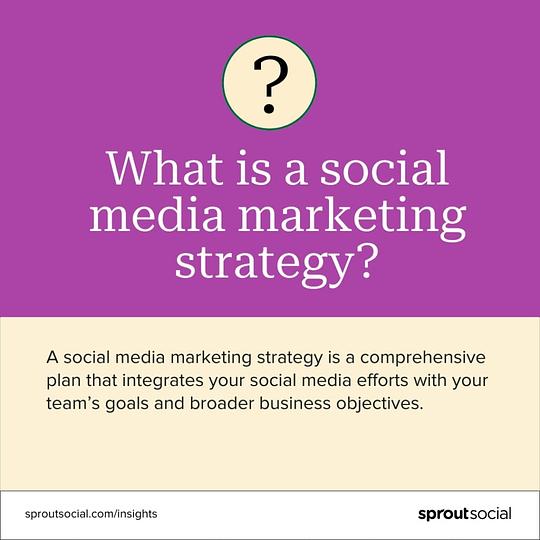
A social media marketing strategy is a comprehensive plan that integrates your social media content distribution efforts with your team’s goals and broader business objectives. In short, it is a documented blueprint that defines your goals, your audience, your content approach, your platform priorities and how you’ll measure success. This alignment ensures that your activities are optimized for performance and deliver measurable results that contribute to your overall marketing success.
Think of it this way: social media marketing is what you do. A strategy is why you do it, how you do it and how you know it’s working. Without one, social becomes reactive, a constant scramble to keep up rather than a deliberate engine for growth.
A well-defined social media marketing strategy also sets clear boundaries around your team’s time and expertise. Social media managers often face requests to share content that doesn’t align with the overarching strategy or audience interests, and having a documented strategy gives you the framework to push back with confidence.
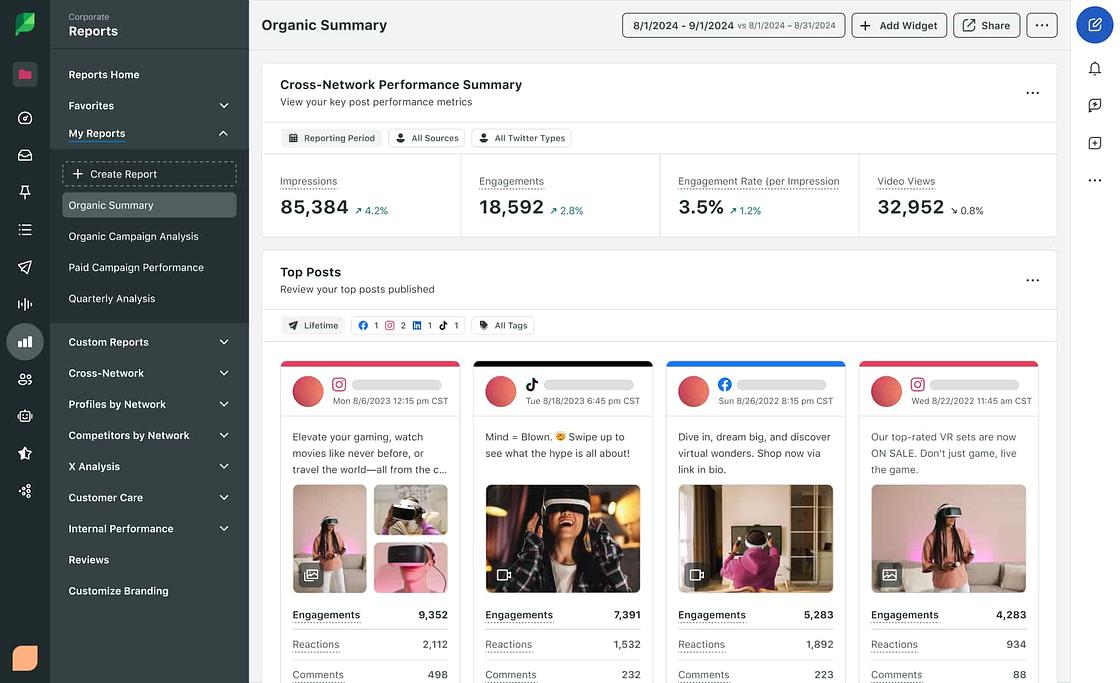
A social media management tool with capabilities such as Social Listening, Post Scheduling and Analytics and Reporting supports social teams in staying targeted, maximizing impactful and proving ROI.
How social media marketing has evolved in 2026
The fundamentals of social media marketing haven’t changed, but the stakes have. Here’s what’s reshaping strategy right now in 2026.
Social is the top channel for product discovery. Facebook is now the number one platform for product discovery, with nearly 40% of social users using it to find new products, according to the 2026 Sprout Social Content Strategy Report. Your social presence is your storefront.
Authenticity defines brand relevance. Consumers don’t just want polished content; they want brands that feel real. The 2025 Sprout Social Index™ confirms that authenticity and relatability top the list of what consumers want from brands on social.
AI is reshaping how teams work. From content ideation to reporting to customer care, AI tools are giving social teams back the time they’ve been losing to manual workflows. And all marketers regardless of seniority say real-time audience insights would be the #1 most impactful resource for their content strategy, according to the 2026 Sprout Social Content Strategy Report. The brands winning on social aren’t the ones posting the most; they’re the ones using AI to work smarter and focus on strategy.
Social commerce is accelerating. According to the Q2 2025 Sprout Pulse Survey, 76% of social users say social media has influenced some percentage of their purchases over the past six months. The path from discovery to purchase is shorter than ever, and your strategy needs to account for it.
The executive gap is closing slowly. According to the 2025 Impact of Social Media Report, only 44% of marketing leaders rate their teams as “expert” when it comes to measuring the business impact of social. Closing that gap requires better measurement, clearer reporting and a strategy built around business outcomes, not vanity metrics.
Brands like UK-based financial giant Barclays are already engaging their audiences with educational content on their social media to meet consumers where they are and build brand trust.

Why your brand needs a documented social media marketing strategy
Building a sustainable social media strategy requires understanding both current best practices and the context of social—a perspective Sprout Social has developed over 15 years supporting brands’ success. Being able to clearly articulate the advantages of a cohesive social media strategy is also crucial for securing buy-in from other stakeholders.
Here’s how a well-defined social media strategy benefits your brand and business.
It increases brand awareness and engagement
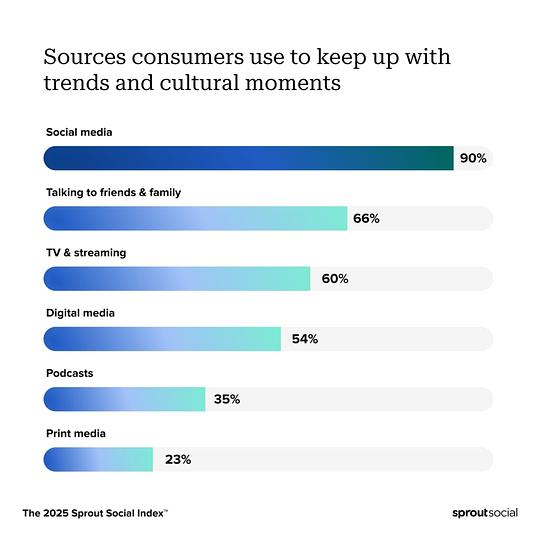
According to The 2025 Sprout Social Index, 90% of consumers use social media to keep up with trends and cultural moments. When brands commit to a cohesive social media marketing strategy, they develop the consistency needed to form a brand identity that cuts through the noise to resonate with a target audience.
The rise of influencer marketing has further enabled brands to deepen their reach and drive meaningful engagement. According to the Q1 2025 Sprout Pulse Survey, 90% of marketers reported that sponsored influencer content performed better in terms of engagement compared to organic content posted on their brand accounts.
It promotes brand trust and authenticity
Social’s impact on brand trust is palpable, particularly for younger consumers. According to a Q2 2024 Sprout Pulse Survey, 78% of consumers surveyed agree that a brand’s social media presence has a higher impact on whether or not they trust that brand—and that number goes up to 88% for Gen Z.
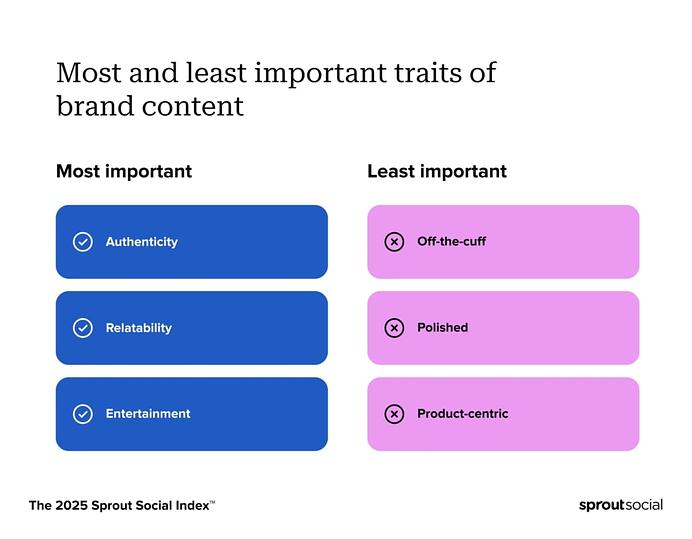
The 2025 Sprout Social Index showed consumers rank authenticity and relatability as two out of the three most important brand content traits.
It drives revenue
According to the 2025 Impact of Social Media Report, 56% of marketing leaders say social media drives revenue for their businesses. As social commerce adoption continues to skyrocket in the US and abroad, social media now supports a full-funnel experience—even B2B brands are using social media to increase lead generation and drive pipeline growth.
For example, when Simpli.fi, an advertising success platform, integrated employee advocacy into their social media strategy, the company realized $90,000 in earned media value in three months.
It supports performance measurement
A social media marketing strategy creates the infrastructure you need to prove social ROI. Without one, you report on social media KPIs in isolation—disconnected from the business objectives that give those numbers meaning.
With a defined strategy, every metric tells a story. If your objective is increasing market share with a specific audience segment, you build a content pillar for that audience, track their engagement over time and present results that show exactly how social contributed to the business goal.
With a social listening tool, you can even measure how your brand’s share of voice stacks up against key competitors. This is a highly effective way to gauge your brand’s visibility and market share within your industry.
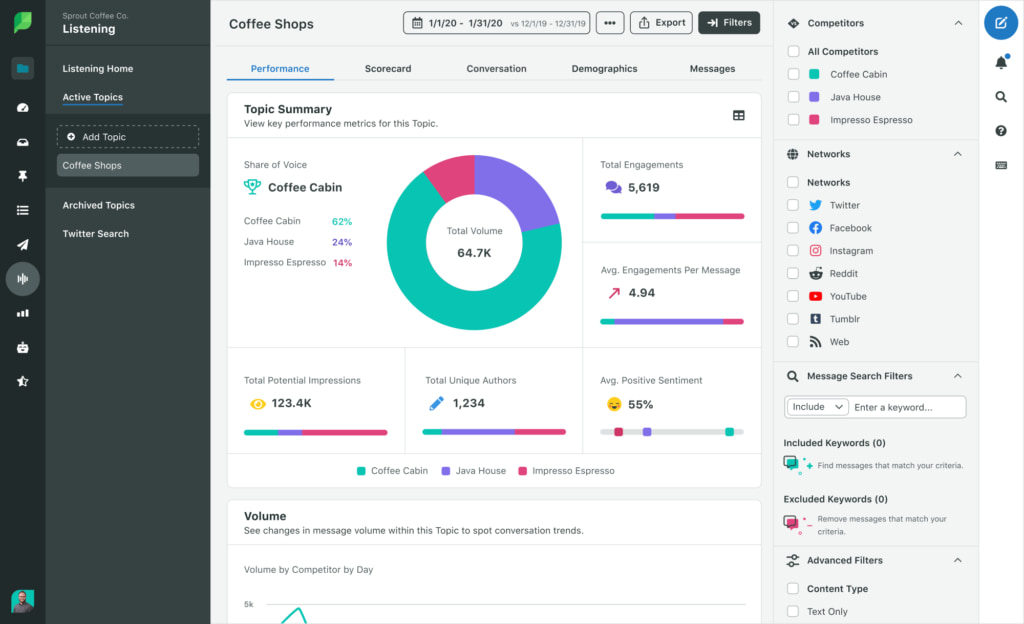
Learn more about social listening tools
Benefits of social media marketing for your business
Social media marketing delivers measurable business impact across every industry, from brand awareness and lead generation to customer retention and revenue growth. It gives your organization direct, real-time access to audience intelligence, competitive insight and customer feedback that no other channel provides at the same scale or speed.
We spoke to Penn State Health, a multi-hospital academic health system serving the central Pennsylvania region, to understand how social media has been instrumental in supporting their business goals.
It surfaces real-time competitive intelligence
Your competitors are on social, and so are your customers’ unfiltered opinions about them. A strategy that includes competitive analysis and social listening gives you a live pulse on market positioning, share of voice and opportunities your competitors haven’t spotted yet.
Sprout’s competitor and sentiment analysis reports allow you to monitor growth and engagement to ensure that you aren’t falling behind.
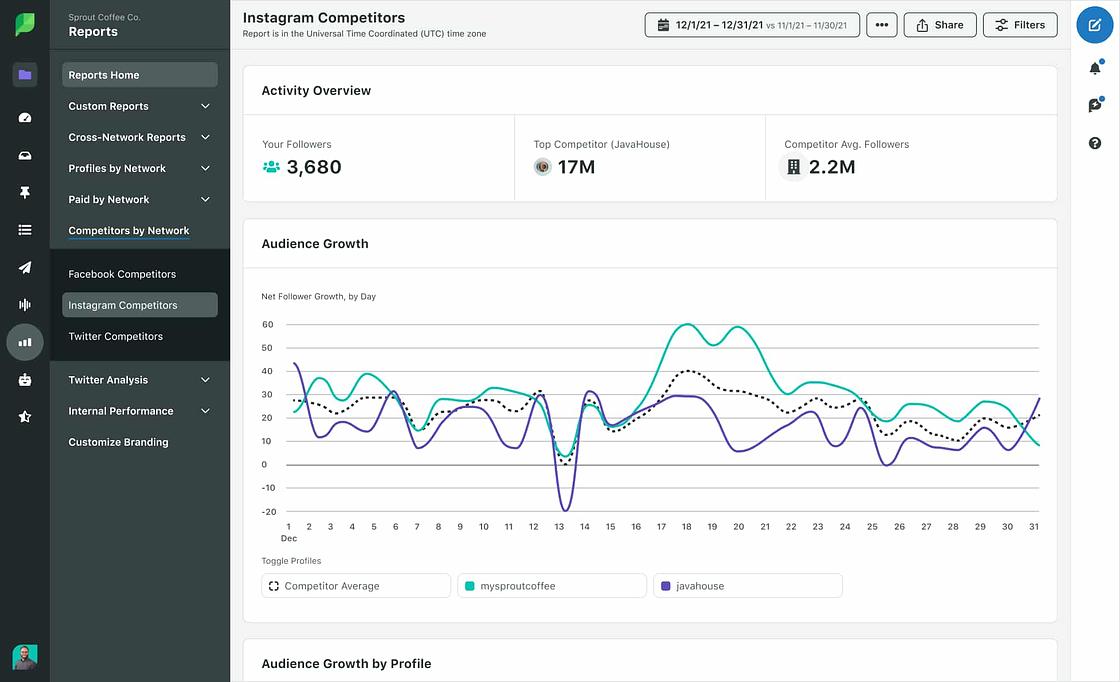
Through this analysis, discover which pieces of your own content are earning the most engagement. Understanding your top-performing content is key to understanding how to break through the noise in your industry.
Get comprehensive competitive analysis
One of the most valuable social media business benefits is the ability to study your competitors. You can use competitor analysis tools to understand what they’re promoting, what sort of ads they’re running and how their content strategy differs from yours. By conducting social competitive analysis, you uncover opportunities to experiment with your own content or advertising.
For example, you notice your competitors are crushing it with Facebook Ads but their Instagram presence is lacking. In turn, you might explore influencer marketing or user-generated content campaigns for the sake of standing out from the crowd.
Analyze your competitors’ social performance with Sprout’s tools. Our competitor and sentiment analysis reports allow you to monitor growth and engagement to ensure that you aren’t falling behind.
Through this analysis, discover which pieces of your own content are earning the most engagement. Understanding your top-performing content is key to understanding how to break through the noise in your industry.
It deepens customer relationships
Social media is where customers go when they have questions, complaints and praise. A strategy that prioritizes responsive, empathetic engagement turns those moments into loyalty.
Fifty-three percent of brands say customer service contributes to the organization’s social strategy, according to the 2025 Sprout Social Index. The brands that respond fast and most helpfully win the relationship and the repeat purchase.
As Amy Peiffer, Social Media Lead at Penn State Health, put it: “People’s needs extend well beyond nine to five when somebody is in a clinic office picking up a phone and when people need answers to their questions. Often they go to social media because it’s the communication platform that they’re most familiar with and meets them at the times that they are working nine to five themselves.”

It amplifies your reach through employees and influencers
Your brand’s most credible voices aren’t always your brand accounts. Employees and influencers who authentically align with your values extend your reach into audiences you’d never access through your owned properties alone.
A strategy that incorporates employee advocacy and influencer marketing multiplies your impact without multiplying your ad spend. When employees share brand content, it reaches their personal networks with a level of credibility no paid ad can replicate.
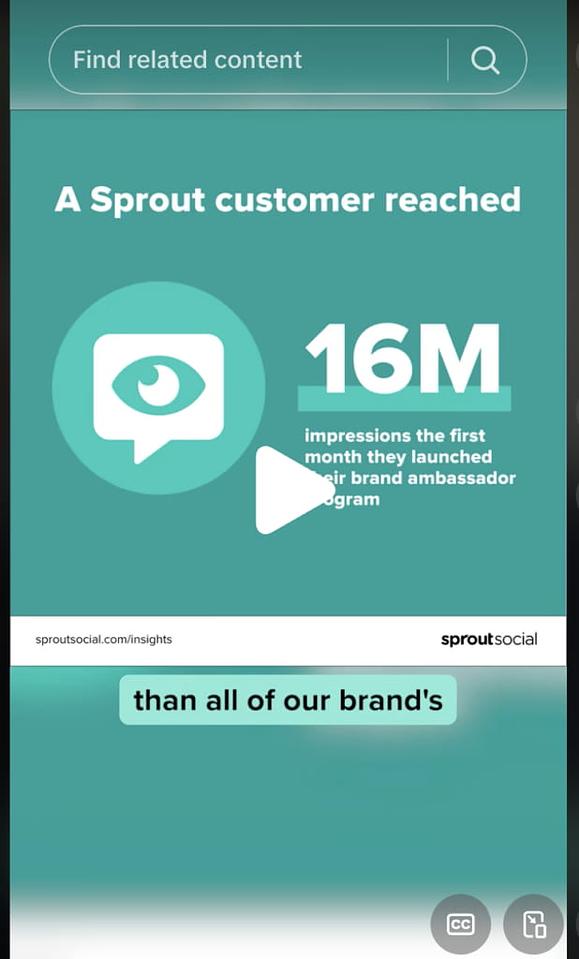
Our data shows that posts employees share have an 8x higher engagement rate than brand content and employee content has 20x greater reach than all organic platforms combined.
Take a listen to the video below to learn more.
It generates top-of-funnel leads
Billions of people are active on social media daily and there’s a large chance your audience is already online. Whether through paid ads or content promotion, social media raises awareness for your brand and creates a path to conversion for audiences who don’t know yet you exist.
Even when leads don’t convert directly through social, brand awareness built on social moves them further down the funnel toward a future purchase decision.
Take advantage of SEO to supercharge your brand
Social also supports your ability to tap into the power of social media search engines when someone looks up your brand. According to the Q3 2025 Sprout Pulse Survey, 36% of social media users are more likely to trust information about a brand found on social compared to other forms of search, making social content optimization a direct driver of brand credibility.
Shares and click-throughs via social represent positive search signals to Google, making social a sizable traffic source you can track with tools like Google Analytics. You can optimize your social scheduling with Sprout Social’s patented ViralPost® technology that ensures you’re utilizing optimal send times.
It extends your media and investor relations efforts
Social media has transformed how brands communicate with journalists and investors. Brands aren’t limited to traditional PR channels anymore—you can use social media to supercharge your media relations and investor relations strategies.
Journalists use networks like X to find sources and stories. Follow and engage with reporters at your target publications to build rapport before the pitch. Investors use social to learn about brands, and company announcements and milestones shared on LinkedIn reach them directly.
How to build a social media marketing strategy from scratch in 7 steps
Building a social media marketing strategy isn’t complicated, but it does require intention. Follow these steps to create a strategy that’s grounded in data, aligned to business goals, and built to evolve.
Step 1: Conduct a social media audit
Before you set goals, you need to understand where you stand. A social media audit gives you a clear baseline of what’s working, what isn’t and where the gaps are.
Your audit should cover:
- Profile inventory: List every active social profile across every platform. Identify any outdated, inactive or unauthorized accounts that need to be updated or removed.
- Brand consistency: Audit your bios, profile images, cover photos and brand voice across platforms. Inconsistency erodes audience confidence, making it critical to prioritize building trust through social media by keeping your messaging aligned across all active profiles.
- Content performance: Review your top-performing and lowest-performing content over the past 90 days. Look for patterns in format, topic, tone and posting time.
- Audience analysis: Examine your follower demographics, growth trends and engagement rates across each platform. Are you reaching the right people? Are you on the right platforms?
- Channel ROI: Which platforms are driving measurable business outcomes—traffic, leads, conversions—and which are consuming resources without return?
- Competitive benchmarking: Compare your performance against two or three key competitors. Where are you winning? Where are you falling behind?
- Workflow and process gaps: Identify bottlenecks in your content creation, approval, publishing and reporting workflows.
Use the Sprout Social analytics dashboard to pull cross-platform performance data and build your audit from real numbers, not assumptions. Once your audit is complete, you have the foundation you need to set goals that are grounded in reality and a strategy that builds on what’s already working.
Step 2: Set goals and establish KPIs
Every effective social media strategy starts with clear, measurable goals, and those goals must connect directly to business outcomes. Define what success looks like before you publish a single post.
Set SMART goals
Use the SMART framework to make every goal actionable: Specific, Measurable, Achievable, Relevant and Time-bound. A vague goal like “grow our Instagram presence” becomes a SMART goal when it reads: “Increase Instagram follower growth rate by 15% within Q2, measured through Sprout Social’s Profile Performance Report.”
Examples of SMART social media goals:
- Increase Instagram engagement rate from 2.1% to 3.5% by Q3
- Generate 500 qualified leads from LinkedIn content in the next 90 days
- Reduce average social customer care response time from 4 hours to under 1 hour by end of quarter
- Grow TikTok following from 10K to 25K by December 31
The most powerful goals connect social activity directly to business outcomes like revenue, pipeline, retention and customer satisfaction. When your goals speak the language of the C-suite, earning executive support becomes significantly easier.
Pick one or two goals to anchor your strategy and rally your team around them. When in doubt, keep it focused: a clear strategy on two goals outperforms a scattered strategy on six.
Example social media goals
The goals that matter most in 2025 reflect where social media’s business impact is most measurable. According to the 2025 Sprout Social Index, marketing leaders plan to measure social media success with overall engagement, audience growth, social interactions, web visitors and share of voice.

Key goal categories to build your KPI framework around:
- Brand awareness: Reach, impressions, share of voice
- Audience growth: Follower growth rate, profile visits
- Engagement: Engagement rate, saves, shares, comments
- Traffic and conversion: Link clicks, website sessions from social, conversion rate
- Customer care: Response time, resolution rate, customer satisfaction score
- Revenue: Social-attributed pipeline, social commerce revenue, influencer-driven sales
Goal example 1: Increase brand awareness
Brand awareness means getting your name out there. According to the Index, 93% of consumers agree it’s important for brands to keep up with online culture. Try to avoid solely publishing promotional messages and strike a good balance with authentic content that emphasizes your brand’s voice and story.
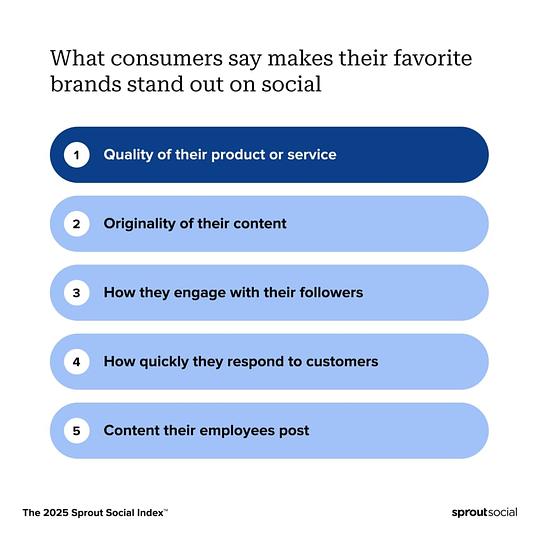
If you want to increase brand awareness, here are the social media metrics you’ll want to focus on:
- Reach: Post reach is the number of unique users who saw your post. How much of your content actually reaches users’ feeds?
- Impressions: At the post level, impressions are how many times a post is displayed to someone. Impressions are a good indicator of how popular a piece of content is, and that people may be viewing a post multiple times.
- Hashtag performance: What were your most-used hashtags? Which hashtags were most associated with your brand? Having these answers can help shape the focus of your content going forward.
- Video views: This may come off as a vanity metric. But on certain channels, like TikTok, views count as impressions and are therefore important to monitor.
As you define your objectives, it’s also important to consider the role of both organic and paid social media in your overall strategy.
Goal example 2: Generate leads and sales
Whether online, in-store or directly through your social profiles, followers don’t make purchases by accident. Are you alerting customers about new products and promos? Are you integrating your product catalog into your social profiles? Are you running exclusive deals for followers?

Here are the metrics you’ll want to track if you’re focused on lead generation and sales:
- Conversions: A conversion is when someone takes a desired action, like purchasing something from your site or signing up for an upcoming event.
- Conversion rate: Conversion rate measures how well your social ad or campaign is convincing people to take a desired action.
- Influencer ROI: This will tell you the revenue or profit you gain compared to the cost of the investment
- Employee Advocacy: This metric will tell you how many leads you generated from employee-promoted content
- Return on ad spend (ROAS): ROAS will inform on how your campaigns and ads are performing
Goal example 3: Grow your brand‘s audience
Bringing new followers into the fold means finding ways to introduce your brand to folks who haven’t heard of you before. Growing your audience also means discovering conversations around your business and industry that matter the most.
Digging through your social channels is nearly impossible without monitoring or listening for specific keywords, phrases or hashtags. Having a pulse on these conversations helps you expand your core audience (and reach adjacent audiences) much faster.
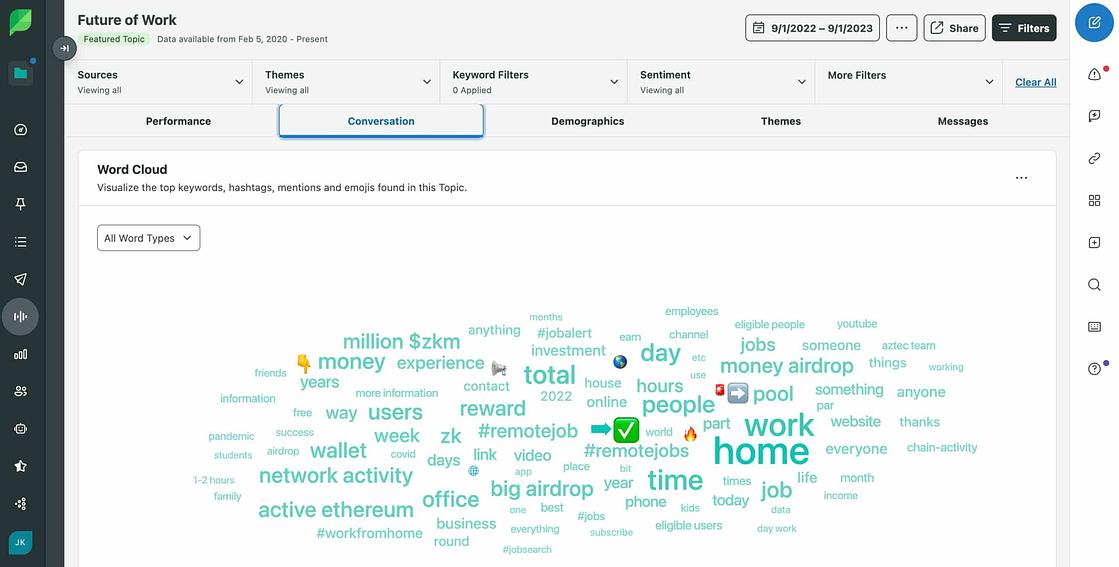
Important audience growth metrics include:
- Follower growth: Your follower growth measures the net new followers you gained in a specific time period.
- Follower growth rate: The percentage that shows you how quickly your audience is growing—or slowing—within a certain time period.
Goal example 4: Provide holistic customer care
The Index shows most consumers believe the most memorable thing a brand can do on social media is respond to customers. This means companies need to experiment with messaging and content when approaching customer care.
Does your team have a protocol for handling @-mentions and comments? Do you have templated responses to FAQs? Does your brand promote user-generated content and hashtags? Your customers can be your best cheerleaders, but only if you give them a reason to grab the megaphone.
If you want to improve your business’ approach to social customer care, here are the customer service metrics you need to track:
- Average first reply time: The time it takes for your team to send out the first reply to an inbound customer message within business hours.
- Reply or response rate: The rate that brands respond to messages or comments that they receive on a daily basis.
- Resolution rate: The percentage of customer inquiries that are fully resolved. This metric can reveal how equipped your entire brand is to address customer inquiries.
Goal example 5: Drive traffic to your site to illustrate the ROI of social efforts
If you’re laser-focused on generating leads or traffic to your website, social media delivers. Whether through organic promotional posts or social ads, keeping an eye on the following metrics can help you better determine your ROI from social media:
- Website traffic: Monitoring website traffic can help you properly attribute increases to specific campaigns or viral posts.
- Social media referral traffic: This describes people who visit your website directly from social media pages and posts.
Any combination of these goals is fair game and can support you in better understanding which platforms to tackle, too. Pick one or two and rally your team around them.
Bonus resource: A great deck can bridge the gap between raw social data and direct business value. Use this presentation template to pitch a compelling vision for your next campaign, initiative or annual strategy.
Step 3: Research your target audience and select your platforms
You can’t build a strategy for everyone. The brands that win on social build their strategies on real data, not gut feel. The good news: everything you need to understand your audience is already out there.
Start with the data you already have. Your existing social analytics, website demographics, CRM data and customer feedback all contain signals about who your audience is and what they care about. Layer in social listening data to understand the conversations your audience is having, the language they use, and the topics that drive their engagement.
Remember: Different platforms attract different audiences. Social media demographics and benchmark statistics are great for understanding where your target audience lives, but it’s also important to understand the nuances of each social network so you can decide where your business needs to be. Marketers should also look beyond demographics and analyze the specific social media consumer behavior that influences how their audience moves from discovery to purchase.
Create audience personas
Audience personas are semi-fictional representations of your ideal customers built from real data. A strong persona goes beyond demographics; it captures your audience’s motivations, pain points, content preferences, and platform behaviors.
To build accurate personas, pull from:
- Native platform analytics: Age, location, gender and active hours from each network’s insights dashboard
- CRM and customer data: Purchase history, support interactions and lifecycle stage
- Social listening data: What your audience talks about, the language they use and the problems they’re trying to solve
- Direct feedback: Surveys, interviews and community conversations
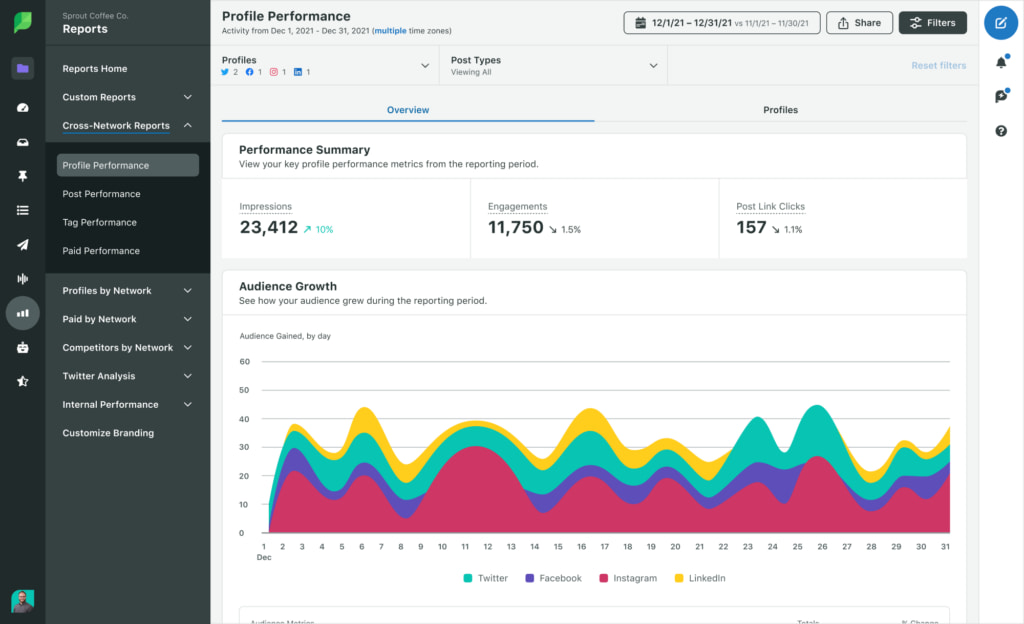
Ground your personas in social data, not assumptions. Sprout Social’s audience demographics reports give you real-time data on who’s engaging with your content across every platform. Use that to validate and refine your personas over time.
Picking networks for your social media marketing strategy
You don’t need to be everywhere. You need to be where your audience is and where you can show up with quality and consistency. Use your personas, listening data and platform analytics to make that decision with evidence, not assumption.
Sprout’s analytics dashboard puts your audience demographics front and center, showing which platforms see the most activity so you can invest time where it counts. You can view analytics from X, Facebook, Instagram, LinkedIn, YouTube and Pinterest data in the dashboard.
X (formerly Twitter)
Requiring minimal setup and providing a place for back-and-forth conversations with followers, there’s a reason why X remains one of the go-to platforms for customer service. If you’re trying to master the social media marketing basics of hashtags, tagging, brand voice and social media etiquette, look no further.

With more than 3 billion users, Facebook is the world’s leading social media platform. It should be a part of your customer service strategy and marketing campaigns regardless of whether you’re a B2C or B2B business. Plus with Meta investing in expanding advertising features within its short-video format feature Reels, the platform is poised to become a major force that has gone far beyond its humble origins.

Instagram is a network centered around visual content. From eye-popping photos to clever captions, it’s all about finding unique ways to show off what you’re selling. Check out how Australian garden center chain Bunnings uses Instagram to promote its products.

Threads
When Meta released Threads on July 5, 2023, the platform received over 100 million registrations less than a week after its launch, making it the most fastest downloaded app ever. Threads is a text-based platform that users can sign up for through their current Instagram account, which is great for brands who already have Instagram accounts because the sign-up process is seamless.

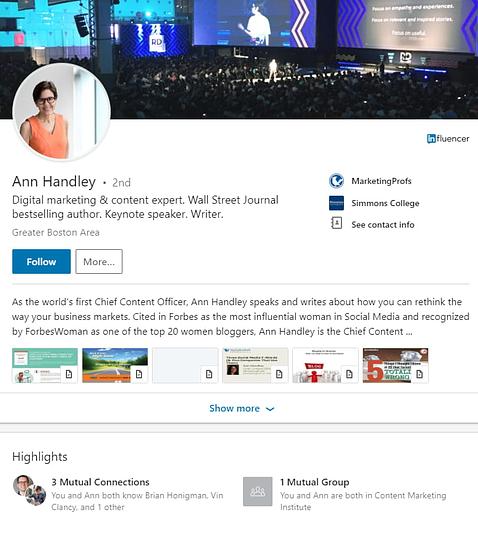
LinkedIn is laser-focused on business trends and networking, making it a highly lucrative channel for B2B brands. The benefits of LinkedIn marketing go beyond networking, including content distribution and lead generation. We also have a guide for LinkedIn best practices so you can take full advantage of those benefits.
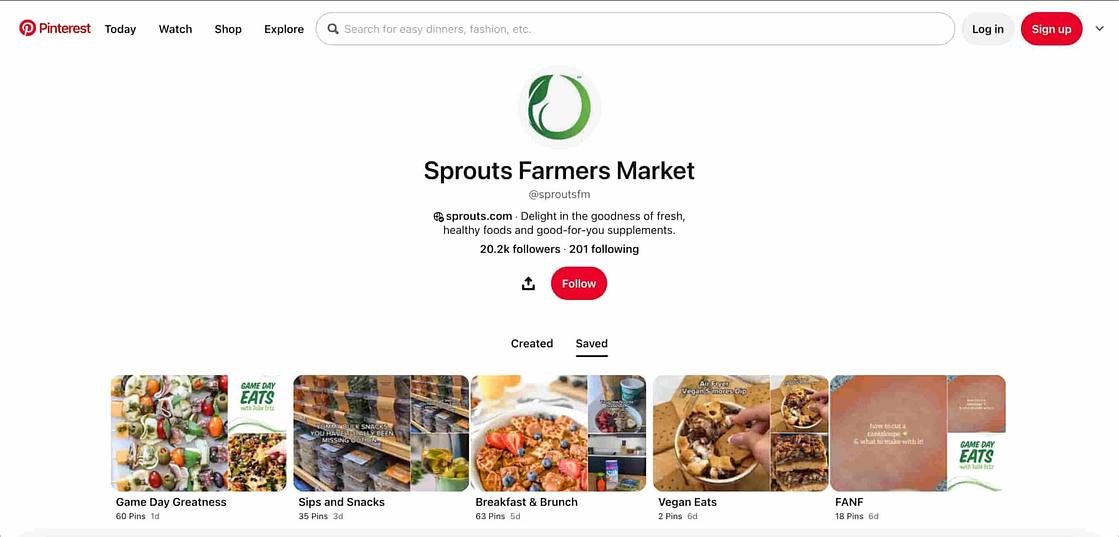
Pinterest marketing is very popular, especially among Gen Z and Millennials. Over 465 million people use this visual pinning platform every month to find inspiration and their next purchase, making it a direct commerce channel for brands in lifestyle, home, food, fashion and beauty categories.
TikTok
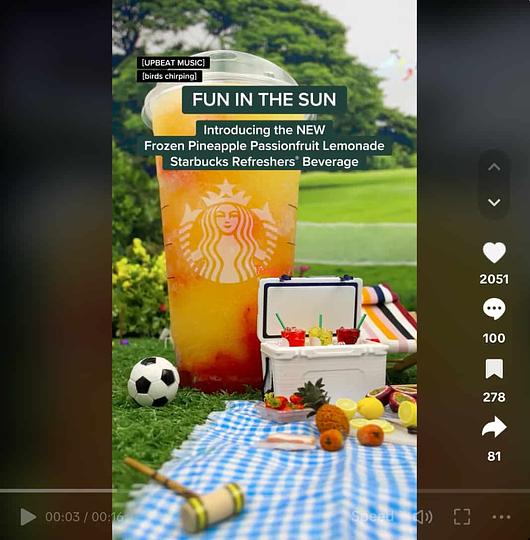
TikTok remains one of the most popular apps in the world. Along with its viral trends and niche communities, the short-form video app is known for its hyper-personalized algorithm that keeps users scrolling for hours. TikTok marketing has redefined how brands engage with customers.
YouTube
YouTube has gone beyond being a video-hosting platform, transforming into the world’s most popular search engine, second only to Google. And considering that video represents the top-performing type of content across nearly every social network, YouTube is a great place to house your videos and optimize them for search and lead generation.
In fact, according to The 2026 Content Strategy Report, consumers want brands to post entertaining content but also content that educates them about their products and services.
Step 4: Create (and curate) timely and engaging social content
No surprises here. Your social media marketing strategy hinges on your content. At this point, you should have a pretty good idea of what to publish based on your goals, audience and brand identity. You probably feel confident in which networks to cover, too.
Defining your content strategy
Developing a content strategy might seem daunting, but it starts and ends with your goals.
For example, Nike builds its entire social media strategy around inspirational storytelling to foster a deep, emotional connection with its audience.
- Looking to educate your audience in the B2B space? Publish blogs, news and opinions relevant to your industry.
- Trying to push e-commerce products? Post action shots of your products and photos of others showing off your swag.
- Focused on customer service? Tips, shout-outs and company updates are fair game.
To ensure your content remains focused and aligned with your brand’s objectives, you can build your content plan around a set of social media content pillars.
Regardless of what you might post, coming up with a hashtag to couple with your content is a brilliant branding move.

Hashtags can be used to get your attention and encourage people to share their photos interacting with your brand.

Find your brand voice
One of the best ways to stand out on social media is to have a distinct brand voice. Chances are you’ve seen a post from a particular brand that just feels like, well, theirs.
The quippy, casual tone that makes Discord’s X presence beloved by casual users and moderators alike is a great example.

The key is to present yourself as a human rather than a robot. Adopt a consistent brand voice and style that’s appropriate for your business.
To move beyond one-off posts and build a cohesive brand identity, consider developing a social media content series that reinforces your core values and keeps your publishing calendar consistent.
Bake timeliness into your strategy
Timeliness is arguably more important than ever for marketers. Not only are you expected to put out fresh content regularly, but also to always be “on” for your followers. But you can’t always expect customers to operate on your clock. Plus, timeliness is a tall order when you’re strapped for resources or are part of a small team.
As evidenced by our best times to post on social, brands have a lot of ground to cover in terms of frequency and how much content to push. It’s important to pay attention to the optimal times for engagement so you can automate the most tedious aspects of your social presence without having to worry about posting in real time.
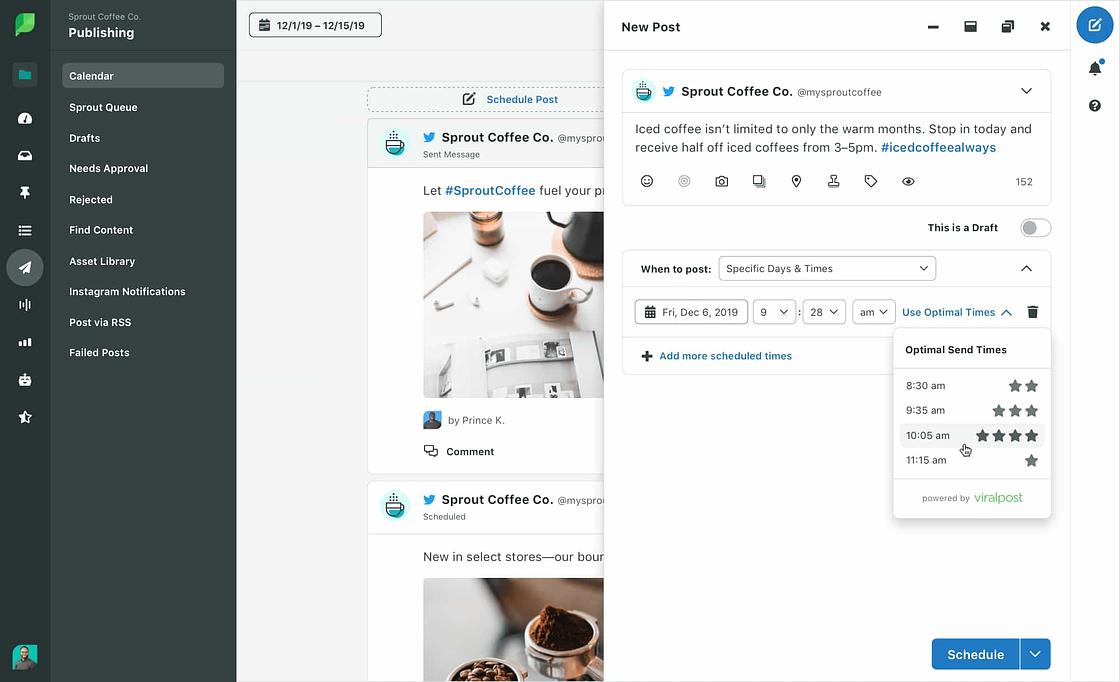
Another important factor is ensuring you respond to customer comments in a timely manner. If you’re strapped for time and have a small team, use chatbots, AI and automation to serve and engage with customers when your team is offline.
Take advantage of short-form video
Thanks to the rise of TikTok and Instagram Reels, social video is booming. Short-form productions continue to dominate the social space across all platforms due to their high engagement rates.
Thanks to advancements in DIY and remote video production, you don’t need massive budgets to be successful. All you need is a laptop or smartphone and a few tricks of the trade, like video length best practices and editing tools.
Share posts that show off your brand’s uniqueness and human side
Both personal and personable content should be a cornerstone of your social media marketing strategy. Don’t be afraid to remind followers of the humans behind your posts. According to the latest Index, consumers crave original, entertaining and humanizing content from brands.
For example, Zoom has excellent original content on their Instagram and TikTok accounts, like this Reel that explores the different signs in the workplace:

Step 5: Collaborate with influencers
If you haven’t already, it’s time to tap into the power of influencer marketing. Social partnerships are very effective when executed correctly. They can help drive traffic to your website, produce compelling content and inspire purchase decisions.
But consumers care about creators’ qualifications, so choose wisely. The two most important qualifications for content creators working with brands are their experience with the product or service and their authenticity.
Identify creators who align with your brand and consider how they can help you craft stand-out content for your audience.
What consumers want from influencer-brand collaborations
According to the 2024 Influencer Marketing Report, consumers overall look to engage with influencers who align with their personal values (53%) and seem authentic (47%), even when posting sponsored content and taking part in brand campaigns.
Across ages and genders, honest and unbiased content stops audiences mid-scroll, while aspirational content is least likely to catch their attention.
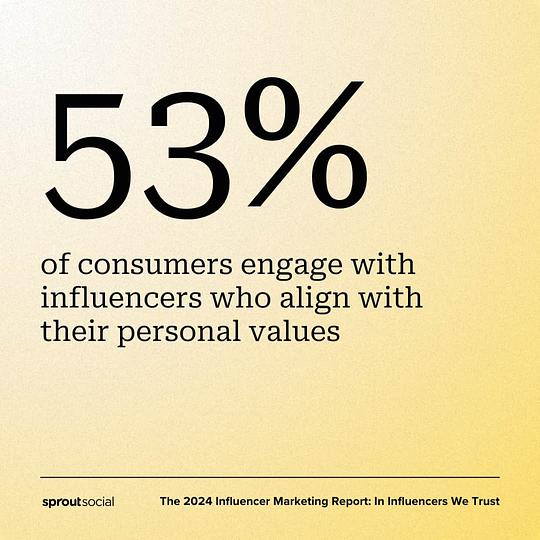
However, the report also found that authenticity is losing its appeal among younger generations. While trust in influencers remains strong—and is even growing among younger consumers—only 35% of Gen Z value authenticity, compared to nearly half of Millennials, Gen X and Baby Boomers.
This indicates that younger generations are more aware of the influencer-brand relationship and how it influences their buying decisions, but they’re comfortable with it. Instead, they prioritize other indicators of trustworthiness, such as follower count, posting frequency and community loyalty.
Step 6: Bring other departments into the mix
Social media teams have a unique advantage when it comes to understanding customer sentiment. You’re the eyes and ears for your brand online. Those insights can do more than just inform your marketing strategy.
They can transform your business. Stand-out social media teams will approach cross-department collaboration with enthusiasm and intention.
Which departments can benefit from social data?
The short answer? All of them. Index data shows around three-quarters of marketing leaders already say organic and paid social marketing are top priorities for the organization.
However, avoid overextending your resources. Start where you can make the most impact. Here are a few ideas to jumpstart your strategy.
Human Resources
Collaborating with human resources on social-first employer brand initiatives can do more than just fill open roles quickly. It can attract stronger, more qualified candidates as well. Many companies have embraced social recruiting strategies, such as publishing creative “we’re hiring” posts on LinkedIn to attract top talent.
Sales
Data from The 2023 Sprout Social Index notes marketers planned to track conversations and sales directly resulting from social efforts in 2024 to better connect the value of social to business goals. Sharing social insights with your sales organization can empower reps to work smarter in the context of increasingly digital customer journeys. Consider learning more about social selling to leverage the power of online networks even further.
Product and merchandising
You’ve probably received quite a few feature or product requests while managing your brand’s social inbox.
With a social media management tool, you can distill those messages into actionable insights for your product or merchandising teams. These insights can complement existing roadmap research, creating a customer-focused plan that delights.
Customer care
Monitoring customer service metrics like average reply time, average wait time and response volume can help your social customer care team identify what’s working well and spot opportunities for improvement. Marketers are using social media customer service software to elevate their support strategies and get the most out of their tech stack. These metrics are vital inputs for a larger, comprehensive customer experience management (CXM) strategy, ensuring social media support aligns with overall brand service standards.
Step 7: Evaluate and improve your social media strategy
By now you should have a big-picture understanding of your social media strategy. However, it’s important to adapt your strategy throughout the year.
Without continuously analyzing your efforts, you’ll never know how one campaign did over another. Having a bird’s eye view of your social media activity helps put things into perspective. This means looking at your top-performing content and adjusting your campaigns when your content stalls.
Social media marketing requires continuous trial and error. Monitoring the metrics behind your campaigns in real time allows you to make small tweaks to your social media marketing strategy rather than sweeping, time-consuming changes.
Doing social media marketing right starts with being diligent about your data. You can be reactive in the short term to get the most out of your running campaigns, and then proactively use these takeaways to inform your next strategy overhaul.
To guarantee you reach as many customers as possible, monitoring your growth is essential. With Sprout, social reports can clue you in on everything from your top-performing content to how engaged your audience is. These reports are crucial for accountability and guaranteeing your numbers continue to tick upward.
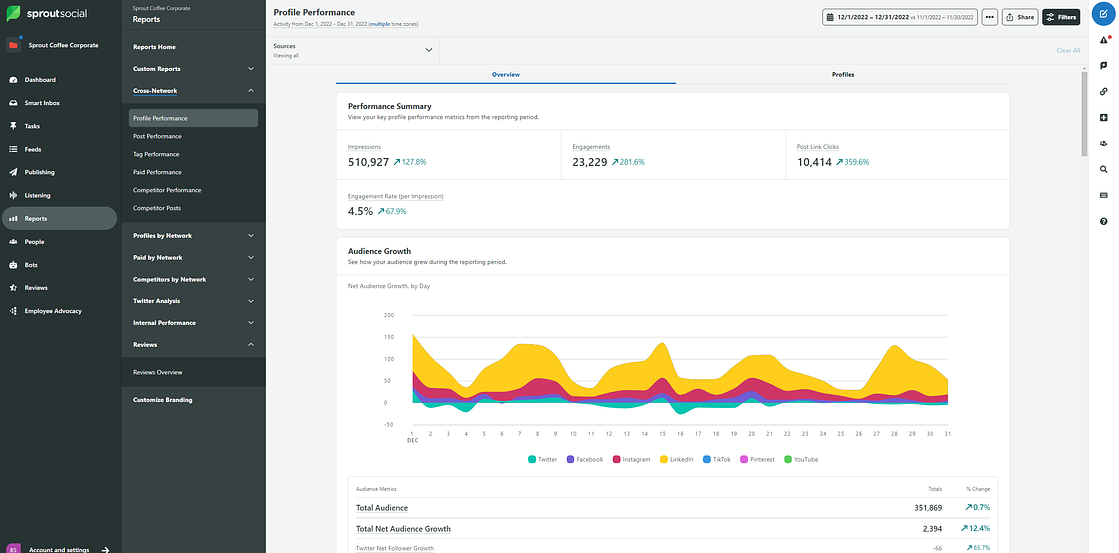
Reporting on data is also important for the sake of sharing valuable insights from social with your coworkers and colleagues. Remember that 60% of organizations use social data daily—be one of the brands that embrace it.
Sharing this information in regular reports not only holds you accountable for your efforts but also highlights the impact and bottom-line results your social strategy produces. Based on your data, you can better assess whether your KPIs truly ladder up to your overarching company goals or whether they need to change.
How to maintain an effective social media marketing strategy
Maintaining an effective social media marketing strategy requires a balance of planning, execution and continuous optimization. Here are focus areas you’ll need to pay attention to to ensure your strategy remains evergreen.
1. Secure executive buy-in and engagement
Winning leadership buy-in is one of the most important factors that can ensure your social media marketing strategy is a success. Approaching it in a layered manner and showcasing how your social media strategy is impacting your business, with tangible data, can help.
- Show ROI: Use data and insights from social listening (e.g., customer sentiment, competitive analysis) to demonstrate the business impact of social media.
- Make it easy: Provide curated content and pre-drafted posts to simplify their participation.
- Highlight thought leadership: Position executives as industry leaders by sharing insights, trends, and personal perspectives on LinkedIn or other social media channels.
- Tie it in with employee advocacy: Encourage executives to engage organically by responding to comments and participating in conversations that align with company values. Plus, amplify your employee advocacy by encouraging employees to share brand content that’s already curated.
- Frame it as an executive summary: When looking to prove the impact of your efforts and secure buy-in from senior leadership, having a well-articulated social media strategy executive summary is essential for quick, easy alignment and showing the straight route to measurable success.
2. Ensure you’re not deviating from your set goals and KPIs
Now that you have broader organizational support, create guardrails so you’re on track with your goals. To do this, it helps to define what success looks like—is it brand awareness, engagement, lead generation or conversions? Align your KPIs (followers, reach, CTR, engagement rate) with your objectives.
3. Build on your influencer marketing efforts
The 2024 Influencer Marketing Report found 49% of consumers make purchases at least once a month because of influencer posts. This makes influencer marketing one of the most impactful drivers for your business compared to other social efforts. To ensure you get the most of your influencer ROI, integrate an influencer marketing platform into your existing tech stack. This will help you automate data collection and analysis and enable you to track and measure the impact of influencer-led campaigns on your revenue.
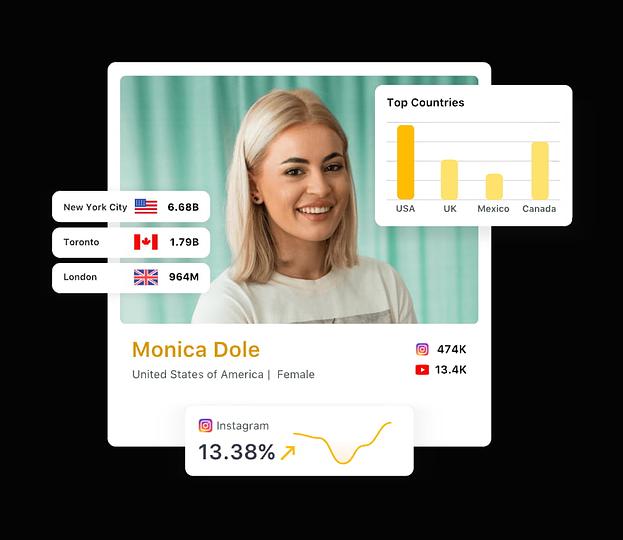
Sprout Influencer Marketing integrates into your martech stack seamlessly so you can search for the right influencers and collaborate with them, streamline influencer workflows, and manage influencer compensation and campaigns, all through a unified dashboard.
4. Take advantage of AI and automation
Use AI for smarter workflows and get time back to focus on strategy. Use AI and automation for content recommendations, content creation, automated posting and sentiment analysis for brand insights. Similarly, implement chatbots on your social channels for instant customer interaction and improve customer support.
This video highlights how Sprout’s Bot Builder helps businesses.
You can also use AI to automate reporting to track performance efficiently and provide different teams with the exact data and insights they need.
Social media marketing gives you access to real-time data on customer experience and shifting consumer preferences. Having this data at your fingertips ensures you’re making decisions that go beyond personal feelings and anecdotes and are based on tangible evidence.
“With this comes a greater ability to show that specific initiatives, types of content, themes or campaigns have or have not supported KPIs that we’ve identified as important to what we’re trying to achieve. When you have that level of data available, and in an easy-to-set-up way, it unleashes a lot of power in your decision-making and decision backing.” Peiffer explains.
5. Use in-depth reporting to prove social ROI
One of the benefits of social media marketing is that you get comprehensive audience and campaign performance metrics easily and quickly to ensure you’re aligned with your primary goals.
For example, with Sprout’s My Reports tool, you know exactly what metrics align with your business priorities and how to turn that engagement into tangible results. This makes it easy to prove your social ROI because now you can easily showcase how your social marketing strategy is performing, driving leads, and helping with your brand’s integrated marketing strategy.
Rachael Goulet, Director of Social Media at Sprout Social explains how her team uses My Reports.

Since My Reports are also highly customizable, it’s easy for social media managers to pull the exact KPIs leadership teams and stakeholders are interested in and reveal the impact of social on the brand and business.
“When you have five minutes to present to other key stakeholders at the executive level, they are looking for fast, quick takeaways. Sprout allows us to pull just that much information that’s customizable for those key stakeholders. We can even automate it, such that, if they have a monthly check-in, for example, and they just want to know how some of our strategic priority areas are performing at that time, we can pull KPIs specific to those areas.” Peiffer notes.
Through reporting on social data you’re also able to achieve greater transparency and accessibility through meaningful metrics. “Data-driven decision-making is being built into the culture beyond our social media and web team, because we can build greater transparency and accessibility using reporting and social listening dashboards,” she says.
“Because these reports are highly visual, and can be as robust or simple as we need them to be to communicate with key stakeholders, it allows us to empower really anyone to communicate the results of our efforts on social media in a way that is meaningful to their goals—whether that be an executive to a governance council, a director to our dean or an account manager to a service line physician,” Peiffer adds.
6. Focus on audience segmentation and tracking
Social media marketing enables businesses greater segmentation and tracking through platform-specific data and insights from AI-powered tools like Sprout. You can target audiences based on demographics, interests, behaviors and even sentiment analysis through social listening. Plus, advanced targeting features like custom and lookalike audiences can ensure your ads reach the most relevant users.
As Sprout customers, Penn State Health has used Sprout’s Tagging feature to help benefit from improved segmentation and tracking for their marketing and communications objectives on social media. “The tagging architecture within Sprout has really allowed us to have greater segmentation and tracking for those separate and distinct audiences and also the variety of content that we’re putting out,” Peiffer notes.
AI-powered analytics further helps track engagement, conversions and customer journeys. This will enable you to tailor content to audience personas and optimize campaigns in real-time for better social ROI and audience alignment.
7. Optimize your content strategy
Content that resonates with your customers, including user-generated content and success stories, directly drives higher engagement and conversion rates. Social gives you the advantage of curating this impactful content quickly. For example, you can monitor mentions and tags to uncover positive customer interactions and then share them on your social media channels to nurture brand trust.
Many brands also curate customer photos to use throughout their marketing campaigns. This is why having a branded hashtag is so important. By encouraging your customers to tag their content, you can find shareable posts that your followers will love while also making a connection with your customers. You can manage this process effectively through a dedicated UGC platform.
A Publishing Calendar can also be useful to ensure your curated content is posted at a consistent rate to ensure you have a steady brand social media presence.
However, when it comes to cyclical content, constantly creating awesome content can be taxing—a challenge all brands face. AI in social media can help overcome this block and even enhance creativity.
“There’s only so many ways over time I can think to say it’s National Doctors Day, thank a doctor who has made a difference in your life,” Peiffer explains. “As social media managers, we can use tools like generative AI to get ‘unstuck’ in these creative blocks and tailor it to our own brand voice and audience preferences,” she adds.
Sprout’s AI tools have made a difference in how Penn State Health’s social team creates brand content. “I appreciate that Sprout gives several options when generating text. I’m sometimes pulling from this piece and adding it to another, or it just inspires a wholly separate thought and I’m writing something entirely different. That inspiration saves time and helps find a new way to say the same thing,” Peiffer notes.
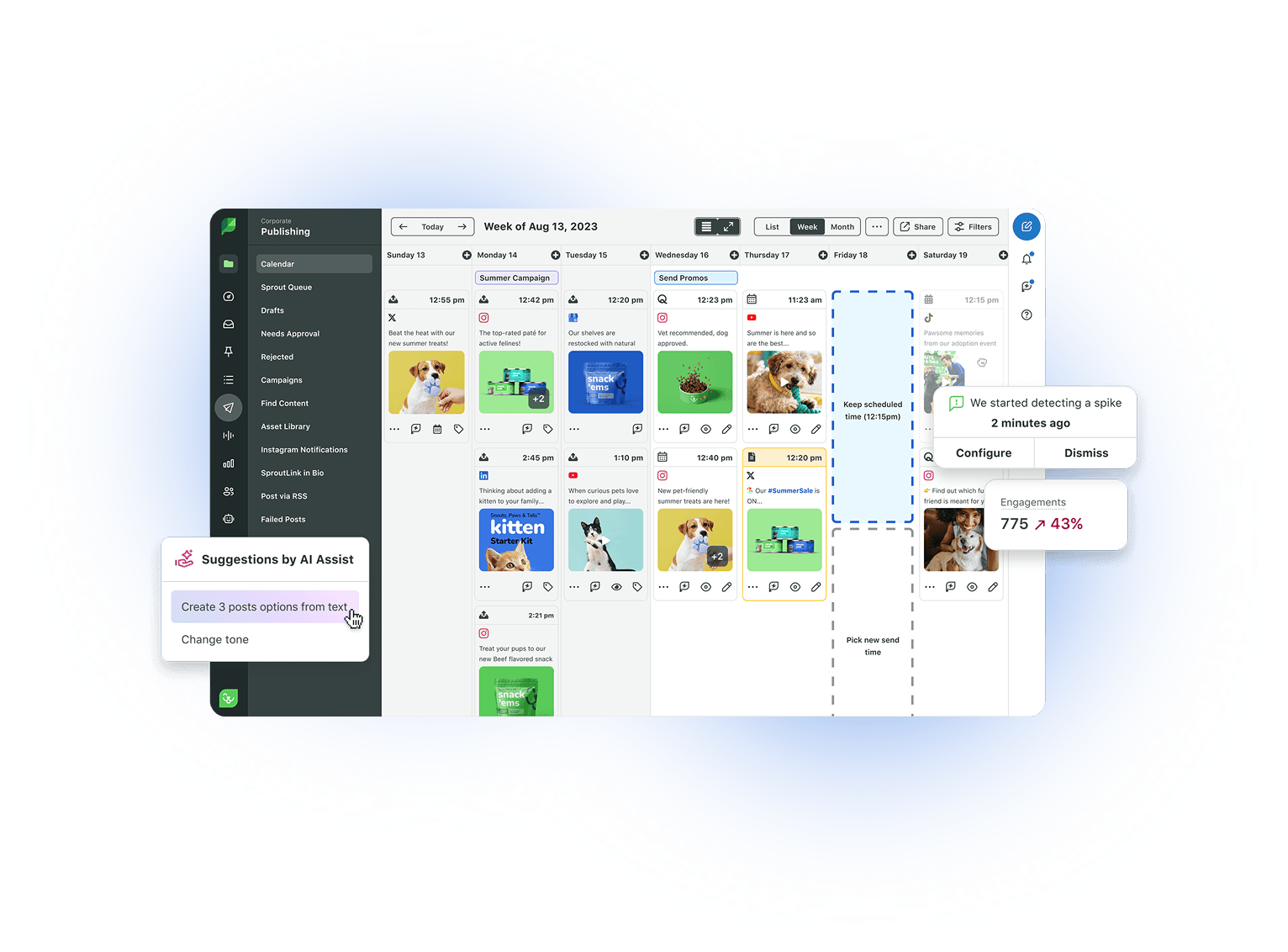
Generative AI tools like Sprout Social’s AI Assist in Compose can help you create content easily. All you have to do is add a few thoughts or drop a link and you get multiple caption options in different tones. Similarly, the Suggestions by AI Assist capability helps improve social media posts by instantly generating multiple variations of the post or adjusting its tone.

Yet another important way to optimize your content strategy is to have a balanced mix of videos, infographics, carousels and user-generated content to create multi-format content and keep engagement high.
It’s also important to align content with your brand persona and not jump on every trend you see on social. The 2025 Sprout Social Index revealed this as one of the top things consumers want brands to stop doing.
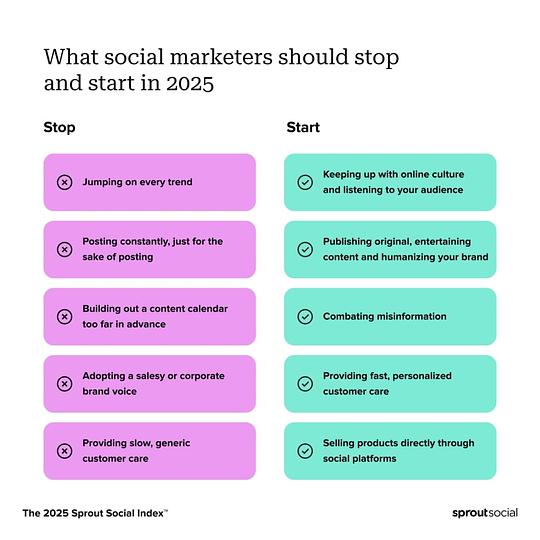
This need for brand restraint and true alignment is particularly apparent when building out long-term Gen Alpha marketing playbooks; this group is already experiencing deep screen fatigue and values real-world, tactile interactions over superficial online trends.
8. Champion workflow efficiencies to empower your team
Brands need to be constantly accessible to customers because with social, customers are just a touch of a button away from brands they want to reach. This can also mean overwhelmed social teams balancing customer support, content management and slicing and dicing data for reporting.
However, with an intuitive social media management solution, this daunting task becomes effortless. According to Amy, Penn State Health’s social team was able to build custom reports faster and more efficiently, such that the time to build customer reports dropped by nearly 70%. They also reduced errors by 80% and troubleshooting turnaround time from 3-5 days to within an hour.
This collective efficiency helped save team resources as well. “We eliminated the need for an additional contractor-supported role due to efficiency gained for full-time team members,” Peiffer explains.
This video explains how the Sprout team uses our own tool to save time and increase workflow efficiency.

9. Prioritize social customer care
Per the latest Sprout Social Index, among the top things customers want brands to start doing in 2025 is prioritizing quick, personalized customer care.
Social Customer Care by Sprout Social helps brands achieve this. Whether it’s through Case management that enables global customer care teams to be on the same page or tools like Saved Replies that help deliver quick service while maintaining brand voice, you deliver the best customer experience ever, and more importantly, humanize your brand.
Peiffer says, “What we found in years of inquiries was that there were certain themes and frequent requests to our social media pages. Using Sprout, we built Saved Replies that centralized how to locate those resources for our audiences, but could still be individualized and customized to impart that humanity to our social media communications, which I think is so important in health care. In Sprout, we’re able to unlock this potential and allow our team to focus on more strategic objectives.”
10. Engage and build community
This brings us to customer engagement and building your own brand community. One of the ways to nurture a thriving brand community is to respond to comments and messages promptly. Tools like Sprout’s Smart Inbox or Message Alerts help you in doing that because they automatically categorize messages according to priority.
Collaborate with brand advocates to extend your reach and infuse your social media with authentic, relatable content. Plus, encourage user participation through polls, Q&A and challenges. This will help you grow and sustain your brand’s community with loyal followers.
11. Analyze and iterate your efforts
Analyze and track your efforts consistently. This includes testing your ad creatives, captions and posting times to ensure they are optimized for your audience. Tools like Sprout’s Suggestions by AI Assist and ViralPost® capabilities enable you to do just this.
Analyze your content performance as well and use that data to refine your approach. With Sprout’s Tagging feature, you can pull tag-based reports that make it easy to assess what makes something resonate with your audience and see how it aligns with your strategic priority area. You can see what’s performing well and apply those data-backed learnings to other projects to build your annual campaigns.
This approach has also helped Penn State Health win executive buy-in. “The ability to customize how specifically we want to be able to sort, filter and measure data has allowed us to build really enhanced reporting that provides sometimes real-time feedback to stakeholders in ways we haven’t always been able to,” Peiffer says.
“It’s something that not only allows us to plan better as we’re laying out our campaigns and our social strategy for the year, but then also to go back and to report to others when they say, I don’t understand why you did this, or I don’t understand why we don’t do something else. We have the data and the insights available to communicate effectively why our decisions are what they are and to support them as we go forward,” she adds.
While the fundamentals of social strategy apply to most sectors, high-end sectors may require a more nuanced approach to exclusivity. For a deeper dive into this, explore how to tailor a luxury brand social media marketing strategy that resonates with affluent audiences in the UK.
Another important factor is to keep track of platform algorithm changes so you aren’t caught off-guard and adapt your strategy accordingly.
This cohesive approach will also enable you to create benchmarks that you can lean on for future campaigns.
Ready to make your social media marketing strategy future-proof?
If you set actionable goals and address each of the steps above, you’ll establish a distinct competitive advantage with your social media marketing strategy.
Try out some of the Sprout Social features we shared in this article and explore how your business can advance with greater consistency and impact.
Sign up for a 30-day trial today.
Social media marketing strategy FAQs
What is the role of social media tools in social media marketing strategy?
Social media management tools are essential for streamlining and amplifying a social media marketing strategy. They automate repetitive tasks, provide critical data for informed decisions, and enable businesses to manage their presence across multiple platforms efficiently. Here’s the role of social media tools in a marketing strategy:
- Scheduling and Publishing: Social media management tools let you plan and schedule posts in advance. This ensures a consistent posting schedule without requiring you to manually post in real time, saving significant time and effort.
- Analytics and Reporting: These tools provide detailed insights into your performance. They track engagement, reach, and follower demographics, helping you understand what content works best and allowing you to adjust your strategy for a better ROI.
- Audience Listening and Monitoring: Social listening tools monitor conversations about your brand, competitors, and industry trends. This provides valuable insights into customer sentiment and helps you identify opportunities and address potential crises.
- Team Collaboration: For larger teams, social media management platforms provide a unified dashboard where team members can collaborate on content, manage customer inquiries, and ensure a consistent brand voice.
- Optimizing for ROI: Social media tools are crucial for proving the return on investment (ROI) of your efforts. They provide the data reports and custom dahsboards needed to show which campaigns are generating leads, driving sales, and contributing to overall business goals, justifying the investment in your social media strategy
How do I measure the success of my social media marketing efforts?
The success of social media marketing is measured by analyzing key performance indicators (KPIs) that align with your business objectives. By tracking the right metrics, you can understand your audience, optimize your content, and demonstrate a clear return on investment (ROI). Here are five key metrics to measure the success of your social media marketing efforts:
- Engagement Rate: This measures how actively your audience interacts with your content. It’s calculated by dividing the total number of likes, comments, and shares by the number of followers. A high engagement rate shows your content is resonating with your audience.
- Reach and Impressions: Reach is the number of unique people who saw your content, while impressions are the total number of times your content was displayed. These metrics show how widely your brand’s message is being seen.
- Click-Through Rate (CTR): This metric measures the percentage of people who click on a link in your social media post. A high CTR indicates that your call-to-action (CTA) is effective and driving traffic to your website or a specific landing page.
- Conversion Rate: This tracks the percentage of users who complete a desired action, such as making a purchase, signing up for a newsletter, or downloading a guide, after clicking on a social media post. It directly links your social efforts to business results.
- Audience Growth Rate: The audience growth rate the pace at which your follower count is increasing over time. It helps you understand if your strategies are effectively attracting new followers and expanding your brand’s community.
Additional resources for Social Media Marketing

Social media alcohol marketing: Rules, platform policies and best practices

How to build your Bluesky strategy: The complete guide for modern brands

How to rethink the social media marketing funnel with a flywheel

A marketer’s guide to how social media algorithms work and how to master them

Marketing on Reddit: How to reach and connect with your audiences

Australian social media conferences: The 2026 strategic shortlist

The importance of social media marketing: 8 stats that prove social’s role in business success

How to build a customer-centric B2B social media strategy
Social media marketing: What it is and how to build your strategy

The complete guide to using social media for business

Social media marketing for small business: Complete guide for 2026

How to choose the right social media networks for your brand in 2026


Social-first brands: Redefining culture and business strategy

How to build a top-tier SaaS social media marketing strategy

Luxury brand social media marketing: Strategies by UK brands that scale globally

How to build a social media portfolio that proves your impact

How to use Pinterest to grow your brand in 2026

Social media marketing for UK fintech: How to build trust and stay compliant

Social media marketing for Australian ecommerce: Turn connection into growth

Social media marketing for sustainable ecommerce brands in Australia: 8 effective strategies

The future of social media: 7 expert predictions for 2026

Video marketing for ecommerce: A guide for Australian brands


8 winning holiday marketing strategies for 2025

20 engaging Instagram post ideas for UK businesses

Australian TikTok video ideas that convert

Everything you need to know about WhatsApp marketing

How to maximize your social strategy with video SEO

25 social media post ideas for UK brands


How to use social media memes in your marketing strategy to drive engagement
Why social media shares matter in 2026 (+10 engagement tips)

Top UK & European marketing events for social teams in 2026



16 digital marketing platforms to check out in 2026

Target audience: What it is and how to find yours

8 social media myths to unlearn (and dispel across your organization)

8 social media tips from experienced marketers


The complete guide to Pinterest Marketing

What to do when faced with these 10 social media marketing challenges

A beginner’s guide to social media marketing tools


The ultimate guide to Twitter for business


Tumblr is back. What does that mean for marketers?


Sprout on Sprout: How to communicate social media marketing priorities to outside stakeholders



8 marketing campaign ideas that customers will engage with


Social media campaign examples to inspire your social strategy

To see marketing differently, we need to turn the spotlight on social

Twitch marketing: What it is and how brands can do it right

The social media marketer’s guide to infographic marketing

9 Smart social media tactics you need today


A painless guide to social media marketing for dentists


Share