
Social Media Management
What is social media management? Everything you need to know
Explore the ins and outs of social media management with this complete guide. We unpack the key components of social media management and what’s critical to make sure your brand stays relevant.
Reading time 16 minutes
Published on May 29, 2026
Table of Contents
Summary
- Social media management is the process of creating, scheduling and optimizing content to grow and engage an audience across platforms. It involves strategic content creation, influencer collaborations, social customer care and community building to drive meaningful connections.
- Successful social media management requires a strategic blend of data-driven insights, engaging content, authentic audience interactions and continuous optimization.
- AI tools enhance social media management by helping brands automate content creation, optimize posting schedules, analyze audience insights and improve engagement through social listening and personalized recommendations.
Social media management means overseeing every aspect of a brand’s social presence, from content planning and publishing to customer care, analytics and community building, within a centralized workflow that drives measurable business impact.
The brands winning on social aren’t just posting content. They’re building integrated strategies that connect audience insights to business decisions, turning every interaction into an opportunity to grow.
Whether you’re building your first social media marketing strategy or scaling an existing one, this guide breaks down every dimension of social media management—what it includes, who does it, how to do it well and what tools you need to do it at scale.
What is social media management?
Social media management is the ongoing process of creating, publishing and analyzing content—alongside customer care, community building and performance reporting—to grow a brand’s presence and drive measurable business impact on social media. It spans the full scope of a brand’s social presence, including:
- Social media content strategy and publishing
- Community management and audience engagement
- Social media customer service and care
- Analytics, reporting and ROI measurement
- Paid social media strategy and execution
- Influencer marketing and creator partnerships
- Team member management and development
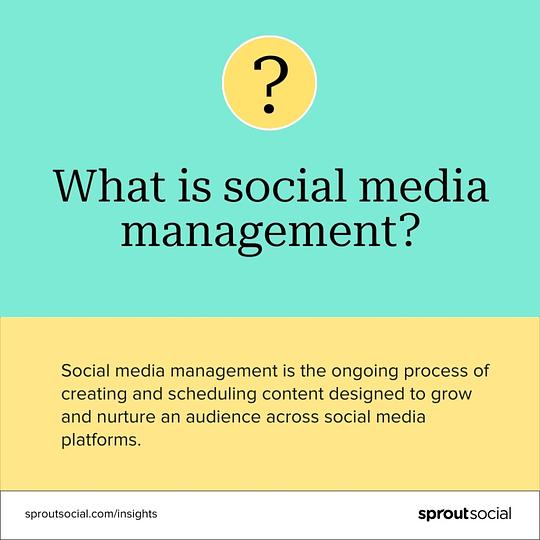
Social media management builds personal connections with target audiences at scale and translates those connections into measurable business impact across your entire organization.
The evolution of social media management
Social media management has expanded far beyond publishing and community management. The creator economy has transformed how brands show up on social and the rise of social messaging has shifted conversations from public feeds to private channels, deepening the relationship between people and the brands they follow. According to the 2025 Sprout Social Index™, 90% of consumers say social media is how they keep up with trends and cultural moments—and they expect brands to be right there with them.
Social commerce has repositioned social media platforms from awareness-focused to a full-funnel revenue driver. AI marketing tools now power content creation, customer personalization and data analytics at a scale that was impossible just a few years ago. Social is no longer a support function. It’s a primary source of business intelligence.
Ready to simplify your entire workflow and transform your social insights into business growth?
The role of a social media manager
Social media managers develop strategies that grow a brand’s social presence while handling content creation, campaign execution, reporting and team development. The role demands both creative and analytical thinking in equal measure.
Proving the ROI of social is now central to the job. That means tracking engagement, conversions and brand sentiment, then translating those signals into business outcomes like revenue growth, lead generation and customer loyalty that decision-makers can act on.
Succeeding in this role requires a distinct combination of skills:
- Adaptability
- Organization
- Creativity
- Curiosity
- Critical thinking
These capabilities define the social media professionals who don’t just manage social media platforms. They drive business strategy.
Skills every social media manager needs
Social media management demands more than posting on time. The strongest social media managers blend strategy and execution by planning content, reading the room, responding with confidence and translating performance into business impact.
According to the 2025 Sprout Social Index™, 41% of social practitioners say their greatest fear is leadership not trusting them to publish content that performs best. The skills below close that gap between what you know and what you can prove.
- Content strategy: Build a well-defined strategy for what you publish, why it matters and how it supports your goals and objectives.
- Community instinct: Know when to engage, when to escalate and how to keep your brand voice consistent across every interaction.
- Analytics fluency: Turn metrics into decisions—not just reports your leadership ignores.
- Creative agility: Adapt fast when trends shift, priorities change or a post misses the mark.
- Cross-functional collaboration: Work with creative, customer care, leadership and legal without losing momentum.
- Social listening: Track what your audience says about your brand, your competitors and your industry—then act on it before the moment passes.
When these skills work together, social stops feeling reactive. It starts driving measurable business impact while earning the executive trust that fuels bigger budgets and bolder strategies.
The best ways to manage social media accounts
Mastering social media management demands network diversification, audience intelligence, AI-powered automation and data-driven ROI reporting. Each of these pillars compounds your impact over time.
Diversify your networks
Your data tells you where to invest your time and budget, but social moves fast. The platform delivering results today takes a dip tomorrow and an algorithm update hits much harder when you’ve put all your resources into a single network.
A social media management platform streamlines complex social media workflows across multiple networks. Posting natively across profiles, which means logging into each network individually, is a massive time commitment. Factor in engagement and monitoring and it becomes more than a full-time job.
Sprout Social helps businesses scale social operations sustainably. Publishing workflows support network-specific customization while minimizing risk, because quality control is far harder when your team runs social natively.
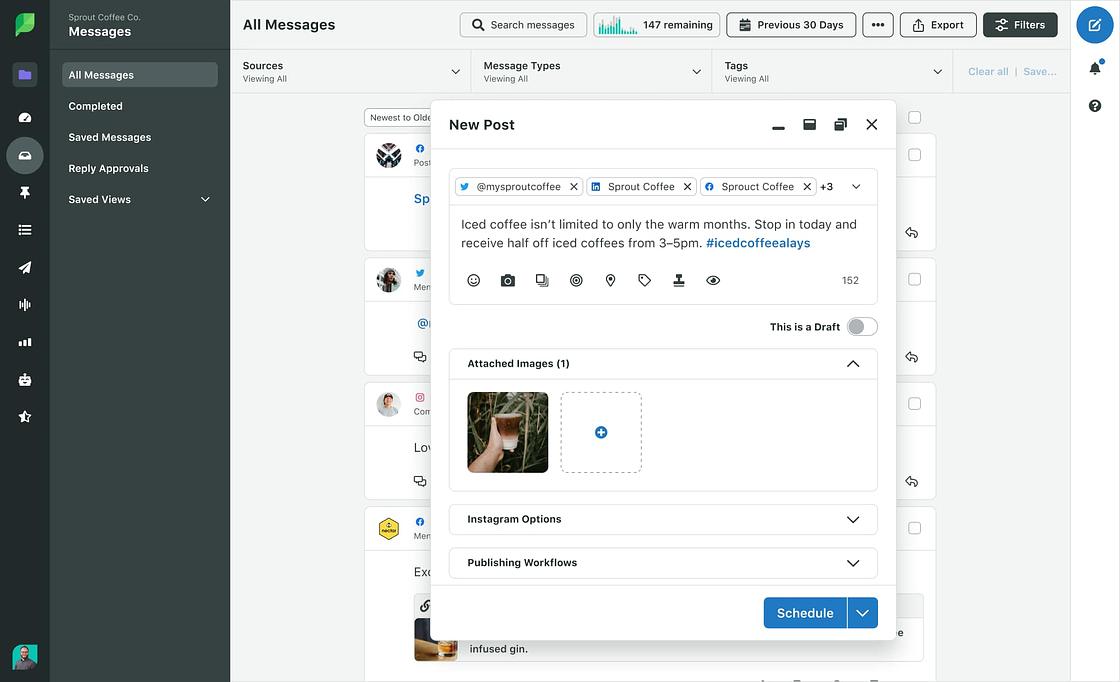
Publishing and scheduling features automate and complement existing processes so your team gets out of the weeds and into the bigger picture.
Listen to the market
Impactful content starts with knowing your audience, not guessing at them. Social listening goes beyond tracking brand mentions. It means analyzing audience conversations, industry trends and competitor strategies to surface what your audience wants before they ask for it.
Social listening tools uncover customer pain points, shifting preferences and emerging opportunities fast. This intelligence lets you refine your messaging, sharpen product positioning and identify gaps in the market before the window closes.
Sprout’s Listening tool processes conversations across X (formerly known as Twitter), Facebook, Instagram, LinkedIn, Reddit, YouTube and more—surfacing sentiment trends, share of voice data and emerging topics in real time. The AI-powered Query Builder lets you filter by keyword, topic or theme so you see only the signals that matter to your goals.
Use automation and AI
AI transforms social media management from a reactive grind into a proactive strategy engine. With the right tools, your team automates repetitive tasks, streamlines reporting and makes faster, better-informed decisions. And according to the Index™, 97% of marketing leaders say it’s crucial their teams know how to use AI in their daily work.
AI-powered social media management delivers measurable advantages across your workflow:
- Optimal scheduling: Post at the times proven to drive maximum engagement for your specific audience.
- Sentiment analysis: Monitor brand health in real time and respond to shifts before they escalate.
- Content ideation: Generate ideas grounded in trending topics and audience behavior.
- Scalable customer care: Handle high volumes of interactions with AI-assisted responses that stay on-brand.
- Automated analytics: Free your team from manual reporting so they focus on strategy and creative work.
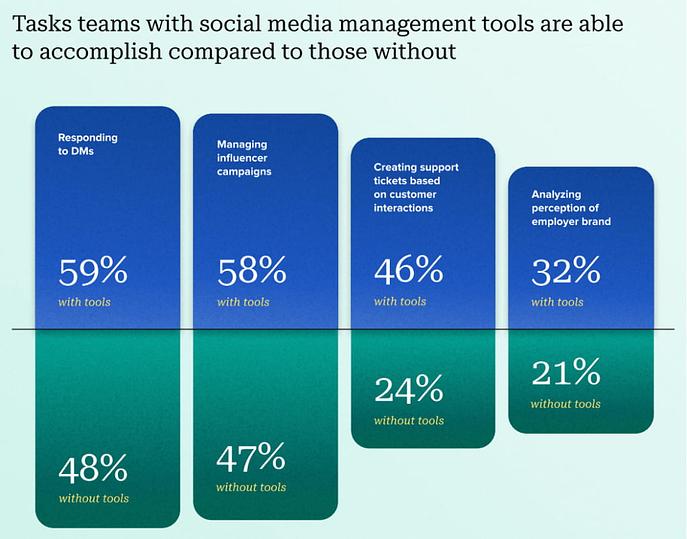
According to the 2025 Impact of Social Media Report, 58% of expert teams rely on social media management tools to measure the business impact of social—proof that the right technology directly elevates your team’s strategic impact.
Use social data to prove ROI
Social data is your most direct line to proving the business value of your work. In a budget-conscious environment, demonstrating social ROI is what secures continued investment in a channel that now sits at the center of brand growth.
The challenge is that social teams and leaders measure success differently. According to the 2025 Sprout Social Index™, leaders track success through metrics like overall engagement, audience growth, social interactions and share of voice, while social teams often focus on production efficiency and cross-team data usage.
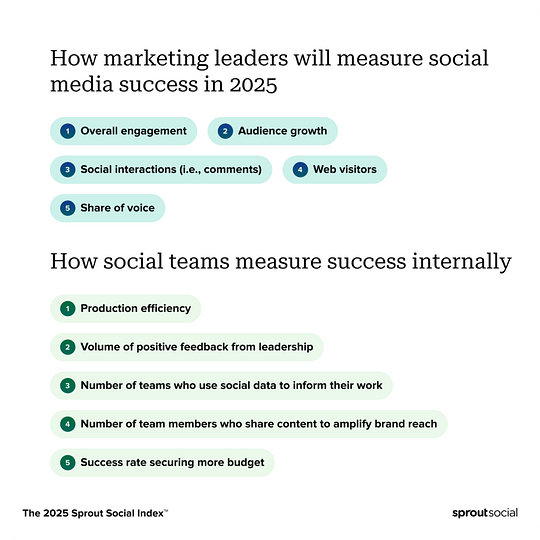
Align your reporting to the metrics leaders care about. Presentation-ready reports—like those available through Sprout’s Premium Analytics—connect your social efforts directly to business impact, making the case for future investment impossible to ignore.
Social media planning and content creation
Effective social media management starts with a content strategy rooted in audience intelligence, not trend-chasing. According to the 2025 Sprout Social Index™, 93% of consumers want brands to combat misinformation and 81% say social media compels them to make spontaneous purchases multiple times per year or more. The brands winning on social are the ones who know exactly what their audience wants before they ask for it.
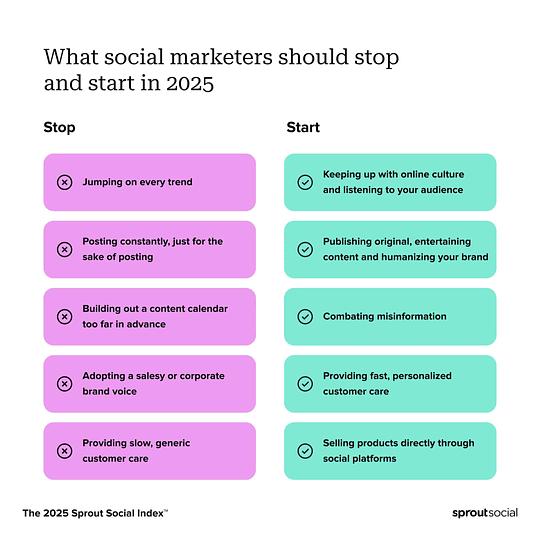
Social listening is the engine behind smarter content planning. It surfaces the trends that matter to your specific audience, including funny content, educational posts, community-building moments or tips and tricks, so you build a strategy around real signals, not assumptions. When you know what resonates, your content calendar becomes a precision tool, not a guessing game.
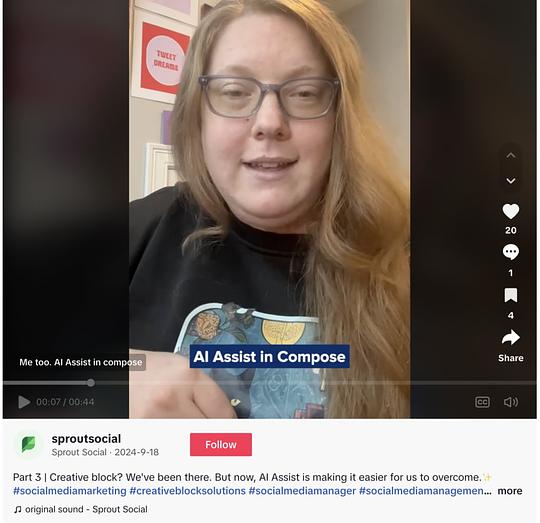
Cross-posting across social media platforms extends your reach, but generic content gets ignored. Sprout Social’s Compose tool lets you tailor each post to network-specific features and hashtags, while Enhance by AI Assist sharpens your copy and breaks through creative block—as shown in the video below.
Social media customer service
Social customer care is now a direct driver of revenue and retention. According to the 2025 Sprout Social Index™, 73% of social media users will buy from a competitor if a brand doesn’t respond on social, and nearly three-quarters expect a response within 24 hours.
To meet these expectations, social teams must move from reactive to proactive. Build a customer care approach that covers the full journey:
- Self-service tools like FAQs and a help center
- Educational social media content about your products and services
- Consistent engagement with customers throughout the buyer journey
- Fast, direct responses to complaints, concerns and questions on social
Customer care sits at the intersection of marketing and customer service. Give your social team the tools and authority to act, and you’ll build the brand loyalty that keeps customers from ever looking elsewhere.
Influencer marketing
Influencer marketing is now a core pillar of social media management—not an optional add-on. Brands that build authentic creator partnerships drive stronger community trust, reach new audiences and generate measurable business impact.
Finding the right influencers, defining success metrics and managing campaigns end-to-end are non-negotiable skills for social teams in 2026 and beyond. The brands winning on social treat influencer strategy with the same rigor as paid media.
To build an effective influencer program, your strategy needs to address:
- Creator discovery: Identify influencers whose content topics align with your brand—not just their follower count.
- Brand fit and safety: Vet partners for topical relevance and brand alignment before activating campaigns.
- Campaign management: Streamline outreach, approvals and reporting in one centralized workflow.
- ROI measurement: Connect influencer performance to real business outcomes, from reach to revenue.
Download our influencer marketing toolkit to build your strategy and plan your budget—whether you’re launching your first program or scaling an existing one.
Social media community management
Community management transforms passive followers into active brand advocates, and the brands that do it well build audiences that grow themselves. Oatly’s TikTok presence is a masterclass in this: the food company joined the platform in October 2022 and earned over 600,000 followers and 8.5 million likes in just six months.
Oatly uses TikTok comments to showcase their brand voice and respond to organic conversations. When comedian Simon David made a funny video about Oatly’s theme song, the brand responded quickly in the comments—earning over 20,000 likes, nearly a third of all likes on the video.

Not every post needs to be product-focused. Non-promotional conversations give your social team direct insight into what your audience cares about, and that intelligence shapes smarter content, better campaigns and stronger brand loyalty.
Building an active social community takes a deliberate, phased approach. Whether you’re activating Facebook Groups, Instagram broadcast channels or TikTok comments, start with an invite-only or beta program for your most loyal customers. Once you’ve refined your strategy, expand to a broader audience with confidence.
Paid social media ads
Organic and paid social media work best together, not in competition. Your organic efforts build long-term relationships with followers, while your social media advertising strategy reaches new audiences fast through precise targeting.
Managing both within the same platform keeps your brand consistent and your budget accountable. Sprout Social supports in-platform paid social promotion and reporting, so you track performance, adjust spend and prove ROI—all without switching tools.
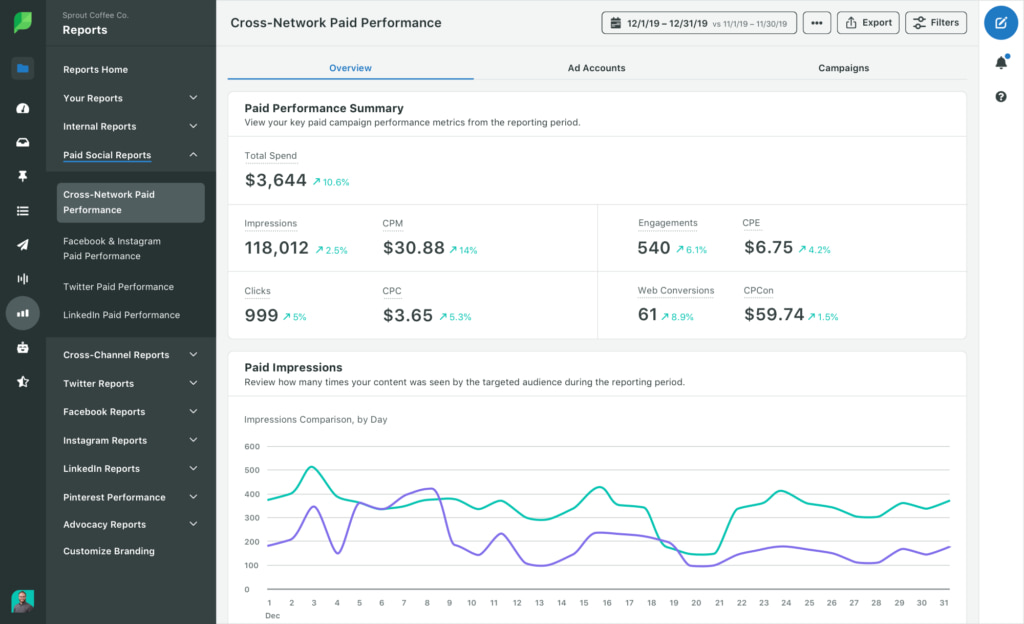
When your organic and paid social media efforts share a single workflow, you stop guessing and start optimizing. That’s where social media management turns spend into measurable business impact.
Social media management and scheduling tools
Native publishing tools can’t keep pace with the demands of a modern social media strategy. Between publishing content, responding to consumers and managing paid initiatives, social teams need dedicated social media management tools to stay competitive and sane.
Our Social Media Productivity Report found that marketers with social media management tools accomplished more strategic work, including social listening for competitive analysis (47%) and audience research (43%).
Sprout Social gives you a single platform to manage every social account, with capabilities that drive real business results:
- Optimized reach: Post at the exact times your audience is most active for maximum performance
- Faster response times: Consolidate all inbound messages into one inbox so nothing slips through
- Holistic analytics: Get a complete view of your social strategy’s performance across every network
- Time savings through automation: Schedule posts, manage multiple accounts from one dashboard and eliminate redundant logins
- Streamlined collaboration: Use task assignments, editorial calendars and approval workflows to accelerate content creation
Adopting Sprout Social enriches your entire marketing tech stack, making it easier to quantify social’s impact across your organization.
Social media calendar and scheduling
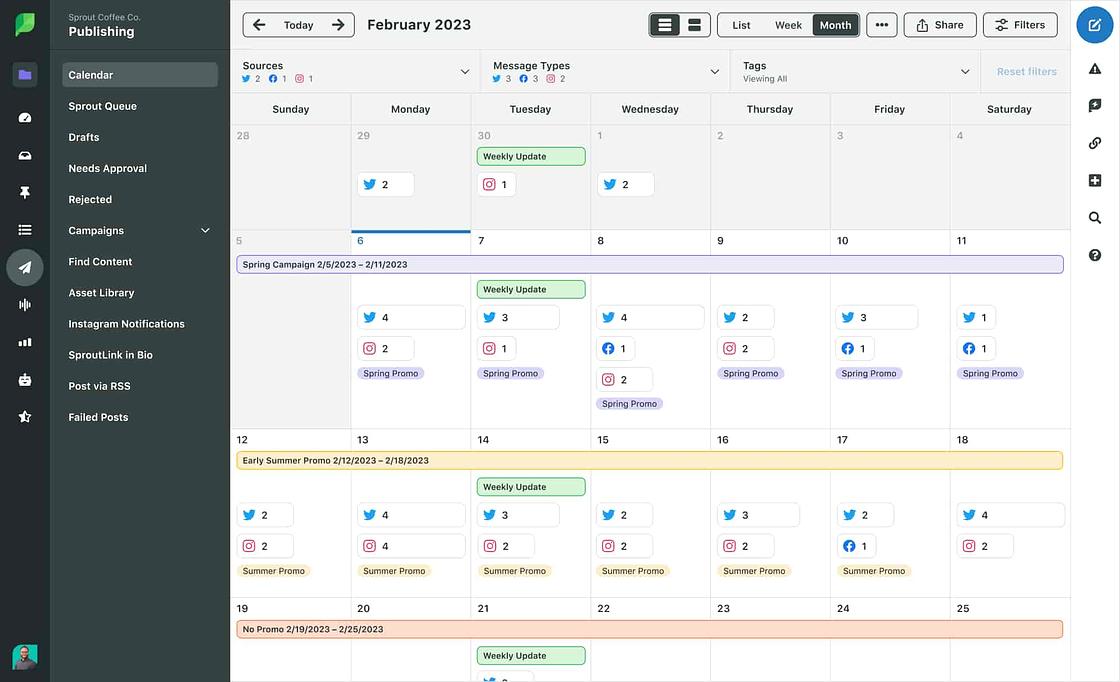
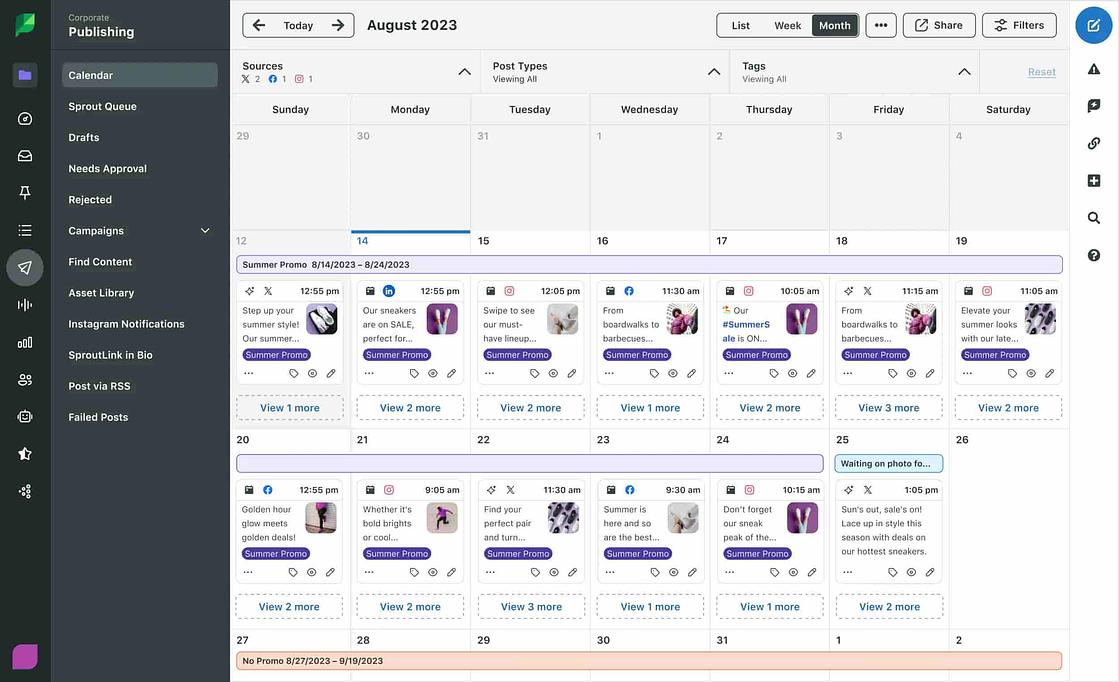
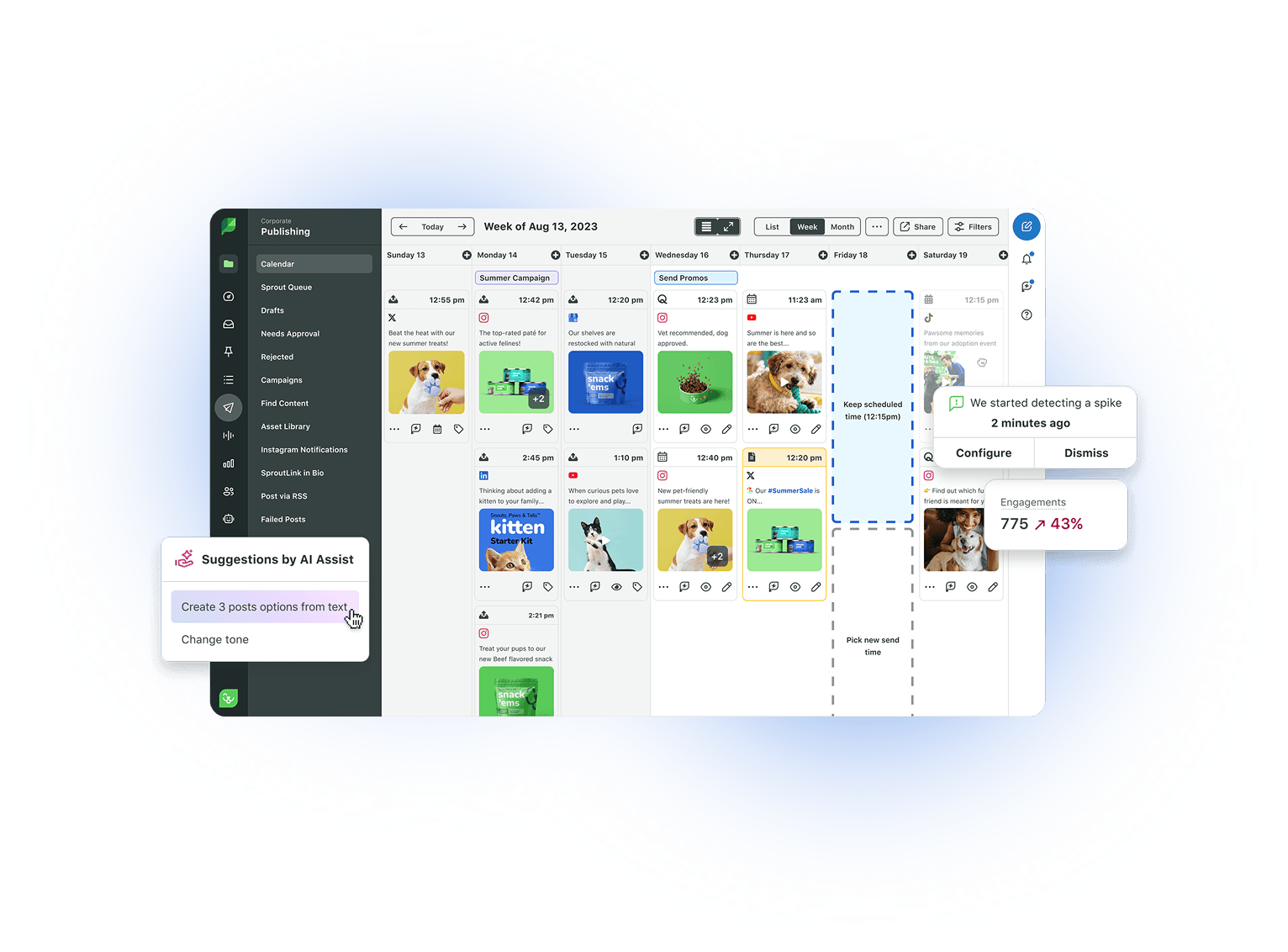
Your social media content strategy defines the themes that drive your publishing schedule. Your social media content calendar shows exactly what you’re posting and when, across every platform—giving you the bird’s-eye view you need to confirm your content mix aligns with business goals.
Sprout Social’s collaborative scheduling tool supports queueing, multimedia scheduling, advanced scheduling and multi-profile publishing. Custom Post Variables let you create a single post with unique URLs, locations and website links for each of your social profiles.
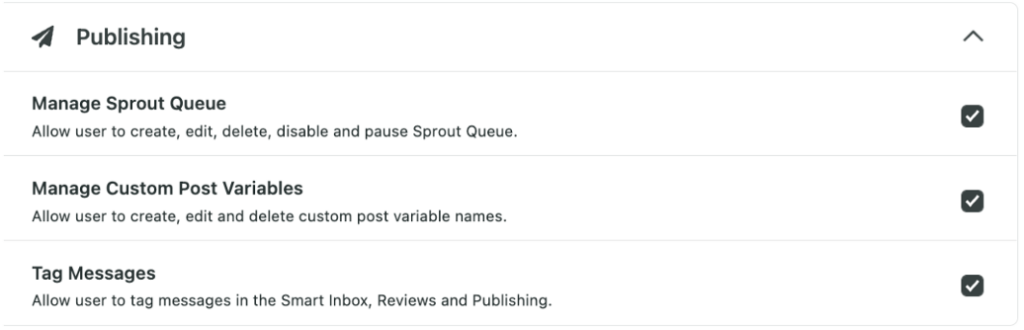
Sprout Social’s patented ViralPost® technology calculates your best times to post and surfaces them for automated or manual publishing—so every post reaches your audience at peak engagement.
Social media inbox
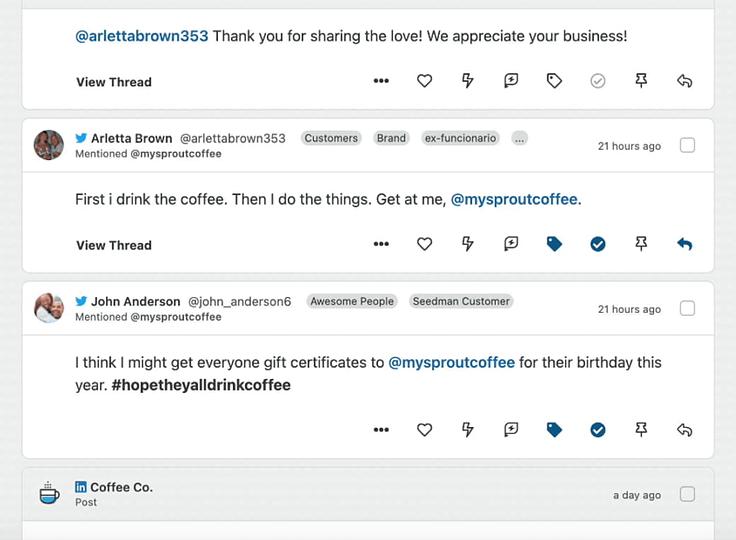
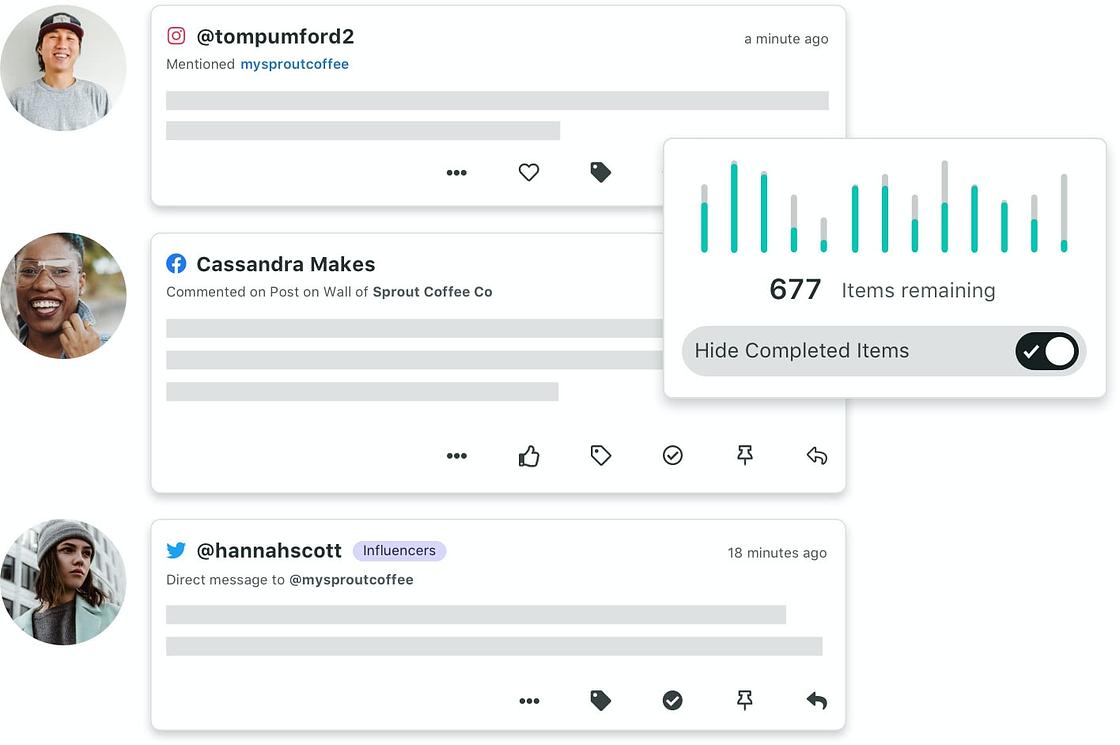
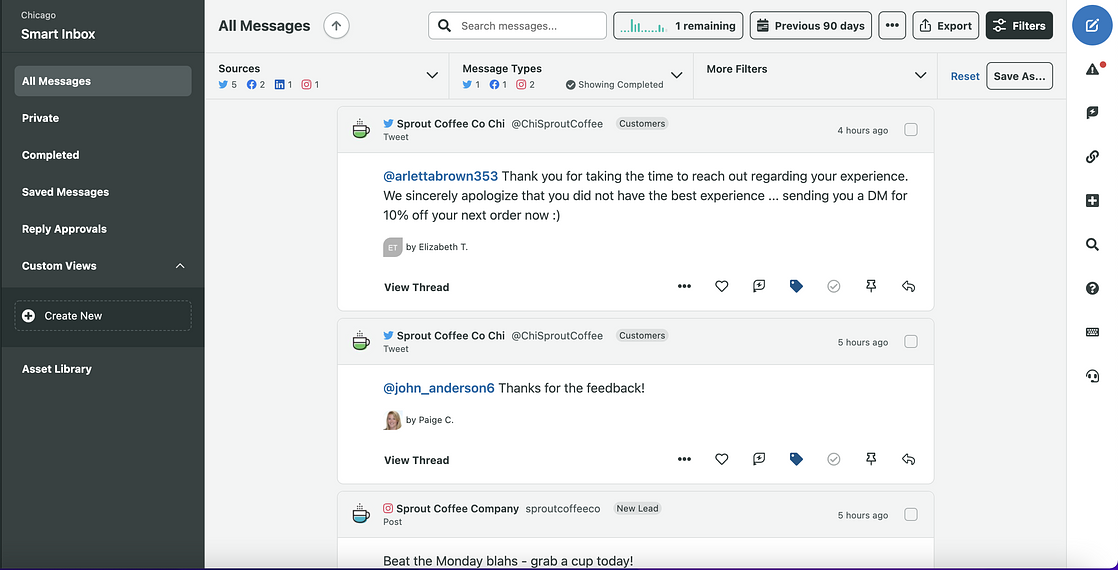
Sprout Social’s Smart Inbox centralizes messages from every social account in one place, eliminating the chaos of managing hundreds of conversations across separate platforms. Use Split Plane Mode to view inboxes side-by-side or switch to Conversation View to group private messages into a single thread.
The Smart Inbox’s Tagging capabilities let you filter messages by theme, topic, content type, audience type or campaign—keeping your inbox manageable and your pulse on customer conversations sharp.
Social media analytics
Social media analytics reveal how your brand and campaigns are performing—so you increase share of voice, optimize engagement and improve conversion rates with confidence. With Sprout Social’s analytics tools, you get a competitive view of your performance across every network, from Facebook and LinkedIn engagements to Instagram follower growth, all surfaced in custom reports through Premium Analytics.
Sprout Social’s templated and custom social media reports organize and present data visualizations that prove the impact of your social efforts to any stakeholder—no manual formatting required.
Social listening
Sprout Social’s advanced Social Listening tool delivers data on customer sentiment, campaign performance, share of voice and industry influencers—cutting through thousands of social conversations to surface what matters to your goals. The integrated, AI-driven Query Builder lets you include or exclude keywords and set up Themes to focus your listening data on the insights that drive action.
Sprout Social’s Analyze by AI Assist tracks important keywords, hashtags and mentions trending in your Listening Topics—turning raw conversation data into well-defined strategic direction.

Watch this short video to see how to set up Themes.

To see Sprout Social’s analytics, listening and customer care in action, sign up for a demo.
Reputation management
Reputation management is essential for business success, even if it’s not a core social media role. Online reviews drive consumer decisions, with many buyers researching businesses directly on networks like Instagram and TikTok.
A proactive approach to reputation management strengthens brand trust, improves customer relationships and drives business growth. Consider these key tips to build a strong brand reputation.
- Ask for reviews strategically: Request reviews from satisfied customers and make the process seamless.
- Engage with feedback: Respond to positive and negative reviews to build trust and show responsiveness.
- Monitor brand mentions: Use social listening tools to track untagged conversations and sentiment trends.
How to manage social media with Sprout Social
Sprout brings publishing, engagement, analytics and listening into one centralized platform, so you spend less time switching between networks and more time driving results that matter to leadership.
Sign up with your business email and get started step-by-step with the capabilities included in your free 30-day trial.
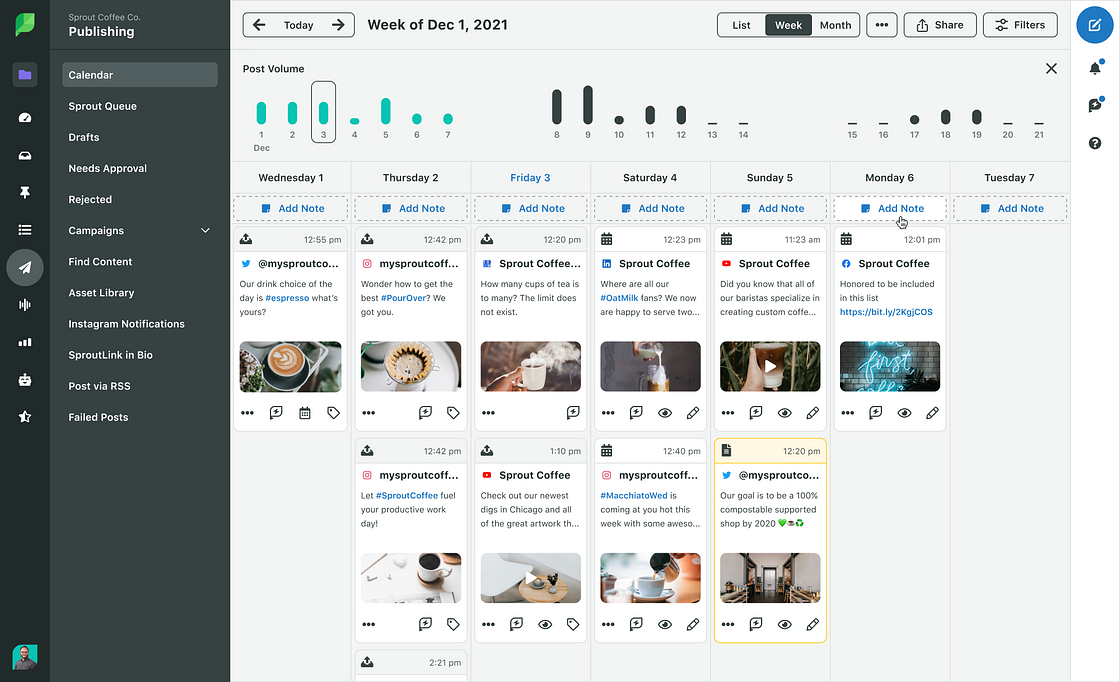
Plan and publish social media content faster
Sprout’s publishing tools eliminate messy spreadsheets and siloed workflows, giving you one place to plan campaigns, manage assets and post across every network.
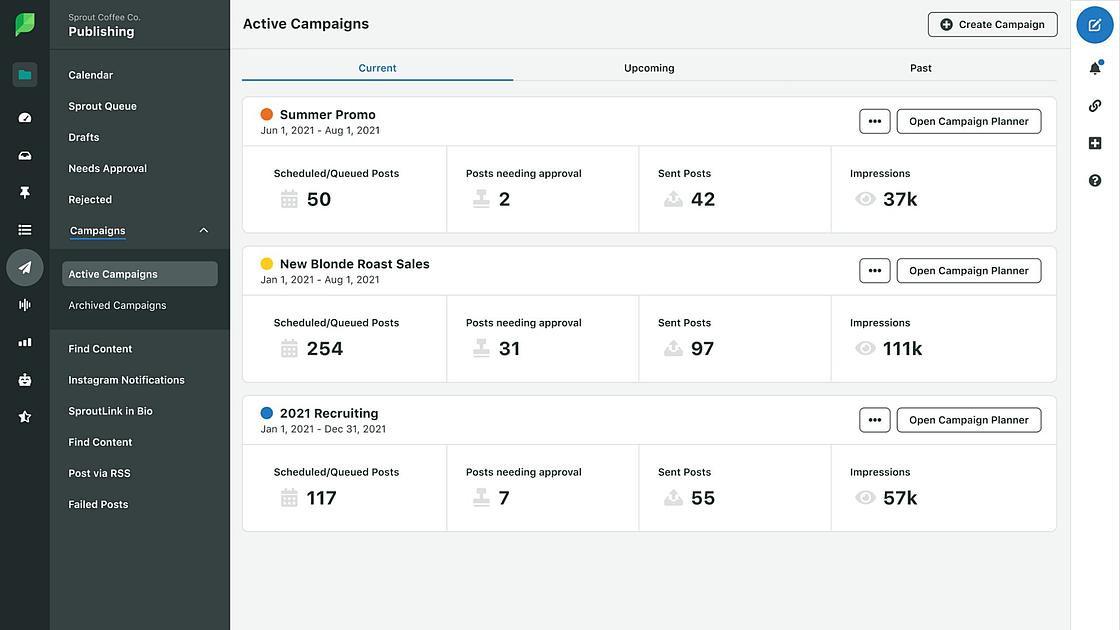
From the Publishing dashboard, open Campaign Planner to map content around launches, events or seasonal themes:
- Add internal notes and labels to keep cross-functional teams aligned.
- Visually group posts by campaign to keep your calendar organized.
- Set publishing objectives to track success against goals.
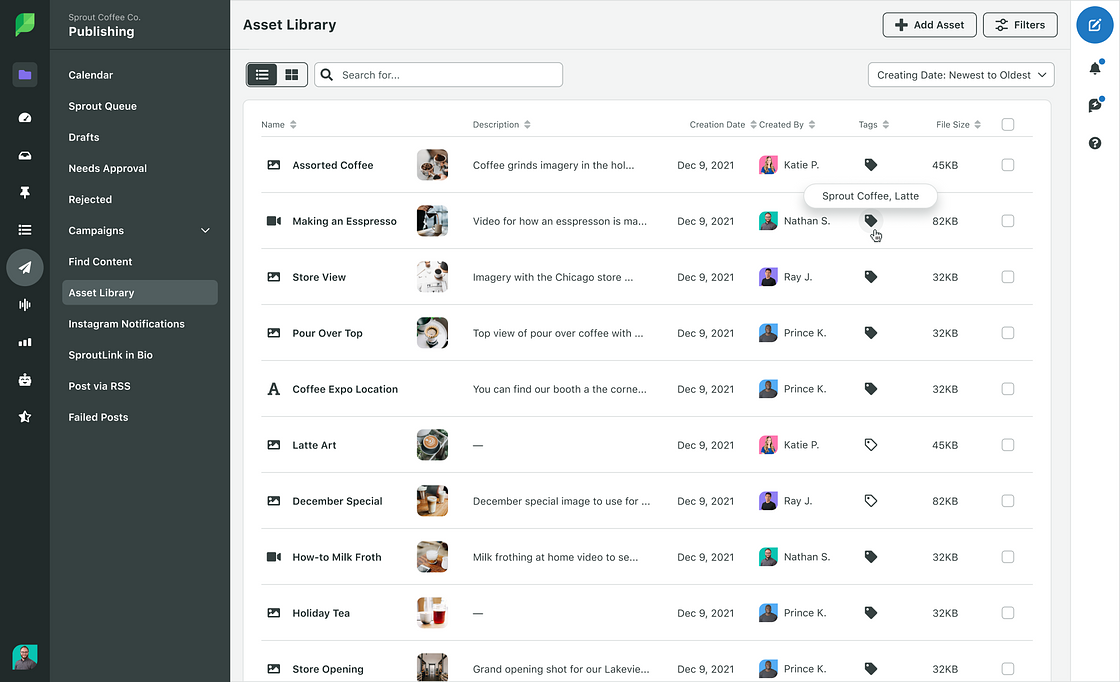
On Professional and Advanced plans, the Asset Library is your central hub for all preapproved images, videos, copy and templates. Create assets directly in Sprout Social or import them from Canva, Bynder, Adobe Experience Manager, Dropbox or Google Drive.
- Organize by campaign or content type (for example, evergreen or event-based).
- Drag and drop assets into posts while drafting.
In the Compose window, create a post and customize it for each social media account:
- Schedule using ViralPost®, which automatically selects the best send times for engagement.
- Preview your post for each network before scheduling.
- Apply tags to keep posts trackable by campaign or goal.

Sprout lets you assign publishing permissions to team members and build multi-step approval workflows, so only publish-ready content goes live, whether you’re running a lean team or operating in a regulated industry.
More Resources
Create social media content that resonates with help from AI
Sprout’s AI tools accelerate content creation—from drafting captions to generating content ideas and refining posts for clarity and engagement.
Start a new post from the Publishing tab and Sprout suggests:
- Relevant hashtags based on platform and topic
- On-topic content ideas to complete or rewrite your post
- Improvements to increase social media engagement across platforms
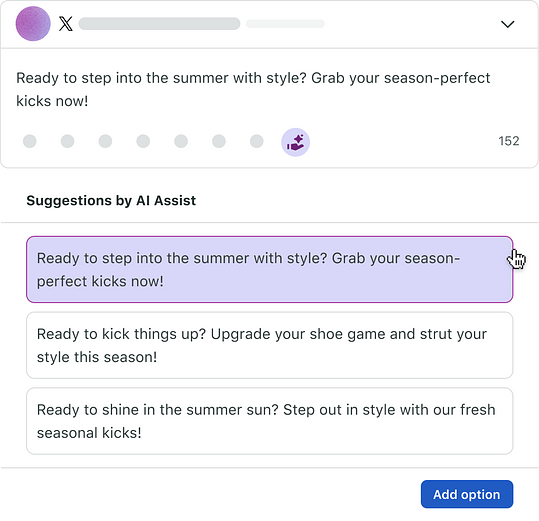
Thanks to Sprout’s integrations with OpenAI, AI Assist delivers smart rewrites that improve tone, structure and clarity:
- Choose tone options like friendly, professional or witty.
- Enhance for readability or engagement.
- Generate alt text suggestions for image-focused posts.
- Accept or modify the suggested version before posting.

Collaborate and approve with ease
Sprout’s collaboration tools give marketing teams one place to manage messages, assign tasks and approve content, so no more forgotten DMs or comments slip through the cracks.
Sprout’s Smart Inbox (available with a free trial) unifies all your messages into a single view:
- View DMs, mentions and comments from multiple accounts side by side.
- Use Collision Detection to prevent multiple replies to one message.
- Apply custom tags and filters to triage messages by urgency, topic or team.
- Assign messages to the right teammate for follow-up.
With Advanced and Enterprise plans, build custom approval workflows so nothing gets published without the right eyes on it, and assign specific reviewers based on team roles, content type or social media account.
The Shared Calendar keeps every stakeholder aligned, from senior managers to junior team members:
- See all scheduled posts in one place.
- Add internal notes, deadlines or review tags.
- Shift or reschedule content as priorities evolve.
Prewritten, preapproved replies cut response time and keep your brand voice consistent across every customer interaction:
- Apply them to FAQs, support responses or brand messaging.
- Empower team members to handle customer interactions confidently.
- Customize replies before sending to keep conversations personable.
More Resources
Report performance with confidence
Sprout’s reporting tools turn social data into well-defined, visual reports your leadership acts on, with no spreadsheets required. According to the 2025 Sprout Social Index™, 73% of social media users expect brands to respond within 24 hours and the right reporting infrastructure proves you’re delivering on that standard.
Pull reports from X (formerly known as Twitter), Facebook, Instagram, LinkedIn and more. Combine metrics from each network to build a complete picture and highlight your best-performing content:
- Profile Performance Report: See post-level metrics across platforms.
- Engagement Report: Spot trends with likes, replies, shares and more.
- Sent Messages Report: Understand performance by content type or timing.
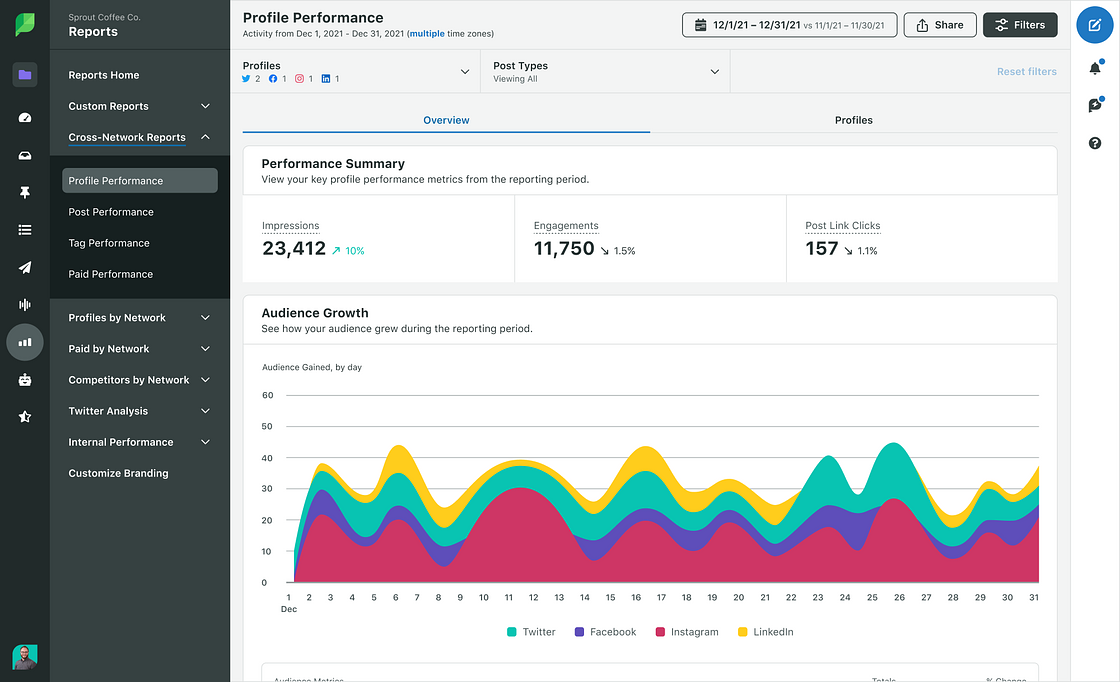
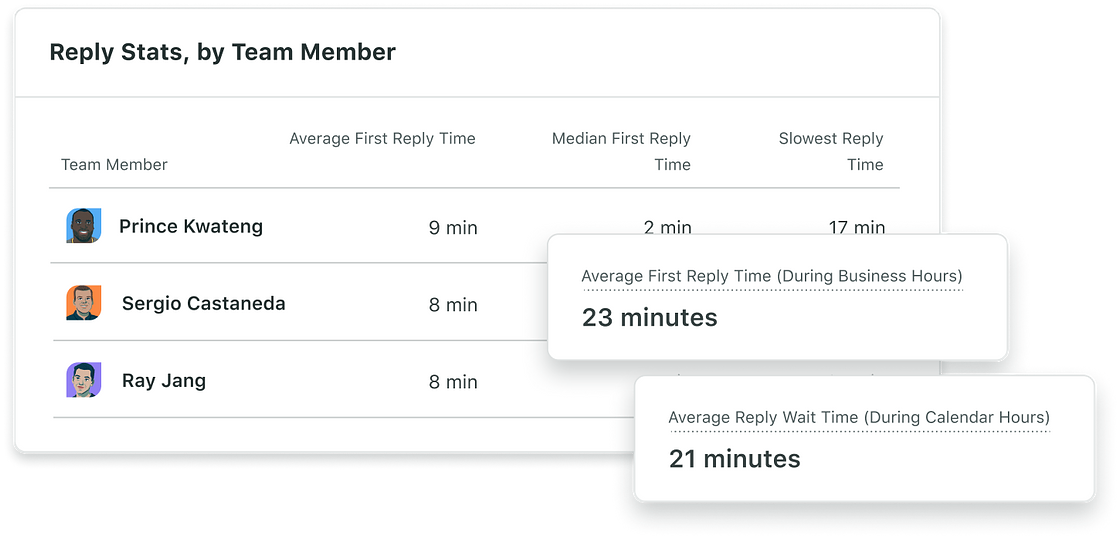
Available on Professional and Advanced plans, the Tag Report shows how different tags, like campaigns or content types, are performing against your goals.

Premium Analytics is a paid add-on to Sprout Social, offering advanced customization and a drag-and-drop report builder for teams that need deeper insight and custom dashboards.
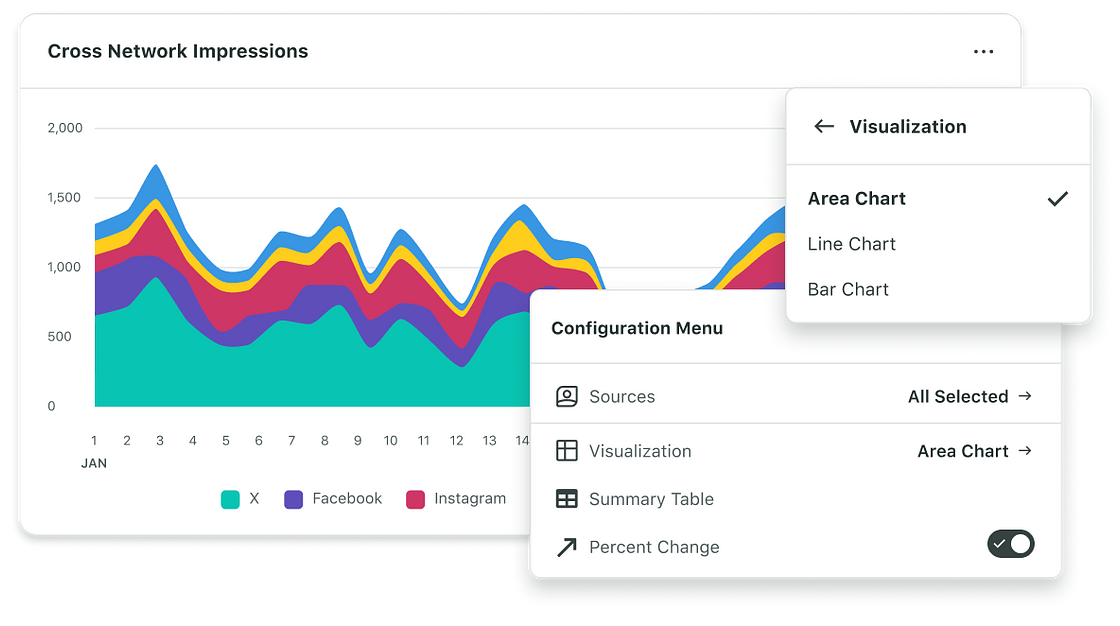
Schedule a demo to explore custom dashboards and actionable insights.
How much does social media management cost?
Social media management costs vary based on your goals, team structure and platform mix. A lean brand managing a few profiles has fundamentally different needs than an enterprise team running global campaigns, customer care and reporting across dozens of accounts.
Most brands choose from four paths: manage social in-house, hire a dedicated social media manager, work with an agency or invest in a social media management platform. Here’s a quick breakdown of what each approach typically involves:
| Approach | Best for |
|---|---|
| In-house management | Deep brand knowledge and direct control over every post and response |
| Freelancer or consultant | Flexible support without building a full team |
| Agency support | Broader execution across strategy, creative and reporting |
| Platform investment | Centralized publishing, engagement, analytics and collaboration at scale |
In-house social media managers earn between $50,000 and $80,000 a year. Freelancers charge anywhere from $500 to $5,000 per month depending on scope. Agency retainers commonly range from $1,000 to $20,000 per month. Social media management platforms vary widely, from entry-level plans to enterprise-grade solutions that scale with your team size and channel count.
Define what success looks like before you set a budget. If social needs to drive awareness, customer care and revenue, your investment must match that ambition. For a full breakdown of pricing options, see our guide on social media management costs.
Team member management
Social media teams are evolving fast. Many teams are still organized by network: one member owns TikTok, another owns Instagram and so on. That structure is shifting as consumer behavior changes and new platforms emerge.
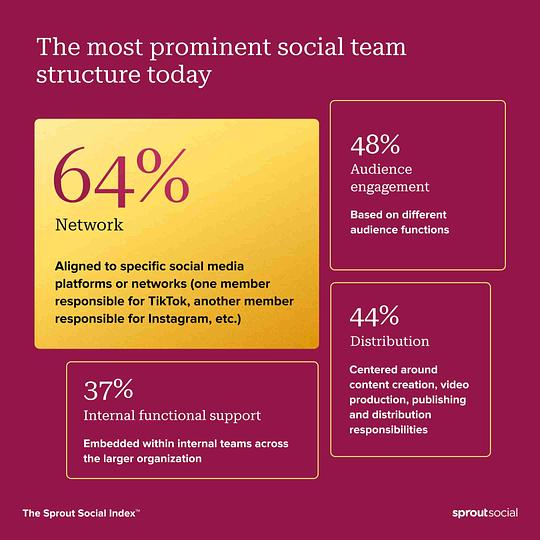
Build a team that’s ready for what’s next. These four skills separate high-performing social media teams from the rest:
- Reporting and analytics: As you move into a people management position, you must champion your team’s impact. Master storytelling with data to translate social media management results into business outcomes executives understand.
- Time management: Stand-ups, one-on-ones and project kickoffs devour calendars—especially in hybrid or remote work environments. Schedule designated focus hours and run regular meeting audits to protect your team’s deep work time.
- Feedback: Gallup data shows employees are 3.6 times more likely to strongly agree they’re motivated to do outstanding work when their manager provides daily feedback versus annual reviews. Make it a habit, not an event.
- Empathy: Social media professionals navigate brand crises, world events and constant connectivity. Don’t wait for someone to start battling social media burnout—advocate for your team and keep mental health part of every conversation.
Invest in developing these social media skills now. The teams that build this foundation today are the ones that lead their categories tomorrow.
Master the art of social media management confidently
Social media gives brands the intelligence to understand where they stand in culture and where they’re headed. A strong social media management strategy builds relevance, earns loyal audiences and positions your brand for long-term growth.
Sprout Social eliminates the manual work that holds teams back, so you focus on strategy, connection and measurable business impact. Start your free 30-day trial and see the difference firsthand.
Social Media Management FAQs
What is the importance of social media management for companies?
Social media management is important for companies because a strong online presence contributes to quality community engagement, brand reputation and customer care. A successful social media management strategy fosters brand awareness and loyalty.
What are the business functions of social media management?
Social media’s primary business function is marketing and customer service. By publishing relevant content and communicating directly with customers, brands can identify opportunities to improve their products and services. Effective social media management can also contribute to sales and improve targeted efforts like influencer marketing where a strategic approach is key to success.
Additional resources for Social Media Management
What is social media management? Everything you need to know

A complete guide to social media content batching in 2026

How to master your brand’s Facebook link in bio

8 best practices for optimizing your social media workflow

How to schedule Pinterest posts for maximum reach

How to become a social media manager in 2026

Best social media management tools for businesses in 2026


The ecommerce guide to social media conversions in the UK

Social media integration strategies your brand needs

19 social media tools for your brand in 2026

Plan, launch, report: How to create a campaign performance report



How to manage multiple Instagram accounts for one brand

What social media tasks to automate and what to personalize




Social media management services: 9 agencies your brand should check out

17 social media management tips for productivity and organization

10 tips on how to effectively manage your Instagram followers


How to manage multiple Twitter accounts easily


How to build a brand with celebrity social media management


Share