Social Media Advertising
Social media advertising: How it works and tips for success
Social media advertising is a linchpin of modern marketing.
And for brands today, paid ads are an expectation rather than an exception to the rule.
Consider how shoppers rely on apps like Instagram and TikTok for product research. Posts showing products in action are the most in-demand type of social content right now.
Brands can’t ignoremust consider how ads fit into their social media marketing strategies.
The good news? Brands aren‘‘t limited to one-size-fits-all social ads anymore.
Personalized targeting. Creative formats. Ads that don‘‘t feel like ads.
All of the above are at your fingertips. That‘s only if you‘s only if you understand how social media advertising works. That‘‘s exactly what we‘‘ll cover in this post.
What is social media advertising?
Social media advertising refers to any paid marketing campaign on social media.
Social media advertising is a paid marketing strategy where businesses promote content, products or services through targeted campaigns on platforms like Facebook, Instagram, TikTok, LinkedIn and X (formerly known as Twitter). These campaigns reach specific people based on their interests, demographics and behavior. Through ads, brands can send targeted promotions to prospects and past customers alikeaudiences based on demographics, interests, behaviors and past interactions. This allows brands to engage with prospects, customers and lookalike audiences at scale.
Chances are you consistently engage with (or at least see!) social ads on a daily basis. Below is an example that you mightyou’ll see scrolling through Instagram.

Advertising on social media has become more sophisticated in recent years. Gone are the days of boring, one-size-fits-all promotions that feel like random billboards.
Also, platformsPlatforms like Meta have automated some of the more daunting aspects of running ads in the past. This includes targeting new customers and retargeting past ones.
We‘ll bite: you’‘ll bite: you’d be hard-pressed to find someone that says they love seeing ads. That said, research says that consumers are now more willing to engage with relevant ads. The keyword here is ““relevant.““
This shows the value of creativity and thoughtful messaging when running paid campaigns.

From unboxings to interactive promotions, brands can run ads tailor-made for unique audiences. Not to mention personal and more human than a ““BUY NOW!““ ad.
Benefits of social media advertising
Marketers have to pick and choose their tactics carefully, especially when budgets are tight or you need to prove ROI. Social media advertising delivers three core benefits:
- Amplified organic performance: Transform your best organic content into high-performing paid campaigns
- Expanded audience reach: Engage with prospects who’d never see your content organically
- Actionable audience insights: Gather real-world data about what resonates with your customers
How ads support your organic presence
Organic reach is declining across major platforms—especially Facebook and Instagram—as algorithms prioritize paid content. More brands investing in ads means your organic posts reach fewer people.
View this as an opportunity to amplify your organic presence. What you do organically directly impacts and optimizes your paid campaigns.
Use your best organic content as the foundation for ad campaigns. Top-performing posts and influencer content translate into high-performing paid promotions.
Build awareness with audiences you couldn’t otherwise reach
A lack of organic reach makes engaging with new audiences an uphill battle.
The same even applies to past customers and people that follow you. After all, there’s no guarantee that even your followers will see your organic content.
This is where ads save the day. Modern social media advertising allows brands to hyper-target audiences based on specific parameters. This includes:
- Prospects and leads who’ve visited your website
- People who’ve purchased from you before
- New customers that resemble your brand’s target demographic
Quickly gather valuable information about your brand and audience
The depth of modern ad analytics is daunting for brands.
That said, what you learn from your campaigns is a goldmine of marketing data.
Even a small-scale test is eye-opening in terms of learning more about your customers. Think of ads as a scalable way to conduct market research.
Examples of social media advertising
Brands are spoiled for choice when it comes to the types of promotions they run. Below are the most effective social media ad formats and when to use them.
| Ad Format | Best For | Key Benefit | Top Platforms |
|---|---|---|---|
| Static Image | Single product promotions, sales, simple offers | Quick to create, cost-effective | Facebook, Instagram, LinkedIn |
| Video | Product demonstrations, storytelling, entertainment | Highest engagement rates | TikTok, Instagram Reels, Facebook |
| Carousel | Multiple products, step-by-step guides, features | Showcases variety in one ad | Instagram, Facebook, LinkedIn |
| Stories | Urgent promotions, immersive experiences | Full-screen, non-disruptive format | Instagram, Facebook |
| Branded Content | Influencer partnerships, authentic storytelling | Leverages creator credibility | TikTok, Instagram |
Static image ads
Static image ads are straightforward. Single-image ads often highlight a specific product, sale or offer. Many brands make these pop with bold colors and captions that create FOMO.

Video ads
As noted early, consumers want to see products in action.
Video ads balance entertainment and education when it comes to your products. Bonus points if your videos feature real-life customers or creators.
If nothing else types of ads serve as a natural hook and grab the attention of serial scrollers. The fact that Reels and TikToks are so popular right now reflects the effectiveness of video ads.

Carousel ads
It’s well-documented that Carousel content performs well organically on Instagram. Slideshows provide an opportunity to show off multiple products from multiple angles. This provides shoppers with a comprehensive view of what you’re offering. With Carousels, a single ad appeals to different types of customers at the same time.

Stories ads
Serving ads without interrupting customers is a plus. The key is to immediately hook viewers from the first frame to pique their interest. Bold colors and headlines plus a video format do the trick.

Branded content ads (AKA Spark ads on TikTok)
The common thread between most of these social advertising examples?
Featuring real people makes them stand out. These types of ads resemble organic content at a glance and that makes them so powerful.

Branded content ads allow you to take posts from creators on Instagram or TikTok and promote them as ads. Doing so should be on the radar for any brand that already invests in influencer marketing.
How social media advertising works
There are a lot of moving pieces involved in any given ad campaign. Below is a high-level overview of the steps required to get an ad up and running.
Bidding and targeting
The concept of bidding is something to understand when advertising with Meta. Without getting too into the nitty-gritty, here’s how it works:
- Meta ads work in a so-called “auction” system. Think of this as competing for prime-time ad placements on TV. Meta determines which brands get their ads served to people based on relevancy. The idea is that your ad “wins” when it’s set to serve people who’d be most likely to engage with them.
- You set a timeline and budget for your ad campaign. With a lifetime budget, Meta will determine the optimal way to serve your ads until your budget is spent. With daily ad budgets, you set a limit on how much you’re willing to spend on individual ad sets per day.
- You set up ad targeting to determine who your ads will reach. For example, you set up ads to reach new customers that resemble your current customers. You can also target audiences based on customer lists, website visits and more.

How you define your audience is up to you, but Meta does a lot of hand-holding to walk you through the process.
Goals and objectives
Pop quiz: why do you want to invest in social media advertising in the first place?
This isn’t a trick question! Big-picture goals support defining specific objectives to optimize your campaign performance.
For example, are you trying to build awareness? Hype up a launch? Earn more traffic? All of the above are fair game in terms of goals. Social platforms will tailor your ad targeting and setup based on your goals via campaign objectives.
Here’s a snapshot of the campaign objectives available on Facebook and Instagram:
- Sales
- Leads (lead generation)
- Engagement
- Traffic
- Awareness
- App promotion
Meanwhile, here are the ad objectives on TikTok.
- Awareness (reach)
- Consideration (traffic, views, community interactions)
- Conversion (product sales, website conversions, lead generation, app promotion)
Once you define your elements, you’re responsible for filling in the blanks to determine what your ads will look like.
Creatives
Piggybacking on the point above, your ad creatives are the “meat” of your campaigns. In other words, what people are going to get served.
When we talk about the many moving pieces of a campaign, creatives are make-or-break. Consider the anatomy of any given social ad including:
- Messaging and copy
- Calls-to-action
- Format (think: photo versus video)
- Color scheme
- Audio
- Discounts and offer amount
Some brands run variations of the same ad with different creatives.

Brands do this for testing purposes and to reach multiple audiences with the same ad.
Social media advertising costs by platform
Understanding social media advertising costs in 2025 supports effective budgeting and realistic expectations. Costs vary significantly based on your industry, audience targeting and the quality of your ads.
Factors that influence social media advertising costs
Several variables determine how much you pay for each result. Competition plays a major role. Advertising during peak seasons like the holidays requires a higher budget. Your audience targeting specificity also impacts cost, as reaching highly specific niches often commands a premium.
Ad quality and relevance scores matter. Platforms reward engaging content with lower costs. If your audience engages with your ads, the platform serves them more frequently for less money.
Cost breakdown by major platform
Advertising costs vary significantly across platforms. Here’s what to expect in 2025:
| Platform | Minimum Daily Budget | Average CPC Range | Best For | Cost Drivers |
|---|---|---|---|---|
| Meta (Facebook/Instagram) | $1-5/day | $0.50-$2.00 | B2C, broad audiences | Objective type, audience size, competition |
| TikTok | $20/day | $0.50-$1.00 | Gen Z, video-first brands | Creative quality, engagement rate |
| $10/day | $5.00-$8.00 | B2B, professional services | Job title targeting, industry specificity | |
| X (formerly known as Twitter) | No minimum | $0.50-$2.00 | Real-time engagement, news | Trending topics, conversation relevance |
| No minimum | $0.10-$1.50 | E-commerce, visual products | Shopping intent, seasonal trends |
Budget recommendations by business size
Small businesses should focus on testing. Allocate a modest daily budget to identify winning creatives and audiences before scaling. This prevents wasted spend on ineffective campaigns.
Mid-market and enterprise brands typically allocate a significant portion of their total marketing budget to social. These organizations use data to shift budget dynamically between platforms based on performance. Using a tool like Sprout Social supports tracking cost per result across all channels to optimize this allocation.
How to measure social media advertising success
Running ads without tracking performance is a fast way to drain your budget. You need to move beyond vanity metrics and focus on data that proves business impact.
Key metrics by campaign objective
Success looks different for every campaign. Track these metrics based on your goals:
- Awareness campaigns: Impressions, reach and brand lift show how many people see and recall your brand
- Consideration campaigns: Engagement, clicks and video views indicate your audience finds content relevant enough to engage with
- Conversion campaigns: Purchases, leads and cost per acquisition directly correlate to your bottom line
Calculating return on investment
Calculate your Return on Ad Spend (ROAS) using this formula: (Revenue from Ads ÷ Ad Spend) × 100. A ROAS above 100% means you’re generating more revenue than you’re spending. For example, a 400% ROAS means you earn $4 for every $1 spent on ads.
Don’t forget to consider customer lifetime value. Sometimes a higher acquisition cost is acceptable if the customer generates significant revenue over time.
Using analytics tools to track ad performance
Platform-native analytics only tell half the story. They show you what happened on their specific network but fail to provide a holistic view of your brand’s performance. You need a unified solution to see the big picture.
Sprout Social brings your organic and paid data together. The Post Performance Report allows you to track paid content alongside organic posts, giving you a comprehensive view of what resonates with your audience. You identify high-performing organic content and confidently put ad spend behind it.
Cross-Channel Reporting enables you to compare ad performance across Meta, LinkedIn, TikTok and X in a single view. This supports identifying which platform delivers the best ROI without toggling between multiple tabs.
For executive updates, the Custom Report Builder lets you create presentation-ready dashboards that combine organic and paid metrics. Tell a compelling story about your social strategy’s total business impact.
Reporting frequency and stakeholder communication
Monitor your campaigns daily to catch issues early, but analyze performance weekly to spot trends. Create comprehensive monthly reports for stakeholders to demonstrate long-term value and justify budget requests.
How does social media advertising differ from organic content?
After tracking your advertising performance, the next step is understanding how paid and organic efforts work together in your broader social strategy.
A well-crafted social ad might looklooks exactly like an unpaid post.
Heck, sometimes you can’t even tell the difference if it weren’t for the “Sponsored”the only difference is the ‘Sponsored’ label.“
The obvious difference between paid and organic social media is the price tag. Beyond that, also consider:
- Ads aren
‘‘t tied to the whims of social media algorithms. Paid targeting and biddingcan beare complicated. That said, there‘‘s a guarantee that at least some people will see your ads. This includes people that don‘‘t follow you. Contrast this with organic posts thatcouldget buried by the algorithm. - Ads contain specific calls-to-actions (
“try our demo” or “shop now”“try our demo” or “shop now”). They likewise lead to specific landing pages attached to your ads. - Organic social media is ongoing, ads are time-sensitive. Some brands cycle through ad campaigns on a consistent basis. Still, social media advertising is contingent on your business initiatives and budget. On the flip side, brands must keep up their organic presence whether or not they
‘‘re running ads. Remember that a successful strategy often involves a blend of both organic and paid social media.
Tips for social media advertising
To wrap things up, let‘‘s review some quick tips for brands considering ad campaigns on social media.
Be ready to experiment with different campaigns
Knocking your first set of social ads out of the park is a tall order.
Thankfully, a little bit of experimenting can gogoes a long way toward optimizing your campaigns. Rather than go head-first into ads, consider running small-scale tests first.
From formats to copy and beyond, there are so many variables that go into any given ad set. Be prepared to make a few tweaks before finding what works.
Use a social media marketing tool to make informed decisions
If you‘‘re stuck in terms of what you should run as an ad, look no further than your organic presence.
For example, yourYour analytics and past engagement can serve as a treasure trove of insight for yourinform smarter ad campaigns. This is especially true if you’re using a social media management tool like Sprout Social.Sprout Social streamlines this process by:
- Identifying top performers: Pinpoint your highest-engaging organic content to promote as ads
- Uncovering audience insights: Use Social Listening to discover trending topics and conversations
- Informing targeting strategy: Turn audience behavior data into precise ad targeting parameters
- Maintaining brand consistency: Manage ad creatives and organic visuals in one Asset Library
The more granular you get with your data, the more confident decisions you can‘ll make with your ads.
Make your ads as personable as possible
We‘‘ll say it again: the more your ads resemble organic content, the better.
There‘‘s a reason why TikTok‘s mantra is “‘s mantra is “Make TikToks, not ads.““ Authentic and unfiltered ads have proven effective on TikTok. Brands can apply the same approach to Instagram, too. Creator-based ads serve as a way to make your ads instantly feel less sales-y.

Start advertising smarter with Sprout Social
The brands winning at social advertising don’t just run campaigns—they make data-driven decisions about what to promote, who to target and how to measure success.
Integrating your organic and paid strategies maximizes your budget and creates a cohesive brand experience. The right tools make it manageable.
Sprout Social gives you everything you need to coordinate organic and paid efforts, identify your best-performing content and prove ROI with unified analytics. Start a free trial or request a demo to explore how the platform simplifies social media advertising.
Hopefully you have a better idea of what’s possible with paid campaigns and you’re ready to start brainstorming your own. If you need more inspiration, check out our paid social media 101 guidePaid Social Media 101 Guide!
Reading time 8 minutes
Published on December 31, 2025
Table of Contents
Summary
- Social media advertising is crucial for modern marketing. Paid ads are now expected by brands rather than low-priority or exceptions.
- The sophistication of social media advertising allows for personalized targeting, creative formats and ads that feel authentic. This provides brands with ample opportunities to engage with their audience effectively.
- Additionally, there is an opportunity for brands to leverage apps like Instagram and TikTok for product research. With increasing reliance of shoppers on platforms like Instagram and TikTok, there are countless posts demonstrating products in action that are highly sought after.
Social media advertising is a linchpin of modern marketing.
And for brands today, paid ads are an expectation rather than an exception to the rule.
Consider how shoppers rely on apps like Instagram and TikTok for product research. Posts showing products in action are the most in-demand type of social content right now.
Brands can’t ignore how ads fit into their social media marketing strategies.
The good news? Brands aren’t limited to one-size-fits-all social ads anymore.
Personalized targeting. Creative formats. Ads that don’t feel like ads.
All of the above are at your fingertips. That’s only if you you understand how social media advertising works. That’s exactly what we’ll cover in this post.
- What is social media advertising?
- How social media advertising differs from organic content
- Benefits of social media advertising
- Examples of social media advertising
- How social media advertising works
- Tips for social media advertising
What is social media advertising?
Social media advertising refers to any paid marketing campaign on social media.
These campaigns reach specific people based on their interests, demographics and behavior. Through ads, brands can send targeted promotions to prospects and past customers alike.
Chances are you consistently engage with (or at least see!) social ads on a daily basis. Below is an example that you might see scrolling through Instagram.

Advertising on social media has become more sophisticated in recent years. Gone are the days of boring, one-size-fits-all promotions that feel like random billboards.
Also, platforms like Meta have automated some of the more daunting aspects of running ads in the past. This includes targeting new customers and retargeting past ones.
We’ll bite: you’d be hard-pressed to find someone that says they love seeing ads. That said, research says that consumers are now more willing to engage with relevant ads. The keyword here is “relevant.”
This shows the value of creativity and thoughtful messaging when running paid campaigns.

From unboxings to interactive promotions, brands can run ads tailor-made for unique audiences. Not to mention personal and more human than a “BUY NOW!” ad.
How does social media advertising differ from organic content?
A well-crafted social ad might look exactly like an unpaid post.
Heck, sometimes you can’t even tell the difference if it weren’t for the “Sponsored” label.”
The obvious difference between paid and organic social media is the price tag. Beyond that, also consider:
- Ads aren’t tied to the whims of social media algorithms. Paid targeting and bidding can be complicated. That said, there’s a guarantee that at least some people will see your ads. This includes people that don’t follow you. Contrast this with organic posts that could get buried by the algorithm.
- Ads contain specific calls-to-actions (“try our demo” or “shop now”). They likewise lead to specific landing pages attached to your ads.
- Organic social media is ongoing, ads are time-sensitive. Some brands cycle through ad campaigns on a consistent basis. Still, social media advertising is contingent on your business initiatives and budget. On the flip side, brands must keep up their organic presence whether or not they’re running ads. Remember that a successful strategy often involves a blend of both organic and paid social media.
Benefits of social media advertising
Marketers understandably have to pick and choose their tactics carefully. This is especially true when budgets are tight or you need to prove ROI. Below are some of the key reasons why ads are worthwhile for brands.
Ads help brands squeeze more out of their organic presence
If you feel like your social posts are getting less reach lately, you’re not alone.
Falling organic reach plagues most brands these days, especially on Facebook and Instagram.
Like it or not, social algorithms are giving more real estate to paid versus organic content. More brands investing in paid social means shrinking organic reach.
Brands should view this as a chance to squeeze more out of their organic social presence. What you do organically can directly impact and optimize your paid campaigns.
For example, consider using your best organic content as the basis for an ad campaign. It’s easier than ever to boost top-performing posts or run influencer content as ads, too.
Build awareness with audiences you couldn’t otherwise reach
A lack of organic reach makes engaging with new audiences an uphill battle.
The same even applies to past customers and people that follow you. After all, there’s no guarantee that even your followers will see your organic content.
This is where ads can save the day. Modern social media advertising allows brands to hyper-target audiences based on specific parameters. This includes:
- Prospects and leads who’ve visited your website
- People who’ve purchased from you before
- New potential customers that resemble your brand’s target demographic
Quickly gather valuable information about your brand and audience
The depth of modern ad analytics can be daunting for brands.
That said, what you learn from your campaigns can be a goldmine of marketing data. Ads provide a way to measure the performance of different ad creatives, offers, CTAs and more.
Data gathered from these campaigns represent real people, not hypotheticals. Even a small-scale test can be eye-opening in terms of learning more about your customers. Think of ads as a scalable way to conduct market research.
Examples of social media advertising
Brands are spoiled for choice when it comes to the types of promotions they run.
Below are some social media advertising examples that scratch the surface of what you can do.
Static image ads
Static image ads are pretty straightforward. Single-image ads often highlight a specific product, sale or offer. Many brands make these pop with bold colors and captions that create FOMO.

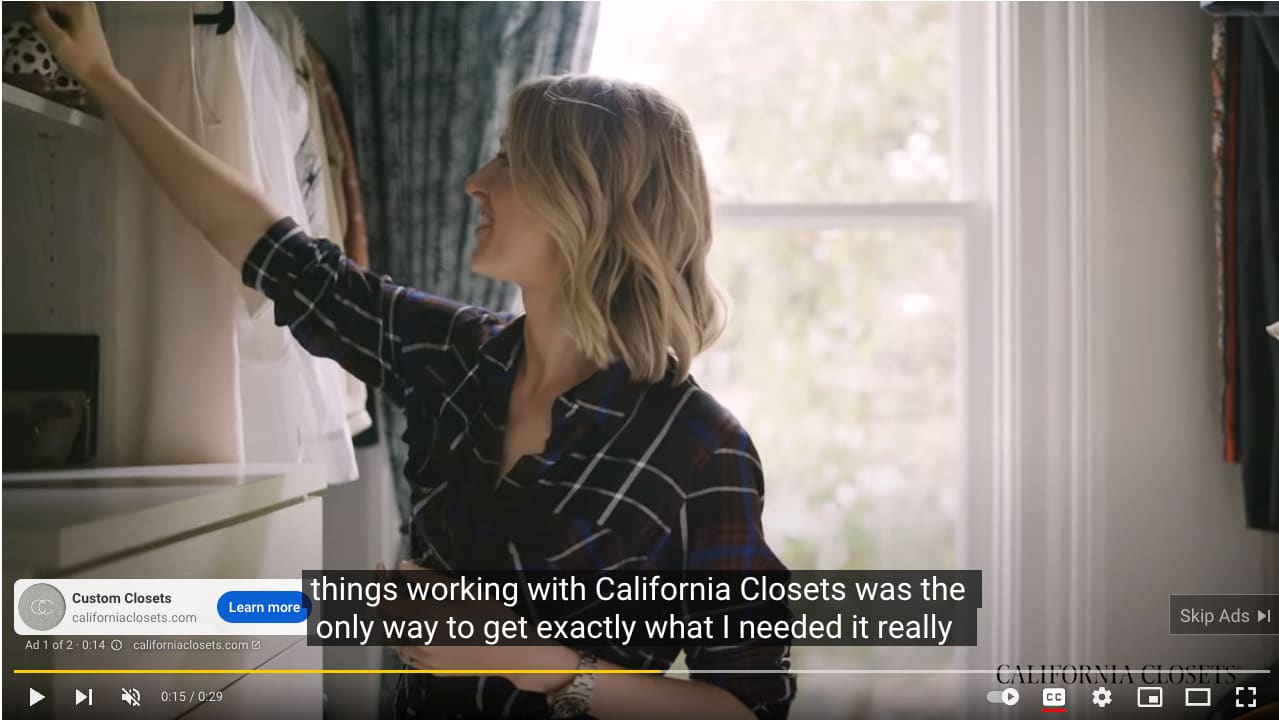
Video ads
As noted early, consumers at large really want to see products in action. Video ads can balance entertainment and education when it comes to your products. Bonus points if your videos feature real-life customers or creators.
If nothing else types of ads serve as a natural hook and grab the attention of serial scrollers. The fact that Reels and TikToks are so popular right now reflects the effectiveness of video ads.
Carousel ads
It’s well-documented that Carousel content performs well organically on Instagram. Slideshows provide an opportunity to show off multiple products from multiple angles. This provides shoppers with a complete view of what you’re offering. With Carousels, a single ad can appeal to different types of customers at the same time.

Stories ads
Anything you can do to serve ads without interrupting potential customers is a plus. That’s part of what makes ads in the Stories ads so notable. The key is to immediately hook viewers from the first frame to pique their interest. Bold colors and headlines plus a video format do the trick.

Branded content ads (AKA Spark ads on TikTok)
The common thread between most of these social advertising examples?
Featuring real people helps them stand out. These types of ads resemble organic content at a glance and that makes them so powerful.

Branded content ads allow you to take posts from creators on Instagram or TikTok and promote them as ads. Doing so should be on the radar for any brand that already invests in influencer marketing.
How social media advertising works
There are a lot of moving pieces involved in any given ad campaign. Below is a high-level overview of the steps required to get an ad up and running.
Bidding and targeting
The concept of bidding is something to understand when advertising with Meta. Without getting too into the nitty-gritty, here’s how it works:
- Meta ads work in a so-called “auction” system. You can almost think of this as competing for prime-time ad placements on TV. Meta determines which brands get their ads served to people based on relevancy. The idea is that your ad “wins” when it’s set to serve people who’d be most likely to engage with them.
- You set a timeline and budget for your ad campaign. With a lifetime budget, Meta will determine the optimal way to serve your ads until your budget is spent. With daily ad budgets, you can set a limit on how much you’re willing to spend on individual ad sets per day.
- You set up ad targeting to determine who your ads will reach. For example, you can set up ads to reach new customers that resemble your current customers. You can also target audiences based on customer lists, website visits and more.

How you define your audience is up to you but Meta can do a lot of hand-holding to walk you through the process. This applies to bidding and targeting alike.
Goals and objectives
Pop quiz: why do you want to invest in social media advertising in the first place?
This isn’t a trick question! Big-picture goals will help you define specific objectives to optimize your campaign performance.
For example, are you trying to build awareness? Hype up a launch? Earn more traffic? All of the above are fair game in terms of goals. Social platforms will tailor your ad targeting and setup based on your goals via campaign objectives.
Here’s a snapshot of the campaign objectives available on Facebook and Instagram:
- Sales
- Leads (lead generation)
- Engagement
- Traffic
- Awareness
- App promotion
Meanwhile, here are the ad objectives on TikTok.
- Awareness (reach)
- Consideration (traffic, views, community interactions)
- Conversion (product sales, website conversions, lead generation, app promotion)
Once you define your elements, you’re responsible for filling in the blanks to determine what your ads will actually look like.
Creatives
Piggybacking on the point above, your ad creatives are the “meat” of your campaigns. In other words, what people are going to get served.
When we talk about the many moving pieces of a campaign, creatives are make-or-break. Consider the anatomy of any given social ad including:
- Messaging and copy
- Calls-to-action
- Format (think: photo versus video)
- Color scheme
- Audio
- Discounts and offer amount
Some brands will actually run variations of the same ad with different creatives. This can be done for testing purposes and likewise serve as a way to reach multiple audiences with the same ad.

Tips for social media advertising
To wrap things up, let’s review some quick tips for brands considering ad campaigns on social media.
Be ready to experiment with different campaigns
Knocking your first set of social ads out of the park is a tall order.
Thankfully, a little bit of experimenting can go a long way toward optimizing your campaigns. Rather than go head-first into ads, consider running small-scale tests first.
From formats to copy and beyond, there are so many variables that go into any given ad set. Be prepared to make a few tweaks before finding what works.
Use a social media marketing tool to make informed decisions
If you’re stuck in terms of what you should run as an ad, look no further than your organic presence.
For example, your analytics and past engagement can serve as a treasure trove of insight for your ad campaigns. This is especially true if you’re using a social media management tool like Sprout Social.
Sprout makes it a cinch to identify your top-performing content and messaging to repurpose as ads. Not to mention which networks would be prime for your next campaign.

The more granular you get with your data, the more confident decisions you can make with your ads.
The fact that Sprout allows you to track your organic and paid efforts side-by-side is a nice added bonus. Doing so gives you a more holistic understanding of your social media advertising efforts.
Make your ads as personable as possible
We’ll say it again: the more your ads resemble organic content, the better.
There’s a reason why TikTok’s mantra is “Make TikToks, not ads.” Authentic and unfiltered ads have proven effective on TikTok. Brands can apply the same approach to Instagram, too. Creator-based ads serve as a way to make your ads instantly feel less sales-y.

Is social media advertising on your radar?
Social media advertising campaigns are becoming a matter of “when” rather than “if” for brands.
As organic reach is harder to come by and competition grows in the social space, paid ads are often the best way to ensure that you’re reaching your audience.
Hopefully you have a better idea of what’s possible with paid campaigns and you’re ready to start brainstorming your own. If you need more inspiration, check out our paid social media 101 guide!
Is social media advertising on your radar?Frequently asked questions about social media advertising
How much should I budget for social media advertising?
As organic reach is harder to come by and competition grows in the social space, paid ads are often the best way to ensure that you’re reaching your audienceStart with $5-20 per day to test creatives and audiences, then scale based on performance. Your optimal budget depends on your goals, industry and the platforms where your audience spends time.
What's the difference between boosting a post and creating an ad?
Boosting promotes existing organic posts with limited targeting options, while custom ads give you full control over objectives, targeting, formats and placements. Custom ads deliver better performance and ROI. Use Sprout Social to identify top organic posts, then build custom ads inspired by that content.
How long does it take to see results from social media advertising?
You’ll see initial data within 24-48 hours, but meaningful insights require 7-14 days as platform algorithms learn your audience. Run campaigns for at least 30 days to gather enough data for optimization decisions.
Do I need a large following to run social media ads?
Yes, ads reach people who don’t follow you yet through demographic and interest targeting. Running ads often grows your organic following as a secondary benefit.
Which social media platform should I advertise on first?
B2C brands should start with Meta (Facebook/Instagram) for broad reach and sophisticated targeting, while B2B brands should prioritize LinkedIn despite higher costs. Master one platform before expanding. Use cross-channel analytics to compare performance and inform your next move.
Additional resources for Social Media Advertising
Social media advertising: How it works and tips for success
Instagram advertising guide: How to run successful Instagram ads
Your step-by-step guide to TikTok affiliate marketing
YouTube affiliate marketing: Turning content into conversions
Always up-to-date list of Instagram ad sizes & specs
Always up-to-date list of Facebook ad sizes & specs
Twitter ads: The complete guide for your brand
How to Advertise on Facebook + Strategies [Complete Guide]
Paid, owned and earned media: What they are and where social fits into the mix
The digital marketer’s guide to Facebook video ads
Your guide to social media targeting via Sprout Social
12 Facebook ad examples you wish you made

Instagram ads vs Facebook ads: Which is better for your business?
How to master Facebook ad targeting & zero-in on your audience


Share