Your guide to social media targeting via Sprout Social

Written by Mary Keutelian
Published on July 7, 2026
Reading time 8 minutes
Table of Contents
The internet doesn’t need more content. It needs more relevance. Brands are publishing faster than audiences can consume, but the ones winning attention aren’t just shouting louder—they are reaching the exact right people. That’s why audience targeting is the non-negotiable core of effective social media publishing.
Paid social on Facebook, X (formerly known as Twitter) and LinkedIn offers robust targeting capabilities—demographic filters, interest categories and user-type segmentation. But audience targeting extends well beyond paid advertising.
Most social media platforms let you apply targeting or custom visibility to organic posts as well. This guide covers what audience targeting is, the types that matter most for your social media strategy, how to define your target audience and how to execute targeting across Facebook and LinkedIn—directly from Sprout Social.
What is audience targeting?
Audience targeting is the strategic practice of delivering digital content to specific segments of people based on shared traits such as demographics, interests, job roles or online behaviors. On social media, it replaces broad broadcasting with precision, using data signals to serve your message exclusively to the users most likely to engage or convert.
When content reaches the right audience, it earns attention. Attention drives action. Action drives results.
What’s the difference between a target audience and audience targeting?
| Term | What it means | How it works |
|---|---|---|
| Target audience | The specific group you want to reach | Shapes your overall strategy and messaging |
| Audience targeting | The method you use to reach them | Executes your strategy by placing content in front of the right people at the right moment |
Your target audience defines the who. Audience targeting is how you close the gap between strategy and impact.
Types of audience targeting for social media
Social media audience targeting falls into five core types, each built for a different goal. The strongest campaigns layer multiple types together to sharpen reach and drive measurable results.
- Demographic targeting: Reach people based on age, language or location. It’s the foundation of most campaigns and the starting point for defining who you’re talking to.
- Interest-based targeting: Focus on what people follow, engage with and care about. This connects your content to audiences already primed to receive it.
- Behavioral targeting: Reach people based on actions they’ve taken—past engagement, website visits or purchase signals. Behavioral data turns intent into opportunity.
- Professional targeting: Narrow in on job title, seniority, industry or company size for B2B audiences. LinkedIn makes this especially powerful for brands selling to decision-makers.
- Geographic targeting: Tailor content to cities, regions or countries when location changes the message. A campaign that resonates in one market won’t land in another.
Layering demographic, behavioral and interest-based signals together sharpens your audience targeting and drives better performance across every campaign. The brands that combine targeting types will consistently outpace those relying on a single signal.
Benefits of audience targeting on social media
Audience targeting transforms how you publish—with purpose, precision and a direct line to business impact. When you know exactly who you’re speaking to, every decision gets sharper.
- Stronger relevance: Your content matches what specific groups want to see. You stop guessing and start delivering.
- Higher engagement: The right people respond, click and share. Relevance drives action.
- Reclaimed time: Your team stops creating content for audiences who were never going to act. That time goes back to strategy.
- Clearer messaging: You tailor copy, creative and offers to each audience segment. One message no longer has to do the work of many.
- Smarter reporting: You see exactly which segments respond and where to invest next. The data tells a cleaner story.
The brands that win on social aren’t just creating more content—they’re creating the right content for the right people. Audience targeting is what makes that possible. It turns your social presence from a broadcast platform into a precision tool for business growth.
Understanding the benefits is only the first step. The real advantage comes from putting audience targeting into practice across the platforms where your audience already lives.
How to define your target audience for social media
Defining your target audience starts before you open a composer. Know who you’re trying to reach, what they care about and where they engage—because without that foundation, even the most precise audience targeting tools won’t deliver results.
Use demographic data to shape your targeting
Start with the basics: location, age range, language, industry and job seniority. These are your first filters, especially when those traits directly affect how your message lands. A campaign aimed at enterprise IT leaders in North America requires a very different setup than one targeting small business owners in Europe.
Demographic signals tell you who your audience is. They don’t tell you what your audience wants. That’s where social data comes in.
Use social analytics and listening to sharpen your audience profile
Social data fills the gaps that demographics leave behind. Data from our 2026 Social Media Content Strategy Report shows real-time audience insights are the number one resource marketers say increase the impact of their social media strategy—yet most teams haven’t tapped into audience or competitor sentiment metrics.
To build a sharp, evidence-based audience profile, analyze:
- Content performance: Which formats and topics drive the most engagement from your existing followers
- Audience language: The phrases and terminology your audience uses when discussing your category
- Community activity: The conversations and spaces where your audience already shows up
- Unanswered questions: The topics your brand is positioned to address that competitors aren’t
This transforms a generic audience definition into a precise, actionable profile. You stop guessing and start building content and targeting strategies grounded in real behavior.
Social listening is the engine that powers this kind of audience intelligence. Sprout’s Social Listening tool surfaces sentiment trends, tracks the conversations your audience is having in real time and feeds those insights directly into your targeting decisions—all from the same platform where you publish.
Accessing audience targeting from Sprout Social Compose
Sprout’s publishing tools let you schedule, queue and post messages to multiple social media platforms simultaneously while applying precise audience targeting options for each network—all from a single, centralized Compose window.
Compose centralizes your publishing workflow, saves time and maintains a consistent brand voice across networks. More importantly, it puts targeted audience delivery directly in your hands, so every message reaches the right segment of your community.
To access Audience Targeting, click the targeting icon in the lower left corner of the Compose window. The menu populates with only the networks that correspond to the profiles you’re publishing to.

Audience Targeting is available to Professional and Advanced plan users. Whether you’re managing a lean team or scaling across enterprise audiences, Sprout gives you the targeting precision to make every post count.
Facebook audience targeting
Facebook gives you more control over who sees your organic content than most social media platforms. You target posts by interests, demographics and location—so the right message reaches the right people. Sprout brings that targeting directly into your publishing workflow, eliminating the need to jump between tools.
Target your post to the right audience
When you publish through Sprout, you define your target audience before a post goes live. You’re not broadcasting one generic message to your entire following—you’re delivering tailored content to the people most likely to act on it.
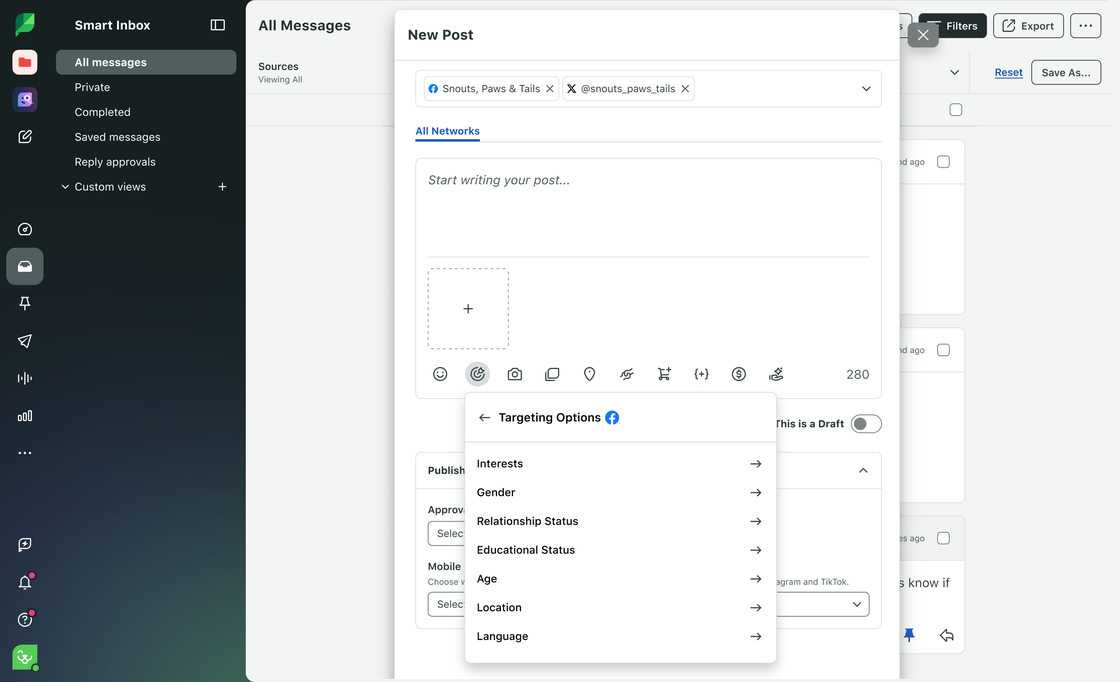
Use interest and profile-based audience targeting when your content speaks to a specific group. Here’s where precision pays off:
- A fitness brand promoting a new supplement line targets followers interested in nutrition and wellness—not casual fans who followed for workout tips.
- A software company shares a product update aimed at IT professionals, keeping it out of feeds where it won’t resonate.
- A retailer running a seasonal promotion targets shoppers by age range and purchase behavior to match the offer to the audience most likely to convert.
When your audience settings match your content, engagement increases and your message lands with the people who matter most to that campaign.
Limit your post’s audience by location
Not every post belongs in every market. Facebook lets you restrict visibility by country, region or city—and Sprout applies those restrictions without breaking your publishing workflow.
Use location-based targeting when:
- You’re promoting a local event or in-store offer that only applies to a specific city or region.
- You’re running a campaign with region-specific pricing, availability or regulations.
- You want to test messaging in one market before rolling it out more broadly.
If a post is built for a specific audience, the audience settings must match. Precision targeting is what separates content that converts from content that gets ignored.
LinkedIn audience targeting
LinkedIn is no longer just a professional directory—it’s a high-intent publishing platform where your content competes for the attention of decision-makers, practitioners and executives. With over 1 billion members worldwide, precision audience targeting is the difference between content that converts and content that disappears.
Sprout’s LinkedIn targeting lets you segment your follower base and deliver content tailored to specific professional subsets—so the right message reaches the right person every time.
From Sprout, LinkedIn targeting applies to posts based on the following criteria:
- Company size
- Industries
- Function
- Seniority
- Continents
- Countries
- State/province
- Cities
- Locales
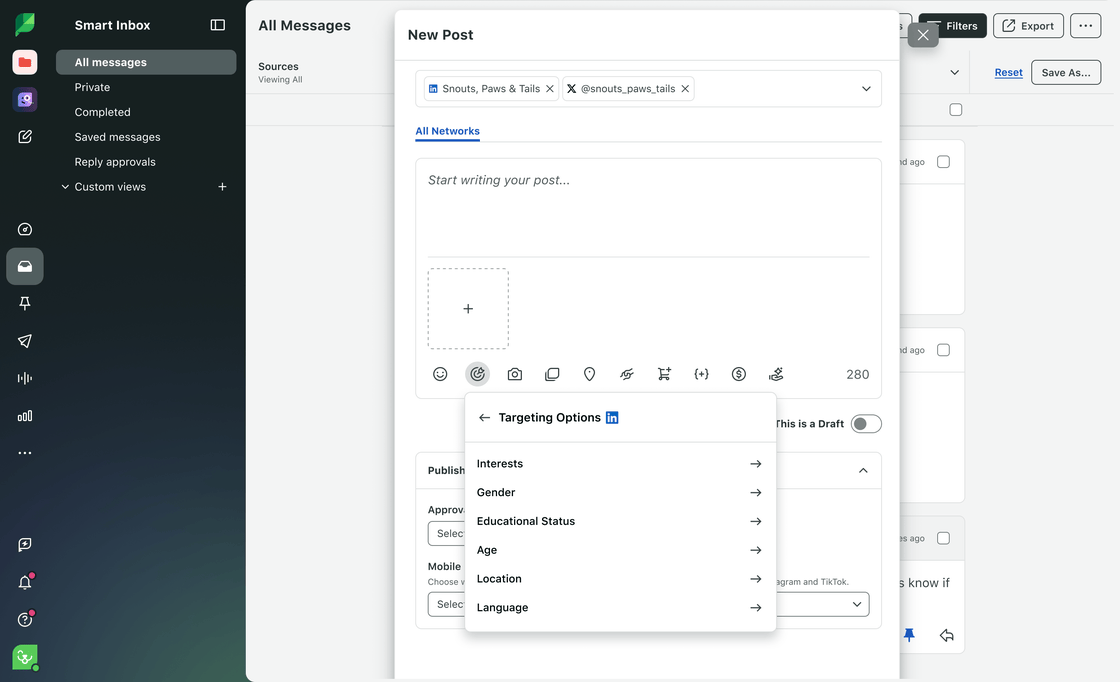
Put these targeting criteria to work with purpose:
- Seniority and function targeting: Share job postings directly with the candidates most qualified to fill them.
- Geography and industry targeting: Distribute regionally specific company news or local industry event announcements to the audiences who care most.
How to measure audience targeting performance
Targeting without measurement is just guessing with extra steps. Performance data transforms your audience targeting strategy from reactive to predictive—so every campaign builds on real intelligence, not assumptions.
Start by comparing targeted posts against your broader content. Track these core metrics:
- Reach: Are targeted posts reaching more of the right people, not just more people?
- Engagement: Are the audiences you targeted responding with likes, comments or shares?
- Clicks: Are people taking action after seeing your content?
- Conversions: Are targeted campaigns driving the outcomes that matter to your business?
- Follower growth: Are you attracting the audience segments you set out to reach?
Then push one level deeper: Look for audience fit. Are local campaigns driving local action? Are role-specific posts earning attention from the right job functions?
A post with strong reach but low engagement from your target segment signals a mismatch—between your message, your audience or both. Numbers tell you what happened. Audience fit tells you why.
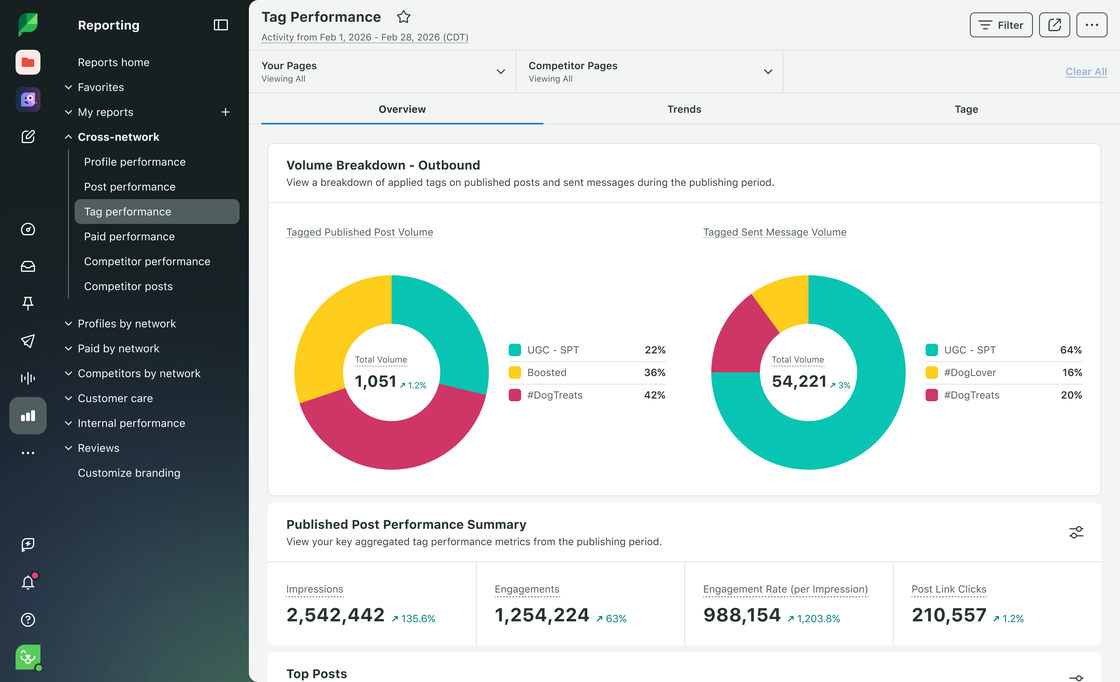
Sprout’s reporting tools surface the performance data that shows which audience segments respond best to your content. Use Tag Reports to compare how targeted posts perform against your broader content mix—by engagement, reach, clicks and conversions. That intelligence feeds directly back into your targeting decisions, so every future campaign starts from a stronger foundation—not a blank slate.
Reach a targeted audience through employee advocates
Employee advocacy is a precision targeting strategy—one your brand account cannot replicate on its own.
Your employees already live inside the communities, professional networks and local markets you’re trying to reach. When they share content aligned with their expertise, your message travels farther and lands with more credibility than any brand post.
The strongest advocacy programs match the right content to the right people based on three factors:
- Employee expertise: Content shared by someone with genuine knowledge in a subject earns deeper trust inside niche communities.
- Audience relevance: Employees reach segments—local markets, industry verticals, professional peer groups—that brand accounts rarely penetrate.
- Business goals: Every piece of shared content connects back to a specific objective, whether that’s awareness, pipeline or community growth.
Build advocacy around these principles and it stops being a distribution boost. It becomes a full targeting strategy—placing your message in front of the right people through voices they already trust.
Sprout’s Employee Advocacy solution gives you the infrastructure to run this at scale. You control the content library, employees choose what resonates with their network and your analytics show exactly where the impact lands.
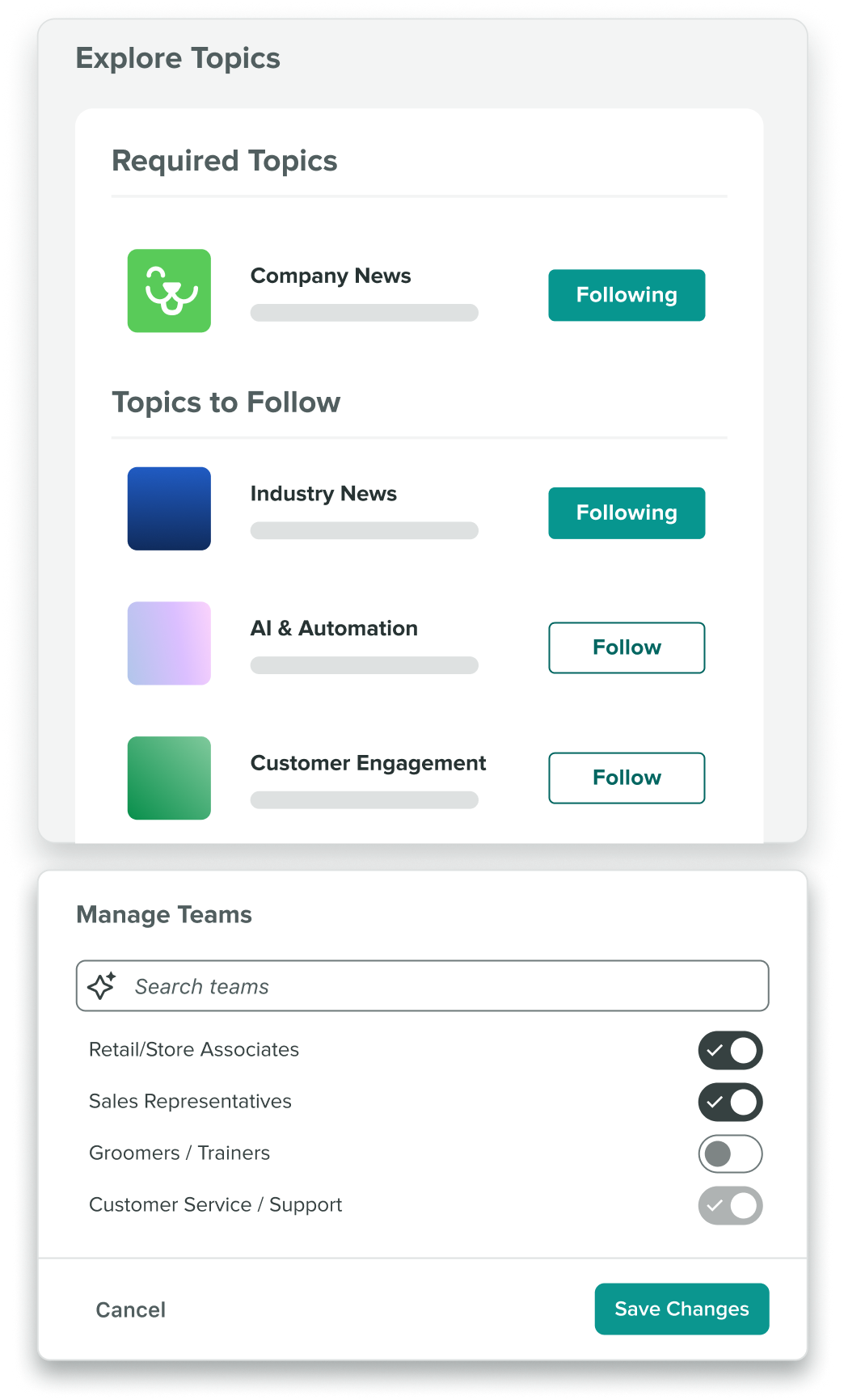
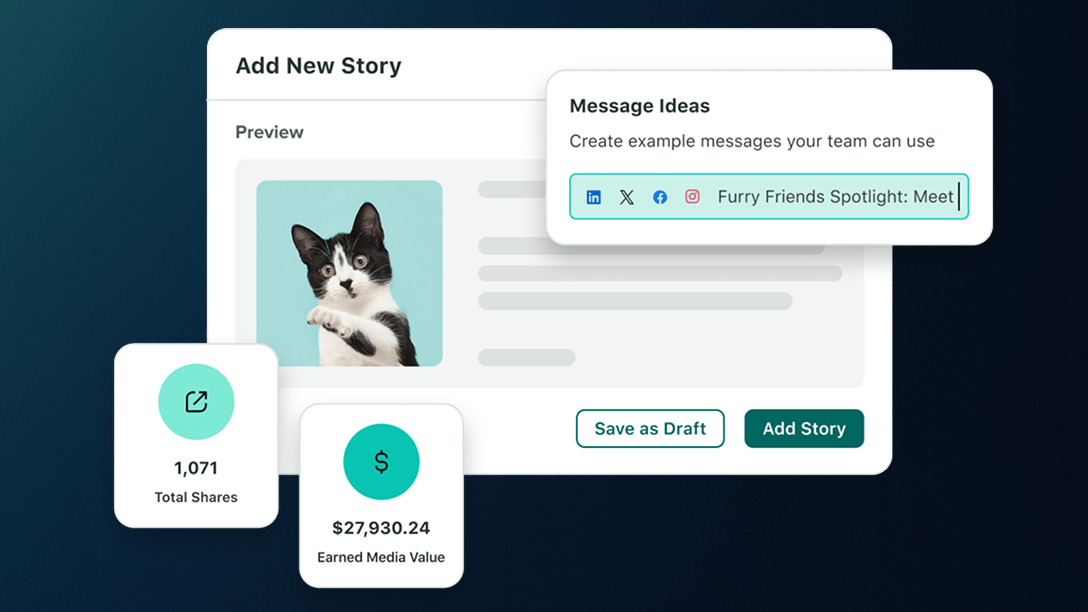
Data shows that content shared by people receives more engagement than brand posts, and 71% of B2B marketers agree that recommendations from subject matter experts are critical for brand building. When properly tracked, these trusted voices drive measurable business results—like a 5,800% increase in pipeline impact.
Ready to improve your audience targeting?
Reaching the right people starts with the right platform. Start a free trial to put smarter audience targeting to work today or request a demo to see how Sprout Social supports your team in publishing with precision across every network.
FAQs about audience targeting
What are the four types of target audiences?
The four main ways to group target audiences are by demographics, interests, behaviors and professional traits. Most social strategies use a combination of all four.
What's the difference between organic and paid audience targeting on social media?
Organic targeting controls who sees the unpaid content you publish on your social profiles, while paid targeting controls who sees your ads.
Organic targeting works through platform-level settings and content signals; paid targeting uses detailed criteria you set directly within the ad platform.
How does social listening support audience targeting?
Social listening reveals what people care about, how they talk and where conversations are happening—so your targeting is built on real audience signals, not assumptions. Sprout Social’s listening tools surface these signals, keeping your strategy grounded in what your audience wants.
What are the four target marketing strategies for social media?
The four most effective approaches for social teams are broad targeting, segmented targeting, niche targeting and personalized targeting. The right choice depends on how specific your message needs to be and who you’re trying to reach.
- Broad targeting maximizes reach across a wide audience.
- Segmented targeting divides your audience into distinct groups based on shared traits.
- Niche targeting focuses on a highly specific audience with precise interests or needs.
- Personalized targeting tailors messaging to individuals based on behavior and data signals.
39 free social media strategy templates that will elevate your workflows
Published on August 20, 2026 Reading time 15 minutes







Share