9 social media marketing tips for small business success

Written by Jacqueline Zote
Published on June 26, 2026
Reading time 8 minutes

Table of Contents
Between running day-to-day operations and managing admin work, marketing is the last thing many small business owners want to worry about. And it’s not because they don’t think it’s important. Rather, it’s because they don’t always have the resources for it, often lacking the budget to buy ad space and the staff to oversee elaborate campaigns.
Social media levels the playing field, offering a channel to effortlessly get your small business in front of a bigger audience.
This is especially relevant now that consumers are using social media to search and find products. As the latest social media stats show, social media platforms drive 60% of product discovery.
With the right strategy, small business owners can use social media to exponentially grow their reach and sales. In this post, we share practical social media marketing tips for small business owners, covering everything from platform selection to content planning. Let’s dive in.
Why social media is non-negotiable for small business marketing
With small budgets and even smaller workforces, small business owners need marketing channels that are effective, affordable and easy to manage.
Social media offers just that, with free built-in marketing tools and a massive reach. Social is where people go to tap into cultural moments and connect with friends. It’s where they get entertained and find buying inspiration.
And now that social search is evolving, it’s easier than ever for businesses to get discovered. Not to mention the opportunity to reach new audiences through algorithmic discovery.
For small business owners, this is an opportunity to drive brand awareness without the heavy marketing budget.
But social’s role goes beyond simply getting your business in front of the right audience. It lets you directly connect with consumers through comments and direct messages, giving you the perfect channel to engage your community.
In fact, personalized customer service is the top expectation consumers have for brands in the 2025 Sprout Social IndexTM. The brands that stand out on social are the ones engaging with their followers and promptly responding to customers. 73% of social users will even buy from a competitor if a brand doesn’t respond to them on social.
That says a lot about the role social media marketing plays in business success.
Define your specific target audience
Your marketing dollars go further when you speak to a very specific audience. Start with a clear idea of the people you’re targeting with your small business social media strategy.
Build a comprehensive audience profile that breaks down the demographics of your ideal audience. How old are they? Where do they live? What kind of work do they do? You can use the insights from your native analytics to find out your audience demographics.
Additionally, tools like Meta Audience Insights and TikTok Audience Insights provide you with psychographic data on your audience. So you can enrich your audience profile with information about their interests, values and hobbies. These audience insights will help you build a strategy that resonates with the right people.
Focus on quality over platform quantity
Trying to maintain brand presence on every single platform is time-consuming and overwhelming. You’ll find yourself struggling to post consistently and keep up with conversations across multiple platforms.
It’s better to focus your time and resources building a strong presence on the platforms your audience actually uses.
Consider the ideal industry and demographics intersection to figure out the right platform fit. For example, tech conversations thrive on X (formerly Twitter), but retail will see better engagement on visual platforms like TikTok and Instagram. Both platforms see strong usage from Gen Z, but Facebook is where you stand a better chance of reaching Baby Boomers.
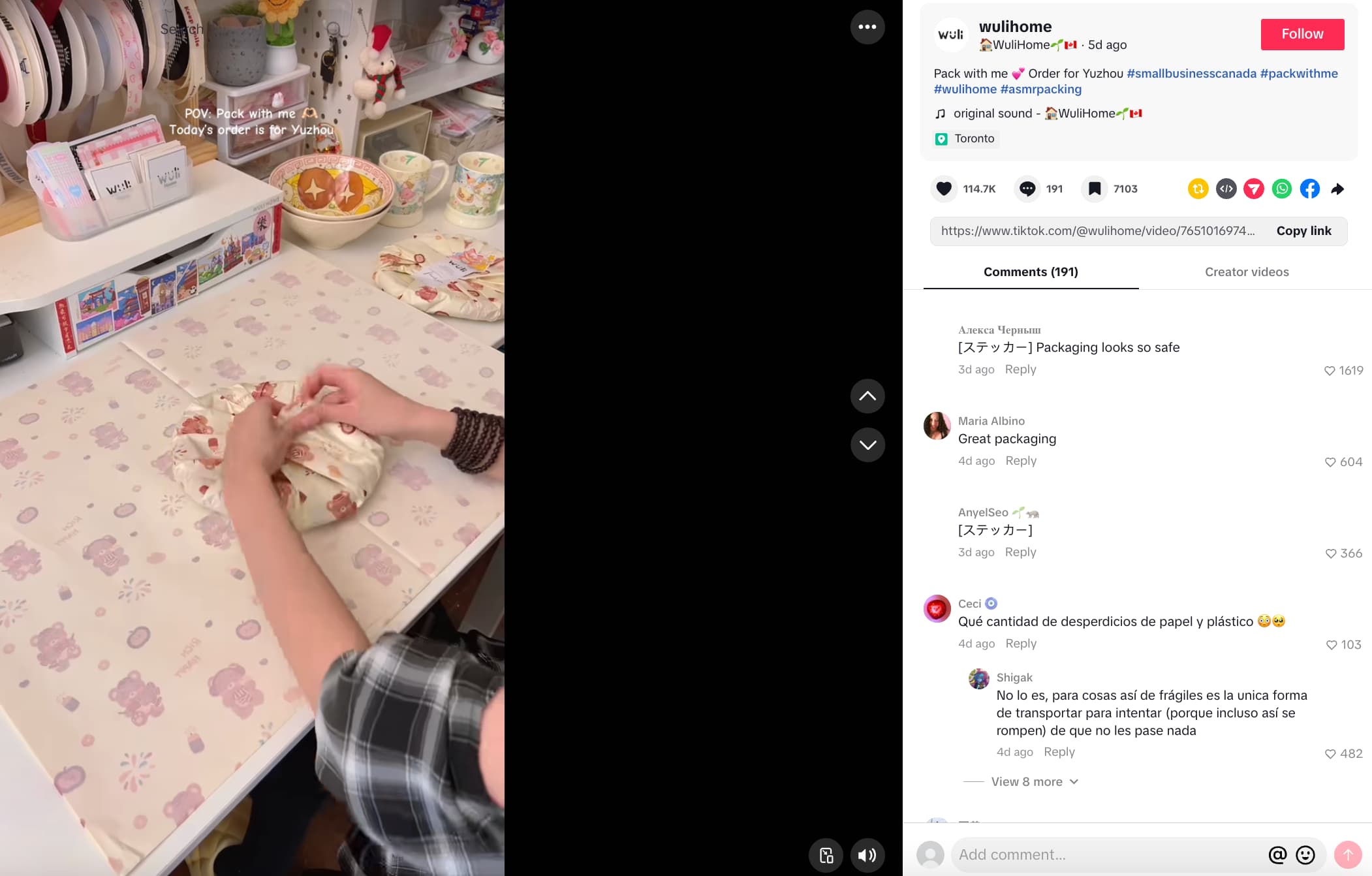
Source: TikTok
Plan ahead with a consistent content calendar
Even when it comes to content, quality matters more than quantity. But you still need to post consistently to engage your audience.
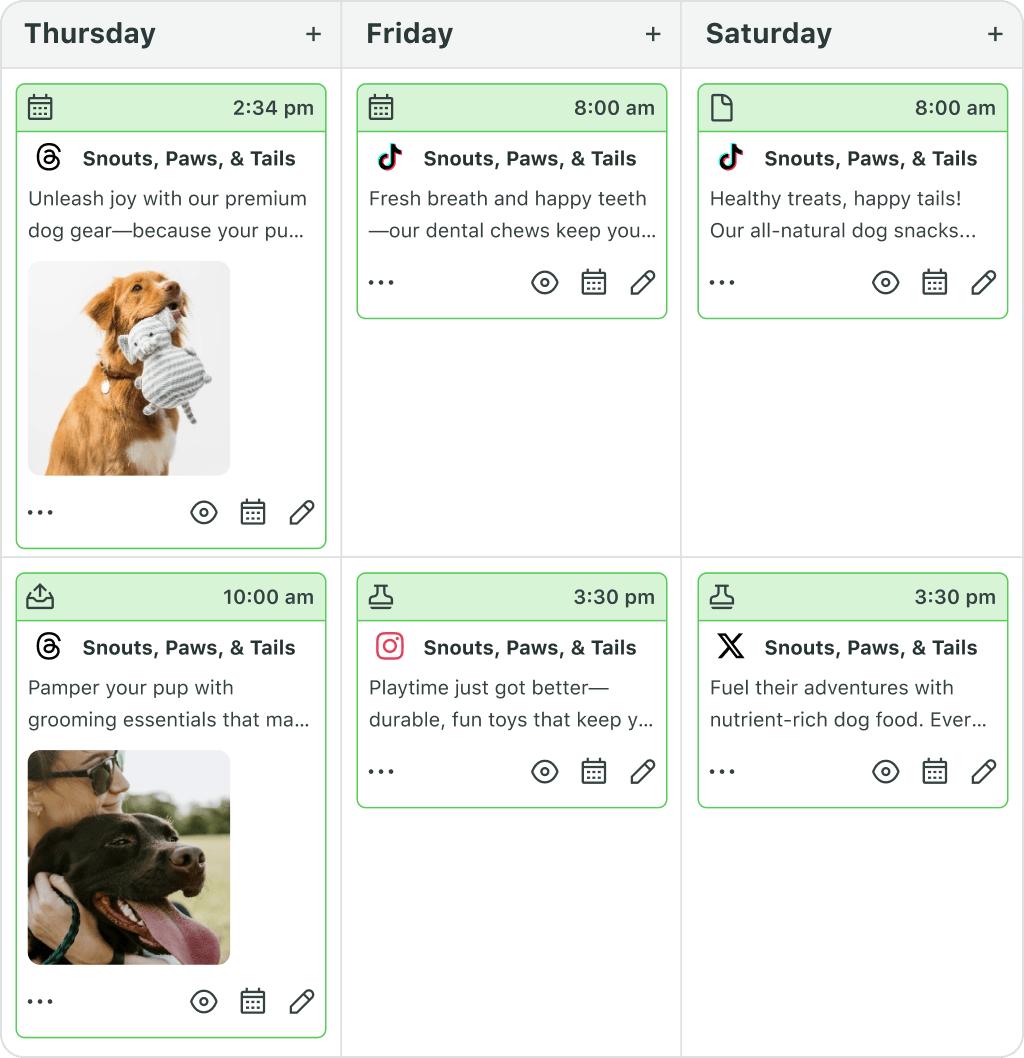
Organize your publishing efforts with a social media content calendar that includes:
- Content pillars: 3-5 core topics or themes to anchor your content strategy (For example, case studies, user-generated content, how-to videos, industry tips, etc.)
- Posting cadence: Timing and frequency of posts (For example, 1 post at 3 pm on Monday, Wednesday and Friday; and 1 post at 6 pm on Tuesday and Thursday.)
Sprout Social Essentials
Stop winging your content calendar.
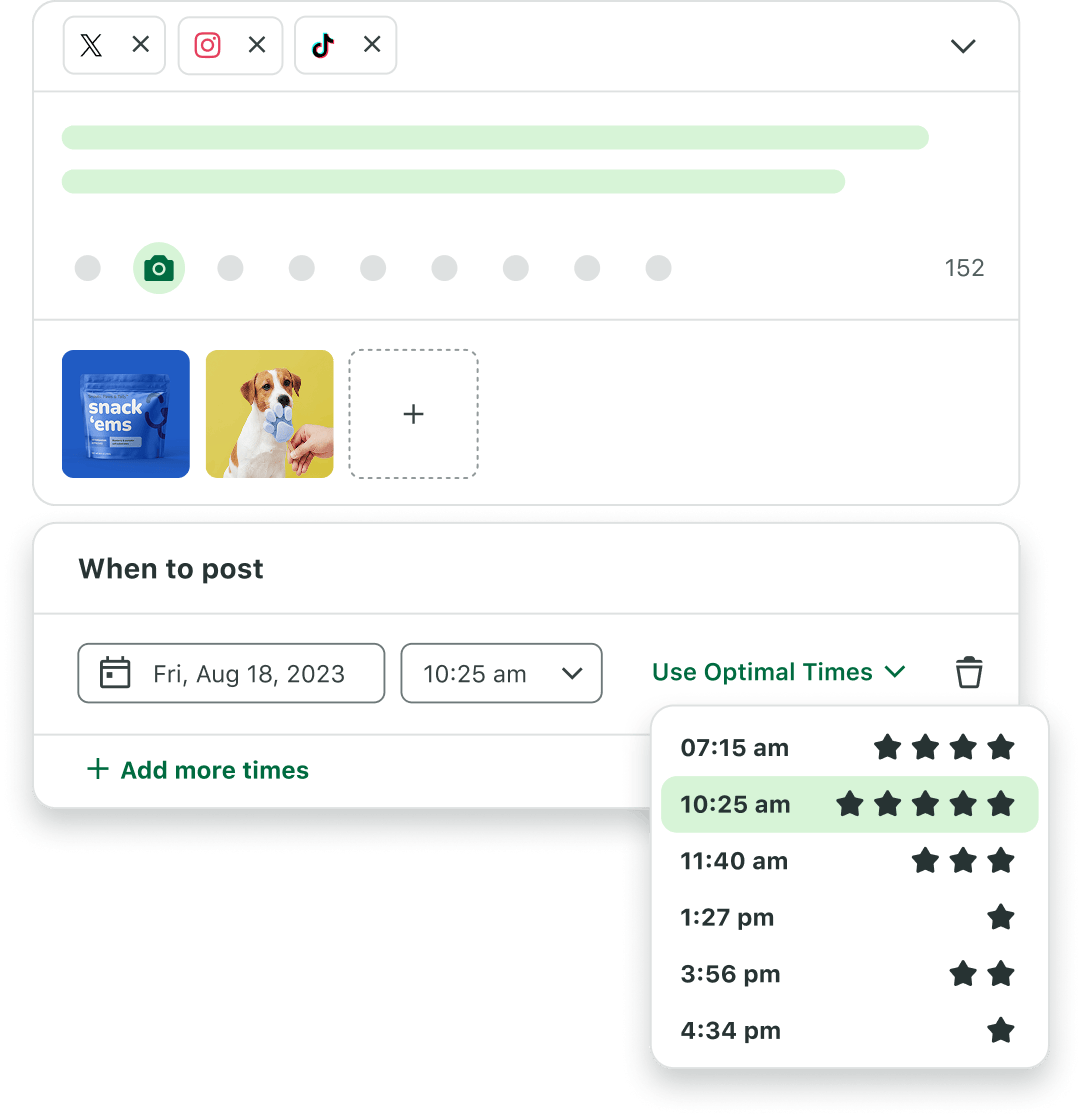
Sprout’s Essentials plan gives you a visual publishing calendar, optimal send-time recommendations, and scheduling across all your accounts — built for small businesses that move fast.
You can build out your calendar as you add more post ideas along the way. Then block off some time every week for ideating and researching content, creating posts and scheduling them. Batch creating content makes it easy to stay ahead, so you always have a consistent supply of posts to fill up your calendar.
Sprout Social comes with a visual calendar to help you plan ahead and maintain a consistent publishing schedule.
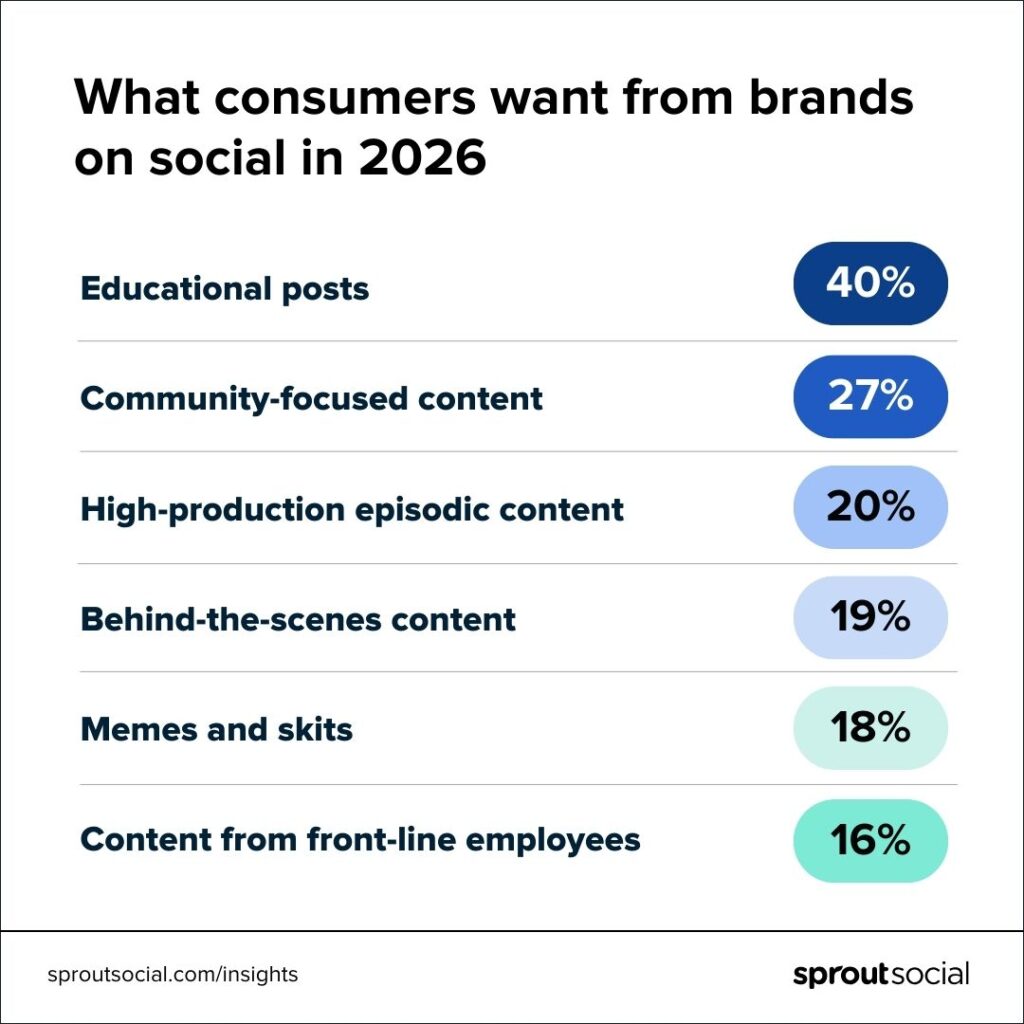
Visualizing your content plan makes it easy to mix things up between different content types and formats to maintain audience interest. According to The State of Social Media 2026, consumers want to see brands posting educational content and community-focused content. Episodic content and behind-the-scenes also rank high among consumers.
Lean into short-form video content
No matter which platforms you focus on, short-form video is the key to engaging your audience. According to the 2026 Social Media Content Strategy Report, users are most likely to interact with short videos across Facebook, Instagram, TikTok and YouTube.
And the shorter the better, with users preferring videos shorter than 60 seconds.
Create Reels, TikToks and Shorts that capture immediate user attention. Use them to share bite-sized tips, entertaining info and behind-the-scenes footage. This is a great opportunity to jump in on viral trends and use humor to entertain your audience.
Notice how Plaza Deli uses relatable humor about “the grindset” trend to create an Instagram Reel. This is the deli’s most successful post, with over 34k likes and thousands of shares.
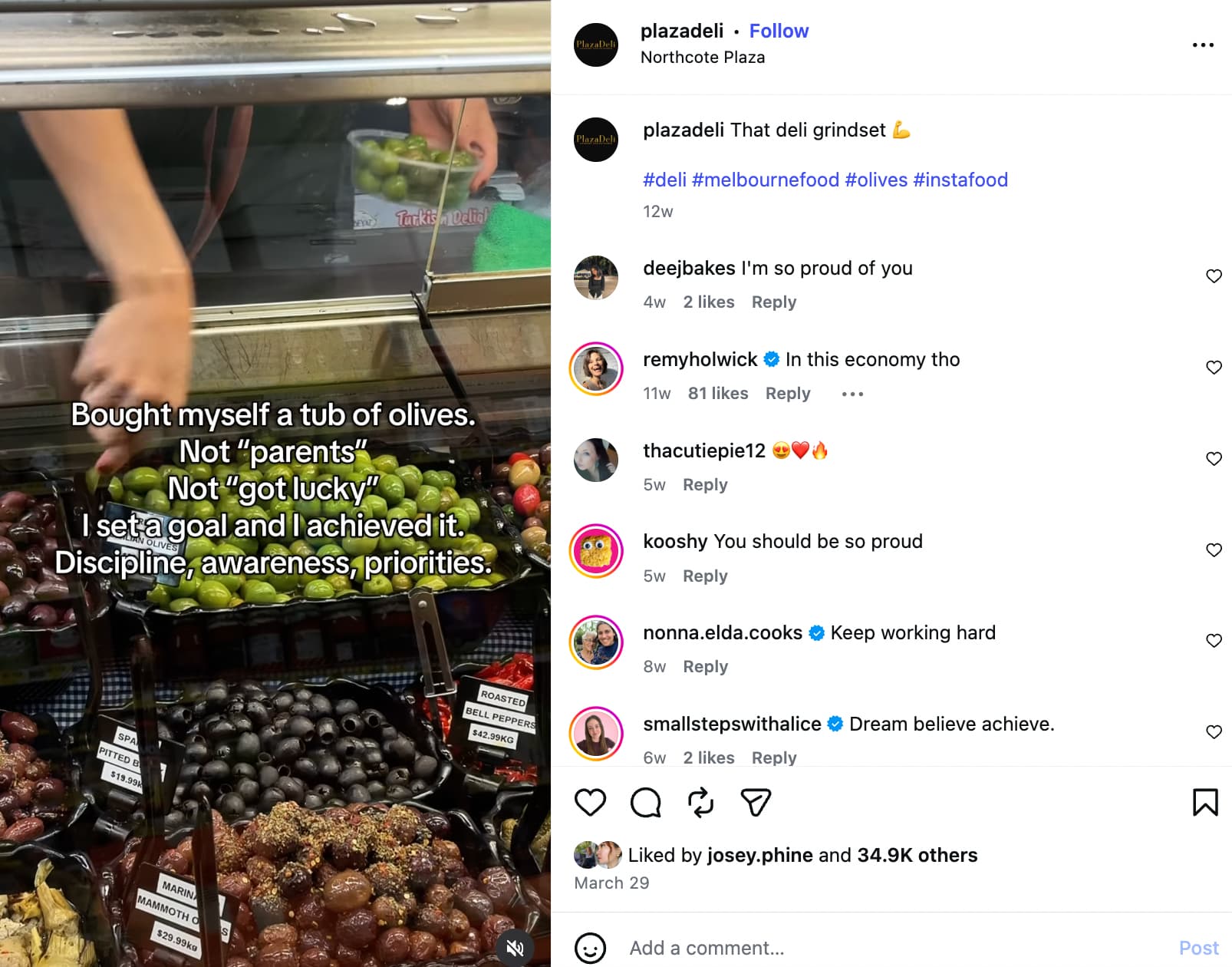
Source: Instagram
Social media platforms use metadata from your captions (including in-video text) to rank content in relevant search results. Make sure to sprinkle in a few keywords naturally into your captions to improve content visibility.
Engage with your audience in the comments
People love it when you’re responsive and actively engaging with them. It’s one of the most effective ways to humanize your business and establish a connection with your audience.
As established in the 2025 Sprout Social IndexTM, consumers watch how you engage with your followers on social media. So when they see you responding to comments, they see a business that pays attention.
Plus, an active comments section looks good to the algorithm. It drums up engagement and helps your content get more visibility in people’s Feeds.
Ask questions in the caption or conduct polls to spark a conversation and encourage more people to comment. Then interact with those comments to acknowledge your audience and connect with them.
Even if it’s not viable to reply to every single one, make sure to respond to the most important ones. Think: comments that ask relevant questions or get a lot of Likes from other users.
See how Palms Thai Restaurant responds to the top comments on a Reel that went viral.

Source: Instagram
Leverage user-generated content (UGC)
The 2026 Social Media Content Strategy Report highlights how human-generated content is the most important priority for consumers. And what’s more “human” than content from your customers? Real people sharing real images and real experiences can help you build trust while nurturing connection with your existing community.
Encourage customers to share their reviews and post about your business on social media. Then get their permission to repost to your Stories. You could even take it further and repurpose user-generated content for your in-feed content or paid advertising campaigns.
Organize UGC around branded hashtags, so it’s easier to find content to repost. You can also check brand mentions and tagged posts to discover relevant UGC.
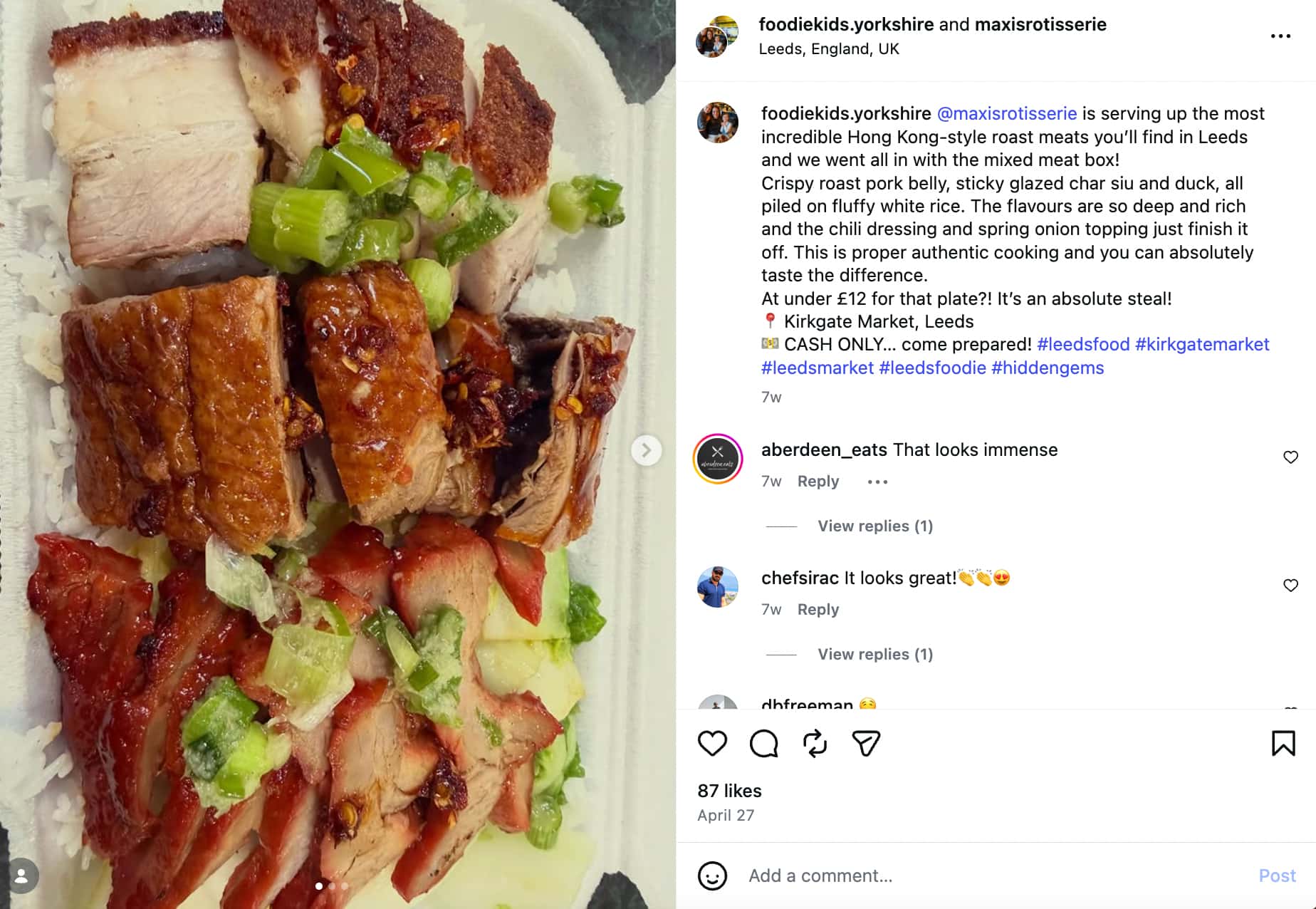
Maxi’s Rotisserie turns UGC into Collab posts on Instagram. This instantly maximizes content visibility as the posts get in front of both creators’ audiences.
Source: Instagram
Partner with local micro-influencers
Influencers give you a much-needed visibility boost, making them a vital addition to your small business social media strategy.
Focus on smaller creators with a niche yet highly relevant audience for your business. For example, gardening influencers who specialize in growing vegetables in the arid Nevada climate. Or food influencers who go around trying new food joints across your city.
Micro (10k–100k) and nano (1k–10k) influencers have a smaller following compared to traditional influencers. But considering their local relevance and audience alignment, they can be a much better fit for small businesses.
Use data and analytics to pivot quickly
When you’re running on limited resources, you need every single resource to go toward a strategy that works. That’s why data is so important to inform what’s working (and what needs to go).
Sprout social Essentials
Your analytics shouldn’t live in five different tabs.
Essentials brings your social performance data into one dashboard, so you can spot what’s working and cut what isn’t — without the spreadsheet gymnastics.
Native social media analytics tools can give you post-specific insights to understand what types of content resonate. Keep a close eye on metrics like reach, engagement rate, saves and shares. Use this to identify patterns like:
- Which content formats are most effective for reaching non-followers?
- Which content formats get the most positive engagement?
- What content angles resonate the most?
- What types of content drive actual sales?
For example, people might be more interested in seeing your finished nail art designs vs. videos of the process. Then fine-tune your strategy using these insights and get the most out of your marketing dollars.
Streamline your workflow with the right tools
Managing social media for small business owners is more than just posting the occasional content. You need to set aside time for creating the content and actively engaging with your audience. And that’s where it gets challenging because you’re already juggling your operational and admin tasks as it is.
So there’s not enough time to manually post content across all your social media accounts every day, let alone respond to comments.
Social media management tools make this easier with automated workflows that help you save time. For instance, platforms like Sprout will let you plan your content in advance and use social media scheduling to automatically post it at the desired time. Aside from the weekly or monthly time blocks for content creation, you can practically put your publishing on autopilot.
You even get data-backed recommendations on what content to post and when, helping you strengthen your social media strategy for optimal impact.
Work smarter, not harder on social media
Social media marketing can feel overwhelming when you’re already wearing multiple hats to keep the business running. Using an all-in-one management tool makes it more manageable with automated workflows and data-backed recommendations. So you no longer have to spend hours coming up with content ideas or manually posting content.
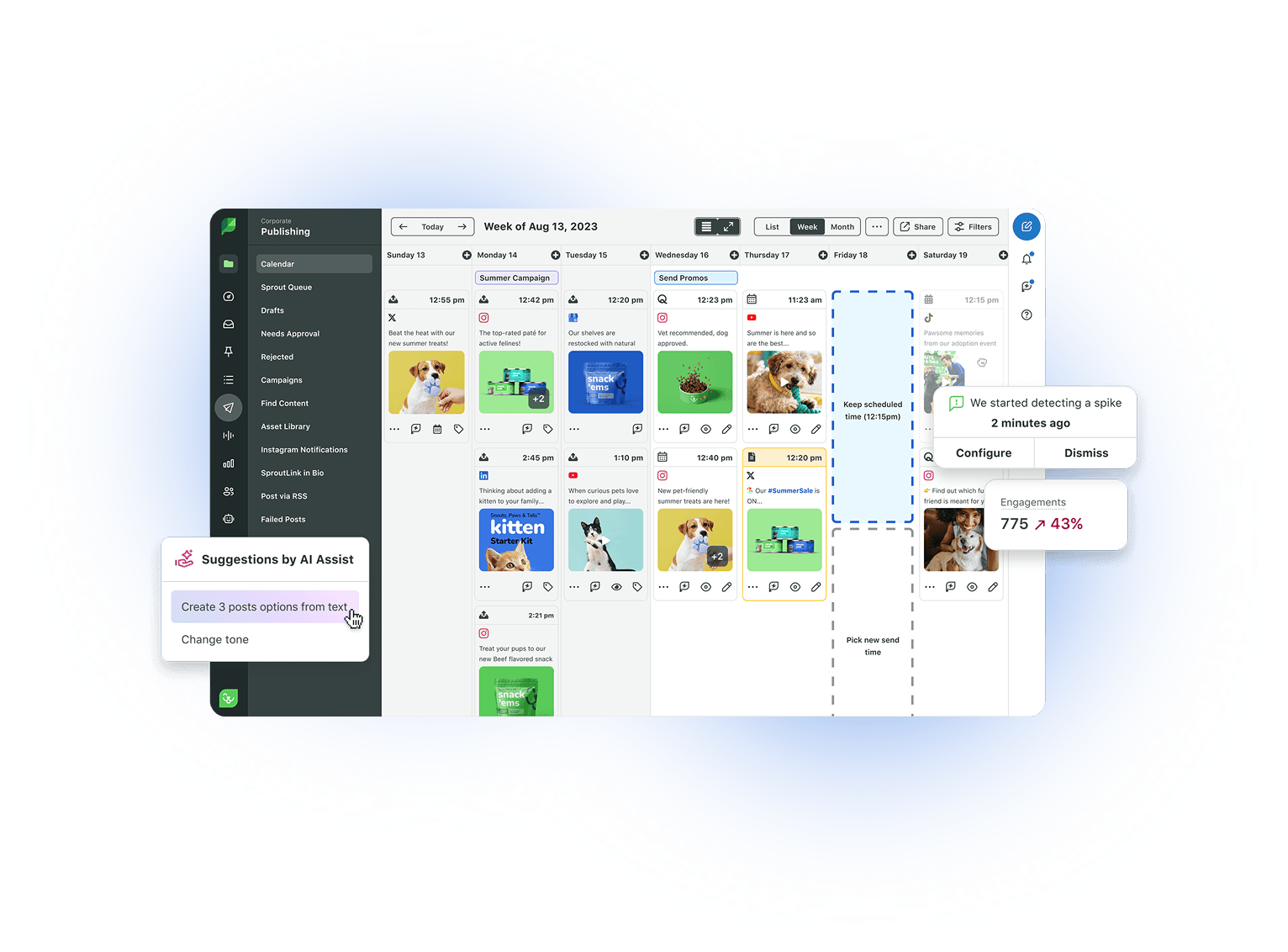
With Sprout’s Essentials plan, you can speed up publishing and automate analytics for your small business social media strategy. Get a free 30-day trial to see how it fits into your social media marketing workflow.
40 free social media strategy templates that will elevate your workflows
Published on August 20, 2026 Reading time 16 minutes







Share