Social media for small business growth: what works in 2026

Written by Rebecca MacFarlane
Published on May 20, 2026
Reading time 9 minutes

Table of Contents
Summary
- Crack the code on platform-specific growth: No two channels are the same. Unlock the nuances, user behaviors and top-performing content types of each, and structure your strategy accordingly.
- Engage with intention: Embrace tactics like proactive community management, timely customer support and DM-based selling to foster trust at scale.
- Scale smarter, not harder: Streamline your workflows with the help of an all-in-one system. Use it to batch content, centralize content planning and automate scheduling.
For small businesses, social media is no longer just for brand awareness; it’s a primary driver of revenue, customer retention and market share.
With an agile and curated social strategy, small businesses can reach new customers, foster brand loyalty and scale at unprecedented rates.
But to leverage social media to the fullest, you need to get a lay of the land.
In this guide, we explore the true impact of using social media for small business growth and offer actionable insights for Instagram, TikTok and Facebook. Plus, we break down how a centralized social management system like Sprout Social Essentials can help you minimize effort and maximize growth.
The impact of social media marketing on small business growth
Oftentimes, when people discuss social media’s role in small business growth, its value is reduced to one output: discovery. The crux of the conversation: you can’t grow your brand if people don’t know it exists.
But social media’s power is far broader than these conversations let on.
While reach is an undeniable benefit, it centers around the customer base, rather than the company. When it comes to business impact, here are three big wins social has to offer:
- Lower customer acquisition costs (CAC): Social media fuels organic content and engagement. For example, you might share a funny skit-style TikTok that goes viral. In addition to the views, likes, comments and shares, you could also see an uptick in site traffic and conversions—without having to spend a cent.
- Brand loyalty: Loyal customers are one of the most valuable assets any business can have. Per Statista data from June 2024, global consumers’ favorite way to show their loyalty to brands is by frequently purchasing from them. Their second favorite display is recommending the brand to loved ones. For small businesses, that loyalty is often fostered on social media. Regularly posting authentic content fosters familiarity and community—both of which make people want to stick around and support your brand.
- Primary customer service channel: Consumers regularly direct message (DM) brands—including small businesses—on social to seek support. Per The 2025 Sprout Social Index™, nearly three-quarters of consumers expect a response within 24 hours. And if they don’t get it, the same proportion said they would purchase from a competitor. By making social a core channel in your service framework, you can keep up with that demand and keep customers coming back.
| Business impact | Traditional marketing | Social media marketing |
|---|---|---|
| Metrics | Delayed | Real-time |
| Engagement | One-way broadcast | Two-way engagement |
| Cost | Costly, depending on the deliverables | Organic: free
Paid: customizable to your budget |
| Speed to market | Slower production cycles | Instant publication |
| Touchpoint frequency | Infrequent or one-off campaigns | High-frequency; sometimes multiple touchpoints per day |
| Targeting | Broad | Precise (i.e. based on age, region, interest, etc.) |
Proven social media engagement strategies for small business growth
Now you know why social media works in fueling small business growth. Next, let’s focus on how to use these tools effectively. Here are a few high-impact strategies even the leanest teams can pull off:
- Proactive community management: Sprout’s The State of Social Media Report uncovered that community-focused content is the second most-desired content type from social users today. Specifically, 51% expect brands to engage with their audiences on all platforms. With that in mind, social media community management is crucial. Identify your target audience and where they’re most active. Then, start interacting with these users across your comments, DMs, Reddit forums and other spaces. While reactive engagement is fine, strive for proactive engagement as well. Find ways to participate in broader digital conversations. For example, you might react to campaigns by other leading brands or leave a comment on a viral video. Doing so can expand your business’ reach or even recruit new customers.

- DMs as a sales channel: DMs can also play a key role in sales. If someone DMs your business with a question about a product or service, they’re probably serious about purchasing. Make the most of that intent-signaling by responding to their DMs in a timely and strategic way. For example, if you glean that a certain product isn’t right for them, offer alternative recommendations. Or, if you offer discounts for first-time buyers, mention that in your reply to nudge them towards conversion. With Sprout Social Essentials’ features—such as automated publishing and AI-generated alt text—you’ll have more free time to manually manage your DMs and leverage them as a personalized sales outlet.
- User-generated content (UGC): As a small business, you may not have the financial means to collaborate with mega-influencers. That said, you can still find creative ways to outsource content creation and build authenticity—without breaking the bank. UGC is unpaid or unsponsored content your customers create about your brand. In essence, it’s word-of-mouth marketing in the form of testimonials, photos, videos or social posts. UGC is effective for small businesses because it offers a no-cost way to reach new audiences. Plus, it simultaneously showcases social proof, which is far more persuasive than anything you could pay to produce.
Sprout Social Essentials Pro Tip
Setting realistic goals and assessing capacity
Before choosing your channels, define what growth looks like to you. Identify your goals and their most relevant metrics. Whether it’s brand awareness, lead generation or direct sales, have a clear vision of what you’d like to achieve via social.
Next, audit your team’s bandwidth. In a small business, staff often have several duties to oversee; adding social media to that list must be done strategically. Talk openly with your team members to assess their workloads. If needed, redelegate tasks or responsibilities to free up certain people’s calendars.
Using this information, set objectives that are realistic and respectful of everyone’s capacity. For instance, if you plan to have one person managing socials, posting five times per day isn’t feasible. And such an overly ambitious goal could result in inconsistent posting cadences, unmet KPIs or employee burnout. In this scenario, one post per day might be better aligned with your team’s size and capacity.
Choose your channel: Network growth strategies
When choosing your social channel, remember the golden rule: you don’t need to be everywhere—you just need to be where your audience is.
Below, we break down three of the top social media networks and how you can use them to broaden your small business.
Instagram growth strategy for small businesses in 2026
While images were once Instagram’s bread and butter, video content is taking over.
Per The 2026 Social Media Content Strategy Report, short-form video (<60 seconds) is the top performer on Instagram, with 52% of social users likely to engage with it.
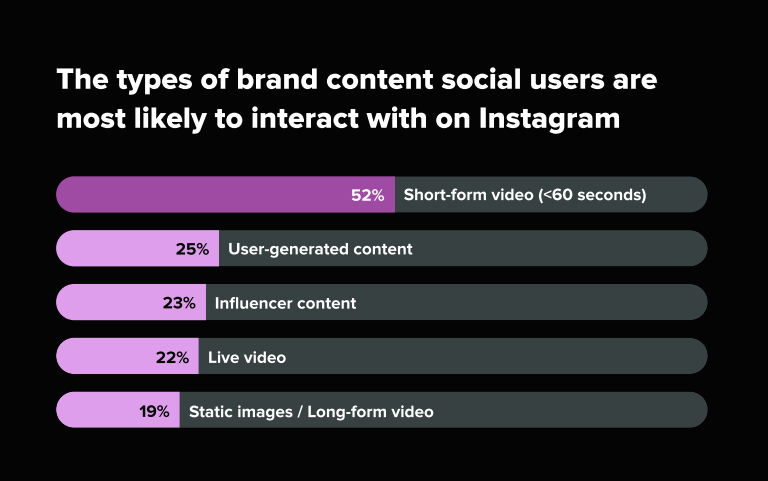
With that in mind, Reels must be an integral part of any small business’ Instagram strategy. Fortunately, they don’t need to be polished or cinematic to resonate with users; the most impactful Reels are entertaining, educational, authentic or relatable. Some great go-to formats include product demos or tutorials, myth-busting breakdowns, behind-the-scenes employee vlogs or founder stories.
With social media search on the rise, your profiles must be optimized accordingly—including your Instagram. Boost your business account’s discoverability by peppering high-intent keywords in your Name field. In addition to your brand name, specify your niche or location to quickly and clearly highlight what you do.
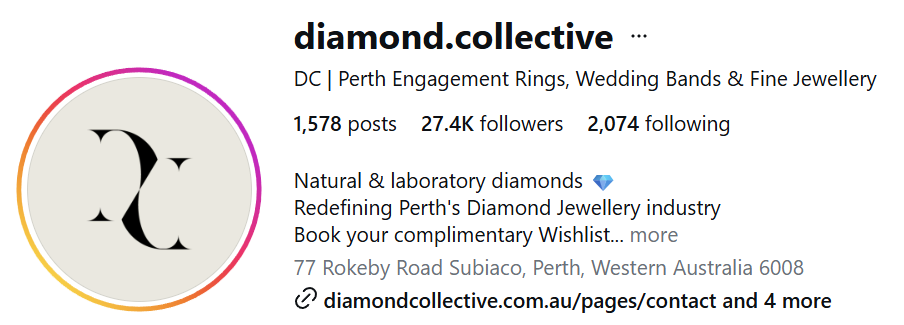
You should also provide a friction-free call to action (CTA) in your bio, whether it’s booking a free consultation or shopping a limited-time product drop.
Finally, building visual authority is key. Images, color palettes, logos and emojis make up your visual identity on social. With a cohesive and strategic approach, you can communicate key brand traits, uphold brand values and increase brand recognition—without a single word.
TikTok marketing for agile brands
According to the 2026 Social Media Content Strategy Report, entertainment is still the most sought-after content trait on TikTok. With that said, it’s not enough to outperform your competitors on the platform anymore.
To perform well on TikTok, content should satisfy one or more of the Three E’s: entertainment, education and emotion. Below, you’ll see popular content examples that hit these markers.
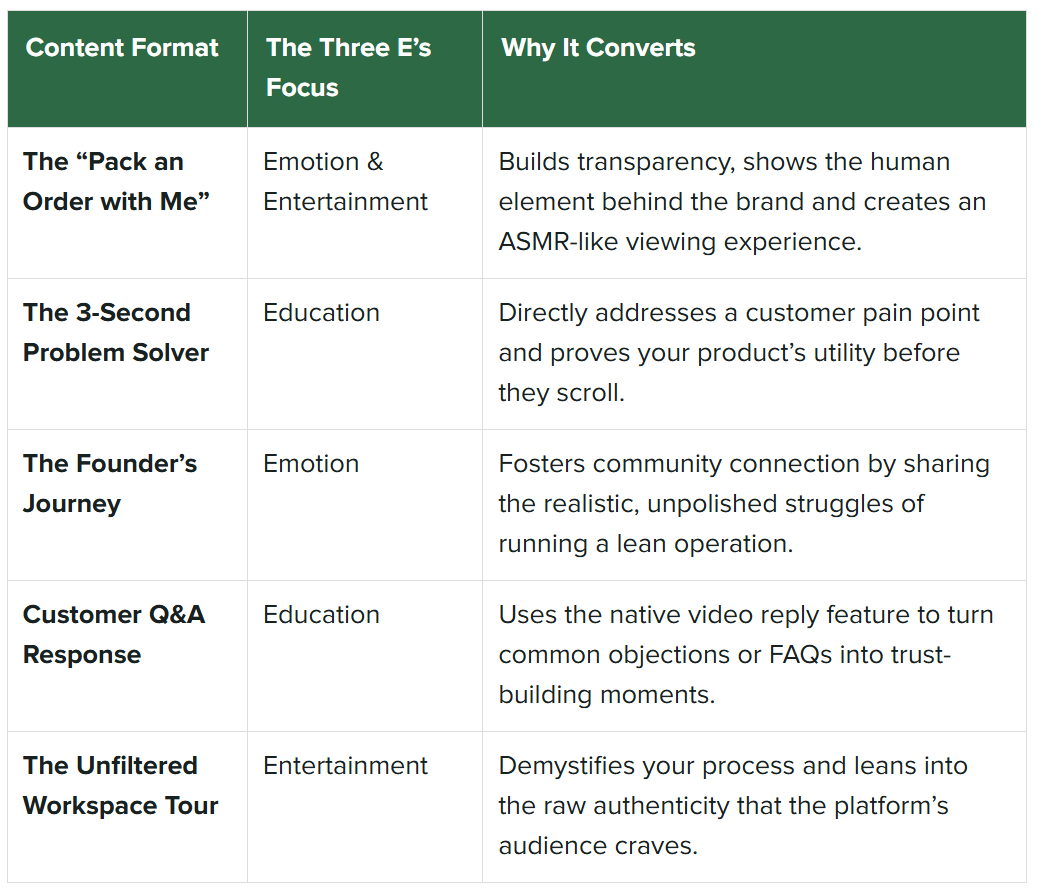
For instance, founder-led content could help you tick all three boxes. Showing the real people behind the brand humanizes the business and, in turn, fosters emotional connection. On the other hand, content centered on behind-the-scenes operations, like packing customer orders, can be equal parts educational and entertaining.

Another major perk of TikTok is the opportunity for rapid organic discovery, thanks to its For You page (FYP). This is the platform’s primary discovery feed, personalized to each user by the TikTok algorithm. Because it offers unparalleled access to potential new followers (or customers), this is where you want your content to surface.
To improve your chances of landing on the FYP, use trending audio, write keyword-rich captions and craft scroll-stopping hooks (in your visuals or voiceovers). With these tactics, you’ll leverage TikTok for small business marketing to the fullest.
Facebook strategies for local reach
Despite the emergence of new social platforms, Facebook remains one of the most powerful for small businesses. The 2026 Social Media Content Strategy Report found that 85% of consumers across generations have Facebook profiles—the most of any network.
With the right Facebook small business strategy, you won’t just reach that broad consumer base; you’ll connect with them.
Community-building is a core part of Facebook’s offering. As revealed by the 2026 Social Media Content Strategy Report, 52% of consumers say their top network for interacting with people who share their niche interests.
Your small business can facilitate that connection. Join community groups on Facebook and find meaningful ways to participate, such as sharing industry expertise or hosting events. Toronto-based Red Tape Brewery holds a monthly book club. This unites local bookworms, giving them the chance to discuss the material and build genuine relationships.

These initiatives are particularly effective because your business is showing up consistently in these spaces. That consistency breeds familiarity, loyalty and retention. You’re not only giving people a reason to show up but to keep coming back.
But remember: if you’re sharing an event in a group, don’t be pushy or promotional. Frame it as an invitation to engage, rather than a sales pitch.
You can also further your local engagement via paid Facebook advertising. Even a small ad budget extends your reach beyond your existing followers, enabling you to increase brand awareness and engagement. Best of all, you can localize these ads so you’re only targeting people in your area. Facebook Ads Manager gives you control over placements, audiences and objectives.
Establishing social media platform workflows
By now, it’s clear that an omnichannel approach is vital for growing your small business on social. But how you use these platforms is just as important as being on them.
When you use each platform’s native capabilities, you pay a “hidden tax”—the unseen financial or time costs that come from operational inefficiency.
Say you have a video you want to post on Instagram, Facebook and TikTok. If you use each network’s native capabilities to do that, you’re losing precious time hopping between apps to publish content. Then, once it’s up, you have to check the analytics of three distinct networks.
Such disconnected workflows chip away at employees’ time and energy. Plus, you might miss valuable cross-channel insights buried in these separate dashboards—insights that could inform your strategy.
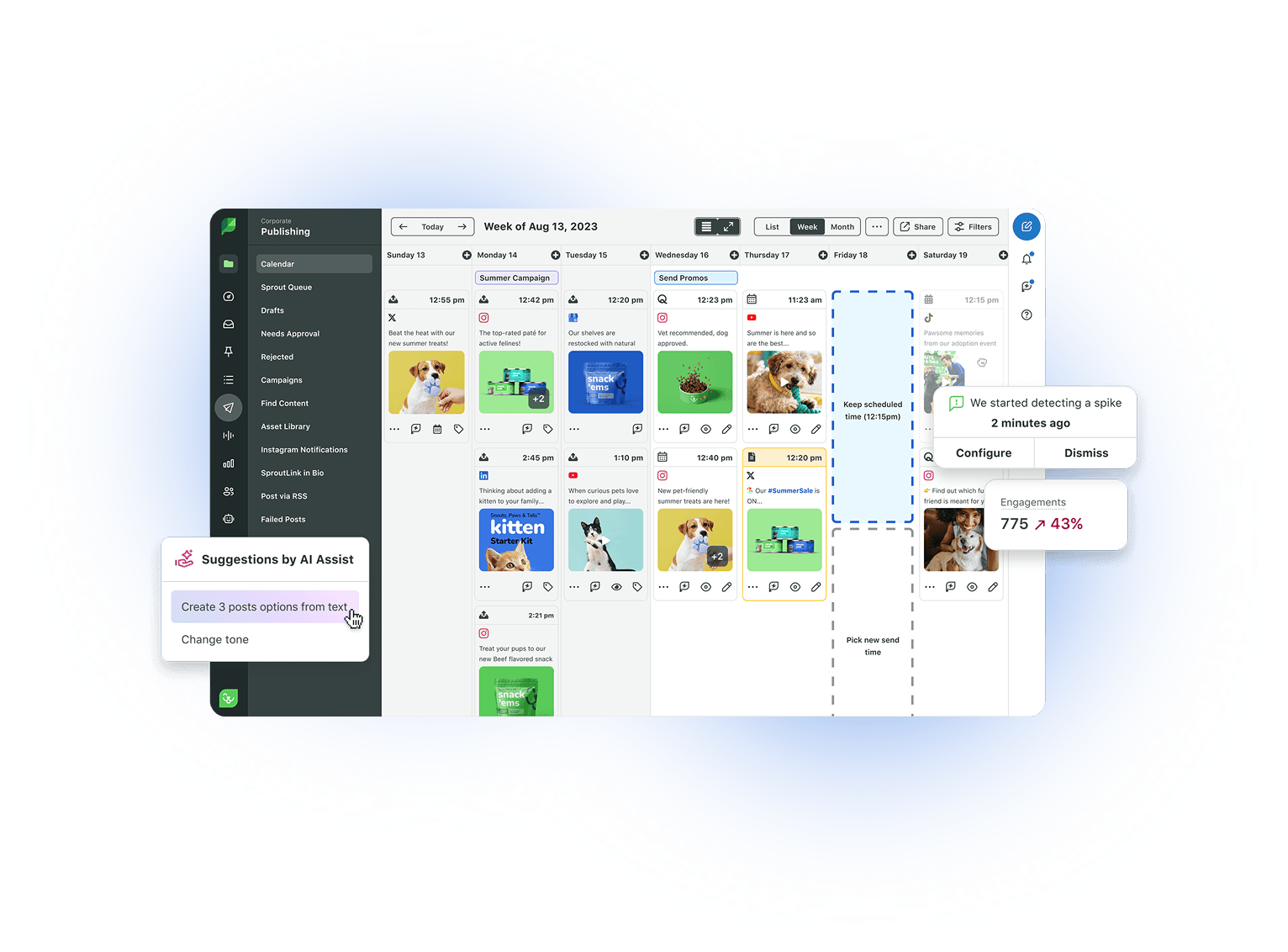
To avoid this, opt for a centralized social media management system. In it, you can establish clear workflows, batch content for various networks and automate scheduling to reclaim valuable hours.
How to measure your social media growth and ROI
You can’t grow what you can’t measure. To understand if your social growth strategy is working, you need to know which metrics to analyze.
Avoid tracking vanity metrics, such as likes, impressions or follower counts. Instead, focus on metrics that drive real business impact, such as website traffic, conversions, cost per acquisition (CPA) or return on ad spend (ROAS). These metrics will help you understand what’s moving the needle on social.
For instance, you might discover that a specific behind-the-scenes video is driving 40% of your total weekly engagement. Or, you may notice through your post performance reports that your audience is most active early on Tuesday mornings. You can then use these findings to inform your next steps, such as adjusting your content calendar to produce more video or relying on optimal send times to automatically publish when your followers are online.
Power your brand’s growth with Sprout Social Essentials
Now, you’ve got the know-how to start using social media for small business growth. But to put these tactics into practice, you need the right tools in your kit.
Move beyond native apps and skip the hassle of constant app-switching. Save your team valuable time and effort with the help of a centralized social management tool like Sprout Social Essentials.
With automated scheduling and streamlined reporting features, this all-in-one tool has everything a lean team needs to execute a professional growth strategy—without increasing headcount.
39 free social media strategy templates that will elevate your workflows
Published on August 20, 2026 Reading time 15 minutes








Share