39 free social media strategy templates that will elevate your workflows
Published on August 20, 2026
Reading time 15 minutes
Audience segmentation is the process of dividing a broad audience into smaller groups of people who share traits, such as age, location, values or behaviors. Each group, or segment, gets messaging built for what it cares about, instead of one generic message for everyone.
Segments make personalization possible. You can’t tailor a message until you know who you’re talking to.
According to Twilio’s 2024 State of Customer Engagement Report, “64% of consumers surveyed would quit a brand if their experiences aren’t personalized.” Audience segmentation gives you the groups you need to personalize at scale.
Relevant content gives people a reason to engage. It also makes your ad spend more efficient, because each dollar reaches people who fit the message.
Strong segments start with research. Target audience analysis shows you who already follows and engages with your brand. Audience intelligence adds the behavior and interest signals that demographics alone miss.
Marketers group audiences in four main ways:
Once you define a segment, a buyer persona gives it a name and a face. Your best customers also become the seed list for Facebook lookalike audiences.
A target audience is the group you choose to reach. Audience segmentation is how you split any audience into groups in the first place.
Targeting is the third piece. It’s how you deliver content to a chosen segment through ad settings or organic post targeting.
You segment to understand your audience, choose a target audience to focus your effort and use targeting to deliver. Learn how to find your social media target audience step by step.
The Grains Research and Development Corporation (GRDC) serves Australian grain growers. Its audience ranges “from young growers straight out of university to experienced growers in their 60s and 70s.”
Those groups use social media in different ways. Using Sprout Social, GRDC delivers content in formats ranging from 30-second Reels to in-depth 1,000-word articles.
Sign up for a demo to uncover the conversations and demographics behind every segment with Sprout’s Social Listening and Social Media Analytics.
39 free social media strategy templates that will elevate your workflows

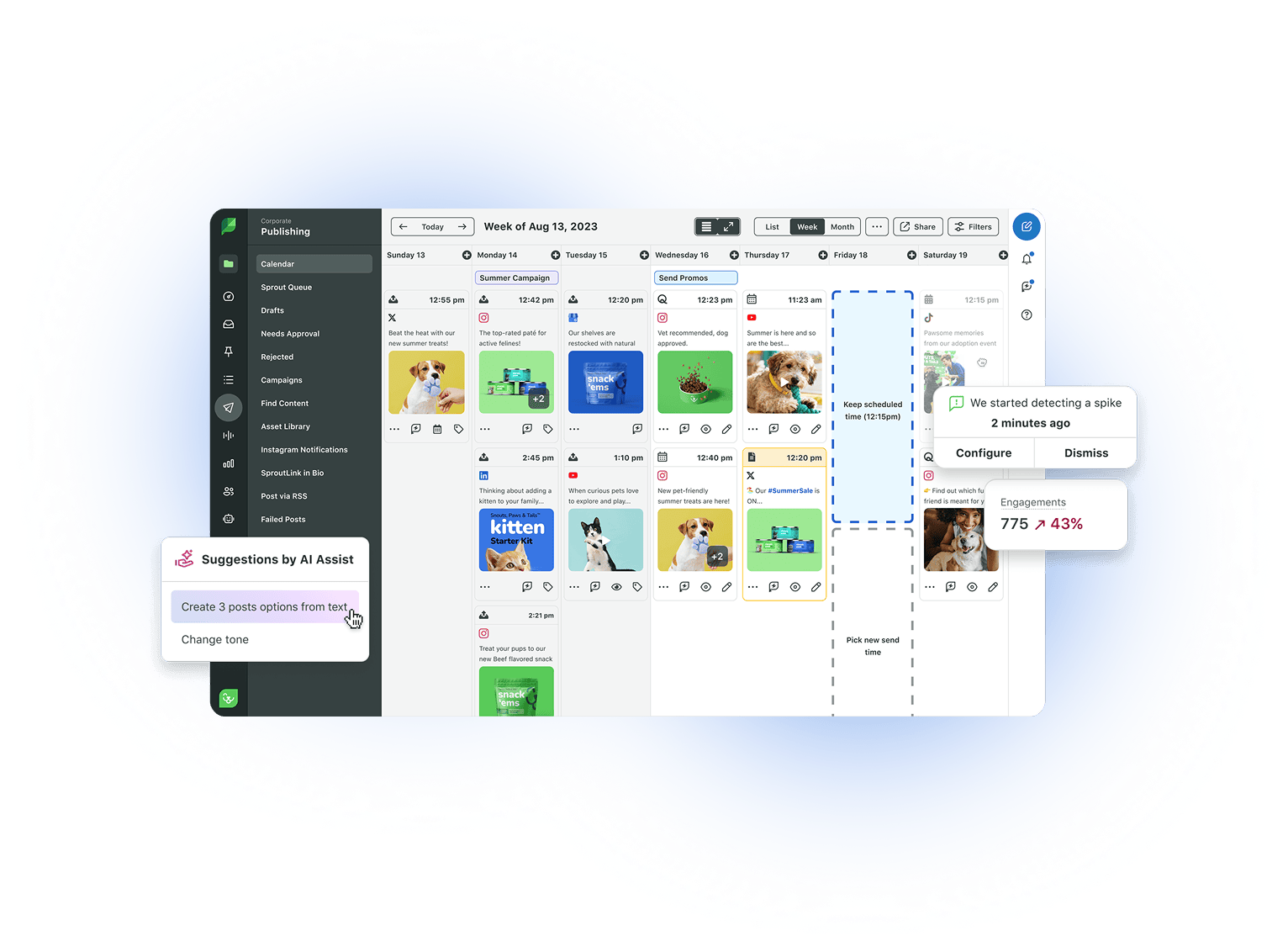
Build and grow stronger relationships on social