39 free social media strategy templates that will elevate your workflows
Published on August 20, 2026
Reading time 15 minutes
A buyer persona is a research-based profile of your ideal customer, built from real data about who buys from you, what they want and what stands in their way. Marketing, sales and product teams use these profiles to ensure every message hits the mark with the people they want to reach.
Think of it as a portrait of one person who stands in for a whole group of customers. You give that person a name, a job and a set of goals. Then every post, campaign and sales pitch speaks to them.
Nielsen Norman Group defines a persona as “a fictional, yet realistic, description of a typical or target user of the product.” Swap “user” for “customer” and you have the marketing version. You invent the person, but research supplies the details.
A strong customer persona covers:
Most brands build several personas, one for each key customer group. A software brand, for example, can build one persona for the daily user and another for the executive who approves the budget. Fill in each field faster with these free buyer persona templates.
A buyer persona turns scattered audience data into one shared picture of your customer. Your content team, sales reps and product managers all work from the same profile. That means sharper messaging and faster decisions—because nobody has to guess who they’re talking to.
Personas also support personalization, and consumers expect it.
Start with a target audience analysis to see who engages with your brand. Then, learn how to create buyer personas fueled by social data.
A target audience is the broad group you want to reach, defined by shared traits like age, location or interests. A buyer persona is one representative person inside that group, complete with goals and pain points. Your audience data tells you who’s in the room, and your persona tells you why they’re there.
Nielsen Norman Group notes that personas capture what analytics can’t: attitudes, goals and pain points. Numbers show patterns. Personas give those patterns a face.
You need both. First define your target audience, then build personas for the people inside it.
For a social-first view, social media personas focus on how each person behaves on social media platforms.
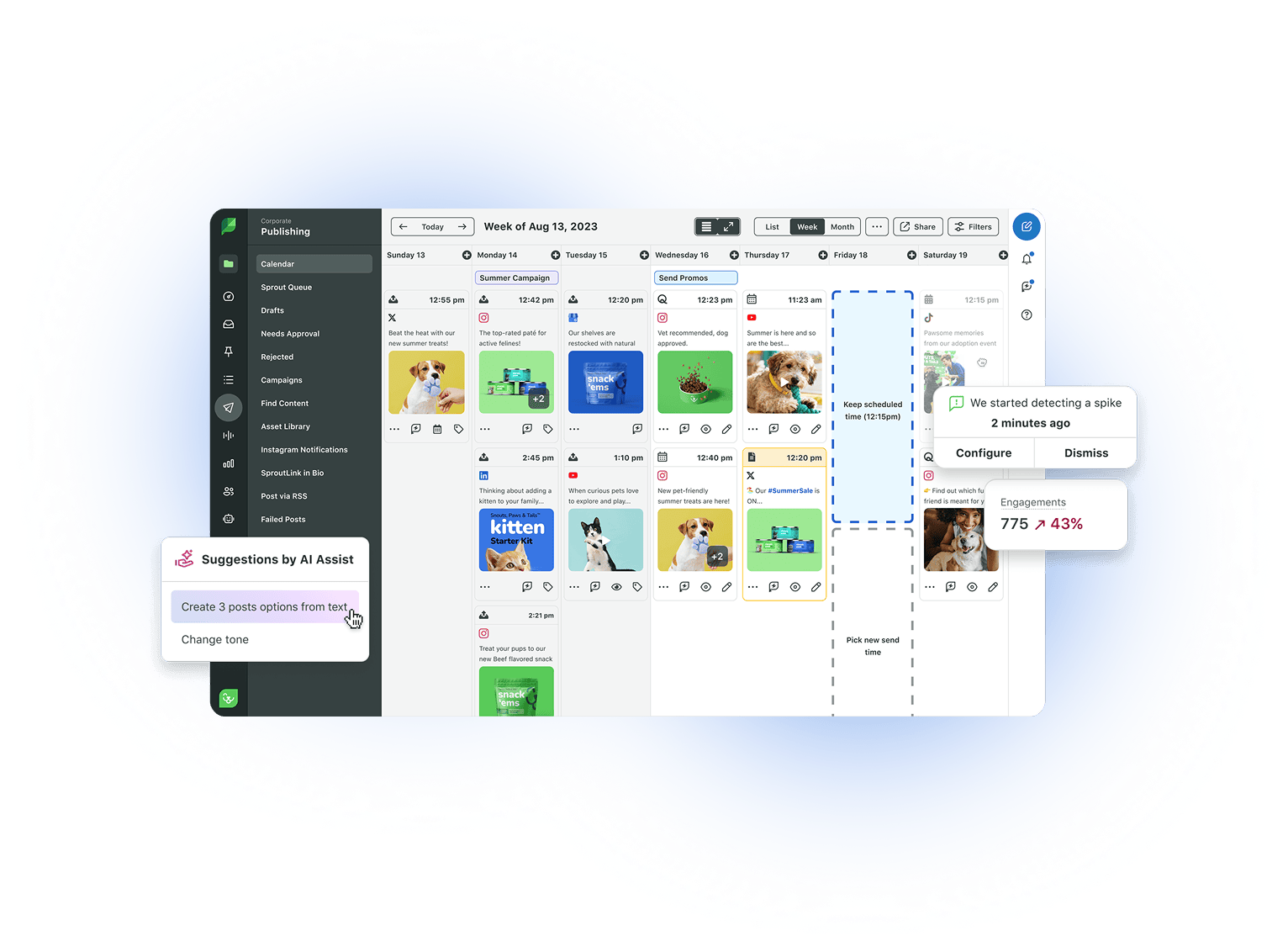
Great personas start with real conversations. Ground yours in what your audience is already saying with Sprout’s Social Listening, which quickly surfaces audience demographics, interests and sentiment. Start your free trial and put your audience data to work.
39 free social media strategy templates that will elevate your workflows

Build and grow stronger relationships on social