How to be successful on Instagram: From fundamentals to full-funnel

Written by Alex York
Published on November 11, 2025
Reading time 10 minutes

Table of Contents
Let’s put this notion to rest before we even start—you don’t have to be Instagram famous for your brand to see real results.
Instagram success isn’t just about follower count. It comes from a highly engaged audience, strategic content and a clear understanding of your goals. Developing a solid Instagram marketing strategy is what unlocks this success, turning followers into a loyal community and customers.
Whether you’re building your brand’s first profile or optimizing a complex global strategy, this guide provides a 7-step framework you need to turn your Instagram presence into a measurable business engine.
We’ll cover foundational strategy, profile optimization, content, engagement, growth and—most importantly—measurement to turn followers into a loyal community and drive business ROI.
What is Instagram marketing?
Instagram marketing is the practice of using the visual-first platform to connect with your target audience, build community and achieve specific business objectives. It’s a component of your larger social media strategy focused on building relationships and driving measurable results.
This approach is how you move beyond posting photos and videos to connecting your brand with people in ways that build trust and loyalty.
Key Instagram marketing components include:
- Content strategy: Visual storytelling that showcases your brand personality
- Community engagement: Authentic interactions with followers and industry leaders
- Performance analytics: Data-driven insights to optimize your approach
- Paid advertising: Targeted campaigns to expand your reach
Why Instagram marketing drives business results
Instagram drives real business results. The platform’s highly visual nature and integrated e-commerce features like Instagram Shops and product tags transform inspiration into immediate sales opportunities.
Data from the 2025 Sprout Social Index™ shows that 81% of consumers say social media compels them to make spontaneous purchases multiple times per year or more. When you showcase products through compelling visual content, you’re not just building brand awareness—you’re creating trackable purchase moments that drive measurable revenue growth.
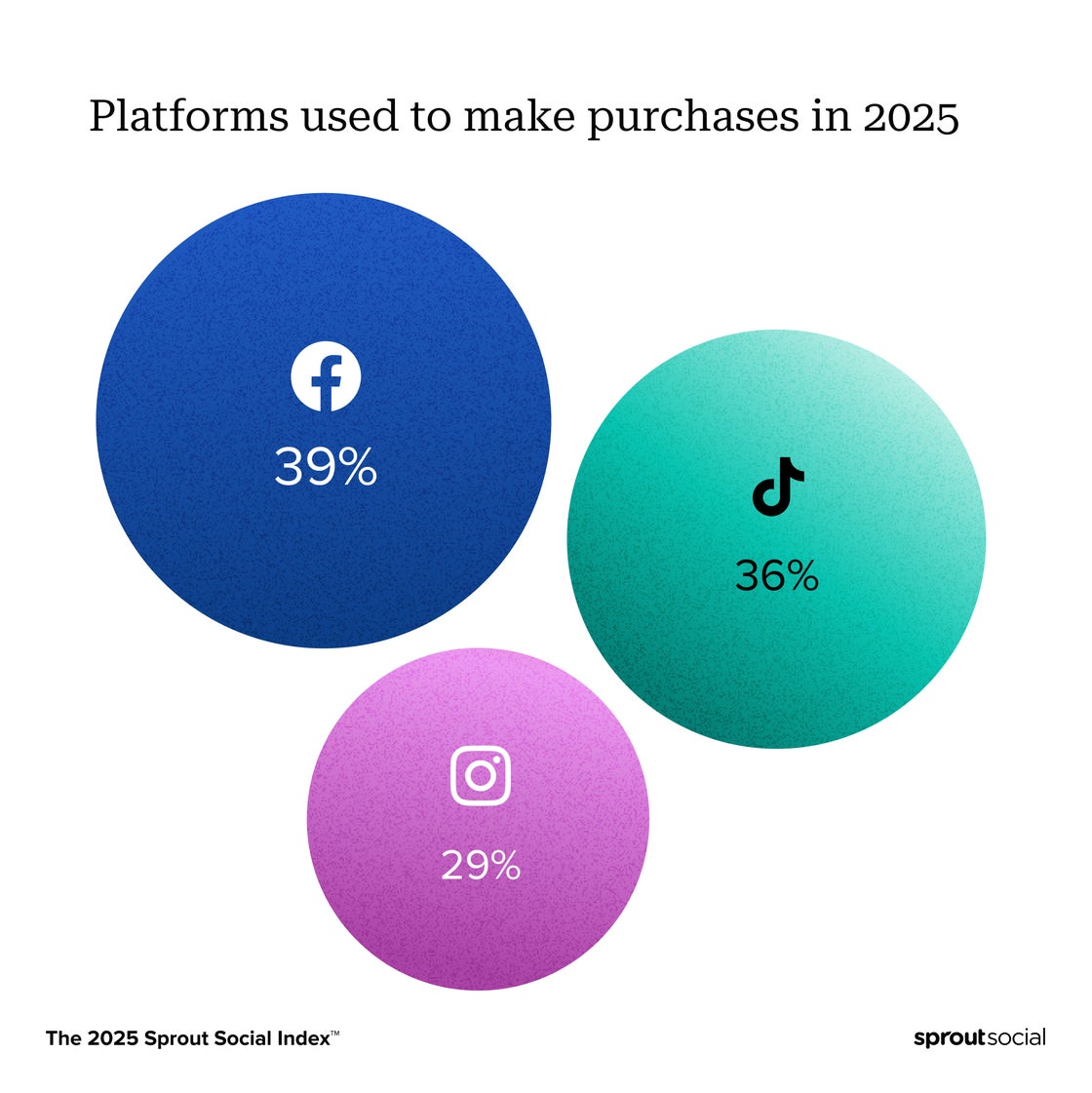
Instagram’s business impact includes:
- Brand discovery: Visual storytelling introduces new audiences to your products and services.
- Purchase influence: User-generated content, influencer partnerships and reviews drive buying decisions.
- Direct sales: Product tags and Shopping features enable immediate in-app purchases.
Step 1. Define your strategic foundation
Before you post a single Reel or research a hashtag, you need a “why” and a “who.” Many brands fail on Instagram because they post randomly; successful brands post with purpose.
A winning Instagram strategy is built on a clear foundation, not guesswork. This step ensures every piece of content you create serves a specific business purpose and resonates with a defined audience, turning passive scrolling into a predictable growth funnel.
Set your goals
If you’re just starting, the SMART framework is perfect for setting clear, actionable benchmarks. This framework turns vague hopes into a real plan.
- Specific: “We want to increase our follower count.”
- Measurable: “…by 15%.”
- Achievable: “…from 1,000 to 1,150.”
- Relevant: “…to expand our reach with our target audience.”
- Time-bound: “…by the end of this quarter.”
Other great SMART goals include: “Post 3x per week” or “Achieve an average engagement rate of 4%.”
For advanced marketers, this means translating platform metrics into business-level KPIs. “Increase engagement” becomes “Improve brand sentiment and Share of Voice (SOV) against competitors.” And “Drive traffic” becomes “Generate qualified, low-cost marketing leads (MQLs) for our sales funnel.”
Identify your audience
You can’t create compelling content if you don’t know who you’re talking to.
Go beyond the basic demographics available in your native Instagram Insights. These Insights are available in Instagram Business Accounts. Look for:
- Top locations: Where do your followers live (cities and countries)?
- Age range and gender: What is your primary demographic?
- Most active times: What are the exact days and hours your audience is most active? This is your key to finding the best times to post on Instagram.
Once you understand your demographics, build data-rich personas. Use an advanced social listening tool to uncover the “why” behind your audience’s behavior: their interests, their pain points, what they value and how they feel about your brand. This insight is the key to creating content that truly connects.
- Go beyond mentions: Use Sprout Social Listening to analyze audience sentiment, discover emerging trends and find pain points beyond your own mentions.
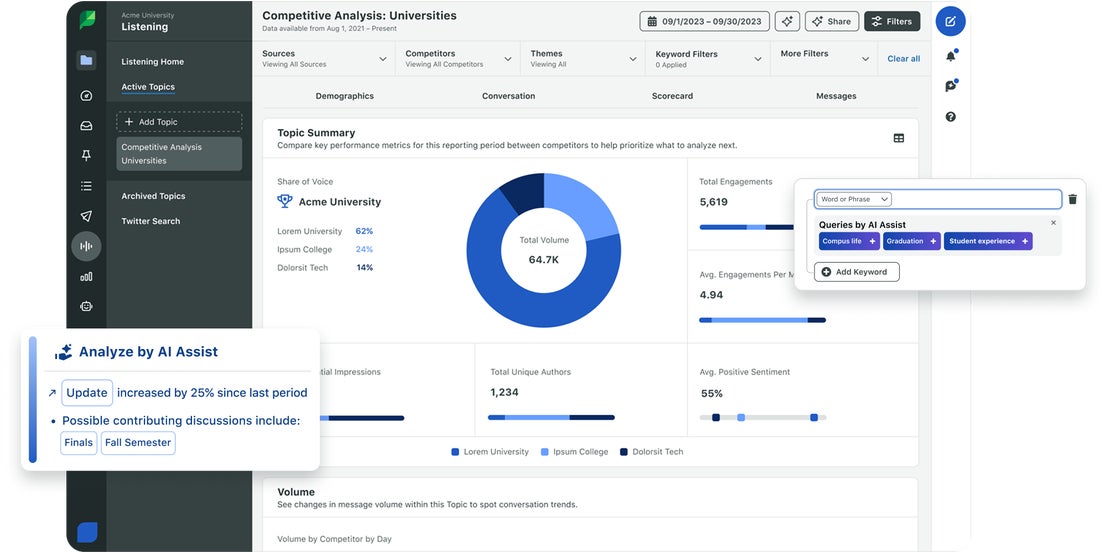
- Identify subtopics: What else is your audience talking about? If you sell hiking boots, listening might reveal they’re also passionate about sustainable travel and landscape photography. These are your new content pillars, allowing you to join the conversations they’re already having.
Step 2. Optimize your Instagram profile for discovery
Your Instagram profile is your brand’s digital storefront. It’s often the first impression a potential customer has of your brand.
Your profile needs to tell a user exactly who you are, what you do and why they should follow you.
Optimize your profile
First, ensure you have an Instagram Business Account to unlock analytics and advertising features. Then, optimize every element for discovery:
- Profile picture: Use a high-quality, recognizable logo.
- Handle (@username): Keep it simple and as close to your brand name as possible.
- “Name” field: This is a key Instagram SEO opportunity. The “Name” field (the bold text) is searchable. Don’t just put your brand name; include a primary keyword.
- Bio: You have 150 characters. Use them to state your value proposition clearly (what you do, for whom) and include a compelling call-to-action (CTA).
- Do: Clearly state what you do, who you do it for and your unique value proposition. Use line breaks and emojis for scannability.
- Don’t: Use generic phrases like “click the link below” (they know) or “welcome to our feed.”
Transform your Link in Bio from a link to a funnel
That single link in your bio is your most valuable piece of Instagram real estate. Don’t just link to your homepage.
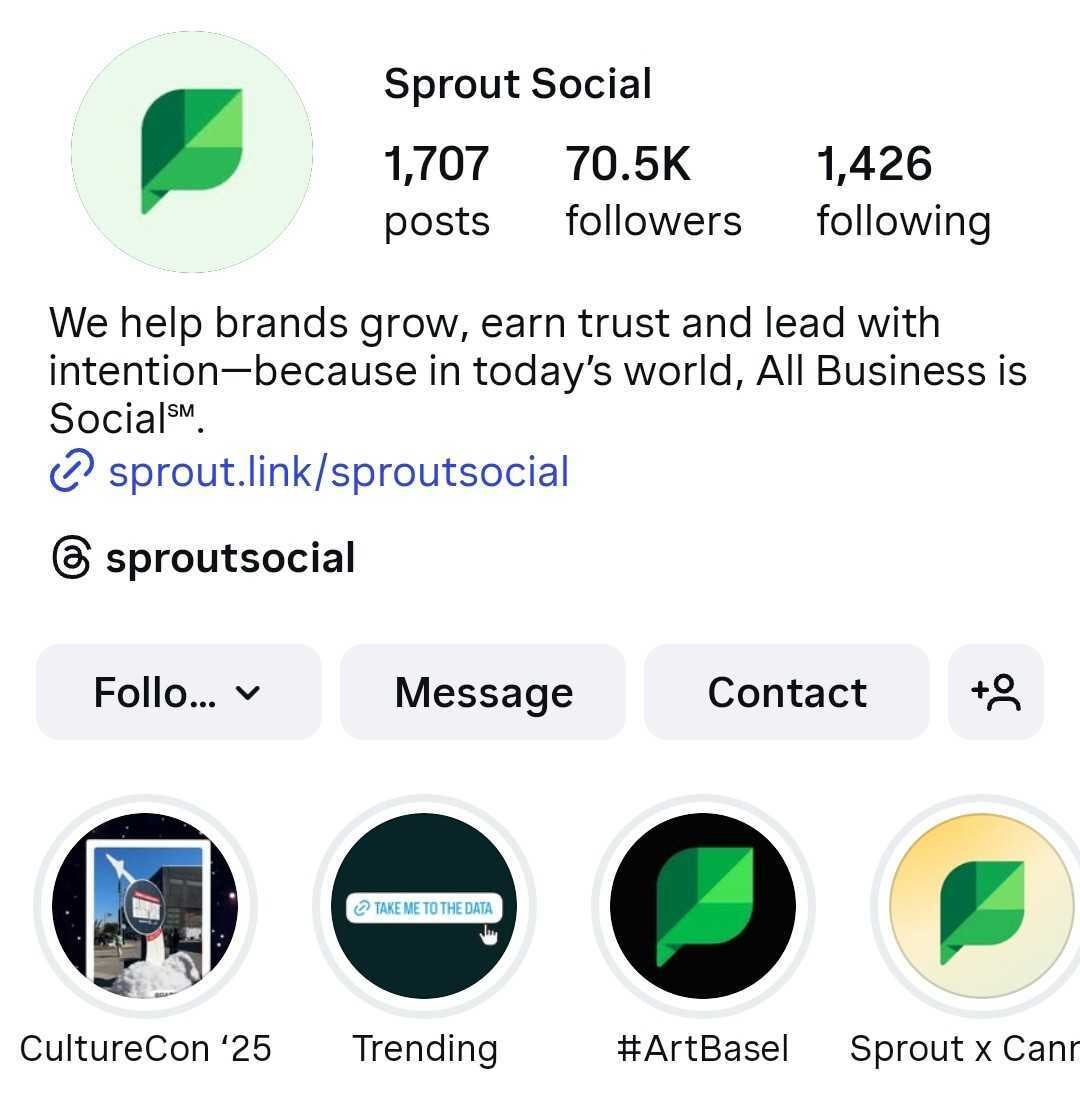
Use a link in bio tool like Sprout’s Link in Bio to create a mobile-friendly landing page that directs users to your most important content. For sophisticated marketers, this isn’t just a link list; it’s a critical attribution hub.
By adding UTM parameters to every link, you can track the entire user journey in your analytics platform. This is how you prove Instagram ROI, attributing website traffic, conversions, and revenue directly back to your Instagram strategy.
Step 3. Build your content strategy and engine
Your profile gets them in the door; your content makes them stay. A successful content engine runs on two things: a consistent brand identity and a strategic mix of formats.
Consistency builds brand recognition, while mixed content formats gives people a reason to follow, engage and buy.
Establish your brand identity
Your aesthetic and voice are the foundation of a recognizable brand. And a professional and memorable feed is built on consistency.
- Visual consistency: Define your aesthetic. This includes your core color palette, the fonts you use in Stories and Reels, and a consistent filter or editing style. This makes your brand instantly recognizable. This is where Sprout’s publishing tools are essential. You can use the grid planner to see how your scheduled posts will look, ensuring your feed always maintains its defined aesthetic.
- Tonal consistency: Define your brand voice. Are you witty, authoritative or inspiring? This voice must be consistent in every caption, reply and DM to build an authentic relationship.
Diversify with Instagram content formats
A successful Instagram strategy uses a mix of Instagram content formats, each with a specific job. Don’t just post what’s easy; post what’s strategic.
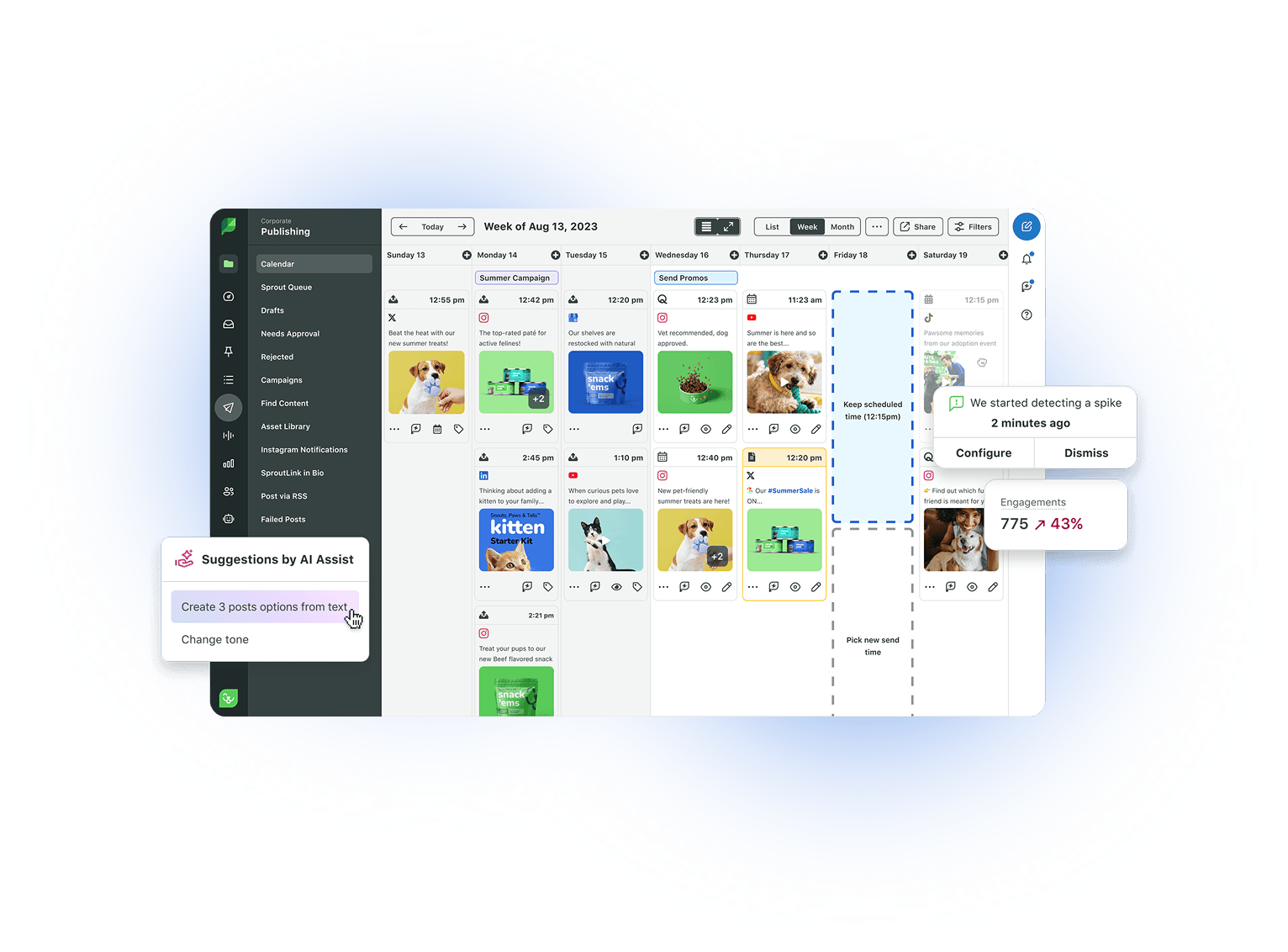
Using Sprout’s scheduling tools, you can plan and automate your entire content mix—from Reels and Carousels to Stories—all from a single calendar.
Reels
Reels is the number one format for reach and new audience discovery. To succeed with Reels, you must:
- Have a strong hook in the first 1-2 seconds to stop the scroll.Use trending audio that fits your brand’s message.
- Provide value—either through education (a quick tip, a mini-tutorial) or entertainment (a relatable joke, a behind-the-scenes look).
Carousels
Carousel posts tend to have high engagement and save rates. Because users spend more time swiping, the algorithm sees this as high-quality engagement. Carousels are ideal for:
- “How-to” guides and step-by-step tutorials
- Listicles (e.g., “5 Ways to…”)
- Brand storytelling or showcasing product features
Stories
Stories are your primary tool for building community and nurturing your current followers. The key is interaction. Use Instagram’s built-in interactive stickers to drive engagement, such as:
- Polls
- Q&As
- Quizzes
- Sliders
This not only boosts engagement but also gives you valuable, qualitative feedback directly from your audience.
Static posts and infographics
Don’t discount the power of a simple, high-impact image. Static posts and infographics are perfect for sharing easily “savable” or “shareable” content. They are ideal for:
- Impactful quotes
- Key industry stats
- Major brand announcements
- Simple, shareable tips
This “bookmark-worthy” content signals high value to your audience and the Instagram algorithm.
Step 4: Focus on engagement and authenticity
Engagement is the currency of Instagram. A high follower count is meaningless without a community that trusts and interacts with your brand.
The Instagram algorithm prioritizes content that sparks conversation. Your goal is to move from a broadcast-only model (“here is our post”) to a community-centric one (“let’s talk about this”).
Instagram engagement basics
The “must-dos” of community management are non-negotiable.
- Be responsive: Respond to comments and DMs promptly. As your account grows, managing this manually becomes a major challenge. Using a tool like Sprout’s Smart Inbox consolidates all your Instagram comments and DMs into a single, manageable stream. This ensures your team can manage engagement at scale and never miss a message.
- Be human: Avoid robotic, canned replies. Even large brands like Dr. Pepper find time for quippy, authentic responses.
- Spark conversation: Use your Instagram captions to ask open-ended questions and include clear CTAs (e.g., “Share your thoughts in the comments”) to encourage interaction.
Building a community on Instagram
To take engagement one step further, move from a reactive model of only replying to comments to a proactive model.
- Find untagged mentions: Use social listening to find and engage with conversations about your brand, even when you aren’t tagged.
- Foster advocacy: Build a scalable User-Generated Content (UGC) program. Encourage your fans to post, and reshare their best content (with credit). This build immense social proof and makes your community the hero.
Step 5: Use hashtags wisely
Hashtags are a tool for discovery, but the strategy has evolved. The “30-hashtag” myth is dead. Instead, focus on 3-5 highly relevant, niche hashtags that accurately describe your post.
Today, keywords in your caption and bio are just as, if not more, important for the Instagram algorithm’s search function. Write descriptive, natural-language captions that include terms your audience is actively searching for.
Instagram success pro tip: Remember to fully inspect your chosen hashtag as it is sometimes associated with something else. Avoid the embarrassment and be thorough with your hashtag campaign.
Understand Instagram hashtag analytics
Don’t just “set and forget” your hashtag strategy. You must measure what’s working.
Sprout’s Instagram Reports tracks your hashtag performance and shows you which hashtags are driving the most engagement and reach, allowing you to refine your strategy based on hard data, not guesswork.
Key hashtag insights include:
- Performance metrics: Engagement rates, reach and impressions by hashtag
- Audience behavior: Which hashtags drive the most meaningful interactions
- Brand mention tracking: Hashtags commonly associated with your brand
- Competitive analysis: Compare your hashtag performance against competitors and industry benchmarks

This data empowers you to refine your hashtag strategy based on actual performance, not guesswork.
Step 6: Amplify your brand
A strong organic strategy is the foundation, but amplification is how you scale and accelerate your success on Instagram.
Use integrated paid and organic strategies
Your paid and organic efforts should work as a single team. The most effective strategy is to amplify your top-performing organic content with a paid budget. This content is already proven to resonate.
Use your paid budget to push this content to new “lookalike” audiences or to build retargeting funnels based on users who have already engaged with your profile or watched your Reels.
Partner with influencers and creators
Influencer and creator partnerships are about borrowing trust and scaling advocacy.
Move beyond “celebrity” influencers and focus on niche or micro-creators who have a smaller, but highly engaged, following that aligns perfectly with your target audience. The key is authenticity. Nurture real relationships with these creators; don’t just send a cold DM with a “request.”
Step 7: Measure your Instagram performance
You cannot improve what you do not measure. The final, most critical step to being successful on Instagram is to track your performance and prove its value.
Tracking core performance metrics
Move beyond vanity metrics like “likes.” Focus on the metrics that signal true audience value and align with your goals.
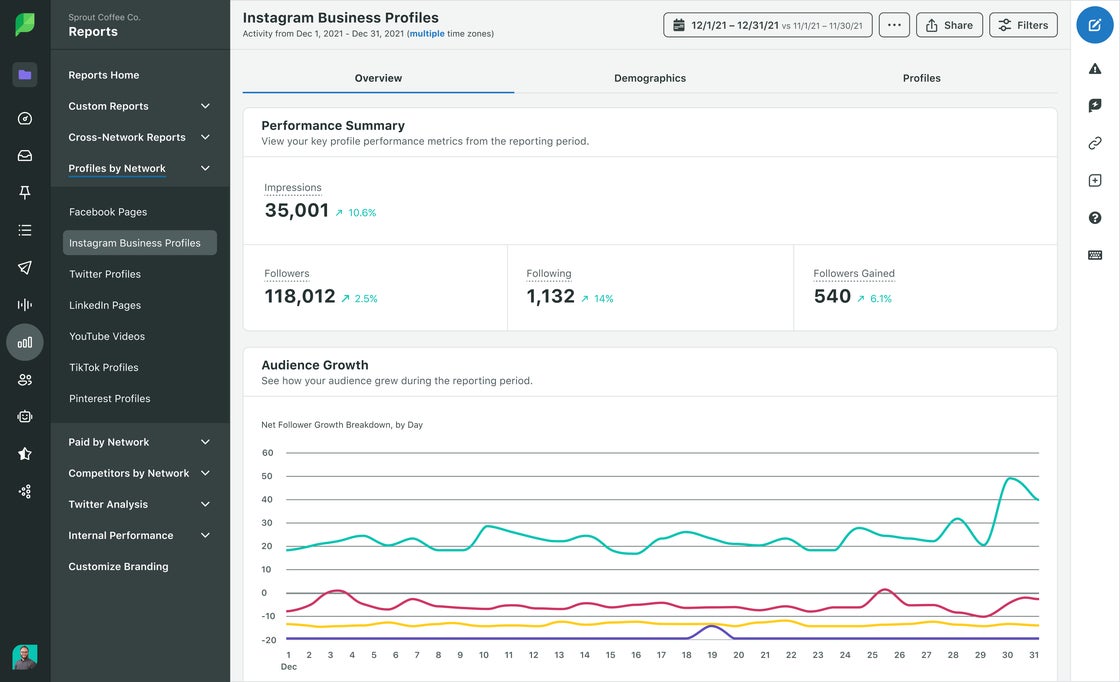
Essential Instagram metrics to track:
- Engagement metrics: Likes, comments, shares, saves and Story completion rates
- Reach metrics: Impressions, reach and profile visits
- Conversion metrics: Website clicks, link clicks and sales from product tag interactions
- Growth metrics: Follower growth rate and audience quality
Sprout’s Instagram analytics dashboard consolidates these metrics into actionable insights. Track post performance, audience demographics and engagement trends in one unified view. When you understand what’s working and what’s not, double down on successful tactics and pivot away from underperforming ones.
Proving business value and ROI to leadership
For marketers, this is the most important part. You must connect your Instagram activity to the C-Suite’s business objectives.
Build executive-ready reports that go beyond platform metrics. Use Sprout’s reporting tools to consolidate your data and demonstrate tangible business outcomes, such as:
- Social-driven revenue (tracked via your UTMs and link in bio)
- Cost Per Lead (CPL)
- Share of Voice (SOV) against competitors
- Customer Lifetime Value (CLV) from social-acquired customers
Take your Instagram marketing to the next level
Success on Instagram isn’t a secret. It’s a consistent, 7-step process: build a solid foundation, optimize your profile, create value-driven content, engage authentically, amplify your message, and measure what matters.
Whether you’re scheduling your first post or analyzing your quarterly ROI, Sprout Social’s all-in-one platform gives you the tools to manage your entire Instagram strategy.
Start your free trial today to see how Sprout Social’s full suite of Instagram management tools can transform your strategy.
Update: Meta has announced several Instagram metrics will be deprecated as of January 8th, 2025, which affects the functionality mentioned above. Read here for more information
FAQs about Instagram Marketing Success
What is the 5-3-1 rule on Instagram?
The 5-3-1 rule is an engagement strategy to build community. For every one piece of content you post, you should comment on five other posts and “like” three other posts from accounts in your niche.
What are the 3 C's of Instagram?
The 3 C’s are a framework for a successful strategy:
- Content: High-quality, valuable, and format-diverse posts.
- Community: Authentic engagement and relationship-building.
- Consistency: A regular posting cadence and a steady brand identity.
How long does it take to see results from Instagram marketing?
While you can see early engagement metrics (likes, comments) within weeks, significant business results like sales and qualified leads typically take three to six months of consistent, strategic effort.
What's the difference between Instagram marketing and Instagram advertising?
Instagram marketing is your overall strategy, including organic content creation, community engagement, influencer partnerships and profile optimization. Instagram advertising is a component of that strategy—it involves paying to promote your content to a targeted audience to increase reach and drive specific actions like website visits or purchases. The most effective brands combine both organic and paid tactics for maximum impact.
How often should I post on Instagram for business?
There’s no magic number that works for every brand, but consistency matters more than frequency. Most brands find success posting three to five times per week. According to the 2025 Q2 Sprout Social Pulse Survey, 57% of social users say posting original content series is the most important thing for brands to prioritize. Analyze your own performance data to see what frequency works best for your specific audience and resource capacity.
What Instagram analytics should I track for business success?
Focus on metrics that align with your business goals. Key analytics include engagement rate (likes, comments, shares, saves), reach, impressions, profile visits, website clicks, follower growth and conversion rates from your link in bio or product tags.
These metrics demonstrate the business impact of your social efforts and support you in proving ROI to executives who need to see how Instagram contributes to revenue and business growth.




Share