Navigating social media compliance while moving at the speed of social

Businesses across industries rely on social media to connect with their audience—including brands in highly regulated industries like the financial, government and healthcare sectors.
But in these industries, social media comes with high risk due to considerable legal and regulatory requirements. Failing to meet social media compliance obligations could result in major blowback, like reputation ruin, steep fines and legal action.
Another complication: Customers expect brands to respond publicly and quickly on social media, but many teams are buried in approvals. The Q3 2026 Sprout Social Pulse Survey found that 38% expect a brand to respond to a social customer care inquiry within 1 to 2 hours. This is on top of already increased expectations found in the Q2 2026 Sprout Pulse Survey, which found that social is the number one place consumers first hear about a brand crisis, and 64% think it’s important for brands to respond publicly on social.
The 2026 Social Intelligence Report further found only 10% of businesses can act on a social media insight within hours, a costly disconnect from what consumers want. So brands in serious industries need to build compliance into their social workflows to stay ahead of the potential pitfalls and move at the speed consumers demand. In this guide, we’re exploring how you can factor regulatory bodies and laws into your social media strategy, considerations to stay in the clear and tools that can help alleviate risk.
Section 3
Are there any laws regarding social media? Key regulations to know
No single law or policy governs social media, but many apply to these networks. Depending on your brand’s location, you may have local, regional, national and international guidelines to consider.
Compliance is an evolving landscape, and new mandates like the WCAG 2.1 AA standards for SaaS procurement are now critical for government and enterprise agencies. By following social media compliance from your industry’s regulatory body, you can maximize the benefits of social while minimizing your company’s risks.
Here is a high level guide to specific regulatory bodies that govern high-risk industries.
| Regulation | Region | What it Covers | Impact on Social Teams |
| GDPR | EU/EEA | User rights and consent to data protection | If you target audiences in the UK or EU, you need to track how consumer data is used and stored in messages, ads and more. You’ll need to be prepared to remove data if requested. |
| CCPA/CPRA | California, US | Consumer data privacy and rights, opting out of sharing personal information | Similar to GDPR, you will need to understand how data from consumers in California is stored and used on your platforms, have ways for them to opt out and be prepared to delete personal data upon request. |
| COPPA | US | Children’s privacy on websites that collect info on kids under the age of 13 | Know if your website collects this information if you link to it from social; ensure parents are informed about any data collection on social |
| FTC Endorsement Guidelines | US | Advertising disclosures, eliminating fake reviews, proper endorsements | Your influencer campaigns should be transparent, clearly labeled and avoid misleading claims |
| HIPAA | US | Protected health information of individuals | If you’re a brand in this space, carefully consider how patient stories are shared and discussed |
| FINRA/SEC Recordkeeping | US | Financial services, record keeping, communications | Build in strong record keeping and review for all influencer campaigns and claims-based social content |
| PCI DSS | Global | Transactions, card processing | If you sell products on social networks or link to a retail website, you’ll need to meet these standards |
| EU AI Act | EU | AI transparency and disclosure | For content shared with EU audiences, any generative AI usage must be disclosed. |
| ASA/CAP | UK | Marketing and advertising standards | All social ads and influencer campaigns should be clearly marked as such |
Industry rules at a glance
For certain industries, specific regulations and nuance about what you can and can’t do apply. Here are four fields with specific considerations.
Financial services
Financial services brands must follow the governance of regulatory bodies like the FTC and FINRA. As such, they must be extremely careful when advertising and selling their tools and services—avoiding misleading claims and information in their promos, and clearly explaining the benefits they tout. You can stand out and remain compliant by offering resources and leaning into local angles where possible.
Onpoint Community Credit Union is a regional credit union in Oregon and Washington. They use their Instagram account to talk about local recommendations and share memes and videos that avoid discussing risky topics. Their social accounts reflect their approachable, local focus and shows the real team members customers will see when they come into a location. It’s a way to build trust by connecting on a human level without crossing regulatory lines.
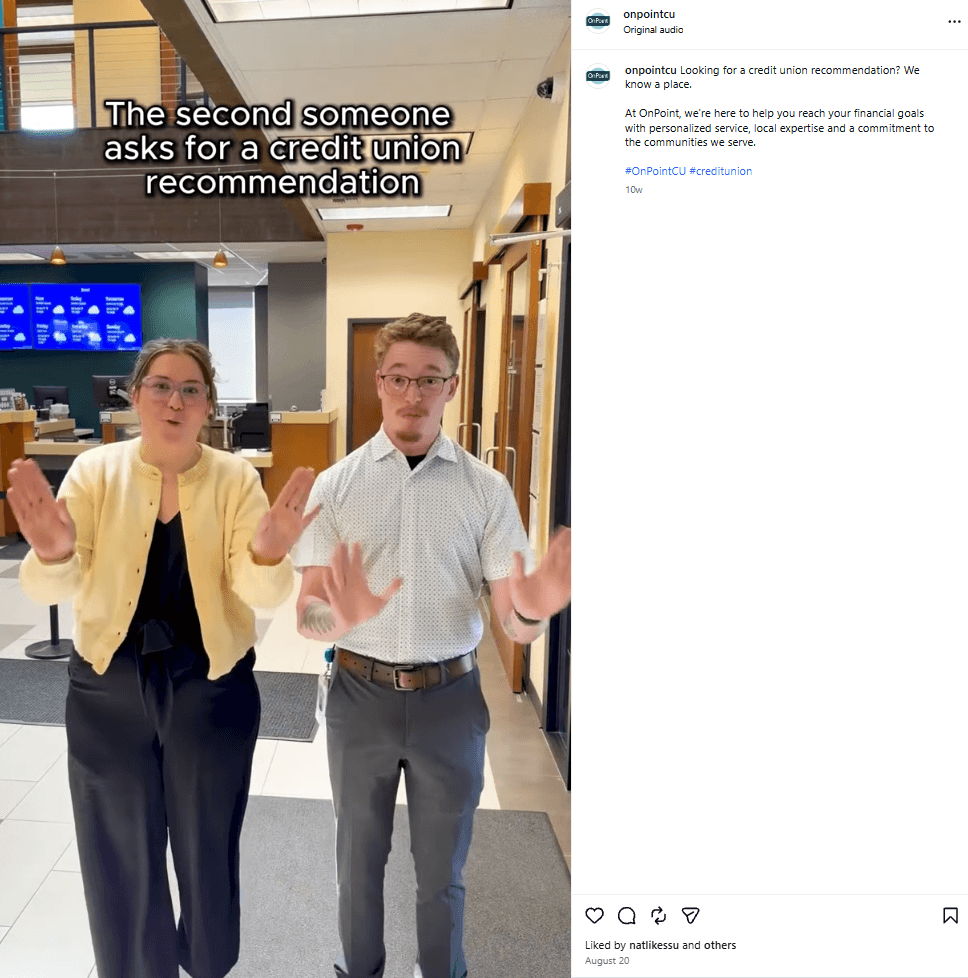
What this means on social: It’s okay to have fun as a financial brand on social. Aim to educate and inject humor where it makes sense, directing customers to the proper channels for specific questions.
To help your team manage regulated industry requirements, we’ve created a social media compliance checklist for financial institutions that outlines key steps and best practices.
Looking for another financial services example? We interviewed Monzo Bank’s Head of Social, Richard Cook, on their social strategy.
For more, read our complete guide to social media for financial services.
Healthcare
Hospitals, doctor’s offices, insurance companies and even wellness brands have many regulations to be aware of on social media. HIPAA is a critical piece of keeping patient information private, and brands in this industry should also be aware of FTC and even FDA requirements when discussing medication or supplements.
One way to talk about the work you do without crossing a line with patient information is to elevate your team members. Healthcare system CommonSpirit creates videos featuring clinical staff to educate patients and the public on topics like annual exams.
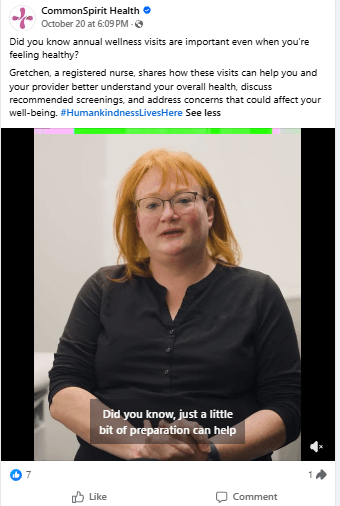
The brand also uses social to share updates about new locations, staff and volunteer events. These posts showcase the brand’s culture while elevating the faces that patients see every day. It adds a human touch that deeply matters in healthcare.
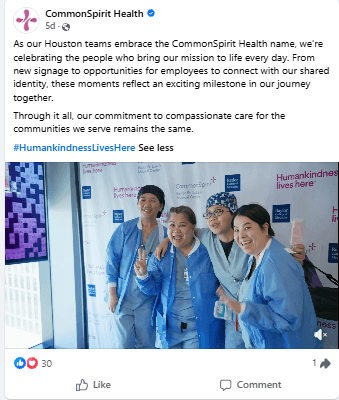
What this means on social: Tap your team and their expertise to talk about what matters to patients without running afoul of HIPAA. Make sure your social team are experts in your industry’s regulations. Create company-wide policies that help you stay compliant with the guidance of regulatory bodies and prepare for the unexpected.
Looking for more ways to meet your patients’ needs on social? Check out our guide to social media and healthcare.
Higher education
Social media is a key channel for universities and colleges to communicate with students about recruitment, events, classes and timely updates. Sharing any information or images of students requires an understanding of FERPA in the US and GDPR in the EU, and schools should be ready to delete student information upon request.
These networks are also a way for schools to share details with the public about the exciting research, experiments and inquiry happening in their departments. Cambridge takes this approach to share creative video content that remains compliant while spotlighting discoveries and studies happening on campus.
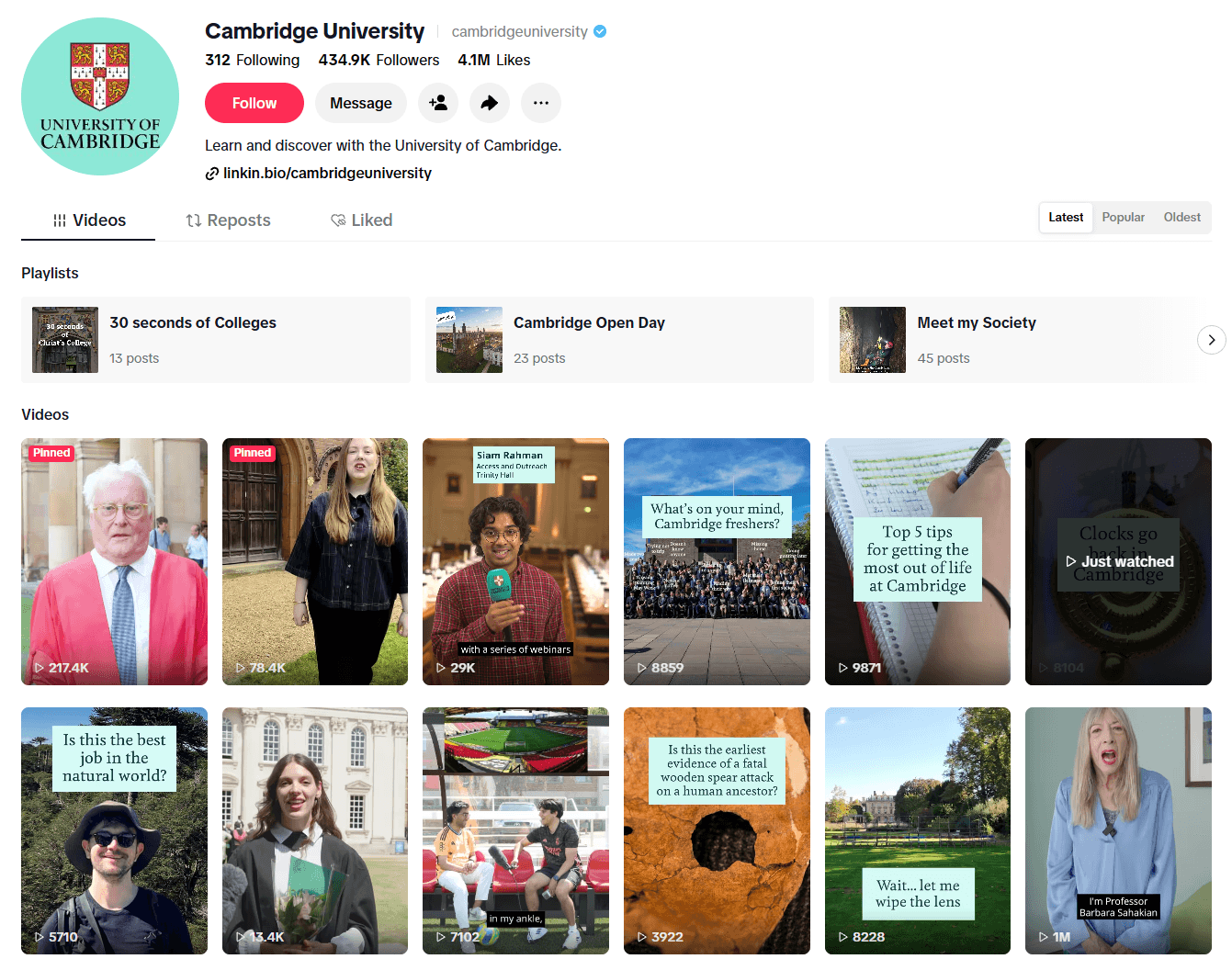
What this means on social: Balance compliance and education by keeping student-focused content in line with privacy and permission requirements, and use the power of social to highlight the important work your school does.
For more ideas on starting the conversation on social as a higher education institution, download our playbook.
Government
In many ways, social is like a 24/7 town hall meeting between a city or other locale, leaders and constituents. It’s key to promoting local business and events, humanizing the city government and building trust. Social media is a tool for transparency, combating misinformation in real time and promoting what makes an individual place special.
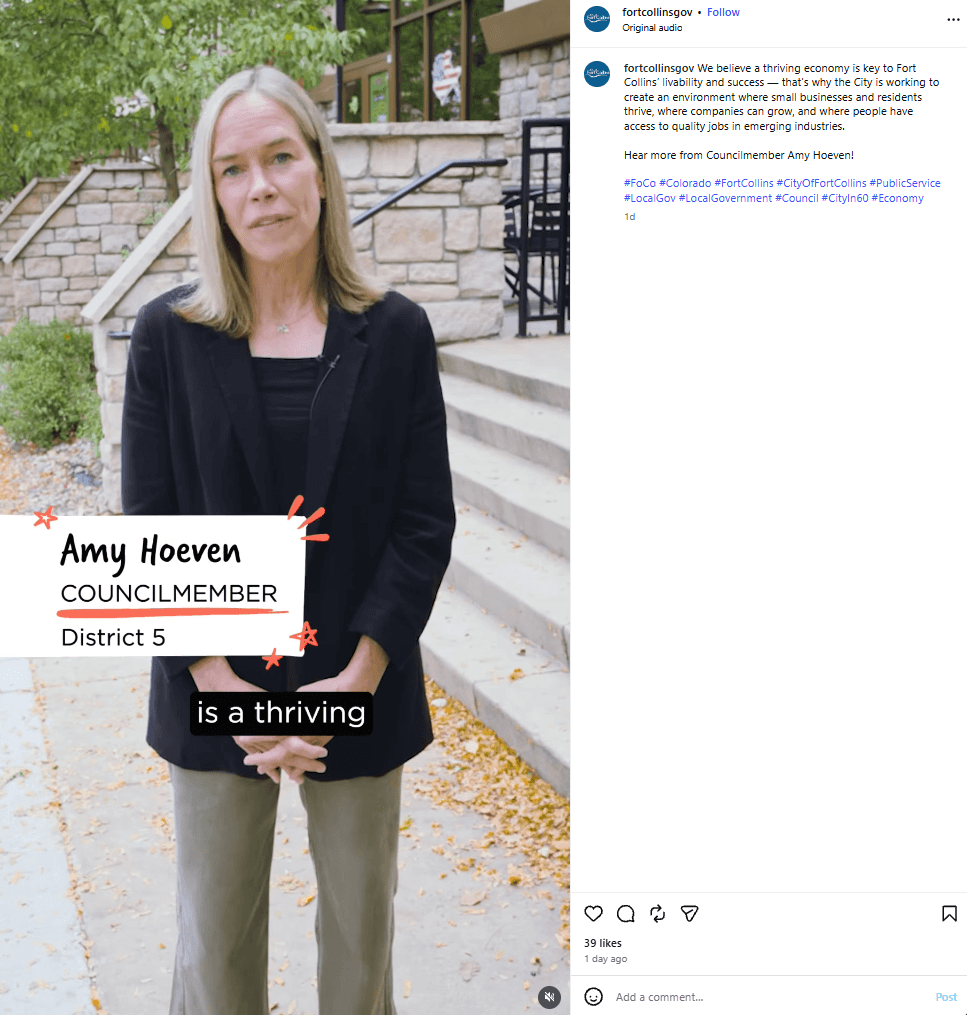
The city of Fort Collins, Colorado, US, uses their official Instagram account to post a “City in 60” series featuring quick discussions on important topics from city officials. To keep things compliant, their link in bio includes a link to the city’s social policy and disclaimers.
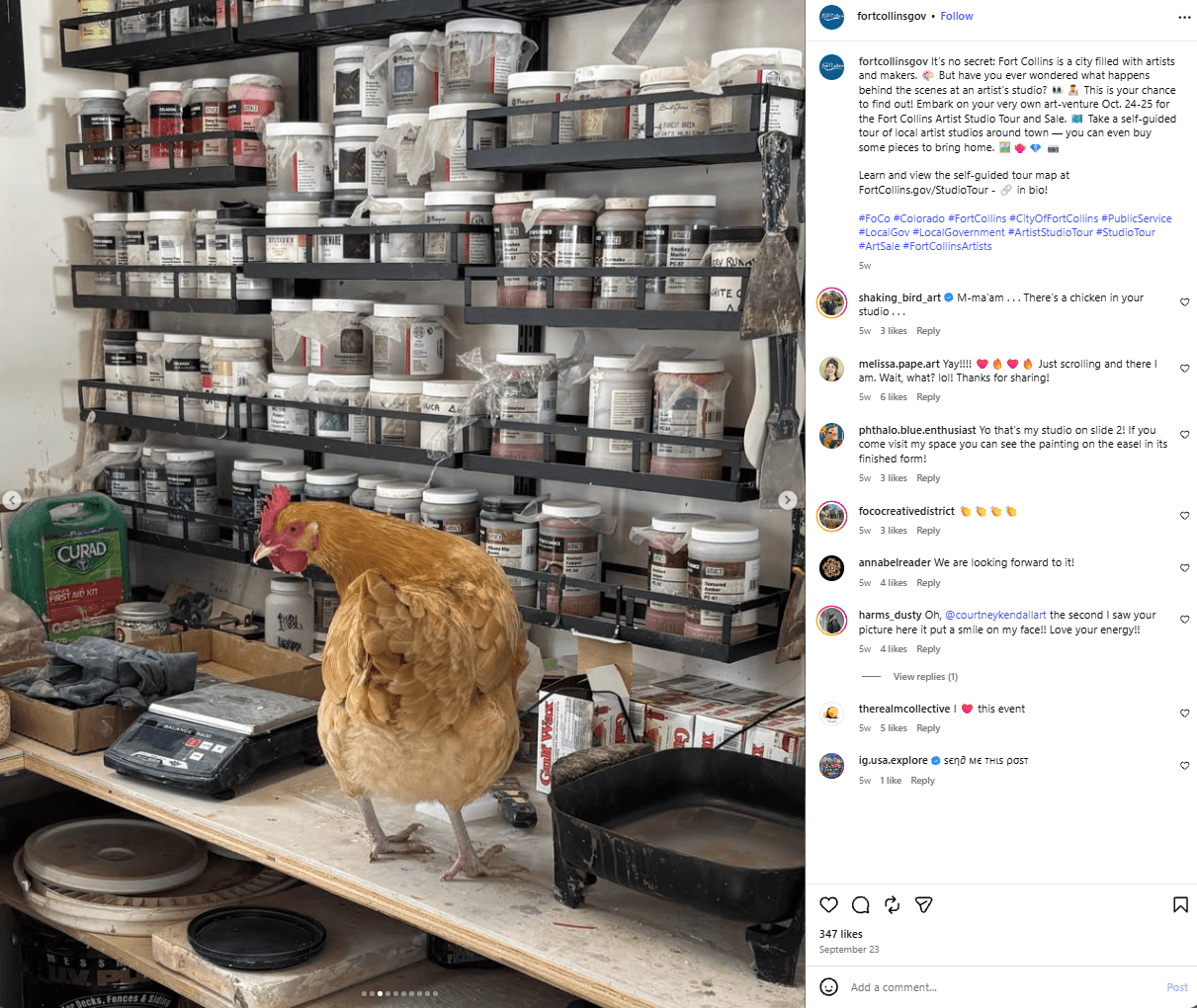
The city also promotes arts, culture and seasonal events through social media. One example is a carousel of photos highlighting participants in an art studio crawl where guests could peek inside studios and buy local art.
What it means for social: Use social to engage citizens in your constituency. Create “edutainment” content that educates and entertains your audience, while quickly responding to misinformation and crises. Above all, remember to respect the privacy and user data of your followers and citizens you represent.
Want to see more examples of engaging content from government agencies? Read our guide to social media and government.
Section 4
The biggest social media compliance risks
While specific social media compliance regulations vary by industry, some risks are common in any field. Here are the biggest ones to keep an eye out for.
Publishing risks (what you send out)
Your content is a prime source of compliance issues. It’s always smart to check content before you hit publish to make sure everything is on the up-and-up. Make sure there are no unapproved claims or things regulatory bodies say you can’t mention, and ensure all appropriate disclosures are included. Check that all captions and text align with your brand voice and follow the guidelines for representing your brand on social.
Engagement risks (what customers send in)
Customer data management is an everyday part of social media and digital marketing. It makes it possible to engage your audience in the right way by creating customer-centric strategies and personalized experiences. From social data alone, you can learn about your customers’ demographic and psychographic information, interests and hobbies, other brands they follow, what content they engage with and their feelings toward your brand, products and industry. All PII in these categories is your responsibility to protect.
Without effective management strategies in place, your customer data is subject to data breaches that cost you customers’ trust, which can result in business loss and legal damages. Customers may send information in DMs, comments and customer service cases on social media. If a customer service agent asks for sensitive data in the wrong channel, it can put that data at risk. Proper data management is critical, including:
- Gather information with customer consent.
- Invest in management software.
- Train your team.
- Regularly back up and update your data.
Data management is also a consideration for customer comments and interactions on your social channels. Customers may reach out with concerns via a post comment and share details about themselves or an order in the process. If a customer starts a complaint in a public space, acknowledge it before moving to a private channel. About half of users expect this according to a Q3 2026 Pulse Survey, so get them to a more secure channel as soon as possible.
Recordkeeping risks
Recordkeeping on social media is important whether or not you’re subject to something like FINRA’s guidelines. You never know when you’ll need to show proof of a past conversation or piece of content. Incomplete archives can hinder legal proceedings or customer disputes.
Include a way to track deleted or edited content in your record keeping, especially if the edit involved fixing an inappropriate claim.
Brand reputation and trust risks
Employees using social media to talk about your company is a good thing, as they can be some of your best brand advocates. Yet, the dangers of employees’ individual social media use are massive. They could accidentally break confidentiality agreements, share your brand’s intellectual property or put customer data at risk. There’s also a chance they say something that goes against your brand’s values, leading to a PR crisis. Even if employees don’t say something about your business directly, if they list you as their employer and post something inappropriate, it could still reflect poorly on your company.
To proactively mitigate these risks, you should develop a clear employee social media policy. A well-crafted policy can do much more than protect your brand’s reputation—it protects your company’s security, privacy and legal interests.

Content creators and influencers you partner with, or who talk about your brand on their own, also pose a risk. Our Influencer Marketing report found that 32% of marketers find disclosure and compliance guidelines in influencer marketing challenging. Make sure partner content is thoroughly reviewed before going live. And while you can’t control what someone you aren’t working with says, you can address misinformation and false claims on your channels.
As AI-generated content also saturates social media, your brand may be at risk from fake videos or images, imposter accounts and even your own AI-assisted tools. Be on the look out for external items you can counter publicly, and put governance in place for any tools you’re using. This includes being transparent about usage: posting AI content without labels is the top thing consumers want brands to stop according to the Q1 2026 pulse survey.
Section 9
Compliance is necessary but also your competitive advantage
Navigating social media can be a challenge for any business, but brands in regulated industries like healthcare, finance and government face additional compliance roadblocks. Each of these sectors is under significant pressure to balance growing their social presence, engaging their audience and following the guidelines drawn by regulatory agencies.
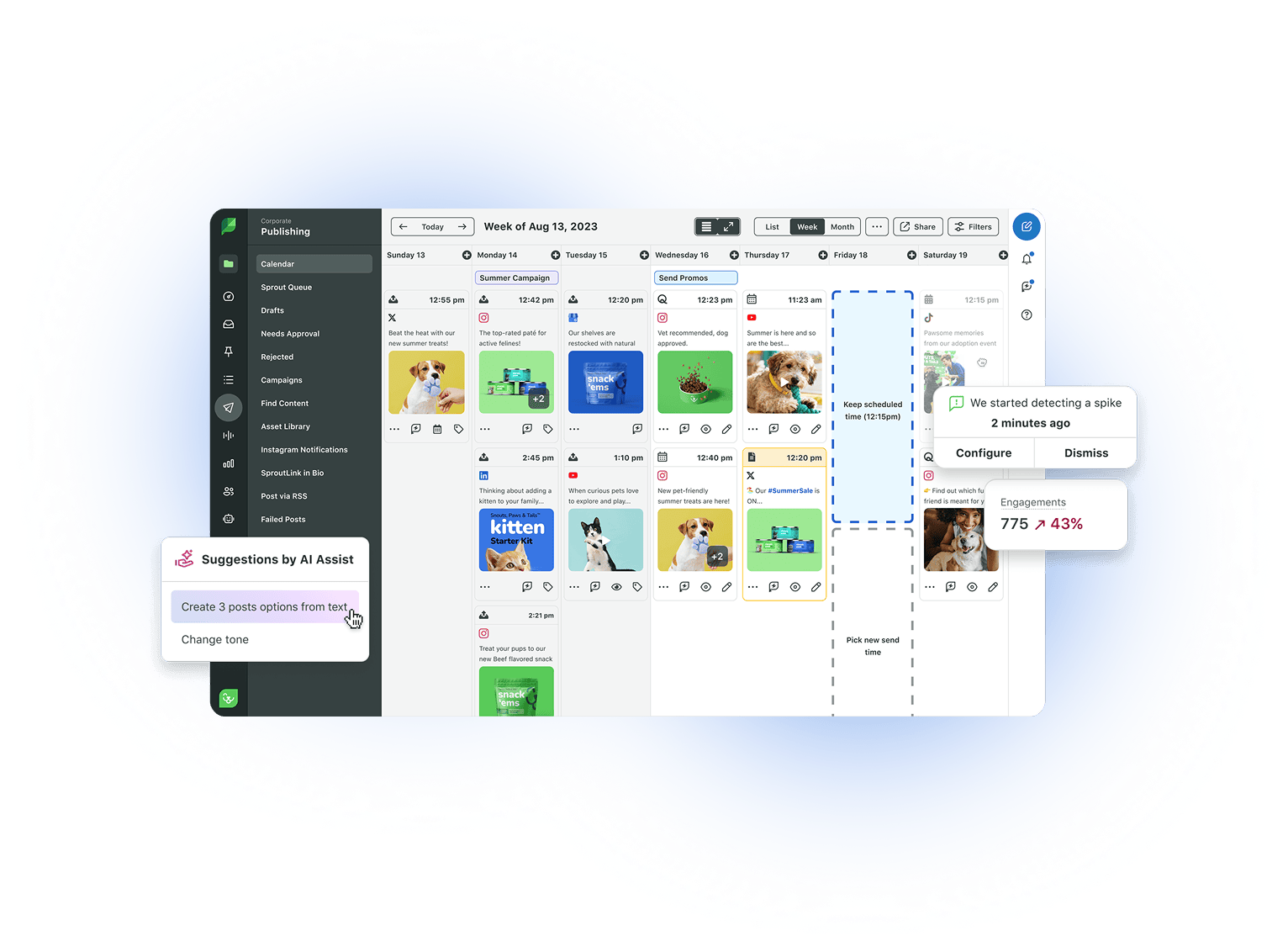
Teams that build compliance directly into their social workflows move faster and earn trust from their audiences long term. A centralized social media management tool like Sprout Social is invaluable for navigating compliance across these regulated industries. Capabilities like message approval workflows ensure that all outgoing communications are reviewed and comply with industry-specific regulations like FINRA, FERPA, HIPAA and public records laws.
With Guardian’s additional capabilities in permissions, archiving and enhancing brand communication, your team is empowered to handle proactive compliance. Protect your brand’s reputation, build customer loyalty and put protocol in place to meet regulatory guidelines: request a demo of Guardian.




Section 6
Social media compliance monitoring: What to watch and how
Teams should regularly monitor their owned channels, including comments and DMs, for adverse events, complaints and PII that may have slipped through the cracks. Note imposter accounts, employee content and creator posts that are out of alignment and reach out to fix as soon as you find them. Sprout Social Listening helps with monitoring your entire social media ecosystem so brand content across teams, regions and channels fits your compliance requirements.
As you roll out influencer campaigns, establish what brand values must be reflected in your partnerships. When you research potential creators to work with, look for other companies they’ve worked with, as well as content (whether theirs or the comments of their followers) that stands out as a potential compliance issue. Do they clearly mark their ad partnerships and word product claims appropriately? With Sprout’s Influencer Marketing Brand Safety tools, you can easily vet based on your parameters and generate brand safety reports about creators you’re interested in. The reports flag content that could be out of compliance or misaligned with your brand values.
Also monitor broad media and news conversations to spot discussions relevant to your brand. A tool like NewsWhip by Sprout Social offers early detection of reputation risk so you can jump in before it spirals. NewsWhip brings together fragmented media sources in one place to spot and predict conversations to help protect your brand over time.