How to use social media audience segmentation to drive smarter business decisions

Written by Rebecca MacFarlane
Published on October 28, 2026
Reading time 11 minutes

Table of Contents
Summary
- Social media audience segmentation is the act of classifying users into defined groups based on traits, beliefs, behaviors or location details shared on social.
- Key types of social media audience segmentation include: demographics, psychographics, behavioral and geographic.
- Tying your segments back to business initiatives and sharing segment data with cross-functional teams enables your company to reap the most benefits, such as increased engagement, retention and revenue.
- Segmenting your social audience isn’t a one-time effort; it’s an iterative process you should revisit at least once per quarter.
For brands, social media is a goldmine of real-time insight into consumers’ preferences, behaviors and motivations. And segmenting social users intentionally—using live conversation data rather than static demographic details—empowers leaders to make smarter business decisions, whether it’s optimizing spend, discovering new markets or driving revenue.
But social media audience segmentation isn’t a one‑off marketing exercise. It’s a dynamic, cyclical process designed to spot emerging opportunities and inform data-grounded strategies.
With the help of this guide, you can better understand how to approach social media audience segmentation and use it to make an impact across the business.
What is social media audience segmentation?
Social media audience segmentation is the process of breaking down your target audience that’s engaging on social networks into smaller, distinct groups based on shared characteristics, behaviors or interests.
In contrast to broader marketing segmentation, social segmentation draws on real-time social data. Think live conversation, engagement and sentiment data, rather than CRM or survey inputs that may reflect the past and not a user’s present feelings.
Segmentation is one of the many pillars of social media intelligence, helping organizations move beyond broad audience assumptions by uncovering the distinct groups driving conversations online. Teams can then make more targeted decisions aligned to the current pulse of the market across customer care, product innovation, campaign planning and overall business strategy.
Why audience segmentation matters more than ever
One of the key factors driving the need for segmentation is the degradation of trust and attention among consumers.
According to the Q1 2026 Sprout Pulse Survey, consumers are becoming more particular about what they engage with online, with two-thirds (66%) feeling more selective than a year ago. AI slop (i.e. undifferentiated, one-size-fits-all content) was cited as a contributor to eroding trust; 56% of respondents said they see AI slop often or very often.
Many brands are mistakenly investing in this generic content. This ultimately results in wasted budget as platforms are increasingly rewarding relevance over reach.
Segmentation is what enables brands to achieve personalization and, in turn, resonance with their audiences—without necessarily needing to increase headcount or budget.
4 types of social media audience segments (and where social data fits)
Let’s take a look at four key types of social media audience segments, what they tell you and the social signals that paint the picture of who they are.
Demographic segmentation
Basic demographics like age, gender or follower count are a reasonable starting point in creating social media segments. This data is garnered via self-disclosure (i.e. a user inputs this information when creating a profile), network-level audience demographics reported by ad managers or analytics tools.
While these details don’t tell you much on their own, they can reveal behavioral trends. For instance, you may see a generational skew depending on the networks and content formats a person engages with. In general, Instagram Reels and TikToks attract a younger audience, while Facebook’s most active users skew older.
However, it’s important to note that demographics don’t provide the soundest basis for segmentation because the data is often self-reported. Users may skip fields or deliberately enter false details to protect their privacy or access age-restricted content.
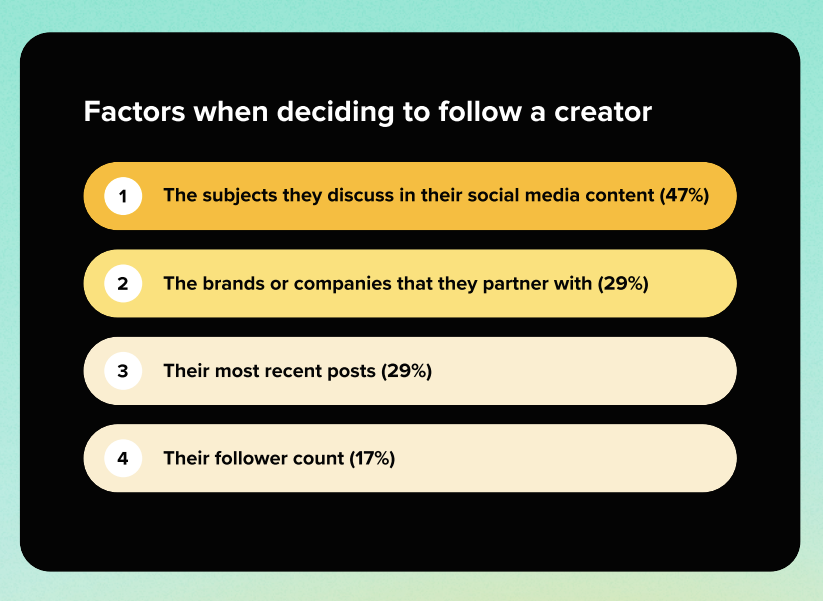
Demographic-based targeting is also losing its predictive power. Per the 2026 Influencer Marketing Report, only 17% of consumers check follower count before following a creator. For nearly half of respondents (47%), things like content topic and behavior matter far more.
With that in mind, demographics should be used as a starting point rather than a primary segmentation driver. Instead of examining people’s surface-level traits, look at the things they say and do unprompted on social. These signals are more dynamic and indicative of how people identify themselves.
Psychographic segmentation
Psychographics is the classification of people based on psychological criteria—such as values, attitudes or motivations—that influence their engagement and consumption patterns.
To segment your social audience by psychographics, review their comments, posts and shares. The content they post or engage with can tell you a lot about their internal beliefs. Your brand can then use these insights to tailor its content and target these users more closely.
For example, if your audience members regularly post about climate change and sustainability, you can place them into an environmentally motivated segment. From there, you can center your messaging around subjects related to your brand, like ethically sourced materials, reusable products or community initiatives.
Behavioral segmentation on social
While psychographics focus on what users believe, behavioral segmentation shines a light on how they behave on social. The actions they take, the conversations they partake in and the content formats they engage with.
To build behavioral segments, brands must observe audiences’ patterns. How often do they post? What formats do they share (e.g. static images, carousels, Reels)? What are they talking about in comment sections? Whose posts are they commenting on?
Finding the answers to these questions can unearth important information about consumers’ decision-making and motivations. In addition to seeing how people behave, you’ll begin to understand why. You won’t just see who they interact with, but who they really are behind the screen.
Say you identify a segment of users consistently participating in giveaways, promo codes and engaging with shopping-on-a-budget content. With this data, you can glean what might be most important to them when making purchase decisions: fair pricing and discount offers. From there, you can tailor your social messaging accordingly, whether it’s highlighting affordable prices or sharing the outsized value of your offerings.
Geographic segmentation
A person’s physical location shapes their social and spending habits—and the two often go hand in hand.
Various social signals enable brands to glean a user’s whereabouts, including location tags, geotagged posts and stories, and the language or dialect they use on social. Additionally, some network behaviors and preferences are region-specific.
Pew Research Center’s Social Media Platform Use Around the World report analyzed users in 37 countries for five networks: Facebook, Instagram, TikTok, X and Snapchat. It found that Facebook is the most favored globally, especially in high- and middle-income countries, such as the United States, Canada and Australia. But in high-income regions in Europe and the Asia-Pacific region—like Germany, Spain and Japan—Instagram is more popular. In contrast, TikTok is among the top platforms in certain middle-income Asian and African nations, including Malaysia, Pakistan and Ghana.
Brands should also examine social users’ conversations for localized topics or trending hashtags tied to a region (e.g. event-driven spikes, regional slang or local news reactions).
This type of segmentation is most useful when paired with a behavioral overlay. Rather than examining audiences in Australia, review audiences in Australia discussing parenting challenges, such as screen time or school readiness.
You could even go one step further and add a demographic layer (e.g. audiences in Australia between the ages of 35 and 44 discussing parenting challenges).
| Social media audience segment | Summary | Social signals |
| Demographic | Defined traits such as age, gender, income or education level. | ● Self-disclosed profile data
● Network-level audience demographics reported by ad managers or analytics tools |
| Psychographic | Values or attitudes that affect users’ buying behaviors. | ● Sentiments and values expressed in comments and posts |
| Behavioral | Habits or actions users perform on social. | ● Engagement patterns
● Conversation topics |
| Geographic | Where a user lives. | ● Location tags
● Geotagged posts and stories ● Languages and dialects ● Region-specific network preferences |
Essential tools for social media audience segmentation
Classifying audiences by intent signals (e.g. people discussing pain points, shared interests, a competitor or a use case) can help companies transcend static segments and derive more actionable data.
But to get there, you need the right tools in your kit.
Social listening platforms
Social listening tools empower brands to treat segmentation not just as a refinement tool, but a discovery mechanism. Because social media is rife with unprompted, authentic data, it can surface segments or insights that businesses didn’t even know to look for.
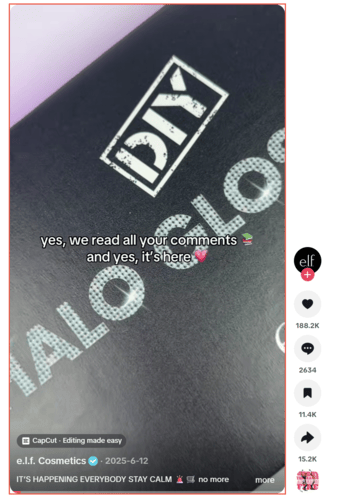
Take e.l.f. cosmetics as an example. Through social listening, the brand picked up on an up-and-coming trend in which people were repurposing empty foundation bottles into oversized, custom lip glosses. The makeup brand capitalized on the community-led trend, launching a dedicated campaign that garnered 85 million organic views, two million engagements and 1,000+ user-generated videos. It even prompted the launch of its very own product: a limited-edition DIY Halo Gloss Kit.
Oat milk brand Oatly also turned social listening data into action with its Matcha Latte launch. Across Reddit, X, Instagram and TikTok, the business noticed a surging demand for matcha latte drinks. These findings were then presented to their Innovation and R&D teams, ultimately becoming the basis for a new beverage.

With Sprout’s Social Listening, picking up on these invaluable trends is made simple. Backed by AI technology, it sifts through billions of data points to hone in on the trends, learnings and conversation themes that you can leverage to drive real business impact.
CRM integrations
CRM integrations allow teams to connect audience intelligence from social channels with first-party customer details. Using these datasets in conjunction, you can determine whether emerging segments are actually driving leads, revenue or long-term customer value.
For example, Sprout Social’s integrations with Salesforce and HubSpot provide teams with a holistic view of their audience members. By connecting these tools, you get a look at users’ social activity as well as their lead status, customer lifetime value and purchase history. Brands can then use these insights to validate which audience segments represent meaningful growth opportunities and which may be part of a passing trend.
AI analysis
Leveraging AI can streamline the lift in segmentation via pattern detection across datasets and large volumes of conversation. Instead of manually tagging and coding data, your team will be free to focus more on strategy development.
Think of an AI tool as your always-on, directly embedded teammate. As an example, Sprout’s AI agent Trellis continuously monitors emerging engagement trends, sentiment shifts and audience signals. Then, it sums these findings up in a way that’s easy to understand and actionable. If you have a question about something specific, you can simply ask Trellis, and it will generate executive-ready responses and recommendations.
How to build a social media audience segmentation strategy (step-by-step)
Armed with an understanding of segment types and the right tools, you can craft and continuously refine your segmentation strategy by following these steps:
1. Define your business objective
Start by identifying the core goal that the audience segment relates to. Whether it’s fostering brand awareness, driving qualified leads or increasing online sales, each objective requires a different segmentation lens.
If your goal is brand awareness, you’ll need to focus on segments less familiar with your brand, and ideally with broad reach or strong share activity. Think users who share your posts to their stories, tag their friends in your comment sections or engage with viral-leaning formats like TikTok videos with trending audio.
If your goal is lead generation, you should prioritize segments showing high-intent behaviors. Users who click on in-post product links, comment questions like “How long is the warranty?” or DM your brand would likely fall into this segment.
Defining your objectives upfront makes it easier to evaluate whether your segments are contributing to the outcomes you care about.
2. Aggregate your social & listening data
Before segmenting your audience, you need a consolidated view of the conversations and engagement signals happening across your social channels. This means pulling data from your native platform analytics, social listening tools and any third‑party dashboards your team uses.
A social media intelligence platform with AI agents or Boolean search queries like Sprout Social streamlines this process by filtering out the noise. AI agents can quickly surface recurring themes, cluster similar conversations and flag anomalies you might miss manually. Boolean queries, including those created by AI agents, help you refine your listening streams by featuring only the topics, keywords or sentiment markers that matter to your brand, while excluding high‑volume distractions that skew results.
For instance, a marketer at a coffee shop may want to parse through mentions of their most recent seasonal beverage. Here’s what their queries may look like:
(“The Good Bean Coffee Co.” OR “Good Bean Coffee” OR “Good Bean”) AND (“Maple Pecan Latte” OR “MPL” OR “Maple Pecan” OR “Maple Latte”)
Although finding the right social listening queries can be tricky, Sprout’s Listening Query Builder makes the process quick and intuitive. The Queries by AI Assist tool is especially helpful, strengthening your query as you build it. It automatically suggests related keywords based on the keyword you initially provide, so you can get the insights you need even faster.

3. Identify patterns and segments
Instead of looking for vague shared interests, drill down by creating specific listening themes that map directly to your business objectives. These themes act as buckets that help you classify conversations, behaviors and signals with more precision.
For example, you may set up listening themes like competitor complaints, feature requests, product misconceptions, purchase‑barrier discussions, category trends or emerging customer frustrations. Each theme gives you a structured way to spot recurring patterns, be it a spike in users asking for a specific feature or a cluster of conversations about a competitor’s recent misstep.
Once you’ve grouped your data into clear themes, you’ll be able to see at a glance which segments are forming organically, what they care about most and where your brand has opportunities to respond, differentiate or improve.
For example, household and personal care brand Dyson uses its social data to identify complaints it should respond to in its Instagram comments to improve customer care and preserve its reputation.

4. Validate segments against business data (CRM/BI)
Once you’ve identified your audience segments, validate them against your CRM and BI data to ensure they reflect real customer behavior. Cross-reference social signals with purchase history, lifecycle stage, product usage or support tickets.
This practice is what’s going to transition your segmentation from a marketing‑only exercise into a cross‑functional asset. Pairing these datasets provides real‑time context that builds a complete customer profile.
Let’s revisit the feature request listening theme. You may notice a segment consistently talking about advanced features or power‑user workflows. CRM data can tell you whether these users belong to higher‑value tiers, purchase add‑ons or have longer retention periods. If they do, you’ve validated a segment that’s ideal for upsell messaging or early access programs.
5. Activate segments across teams and channels
For many businesses, marketing-generated segments rarely reach the teams that could act on them commercially. According to the 2026 Social Intelligence Report, only 36% of organizations say social data regularly informs decisions outside marketing. Research and development (R&D) only sees this data 18% of the time.
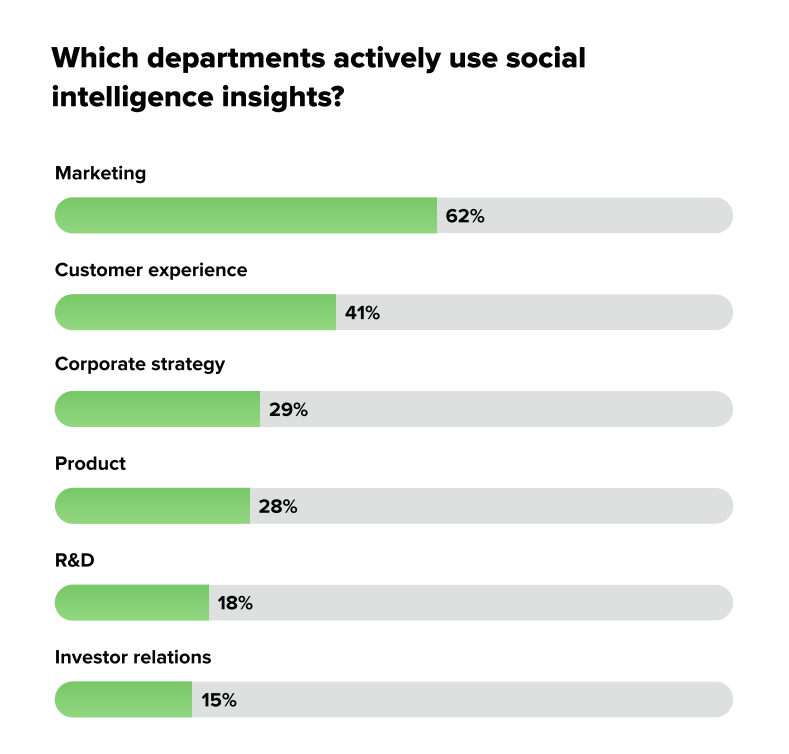
But when it does reach cross-functional teams, the business impacts are tangible and powerful. The report found that customer retention is the #1 reported outcome of social intelligence (45%).
To help your brand reap those rewards, route segment‑level insights directly into the departments’ workflows. For instance, customer experience (CX) teams should receive segment data that highlights friction points, recurring complaints or onboarding gaps. CX teams can use this to refine support scripts, improve self-service content (e.g. how-to guides or FAQs) or proactively address issues before they escalate.
Common audience segmentation mistakes to avoid
Even the smartest segmentation strategies can encounter the occasional pitfall. But the first step in avoiding them is awareness. Here are some common mistakes to avoid:
- Treating segments as static: Audience insights, behaviors, interests and platforms evolve constantly. Refresh segments regularly to keep insights relevant.
- Focusing too heavily on demographics: Age, location and follower count provide context, but behaviors, intent signals and content engagement are often more predictive.
- Keeping insights siloed in marketing: Share segmentation findings with product, customer care and leadership teams to drive more informed decisions across the business.
Make segmentation a business intelligence discipline
When fueled by real-time behavioral data instead of static details, social media audience segmentation goes from a channel-specific exercise to an ever-evolving intelligence engine.
Moving forward, brands will fall into one of two camps: those that treat segmentation like a standard reporting function and those that treat it as a live intelligence system. The latter group will be better positioned to uncover emerging needs and shifting priorities, adapt faster and make informed business decisions that keep them relevant to customers.
If you’re ready to secure your spot in the second group, download The Social Signal Playbook. With its insights and tactics, you’ll learn how to build a more proactive, insight-driven approach to understanding your audience.
Frequently asked questions
What is an example of audience segmentation on social media?
Examples of audience segmentation on social media include:
- Demographics: Characteristics like age, gender or income.
- Psychographics: Beliefs, values or motivations.
- Behavioral: Habits, interactions or actions.
- Geographic: Physical location.
Many of these segments can and should be used in conjunction to extract deeper, more meaningful insights. For instance, the segment of women in Canada aged 18-25 who post about animal rights combines all four types.
How is audience segmentation different from targeting?
Segmentation is the process of defining groups of audiences you wish to reach. Targeting is the act of intentionally reaching those audiences.
How often should you update audience segments?
You should review your segments at least quarterly or when you notice shifts in conversation patterns or market conditions. Because social media usage is dynamic, your segments need to be, too.
39 free social media strategy templates that will elevate your workflows
Published on August 20, 2026 Reading time 15 minutes






Share