How to build trust with local government social media strategy

Written by Rebecca MacFarlane
Published on March 25, 2026
Reading time 15 minutes
Table of Contents
Social media has evolved into a key connection point between local government agencies and the public.
According to the Q2 2025 Sprout Pulse Survey, 32% of respondents ranked national/global news as one of the top content types they consume on socials. This figure spikes among younger generations, with 71% of young adults getting local government news from social media.
But there’s a disconnect between what the people want and what they’re experiencing on social. While 50% of young adults trust social media as much as national news, only 29% are satisfied with government response times.
For government bodies, this begs the question: How can you bridge that gap to inform and serve the public on their preferred channels?
We spoke with marketing teams from the City of Phoenix and the City of Virginia Beach to explore how local government social media strategy can foster trust, transparency and dialogue with constituents.
Ethical uses of social media for government
Per Civic Plus, 92% of public sector agencies consider social networks essential for communicating with the public.
But in these communications, it’s crucial to do right by local citizens. Here are some ethical use cases of social media for government agencies:
Communicating with residents
From unexpected road closures to severe storms, local governments are responsible for keeping the public informed. And because most members of the public are already on social media, it’s the perfect place for local agencies to reach them.
With that said, social isn’t just for one-way communications; it can also foster two-way dialogue. Agencies can use it to connect with the community and invite feedback, whether through quick polls or links to report local issues, such as potholes or broken streetlights.
The City of Virginia Beach Communications Office prioritizes transparency, engagement and public dialogue, and welcomes resident feedback. The Office says “This invites both positive and negative input, but it also gives us valuable insight into public opinion and strengthens overall engagement.”
Social media can be a place for genuine connection where residents feel heard, seen and valued.
Education and increasing awareness
Local governments should use social media to educate the public on community programs, free services and local events.
For example, the City of Virginia Beach focuses their social content on four core areas: “helping residents participate in City policy development and decision making, informing them about government services and activities, showing residents how they can engage with and provide input to departments and elected officials, and recruiting those who may be inspired to explore careers with the City.”
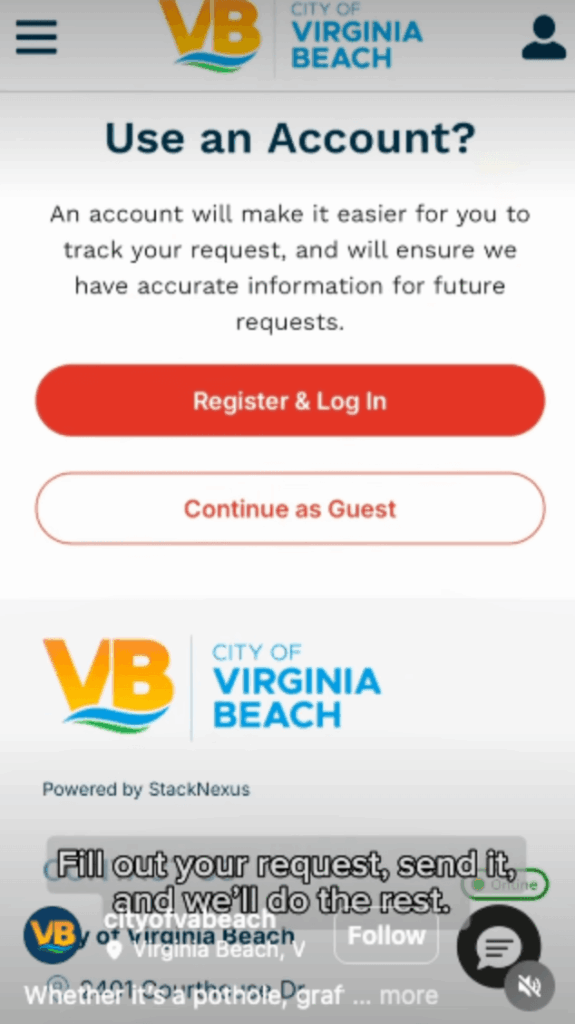
Residents often miss out on such resources because they don’t know they exist or where to access them. Social posts can bridge that gap by outlining key details in a digestible format—simple language, helpful visuals and clickable links. This makes the content easy to understand and engage with.
Promoting tourism
Tourism is a major economic driver for governments at municipal and state levels. And social media can help these agencies reach visitors from near and far.
Municipalities and tourism bureaus often use social to paint an enticing picture of everything their region has to offer, from urban amenities to natural landscapes.
But eye-catching visuals are only one piece of the pie.
Effective social strategies also highlight authentic experiences, cultural practices and environmental protections. They ensure that tourists know what to expect and how to engage with the community responsibly.
Take the City of Miami Beach as an example. In its viral social media campaign, “Breaking Up with Spring Break”, the local government’s primary promotion was clear: public safety. The campaign was launched in direct response to past widespread violence during spring break season. Despite the serious subject matter and messaging, the organization kept the ads light by leveraging the breakup analogy and playfully veering viewers away from destructive behaviors.
Additionally, socials enable governments to promote lesser-known fixtures in the community. Think Indigenous-owned businesses, neighborhood events and off-the-beaten-track spots. Featuring these attractions spreads economic opportunity more evenly and avoids funneling attention to already crowded hotspots.
Set up social media policies to navigate compliance
Because the public sector is so highly regulated, airtight social media governance is essential. By building a clear policy, you’ll ensure that every interaction—whether from an employee or a constituent—aligns with public service standards.
Below, we explore some of the policies you can implement to ensure social media compliance internally and externally.
Internal governance
Start by defining roles and responsibilities for managing social content within your organization. Think about your team members and the permissions they’ll need.
Who can post on official accounts? Who’s permitted to respond to constituent queries or concerns? Use these considerations as a guide, then categorize people into roles of varying seniority. Common roles include admins, managers, contributors and editors.
Next, set up approval workflows. Adopt multi-step approvals for outbound content to minimize brand risk and ensure accuracy before publication.
Your agency may also leverage employee advocacy on social. For many agencies, this is an effective way to cover more ground and stay abreast of local updates.
“In larger cities or even smaller ones with multiple departments, your social media team can’t be everywhere all the time,” says Luke Garrison, the City of Phoenix’s Chief Digital Officer. “Encourage employees to alert you to events or even snap a few pictures or videos if they’re somewhere you can’t be. It takes a village.”
You can further empower employees by allowing them to share updates on their personal accounts. If you do, establish clear guidelines and provide pre-approved “message ideas” to keep posts on-brand and compliant.
Secure access controls are also a must. Government social accounts often hold sensitive information, meaning access should be limited to essential personnel. Use best-practice security measures like multi-factor authentication (MFA) and regular permissions audits. If someone leaves the organization, revoke their access immediately to avoid account misuse.
Finally, develop crisis protocols. In high-stakes scenarios, a pre-drafted post can come across as insensitive or tone-deaf. For instance, if there’s a major transport shutdown, a scheduled post with a playful meme could aggravate residents’ frustrations. A “Pause All” procedure helps avoid these pitfalls and ensures responsible communication when it matters most.
External community standards
It’s also crucial to manage social activity among users outside your agency.
A key step is moderating your online community. Start by defining what constitutes prohibited conduct on your channel. Use the First Amendment as a guide: constituents have the right to free speech, but with exceptions. Some of these include obscenity, threats, hate speech and defamation.
For the City of Virginia Beach, they respect everyone is entitled to their opinion, but also recognize they don’t need to respond to every negative comment. “If a comment is purely opinion, frustration or hostility that is unlikely to change with a response, we simply do not engage.” Instead, their office concentrates on doing their best to correct misinformation and curb the spread of misinformation, sharing links to City resources/on-the-record official sources, when possible.
Communicate your social media community standards while maintaining viewpoint neutrality. To build trust, be specific and transparent about how you will enforce them on social, be it hiding comments or reporting users.
You must also be clear with residents that all social interactions are subject to social media archiving laws. In the United States, federal, state and municipal government bodies must archive social posts and engagements (including likes, comments and replies). Under the Freedom of Information Act (FOIA), these archives have to be part of the public record. Some states also have unique public record retention laws that dictate how and when to archive social content.
Government agencies also need to preserve data privacy on behalf of their constituents. Residents sometimes share personally identifiable information (PII) in comment sections or public threads without realizing the risks. To protect them, leverage one of the most effective social media tools for government: automated PII-masking. This redacts details like phone numbers, addresses or Social Security numbers. Putting these safeguards in place will help your socials remain a safe space for community engagement.
Transparency is also vital when using emerging technologies. For example, Sprout’s Q3 2025 Pulse Survey found that 52% of consumers are worried about organizations sharing undisclosed AI content. With that in mind, create a rule around labeling AI-generated responses or visuals.
Build a community-first content strategy
As a government agency, you need to be a steady yet engaging voice for your constituents, including on social. Doing so will help you gain not only their attention but their trust.
According to Garrison and the City of Virginia Beach Communications Office, some of the most effective content types to achieve this include, educational content (e.g. how-tos, service availability), emergency and service alerts, seasonal and trip planning content, Q&A or live chat sessions, and finding trends to make informative topics engaging.
“Don’t be afraid to experiment with different post formats, especially video, since each format serves a different purpose. Reels and carousels can expand your reach to new audiences, while static posts and stories help you increase engagement with existing followers. Reuse your content where you can, for example, we put an Instagram reel every week in our email newsletter to increase views among engaged residents who may not follow us on that platform,” encourages the City of Virginia Beach Communications Office.
While you should experiment with content types, there are a few golden rules to follow no matter what:
- Maintain a responsible tone of voice in your posts, particularly during sensitive issues.
- Focus your content on residents’ immediate needs, rather than agency priorities.
- Instead of promoting your agency’s strategic plans, use social to offer accessible and reliable information that supports public trust and accountability.
Building trust starts with inclusivity; learn how Sprout Social is championing accessible technology for government through our unified navigation rollout.
Here are a few more specific tactics you can use to bolster your local government social media strategy.
Prioritize human-generated content
Remember: your mission is to serve your residents. And a key part in serving any demographic is knowing what matters to them.
For many social users, it’s a human touch—especially as AI slop becomes more prolific. Per the 2026 Social Media Content Strategy Report, human-generated content is the #1 thing people want to see on social.
One tactic to meet this need is spotlighting government leaders and public servants. The City of Chicago often places Mayor Brandon Johnson front and center in its content, showcasing his daily activities, from giving speeches to hosting press conferences to attending local events.
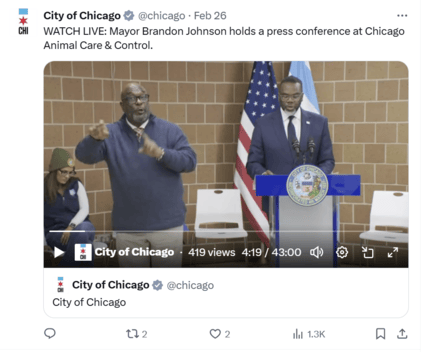
Authentic and unmistakably human, this style of content stands out in a landscape saturated with AI-generated posts. It’s an impactful reminder to residents that their local governments aren’t faceless entities; they’re made up of real people who show up, listen and participate. And when constituents see that authenticity firsthand, trusting their governments becomes easier.
Whether is human- or AI-generated, transparency is vital. Sprout’s Q3 2025 Pulse Survey found that 52% of consumers are worried about organizations sharing undisclosed AI content. So if you do post AI-generated content, create a rule around labeling AI-generated responses or visuals.
Network-specific content
Your citizens likely use a variety of social networks. And different platforms call for different approaches.
Use the formats residents expect and want to engage with on each social network. Here are the top-performing content styles broken down by platform, according to the 2026 Content Strategy Report:
- Facebook: short-form video (<60 seconds)
- Instagram: short-form video (<60 seconds)
- YouTube: short-form video (<60 seconds); long-form video (>60 seconds)
- TikTok: short-form video (<60 seconds)
- LinkedIn: text posts
- X: short-form video (<60 seconds); text posts
- Pinterest: static images
- Snapchat: short-form video (<60 seconds)
- Reddit: user-generated content (UGC); brand account comments
- Threads: short-form video (<60 seconds); text posts
- Bluesky: text posts; short-form video (<60 seconds)
- Substack: short-form Notes; long-form Newsletters
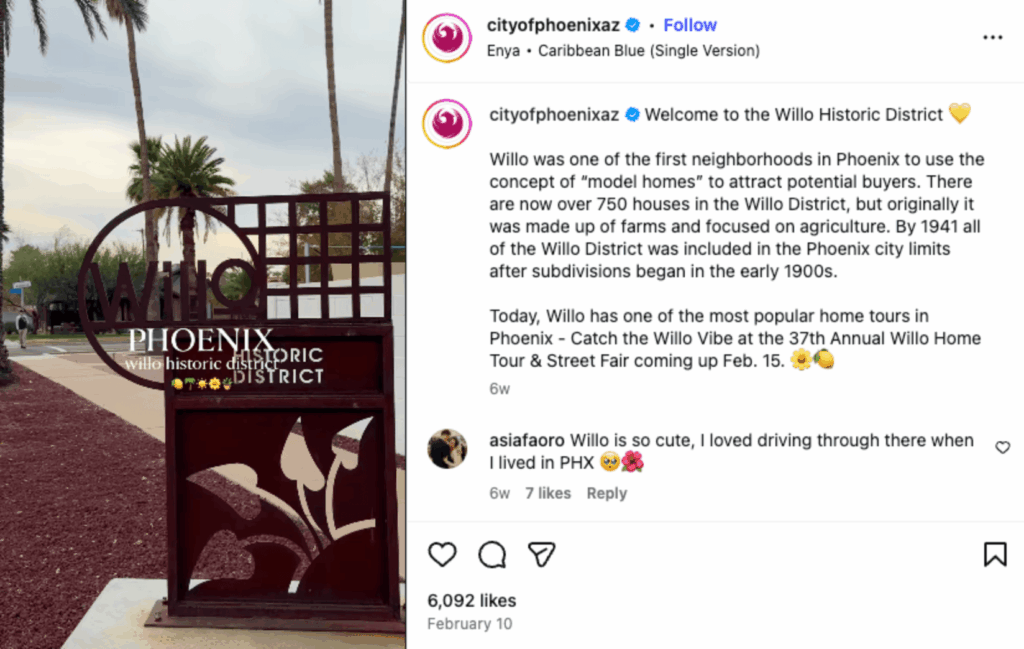
For instance, the City of Phoenix uses Threads to highlight the region’s latest initiatives, including artworks, events and reports. And it does so in the formats best-suited to that platform: short-form videos, text-based posts or a combination of both.
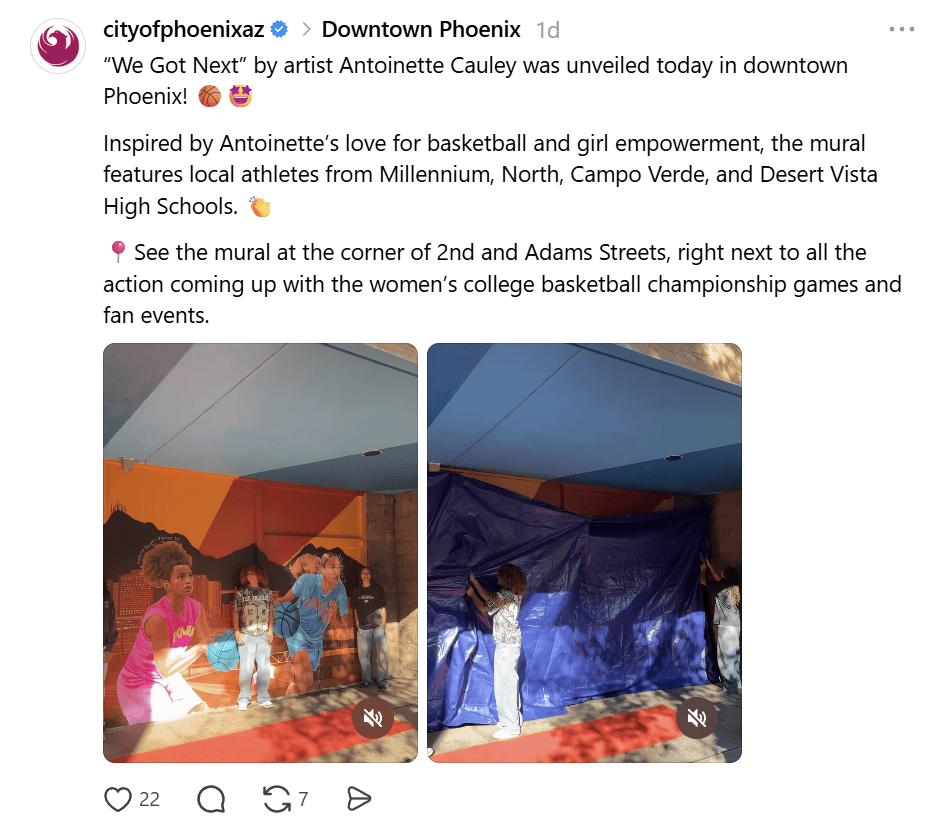
Tailoring communication to each social media platform isn’t just best practice—it’s a strategic edge.
Emergency and service alerts
Given that most of your constituents are likely on social media already, it’s the perfect place to inform them of things that could affect their daily lives.
Use social to provide real-time updates on topics like road closures, weather alerts, transit delays and service interruptions.
The City of Las Vegas does exactly that, using its social accounts to flag urgent weather developments like heat waves.
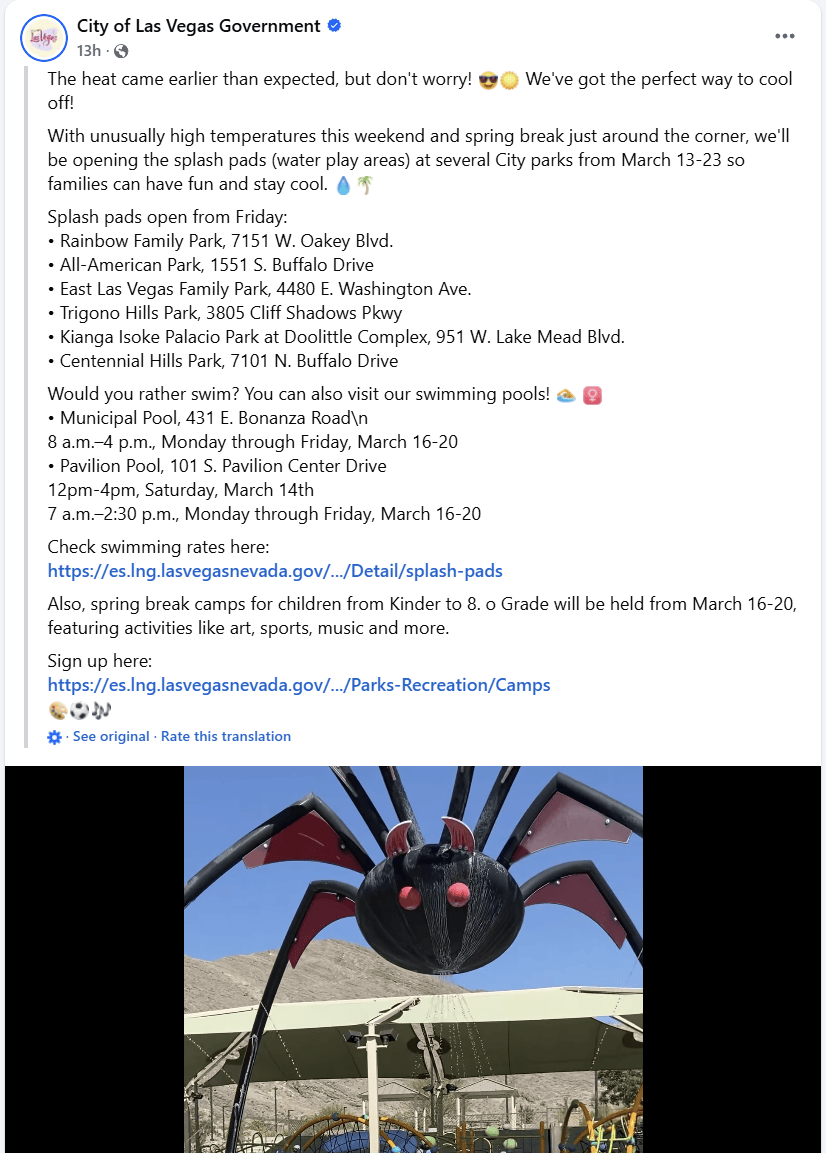
Warning residents of these conditions empowers them to make informed decisions, whether it’s staying indoors or using local services like splash pads or swimming pools to cool off. In turn, these posts convey that the City of Las Vegas is a reliable source of information that’s actively looking out for citizens, which can go a long way in building trust.
The “series” approach
Social users are hungry for in-depth storytelling. One of the best ways to achieve that is through episodic content (i.e. recurring series).
Per the Q2 2025 Pulse Survey, 57% of users prefer episodic series, often because they offer entertainment and create a sense of routine. Plus, they share relatable stories and characters, which cut through the noise and foster connection.
On Instagram, the City of Toronto applies this strategy via its “Toronto Trivia Tuesday” series. The posts educate residents on the city’s history, services and events in a fun, compelling way that keeps them coming back.
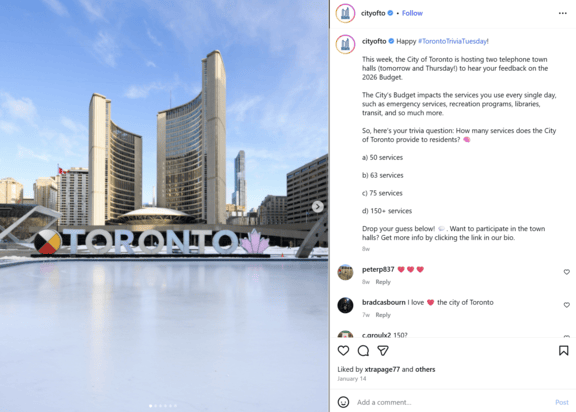
With each installment, the City of Toronto reinforces its reliability and commitment to local residents. Moreover, it shares this messaging in a steady cadence that continuously invites user engagement (i.e. having them guess the answer).
Community pride
A core part of your local government social media strategy should be showcasing and celebrating your community. Specifically, the events, residents and cultural practices that make your municipality so great.
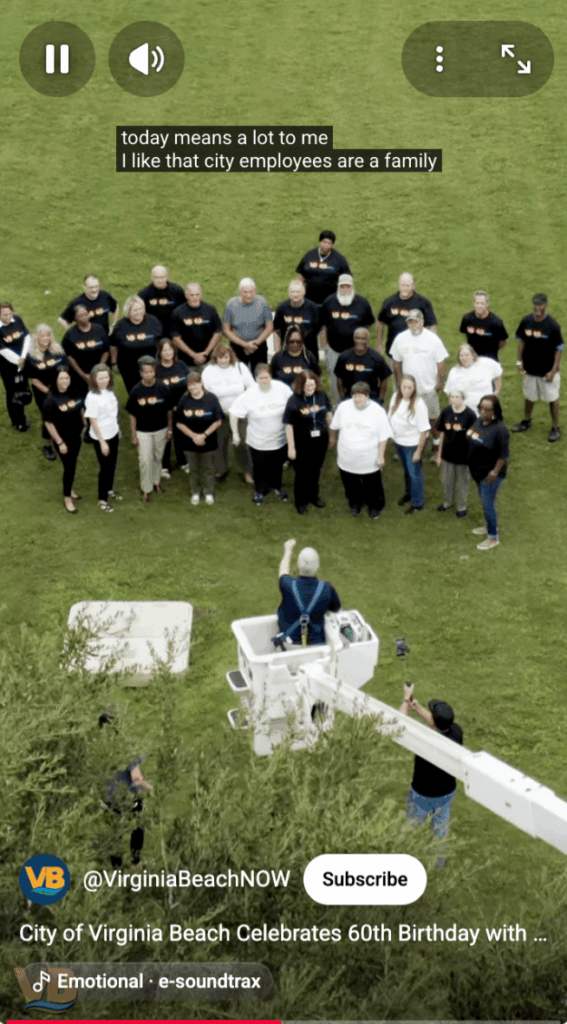
The City of Virginia Beach Communications Office has found shareable, relatable, community-focused social content to be effective, including posts about local pride, beauty shots and highlighting City staff and volunteers.
This tactic helps foster identity, belonging and connection among your residents. In short, it helps them feel seen and understood. And when people feel seen and understood by their local governments, they trust these agencies more. Plus, singing your community’s praises makes the region more desirable to tourists and potential new residents.
Educational content
Social is the perfect outlet to promote the good work your municipality does. In fact, the Q1 2026 Sprout Pulse Survey found that 40% of users want to see educational content on social. Think free services, how-to guides on accessing childcare subsidies or explainers on local infrastructure projects.
Take NYC Public Schools, which uses social to promote its Summer Rising program, a free academic and enrichment initiative for K–8 students. The agency breaks it down into three simple steps and provides a link to the enrollment page to make it easily accessible.
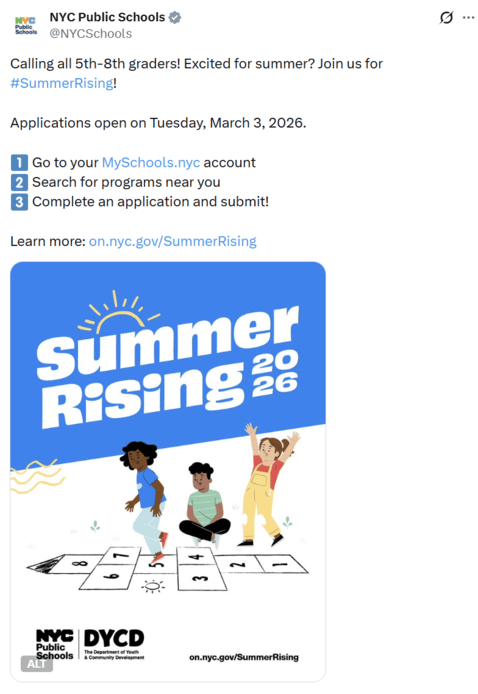
This content doesn’t just educate constituents on the program—it helps them take advantage of it by reducing friction.
Helpful interactions like these convey that your agency is there not only to educate constituents but to actively support them.
Proactive community care & crisis readiness
Social media gives citizens an unprecedented look at how local governments respond to public crises. Agencies can use these tools to communicate in high-pressure situations, correct misinformation and actively protect the community—all of which lay the groundwork for trust.
Be purposeful
Clearly state the specific purpose of the account or page. That way, citizens know exactly what to expect from your content and how they should interact with it. Plus, a well-defined purpose helps your team stay consistent, with each post linking back to the agency’s core mission.
For example, the City of Virginia Beach’s primary mission for their social media presence is to keep residents informed and connected through timely, relevant updates. Their strategy focuses on public awareness and community participation by sharing urgent updates like emergency alerts or road closures, and information on local services, programs and events that enhance daily life. The city also highlights opportunities for residents to provide direct input on issues that affect them.
This sense of purpose fosters clarity, and helps residents understand how they should engage with your social accounts.
One-way vs. two-way communication
It’s important to decide if you’ll use social media as a one-way (i.e. disabling comments) or two-way communication tool.
“Our comments are almost always enabled,” says Garrison. “For the City of Phoenix, we choose two-way communication when community engagement, feedback and dialogue are needed, understanding that it requires active moderation and carries higher legal and resource implications.”
Because these interactions are playing out in a public space, it demonstrates how your agency responds promptly and tactfully to questions. The City of Virginia Beach Communications Office adds, “Before responding, we consider whether the comment is respectful enough to warrant engagement, whether it asks a real question and whether our response can add value. This approach allows us to correct misinformation, elevate helpful conversations and strengthen trust while keeping interactions productive and respectful.”
Two-way communication also enables you to correct misperceptions or fake news. “When it comes to pure misinformation, that’s an important opportunity to reply in the comments with correct information—and that strengthens trust,” says Garrison.
With that said, two-way communication may make your social accounts legal public forums. As a result, you’ll be subject to stricter regulations, which can increase your moderation workload and require more careful oversight.
Create terms of use
Develop a terms of use guide (i.e. a code of conduct) for all your social accounts. In it, clearly state when your agency reserves the right to remove comments or posts (e.g. infractions like harmful or obscene language).
Then, include it on all your accounts; a link in bio is an effective way to feature it.
From there, use a social media management tool, like Sprout, to help you monitor regularly for posts that violate your terms of use. And a unified inbox, like Sprout’s Smart Inbox, to capture and respond to violations, questions, concerns or crises that the agency must address to serve the public.
Take timely action in a crisis
When emergencies happen, you have to respond promptly and sensitively.
According to Garrison, there are three crucial pillars of social communication in a crisis: “Be timely, be considerate and be truthful about what needs to be communicated.”
Whether it’s a public safety threat, a severe weather event or a humanitarian crisis, use social media to share accurate updates quickly. The City of Virginia Beach Communications Office advises that “Being timely ensures residents receive critical updates when they need them most, and transparency builds confidence by showing that the agency is sharing what it knows, what steps are being taken and what actions residents should take.”
Staying abreast of crises as they evolve is also important. “Just as important is maintaining a steady flow of updates as new information becomes available, even if the update is simply that more details will be shared as they become available with a list of ways to stay informed in real time,” added the City of Virginia Beach Communications Office.
Focus on calm, factual updates that will cut through the noise, reduce uncertainty and reassure people that your agency is in control. By acting as residents’ rock in a storm, you’ll gain their trust and develop stronger connections.
Listen, learn, act
To truly build a community-first social media strategy for local governments, agencies must prioritize active listening to resident feedback and concerns, especially on social channels. As Garrison notes, “Social listening is part of our responsibility. What is the community saying about services we’re providing? It’s our goal to monitor that and act accordingly.”
Social media offers insights to better understand resident perspectives. According to the City of Virginia Beach Communications Office, tags and mentions can reveal community sentiment beyond what officials might already know. They note that their passionate community frequently uses social platforms to voice diverse opinions on city issues, providing a direct window into how residents truly feel.
“In addition, the Listening tool within Sprout is great for us. By providing keywords, it allows us to follow topics we know are a hot button item and/or topics we want to focus on. This is helpful in ‘clearing the noise’ versus when doing broader environmental listening,” shares the City of Virginia Beach Communications Office.
Beyond just listening, agencies have a duty to act on these insights to better serve their constituents. Through a combination of listening and engaging, your agency gains valuable insight into public opinion and is better positioned to understand resident preferences and needs, ensuring your support and communication are tailored effectively.
The City of Virginia Beach Communications Office advises using data to connect all your communication channels. “It’s not enough to just create a page for one-way communication, you need to understand how your residents prefer to receive information and what gaps or pain points exist in your current communication approach. Survey residents, study website analytics, track engagement data and pay attention to the questions and misconceptions that surface in your comments, to 311 or any place your residents may be asking questions. Use those insights to shape content across every platform so your social media, website, email marketing, media relations and community engagement efforts reinforce one another rather than operate in silos.”
By prioritizing active listening and applying those insights to foster thoughtful engagement from the start, you establish a critical foundation of trust.
Redefining the public connection
Social media isn’t just a nice-to-have for government agencies—it’s a must. Without an active social presence, governments risk failing their duty to inform and serve the public.
When developing your local government social media strategy, start by creating systems that build staff’s comfort and confidence with these platforms. Develop airtight internal and external governance standards, so employees and constituents alike know what’s expected of them. It’s also important to keep an eye on what’s happening on social, stay flexible and leverage data for decision making. Then, use these systems and learnings to optimize social media workflows that help you garner the most valuable currency: resident trust.
To learn more about social trends in the public sector, download The 2025 Content Benchmarks Report.
39 free social media strategy templates that will elevate your workflows
Published on August 20, 2026 Reading time 15 minutes





Share