39 free social media strategy templates that will elevate your workflows
Published on August 20, 2026
Reading time 15 minutes
Inbound marketing is a marketing methodology that attracts customers with valuable content and experiences they’re already looking for, instead of interrupting them with ads. The idea is that by supplying your audience with meaningful moments, you’ll give them a compelling reason to keep coming back to your brand.
Buyers make decisions based on their emotions. When you attract prospects to your brand through valuable and relevant content or conversations, you satisfy their needs. These positive feelings lead to an improved chance of consumer loyalty.
Inbound marketing first appeared in 2005 as people gained more control over what they read and watch. Cold calling, billboards and catalog advertisements became easier to tune out.
Customers don’t want anonymous “spray and pray” marketing anymore. Today, they actively block out the content they don’t want to see. As of Q2 2025, 32.5% of US internet users use an ad blocker, according to GWI data reported by DataReportal.
Outbound marketing pushes messages to broad audiences, whether or not they asked for them. With inbound marketing, you pull your audience to you by providing the information that they’re searching for. Businesses can answer customer questions with blog posts, respond to concerns on social media and deliver meaningful moments through webinars. All of these touchpoints build trust, credibility and momentum for the business.
Atualmente, há muitas formas diferentes de inbound marketing disponíveis para as empresas. Em todos os canais, o trabalho para gerar valor permanece o mesmo. As melhores campanhas envolvem a combinação de várias vias digitais e offline para apoiar os consumidores em todas as etapas da jornada de compra. Opções para inbound marketing:
Most strategies move people through four stages: attract, convert, nurture and delight.
In a world of social media and growing digital connections, inbound marketing is one of the most effective ways to promote your brand. Inbound advertising aligns better with the needs of modern buyers. Your consumers don’t want to be shouted at with irrelevant information. Instead, they want to be empowered to serve themselves and seek out the answers they need online.
Os métodos de marketing outbound se concentram na entrega de uma única mensagem a um público cada vez mais diversificado. Com o inbound marketing, você cria experiências mais exclusivas e memoráveis para cada um dos seus clientes. Os resultados são:
As iniciativas de inbound marketing aumentam o valor também com o passar do tempo. Uma forte presença nas redes sociais e um fluxo de conteúdo regular chamam a atenção para a sua empresa por meio da publicidade boca a boca, melhor SEO e melhores resultados.
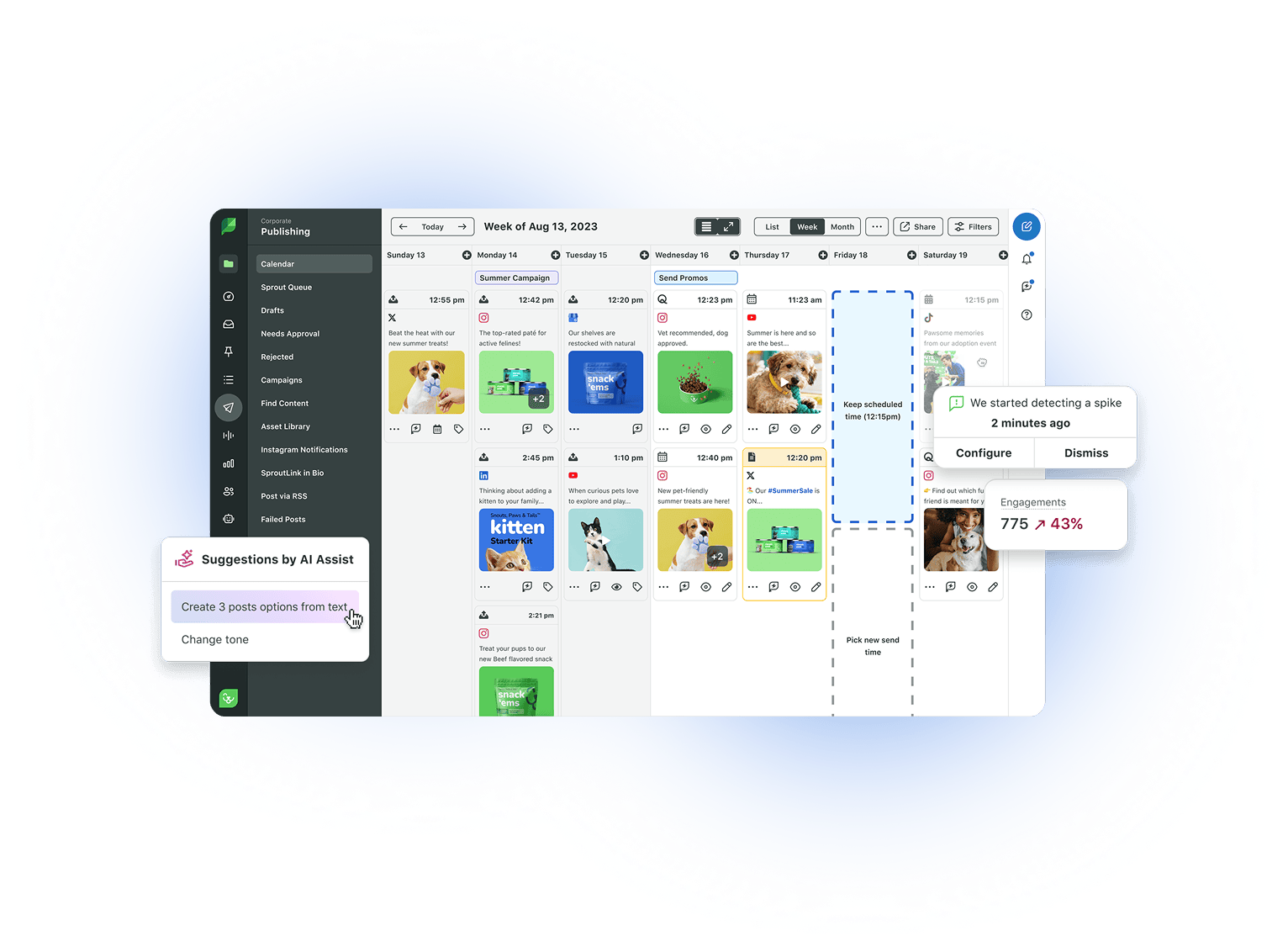
Start a free trial to see how Sprout Social’s publishing and engagement tools help you share valuable content and respond to customers in one place.
39 free social media strategy templates that will elevate your workflows

Cultive relacionamentos mais sólidos nas redes sociais