What is inbound marketing? How it works, benefits and strategy stages

Written by Mahnoor Sheikh
Published on October 26, 2026
Reading time 13 minutes

Table of Contents
No one likes commercials crashing their favorite show or salesy emails from brands they didn’t ask for. People want brands that earn their attention, and that’s the heart of customer-centric marketing. This guide covers what inbound marketing is and gives you a strategy you can put to work right away.
Mass marketing techniques don’t land like they used to. Customers now decide for themselves what to buy, who to buy from and whether they want to be advertised to at all. They search Google, scroll social media and ask AI chatbots long before they talk to a brand.
That’s why brands are embracing inbound marketing. Instead of shoving a product in your customers’ faces, you create valuable content that answers their questions and solves their problems. So when it’s time to buy, they come to you.
Discovery now happens everywhere at once. The brands that show up with the best answers win the click, the follow and the sale.
What is inbound marketing?
Inbound marketing is a marketing strategy that attracts customers with valuable content and experiences instead of interrupting them with unsolicited promotions. You earn attention instead of renting it.
The idea is simple: When you give your audience meaningful moments, you give them a compelling reason to keep coming back to your brand. Blog posts, videos, social media posts, newsletters and helpful customer care all count.
It’s permission-based by design. People choose to read your guide, follow your account or join your email list, so every touchpoint starts with trust. B2B software brands, ecommerce shops and local businesses all use it, because every buyer starts with a question.
Buyers make decisions with their emotions as much as their logic. Content that solves a real problem leaves a positive impression that lasts long after the first visit.
How does inbound marketing work?
Inbound marketing works by publishing content and experiences that match what people already search for. Then it guides them from first visit to loyal customer. Here’s what that journey looks like:
-
Someone has a question or a problem to solve.
-
They search on Google, social media or an AI chatbot.
-
Your content answers it and earns the click, follow or save.
-
You offer a next step, like a newsletter, guide or free trial, in exchange for contact info.
-
You nurture that lead into a customer, then delight them so they bring in the next wave.
That first search no longer happens in one place. Data from Sprout Social’s Q2 2026 Pulse Survey shows 53% of consumers start their search on Google or a traditional search engine. Another 21% start on social media and 12% start with chat-based AI.
That makes social media search a core part of your inbound playbook. Your profiles on TikTok, Instagram and X (formerly Twitter) work like search results pages for the people who discover brands there.
Inbound also compounds. A paid placement stops working the moment your spend stops, but a helpful guide or video keeps attracting visitors months after you publish it.
What’s the difference between inbound and outbound marketing?
Outbound marketing is a traditional type of marketing that puts your message out to the masses and hopes it resonates with your audience. Outbound marketing can be email lists, pop-up or display ads, billboards or cold calling—just to name a few.
But consumers increasingly block out these unsolicited messages with spam filtering, ad-blocking and caller ID.
The concept of inbound marketing was introduced in 2005, in response to the fading effectiveness of outbound solutions. It involves understanding the buyer journey and creating content for each stage. The goal is to turn visitors into customers and promoters of your business.
This strategy saves money and improves your return on investment (ROI) in the long run. It also builds trust, credibility and loyal relationships with your customers. When you answer their questions and deliver meaningful experiences, you show customers you care about them.
Here’s how the two compare side by side:
|
Inbound marketing |
Outbound marketing |
|
|---|---|---|
|
Approach |
Draws people in with content they choose to engage with |
Pushes messages out to a broad audience |
|
Typical tactics |
Blog posts, SEO, social media content, email newsletters and webinars |
Display ads, billboards, cold calls, purchased email lists and TV spots |
|
Cost over time |
Upfront investment in content that keeps delivering after you publish |
Ongoing spend that stops delivering when the budget runs out |
|
Who’s in control |
The audience decides when and how to engage |
The brand decides when the message appears |
|
How you measure |
Organic traffic, engagement, leads, conversions and retention |
Reach, impressions, response rates and cost per acquisition |
|
Best for |
Building trust, long-term demand and loyal customers |
Fast awareness, product launches and new markets |
You don’t have to pick one. Strong demand generation programs pair outbound reach with inbound trust. A paid social campaign introduces your brand, and your content gives new prospects a reason to stay.
What are the benefits of inbound marketing?
Inbound marketing doesn’t rely on being “in your face” to generate results. Instead, it creates sustainable, long-term value for your business.
Here are five key benefits of inbound marketing:
1. Reduced expense
Mass marketing is costly and risky, and it struggles to land with today’s audiences.
It drains your budget with no guarantee of reaching the right people.
With a leaner, more focused spend on inbound marketing, your business saves money and sees higher ROI over time. Track your content marketing ROI to see which pieces earn their keep and where to invest next.
2. Higher trust and credibility
When customers do their own research and find you organically, you come across as more trustworthy than a billboard screaming “Buy this now!”
Trust also depends on showing up when people reach out. Per the 2025 Sprout Social Index™, 73% of social users say if a brand doesn’t respond on social, they’ll buy from a competitor.
Inbound marketing techniques like creating helpful content, replying fast and sharing social proof reduce the risk consumers associate with your brand.
3. Quality traffic and leads
Inbound marketing isn’t just about creating brand awareness. It’s about drawing in the right kind of leads and traffic.
With a more targeted and informed approach, you attract leads who already care about your solutions. That means your sales team spends less time chasing cold prospects and more time closing deals.
4. Opportunity to learn and evolve
Engaging with customers on social media and listening to their conversations, questions and feedback shows you how to improve your products and services. Those insights also shape your next round of content, so every piece gets sharper than the last.
5. Assets that compound over time
An ad disappears when the campaign ends. A strong blog post, video or guide keeps earning traffic, backlinks and AI citations long after you hit publish. Every piece you add builds on the last, so your marketing gets more efficient the longer you stick with it.
The 4 stages of an inbound marketing strategy
There are dozens of ways to execute inbound marketing, but true success requires a strategy.
Creating an inbound marketing strategy means knowing what your customer wants at each point in their journey. Then you create content that meets their needs and moves them to the next stage.
The four stages of an inbound marketing strategy are:
-
Attract visitors to your content
-
Convert visitors into leads
-
Nurture leads into customers
-
Delight customers
1. Attract visitors
The first stage of an inbound marketing strategy is about attracting potential leads and making them aware of your business and its offerings.
This involves creating content that provides value, then making sure it reaches your audience.
Here are three major tactics for this stage:
Content creation
Creating insightful content and promoting it on the right social media platforms is the most effective way to attract potential leads. A well-defined social media content strategy ties every post to what your audience wants to learn.
This includes blogging, making videos and publishing case studies, e-books and guides that address your audience’s pain points.
Infographics are another type of content you can create and share across platforms to attract visitors to your site. They’re shareable, engaging and visually compelling.
Here’s an infographic from design and brand management platform Visme:
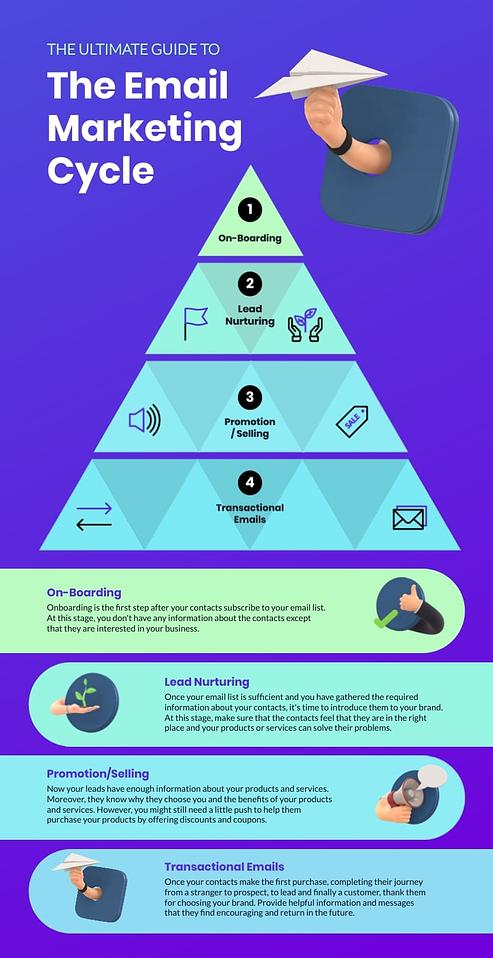
This infographic attracts visitors who search for proof that email marketing works.
SEO
Great content also needs search optimization, so it shows up in front of the right audience at the right time.
Plenty of factors play a role, but good SEO starts with conducting keyword research and working those keywords naturally into your content. If you sell to other businesses, a dedicated B2B SEO strategy targets the longer, more technical queries your buyers search for.
In inbound marketing, quality content and SEO work together to attract visitors to your website. One won’t be as effective without the other.
Social media
Social sharing and engagement should be a crucial part of your inbound marketing strategy. Just like SEO, it gets your content tons of visibility. Social media platforms work as search engines in their own right, so optimize your profiles, captions and keywords for discovery.
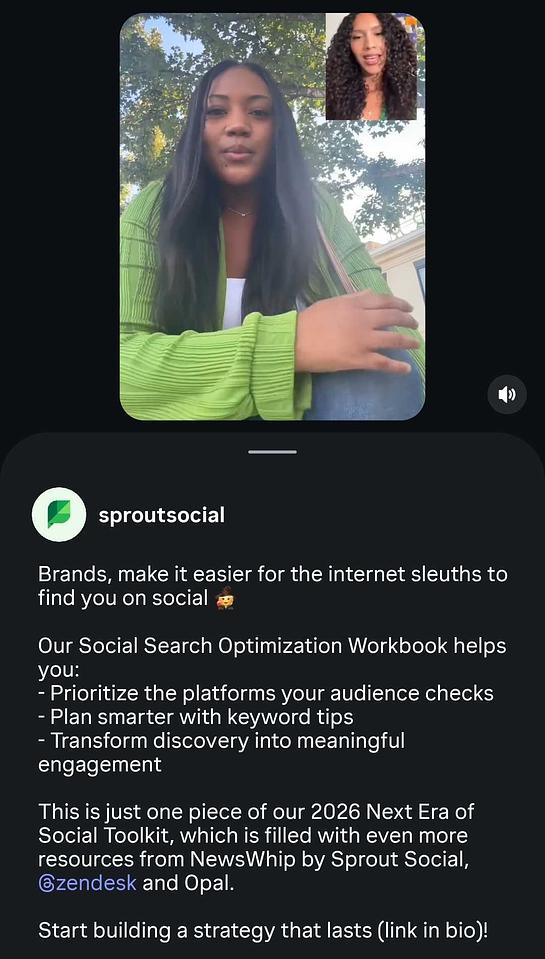
Regardless of who your target audience is, they’re spending time on multiple social media platforms. Find out which platforms matter to you and build a social media marketing strategy to create, share and promote your content there.
Social media platforms also offer a wealth of built-in tools for engagement.
For example, Instagram Stories is great for visual storytelling and sharing interactive content. Brands post how-tos and tutorials, user-generated content, behind-the-scenes footage, quizzes, polls and more.
National Geographic uses interactive stories like this one to turn passive viewers into participants:

2. Convert visitors into leads
When visitors show interest in your brand or content, give them a compelling reason to take the next step.
This stage is about getting visitors’ contact information so you can engage with them and show them why they should do business with you. It’s the heart of social media lead generation, where a follow or a click turns into a real conversation.
Here are three tactics for converting visitors into leads:
Landing pages
Your landing page is what a potential lead sees when they click your ad or link. Optimize this page to encourage visitors to sign up or subscribe.
This is where you give visitors a call-to-action (CTA) to convert into leads. More on this in a bit.
Create compelling copy and, most of the time, offer something in return, like a free product trial, e-book or whitepaper. Here’s an example of a beautiful landing page by Shopify:
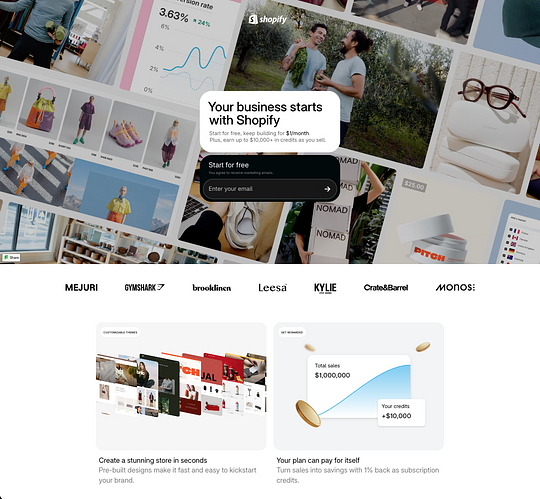
Your homepage or any other page on your website can do this job. But a specialized landing page that targets a specific keyword converts better.
Opt-in forms
Use opt-in forms to gather information from your visitors, such as their name, email address and other details. To optimize for conversions, make your opt-in form prominent and easy to fill out. Fewer fields or multi-step forms work best.
Calls-to-action
A call-to-action (CTA) is a visual way to convince visitors to take action. A compelling CTA is bold, short, clear and action-oriented.
Make sure your CTA is relevant to the text and destination. In the example below, the CTA encourages visitors to try the project management tool for free and leads to a signup page. If that went to a product overview page instead, you’d lose the conversion.
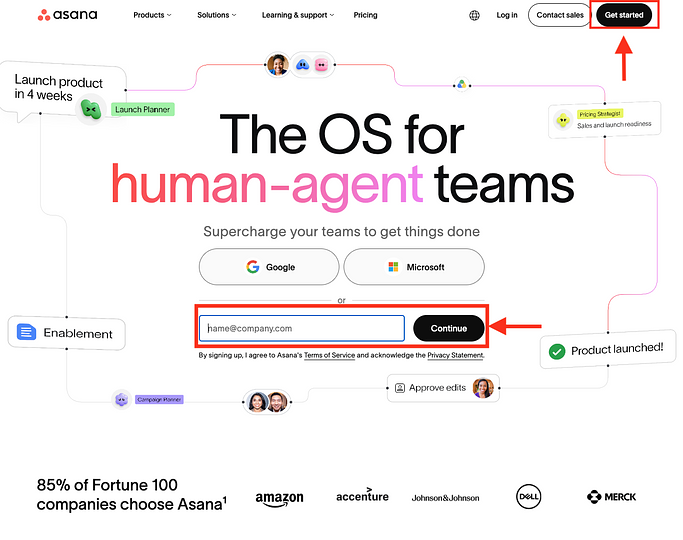
Place CTAs multiple times on a lead generation page to drive more conversions.
3. Nurture leads into customers
The whole point of collecting leads is to communicate with them and convince them to do business with you.
In this stage, you reach out to potential customers through email, social media and other touchpoints. You show them how your products or services benefit them.
Consider these two tactics:
Email marketing
Email is one of the most effective ways to reach your leads.
When visitors subscribe to your email list, they want to hear from you. Your job is to find out what they’re looking for and convince them the answer lies with your business.
Email marketing is also a great way to supplement your social strategy. Share customer reviews and testimonials with your other subscribers, encourage them to follow your social profiles and retarget social media ads to interested subscribers.
Customer relationship manager (CRM) and marketing automation
Nurturing leads is a long-term process, and automation saves time and increases the effectiveness of your campaigns.
Use CRM and marketing automation software to manage your leads, create automated email workflows and view in-depth insights on their engagement with your brand. All of this supports better conversations with leads and increases your chances of converting them into customers.
Shared CRM data also strengthens sales and marketing alignment. Your sales team picks up each lead with full context on what they’ve read and asked.
4. Delight customers
Inbound marketing isn’t just about getting customers. It’s about making your customers so happy they turn into promoters of your business.
The more you delight your customers, the more likely they are to leave great reviews and spread positive word-of-mouth. The goal of this stage is to attract more visitors and potential customers to your business.
Here’s how brands delight their customers:
Live events and webinars
Live events and webinars are a great way to engage with your customers and keep them updated on news and the latest features.
Host Q&A sessions, product tutorials and more through platforms like Instagram Live or Livestorm.
Customer support
Offering excellent customer support is crucial to keeping customers happy and satisfied with your business.
Speed matters. Per the Q3 2026 Sprout Social Pulse Survey, 38% of consumers expect a brand to respond within one to two hours.
The same 2026 survey found 70% of consumers are at least somewhat comfortable with brands using AI to deliver faster customer service. That makes AI customer service a practical way to meet expectations without burning out your team.
Address concerns in a timely manner, and use chatbots to minimize errors and streamline support. Sprout’s Smart Inbox pulls messages from every social media platform you manage into one stream and prioritizes the conversations that need you first.
Social listening
Social media is a great place to learn more about your customers and put that information to work.
Your followers leave reviews and ask questions on your social profiles, but plenty of conversations happen elsewhere. Customers sing your praises or raise concerns without tagging you, and buzz builds around topics in your industry.
With social listening, you stay up-to-date, respond in a timely manner and take advantage of positive customer experiences. Sprout Social Listening surfaces the trends, themes and sentiment behind those conversations, so you know what to say next.
Surveys
If your customers aren’t leaving reviews on their own, don’t hesitate to ask. Reach out via email, SMS, Facebook Messenger or Instagram DMs to collect their thoughts on how to improve your services for their benefit.

Keep surveys short so they don’t require too much form-filling.
How do AI and automation support inbound marketing?
AI marketing speeds up the busywork in every stage of inbound. But the brands that win use AI for insight first and creation second.
Here’s where AI and social media automation fit into each stage:
-
Attract: Social listening and AI surface the questions and themes your audience cares about.
- Convert: Automation routes form fills and DMs to the right workflow.
- Nurture: Automated email and CRM workflows personalize every follow-up.
- Delight: AI-assisted care drafts replies and flags urgent messages.
Keep people at the center. Per the 2026 Social Media Content Strategy Report, consumers want human-generated content to be brands’ number one priority.
The same 2026 report shows only 40% of marketers use AI for performance reporting and analysis. Flip that script: Let AI handle the analysis and keep humans on the story.
Trellis, Sprout Social’s AI agent, answers plain-language questions about your performance and social conversations, so you get answers in minutes instead of building a report from scratch. Smart Inbox flags the messages that likely need a reply, so your team can focus on the conversations that count.
What are the challenges of inbound marketing?
Inbound marketing delivers, but it takes work. Here are the challenges to plan for:
-
Results take time: Inbound builds over months, so set expectations with leadership early.
-
Content saturation is real: Generic content disappears in crowded feeds, so lead with original insight.
-
Search sends fewer clicks: AI summaries answer questions before people reach your site.
-
Attribution gets messy: Inbound touches many platforms, so last-click reporting undersells its impact.
-
Resourcing never stops: Creation, engagement and care all need ongoing time from your team.
That click gap is measurable. In July 2025, Pew Research Center found Google users clicked a traditional result on 8% of visits with an AI summary vs. 15% without.
The answer is to show up where answers form: on social media platforms, in online communities and in the sources AI tools cite. Then measure beyond the last click with engagement, branded search and assisted conversions.
How do you build an inbound marketing strategy?
Ready to put inbound to work? Follow these seven steps:
-
Set goals and objectives: Tie inbound to business outcomes like pipeline, revenue or retention, and define what success looks like each quarter.
-
Define your buyer personas: Document who you serve, what they ask and where they search, using sales calls, care conversations and social data.
-
Audit your existing content: Find what already ranks, converts or earns engagement, and flag what’s outdated or missing.
-
Map content to each stage: Pair every stage with content that matches intent, like how-to guides to attract and case studies to nurture.
-
Pick your priority platforms: Focus on the social media platforms where your personas spend time and search for answers.
-
Set up listening and measurement: Track conversations with social listening and assign metrics to every stage.
-
Attract: Organic traffic, reach, impressions and follower growth
-
Convert: Conversion rate, form fills and new leads
-
Nurture: Email engagement, lead-to-customer rate and sales cycle length
-
Delight: Retention, reviews, response time and positive sentiment
-
-
Review and iterate: Revisit results every month, double down on what works and retire what doesn’t.
Ready to make inbound marketing work for your brand?
Interruption marketing built plenty of brands. Billboards, TV spots and cold calls had their era, and they still have a place in the mix.
But the landscape has changed. People find brands through search, social media and AI answers, and they reward the ones that show up with something useful. It’s time to stop throwing promotional messages at people in hopes of finding a lead.
If your ads cost more every quarter while your content goes unread, that’s your signal to shift. Inbound builds long-lasting relationships and a positive brand reputation instead of a temporary spike in sales.
Sprout Social brings listening, publishing, engagement and analytics together in one platform, so you attract, convert and delight your audience from a single place. Start a free trial to explore the platform’s features.
FAQs about inbound marketing
Is inbound marketing still effective?
Yes. People still research before they buy, and brands with useful answers earn a place in that research wherever it happens.
What are examples of inbound marketing?
Blog posts, how-to videos, podcasts, free tools, newsletters and helpful replies to comments or DMs all count. Anything that attracts people because they chose to engage with it is inbound.
How do you measure inbound marketing success?
Start with the business result you care about most, like qualified leads or customer lifetime value. Then work backward to the content and platforms that influence it, including assisted conversions.
How long does inbound marketing take to work?
Expect early engagement on social media first, then steadier search traffic and leads after a few months of consistent publishing. The timeline shortens when you build on content and audiences you already have.
Is social media inbound or outbound marketing?
Both. Organic posts, community engagement and social customer care are inbound, while paid social ads aimed at cold audiences work more like outbound.



Share