How to use social data for target audience analysis

Written by Sam Kendall
Published on April 9, 2026
Reading time 11 minutes

Table of Contents
Social marketers are inundated with data. Every account managed by a brand today is collecting engagement and follower metrics that give detailed insights into how those accounts are performing.
But while this data is useful for explaining what’s happening on your socials, the metrics alone don’t explain what your audience actually wants. Your social data can be the ultimate source for understanding your audience and their needs, but to effectively uncover those insights you need to connect your data to a detailed target audience analysis.
Audiences are spending more time on social media than ever before, and new methods of use like social search are changing expectations. The 2026 Social Media Content Strategy Report found that real-time audience insights explaining these behaviors are the #1 most impactful resource for content strategies, yet most teams still rely solely on their own performance data. The report also found that 87% of marketers already want to expand to more networks in 2026, casting a wider net where they can speak to more people on their network of choice.
But connecting your social data to your audience’s expectations isn’t just a marketing mission; it fuels social intelligence that can benefit every part of your business.
We’re outlining what exactly target audience analysis is, including the three key layers of insight. We’ll then explain how you can conduct this analysis across your accounts.
What is target audience analysis?
Target audience analysis is a research strategy that involves identifying and reviewing how your audience behaves and interacts with your brand, products, services or industry.
Traditionally, this meant creating audience personas based on key information like demographics (age, location, gender identity etc.) and psychographics (values, interests, hobbies etc.). This is still a core part of effective target audience analysis, however, marketers can enhance their insights further by including social media insights. This advanced approach, known as social target audience analysis, elevates the process by combining audience targeting with quantitative and qualitative assessments based on social data.
Social target audience analysis leverages social listening, sentiment analysis, customer interaction data and predictive media intelligence. Through these advanced strategies, it transforms often generalized demographics into detailed, actionable intelligence that can inform company-wide changes. With this change in process, you can better understand who your audience is, why they behave in the way they do and what they expect from your brand as a result.
Think of it as a way to uncover the real people behind the data.
How search and social media audience behaviors are changing
Social target audience analysis is increasingly important for global brands because of fundamental shifts in how social media works. More than just sharing platforms, these spaces now represent the beating heart of online culture. Many go to social media for breaking news, to interact with friends, engage with their interests and shop for products.
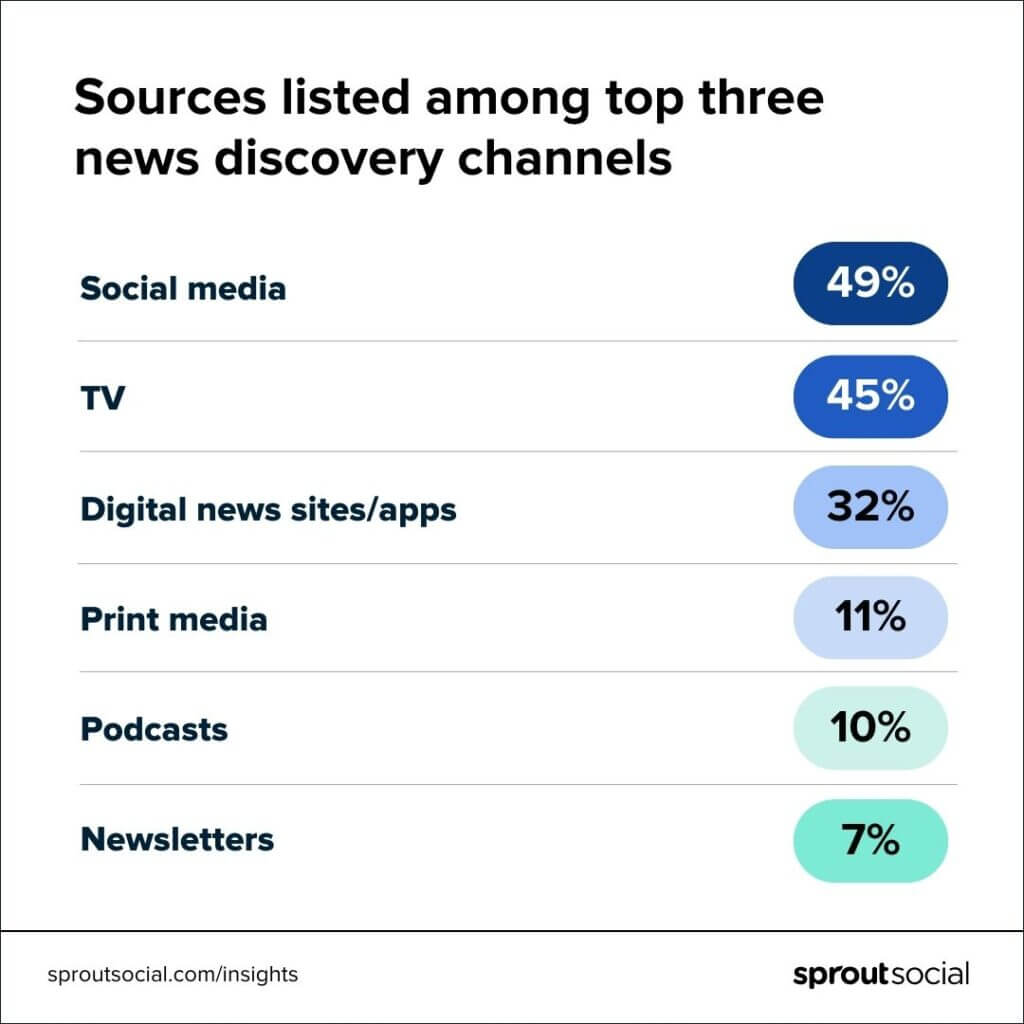
Some of these behaviors are completely changing the way digital marketing works. There’s a growing generational shift in how we search for information. Gen Z (52%), and a growing number of all consumers (36%), prefer to discover and find answers through social search. Sprout Social’s Q2 2025 Pulse Survey found that socials are now the #1 place Gen Z users go to when searching, ahead of traditional search engines like Google. Sprout’s Q1 2026 Pulse Survey found similar behaviors for breaking news discovery; 49% of people now use social media for this, ahead of both TV and news apps.
One of the main reasons for this shift is that people want authentic, human-driven answers to their questions. The Q3 2025 Sprout Pulse Survey found that 52% of consumers use social search to find user-generated content and more personalized experiences. Because of this preference, consumers are more likely to trust and relate to brand information published on social media when compared with information found through Google or AI searches.
People’s general expectations from social media are also evolving. Sprout’s Q1 2026 Pulse Survey found that the top two content types users want to see from brands on socials are educational posts (40%) and community-focused content (27%).
All of these changes make it vital for marketers to invest time in detailed target audience analysis so they can continue to stay relevant.
3 key layers of social media target audience analysis
Three key inputs set social media target audience analysis apart from traditional audience research.
Each of these approaches is only possible through collecting and reacting to social data, and each of them relates to how your audience feels about your brand, how they engage with you, and how the wider world reacts to you and your industry. By interpreting this information, you can gain a deeper understanding of your audience and their expectations.
Layer 1: Sentiment & intent
Sentiment analysis goes a step beyond traditional metric analysis and analyzes the feelings and emotions behind your engagement. Instead of simply tracking the number of likes and comments, a social listening tool like Sprout interprets customer feedback based on how positive or negative the sentiments behind them are. Sentiment tracking can be used across individual comments, or as a way of tracking overarching trends across different accounts.
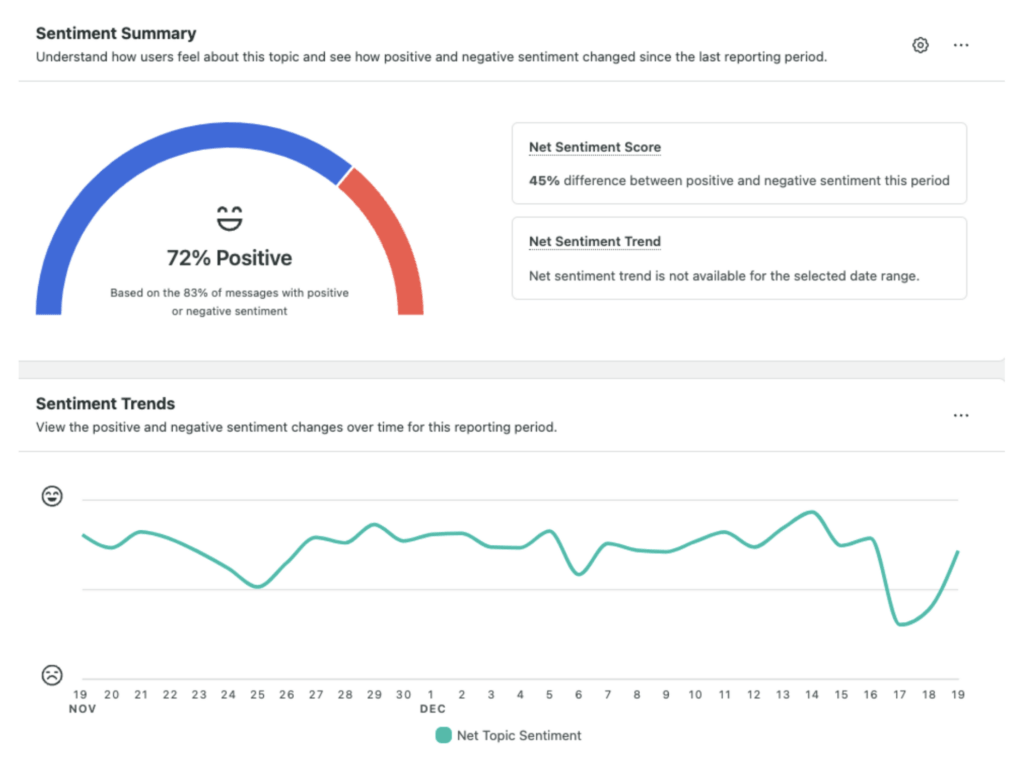
By collecting and reviewing audience sentiment insights with Sprout Social Listening, you can better understand how your audience feels about your brand right now, and how they’ve felt historically. Interpreting this data can reveal how well a new product is being perceived, or how successful your latest campaign is at engaging your audience.
Insights can also be applied to target personas to evidence how different segments of your audience feel about your brand. It’s a core strategy for leveling up your social data and turning it into social intelligence. But it can also be used to inform wider business decisions in areas like GTM strategies, customer care and more. By applying your sentiment findings, you can better understand how your brand is positioned in the market, which is vital when conducting target audience analysis across several channels.
Here’s an example from the game publisher Square Enix, where their comments section includes support and suggestions for new video games, which can inform their product team.

These interactions offer a potential treasure trove of insights into how your audience really feels about your brand. With an integrated tool you can track the sentiments behind them more efficiently, providing greater context and revealing the trends that you need to take action on.
Pro tip: Use this social intelligence analysis template for a ready-to-use framework to bring the gap between social conversations and what your brand should do next.
Layer 2: Customer interactions
Another layer of social media audience analysis involves taking a qualitative look at all of your customer interactions. These are conversations happening across your social comments, DMs, support chats and community forums like Reddit.
Using integrated tools like Sprout Social and Salesforce, you can better understand where and why your followers are interacting with your brand. These insights reveal user demands, feature or collaboration suggestions, or common problems that your audience wants solving.
Layer 3: Predictive media intelligence
The final layer of social media audience analysis looks at media monitoring. This means tracking conversations and news cycles that directly impact your brand, across social media and news sites. Tools like NewsWhip by Sprout Social mean you can spot reputational risks to your brand before they happen, and react accordingly.
You can track your brand health across the whole web, including how your campaigns or potential crises situations are gaining traction on certain channels. By behaving predictably to these news cycles, you can move beyond past data and look at what’s happening right now, as well as what could be happening in the near future. This can become an evolution of traditional target audience analysis that adds another layer of understanding, both of your audience’s current mood and how your brand is perceived right now.
Combined together, these layers transform your social data into actionable audience insights that can inform future strategies.
How to conduct a target audience analysis with social data
This six-stage process explains how you can conduct this more detailed form of social target audience analysis and collect insights across each layer through your social profiles.
1. Identify what you don’t know
When understanding your target audience, it’s often more about what you don’t know than what you’re working with already. Identifying these gaps is much easier with a social management tool and CRM integration. Combine your existing CRM data with your social insights through a tool like Sprout. Review how this customer data aligns with the conversations happening around your brand.
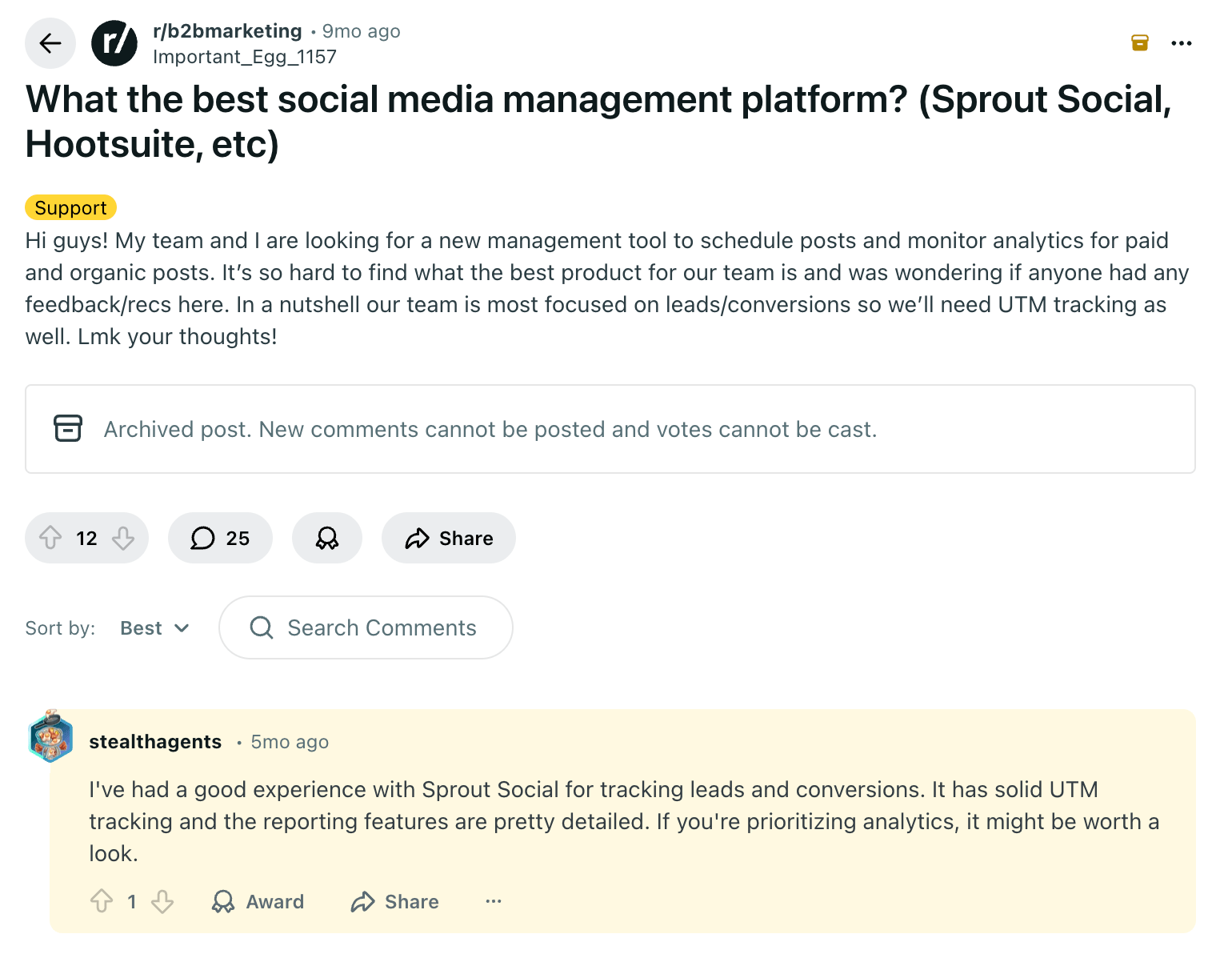
But don’t just focus on your own content; analyze networks where you don’t have a presence, and forums like Reddit to gain a bigger picture of the sentiments surrounding your brand. Here’s an example of the unfiltered, highly relevant feedback you can get from Reddit social listening.
These interactions should identify advocates, concerns and conversations that you haven’t come across before, as well as some you might already be tracking. After comparing this data, collate your findings by connecting qualitative CRM statistics with qualitative sentiments to better understand ‘who’ is in your audience and ‘what’ is it they care about.
2. Layer sentiment over statistics
Now you’re moving on from asking “how many?” to “how do they feel?”. Tools like Sprout enable you to dive into sentiment to understand what your audience really wants. These sentiments complement quantitative data so you can better understand the feelings and desires behind your comments and DMs.
Examples might include situations where a customer is thinking of switching to a different provider, or conversely, is thinking of switching away from one of your competitors. Another category might involve frustrations with your product, or situations where customers are praising your brand but requesting a certain feature. In this example from the Criterion Collection and Janus Films, comments are mostly positive about a new film release, but some of them are requesting a 4K Blu-ray release.

Analyzing these comments transforms your audience from being a number on a page into more specific insights about different segments of your entire audience.
Look for trends in the comments and conversations, sorting interactions into categories that can then be turned into a list of prioritized needs. When prioritizing, think about the quantity of comments in a given category and the strength of sentiments, as well as how feasible it is for you to react in a meaningful way. You’ll use this list later to refine your target personas.
3. Audit competitor audiences
You should have uncovered some insights into your competitors already, but now you’ll delve deeper. First, list your key competition, then use a tool like Sprout to conduct competitive analysis across all their socials.
Look at their successes and their failures; who they’re engaging with, and who they’re failing to support. Successes can inform your strategies, and their failures show gaps that you can target. This data can also reveal influencers they’re collaborating with, engagement strategies they’re using in campaigns and which of their content types is the most well-received by followers, among other intelligence.
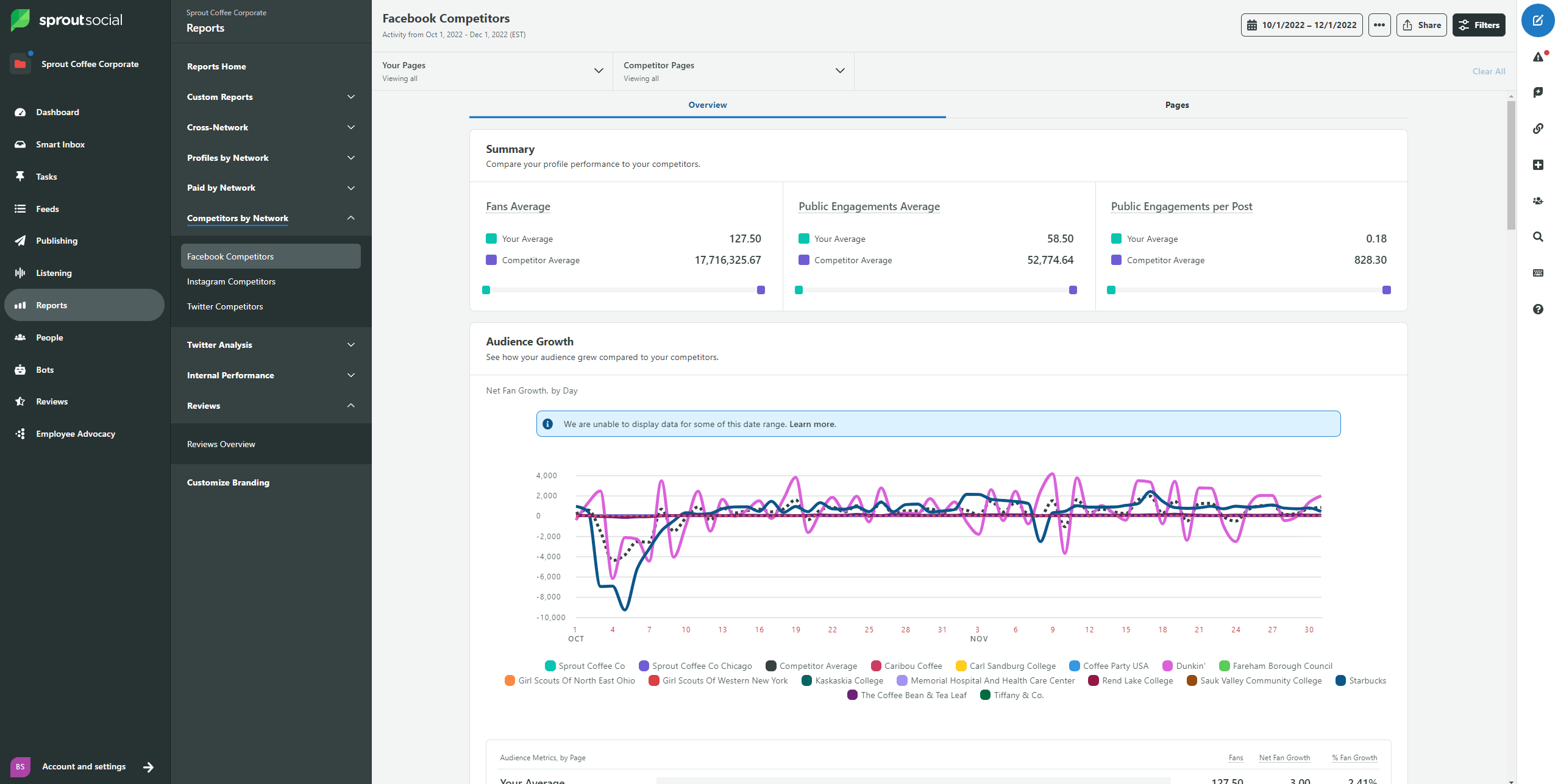
Compare your findings with your performance to better understand your current positioning in the market. It can also inform which networks you should prioritize by identifying where your audiences can be found, and where they’re actively looking to engage with brands in your industry.
4. Track predictive signals
Once you better understand your competition, start analyzing your industry as a whole. Use predictive media intelligence tools like Newswhip to track the speed of conversations, and aim to unearth patterns in that data. Apply this across different networks and broadcasters, both locally, nationally and internationally.
This should reveal a list of topics gaining velocity among your audience. Determine whether these topics are relevant for your brand, and segment them. Then, look at how you can pivot your upcoming strategies to better react to both sides of the conversation.
This process is about meeting your audience where they’re going, so you’re keeping pace with their needs and you’re not left behind. It’s also worth applying your findings to your competitive analysis to determine how prepared your competition is for these potential futures. This gives a better indication of how your positioning may need to evolve, especially for the target personas you should prioritize.
5. Create dynamic personas
With all this data and social insight, you can now create enhanced audience buyer personas. These personas don’t simply list basic demographics; they should be dynamic, detailed personas that dig into the interests, pain points and motivations for each target audience segment.
Use your social data as a base, then apply the insights you’ve gained through analyzing competitors, customer care interactions and predictive signals to build on them. Enhance this demographic and psychographic data based on what your audience has been saying and how they’ve been feeling.
A useful approach is to create a list of goals for each persona based on your research findings. These should outline what exactly each of your personas wants and/or expects from your brand. Then, add a list of frustrations and motivations that impact how they interact with you.
It’s also worth embedding your competitive analysis to list which other brands they’re likely to engage with. Also include examples of creators and influencers they may follow, as this gives you an idea of who they’re influenced by and recognize as experts.
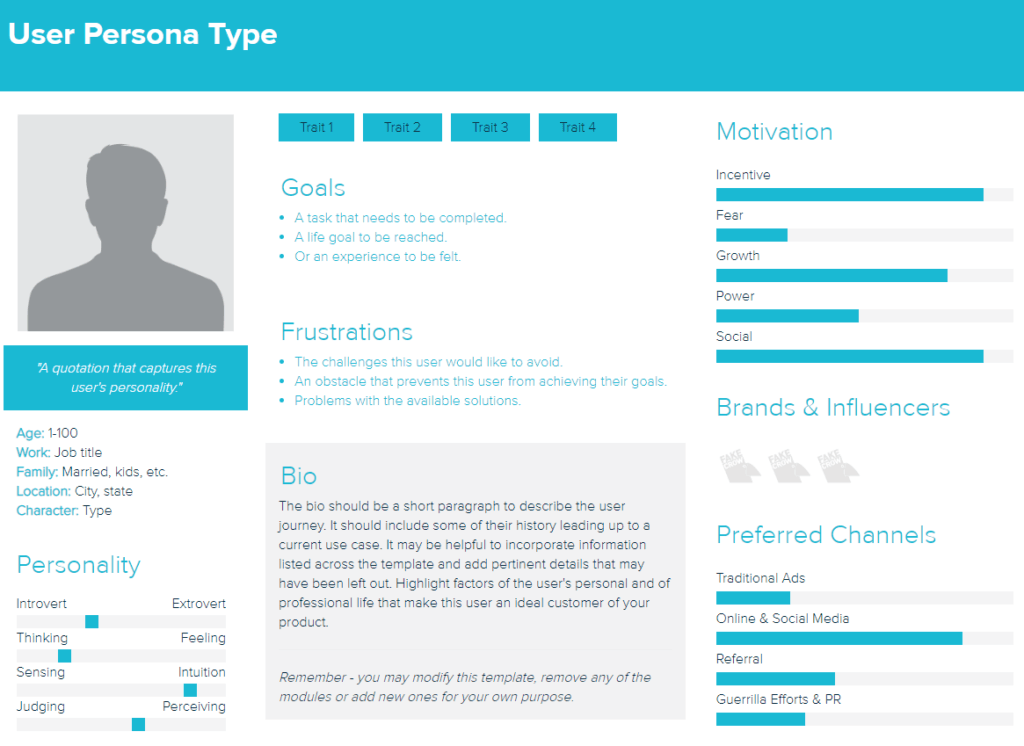
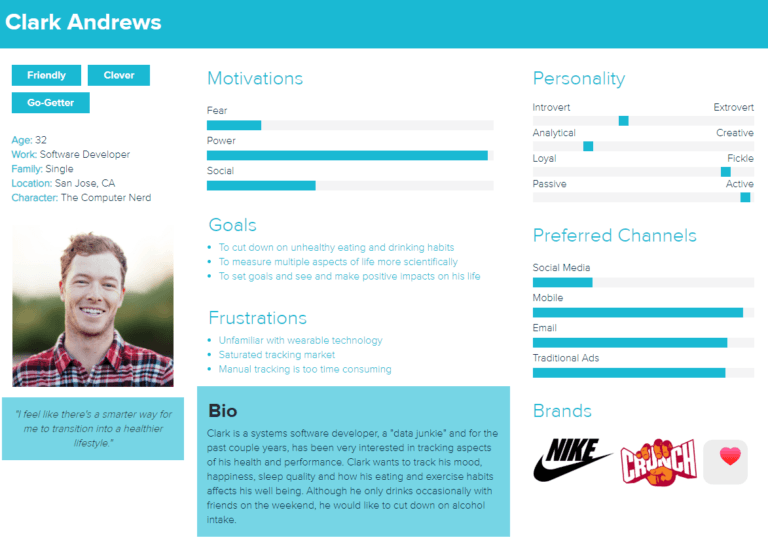
Once you’ve created several audience personas, use them to inform future business strategies. Use Sprout’s targeting features to act on your new personas and your social insights. In platform you’ll be able to segment your content when publishing, and create further social intelligence that immediately informs further targeting and content strategy approaches, on top of changes you can make to your wider business. Go one step further by using agentic AI to automate your audience research, so you keep a pulse on behavioral changes as the market and their needs develop.
6. Share insights cross-functionally
The final step in managing a successful target audience analysis is giving everyone access to your results. Make all of your data accessible and actionable across your entire organization. This becomes much easier if you’re using an AI-powered social intelligence solution like Sprout.
Streamline your insights for relevant departments. For example, you might’ve uncovered that one of your audience personas is asking for a specific feature to add to your solution. Give this insight to your product team in a simple, clear way, with a recommendation on what they can do to resolve it. Or if you’re presenting your findings to c-suite executives, collate the most important data into a report with a list of takeaways and recommended actions, similar to how you’d build a social media scorecard.
Social intelligence should never stay on social media. While it can inform your social strategies (and it should), it should also be used to inform your entire organization. Everyone from sales and product developers to managers, customer service teams and partner agencies can benefit from the audience insights your social media audience analysis has revealed.
Finally, don’t perform this analysis once and call it a day. It needs to be done regularly to keep your company prepared. Schedule regular reviews of your audience personas, competitor audits and sentiment analysis to continue to refine and react to your audience’s changing behaviors.
From social media target audience analysis to business-wide action
Audience analysis has evolved from a recurring marketing task to a business-wide necessity. Without collecting and reacting to social intelligence, brands risk simply adding to social media noise and failing to authentically connect with their audience across channels.
Once you’ve determined who your audiences are, work on a strategy that speaks to them directly. Read Sprout Social’s 2026 Social Media Content Strategy Report to better understand what your audience expects across different platforms, and which trends you should be reacting to right now.
37 free social media strategy templates that will elevate your workflows
Published on December 5, 2025 Reading time 15 minutes





Share