12 Instagram campaigns to inspire your brand in 2026

Written by Mary Keutelian
Published on February 10, 2026
Reading time 9 minutes

Table of Contents
With over 2 billion monthly active users, Instagram in 2026 is no longer just a photo-sharing app—it’s a full-funnel ecosystem driven by AI-personalization, immersive AR and direct-to-community commerce.
For social marketers, the challenge has shifted from “going viral” to building sustainable, high-utility “always-on” experiences. A successful Instagram marketing strategy now requires a blend of creative storytelling and technical integration.
If your strategy needs a refresh, look to these 12 standout Instagram campaign examples for inspiration.
Types of Instagram campaigns
Instagram campaigns fall into four primary categories: awareness campaigns (maximizing reach to new audiences), engagement campaigns (driving conversation and community interaction), conversion campaigns (generating sales and sign-ups) and product launch campaigns (building pre-release momentum). Each type serves distinct business objectives and requires different tactical approaches.
| Campaign Type | Primary Goal | Key Tactics | Success Metrics |
|---|---|---|---|
| Awareness campaigns | Introduce brand to new audiences | Broad hashtags, viral challenges, macro-influencer partnerships | Reach, impressions, profile visits |
| Engagement campaigns | Spark conversation and community interaction | Contests, UGC challenges, interactive Story stickers | Comments, saves, shares, Story replies |
| Conversion campaigns | Drive sales and sign-ups | Instagram Shopping tags, Link in Bio CTAs, promo codes | Link clicks, purchases, lead form completions |
| Product launch campaigns | Build pre-release momentum | Tease-reveal-sustain cadence, countdown stickers, reminder features | Pre-orders, launch day sales, waitlist sign-ups |
Awareness campaigns
These campaigns introduce your brand to new audiences. They often leverage broad hashtags, viral challenges or partnerships with macro-influencers to maximize reach and impressions.
Engagement campaigns
Designed to spark conversation, these campaigns prioritize community interaction. Tactics include contests, user-generated content (UGC) challenges or interactive Story stickers that invite followers to participate rather than just consume.
Conversion campaigns
When the goal is sales or sign-ups, these campaigns focus on the bottom of the funnel. They utilize Instagram Shopping tags, “Link in Bio” CTAs and exclusive promo codes to drive measurable traffic and revenue.
Product launch campaigns
These coordinated efforts build hype before a drop. They typically follow a “tease, reveal, sustain” cadence, using countdown stickers and reminder features to ensure your audience is ready to buy the moment you go live.
1.Blank Street Coffee: “Blank Spring” campaign
Blank Street Coffee capitalized on the exploding matcha trend with its “Blank Spring” campaign, launching new seasonal beverages like the Strawberry Shortcake Matcha.
The brand leaned heavily into nostalgia and styled its Reels with a Y2K aesthetic complete with Tamagotchis and retro soundtracks.
To bridge the digital-to-physical gap, they paired the content with hyper-local “Picnic Stand” activations in New York and London. This move transformed a digital product launch into a tangible, “I was there” moment that generated massive organic social proof.
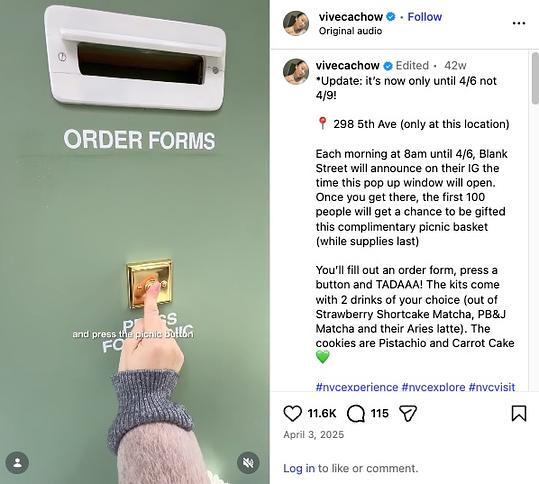
Why it worked: Blank Street proves that “vibe” is a viable business strategy. By tapping into specific aesthetic subcultures and pairing them with real-world generosity, they turned a beverage launch into a lifestyle statement.
2. CAVA: The CAVA Shop
In late 2025, CAVA officially transcended the fast-casual category to become a lifestyle brand with the launch of The CAVA Shop. Capitalizing on the cult-like status of their ingredients, the brand released a streetwear-inspired collection featuring “Feta” dad hats and “Hot Harissa” tees.
The campaign treated these items not as souvenirs, but as “wearable media.” By leaning into the specific products fans already obsess over on social media, CAVA turned their customer base into a walking, talking advertising channel.
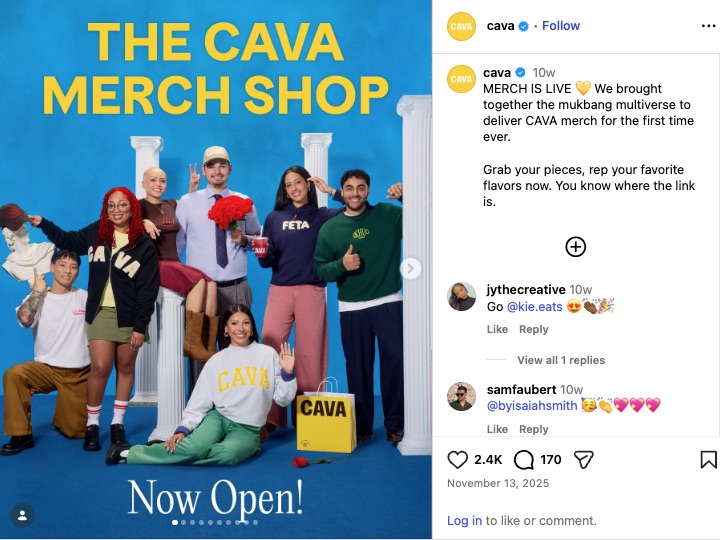
Why it worked: CAVA understands that in 2026, merch is media. By creating design-led apparel based on “inside jokes” with their community, they deepened brand affinity and turned loyal customers into visible brand ambassadors.
3. Patagonia: #PatagoniaFanMail
Patagonia turns the often-feared comments section into a pillar of their content strategy. In the #PatagoniaFanMail series, employees read and respond to real audience feedback—including skepticism and challenging questions about their sustainability initiatives.
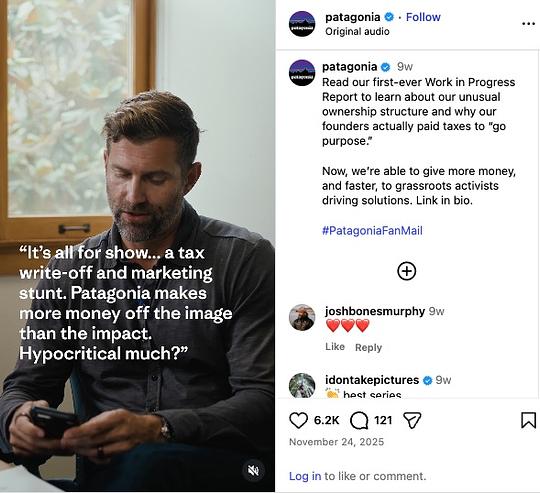
Instead of sidestepping criticism or relying on polished PR statements, the brand uses these Reels to tackle hard topics with humor and honesty.
Why it worked: Instead of deleting negative comments, Patagonia leverages them as educational opportunities. By showing the real people behind the brand, they turn PR risks into trust-building moments, proving that accountability is a powerful form of marketing.
4. Spotify Wrapped 2025: “The Cinematic Universe”
Spotify Wrapped 2025 evolved from a data recap into a full-scale “visual mixtape” that dominated social feeds for weeks. The latest iteration introduced the “Listening Age” feature comparing user tastes to generational trends and “Wrapped Party” which allowed friends to compare stats in real-time.
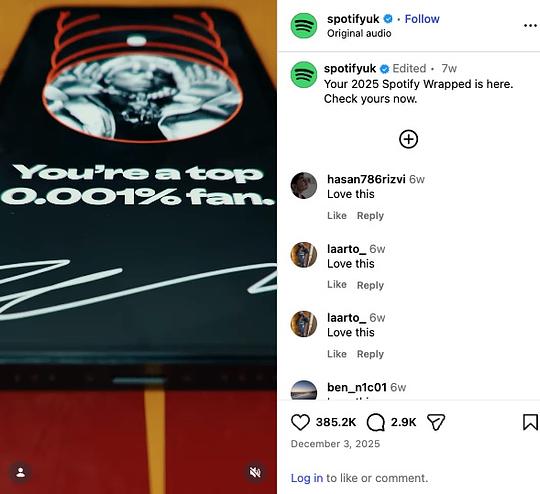
Instead of just presenting static charts, Spotify leaned into the “cinematic” trend of 2025, using gritty, lo-fi textures and motion graphics that felt like a personalized movie trailer.
Why it worked: Spotify continues to prove that personalization is the ultimate engagement hack. By transforming raw listening data into a high-fidelity narrative, they gave millions of users a main character moment.
5. Dove: #FreeThePits
Dove continued its legacy of promoting body positivity by tackling a common insecurity: the underarm. The #FreeThePits campaign encouraged women to reject the pressure of “perfect” pits, featuring a diverse cast of real women displaying shaved, unshaven and natural underarms in high-visibility placements.
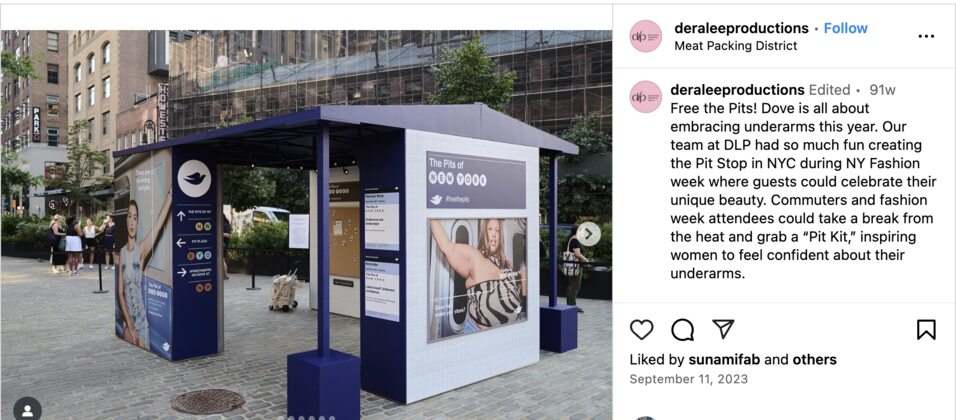
Why it worked: Dove proves that consistency builds trust. By applying their long-standing “Real Beauty” ethos to a new, specific cultural anxiety, they refreshed their narrative without changing their values.
6. Jacquemus: Le Valérie campaign with Charlotte Le Bon
Emotional storytelling meets platform-native craft in this tribute to founder Simon Porte Jacquemus’ mother. Rather than leaning on high-gloss production or overt luxury cues, the brand used intimate emotion and everyday authenticity to launch its latest accessory.
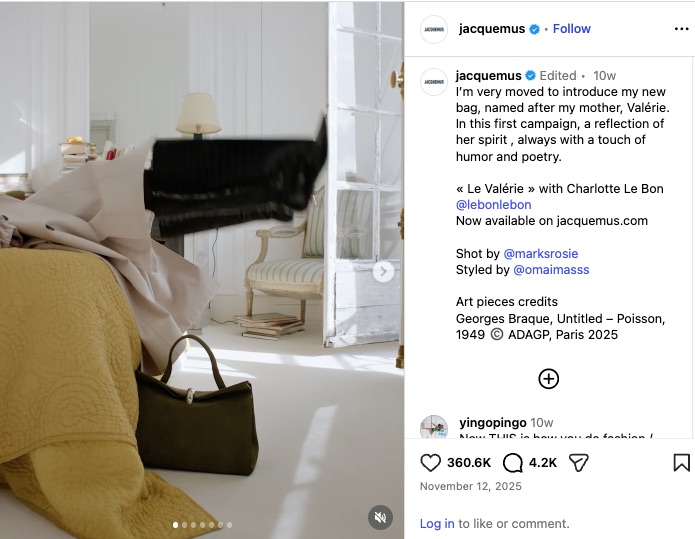
The campaign uses a first-person, POV visual language—groceries tumbling, warm domestic scenes—to communicate a subtle, deeply personal narrative.
Why it worked: Jacquemus is redefining modern luxury by prioritizing sincerity over opulence. By embracing vulnerability, the brand turned a simple product launch into a resonant cultural moment.
7. Liquid Death: “Recycled Plastic” Parody
Known for its edgy and humorous marketing, Liquid Death created a parody campaign “announcing” they would switch to plastic bottles. The video mimicked sincere corporate announcements as a satirical take on greenwashing, reinforcing their brand identity centered on sustainability and “death to plastic.”
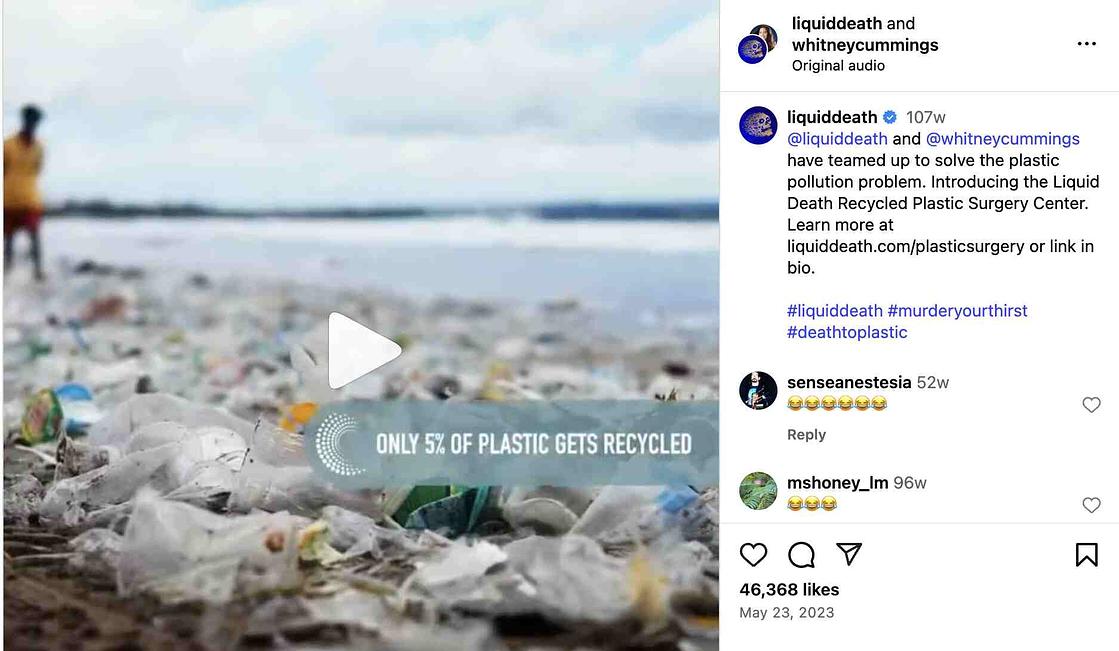
Why it worked: Liquid Death proves that satire cuts through when it’s rooted in brand truth. By parodying the exact corporate behavior they oppose, they reinforced their anti-establishment positioning while engaging their audience in meaningful conversation about greenwashing.
8. Tinder: “It starts with a swipe”
To shift its perception from a casual hookup app to a platform for meaningful connections, Tinder launched the “It Starts with a Swipe” campaign. It featured real-life couples who met on the app, sharing their unique love stories to reframe the narrative around online dating.
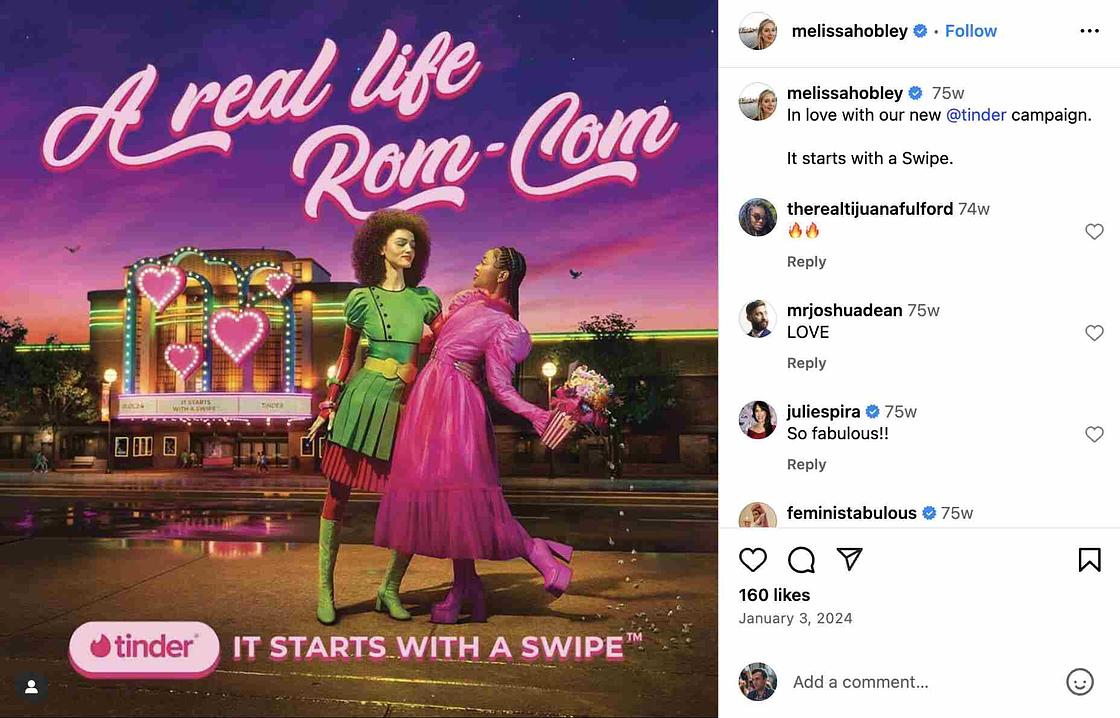
Why it worked:This authentic and heartwarming approach supported Tinder’s rebrand and appealed to a generation seeking genuine relationships. It shows that sometimes the best campaign strategy is letting your successful customers tell their own stories.
9. Olipop: “Soda is dead”
This digestive health-focused soda brand took a bold approach with its “Soda is Dead” campaign. They used vintage-style, slightly spooky creativity to position their product as a healthier alternative to traditional sugary sodas.
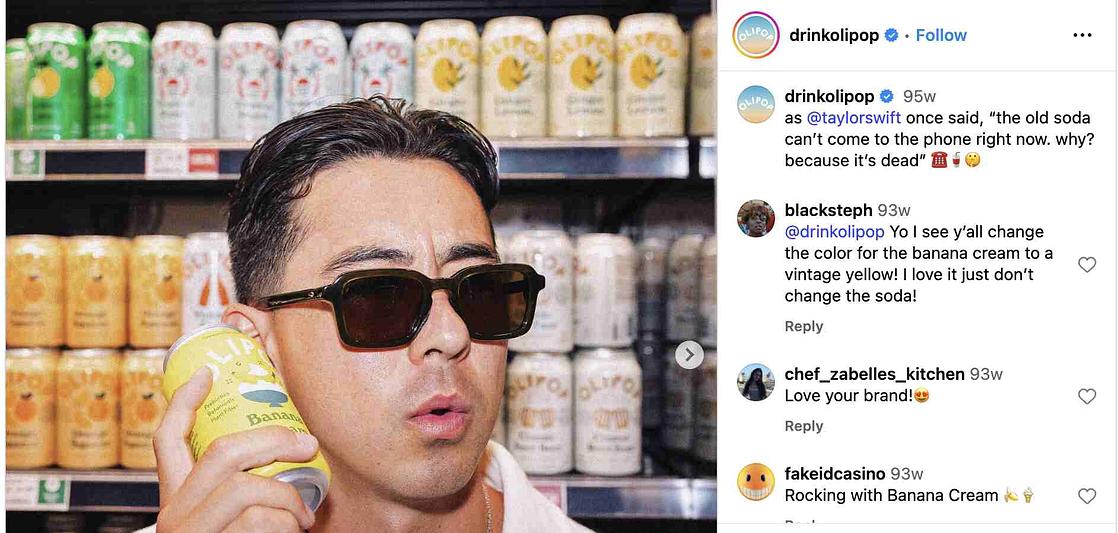
Why it worked: Olipop demonstrates that category disruption demands visual disruption. By embracing a mysterious, counter-cultural aesthetic rather than clean wellness imagery, they differentiated themselves in an oversaturated better-for-you beverage market.
10. Gymshark: #Gymshark66
Gymshark moves beyond the typical “New Year, New You” flash sale with #Gymshark66. Grounded in the concept that it takes 66 days to form a habit, the campaign challenges the community to build consistent routines across training, health and mindset by tracking their daily progress publicly.
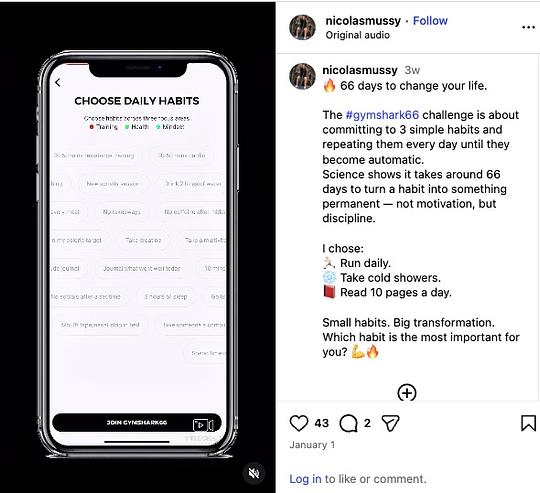
Why it worked: Gymshark proves that consistency beats viral intensity. By creating a structured, long-term challenge, they secure audience engagement for over two months straight. This generates a massive engine of user-generated content (UGC), transforming customers into active brand ambassadors.
11. Crocs x various artists and brands
Crocs has mastered the art of collaboration through partnerships with artists, celebrities and brands. Their LEGO collaboration stood out by featuring Reels that tap into the satisfying aesthetic both brands share, promising content that builds your For You Page brick by brick.
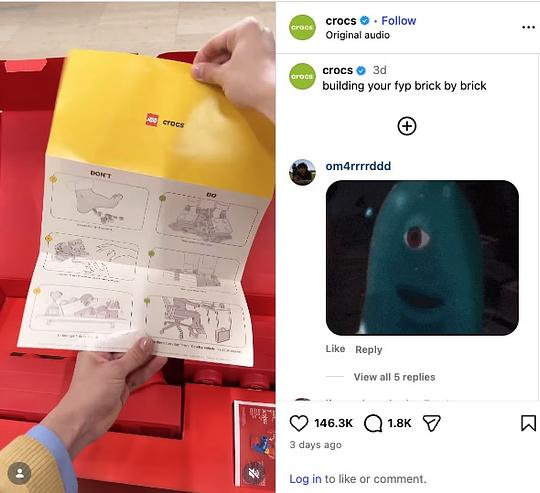
Why it worked: Crocs proves that brand partnerships work best when both parties share overlapping audiences and values. By combining LEGO’s nostalgia factor with Crocs’ comfort positioning, they created a collaboration that feels inevitable rather than forced.
12. Garnier: “Dull to bright”
For its Vitamin C Brightening Serum, Garnier launched a clever campaign called “Dull to Bright.” The brand sent a group of fitness and wellness influencers on a multi-day running journey from a town named Dull in Scotland to Brighton on the English coast. The campaign brilliantly connected the product’s “dull to bright” promise with a real-world, engaging journey, generating significant authentic content andbrand awareness.
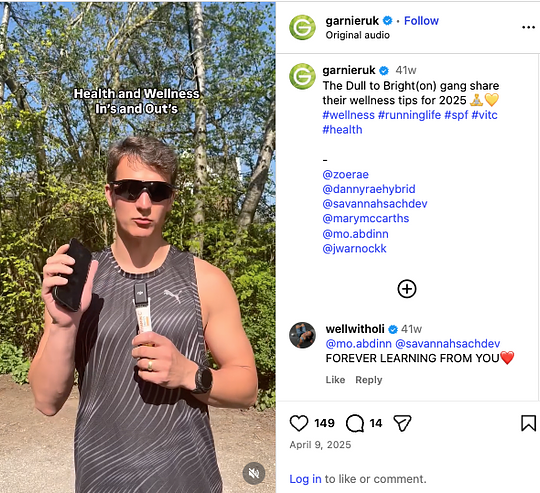
Why it worked:The campaign brilliantly connected the product’s “dull to bright” promise with a real-world, engaging journey. It moved influencer marketing beyond the “get ready with me” format into an adventurous narrative that kept followers watching day after day.
What makes Instagram campaigns successful?
Great campaigns share common DNA. They build on brand truth and audience insight, not trend-chasing. Six elements separate campaigns that break through from those that fade into feeds:
- Visual storytelling that stops the scroll:Striking imagery, unexpected creative choices and production value that signals quality without sacrificing authenticity
- Audience participation:User-generated content, shareable moments and interactive elements transform passive viewers into active advocates
- Strategic partnerships:Influencer collaborations, cross-brand activations and cultural moment integration leverage existing communities to amplify reach
- Brand alignment: Every successful campaign ties to core brand values or product benefits—forced trendjacking backfires
- Clear objectives:Specific business goals (awareness, engagement, sales and repositioning) drive creative strategy from day one
- Measurable results:The campaigns below prove strategic execution delivers business impact, not just vanity metrics
How to create an Instagram campaign
Great campaigns don’t happen by accident. They require a strategic roadmap that bridges creative inspiration with tactical execution.
Follow this seven-step framework to build a campaign that delivers results:
- Define your objective: Set specific goals (awareness, engagement or sales)
- Identify your target audience: Determine who you need to reach
- Choose your campaign type: Select format aligned with your objective
- Develop your creative concept: Craft platform-native visuals and narrative
- Set your budget and timeline: Scope resources and establish deadlines
- Execute and monitor: Launch content and track performance in real-time
- Measure and optimize: Track KPIs and iterate based on results
1. Define your objective
Be specific. Decide if you want to drive brand awareness, increase engagement or increase sales. Your goal dictates every creative decision that follows.
Use Sprout Social’s Analytics to identify current performance gaps and set realistic benchmarks.
2. Identify your target audience
Determine who you need to reach. Are you engaging existing loyalists or chasing a new demographic? Tailor your tone, visuals and platform features (like Stories vs. Reels) to match their consumption habits.
3. Choose your campaign type
Select the format that best serves your objective. A product launch requires a different approach than a community-building UGC challenge. Refer to the campaign types above to guide your selection.
4. Develop your creative concept
Craft a visual identity and narrative that stops the scroll. Ensure your assets are platform-native and aligned with your brand voice. Store your approved creative in Sprout Social’s Asset Library to maintain consistency across your team.
5. Set your budget and timeline
Scope your resources with realism. Define how much you will spend on production, influencer partnerships and paid amplification. Establish a clear start and end date to create urgency.
6. Execute and monitor
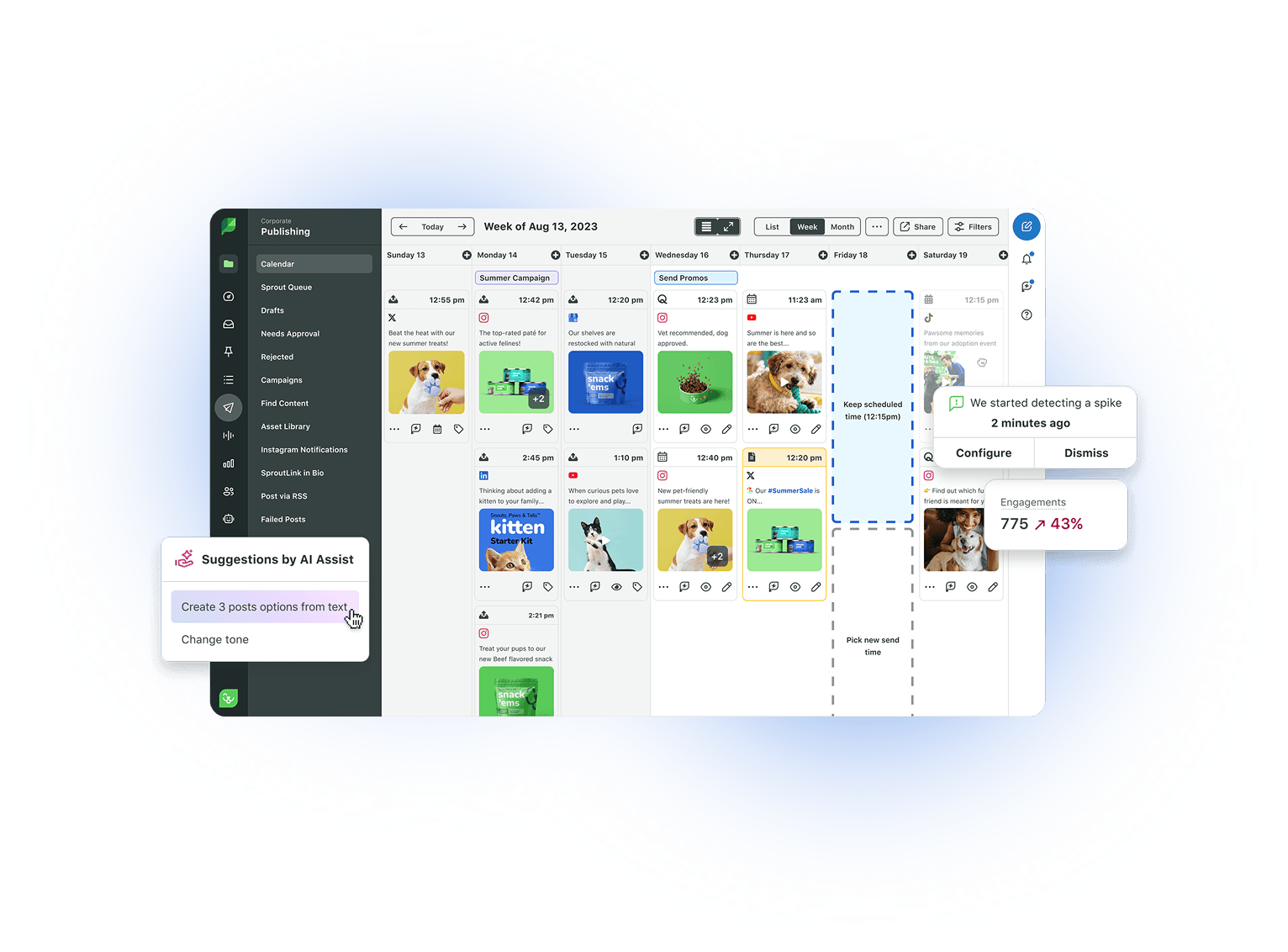
Launch your content according to a structured schedule. Use Sprout Social’s Publishing Calendar to visualize your entire campaign timeline and ensure a cohesive narrative arc. Monitor engagement in real-time to pivot if necessary.
7. Measure and optimize
Don’t wait until the end to check performance. Track your KPIs throughout the campaign. Use Sprout Social’s Tagging feature to isolate campaign posts and measure specific ROI separate from your always-on content.
How to measure Instagram campaign success
The best campaigns mean nothing without measurement. You need to prove your Instagram campaign drove business impact, not just vanity metrics.
Track metrics aligned with your goals
Focus on the data that matters. Different campaign objectives require different success metrics.
| Campaign Objective | Primary Metrics | What to Track |
|---|---|---|
| Awareness | Reach, impressions, follower growth | How many people saw your content and discovered your brand |
| Engagement | Saves, shares, comments, Story replies | How actively your audience interacts with campaign content |
| Conversion | Link clicks, website traffic, purchases | How effectively your campaign drives bottom-funnel actions |
Overcome attribution challenges
Instagram’s last-click attribution often misses the full picture. Campaigns often influence purchase decisions days or weeks later. Look at lift in direct traffic and branded search volume during your campaign window to gauge holistic impact.
Use the right tools
Native Instagram Insights provide a snapshot, but they lack historical depth.
Sprout Social’s Tag Performance Report lets you tag every campaign-related post to track performance as a cohesive unit. This allows you to compare this year’s holiday campaign against last year’s, giving you a clear view of long-term growth.
Benchmark against competitors
Context is key. Don’t measure in a vacuum. Compare your campaign engagement rates against industry standards to understand if you’re outperforming the market.
Evolve your Instagram campaigns with these inspirations
The common thread across all these successful Instagram campaigns is a move away from passive consumption toward active participation. Whether it’s voting on a flavor, scanning a room with AR or hunting for coordinates, the best campaigns invite the user to do something.
As you plan your next move, remember that managing and measuring high-engagement campaigns requires the right infrastructure. Sprout Social’s Publishing Calendar supports multi-post campaign planning, our Smart Inbox manages the influx of engagement and our Tagging features and Analytics prove business impact to stakeholders.
Ready to start planning? Use our social media campaign template to organize your next big idea. Or, if you’re ready to level up your Instagram marketing campaigns, start your free 30-day trial of Sprout Social today—no credit card required.
FAQs about Instagram campaigns
What is an Instagram campaign?
An Instagram campaign is a coordinated series of posts designed to achieve a specific, measurable goal (like product launches, event attendance or awareness moments) within a defined timeframe, unlike regular posts that build brand over time.
How long should an Instagram campaign run?
Most successful campaigns run between two and eight weeks. Short campaigns of two to four weeks work well for product launches or seasonal moments. Longer campaigns of six to eight weeks are better for driving behavior change or sustained awareness.
Any shorter risks insufficient reach while longer durations risk audience fatigue.
Can small businesses run successful Instagram campaigns without a big budget?
Yes, focus on user-generated content, employee advocacy or micro-influencer partnerships rather than production budget. Tools like Sprout Social’s free trial give you enterprise-level campaign planning and tracking capabilities regardless of company size.
Do Instagram campaigns require paid ads?
No, many successful campaigns are organic. The most effective approach blends both: start organic to test creative, then amplify top performers with paid ads to extend reach beyond existing followers.


Share