How to get more views on YouTube and grow your channel in 2026

Written by Rebecca MacFarlane
Published on February 10, 2026
Reading time 15 minutes
Table of Contents
A successful YouTube marketing strategy isn’t just about creating great content—it’s about making sure your content cuts through the noise and gets seen. With users uploading over 20 million videos every day, making your content discoverable requires strategy.
While many guides offer fast-acting tips for boosting visibility and YouTube views, they often overlook strategies that drive long-term, sustainable video growth.
This guide goes beyond the basics of digital marketing. Whether you’re just getting started or want to boost your channel’s reach, get powerful tactics to multiply views and cultivate your channel for the long term.
How to grow your YouTube channel in 2026
Social networks are prioritizing video content in 2026 and beyond, making it the perfect time to grow your YouTube channel. According to Sprout’s 2025 Content Benchmarks Report, the percentage of video content is increasing overall—with a 3 percentage point increase on Facebook and Instagram, and a 2% increase on X.
Video-first platforms like YouTube and TikTok have also increasingly become integral parts of branded social strategies.
With that said, growing a YouTube channel today requires a shift in focus. While your subscriber count still matters, the real growth comes from your individual video performance.
When your videos consistently attract views and engagement, YouTube’s algorithm takes notice. It starts to see your content as valuable and pushes it to more viewers. This creates a powerful cycle: more views = more engagement = more visibility = channel growth.
That’s why creating videos that people want to watch and interact with is the foundation of a successful YouTube strategy. Just as important, though, is to promote your videos effectively so they get the love and attention they deserve.
According to the 2025 Sprout Social Index™, social media users prioritize authenticity, relatability and entertainment in brand content. They’re looking for brands that are well-versed in online culture and reject brands that jump on every viral meme for a quick engagement boost.
The Index also reveals the traits consumers value in their favorite brands for cutting through the noise (in order of importance):
- Quality of their product or service
- Originality of their content
- How they engage with their followers
- How quickly they respond to customers
- Content their employees post
To get more YouTube views, start examining how original, authentic and relevant your videos are to your brand. If they’re falling short in one or all of these areas, push pause on posting to spend more time creating high-quality content.
How to grow your YouTube channel: 13 tips and tricks
Stuck at the same follower count and views? To grow your YouTube audience and break through your engagement plateau, a strategic approach is crucial.
Watch this video for practical ways to promote your YouTube channel and boost your view and subscriber numbers—then continue reading below for additional expert tips:
How to get more views on YouTube
Try these tactics to boost views:
1. Write engaging titles
YouTube marketing is all about presentation and first impressions. Titles, which are the first thing potential viewers will see, are make-or-break when it comes to your video’s performance.
To evaluate your titles, ask yourself: Am I presenting my content as “must-see” or “meh”?
The key to crafting killer YouTube video titles is grabbing your audience’s attention without resorting to clickbait headlines. They want content that entertains or sparks curiosity and authentically communicates the video’s topic before they click on the play button.
Pull a page out of Grammarly’s playbook. The grammar and spelling assistant has a series of YouTube videos showcasing its various features. The titles of the videos follow the same, eye-catching formula: they front-load the action and benefit the user can get from Grammarly’s tool, then list the name of the tool itself.
Take the title “Adapt Your Writing for Any Style with Grammarly’s Paraphraser Agent” as an example. The title leads with a clear, action-oriented benefit (i.e. adapting your writing to suit any style, whether formal or casual or somewhere in between). Then, it names the specific tool you can use to perform that action (i.e. Grammarly’s Paraphraser Agent).
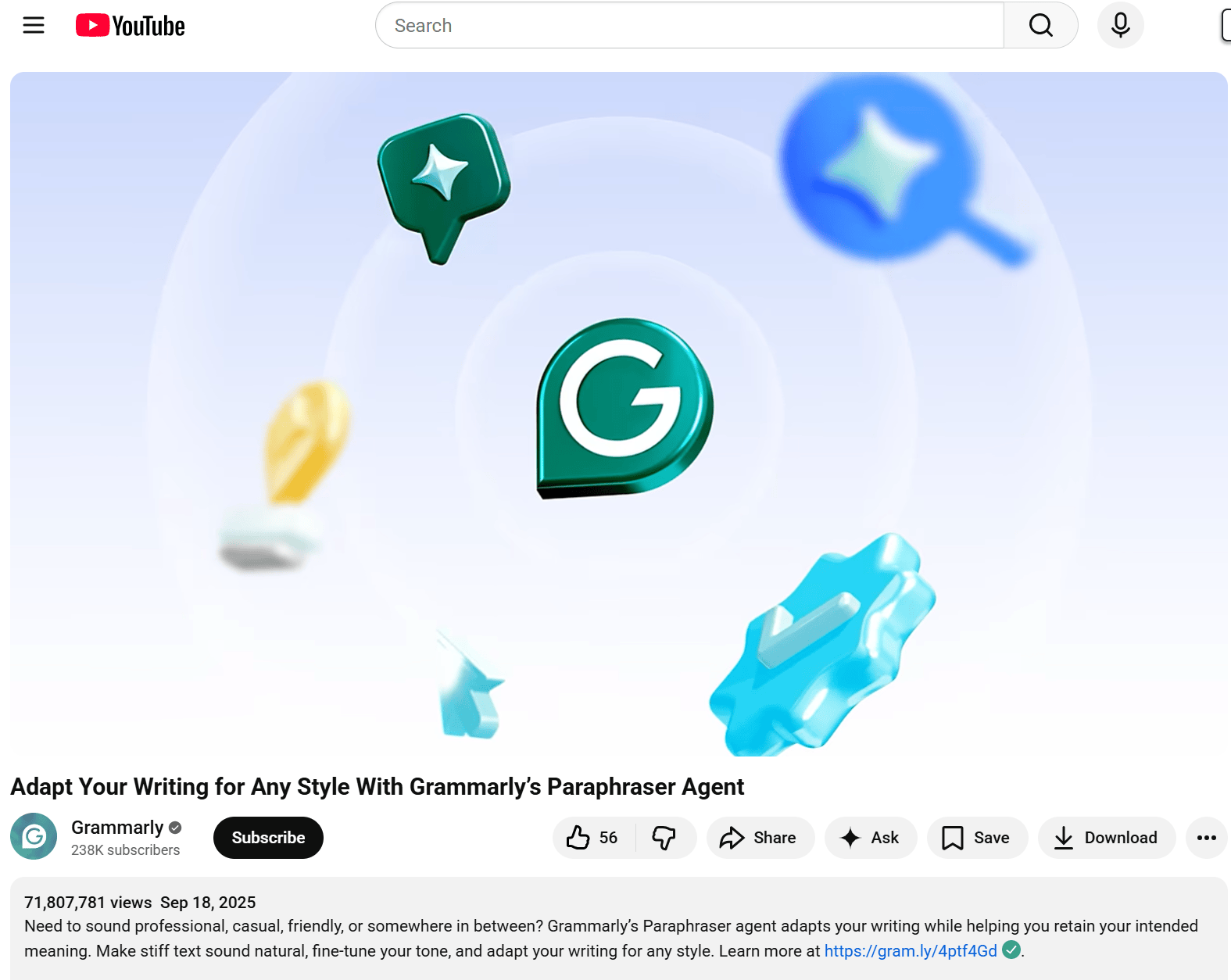
This template gives people a clear idea of exactly what to expect from the video without having to click on it, which makes the content attention-grabbing and transparent.
2. Boost views with eye-catching thumbnails
According to Google (YouTube’s parent company), custom thumbnails are the common denominator in 90% of the best-performing YouTube videos.
Custom thumbnails are designed images that appear over your video’s title in feeds. They replace the default frames that YouTube’s algorithm automatically selects for your video.
To design a thumbnail that makes your target audience want to click, apply eye-catching colors. Think of colors that stand out against YouTube’s predominant red, white and black site design, helping your thumbnail pop with a vibrant palette.
For example, RecipeTin Eats—a cooking blog-turned-international brand—adopts a no-frills approach to its thumbnails, only using high-resolution food photography. No text, no elaborate graphics—just rich colors and mouth-watering textures that jump off the screen.
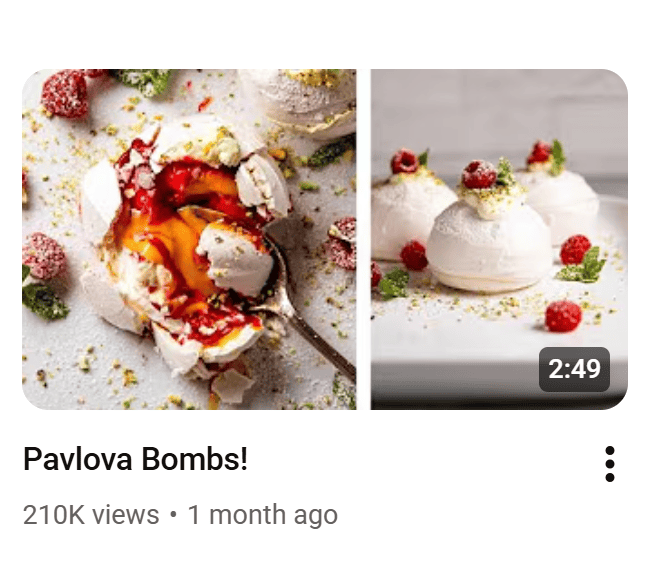
RecipeTin Eats’ thumbnails are proof that it’s often more powerful to show than tell. Although there’s no text in the thumbnail, the imagery speaks for itself, letting users know exactly what to expect when they click on the video.
3. Let analytics guide content
As with any type of content you produce, make sure it aligns with what your audience wants. Whether you’re writing a blog post or creating a video, start by getting to know your audience and the type of content they value.
If you’re just starting to promote your YouTube channel, take a look at your competitors or other video creators in your industry. Look at which of their videos get the most views and engagement. This will give you an idea of what topics your audience wants to learn about and what style of videos they prefer.
You can use Sprout Social’s Competitive Analysis Listening tool to keep an eye on your competitors. Track key YouTube metrics like views, engagement and followers, and set realistic benchmarks for your own performance. You can also use Sprout’s Listening features to monitor keywords and mentions as well as track audience sentiment around specific topics and brands.

If you’ve already established your YouTube presence, look at your YouTube analytics for guidance. YouTube gives you detailed information on audience demographics, location and engagement.
You can also take your strategy a step further with YouTube Videos Reports in Sprout to see how your content stacks up to other social videos you’ve produced.
4. Maximize views with YouTube Shorts
YouTube Shorts tap into the addictive, quick-hit vertical video format that’s dominating social media (think TikToks and Instagram Reels). They’re perfect for capturing the attention of viewers who are used to scrolling through endless streams of videos on their phones.
But YouTube Shorts aren’t just a trend—they’re also powerful tools for growing on the platform.
Here’s how you can integrate Shorts into your brand’s content mix:
- Share quick tips and mini tutorials
- Create funny memes or comedy skits
- Respond to viral news or challenges
- Highlight product features and benefits
- Answer customer questions
- Create before and after videos
- Take your audience behind the scenes
You can also repurpose your longer videos into bite-sized Shorts content to increase reach and brand awareness. Add a CTA for viewers to watch the full video on your channel to drive more views there as well.
How to promote your YouTube channel
Another approach to increasing views on YouTube is to attract more visitors to your channel. Here are some tips on how to promote your YouTube channel and gain more traction:
5. Post short teasers on social media
Cross-posting your YouTube videos on your other social accounts is a savvy move, especially since many platforms are now prioritizing video.
LinkedIn first launched its native video format in 2017, and it’s been on the rise ever since, with video uploads increasing by 45% year-over-year.
Similarly, since the introduction of Reels, video content has been booming on Instagram. Per the Content Benchmarks Report, single-video posts accounted for 28% of brands’ Instagram content across industries in 2024—a notable increase from 2023.
It’s worth keeping in mind that you don’t have to share the entire video on your other platforms. Share a short teaser to encourage viewers to click through to your YouTube channel for the full video.
This tactic boosts your content’s visibility, raises awareness of your YouTube channel and racks up views for the complete video on YouTube.
For content-based businesses, such as podcasts like The Basement Yard, this strategy is particularly effective. That’s because they often rely on depth to create impact; think long-form episodes, storytelling and interviews.
But teasers give people just enough to pique their interest. Whether it’s a funny exchange between the hosts or a memorable soundbite, these moments can grab users’ attention and drive them to the long-form content on YouTube.
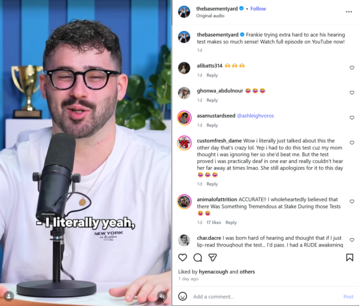
So, as soon as a video goes live, make a point to let your followers know with a well-timed LinkedIn video or a captivating Instagram Reel. Then, encourage them to become subscribers for access to exclusive content (or give them another incentive).
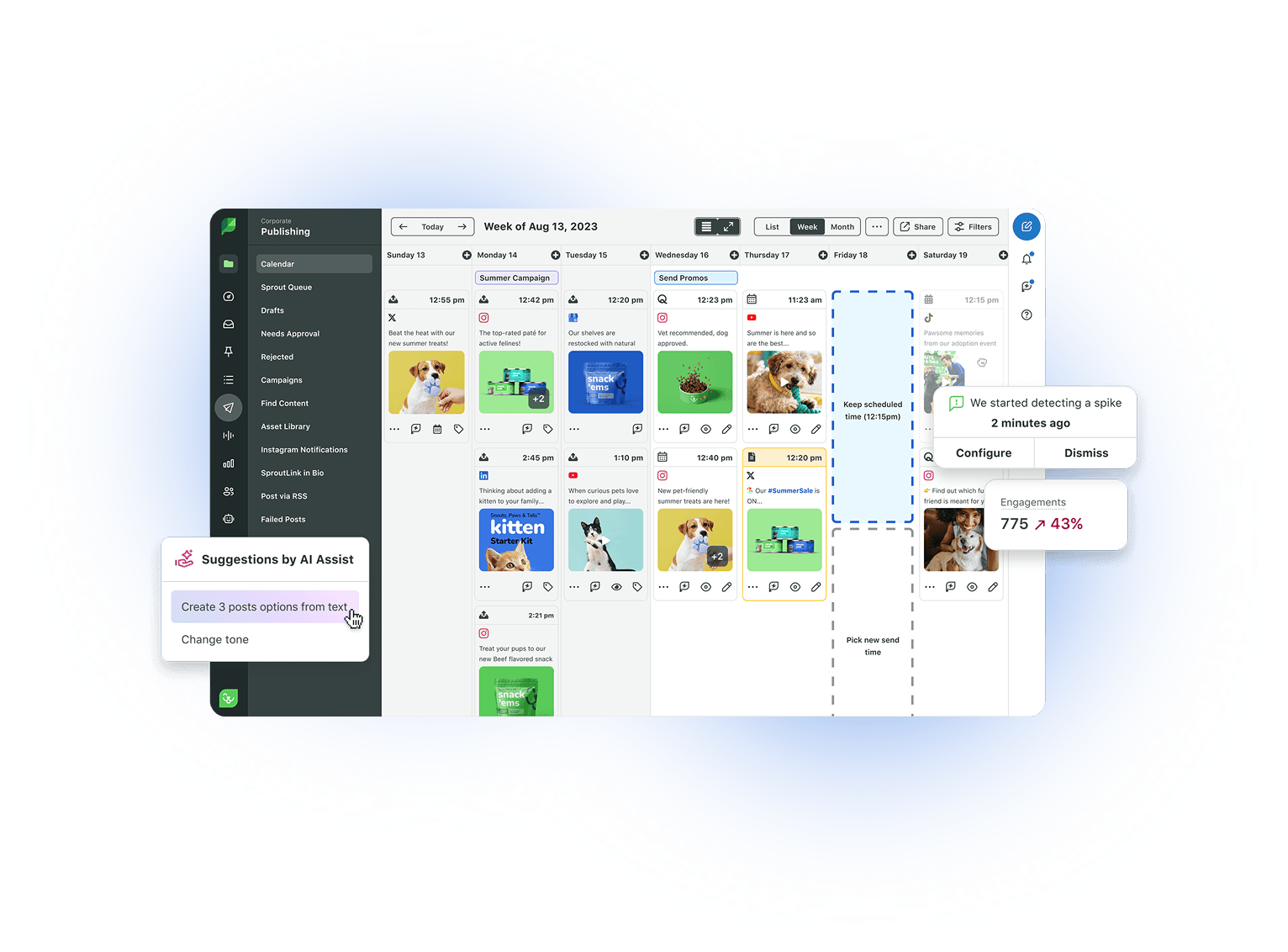
With Sprout, you can schedule your content and cross-promote it without jumping from platform to platform. Features like ViralPost® also ensure that your content goes live based on when your social audiences are engaged.
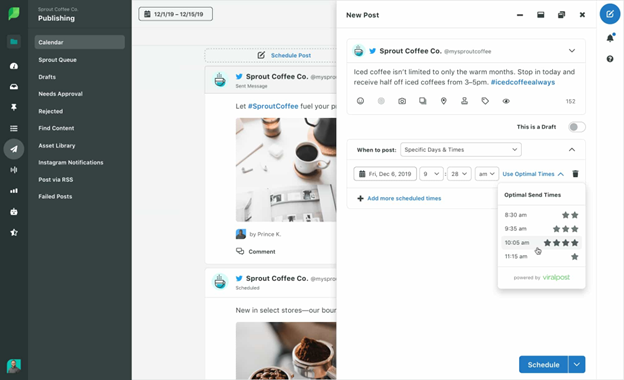
Understanding the best times to post on YouTube and cross-promoting your work extends the reach and longevity of your video marketing efforts.
6. Embed your YouTube videos on your website
Some of the best places to promote your YouTube channel are beyond YouTube itself.
Case in point, video content improves conversion rates and makes online shoppers more likely to buy a product or service. So if you want visitors to take action on a product page or blog post, embed a video.
Any opportunity you have to funnel your on-site (or social) traffic to YouTube is a plus.
7. Run a paid ad campaign
As digital marketing becomes more pay-to-play, you always have the option to get more visibility through paid YouTube ads. YouTube offers a variety of ad formats to choose from:
- Skippable video ads: These ads appear before, during or after a video. Viewers can skip them after five seconds.
- Non-skippable video ads: These ads also appear before, during or after a video. Viewers must watch them all the way through before they can view their selected content.
- Bumper ads: These are non-skippable video ads—up to six seconds in length—that viewers must watch before a video can play.
For your ad creatives, you can either use an existing video or create something new for a specific campaign. The advantage of using an existing video is that you can choose a clip you know has been effective in the past. If a video has already gained a lot of organic views and engagement, running paid ads can amplify your results.
On the flip side, creating a new video for your ads will let you craft a more targeted piece of content. For instance, you can create an ad with a specific CTA at the end to direct viewers to a landing page or another video.
8. Collaborate with other brands and influencers
A tactic some of the biggest YouTube stars used to grow their following is collaborating with other YouTubers. Each collaboration gives you exposure to a new audience. And the best part: Those new viewers are more likely to subscribe to your channel since you’re working with a content creator they already know, like and trust.
The key to a successful YouTube collaboration is finding the right partner. You want to collaborate with content creators who share similar passions with your brand so your video comes off as authentic.
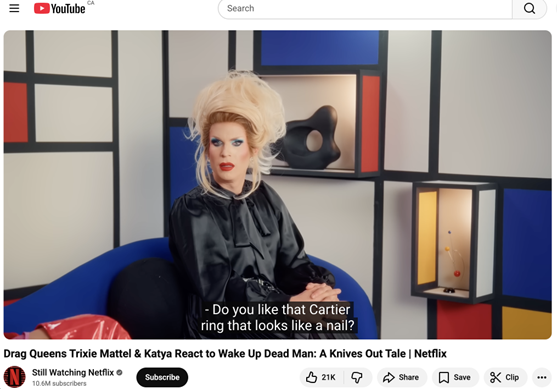
With that said, don’t be afraid to explore unconventional and unexpected partnerships. That’s what Netflix did when it teamed up with renowned drag queens, Trixie Mattel and Katya Zamolodchikova.
After rising to fame on RuPaul’s Drag Race, the duo started their own YouTube show called UNHhhh. Beloved among fans for their playful dynamic and irreverent humor, the show ran for 200+ episodes and garnered millions of views.
Netflix saw that success and tapped into it by launching its own YouTube series titled “I Like to Watch” starring the two queens. The premise is simple: the pair watch Netflix’s newest releases and provide their unfiltered (and hilarious) commentary.
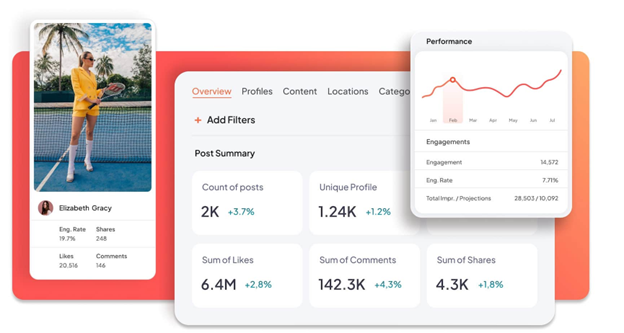
Using a tool like Sprout Social Influencer Marketing platform (formerly Tagger) enables you to easily find top influencers in your niche. Its smart engine digs deep into audience interests and behaviors, not just surface-level stats. This means you can pinpoint creators whose followers truly align with your brand’s vibe and campaign goals. It also empowers you to vet potential collaborators, significantly reducing partnership risk.
9. Create a YouTube series
A smart way to promote your YouTube channel is by creating a specific video series that covers a recurring theme or topic. For example, Sprout’s YouTube channel has a variety of different series that make up our YouTube presence, like our “how-to” tutorial videos.
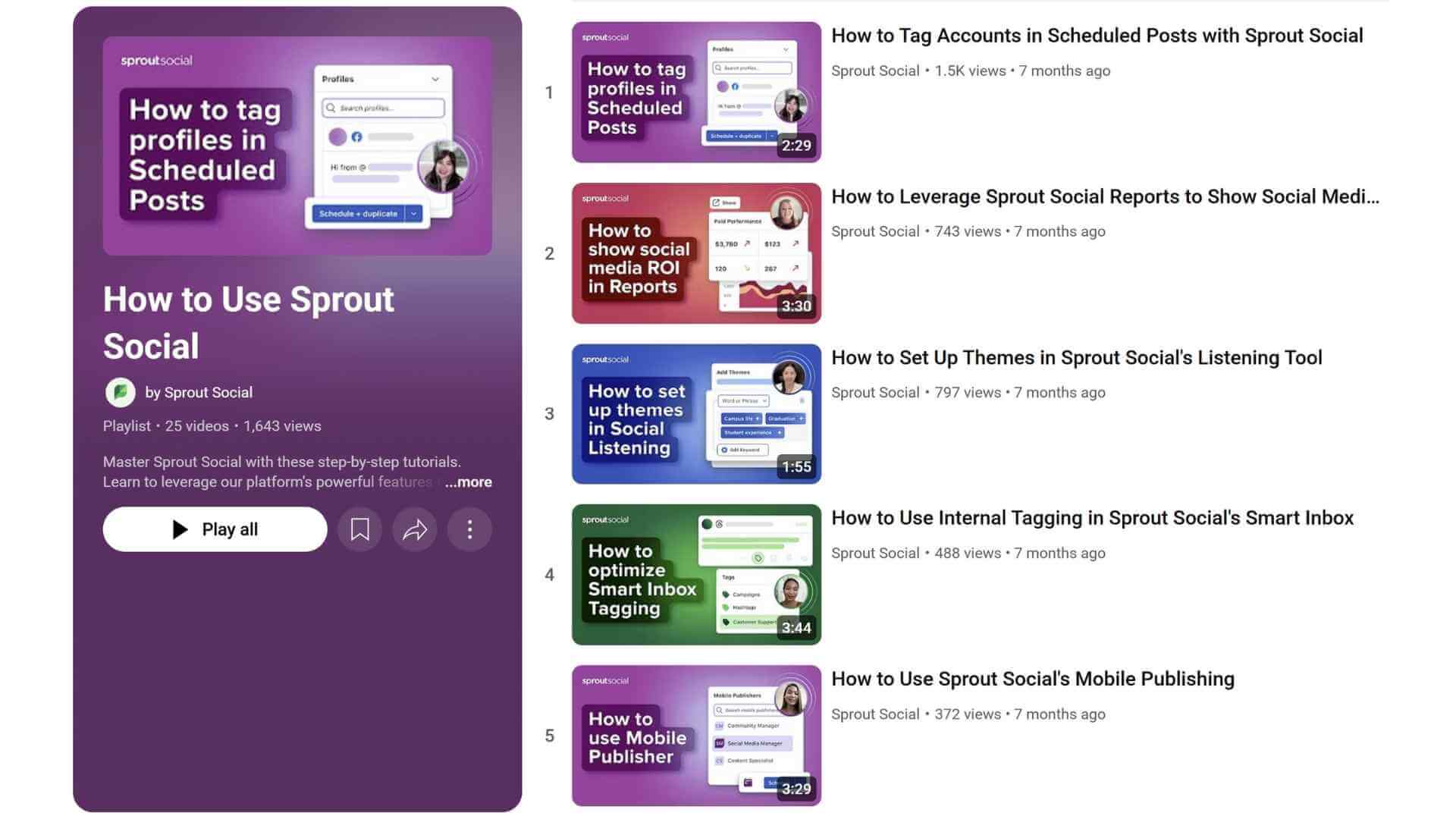
Series are a win-win for creators and viewers alike. For creators, you can hold yourself accountable for creating fresh YouTube content and don’t have to rack your brain for ideas. Your audience will then have something to look forward to—and a reason to keep returning to your channel.
10. Run a contest or giveaway
If there’s one thing YouTubers love, it’s a giveaway. Hosting a YouTube contest encourages people to subscribe to your channel and engage.
To keep your contests simple, have people like your video, leave a comment and subscribe to your channel to enter.
Here are some best practices for running a social media contest:
- Make sure you’re following YouTube’s contest policies.
- Give away a gift that’s related to your brand, as you want to attract more than just freebie-seekers.
- Get creative by incorporating user-generated content (UGC) and other non-traditional entry requirements.
Be careful with hosting frequent YouTube contests, though. You want to make sure you’re getting results from your efforts. Otherwise, you’ll end up wasting time, money and resources.
After holding one contest, wait a while and look at your subscriber drop-off rate and engagement numbers. If you aren’t bringing in engaged subscribers, you could just be attracting people who want free prizes.
How to get traffic from YouTube
Once you get people to your YouTube channel via one of your videos, the work doesn’t necessarily stop. To drive further connection and loyalty, you can use this as a continuous channel to direct people to your website.
To learn how to get traffic from YouTube, explore the tactics below:
11. Optimize links and CTAs
On YouTube, there are several ways you can direct users off the platform and funnel them into another channel, such as your website.
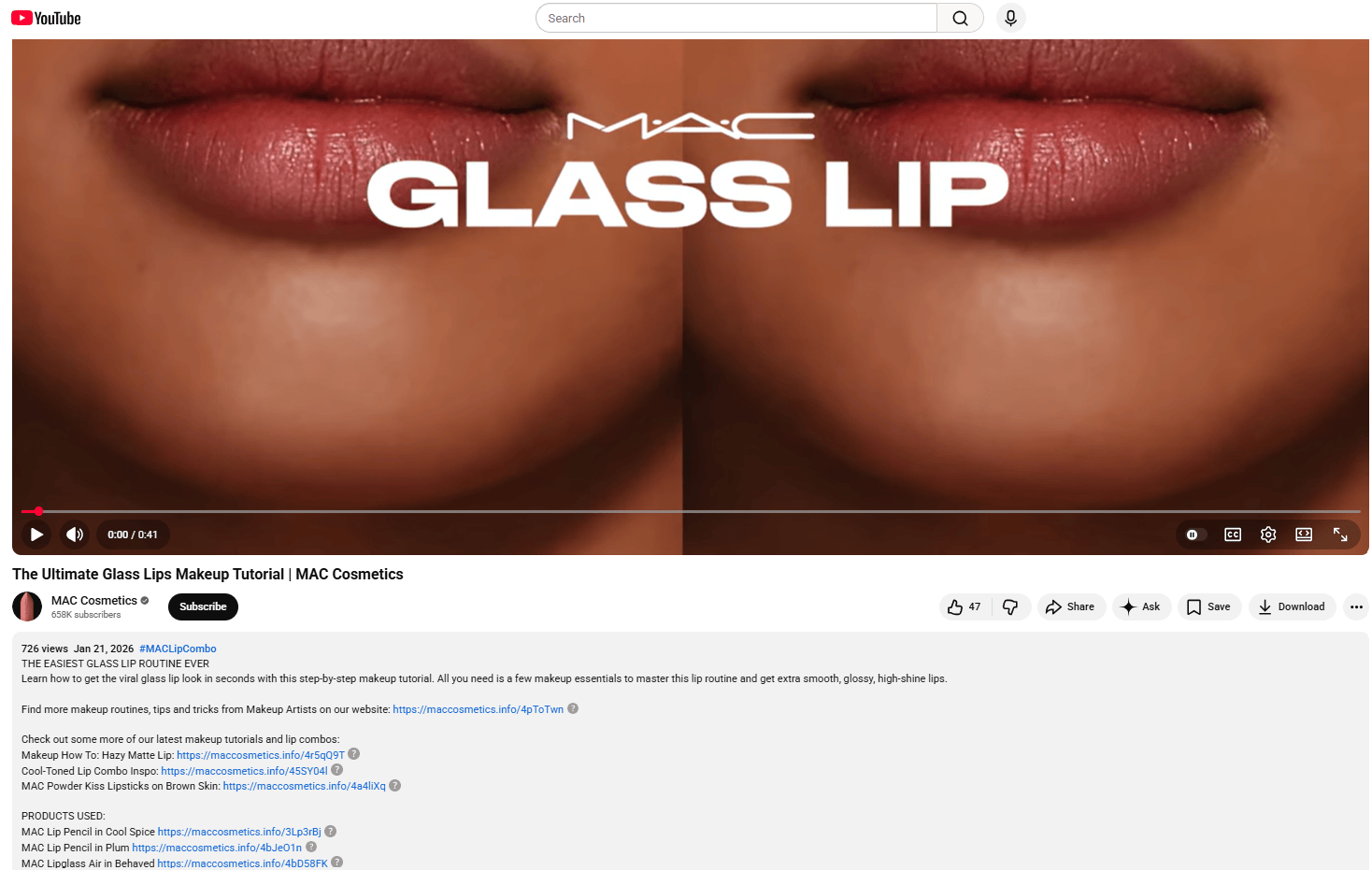
One of the most common and effective strategies is to include calls to action (CTAs) and links in your video description. This works particularly well for ecommerce brands like MAC Cosmetics that use their products in tutorial videos. By linking to the individual products in the description, MAC makes it easier for viewers to buy those goods and achieve the look themselves.
If your channel is in the YouTube Partner Program, you can also use info cards to direct people to your website. Info cards are clickable notifications that appear in the top-right corner of a video. While you can use info cards to link to your other YouTube content (e.g. a specific video or playlist), you can only include external links if you’re in the partner program.
During the editing process, you get to dictate the timing of your info card. For example, if you’re promoting a new product, you could time it so the info card appears when that product is mentioned in the video. That way, the info card surfaces when it’s top-of-mind for the viewer—increasing the likelihood that they’ll click.
12. Optimize your channel and videos for visibility
YouTube videos frequently appear in Google search results—a strategic integration that enhances visibility for creators and provides relevant video content to online searchers.
YouTube results sometimes even pop up before traditional blog posts or websites. After all, as the second-largest search engine in the world, YouTube is a place to search for products and solutions to problems, just like Google.
With that in mind, you should think of your YouTube videos like any other piece of content to optimize in terms of keywords, tags and so on.
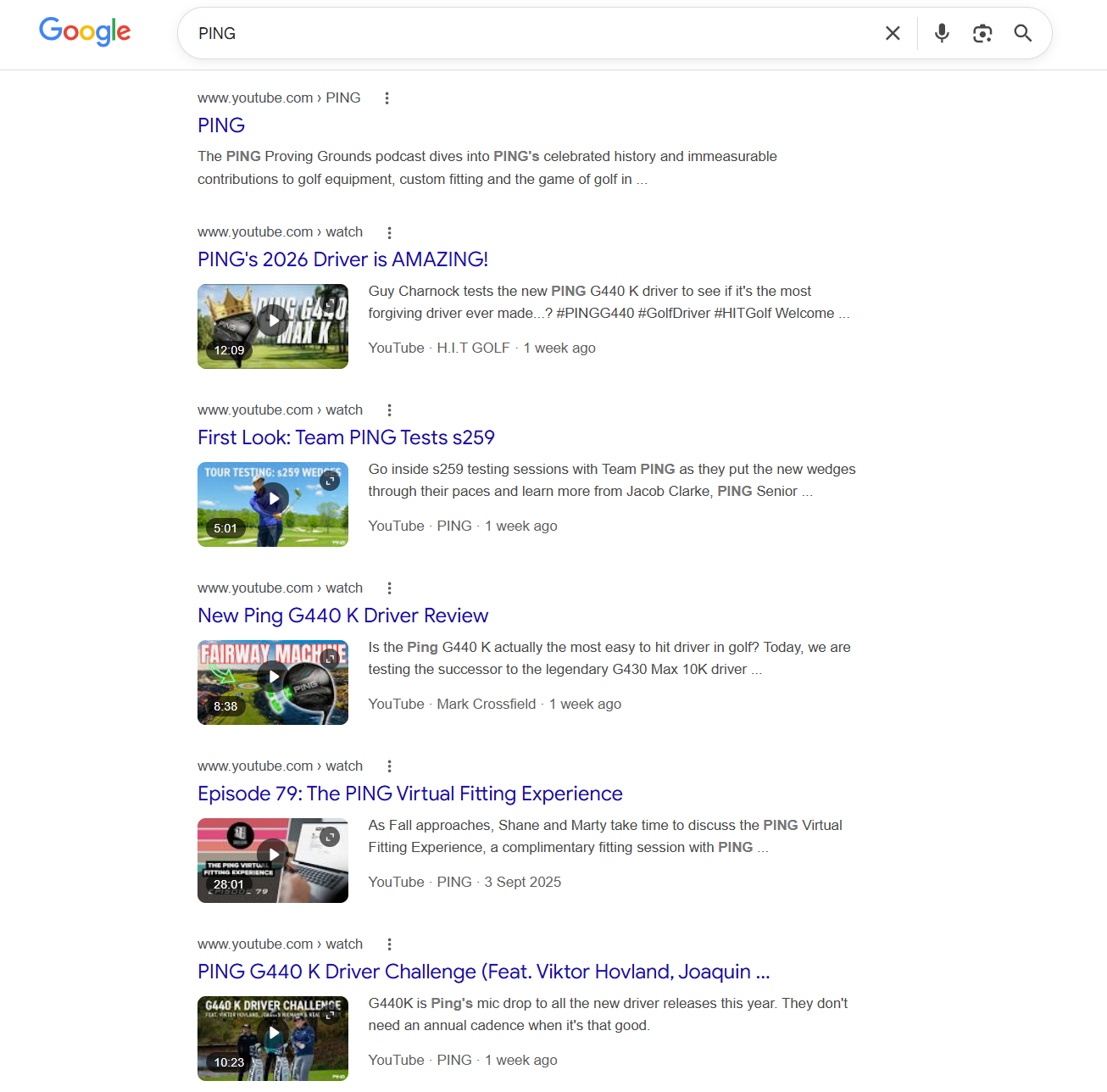
Take PING as an example. With over 43M minutes in lifetime views, the golf brand is clearly doing something right when it comes to getting more eyes on its YouTube content.
For instance, when you search ‘ping’ on Google, many of the top listings in the Videos tab are from PING’s YouTube channel. That kind of dominance in SERPs doesn’t happen by accident; it’s a clear indication that a core part of PING’s YouTube marketing strategy is SEO—and it should be a core part of yours, too.
To increase your chances of showing up in searches, follow these best practices for YouTube SEO:
- Optimize your channel with keywords: Integrate relevant keywords in your title and video description. For comprehensive keyword research, use tools like io.
- Verbally mention keywords in your videos: Organically incorporate target keywords into your dialogue or script. This helps YouTube’s algorithm better understand and categorize your content.
- Prioritize audience engagement: Work to actively boost engagement. YouTube heavily weighs likes, comments and views when determining video ranking in search results.
- Organize your videos: Use categories to help YouTube better understand your target audience—and group similar videos within playlists.
- Apply relevant tags: Add relevant tags and hashtags to your videos to give YouTube additional context, further enhancing your content’s visibility.
Just like with SEO for your website, though, don’t keyword stuff. Use keywords when it makes sense to do so—not just for the sake of having them.
13. Create related content to promote on YouTube
Explore other content that’s relevant to your niche and promotable through YouTube. Doing so not only gives users a clear next step once they’re done watching your video, but it also gets eyes on your brand’s other initiatives.
Think downloadable content like ebooks, recipes, apps, templates—anything that adds further value to what’s featured on your channel.
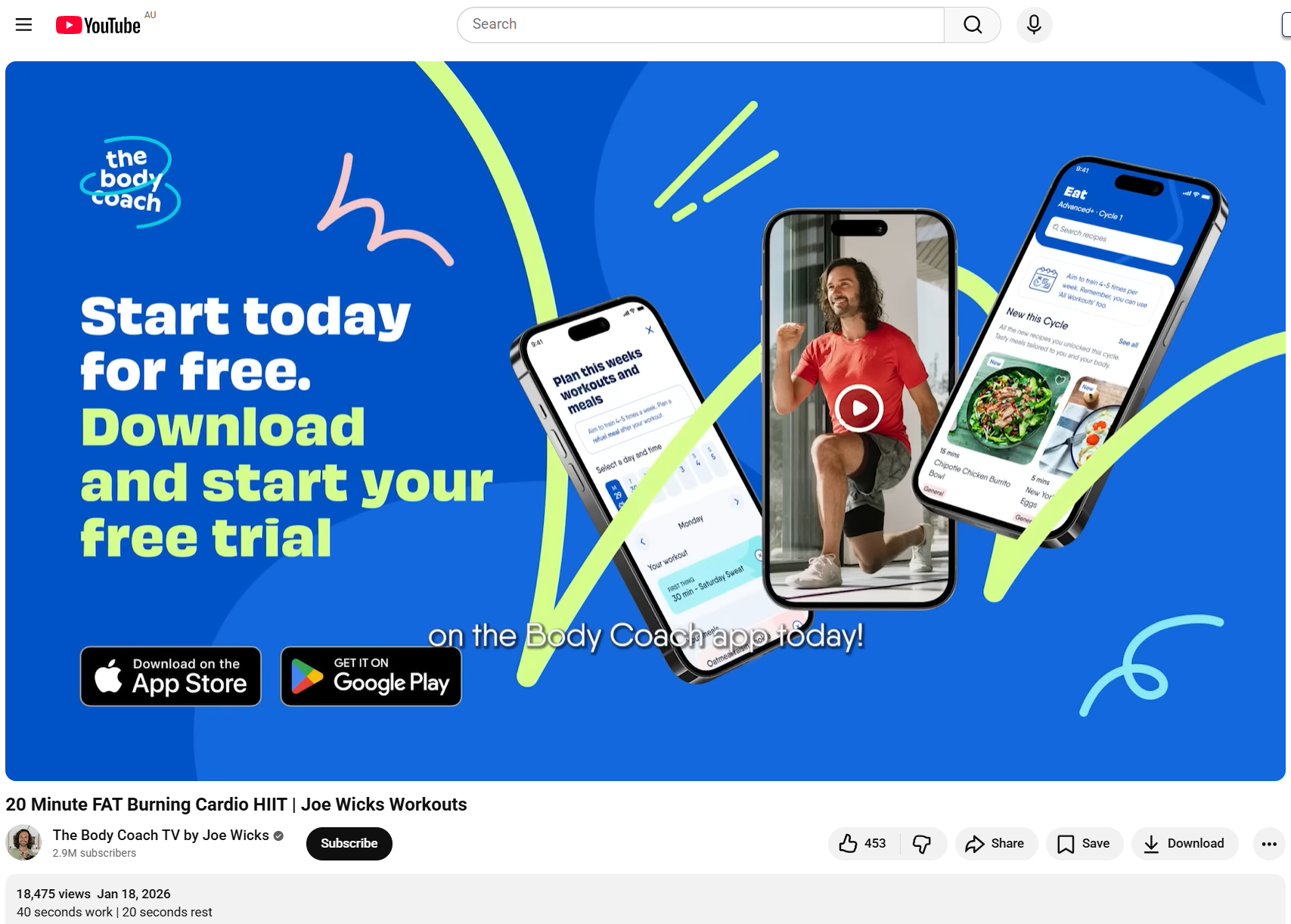
Take Joe Wicks, a trainer, author and presenter also known as The Body Coach. He uses his YouTube channel, The Body Coach TV, to share health and fitness content with his 2.9M subscribers, such as nutritious recipes and easy workouts. In many of these videos, he informs users of another tool they can use to take their wellness journey to the next level: his app.
He highlights that the app provides users with structured workout programs, meal plans and guided workouts—all the content they already enjoy but on a more personalized level.
You can repurpose this approach for your own brand. Offer an initial dose of value, whether it’s teaching a skill or solving a problem. Then use complementary content to take it one step further, prompting viewers to click through and continue their journey with your brand.
What counts as a view on YouTube?
Views refer to the total number of times your video is watched or your channel is visited. Each time a viewer plays a video and watches it for at least 30 seconds, YouTube counts it as a view. If someone watches your video several times, each time counts as a new view.
That said, specific situations that aren’t so clear-cut can leave you wondering whether a view counts:
- Autoplays: YouTube doesn’t count autoplays as views. A view requires a user-initiated action, such as clicking on play or selecting a video to start playback.
- Embeds: Embedded video views count as views as long as a user initiates them.
- Non-skippable ads: Non-skippable ads don’t contribute to your overall view count.
- Social media views: Videos shared and viewed on social networks (like Facebook) generally count as YouTube views as long as they meet YouTube’s standard viewing criteria. For example, a view often counts when a video is watched for at least 30 seconds.
With Sprout, tracking your video and channel views during specific periods is as straightforward as navigating to Analytics and filtering by views.
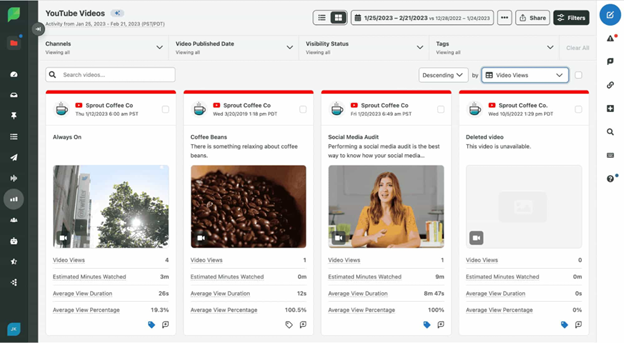
Sprout’s analytics tools also tell you the average watch time for each video view so you can see how long people hung around.
Why are views important on YouTube?
Views are critical to your YouTube channel’s growth. When your videos get more views, YouTube’s algorithm recommends your content to more people. This increased visibility often leads to more subscribers and faster channel growth.
Views are also part of how you can make money on YouTube. More views mean greater monetization through ad revenue and better opportunities for brand partnerships. And the more you earn on the platform, the more you’re able to reinvest in your channel and create even better content.
Finally, views help expand your brand’s reach. In fact, each view is your chance to connect with a potential customer or fan. Over time, higher view counts can boost brand awareness and build brand affinity, helping you reach larger business goals.
Get more views on YouTube with the right toolbox
Growing your subscribers on YouTube requires patience, strategy and consistency—sprinkled with a dash of creativity. That’s precisely why it pays to have a variety of promotional tactics and YouTube analytics tool in your toolbox.
Sprout can significantly enhance your video strategy by streamlining content scheduling, publishing and tracking for more efficient YouTube channel management. Sprout’s robust capabilities not only simplify finding the ideal collaborators but also enable you to listen in and monitor audience conversations to ensure you’re putting out content they value.
Take the first step. Start your free 30-day trial now.
How to get more views on YouTube FAQs
How do I make my YouTube channel grow faster?
To grow your YouTube channel quickly, focus on creating consistent, high-quality content, optimizing your videos for search and promoting your channel on other social media networks. Consider creating playlists or series to encourage YouTubers to stay on your channel longer and engage with viewers and collaborators in the comments to build a strong sense of community.
How do I increase my views on YouTube?
To increase your YouTube views, first focus on producing high-quality content that matches your audience’s interests and values. Craft compelling video titles and design creative thumbnails to help your videos stand out—and strategically promote them, including embedding them on your website, sharing across social media and launching ad campaigns. You can also use an End Screen to promote your other content and encourage viewers to stick around.
How do I promote my YouTube channel?
You can promote your YouTube channel by sharing your videos on social media, collaborating with influencers or other brands to reach new audiences and running paid ads (possibly using your most popular video). And consider leveraging creative tactics. Host a giveaway in exchange for engagement with your channel or create a YouTube series on recurring topics to help with audience retention.
How many views do you need to get paid on YouTube?
To get paid directly through the YouTube Partner Program (YPP), you need to meet specific criteria beyond just views. This includes having 1,000 subscribers and either 4,000 valid public watch hours in the past 12 months or 10 million valid public Shorts views in the past 90 days. While views contribute to watch hours, there isn’t a fixed number of views alone that guarantees payment. Pleaser refer to the YPP support page for all the details.
Can YouTube creators promote their videos to grow their audience?
Yes, YouTube creators can effectively promote their videos to grow their audience using YouTube Ads, as detailed on the provided page. The YouTube platform allows creators to target specific viewers, increase views, gain subscribers, and drive engagement. It offers tools for campaign setup, performance tracking, and achieving various content goals through paid promotions.


Share