How hashtags on Facebook still work for businesses in 2026

Written by Jacqueline Zote
Published on July 6, 2026
Reading time 7 minutes

Table of Contents
Summary
- Facebook hashtags are clickable links that make your posts searchable and discoverable beyond your existing followers.
- Used strategically, they increase brand exposure, drive audience interaction and tie cross-platform campaigns together.
- Two to five relevant hashtags per post outperform long hashtag lists every time.
- The best hashtags aren't the most popular—they're the ones that match your audience, your content and your campaign goal.
- Measuring hashtag performance through campaign tagging and social listening turns a guessing game into a repeatable strategy.
Facebook hashtags categorize your content and make it discoverable to users beyond your existing followers—turning every post into an entry point for new audiences. Hashtagging transforms ordinary keywords into clickable discovery tools that connect your brand to conversations already happening on the platform.
According to the 2026 Social Media Content Strategy Report, Facebook is now the number one social media platform for product discovery, with nearly 40% of social users turning to it to find new products. A strategic hashtag approach puts your brand directly in front of those searches.
This guide breaks down everything you need to know about Facebook hashtags in 2026: how they work, why they matter, best practices for using them, how to find the right ones and how to measure their impact.
What are Facebook hashtags?
Facebook hashtags are clickable links created by adding the # symbol to a word or phrase in a post. When someone clicks or searches a hashtag, Facebook surfaces all public posts containing that tag, connecting users to a broader conversation around that topic.
Do hashtags on Facebook work?
Yes, Facebook hashtags work. They transform tagged keywords into clickable links that surface relevant posts, trending conversations and brand content in search results. Only posts using the hashtag appear in those results, which makes choosing the right tags essential for discovery.
The stakes are real. Data from our 2026 Social Media Content Strategy Report shows 85% of consumers across generations have a Facebook profile—the highest of any social media platform.
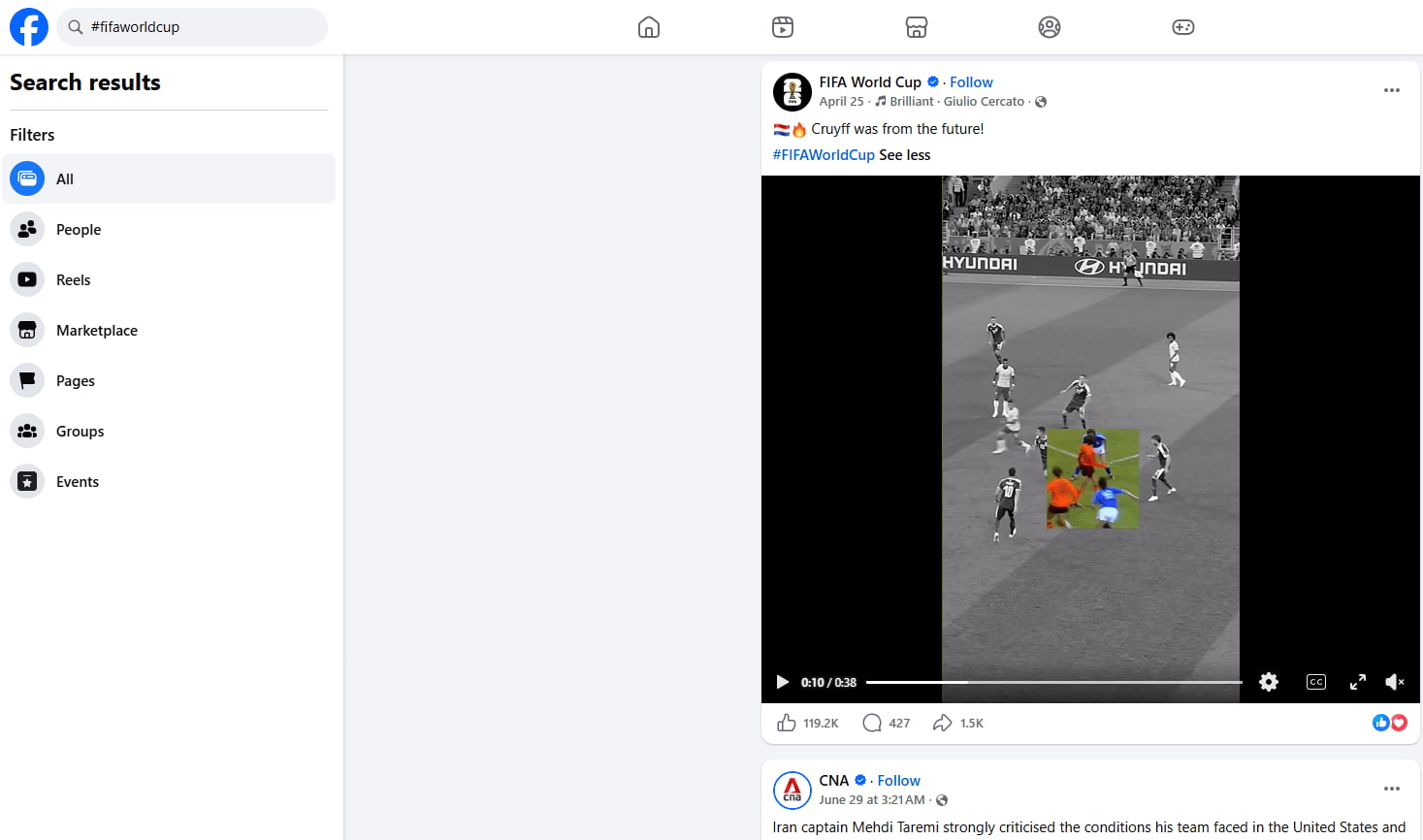
The proof is in the performance. FIFA World Cup paired a highlight clip against archived clips with #FIFAWorldCup, driving 400+ comments and 1,500+ shares. The hashtags did the heavy lifting on discovery.

Want to measure the impact for your brand? Run a social media experiment: publish two similar posts—one with hashtags, one without—at peak engagement times, then compare the results.
Benefits of using Facebook hashtags
Facebook hashtags increase your content’s discoverability, drive audience interaction and tie your cross-platform campaigns together. Here’s what they deliver when used with intention.
1. Increase brand exposure
Facebook hashtags make your posts searchable, putting your content in front of people who aren’t already following you. Every time someone taps or searches a hashtag, your post has a chance to show up regardless of whether they’ve ever heard of your brand. That’s organic discovery at scale, without paid spend.
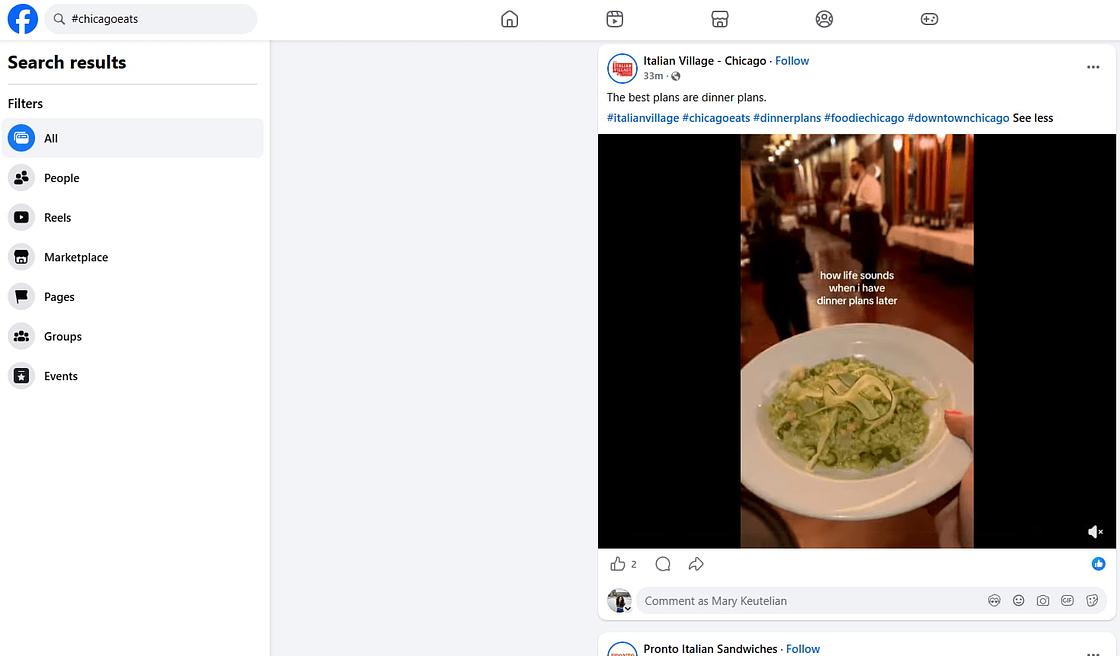
Italian Village uses #ChicagoEats in its Facebook posts. When someone searches that hashtag, the restaurant’s posts surface in results, expanding its reach beyond its existing audience.
2. Encourage audience interaction
Hashtags turn static posts into clickable entry points. When someone taps a hashtag, they enter a feed of related content, and your post is part of that conversation. Greater visibility drives more interaction, which directly supports your Facebook engagement rates.
3. Source questions and feedback
Dedicated hashtags organize customer feedback at scale. Create a branded support tag, encourage your audience to use it when asking questions and you’ve built a structured channel for aggregating sentiment.
Sprout Social’s Smart Inbox centralizes these messages so you filter by keywords and tags, ensuring every customer gets a timely response. You also track industry hashtags to surface questions and complaints that aren’t directed at your brand but are still relevant to your business.
4. Create an omnichannel experience
A consistent hashtag across Facebook, X (formerly known as Twitter) and Instagram ties your campaign together and makes it recognizable no matter where your audience encounters it. The more touchpoints people see the same hashtag, the stronger the campaign recall.
Dr. Martens executed this with the #DMsChallenge campaign, running the same hashtag across Facebook:

X (formerly known as Twitter):

And Instagram:

How to use hashtags on Facebook
Using Facebook hashtags strategically—not randomly—is what separates brands that build discoverability from those that just add noise. Here are six best practices to make every hashtag count.
1. Avoid spaces in multi-word hashtags
To create a hashtag from a single word, add the # symbol to the front. For multi-word phrases, join all the words�into one continuous string so they form a single clickable link.�Adding spaces breaks the hashtag, making only the first word clickable and cutting off your reach.
Capitalize the first letter of each word to improve readability and accessibility. So #tacotuesday becomes #TacoTuesday.
2. Skip punctuation and symbols
Numbers work in hashtags. Symbols and punctuation do not. Characters like “%” break the link, so spell them out instead. A hashtag with a symbol produces no clickable link and no discoverability.
3. Use hashtags to categorize conversations and topics
Purposeful hashtag use drives results. Create dedicated hashtag campaigns for goals like brand awareness or event promotion and use them consistently so your audience knows where to find your content.
When someone clicks #BrandNameTips, they discover your specific advice, and you find user-submitted content�in the same place. Sprout Social’s Tagging features help you track these campaign tags and measure performance with precision.
For instance, Fabletics requires influencers to use #FableticsPartner, making it easy to categorize influencer content and surface posts worth resharing.

4. Join trending topics and conversations
From the World Cup to #NationalDonutDay, trending hashtags give your brand a direct path into high-volume conversations. Post tasteful, relevant content tied to the moment and your visibility increases.
Members 1st Federal Credit Union used #SocialMediaDay to ask their audience for additional social media content�turning a trending moment into a community-driven crowdsourcing campaign.�That’s trendjacking done right: relevant, timely and human.

The hashtag doesn’t have to map directly to your product. Look for events and cultural moments your audience already cares about, then show up authentically in those conversations.
5. Incorporate hashtags into sentences
Weave Facebook hashtags into your copy instead of stacking them at the end. This keeps posts clean, avoids repetition and signals authenticity rather than spam.
Get a chance to win a #GoProHero13 reads far better than�Get a chance to win a GoPro Hero 13. #GoProHero13.
Here’s how GoPro puts this into practice.

6. Use Facebook hashtags within reason
Two to five hashtags per post is the sweet spot. Anything more reads as spam, eroding trust and killing engagement. If you need additional tags, place them at the end of your caption, and never hashtag every word in a sentence.
Test different volumes and use Sprout Social’s reporting to identify which hashtag strategy drives the strongest results for your specific audience. Hulu keeps it simple by hashtagging only the show name—nothing more.

How to find the right Facebook hashtags for your brand
Finding the right Facebook hashtags starts with relevance. You don’t need the most popular hashtag. You need the one that fits your audience, your post and your goal.
Search Facebook directly
Type keywords tied to your product, campaign or industry into Facebook search. Review the posts and conversations that surface, then look for patterns in the hashtags people already use around that topic.
- Start with your core topic keyword
- Identify recurring hashtags in top-performing posts
- Confirm the hashtag matches the intent of your content
Study your competitors’ posts
Competitors reveal what your shared audience already recognizes. Review their Facebook posts and note which hashtags appear often, which campaign hashtags they repeat and which ones drive comments or shares.
- Identify branded hashtags they own
- Note niche hashtags tied to specific products or communities
- Adapt what aligns with your brand—don’t copy them
Use social listening to surface trending hashtags
Hashtag research gets sharper when you move beyond manual searches. Social listening surfaces hashtags, keywords and themes gaining traction in real time—before they peak.
With Sprout Social’s Listening tool, you track hashtag conversations, uncover related terms and see how topics connect across your broader social strategy. That gives you context, not just a list, and context is what separates hashtags that drive discovery from ones that disappear into the feed.
The best hashtags for Facebook: Top trends in 2026
Finding the right Facebook hashtags separates brands that get discovered from those that get ignored. Use this curated list of trending tags to build a smarter content calendar and reach audiences already searching for your topics.
30 popular hashtags on Facebook
- #Love
- #Fashion
- #PhotoOfTheDay
- #Beautiful
- #Art
- #Photography
- #Happy
- #PicOfTheDay
- #Cute
- #TBT (Throwback Thursday)
- #Nature
- #Travel
- #Style
- #Repost
- #Summer
- #Fitness
- #Friends
- #Food
- #Fun
- #Beauty
- #Smile
- #Family
- #Life
- #Music
- #Motivation
- #Health
- #Business
- #Marketing
- #Inspiration
Top 10 Facebook hashtags for B2B
- #SmallBusiness
- #Entrepreneur
- #Business
- #DigitalMarketing
- #Marketing
- #SocialMediaMarketing
- #Leadership
- #Startup
- #BusinessTips
- #Success
Top 10 Facebook hashtags for fashion and beauty
- #Fashion
- #Beauty
- #Style
- #Makeup
- #OOTD (Outfit of the Day)
- #Skincare
- #Fashionista
- #BeautyTips
- #Cosmetics
- #FashionBlogger
Top 10 Facebook hashtags for fitness
- #Fitness
- #Workout
- #Gym
- #Motivation
- #FitFam
- #FitnessMotivation
- #Health
- #HealthyLifestyle
- #Training
- #Exercise
Top 10 Facebook hashtags for food, beverage and restaurants
- #Food
- #Foodie
- #Restaurant
- #FoodPorn
- #Drinks
- #Yummy
- #Delicious
- #Chef
- #FoodPhotography
- #Cocktails
Top 10 Facebook hashtags for technology and software
- #Tech
- #Technology
- #Software
- #AI (Artificial Intelligence)
- #Innovation
- #TechNews
- #SoftwareDevelopment
- #Coding
- #Programming
- #Gadgets
Top 10 Facebook hashtags for travel
- #Travel
- #Wanderlust
- #Vacation
- #Adventure
- #Explore
- #TravelBlogger
- #TravelPhotography
- #Tourism
- #TravelTips
- #TravelTuesday
How to measure your Facebook hashtag performance
Measuring Facebook hashtag performance turns guesswork into strategy. The goal isn’t to use more hashtags. It’s to know which ones drive real results for your content.
Track engagement on hashtagged vs. non-hashtagged posts
Compare post performance. Look at reach, comments, shares, clicks and overall engagement on posts with hashtags against posts without them to establish a clear baseline.
- Compare the same post types for an accurate read
- Review performance across multiple posts, not just one
- Identify patterns in engagement and content visibility over time
Use campaign tagging to measure hashtag strategy over time
Campaign hashtags deliver the most insight when tracked as part of a broader content strategy. Use message tagging to group posts by campaign, product launch or branded hashtag, then compare results across campaigns to identify which themes drive the strongest response.
Sprout Social’s Tagging and Reports features make this straightforward. Organize Facebook posts, track performance trends and demonstrate which hashtag strategies support your business goals.
Monitor branded hashtags with social listening
Branded hashtags are listening signals, not just publishing tools. Track how people use your hashtag, what they say around it and whether the conversation reflects the brand experience you’re building. Strong branded hashtag use surfaces user-generated content worth resharing.
Sprout Social Listening tracks branded hashtag conversations at scale—surfacing customer feedback, user-generated content and emerging trends faster so you turn those insights into smarter campaign decisions.
Command your market with a smarter Facebook hashtag strategy
Facebook hashtags work hardest when they’re backed by data, not guesswork. Sprout Social gives you the tools to identify which hashtags drive real reach, track performance over time and refine your strategy based on what the data shows.
From surfacing trending topics with Social Listening to measuring hashtag impact with robust Facebook analytics, Sprout Social turns your Facebook presence into a competitive advantage. Start a free trial to see how Sprout Social helps you command your market on social media.
FAQs about Facebook hashtags
How many hashtags should I use on Facebook?
Use two to five hashtags per post. Choose hashtags that match the post topic, your target audience and the campaign you’re running.
Do Facebook hashtags work the same as Instagram hashtags?
No. Hashtags drive stronger discovery on Instagram. On Facebook, they organize conversations and support search visibility, so use them with purpose.
Do Facebook posts need to be public for hashtags to appear in search results?
Yes. Public Page posts ensure your hashtags surface in search. Non-public posts limit discoverability regardless of which hashtags you use.




Share