Social media management for startups: A complete guide

Written by Jacqueline Zote
Published on July 24, 2026
Reading time 8 minutes

Table of Contents
Managing a startup business requires you to spend most of your time and resources on fine-tuning strategy and hands-on operations. So there’s hardly any time left to create content and maintain a social media presence.
But with its massive reach and free marketing tools, social media is an indispensable tool for startups. It’s how you get your business in front of the right people and engage them without the heavy ad spend. Fortunately, automation tools help make social media management much more feasible even for busy startup founders.
Combined with a strategic approach to platform selection and content production, social media can be the ultimate channel for building a brand presence and attracting customers. This post provides a practical guide on social media management for startups.
Let’s take a look.
What is social media management for startups?
Social media management for startups refers to the strategic process of creating and publishing content on social media to promote a startup business. In addition to content creation and publishing, it encompasses other steps that support your social media marketing strategy, such as analytics and community engagement.
For new businesses, managing social media requires actively building brand awareness from scratch. Your goal is to establish trust with an audience that’s never heard of your business before and turn them into actual buyers—all with a limited budget.
So unlike established brands that can afford to post erratically or leave their comments unanswered, startups need to be more consistent and responsive.
Why social media matters when you’re an early-stage business
When you’re just starting out, people don’t really know your brand yet. To gain customers, you need to get your business in front of more people and win their trust. Social media opens the doors to help you do just that, offering a low-cost channel to build awareness and trust.
Low-cost trust building before you have brand recognition
An active social media presence signals to audiences that your brand is credible, enabling you to build trust over the long run.
Sprout Social’s #BrandsGetReal survey found that 65% of consumers feel more connected to a brand when it has a strong presence on social. This makes sense because social media serves as the perfect channel to share information and stories about your business.
Social media enables startups to build trust by:
- Showing the real people behind the business
- Sharing real customer stories as social proof
- Presenting reliable information that showcases expertise
The founder of Every Voice Co. shares real footage and stories of her interactions with her previously non-verbal son to establish trust in the brand’s inclusive communication tools.

Source: Instagram
Direct customer feedback loop for product and positioning
Comments and DMs open up a direct line of communication between startups and customers. This gives you the perfect opportunity to gauge audience feedback as you fine-tune your product positioning.
Complaints, questions and feature requests provide insights to inform your product development.
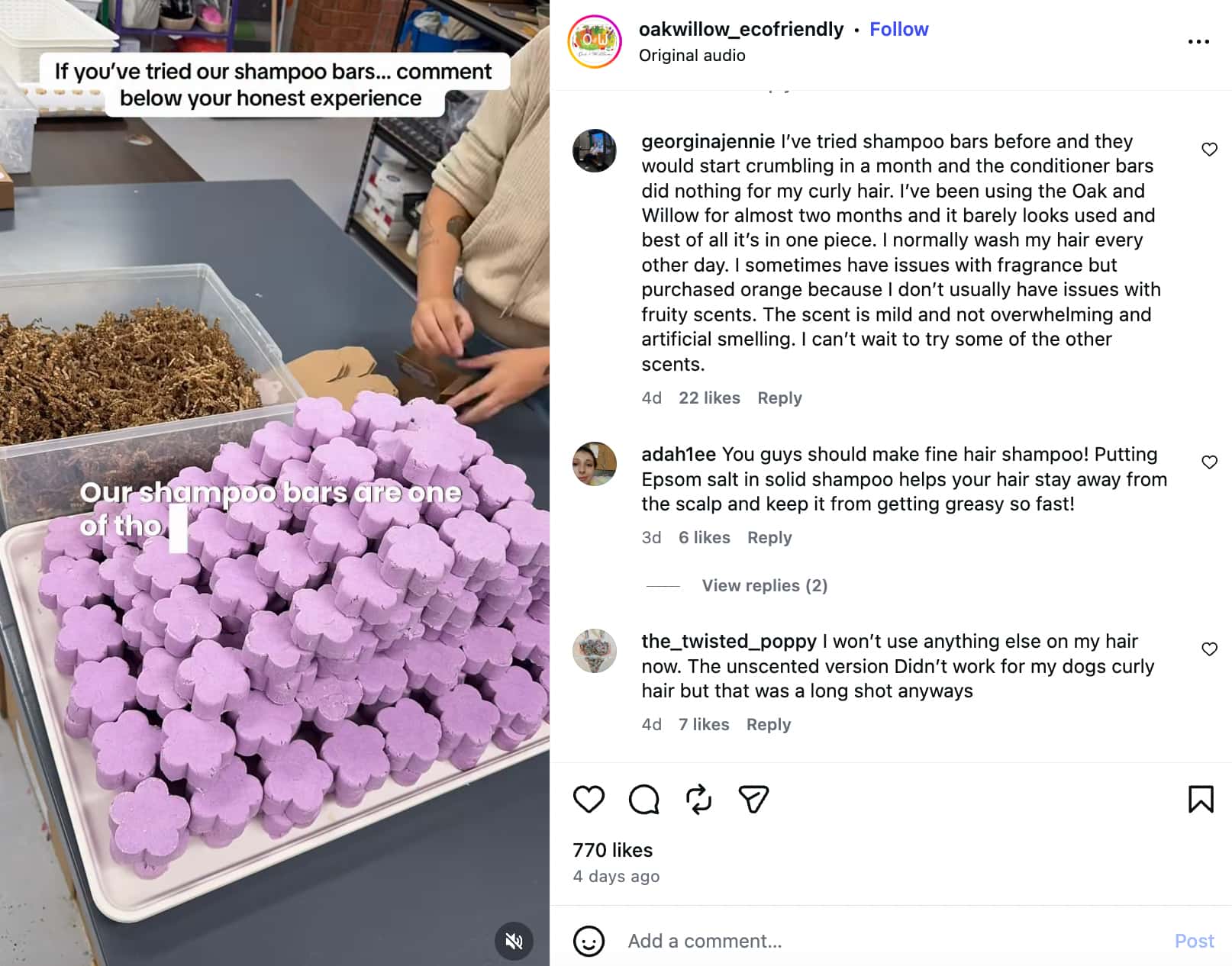
Brands like Oak & Willow even create dedicated posts asking customers for their feedback.
Source: Instagram
Common social media mistakes startups make
New businesses find social media overwhelming because they’re trying to do too much without having an actual strategy in place. Here are some of the big mistakes you should avoid when managing social media for your startup.
Trying to be everywhere on every platform
Having an account on every social media platform seems like the obvious choice when you want to get your business in front of as many people as possible. But this is the easiest way to get overwhelmed as you struggle to push out the occasional post while keeping up with your messages.
Sure, you can use cross-posting tools, but that won’t make up for the slow responses and the missed messages when you’re trying to juggle too many platforms.
Posting without a strategy or a content calendar
Established brands can get away with an erratic posting schedule because they already have a solid presence. Emerging businesses can’t afford to skip this social media best practice. At this stage, you need consistency to stay top of mind and maintain visibility on social media.
Too many startups try to tackle social media without a proper content strategy in place. So it keeps them from maintaining a regular publishing schedule. And you can’t win the algorithm or engage audiences when you’re only posting once every few days whenever you have a content idea.
Not measuring results
Many startups simply push out content hoping for the best. They’re not tracking content performance or measuring results, either because they don’t have the time, or they don’t know how. So there’s no way to know what content resonates with their audience or what formats get the most visibility.
Not using a social media management tool
Being new to social media management and working with minuscule budgets will have startups doing everything manually. Instead of investing in social media management tools, they’re relying on native publishing features and scheduling each post individually.
The biggest con is that these manual tasks take up a significant portion of your time. Plus, you can’t visualize what your content cadence looks like, which makes it difficult to see whether you’re posting too much or not enough.
Social media management tools for startups solve this with visual content calendars where you can plan your posts and easily adjust your posting frequency. They also seamlessly automate your posts to help you publish content consistently.
Built for startups, priced like it
Sprout’s Essentials plan gives you publishing, a visual content calendar and optimal send times, starting at $79/month.
And they don’t have to take up a huge chunk of your startup budget, either. Platforms like Sprout Social offer multiple plans depending on your budget and business size. The Essentials plan is ideal for startups and smaller operations, starting at just $75 per month. It comes with all the entry-level publishing tools you need to streamline your management process.
How to build a social media strategy for your startup
Startups and smaller operations need to be highly strategic with how they spend their time and resources. A solid social media strategy will help you optimize the management workflow. Here are the essential steps to build a strategy for managing social media for your startup.
Set goals tied to business outcomes
For startups, every resource spent toward social media marketing should have tangible business outcomes. Whether that’s generating leads or driving brand awareness, your social media goals should directly add value to your business. These goals will then shape the rest of your social media management efforts.
Some examples include:
- Driving leads and revenue: Use social commerce tools and promo offers to generate sales.
- Building brand awareness: Use paid ads, influencer marketing and user-generated content to get in front of a larger audience.
- Providing direct customer service: Answer questions promptly and resolve customer complaints through DMs.
- Collecting market insights: Gather valuable data on content performance, customer behavior and feedback to refine your strategy.
- Building a brand community: Encourage community conversations and UGC to foster a loyal fanbase.
Choose platforms where your audience actually is
Smart social media management for startups is all about knowing where to focus your efforts. Pick out a couple of platforms that make the most sense for your business based on where your audience actually spends their time.
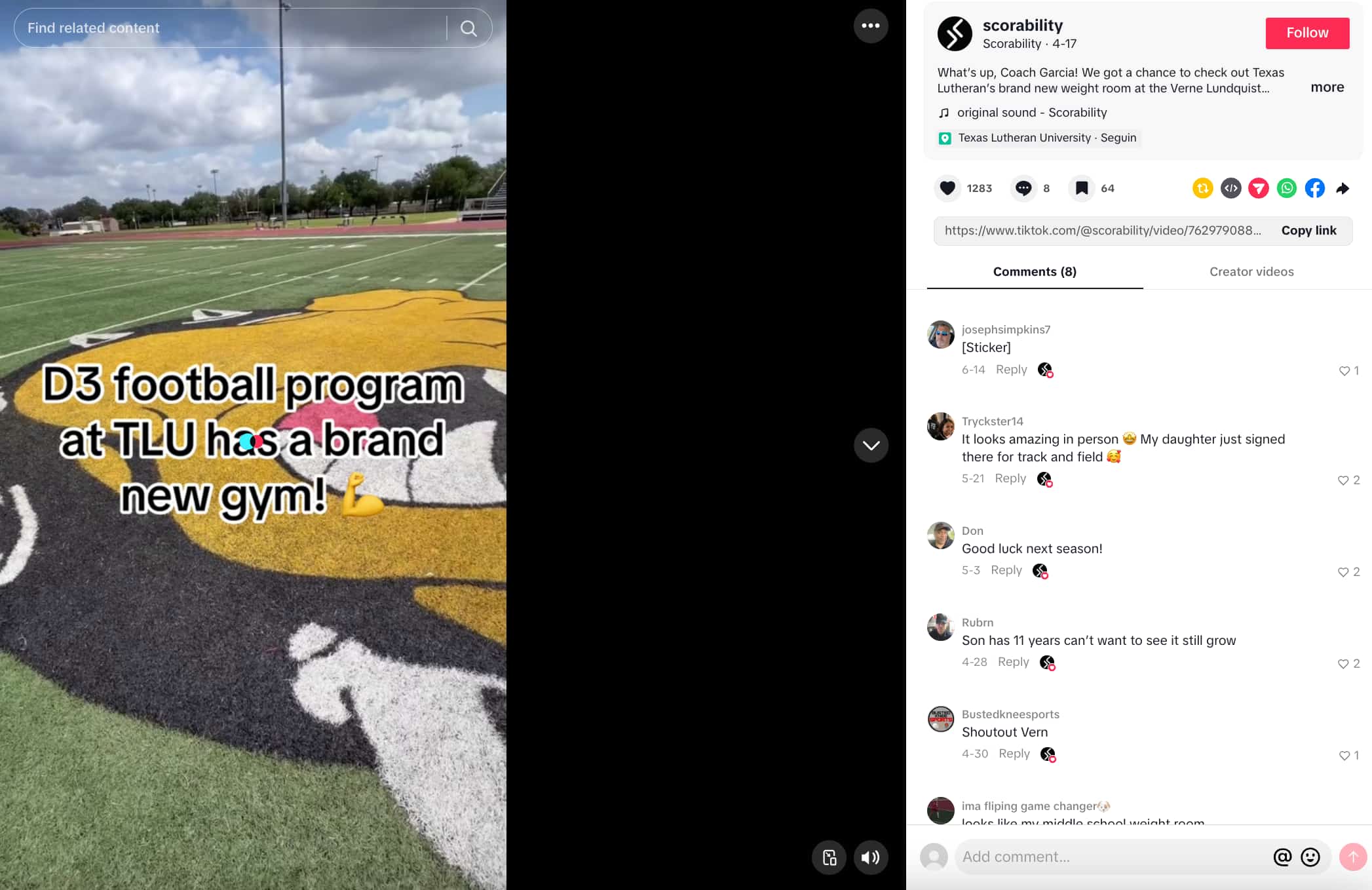
For example, platforms like TikTok are great for reaching a Gen Z population. According to Sprout’s 2026 Social Media Content Strategy Report, 72% of Gen Z social media users are on TikTok.
So it makes sense for a startup like Scorability to maintain an active TikTok presence because the company connects athletes and high school teams with college coaches. And TikTok is where it can engage college-aged users.
Source: TikTok
Define your brand voice early
Are you a brand that’s on top of the latest Gen Z slang? Do you speak to a professional audience that knows their industry language? Do you need a bold and empowering tone to inspire your audience? Or perhaps wit and sarcasm are baked into your brand identity.
Think of how you want to speak to your audience even before you start creating content. Your brand voice will determine the type of language and tone to use in your marketing messages and social media posts. Use it consistently to stay on-brand as you craft captions and respond to customers on social media.
Establish your content pillars
What types of content are you going to post? Tie your ideas to 3-5 content pillars that align with your brand’s goals and target audience.
For example, if your goal is to drive brand awareness and build community, you could do:
- Memes
- Humor-based skits
- Educational videos
- User-generated content
As the 2026 Social Media Content Strategy Report shows, users expect brands to show up differently on each platform.
So create platform-specific content pillars based on what resonates with users on each platform. For example, skits and humor videos will get more visibility on TikTok, while platforms like LinkedIn will need thought leadership and text posts.
Decide your posting cadence per platform
How often will you post on each platform? Some platforms require brands to post multiple times a day to maintain visibility. On other platforms, you risk overwhelming your audience if you post more than once a day.
Here’s a sample posting cadence to experiment with:
| Platform | Recommended Cadence | Notes |
|---|---|---|
| 3–5 Reels/feed posts per week | Supplement with 2–4 Stories daily | |
| 3–5 posts per week | Prioritize community-driven content over volume | |
| 2–5 posts per week | Avoid posting twice a day without a 7-hour gap | |
| X (Twitter) | 1–2 posts per day | Works best with resources for sustained real-time engagement |
| TikTok | 2–5 videos per week | Fast-paced, needs continuous content for momentum |
| YouTube | 1 long-form + 1–3 Shorts per week | Prioritize depth and value over quantity |
You can fine-tune your strategy as you collect more data about audience behavior and content performance.
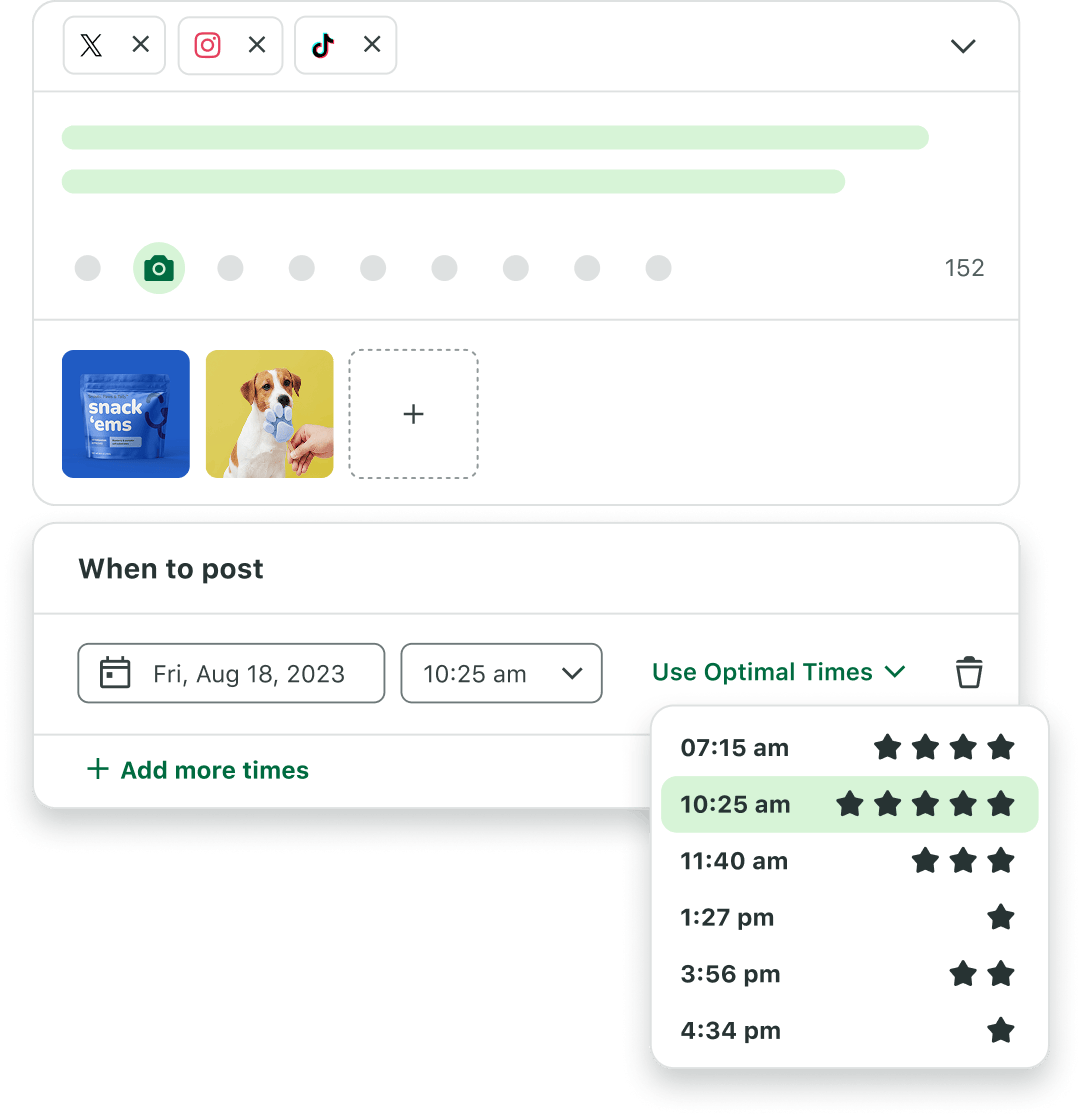
As you perfect your publishing cadence, make sure to time your posts strategically as well. Posts should go live at times that guarantee the most visibility and engagement in the first few minutes. This initial traction will help you get your posts in front of more people.
The Sprout Social Essentials plan suggests the best times to post based on content performance and audience behavior. This saves you the trouble of guessing when to send out your posts.
Build a lightweight content calendar
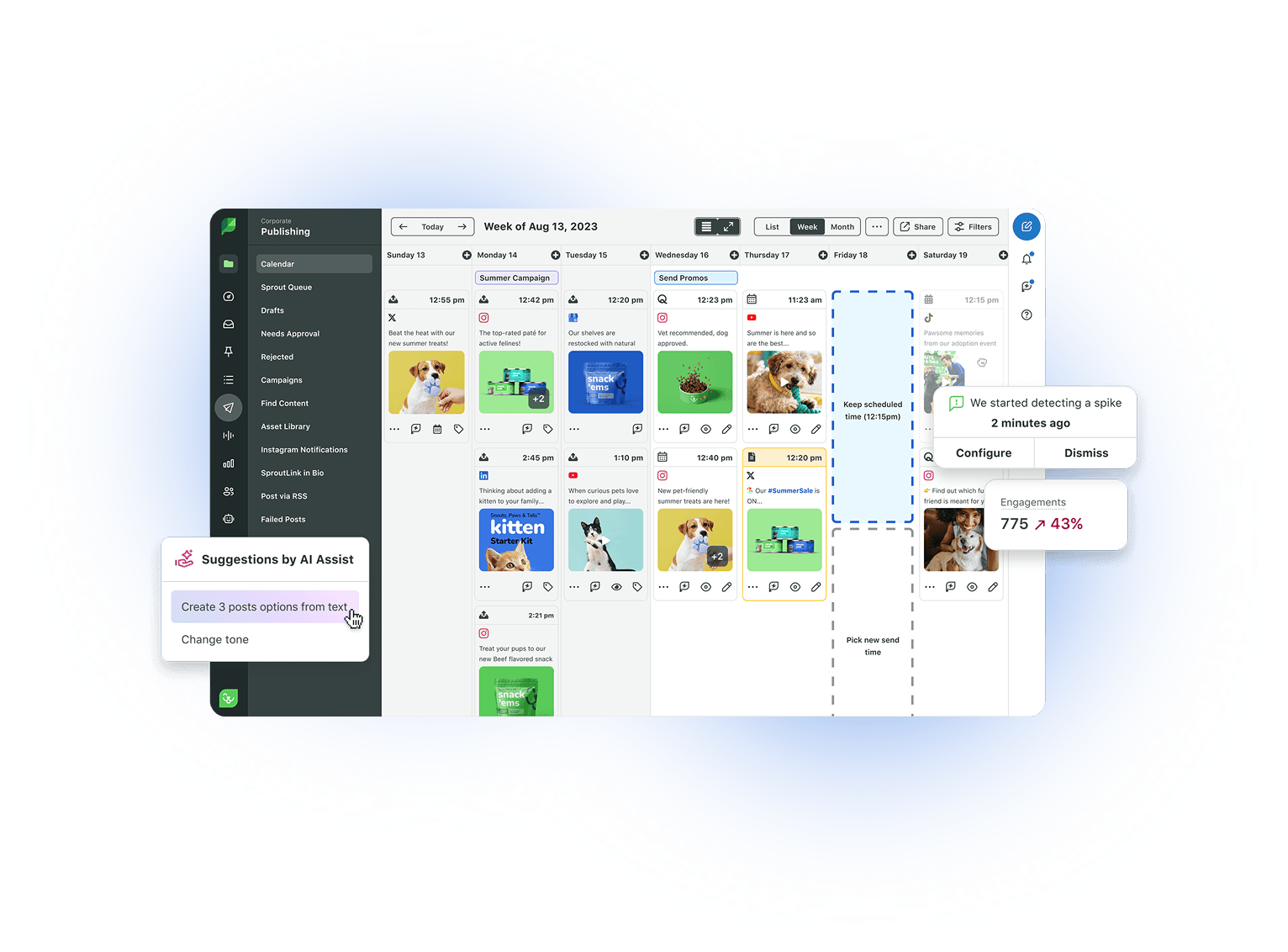
Once you have your content pillars and your posting cadence, organize everything in a content calendar. A social media calendar lets you visualize your content ideas and keep track of your posting schedules to maintain a consistent publishing strategy.
It doesn’t have to be too complicated, either. Start with the essentials like:
- Publish date and time
- Format
- Caption/copy
- Format
- Creative asset
Sprout’s Essentials plan comes with a visual content calendar where you can plan out your social media posts for the entire month across different platforms.

Once you’ve outlined your publishing plan, you can start creating content in bulk to keep up with your publishing schedule. Use content batching to set aside time blocks to create all the posts you need for the rest of the week or month.
Un-complicate social media for your startup
The best thing startups can do about social media management is to keep it simple. Focus your efforts on the right platforms and post consistently, and you’re halfway there.
Un-complicate social media management
Get the visual calendar, optimal send times and publishing tools built for lean startup teams, all in one Essentials plan.
Social media management tools for startups make things easier by helping you organize and automate your publishing efforts. Sprout’s Essential’s plan gives you all the entry-level publishing tools you need to streamline your management workflow.
Try it free for 30 days to see how it simplifies social media.
39 free social media strategy templates that will elevate your workflows
Published on August 20, 2026 Reading time 15 minutes









Share