Link in bio: The complete guide to maximizing engagement in 2026

Written by Brent Barnhart
Published on August 4, 2026
Reading time 7 minutes

Table of Contents
Are you paying attention to your link in bio?
Because bio links are underrated real estate for businesses across your brand’s social platforms.
Especially if you want to track social media engagement and audience interactions.
And sure, your choice of URL might seem like a super small detail.
The reality? These links are key for funneling traffic and customers to your promotions.
At Shoptalk Spring 2026, Meta announced Instagram creators can now tag products directly in Reels—no bio detour required. That’s a real shift.
But for every brand that isn’t running product-tagged Reels yet (which is most of you), your link in bio is still the hardest-working piece of real estate on your profile.
This guide breaks down what a link in bio actually does for your brand, how to make yours convert and the tools that make it painless to manage.
What is a link in bio?
A link in bio refers to a clickable URL that appears in your social media profiles.
A link in bio means the clickable URL living in your social media profile — the one spot on most platforms where you can actually send people somewhere off-app.
The phrase took off on Instagram around 2016, back when the platform blocked links in individual posts entirely. Brands pointed everyone to their bio instead, and the habit stuck.

Fast-forward to 2026 and the landscape’s more fragmented, not less. TikTok and Pinterest still cap you at one profile link. Instagram lets you add up to five external links, though only one displays natively — everything else shows up as “yourdomain.com and 4 other links.”
Meta’s also testing clickable links directly in post captions for Meta Verified subscribers, capped at 10 a month and mobile-only for now, so don’t retire your bio link strategy yet.
Singular links still feel limiting for brands juggling multiple campaigns, product drops and channels. That’s exactly why link-in-bio tools exist: one URL that unfolds into a full menu of destinations.

And when we tap through, we’re directed to a list of the brands social profiles, promotions and storefront aggregated by Linktree.

Why your link in bio is important
We get it. It’s just one link.
With so many moving pieces of your social presence, it’s easy to overlook your link in bio.
The reality, though? Bio links are a surprisingly powerful tool for brands. From learning about your customers to fine-tuning your promotions, here’s why bio links deserve your full attention.
Consistently promote your campaigns and content
Launching a product or pushing a promotion? Point your bio link straight at it instead of your homepage. Brands rotate their bio link for product drops, holidays, giveaways and anything time-sensitive — then swap it back when the moment passes.
Below is an example from Crocs. One of their IG bio links is dedicated to their Glitter Clog.

And when you tap through, you’re led directly to a promotion-specific product page.

Your bio link also keeps campaigns consistent across platforms. Run the same aggregator on TikTok and Instagram and you’re cross-promoting without lifting a finger. Use it as your CTA destination for Stories and posts too.
Squeeze more ROI of out your social marketing efforts
Siloing your social promotions isn’t just inefficient: it can hurt your overall campaign ROI.
Because brands rarely promote products on a single channel, right?
Bio links are deceptively effective at helping you understand what’s working and what isn’t. For example, you might notice that a particular URL or promotion on TikTok gets zero clicks on IG. Or maybe you realize that 80% of your audience clicks on the same link and avoids everything else.
For example, this TikTok bio link for Dove points to a variety of new products. Understanding how customers engage with these links help the brand to tweak its URLs over time. That means they can prioritize their promotions with confidence.

Assessing social media ROI means tracking as much data as you can. Link in bio clicks should be part of your metrics to get a pulse of how engaged your followers are with your promotions.
Bio links encourage cross-promotion
Piggybacking on the point above, brands use bio URLs to build cross-platform awareness.
For example, a customer might find you on Instagram but are personally more active on TikTok. It’s crucial for brands to be active where their audiences hang out. Your link in bio can reduce friction by highlighting everywhere you’re active and funnel folks there.

6 tips to drive engagement with link in bio
Bio link clicks don’t happen totally by accident.
Thankfully, there are a few low-hanging ways to drive engagement to your link in bio.
Regardless of what you’re selling, here are six tips that are fair game for brands.
1. Don’t just link to your homepage!
Chances are you’ve seen a jumbled mess of numbers and letters in a brand’s bio link.
Or maybe just a generic homepage URL with no specific call-to-action.
These types of bio links don’t exactly inspire action. A few small steps you can take to make your link pop include:
- Stylize them with a customer URL
- Create a dedicated landing page for your social URL
- Keep things short and sweet with a URL shortener

2. Rotate links strategically (and keep them updated)
As we noted earlier, brands can use bio URLs to highlight products and promotions. This is a popular strategy if you’re running frequent, time-sensitive promotions such as:
- Product launches
- Holiday promotions
- Giveaways
For example, Kiehls uses their bio link aggregator to point people to their latest offers.


Also, swapping out your bio link keeps your profile from feeling stale. A change in your bio link might catch someone’s eye or otherwise drive them to your website when they normally wouldn’t have considered it.
3. Create branded landing pages for your bio links
Much like you shouldn’t send followers to a generic homepage, you should also consider creating custom pages for your social traffic.
As illustrated by our landing page examples, having a consistent experience across the customer journey will encourage action from buyers. If nothing else, make sure your bio links are in line with your most current branding and aren’t linking to outdated pages or information.
4. Promote exclusive content or offers
Anything you can do to make your bio link more enticing is a plus.
For influencers and creator profiles, your link in bio is a prime place for promotions and affiliate codes. The hidden nature of bio-specific promotions makes them feel very exclusive. In turn, shoppers feel like they’re getting a “for your eyes only” offer.

5. A/B test different CTAs
Fine-tuning your link in bio takes time.
There are plenty of social media experiments related to your URLs that you can run to optimize engagement. Some questions you can set out to answer through testing include:
- How many bio links is “optimal?” More or less?
- Do we get more engagement with a single link or a link aggregator?
- Which call-to-action phrases earn the most clicks?
- Does adding an arrow or emoji pointing to our bio link impact engagement?
Regardless, you should say something to entice people to check out your link in bio versus just leaving it hanging on its own without context.
6. Measure performance with analytics
Tracking your social media analytics is a must-do and your link in bio is no exception.
Most native analytics allow you to see how people are engaging with your bio links and their level of engagement. Here’s an example from Instagram.

The more you can learn about your audience and what they engage, the more confidently you can tweak your offers, links and messaging.
3 link in bio tools for your brand to test-drive
Every social app is different when it comes to native link in bio features. That’s why my brand and creator accounts use third-party aggregators and landing pages that cover all platforms.
To wrap things up, here are some tools to help brands make the most of their bio links.
1. Sprout Social
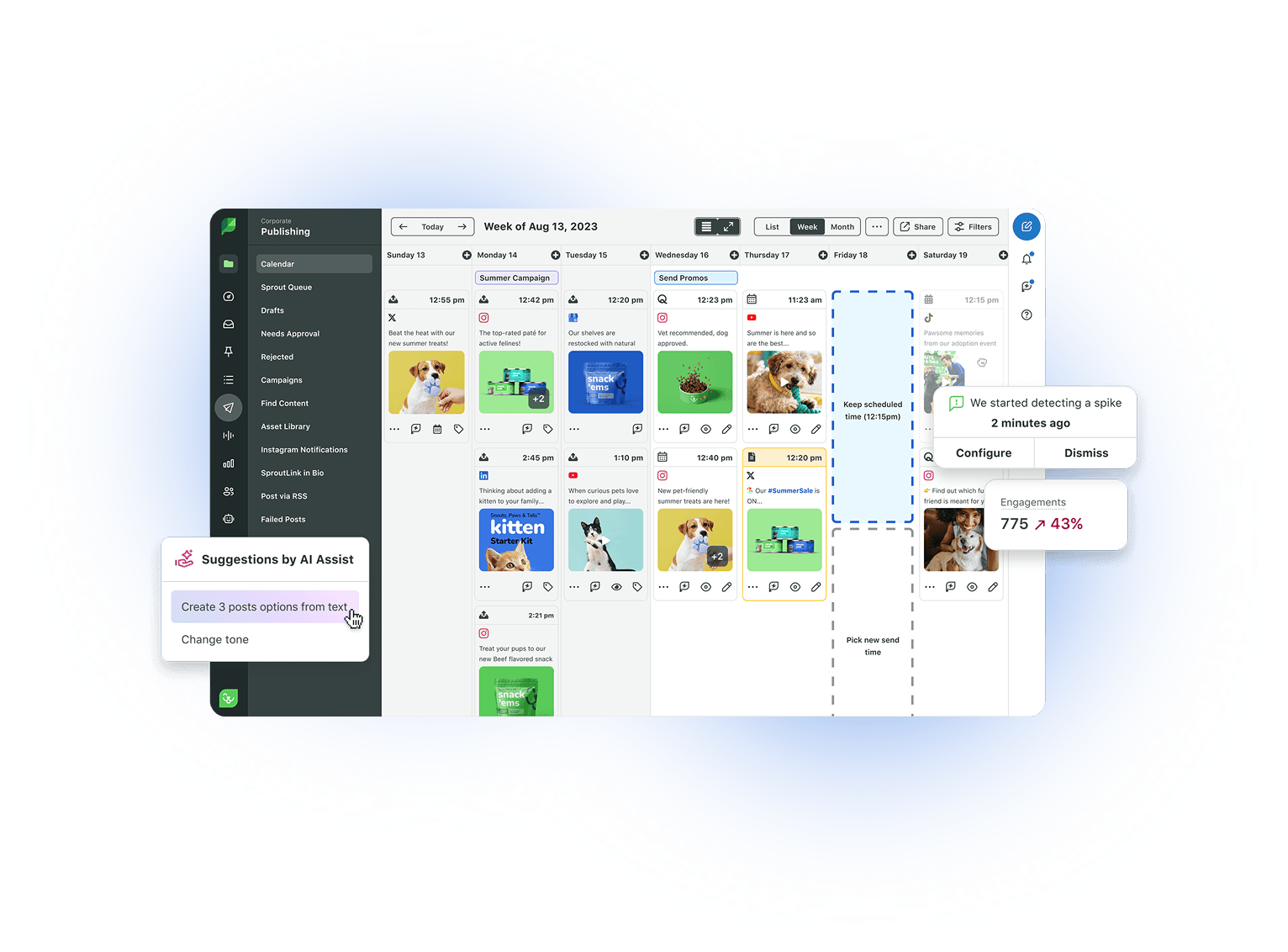
Having a centralized platform for any and all of your social links is a smart move. That’s why Sprout’s link in bio offering, SproutLink, is such a stand-out.
Through one simple link, your audience can access a replica of your Instagram grid and visit the unique link associated with each of your Instagram posts. This is a workaround to not being able to insert links in individual posts.

This clickable grid directs traffic to the content links that matter most—whether that’s your website, a specific product, blog ost or anything in-between. Adding links to your Instagram posts are baked into Sprout’s Instagram publishing workflow, saving you precious time spent jumping between multiple tools.
2. Linktree
Linktree is the self-proclaimed “original” link in bio tool and its popularity is difficult to deny. The tool offers a free account for businesses and creators alike.

With Linktree, you can align multiple profiles and track metrics including CTR, new subscribers and even sales associated with your link in bio. Linktree themselves recommends using between three and seven links within your profile, making the app ideal for brands and creators with a wide variety of promotions or affiliate links.
3. Bio.fm
Bio.fm’s link in bio tool is geared toward creator accounts that want to showcase a variety of content and links. The content previews are particularly useful for artists and digital creators (think: YouTubers, Twitch streamers) and can serve as a mini portfolio of your work.

Are you making the most of your link in bio?
Bio links are often overlooked but seriously underrated when it comes to your social funnel.
With the right tactics and tools, businesses can use those URLs to drive actual business.
The link in bio tips and tools above can help you do the same faster. That said, those links are just one piece of a much larger, data-driven social media strategy.
If you haven’t already, check out a trial of Sprout Social to see how you can align your social presence and see real, measurable business impact.




Share