Organic reach: What it is and how to improve it in 2026

Written by Emily Jenkins
Published on January 14, 2026
Reading time 11 minutes

Table of Contents
Organic reach feels harder to earn than ever, with marketers worldwide reporting declines across social media platforms.
According to Sprout’s 2025 Content Benchmarks Report, brands saw a 20% year-over-year jump in average inbound engagements. This is evidence that audiences are still scrolling and engaging, but are getting more selective.
The challenge isn’t getting people to care. It’s showing up in front of the right audience organically. This takes strategy, timing and a deep understanding of social media analytics.
In this guide, we’ll break down what organic reach means, why it’s getting harder to sustain and how to measure and improve it across the board.
What is organic reach?
Organic reach is the number of unique people who see your content without paid promotions. It represents the true visibility your brand earns through its own publishing strategy—whether that’s through your followers, shares and reshares, recommendations in feeds, or platform discovery surfaces like Explore, For You and suggested posts.
Unlike impressions, which count every time your content is displayed (including multiple views from the same person), organic reach focuses on distinct individuals. That makes it a critical indicator of how effectively your content is breaking through crowded feeds and reaching new or existing audiences on its own merit.
Modern algorithms prioritize content that generates consistent engagement, delivers value to users and aligns with emerging platform signals (like watch time, saves, reposts or profile taps). Strong organic reach tells you your content is resonating with your audience—and that platforms see it as worth amplifying.
Because reach reflects visibility, it’s one of the clearest ways to gauge brand awareness, which remains a top KPI for marketers globally. Tracking your organic reach and impressions reveals how well your brand earns attention on its own—and when it’s relying too heavily on paid support.
Tracking organic reach helps your social team:
- Understand how well your content performs without paid support
- Identify formats and topics that get surfaced by recommendation engines
- Benchmark performance against competitors or previous periods
- Optimize your publishing strategy for algorithmic visibility
- Spot early trends based on what organically gains traction
Organic reach will vary widely by platform, content type and audience behavior—but when you consistently earn strong organic reach, it signals that your content is discoverable, engaging and strategically aligned with what each network rewards.
Organic reach vs. paid reach
Organic reach shows how far your content travels on its own. It’s powered by genuine engagement (likes, comments, shares and saves) that tells algorithms your content is valuable. The stronger that signal, the more people see your posts in their feeds.
But paid reach works differently from organic reach. With paid reach, you invest ad spend to target specific audiences and boost top-performing posts. It’s one of the fastest ways to extend visibility beyond your existing followers.
The best strategies blend both. Organic reach builds trust and community over time, while paid reach amplifies what’s already working. Together, they keep your brand visible, even as algorithms evolve.
Metrics that define reach
Tracking reach helps marketers understand how many people see their content and how far it spreads beyond their followers. The right metrics also show whether your posts actually capture attention or just fill the feed.
These social media metrics paint a full picture of your reach:
- Unique reach: The number of distinct users who saw your post
- Impressions: Total post views, including repeat exposures
- Engagement rate by reach: The percentage of people (both followers and non-followers) who interacted with your content
Together, these metrics reveal how visible your content is, how often it’s seen and how strongly it resonates with your audience.
Why organic reach is declining across social networks
Organic reach is shrinking across networks, according to discussions on Reddit and marketing forums. As social media algorithms become more refined and feeds begin to overflow, every piece of content now competes harder for attention.
But audiences aren’t disappearing. Instead, they’re engaging differently. As the Sprout Social Index shows, users now want content that feels original and relatable, not a stream of product promos. A drop in reach doesn’t mean failure. It’s a sign that social media networks now reward relevance over volume.
At the same time, a new trend is helping brands stay visible despite declining reach: social search. Platforms like TikTok and Instagram are becoming discovery engines, especially for Gen Z.
According to Sprout’s 2024 Social Content Strategy Report, TikTok is one of Gen Z’s top channels for discovering brands, products and even news—especially when they’re looking for real-world experiences and peer reviews.
This shift reframes what organic visibility means. Winning reach now depends on how well your content matches what people are actively searching for.
Additionally, here’s how recent platform updates are contributing to declining organic reach:
Facebook’s algorithm changes
Facebook’s algorithm prioritizes personal content over branded posts. This has been the case since CEO Mark Zuckerberg’s 2018 pledge to promote meaningful interactions.
In Meta’s October 2025 update to Facebook, the company reported that its refreshed recommendation engine now surfaces around 50% more Reels from creators who published that day—giving recent video content a noticeable visibility boost in the Facebook feed. This reflects a broader Facebook trend toward AI-curated discovery feeds. And, new controls like a ‘Not Interested’ option that lets users hide posts they don’t want to see.
This matters because, as the Sprout Social Index shows, audiences would rather engage with authentic, creator-led posts than product-centric content.
While that shift looks like declining reach, it’s actually Facebook filtering for relevant, quality content over post volume.
Instagram’s shift to video
Instagram’s organic reach is also declining. According to Socialinsider, average reach rates on the network have dropped 12% year-on-year, with typical posts now reaching roughly 3–4% of followers.
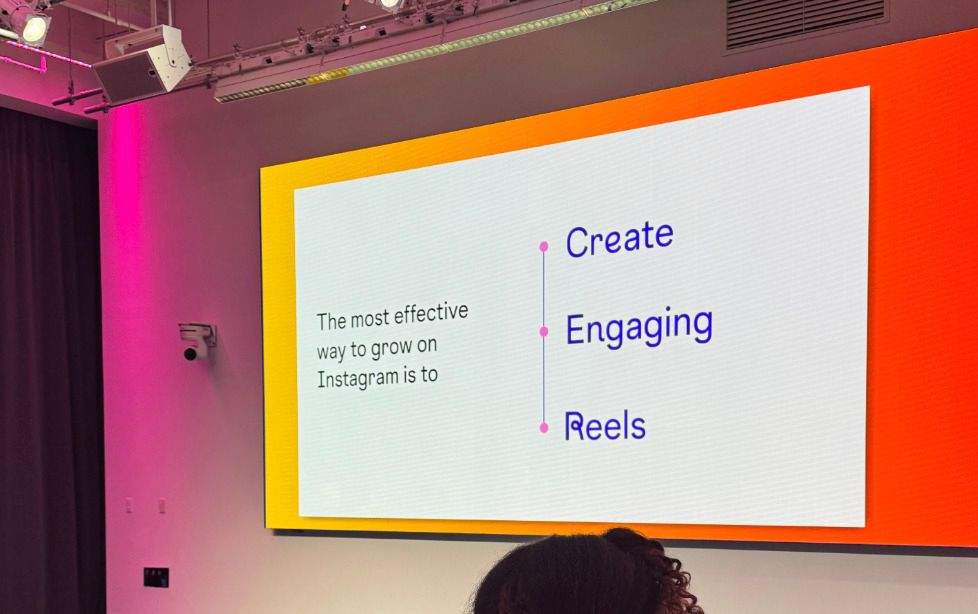
In fact, at a 2024 Meta conference, Instagram CEO Adam Mosseri confirmed that Reels are one of the most effective ways to grow on the platform. Sprout’s Social Media Content Strategy report confirms this, showing short-form, shareable videos perform the best on Instagram.
Source: Threads
This evidence means that video is an essential part of every organic social media marketing strategy. Static images still have value, but in the future, reach will lean more heavily on Reels.
LinkedIn’s engagement-first ranking
LinkedIn’s feed has evolved to prioritize professional value over popularity. In a 2023 post on LinkedIn’s engineering blog, product leader Alice Xiong explained that recent feed updates are designed to give “more reach when the content is focused on sharing knowledge and insights” that help members build their careers and networks.
In Xiong’s own words, LinkedIn’s algorithm aims to give “more reach when the content is focused on sharing knowledge and insights.” This is because posts that deliver value encourage engagement, which drives LinkedIn visibility. In contrast, impression-heavy updates without meaningful interaction fade quickly.
This change reinforces the idea that social media reach now requires relevant, valuable content that sparks interaction, not just a high volume of content.
4 strategies to improve organic reach today
Organic reach isn’t dead; it’s just evolving. As algorithms shift, success now depends on understanding how people actually discover and engage with content on each network. A dip in reach doesn’t mean your audience has disappeared. It’s a sign to rethink how you show up.
Here are four ways to expand your visibility organically (no ad budget required).
1. Optimize for social search discovery
Social search is becoming a powerful complement to traditional SEO. While most consumers still start with search engines, Gen Z now ranks social as their top place to look for information—making in-app search a critical part of your visibility strategy.
People now use networks like TikTok, Instagram and LinkedIn to actively find information. By optimizing your posts for in-app search, you’ll help your content surface in audience feeds and explore pages.
To optimize your posts effectively, you need to know what your target audience is searching for and create content that answers their queries.
Here’s a quick framework to follow:
- Identify what your audience is searching for. Use comments, DMs and social listening tools to spot recurring questions and pain points. For example, a skincare brand might notice followers repeatedly asking, “How do I layer my products?”
- Turn those insights into searchable content. Create posts that directly answer those questions and naturally include relevant keywords in titles, captions and alt text. Going back to our example, the skincare brand could post a Reel on layering products.
- Align social keywords with your website SEO. Keep core phrases consistent across your website and social channels to strengthen authority and improve discoverability. For instance, the brand might use “how to layer skincare products” in a blog post.
Social networks reward relevance—and that comes from a mix of optimization and engagement. Clear, keyword-rich posts help algorithms understand who your content is for, while consistent interaction with your audience reinforces those relevance signals over time.
2. Leverage video and Reels
Sprout’s latest data shows video is rising quickly across industries, and algorithms are serving users more fresh clips each day.
In fact, Meta’s October 2025 update confirms that its recommendation engine now surfaces 50% more Reels from creators who published content that day, giving new video content a clear visibility boost.
Just make sure you’re creating the right videos for each network. Sprout’s 2024 Social Media Content Strategy Report shows that ultra-short clips (under 15 seconds) tend to perform best on Instagram and X, while 15–60-second videos are a sweet spot on TikTok. On YouTube, more in-depth videos generally outperform ultra-short ones, especially when they sustain watch time.
On YouTube, both Shorts and longer-form videos can perform well. As a rule of thumb, ultra-short content (under 60 seconds) fits Shorts, while more in-depth topics are better served by longer videos that can sustain watch time.
You’ll also need to consider formatting. For instance, use vertical framing for Reels and TikToks, square for LinkedIn videos and horizontal for YouTube for an optimal viewing experience.
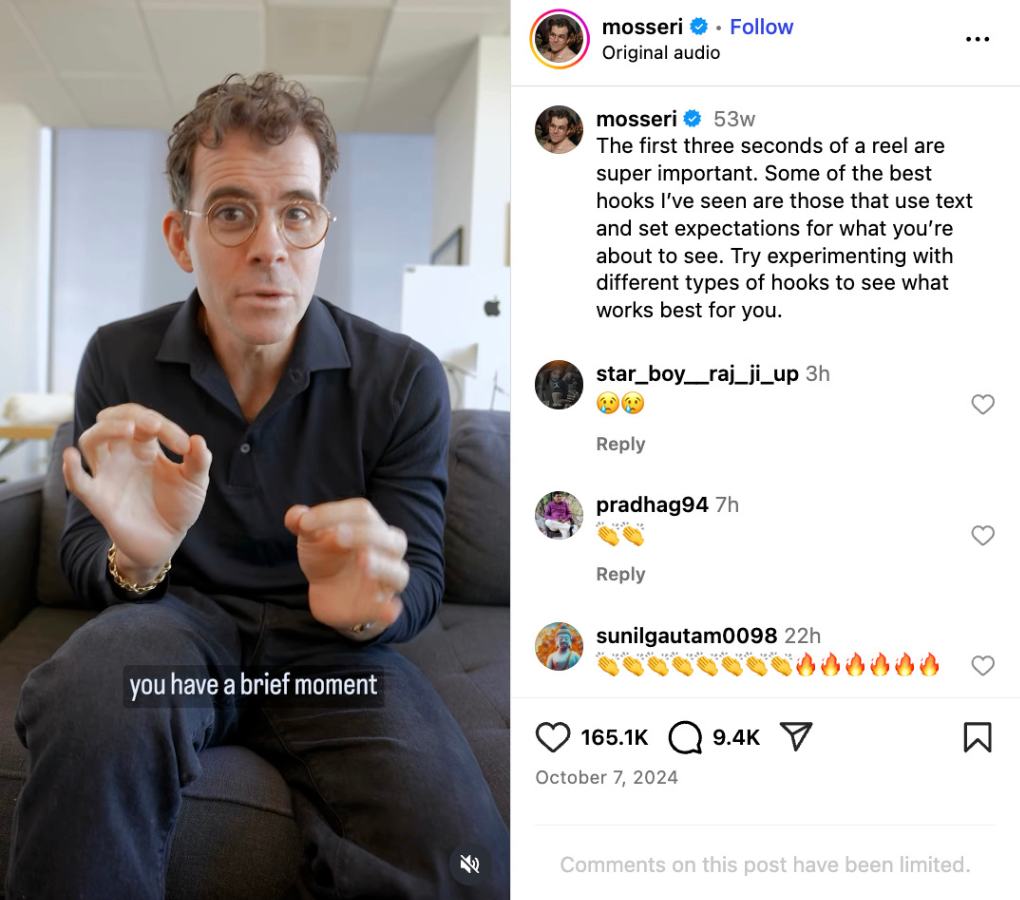
Your videos also need to hook viewers immediately and front-load value to capture attention and hold it. As Meta’s Adam Mosseri advises, the first three seconds matter most:
Source: Instagram
Quick, relevant videos keep people watching, which helps algorithms push your content further.
3. Post when your audience is online
Algorithms prioritize posts that attract engagement quickly after publishing, so make sure your audience is online when you post. To determine the best times to post manually, navigate to the native analytics dashboards in each app and track when people engage the most.
Tools like Sprout’s ViralPost® and Optimal Send Times use AI to analyze your audience’s historical engagement patterns, then surface the best times to publish on each profile—so your posts go live when people are most likely to interact.
4. Encourage meaningful interactions
Likes are great, but comments, shares and saves show deeper interest—which algorithms pick up on. These interactions tell social networks that your content is highly relevant and engaging, which helps it appear in more feeds and stay visible longer.
To build this kind of momentum, create posts that invite participation. Ask thoughtful questions, share helpful tips or post insights that make people want to join the conversation.
Then, keep the dialogue alive by replying quickly (ideally within minutes) to show that you’re listening. The 2025 Sprout Social Index shows just how high the stakes are: 73% of social users say they’ll buy from a competitor if a brand doesn’t respond to them on social, and nearly three-quarters expect a response within 24 hours or sooner.
By encouraging and nurturing interaction in this way, you can build community and extend your reach to new audiences.
How to measure and optimize reach over time
Improving your organic reach doesn’t happen all at once. It comes from watching what works, learning from the data and adjusting your content as you go.
The right analytics and listening tools make this easier by showing you not just how many people you reached, but why certain posts performed better than others.
Here’s how to track and improve your reach over time:
Network analytics
Native analytics should be your first stop, since each network provides a dashboard you can use to analyze your post performance.
These are some app dashboards to explore for baseline data on reach, impressions and engagement:
- Instagram Insights
- TikTok Analytics
- LinkedIn Page Analytics
- Meta Business Suite (formerly Facebook Insights)
- X Analytics (previously Twitter Analytics)
- YouTube Studio Analytics
To understand what’s really causing impact, you’ll need to see it all in one place. However, the problem is that collating that data manually is time-consuming.
Sprout’s Premium Analytics add-on surfaces cross-network trends and lets you build custom reports that compare reach and engagement by network, format, profile, campaign and time period.
Audience sentiment
Reach only matters if your audience reacts positively. That’s why tracking sentiment is so vital—it helps you understand whether increased visibility equals genuine connection of a brewing PR crisis.
Sprout’s Listening Topics automatically aggregates mentions around your keywords and themes, analyzes sentiment and visualizes results—categorizing messages as positive, neutral or negative so you can track shifts over time.
To gain more insight, filter mentions by keyword, hashtag or theme to uncover what’s really fueling reactions. For instance, maybe your customers are buzzing about a new feature, or maybe a support issue is starting to trend.
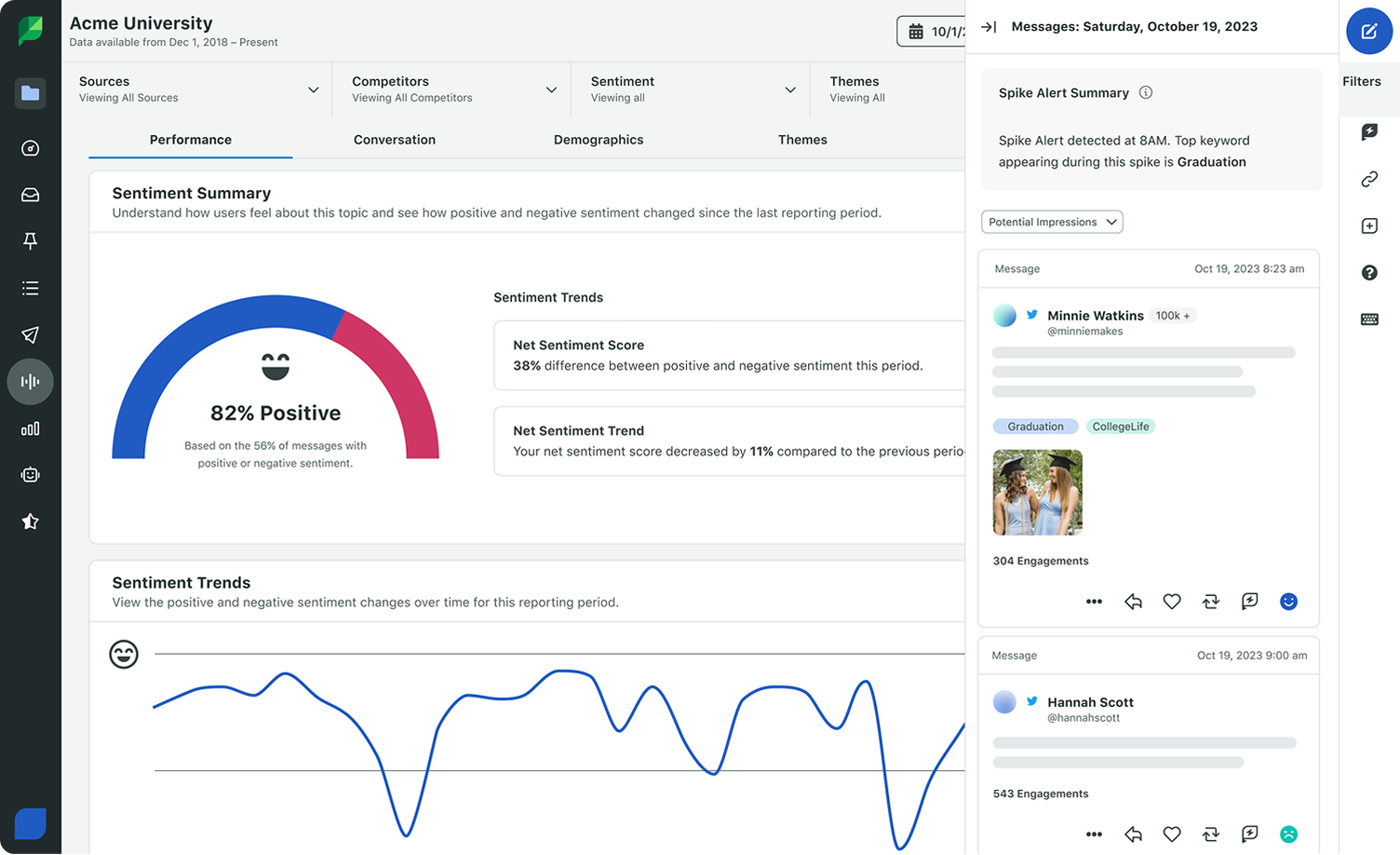
Either way, you’ll get instant context to help you respond faster, adjust your messaging and protect or amplify your reach before the moment passes.
Campaign-level reporting
Understanding how much value your brand awareness efforts bring isn’t always easy. To prove ROI, you need to link reach directly to campaigns and conversions.
Sprout’s Premium Analytics help you do just that. You can connect reach, engagement and conversions across every channel to better understand ROI. And with custom reporting, you’ll see which campaigns actually grow your audience and which stall your efforts.
Tying visibility to business outcomes in this way allows you to prove your organic reach efforts’ ROI without making assumptions.
How Sprout helps you improve your organic reach
Sprout gives you the tools you need to publish smarter, listen deeper and prove the real impact of your content. Here’s how Sprout helps you expand your reach without relying on paid boosts:
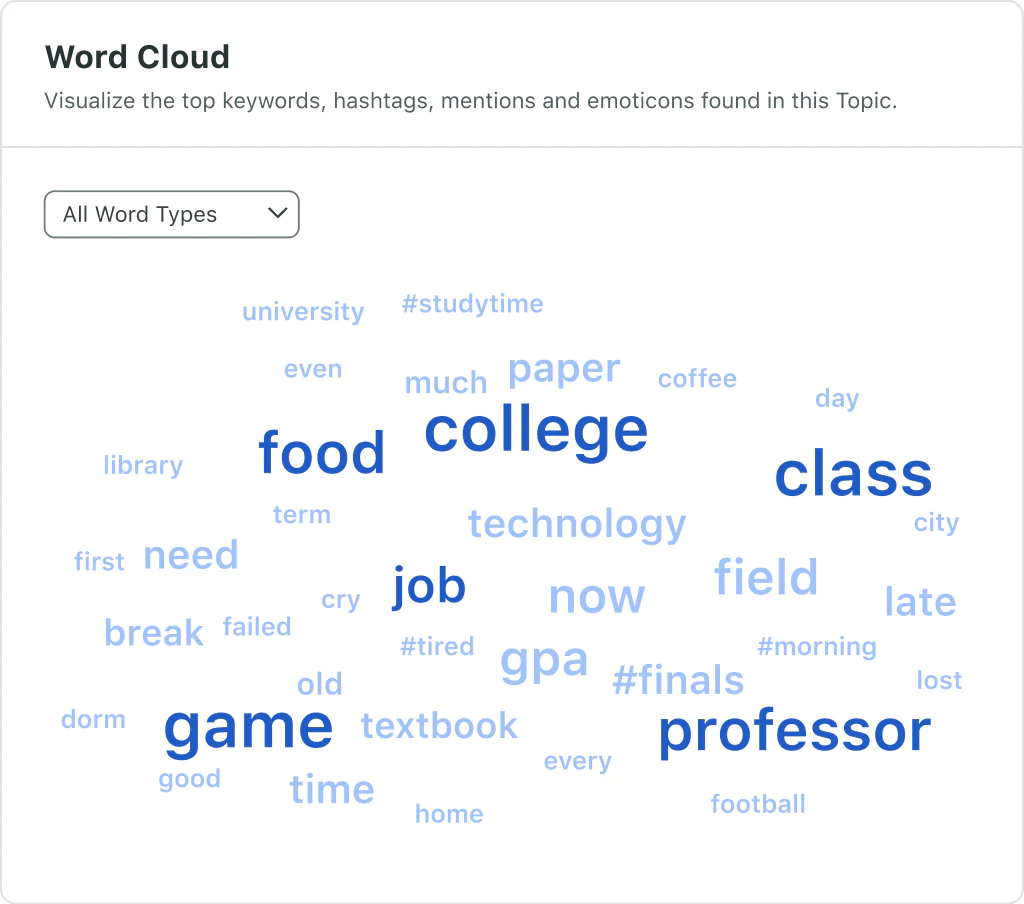
Surface content opportunities with Listening Topics
Your organic reach grows more quickly when you join conversations that your audience already cares about.
To find those discussions, use Listening Topics to track keywords, hashtags and sentiment around your brand or industry. This feature also spots trending themes early so you can understand how people feel about your campaigns, which allows you to create content that earns authentic engagement early on.
Optimize timing with ViralPost
To reach your audience, you need to show up when they’re present. Tools like ViralPost® do this by analyzing your audience’s engagement patterns to pinpoint when they’re most likely to interact. It then automatically schedules posts for those windows.
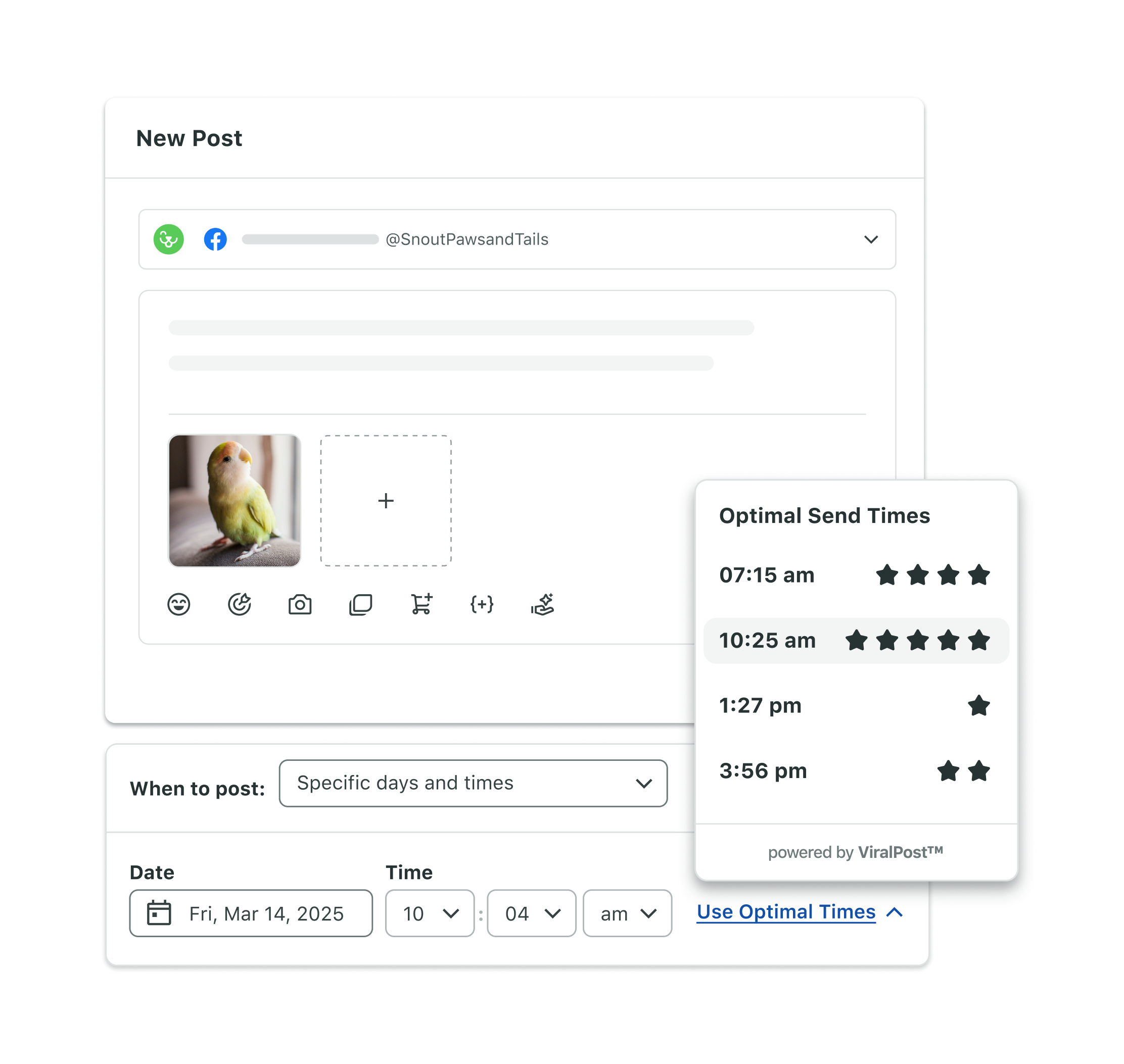
These insights also help you align your publishing times with trending searches or conversations that you discover in Listening Topics. This ensures you’re engaging with topics that are already gaining traction and allows you to post as attention is peaking, not fading out.
Track cross-network reach with Premium Analytics
Premium Analytics lets you see how reach and engagement connect to conversions across every network in one centralized view. Its clear, customizable reports show what’s driving visibility and what needs adjusting so you’re able to improve future campaigns. Shareable insights also make it easy to prove impact to leadership.
Grow your organic reach with smarter insights
Organic reach is evolving, not disappearing. As algorithms favor relevance and interaction, it’s the brands that listen, analyze and adapt that will win visibility without constantly paying for it.
With Sprout, you get the tools you need to find the right conversations, publish at the ideal time, create content that resonates and prove the value of every impression.
Ready to see how a data-driven strategy can expand your organic reach? Book a personalized Sprout demo today to start turning insight into impact.
37 free social media strategy templates that will elevate your workflows
Published on December 5, 2025 Reading time 15 minutes







Share