How to manage social media as a one-person team

Written by Jacqueline Zote
Published on August 25, 2026
Reading time 8 minutes

As the hub of cultural conversations and online activity, social media provides valuable intelligence to inform business strategies. It’s how you discover everything from what trends are taking over to what products people are buying. In fact, the 2026 Social Intelligence Report found that half of one-person teams consider it mission-critical for future growth.
But between crafting content and staying on top of communications, managing social media is hard enough when you’re the only one on the team. This leaves you with little time to focus on social intelligence, let alone extract insights to fuel business growth.
In this post, we provide a guideline on how to streamline social media management for one-person teams. From strategic automation to structured task management, we show you how you can save time and focus on more high-impact work. Let’s get started.
What it means to run social alone
When you’re running social media on your own, you’re juggling multiple roles. You’re the one coming up with content ideas and bringing those ideas to fruition by writing captions and designing graphics. At the same time, you’re in charge of publishing the content, managing comments, responding to DMs and analyzing your data.
You’re essentially doing everything by yourself all at once.
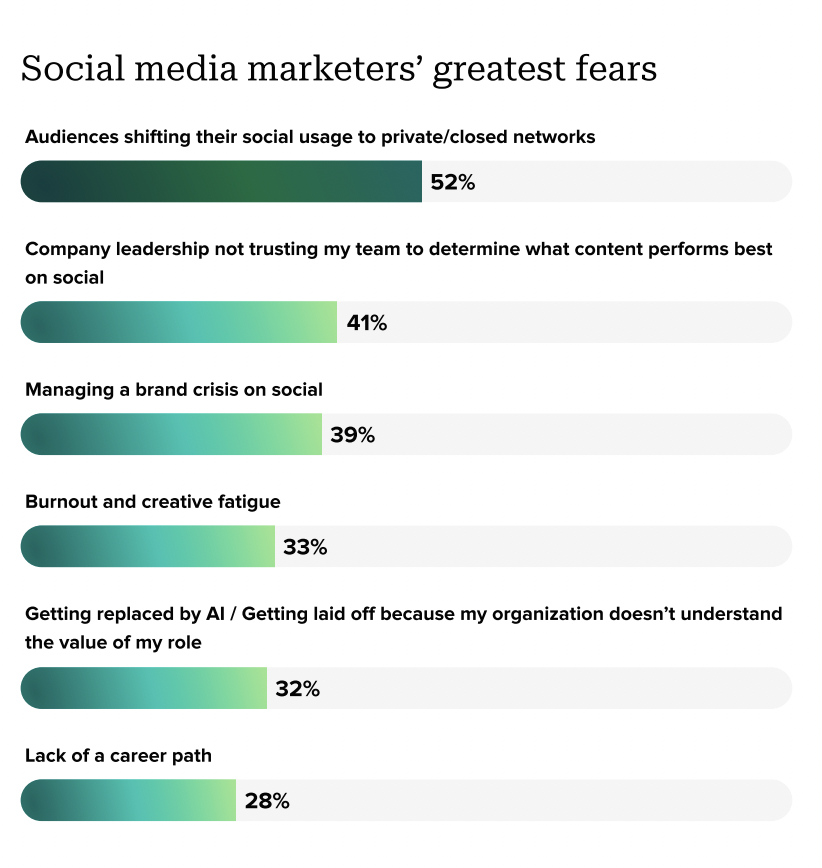
As it is, social media marketers are already at risk of burning out and running out of content ideas. The 2025 Sprout Social IndexTM notes that 33% of marketers fear burnout and creative fatigue.
The risk gets significantly bigger for someone who’s constantly overwhelmed because they’re doing it all alone. Yet this is what social media management looks like for most startups and small business operations.
The biggest challenges for a one-person team
To start with, you need to pinpoint what actually makes it challenging to manage social media on your own. That way, you can focus your efforts on tackling those specific challenges. Let’s dig deeper into the biggest problems in social media management for one-person teams.
Constant context-switching across platforms
One minute you’re checking your Facebook stats, the next you’re trying to catch up on all your Instagram DMs and messages. When you’re a one-person social media team, you’re constantly switching between different tasks across platforms. So you’re distracted and unable to focus on a single task, which will affect productivity.
It’s even worse when you’re doing everything manually. According to The Social Media Productivity Report, 63% of social media marketers report not being able to do high-impact work because of manual tasks.
Creative and content fatigue
Social media teams have to always be on top of trending memes and viral topics to keep producing relevant content. According to the 2025 Sprout Social IndexTM, 94% of social media practitioners report having to be chronically online to do their jobs.
Ultimately, the social media burnout catches up, especially when you’re the only one coming up with ideas and producing content. That’s why burnout and creative fatigue rank as the fourth greatest fear among social media marketers.
Proving ROI without a dedicated analyst
When you’re the only one on your team, you’re also in charge of collecting performance data and putting together reports. It’s easy enough to point out which content is performing well or how your page has grown over time. But without a dedicated analyst to interpret your data, you’ll have a hard time aligning your social media investment to actual business outcomes.
Keeping up with response-time expectations
Between the content creation and performance analysis, comments and DMs often go unanswered for hours when you’re a one-person team. This could reflect poorly on the customer experience, especially with consumers expecting swift responses on social media.
As the 2025 Sprout Social IndexTM found, almost three-quarters of consumers expect brands to respond within 24 hours. They’ll even buy from a competitor next time if the brand doesn’t respond to their customer service questions on social.
3 tips for prioritizing when everything feels urgent
You’re a few days behind on content and your DMs are flooded with messages that you haven’t been able to check. For one-person social teams, it seems like there’s a never-ending to-do list where every item needs to be done “right now.” Here’s how you can streamline your tasks and figure out what to prioritize:
1. Set 2–3 goals tied to business outcomes, not vanity metrics
Impressions are great, but what do they actually mean for your business? Have a clear idea of what you want to get out of social media. This will serve as the foundation for the rest of your social media marketing strategy, shaping everything from your content to your analytics.
Start with 2-3 goals that are related to actual business outcomes. For instance:
- Growing brand awareness
- Building a brand community
- Improving brand sentiment
- Generating online sales
- Driving qualified leads
- Preventing customer churn
- Speeding up social customer service
2. Use an impact-vs-effort framework to triage daily tasks
Building a framework for prioritizing tasks will help you organize your schedule more strategically. Weigh the expected value of each task against the effort needed to complete it, so you can sort out the order in which to do them.
For example:
Quick wins (high impact, low effort)
- What they are: Tasks that yield high value and require very little time or money
- Examples: Repurposing existing content into graphics and bite-sized social posts, sharing user-generated content, customizing social media templates for new ideas, actively replying to recent comments
Big bets (high impact, high effort)
- What they are: Tasks that yield high value and require heavy planning, time and/or budget
- Examples: Running an influencer marketing campaign, launching a multi-platform content series
Backups (low impact, low effort)
- What they are: Minor tasks that don’t add significant value but take very little time to complete
- Examples: Making small tweaks to your profile, engaging with content from other brands/creators
Time sinkers (low impact, high effort)
- What they are: Time-consuming tasks that yield little to no return on investment
- Examples: Manually tracking and analyzing vanity metrics, designing complex custom graphics for platforms that your audience doesn’t use
3. Pick one or two networks instead of trying to be everywhere
Spreading yourself thin across multiple social media platforms isn’t doing anything for your performance or your productivity. Effective social media management for one-person teams is all about knowing which networks to focus on.
Pick a network (or two) that makes the most sense based on the type of audience you’re targeting. For example, LinkedIn for B2B audiences, TikTok for Gen Zs and teens, Instagram for Millennials and Gen Zs or Facebook for Gen X and Baby Boomers. Then focus all your efforts on creating great content and actively maintaining your presence on the chosen network.
How to use AI and automation to carry the load
When you’re a one-person team, you need to “outsource” as much as possible to AI and automation tools. In fact, 93% of practitioners in the 2025 Sprout Social IndexTM trust that AI can help with creative fatigue.
But it’s not about letting AI do the heavy lifting to create everything from scratch. Instead, AI marketing tools should help with tasks that are repetitive and take up a significant portion of your time. This will free you up to focus on high-impact work that needs the human touch. AI and automation are most useful for:
Caption drafting and content ideation
Coming up with new content ideas and crafting fresh captions day in and day out can take a toll on your creativity. Between the manual trend checks and figuring out how to weave them into your content strategy, you’re already spending half the day on planning and creating content.
Let AI handle the repetitive work. You handle the strategy.
Sprout Essentials pairs AI-powered captions, Optimal Send Time and cross-network reporting in one place — built for teams of one.
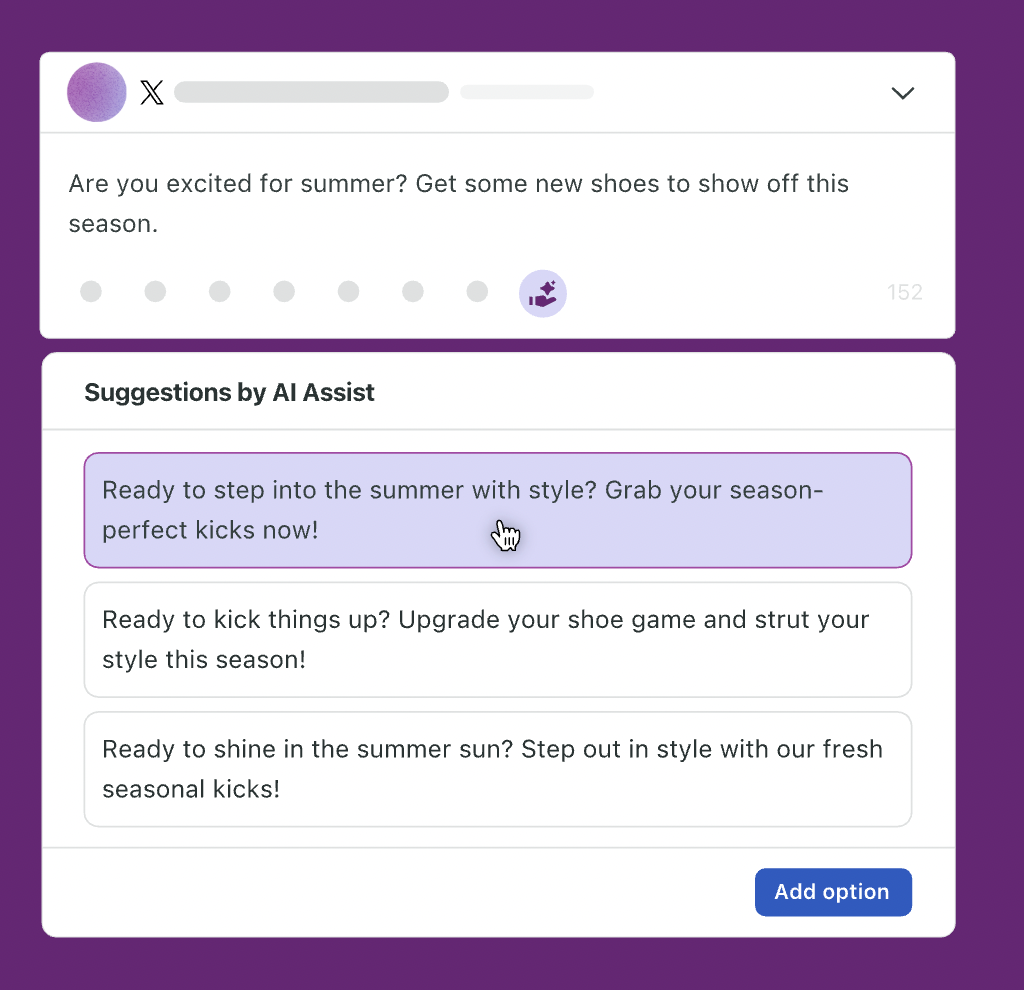
Use AI tools to check trending themes and topics, discover content ideas and generate captions. So you can save time filling up your social media calendar with fresh ideas.
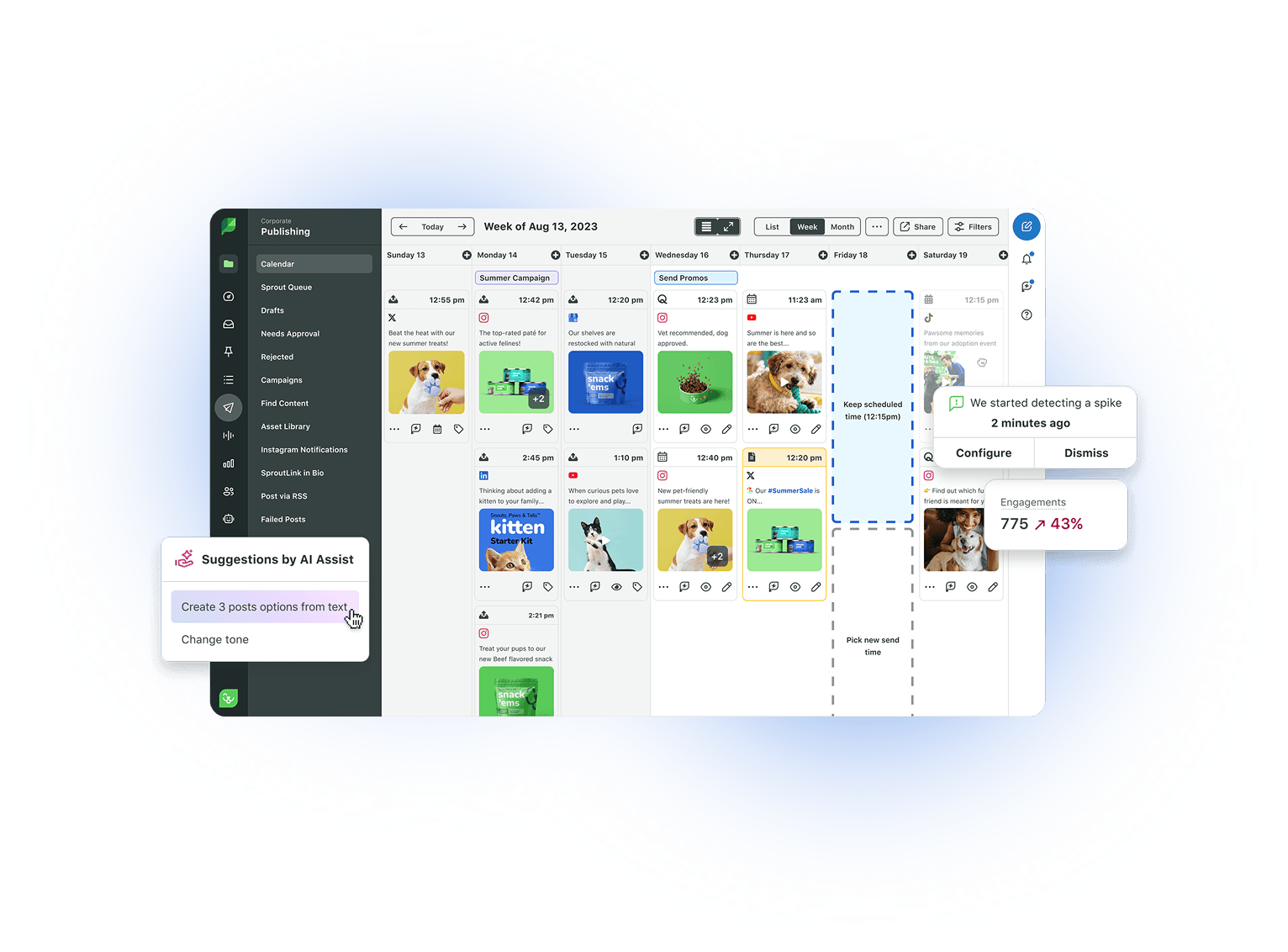
Sprout Social’s AI tools offer content ideas and let you generate text posts from custom topics and top-performing posts.
Scheduling and optimal send times
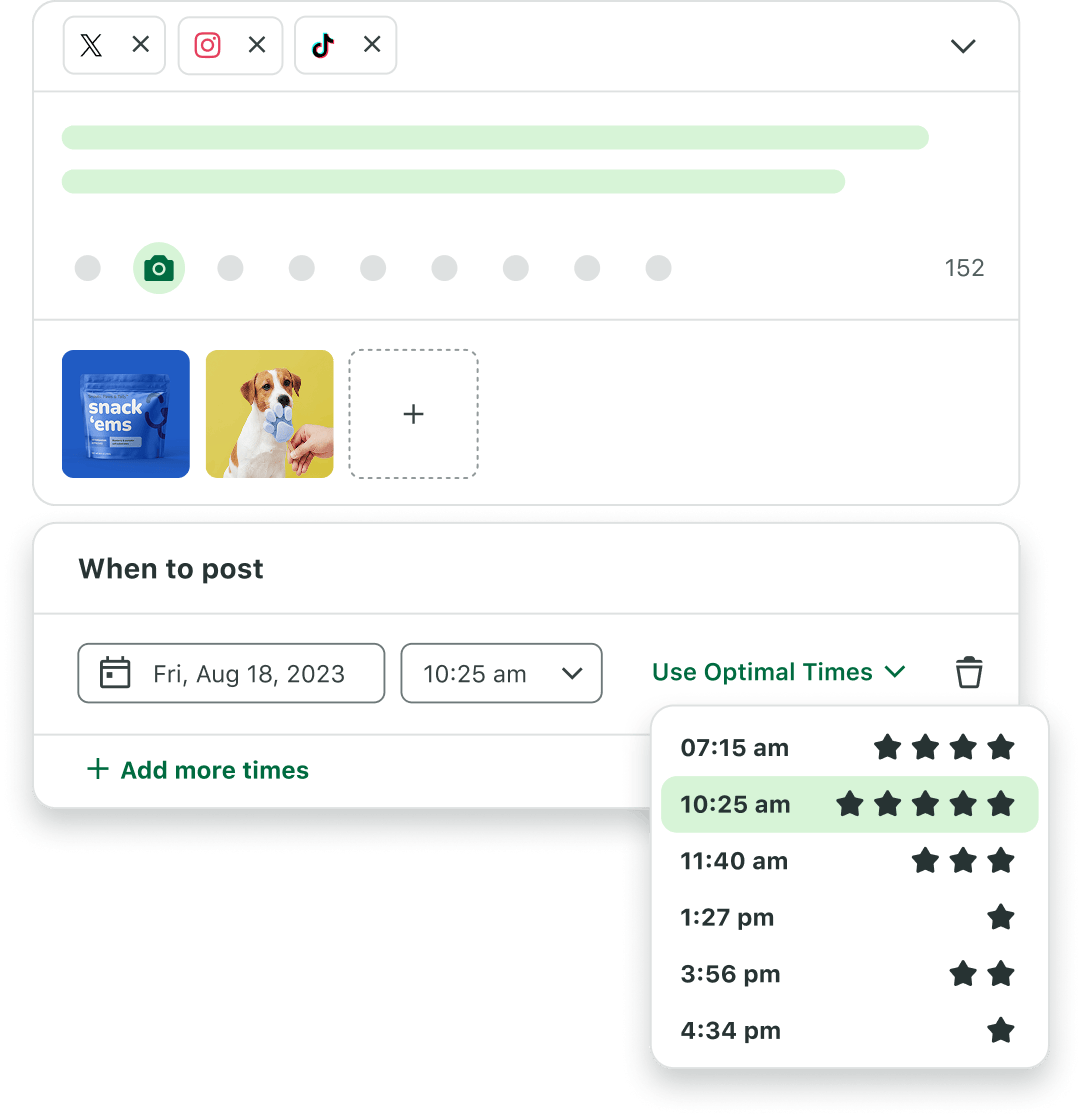
Social media teams waste time when they’re still manually logging into different networks to push out every post when it’s time to publish. Scheduling tools help you optimize the process by automatically sending out your posts at your preferred time. You can set aside some time each week to create and schedule all your posts for the entire week.
As for when to publish your posts, AI tools like Sprout’s Optimal Send Time suggestions take the guesswork out of scheduling. It recommends the best times to post based on your profile engagement and audience behavior.
So you’re no longer wasting time manually checking your previous posts and comparing their performance against publishing time.
Reporting and performance summaries
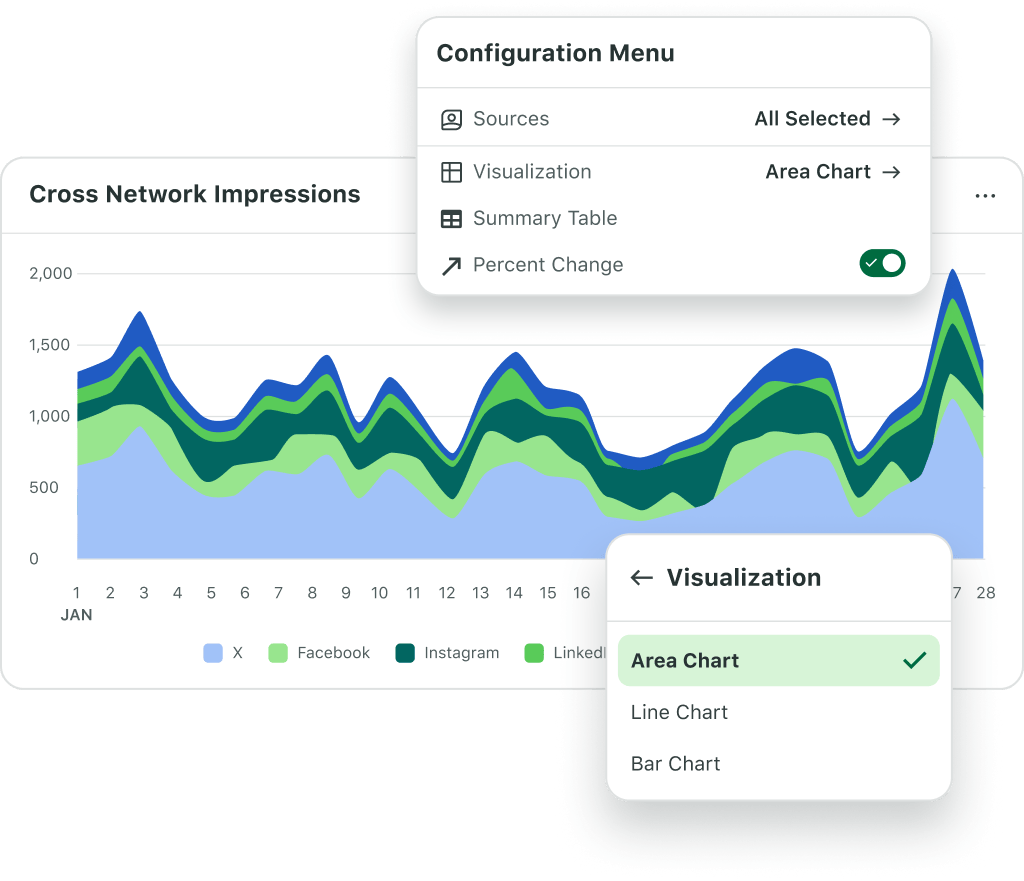
Automation tools help you save the hours spent on collecting data from native analytics dashboards, analyzing it and putting together meaningful reports. Platforms like Sprout will pull cross-network performance data and compile it into visual reports for easy interpretation.
Centralize listening and customer care so nothing slips
Maintaining community engagement is one of the hardest parts about social media management for one-person teams. Here are some tips on how to streamline things.
Monitor mentions and DMs from one inbox
Use social listening tools to keep track of all your comments, DMs and brand mentions in one place. So you can easily catch up on your engagements and make sure nothing slips through the cracks.
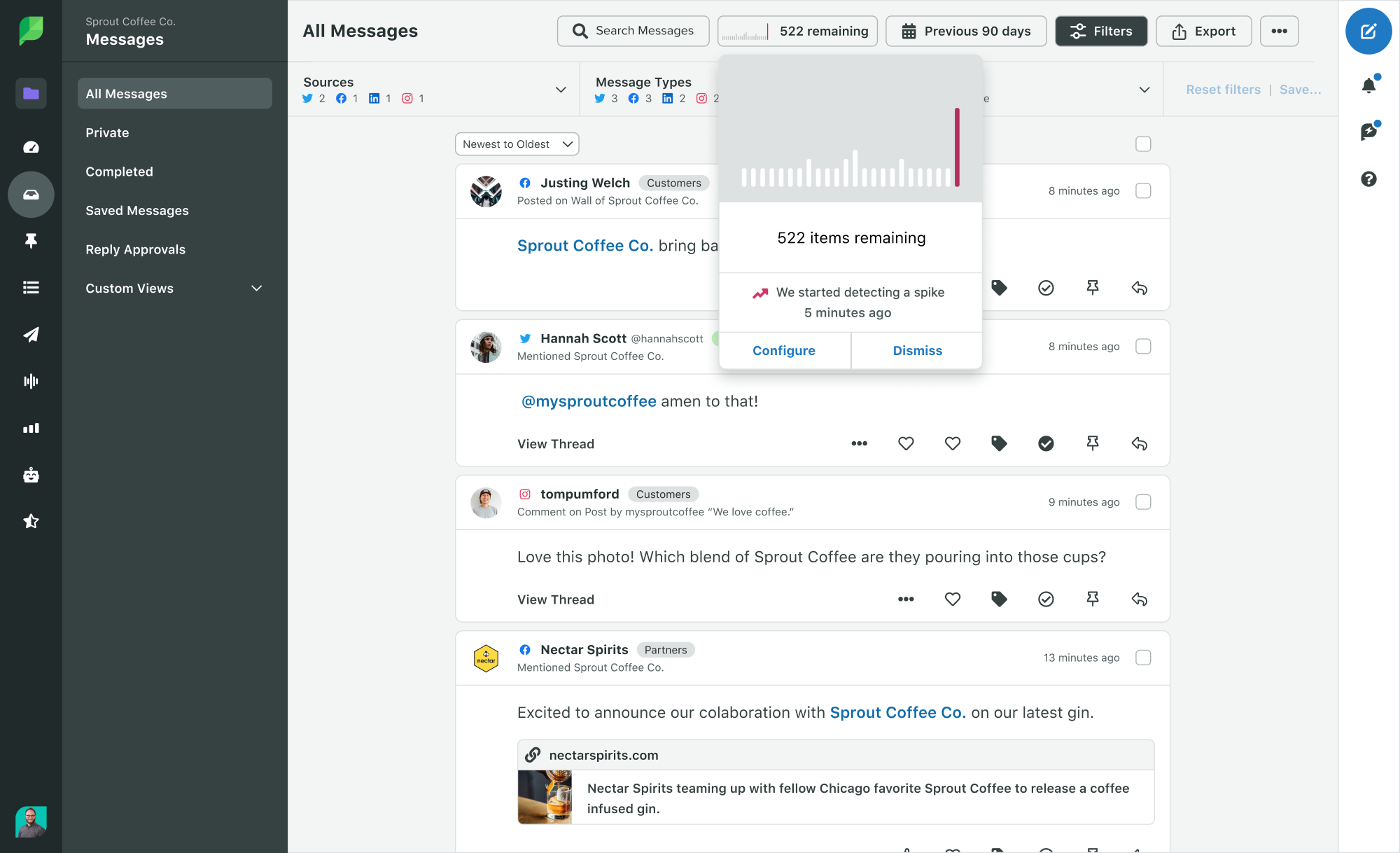
Tools like Sprout’s Smart Inbox centralize all your social media conversations into a unified inbox. You can easily filter inbound messages by platform and manage your responses within the inbox. It even alerts you to message spikes, making sure you stay on top of urgent conversations before things get overwhelming.
Set response-time expectations you can realistically hit
As established earlier, 24 hours is a reasonable timeframe for responding to customers on social. Better yet, if you can do it much faster.
But think of what’s realistic for you. Actively responding to each message and comment as they come in isn’t always viable for single-person teams. So start by defining a social media response time that’s reasonable both for you and your customers.
For example, a 16-hour timeframe could work if you set aside two time slots to manage your social media responses each day:
- 9 am to 10 am: Responding to messages that came in overnight
- 4 pm to 5 pm: Responding to messages you received throughout the day
Find the right setup for a team of one
Managing social media as a one-person team is all about using the right tools and knowing what tasks to automate. Sprout’s Essentials plan comes with everything you need to streamline your content planning, publishing and reporting.
Sort out your ideas into a visual calendar and schedule your posts based on Optimal Send Time suggestions. And keep track of your messages and content performance all in one place without manually going into every platform.
Ready to streamline your social media tasks?
Sprout Essentials gives one-person teams everything they need to plan, publish and report — without the stress.
39 free social media strategy templates that will elevate your workflows
Published on August 20, 2026 Reading time 15 minutes






Share