Building trust through social media: 5 ways to earn it

Written by Jasmine Williams
Published on October 14, 2026
Reading time 7 minutes

Table of Contents
Authenticity is the most important brand characteristic on social media, according to Sprout’s Q3 2026 Pulse Survey. But as audiences grow more skeptical of what they see in their feeds, brands need to work harder to earn their trust.
People rely on social media for news, product recommendations and connection. At the same time, Sprout’s Q1 2026 Pulse Survey found that 35% of users trust social media less than they did a year ago. AI-generated content adds to that skepticism, making it harder to distinguish real experiences from manufactured ones.
Sprout’s Be So FR webinar explored this “trust recession” and the growing demand for content that reflects real people and experiences. Brands need to show who’s behind their content and follow through when customers reach out.
Building trust through social media starts with what you publish and how you respond to your audience. In this guide, we’ll explore what earns audience trust and practical ways to strengthen it.
Why trust is now built on social media first
People often encounter your brand through someone else’s post before they visit your website. They search for recommendations, compare customer experiences and ask questions in the comments. Those interactions help them decide whether to trust you.
Sprout’s 2026 Pulse Surveys show how people use social to find information and decide what to buy:
- Search: 21% of consumers turn to social media first when searching for information, according to Q2 data.
- Influencer impact: 67% made a purchase directly because of an influencer’s recommendation in the past year.
- Trends and culture: Q3 data found that 54% of consumers turn to social media to keep up with trends and cultural moments, ahead of TV and streaming at 45% and conversations with friends and family at 42%.
These social media statistics show why brands need to pay attention to conversations beyond their own accounts. With influencers playing such a significant role in what people buy, choosing credible partners matters.
For example, viewers of @theglownarrative’s skincare review discuss product prices, share what they want to try and recommend alternatives. Her review gives viewers a starting point, while the comments offer additional perspectives. Brands that partner with creators who share honest, firsthand experiences give potential customers more reason to trust their products.
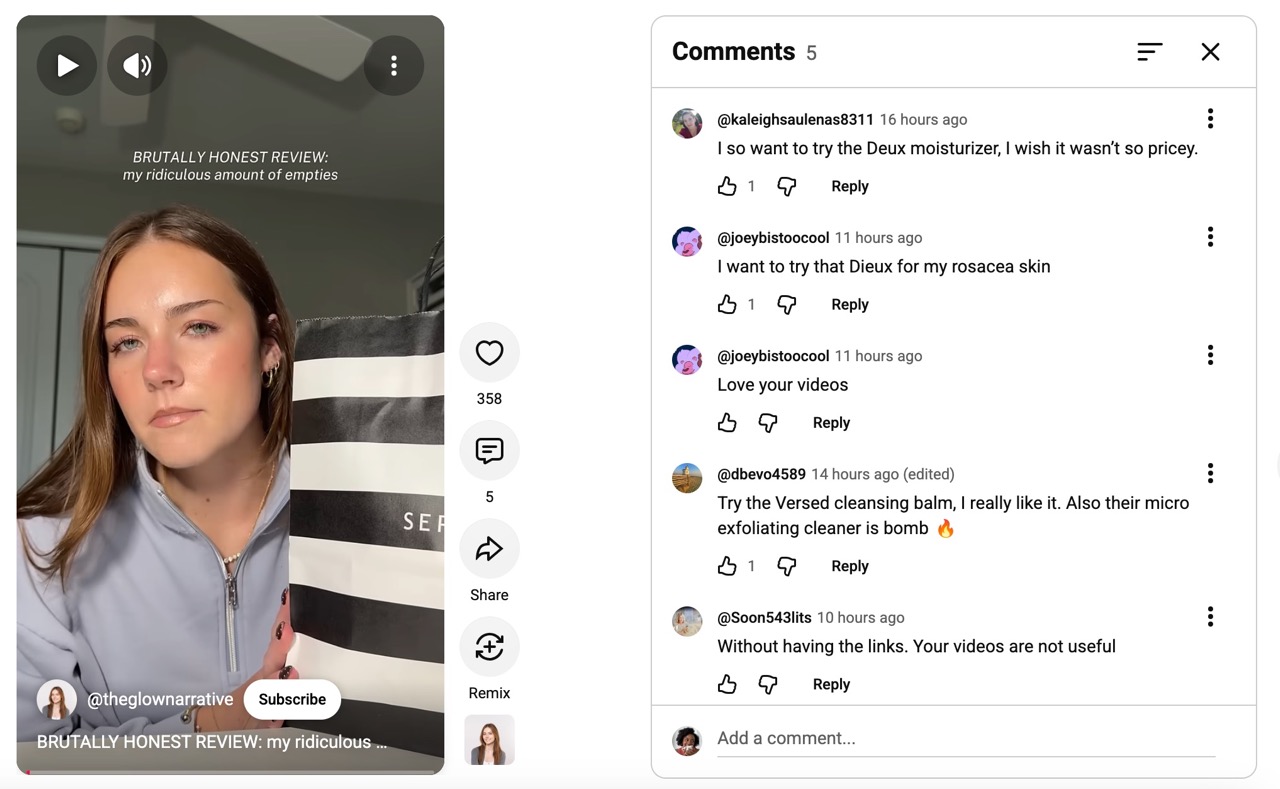
The same online scrutiny applies when something goes wrong for a brand too. According to Sprout’s Q2 2026 Pulse Survey, consumers first hear about a brand crisis on social. And 64% say it’s important for brands to respond publicly on social rather than through a press release or website statement.
How building trust on social media is a growth lever
Social media’s influence gives brands a chance to turn audience trust into growth. When people trust your brand, they’re more likely to choose your products and recommend them to others. As Sprout’s Q2 2026 Pulse Survey highlights, creating multiple points of connection with your brand and through partnerships with trusted voices can strengthen customer relationships and support growth:
- Authentic influencer partnerships build buying confidence. Eighty-one percent of consumers say it matters whether an influencer has used the product they promote. Creators with firsthand product experience offer more credible recommendations.
- Employee content introduces potential customers to your business. Forty percent of consumers rated employee-generated content as more authentic than posts from a brand’s main account. The same proportion discover products or services through employee content at least once a month.
- Timely crisis responses protect customer relationships. Response speed influences how consumers judge a brand’s public crisis response. Addressing problems promptly and following through on a solution gives customers a reason to keep doing business with you.
The signals that earn audience trust
Building audience confidence starts with how your brand shows up day to day. The table below outlines four trust builders—consistency, responsiveness, transparency and proof—and the behaviors that undermine them.
| Trust builder | Trust breaker |
| Consistency: Maintain a recognizable voice and follow through on your stated values. | Chase trends that clash with your identity or make promises your actions don’t support. |
| Responsiveness: Acknowledge questions promptly and provide helpful answers or clear next steps. | Ignore customer concerns or send generic replies that don’t address the issue. |
| Transparency: Disclose relevant AI use and paid partnerships, and acknowledge mistakes. | Hide sponsorships, present AI-generated content as real experiences or avoid accountability. |
| Proof: Share customer experiences, employee expertise and recommendations from creators who know your products. | Rely on unsupported claims or endorsements from people with no firsthand product experience. |
Consistency
A consistent voice and posting cadence set expectations for your brand. Your values need the same follow-through: if you promote a commitment to customer care, your replies should reflect it. Maintain that reliability across everyday posts, campaigns and difficult conversations.
Responsiveness
Helpful replies show customers that you take their concerns seriously. Sprout’s Q3 pulse survey found that 38% expect a customer care response within two hours, including 14% who expect one within minutes.
For example, SpotifyCares responds to a creator’s upload problem within minutes, connects them with the right team and invites them to follow up if they run into issues.
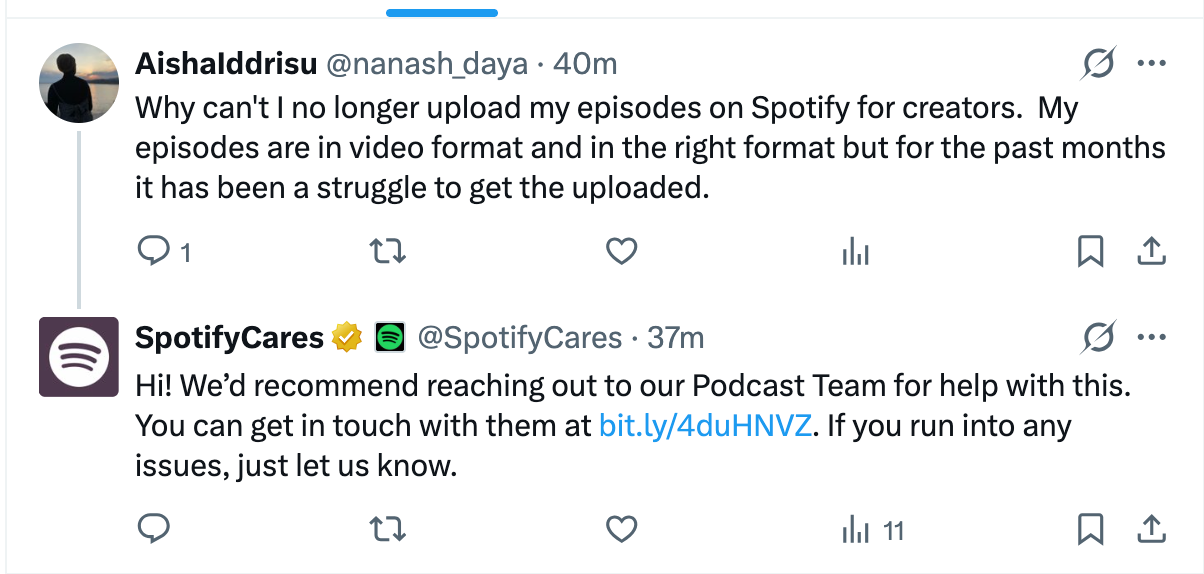
Speed matters during crises, too, as Q2 pulse survey findings show. Acknowledge the issue promptly, explain what you know and tell people when to expect an update. The quality of your response matters as much as how quickly you send it.
Transparency
Be up front about how you create your content and what you’re promoting. That includes paid partnerships, relevant AI use and the limits of your product claims.
Sprout’s Q1 pulse survey found that 28% of consumers most want brands to stop posting AI-generated content without labels. Disclose when content is AI-generated and have a person check it for accuracy before publishing. Disclosure explains how you created it, while human review reduces the risk of publishing inaccurate information.
Proof
Customer reviews and recommendations show whether your brand delivers on its promises. Sprout’s Q2 pulse survey found that 57% trust everyday users most for product recommendations, ahead of experts, mega-influencers and brand employees.
Each perspective offers something useful. Customers describe their experiences, employees explain how products work, and creators demonstrate them in use. Specific details make it easier to judge whether your product fits their needs.
5 ways to build audience trust
Put these trust builders into practice with five steps to create credible content, choose partners and strengthen relationships with your audience.
1. Stay authentic to your brand
Start with a voice your team feels comfortable using in everyday conversations. Sprout’s Q3 pulse survey found that 26% of consumers want brands to sound less corporate and 24% want them to be less salesy. Replace stock promotional language with specific, useful information about your products and the people who use them.
Assess recent posts for language that feels forced or interchangeable with another brand. Give your team examples of how your voice translates into captions and customer replies. Before joining a trend, ask whether it fits your brand and gives your audience something worthwhile.
2. Listen to what people want (and act on it)
Read comments and customer care messages for recurring questions. To get a fuller picture of what people want, look beyond those who contact you directly. Social listening expands that research by tracking conversations about your brand, industry and competitors. It reveals common concerns and unmet audience needs.
With Sprout Social Listening, your team can explore those conversations by topic, compare themes and track sentiment over time. Use it to investigate recurring frustrations or questions that your content hasn’t addressed.
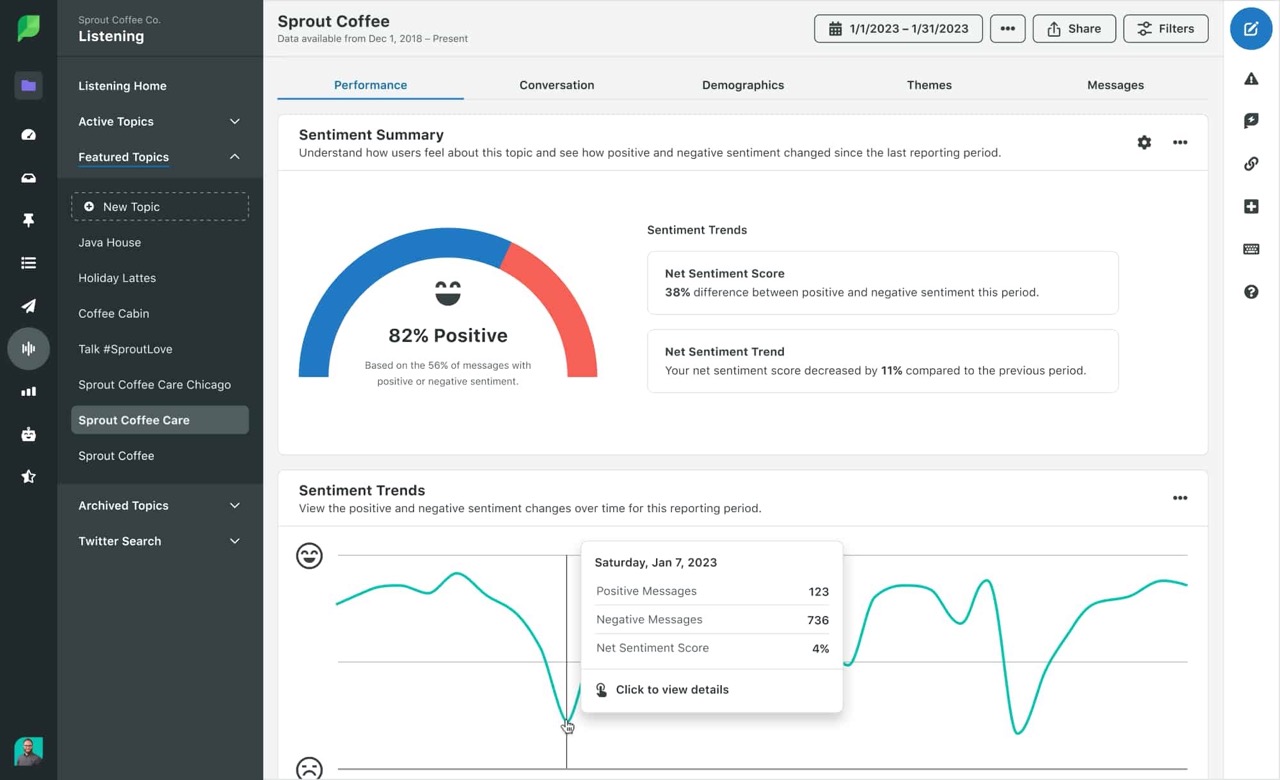
Use those findings to make a concrete change. Repeated setup questions might call for a tutorial. Pricing confusion might reveal information missing from your website. Share relevant feedback with the teams responsible for resolving it.
Close the loop by explaining how audience feedback influenced your decision.
3. Choose influencer partnerships carefully
Look for creators whose content and expertise fit your brand. Sprout’s 2026 Influencer Marketing Report found that 47% of consumers consider a creator’s topics when deciding whether to follow them, compared with only 17% who consider follower count. Prioritize relevant expertise and audience fit when building your shortlist.
Examine potential partners’ recent posts, past sponsorships and responses to criticism. Check whether they make accurate claims and disclose paid relationships. These details help you assess their credibility and identify potential brand safety concerns.
Sprout Social Influencer Marketing automates creator evaluation and partnership management. Customizable Brand Safety Reports flag content that needs a closer look, while Creator Hub supports content submissions and approvals.
Once you’ve chosen a creator, give them time to get familiar with your product so they have something meaningful to share. Agree on disclosure requirements and accurate claims, then leave room for their perspective. A demonstration or thoughtful review will be more useful to their audience when it reflects their experience.
4. Amplify user-generated content and employee voices
Invite customers to share how they use your products, then ask permission to feature their posts and credit their work. Choose examples that show the product’s value, such as a customer explaining how it solves a particular problem.
Employees also bring firsthand knowledge to your content. Sprout’s 2026 Influencer Marketing Report found that 46% of consumers most want to hear from frontline employees. Invite employees to demonstrate products or answer questions customers regularly ask.
Make participation voluntary and provide time and support to contribute. Also consider additional compensation: 61% of consumers believe employees should receive extra pay for promoting their company on social.
5. Build a community, not just an audience
Give people ways to connect around interests they share with your brand. Invite them to exchange advice, share their work or help develop an idea. Respond to their contributions and recognize useful discussions.
Notion’s Earth Day Instagram post offers an example: it features community-built templates and directs followers to those resources. Members contribute tools other users can put to work, and Notion gives those contributions visibility.
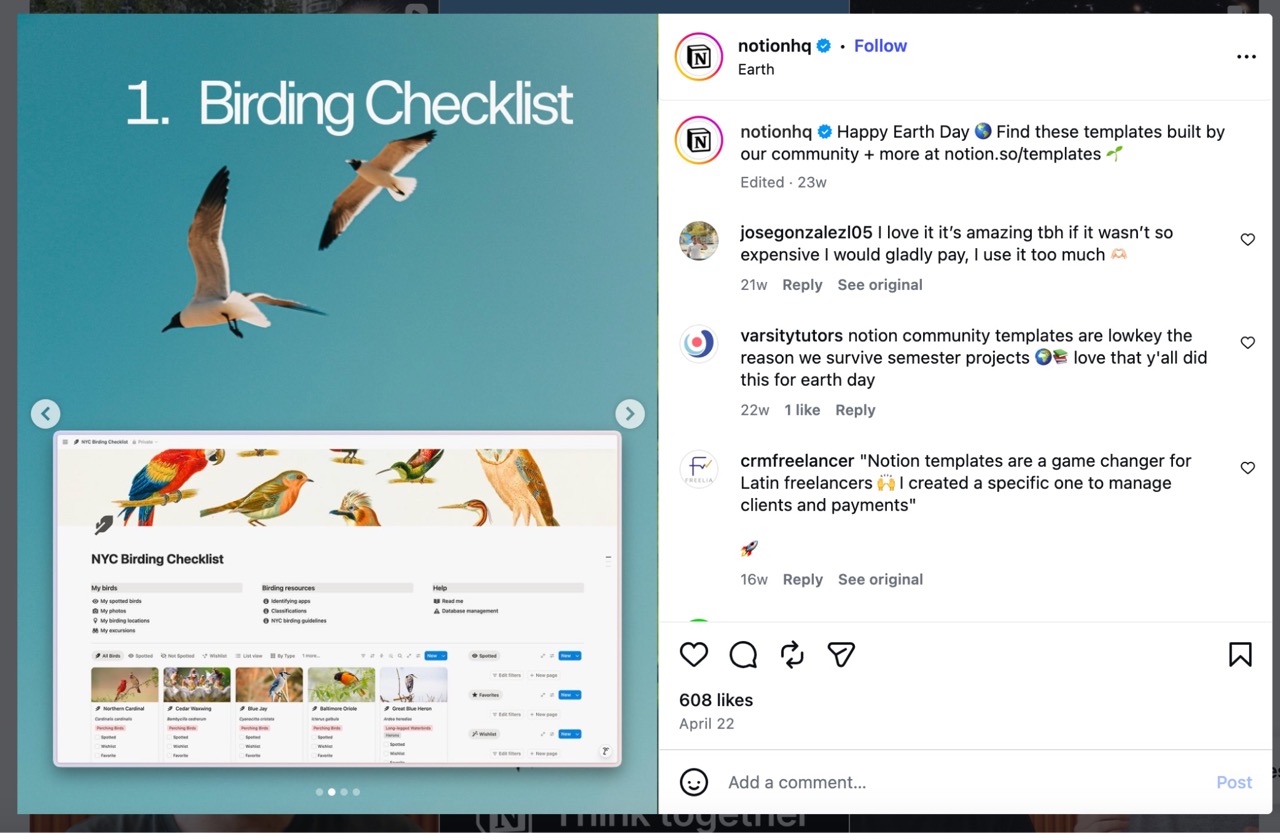
Start with a recurring activity your team can support, such as a monthly member showcase or an expert Q&A. Keep participating between posts, so people have a reason to return and connect.
Keep trust at the center of your strategy
When you review your social strategy, consider whether each interaction gives people more confidence in your brand. Did your content help someone make a decision? Did your response resolve their concern? Have you delivered what you promised?
These questions keep trust connected to the customer’s experience. Use them to identify what deserves more investment and where your approach needs to change.
For more insight into the voices consumers trust and what they expect from brand partnerships, explore Sprout’s 2026 Influencer Marketing Report.
Frequently Asked Questions
What is brand trust on social media?
Brand trust on social media is the confidence people have that your brand shares accurate information and follows through on its commitments. It develops through the content you publish, how you respond to customers and what others say about their experiences with your business.
Why is brand trust on social media important?
People use social media to research products and compare experiences before buying. Trust gives them confidence to consider your brand, act on recommendations and return after a positive experience.
How can brands measure trust on social media?
Track sentiment, recurring themes in customer feedback and the quality of conversations about your brand. Combine social listening findings with customer surveys that ask directly about trust. Monitor changes over time, especially after campaigns or service improvements, rather than treating engagement alone as proof of trust.
How do you rebuild brand trust on social media after a crisis?
Acknowledge the issue promptly, take responsibility for your brand’s role and explain what you’re doing to address it. Answer questions with verified information and provide updates as you make progress. Follow through on promised changes and show evidence that you’ve resolved the problem.
39 free social media strategy templates that will elevate your workflows
Published on August 20, 2026 Reading time 15 minutes









Share