Battling burnout as a social media manager

Written by Natalie O'Grady
Published on January 20, 2026
Reading time 10 minutes
Table of Contents
Social media managers flex both their creative muscles and critical thinking on a daily basis. Behind every carefully curated Instagram feed and viral TikTok is hours of strategy, planning and stress. And still, a social media team’s job is never done.
According to The 2026 Content Benchmarks Report, 70% of consumers say brands do a great job of keeping up with online culture and providing entertainment. However, 61% wished marketers did more to interact with followers, publish truly original content and respond to crises.
It’s harder than ever to cut through the social media noise as a deluge of content appears daily (Merriam Webster’s 2025 word of the year was “slop” for good reason). Friends, family and even colleagues often don’t understand or diminish the work you do. These demands, coupled with the “always on” nature of social media make burnout a very real challenge.
“We’re connected to the entire world via social media, but more dissociated than ever”, says Carolina Barbosa, ex-Global Social Lead at Flo Health. “The algorithm gave us reach fatigue and we’re drowning in content but starving for connection,” she adds.
While a positive sign in terms of engagement metrics, this can mean even more tasks on marketers’ plates. The work required to develop strategy, respond to engagement, navigate constant network changes and simply exist in a fast-paced profession is what’s driving social media burnout.
What is social media burnout?
Social media burnout is defined by chronic mental, physical and/or emotional exhaustion formed from unmanaged, work-related stress. Lia Haberman’s annual ICYMI 2026 Predictions Report showed social marketers are feeling the strain. Respondents to her survey used words like “exhausted” and “overwhelmed” when discussing how they felt about the year ahead on social.
This gradual build-up of stress shows up differently depending on the person, but a few common symptoms include:
- Feeling overwhelmed or empty
- Physical manifestations such as fatigue
- Cynicism
- Sense of inefficacy or inability to complete tasks
A 2025 study defined social media burnout as a “series of negative adverse reactions to activities on [social networking sites], such as disinterest in communication, frustration, exhaustion and fatigue.” It can impact both social media users and marketers, and disrupt your work/life balance, sleep quality and even your ability to enjoy life offline.
The study notes that users frequently respond to burnout by discontinuing use of one or all social media channels. For marketers, that’s not really an option–so understanding the causes of burnout and how to address them are key. Let’s take a closer look at what contributes to social media burnout.
What contributes to marketers’ social media burnout?
Several factors cause social media burnout for marketers. Social media professionals wear many hats while juggling various responsibilities. They’re also the first to see negative feedback or complaints, which come in at all hours of the day.
Social media is a catalyst in today’s 24/7 news cycle, driving trends both fun and serious. “Trendjacking” can be a powerful tactic for brands, but the fleeting nature of trends requires speed and on the fly creative thinking from marketers. The challenging global news cycle adds complexity, frequently requiring publishing schedule shifts and tough calls for social media teams.
Interacting with an influx of information daily can lead to compassion fatigue, increased emotional labor and anxiety. Social media saturation is draining both marketers’ ability to cut through the noise and consumers’ capacity to engage with content. Brands hoping to add value and connect with audiences are up against feeds overloaded with AI bots, evolving social issues and other marketers trying their best.
And when most marketers hop on their personal social media after clocking out for the day, it’s no wonder we’re tapped out. Lack of support in the workplace can worsen these symptoms as well, so it’s imperative for leaders to show teams they care.
Social media burnout: Why marketing leaders need to care
Marketing leaders should care about social media burnout and how their teams are navigating it. Here are a few reasons why.
Teams can’t afford to lose great talent
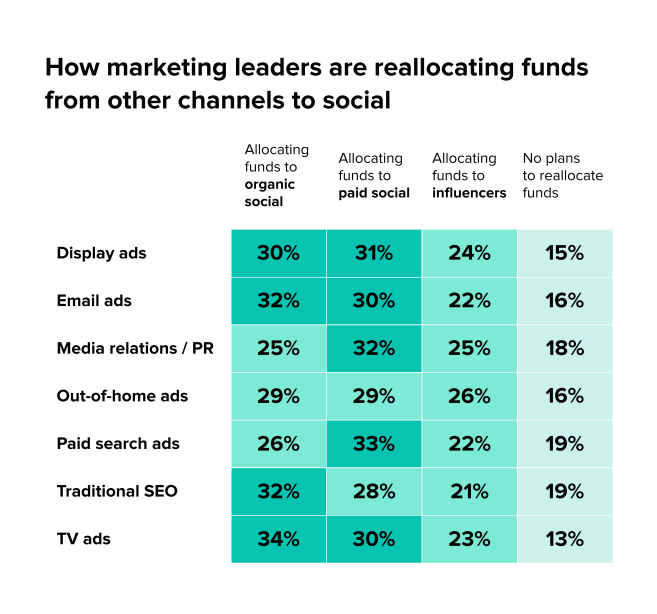
Leadership is taking notice of social media’s impact on the bottom line. According to Sprout’s 2025 Impact of Social Media Marketing Report, 80% of marketing leaders are reallocating budget to social from other areas. Brands will need a strong team in place to support an expanded budget and show ROI.
The Impact of Social Media report also found that three-quarters of B2C marketing leaders and 50% of B2B leaders anticipate increasing the headcount of their social media teams in the next year. Hiring and training take time, and losing talent to burnout will hinder a social team’s ability to excel. The demands of social practitioners are complex and nuanced, so brands need to be thoughtful and strategic when it comes to identifying, attracting and hiring for their social media teams.
A burned-out team is a low-performing team
If your team is feeling burned out, they won’t be able to do their best work. Clouded minds and exhaustion could lead to creative block, or becoming unmotivated to create engaging content. They also won’t have the bandwidth needed to test and experiment, which is crucial to creating a successful social media strategy.
Burnout could reflect poorly on your brand
Your social team interacts frequently with prospects and customers, so practitioner burnout could reflect poorly on your customer experience. If your social team is feeling burned out, it can trickle down to those interactions. It’s important for brands and leaders to acknowledge the hard work their team does by investing in career growth, resources and recognition for their team members. Real people are behind every bit of viral, brand-boosting content, and everyone appreciates being seen for their work.
6 tips to minimize social media burnout
Everyone wants to feel supported, especially in the workplace. Here are six tips tailored to help social teams feel seen and heard—along with a few to keep in your pocket for yourself.
1. Communicate your social media priorities and strategy
Social strategy gets a supercharge when it’s aligned with broader business goals–and when social teams are comfortable vetting requests from other departments. Saying “no” is a form of self-care too. Social teams can be small and mighty, but let’s be honest, they can’t do everything all the time.
It’s important for social media marketers and leaders to circulate their strategy, priorities and data with stakeholders in other areas. The Impact of Social Media Marketing Report found that marketing leaders want other departments to use social insights, from digital marketing (89%) to customer experience (58%) and business development (49%).
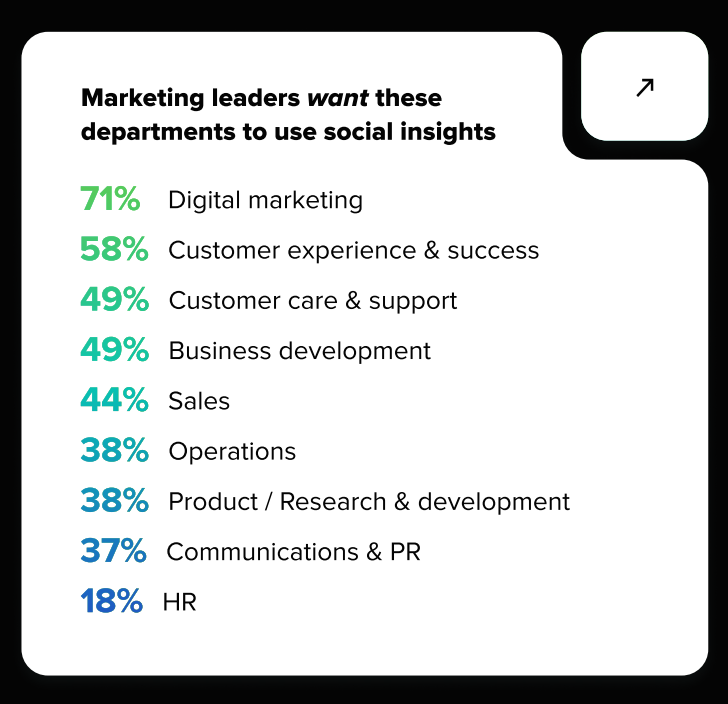
Social data can inform the entire customer journey, and communicating your social media marketing priorities is a key part of syncing up everyone’s approach, so your team isn’t overloaded with requests as the value of social intelligence grows.
To avoid burnout long term, you might even need to audit your social strategy and ruthlessly prioritize tasks and goals. Prioritization can keep your team focused on the networks and content types that matter the most to your brand and audience.
As you implement your strategy, encourage your team to talk about burnout with you and make it clear you’re open to their concerns.
2. Build a social media moderation strategy
Customer care is a major part of a successful social strategy and requires time, attention and thoughtful engagement.
The Sprout Social Index™ found that 73% of social media users say if a brand doesn’t respond on social, they’ll buy from a competitor instead. These expectations put a lot of pressure on social teams to respond quickly while maintaining empathy and professionalism. Developing a thoughtful social media moderation and customer care strategy can help your team address burnout-causing issues before they arise.

Avoid some of the stress by creating a response and moderation protocol. Document common reasons customers reach out to you on social media, the sentiment behind them and examples of how to respond—plus situations where your brand won’t respond at all.
Strategic social silence can be a beneficial moderation strategy for certain tense situations, global crises and harassment. Legitimate customer concerns should never go unaddressed, but be wary of trolls. If your brand is continually targeted by a specific person using hateful or inappropriate language, consider muting or blocking them if that’s an option for your brand.
You can use technology to ease the burden of responding on social, too. Customers are becoming more comfortable with AI in customer care, with Sprout’s Q4 2025 Pulse Survey finding that 65% of consumers say they’re comfortable with brands using AI to ensure faster customer service. Consider what first-line responses your team can manage with AI and where it’s best for a human to step in, keeping personalization in mind across the board.
3. Lean into your community for support
As humans, we’re programmed to crave and seek out connections. That’s the whole point of social, right? If you’re combating burnout, your team and other social media professionals can empathize and support one another.
Community resources like The Arb by Sprout give social practitioners a place to gut check questions, share ideas and talk through challenges. Online spaces like LinkedIn groups and professional Slack channels are easy to find, and offline options also exist. Look for local networking groups built for social media professionals or industries you work in.
If your company has a smaller social team, or you’re a team of one, look for additional support from industry peers. Or, if you can offer support, consider opening yourself up to others.
If you’re finding it challenging to set professional and personal boundaries, lean into the community and human connections that make social media such a powerful platform.
4. Clean up and moderate your personal feeds
It’s a common assumption that long-term, habitual use of social media can take a negative toll, particularly on young people. However, according to a study by Harvard University, findings suggest that as long as people are mindful users of social media, strong social networks are associated with positive mental health and well-being.
Research scientist Mesfin Awoke Bekalu, who co-authored the study, suggests “the ways that people are using social media may have more of an impact on their mental health and well-being than just the frequency and duration of their use.”
In other words, be mindful of how you’re using social media both at work and at home. Set intention for your social media usage by cleaning up your feed and moderating how you use various networks. Mel Robbins is a proponent of Unfollow Friday, where every week you unfollow accounts that don’t bring you joy.
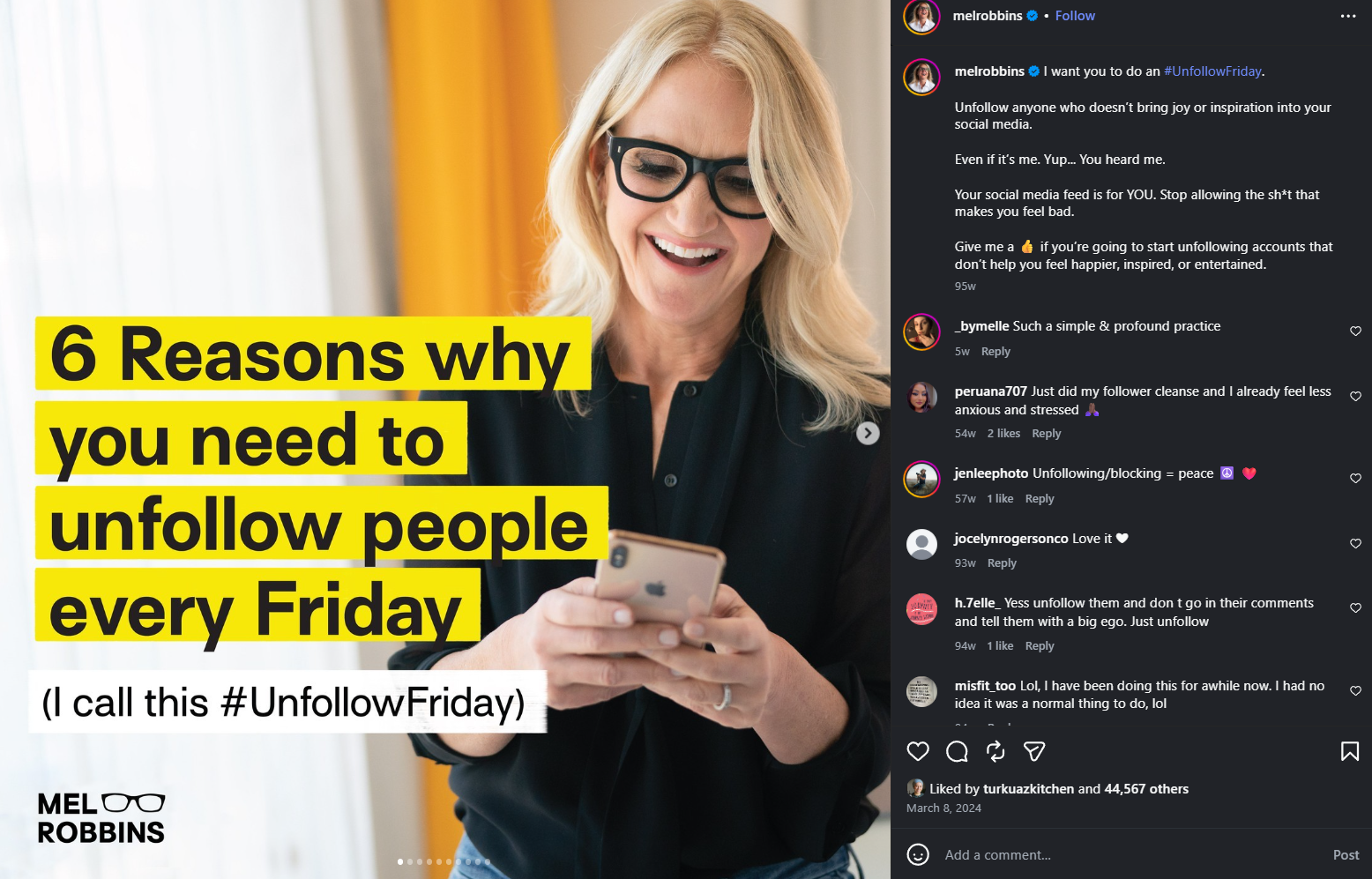
Refresh your feed by unfollowing some people, including friends and family. If their content is making you feel sad, anxious, drained or another negative emotion, it’s time to hit the unfollow button. Curate a timeline that aligns with your values and lifestyle. Follow accounts that inspire and feed you. Follow the accounts that simply make you smile or laugh.
For example, here’s an adorable compilation of a baby elephant at the Oregon Zoo.
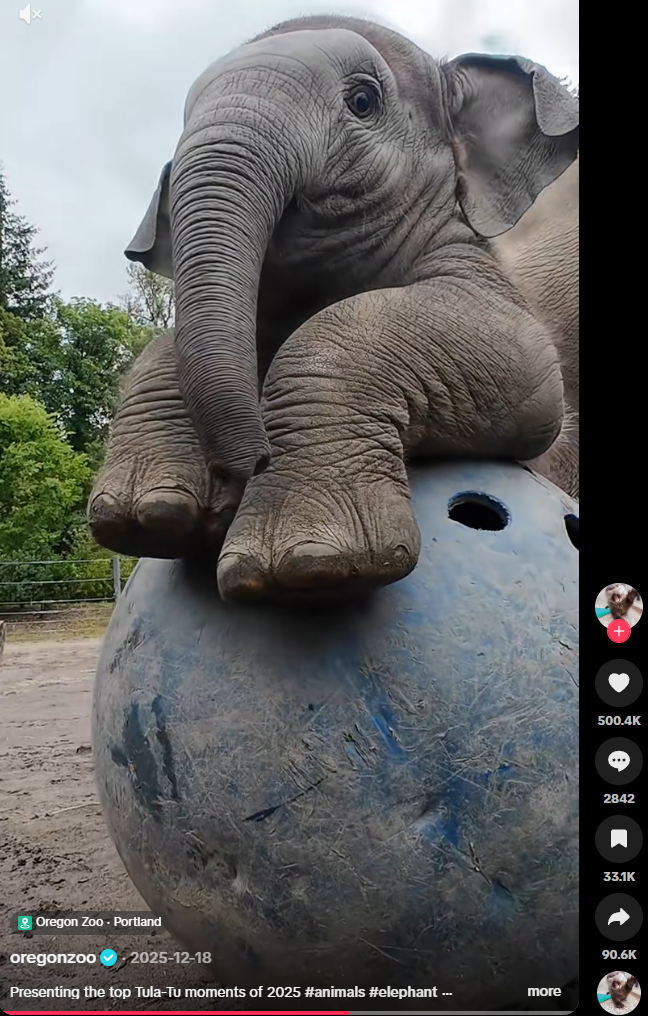
At the end of the day, focus on feel-good content, whatever that looks like for you—just make sure you aren’t scrolling for hours on end.
5. Limit the time you spend online
Many social media marketers limit screen time by setting a timer or using a productivity app. Some social apps record your screen time natively, so try looking at those numbers to check yourself.
Instead of browsing social media to relax, try other methods like taking a walk, dancing to a favorite song or meditating. In an interview for Sprout Social’s Social Futures Substack, Emily Huffer shares a tip for getting herself to log off.
“I use Brick!” Huffer says. “I’ve done a couple of completely free social media weekends and I often use it in the evening to stay off TikTok and spend more time painting and making crafts,” she adds.
If you find it difficult to take time away from social daily or even weekly, Antonio Gary Jr., Associate Director of Social Strategy at Burrell Communications, offers a plan inspired by his workouts.
“Recently, I started incorporating deload weeks similar to what you see in weight lifting programs,” he says. “Every 6-8 weeks, I drastically reduce my screen time and consumption.”
Social media networks are aware of burnout and have incorporated mental health initiatives into their platforms, so users and social media managers alike can be more mindful of the ways in which they’re using them.
For example, you’ve probably come across TikTok Tips while binging on the app and heard something along the lines of, “You’ve been scrolling for way too long now.” Through this account, TikTok has shared partner videos with Headspace that invite scrollers to pause, breathe and meditate. Headspace posts a number of videos on their own account that offer tips to slow down as well.
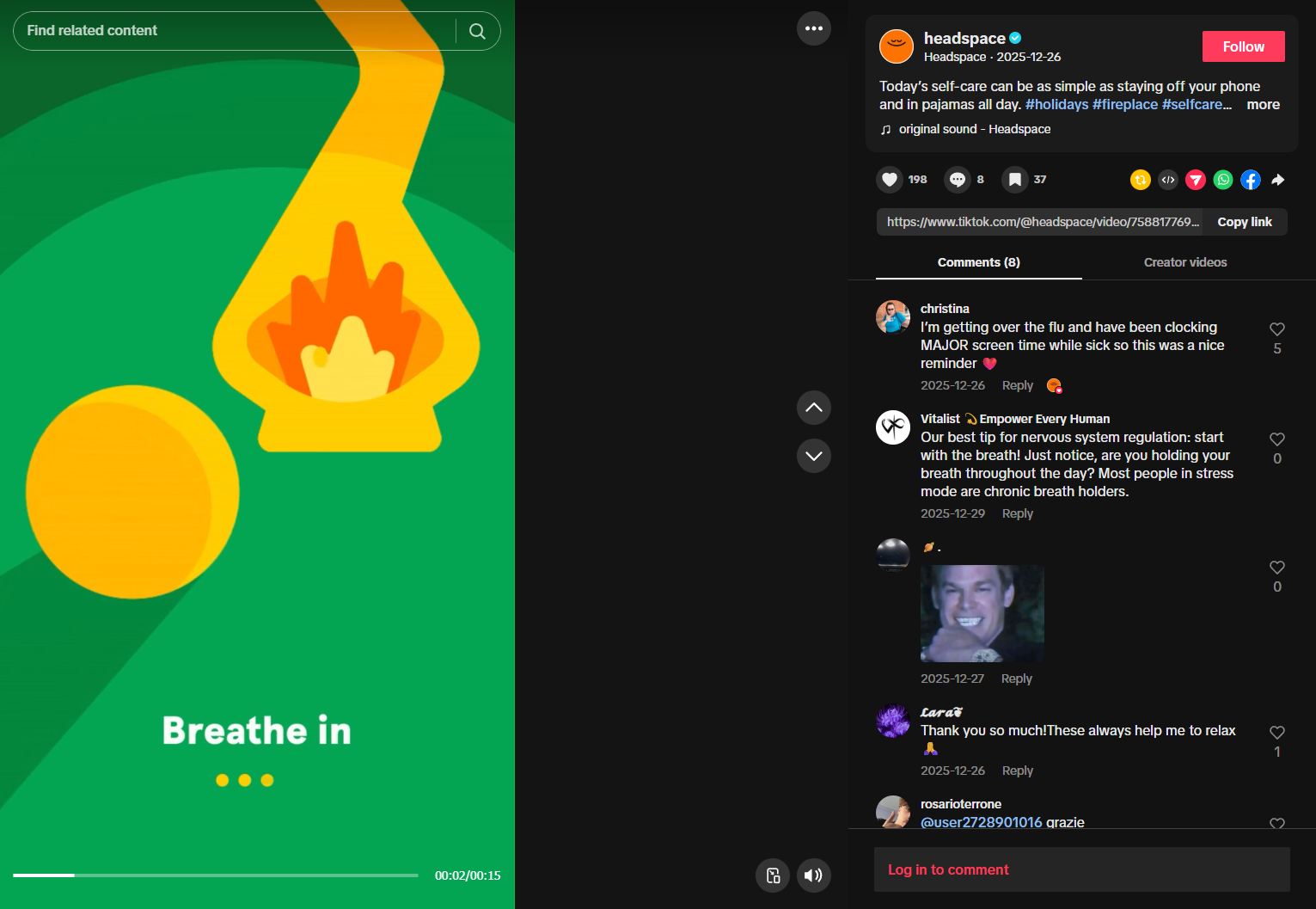
Social media mindfulness is one of the best ways to battle social media burnout, so think about what works best for you.
6. Use automation and advocate for more team resources
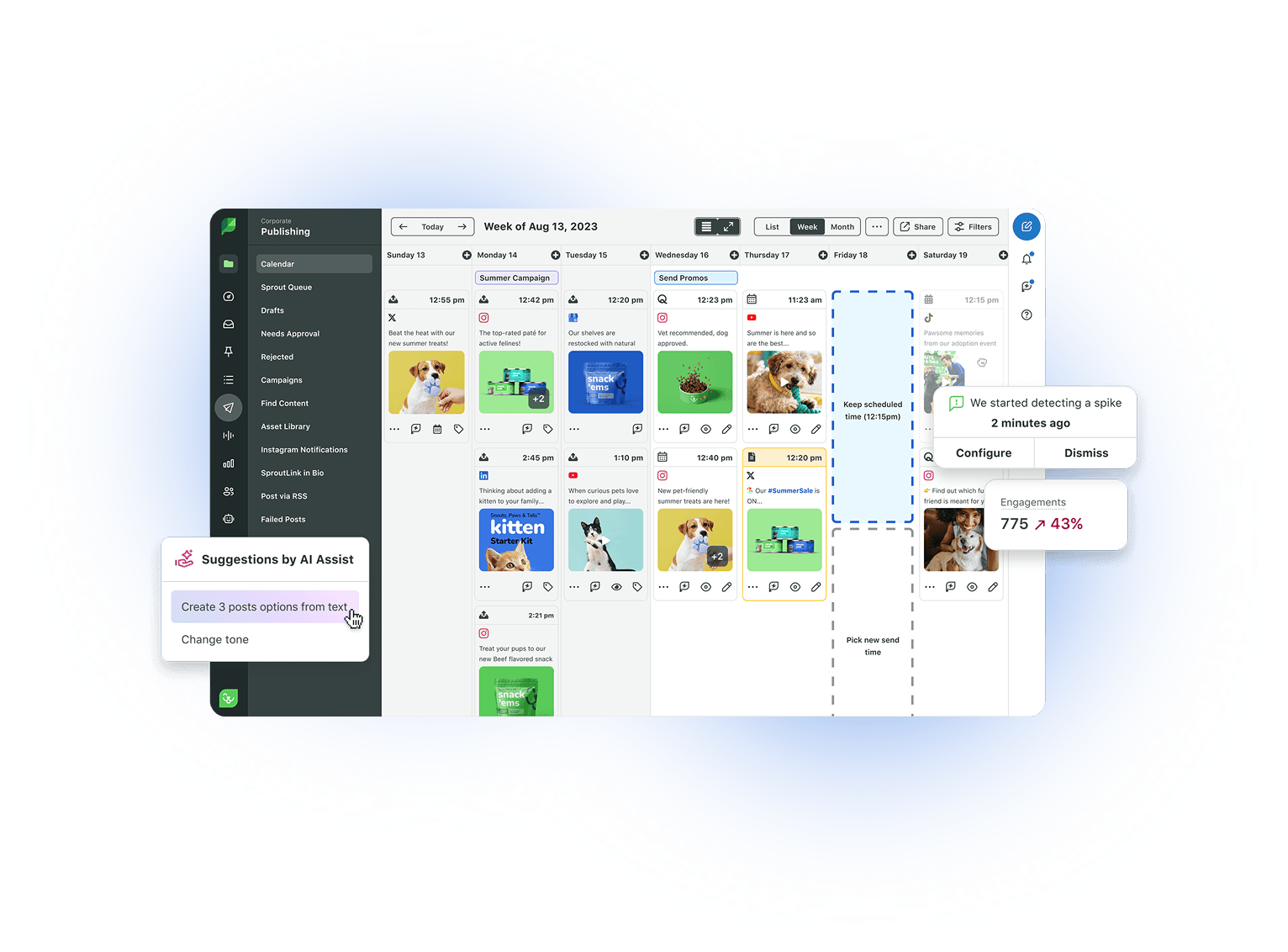
Automating what you can and make sure your team has the right resources that help battle social burnout. Using AI for social media is one option to cut down on human workload without sacrificing audience connection.
Automate repetitive tasks like trend analysis and performance tracking and streamline workflows to take things off your team’s plate. AI is also a creative ideation tool that can save your team time and brain space. Social practitioners with the right tools excel. The 2025 Impact of Social Media Report showed 58% of expert teams use social media management software, more than emerging teams. These tools offer ways to automate, tap the power of AI and manage customer journeys on social. With the right tools, social teams can head off burnout and position themselves to adapt for the future of social marketing.
Showcasing social ROI effectively can inform decisions about which tools and resources are best suited for your team. Make sure your reports go beyond the numbers and craft a narrative about how social media ties to big-picture business goals. Build the case for better tools and workflows by highlighting the human impact on both target audiences and your team.
Social media burnout is real, but you’re not alone
The heart of social media is connection. But being too chronically online (and most social marketers naturally are, it’s hard not to be!) can leave you feeling disconnected, exhausted and overwhelmed. If you’re struggling, know that you’re not alone; find ways to log off, take a break and build community offline. And when you’re back at work, look for ways to automate what you can and build a healthier workflow–you deserve it.
Sprout can help alleviate some stress by streamlining processes and powering efficiency. Learn what social media tasks to automate so you can build some breathing room and re-focus on creativity.


Share