Pinterest SEO: 8 steps to master the visual search engine

Written by John Paul Hernandez
Published on December 8, 2025
Reading time 10 minutes

Table of Contents
Pinterest isn’t just a place for inspiration. It’s a visual search engine that shapes how people find products, ideas and brands. With Gen Z and other high-intent users turning to Pinterest to shop, optimizing your profile for both in-platform and external search makes it a powerful part of your social media search strategy.
Below, you’ll learn the essential steps to use Pinterest SEO to capture intent, build authority and connect with your target audience where they’re actively engaged.
What is Pinterest SEO?
Pinterest SEO is the practice of optimizing your Pinterest profile, Pins and boards for search discoverability. The network has become its own search engine as Pinners search for ideas, products and inspiration. But it also feeds search engines like Google, Bing and DuckDuckGo. Today, LLMs, AI snippets and other emerging tools are starting to surface Pinterest content. As these capabilities evolve, brands have a significant opportunity to use Pinterest to strengthen visibility across both social and AI-powered search.
By investing in Pinterest SEO, each Pin, interaction and a bit of traction you gain helps reinforce your E-E-A-T signals (experience, expertise, authoritativeness and trustworthiness) across search algorithms.
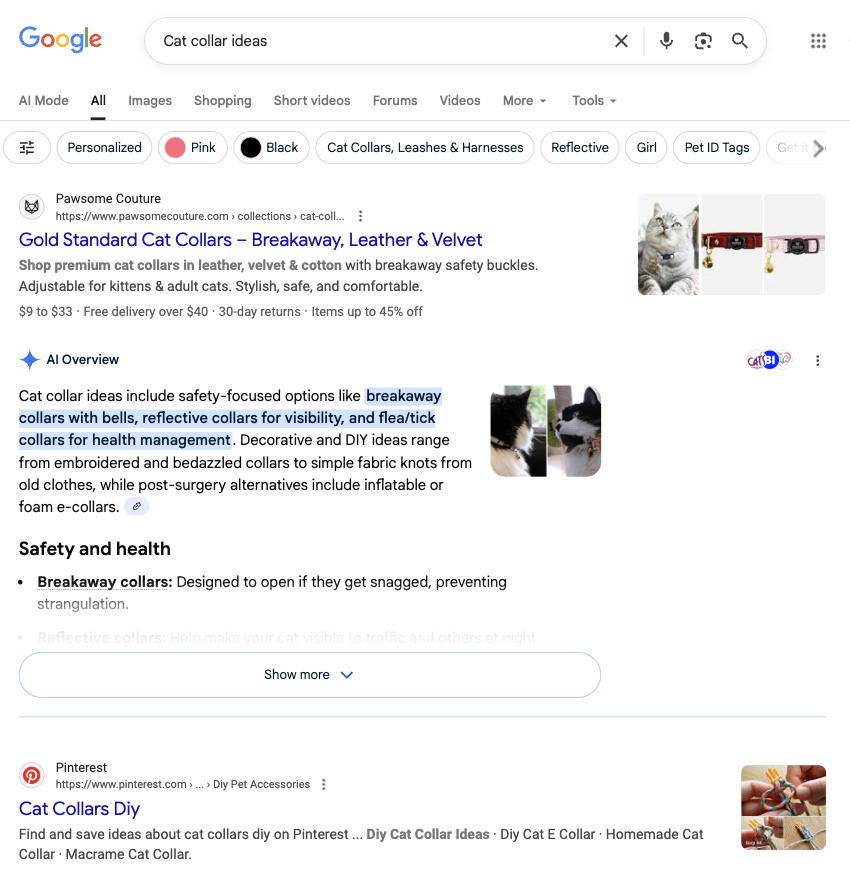
Pinterest is a visual-first search engine
Unlike many traditional search engines, Pinterest offers a visual-first experience. Users aren’t just searching for terms to find information. They also use Pinterest as part of their creative process, looking for inspiration, tutorials and products that meet their needs.
Here’s a Pin from Jones + CO Modern Mercantile, which features its face serum in an attractive display that appeals to its audience’s aesthetic preferences:
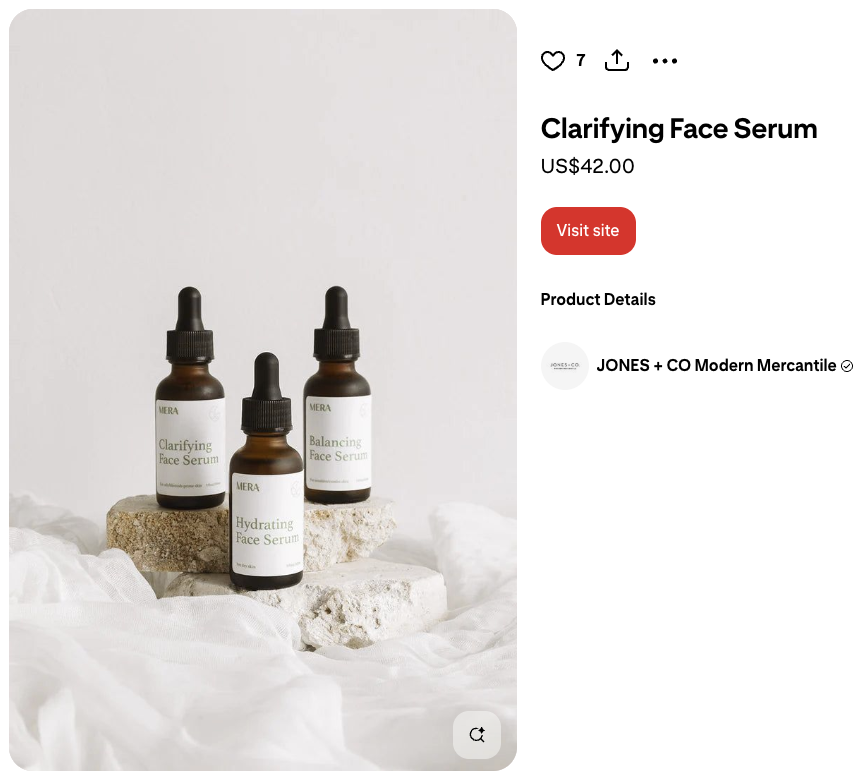
Source: Pinterest
The visual search experience reflects a shift in user behavior, especially among younger generations. Consider these Pinterest statistics about Gen Z habits:
- Gen Z makes up 42% of Pinterest’s monthly user base, which is especially significant since Gen Z spending power is expected to quadruple by 2030.
- According to Pinterest, Gen Z searches increase by 30% each year.
- Pinterest also notes that Gen Z users are 1.3 times more likely to make an online purchase each week.
These Pinterest trends reveal the opportunity your brand has to connect with audiences where they like to browse, plan and shop, while also supporting your broader SEO efforts.
Why Pinterest SEO is important for brands
As of 2025, 578 million active users visit Pinterest each month. According to the 2025 Sprout Social Index™, 42% of consumers have a profile on Pinterest. This buyer-focused community makes Pinterest a powerful tool for content marketing, e-commerce and search-intent strategies.
Here are some key reasons Pinterest works so well as part of a strong SEO strategy:
Audiences are searching on Pinterest
While Pinterest supports SEO across engines, it’s become a powerful network for internal search. Users often begin the buyer’s journey here as they look for ideas and products. Posting Pins through this top-of-the-funnel search channel helps you inspire your audience and guide them to action via CTAs within your posts.
Thankfully, with Pinterest marketing, you don’t have to guess what users are searching for. Pinterest data provides insights into search terms for keyword research, allowing you to create and optimize content aligned with user interests. Here’s a peek at some of the top trends and Pinterest keywords in the US:

SEO funnels are shifting away from Google alone
It’s not just SEO professionals who know search has changed. Your non-techy relative might use ChatGPT to find a recipe, and your best friend may rely on Google’s AI snippets to identify cold symptoms. As the traditional Google-first search funnel starts to fade, standard search engine optimization is evolving into search everywhere optimization. And Pinterest plays a central role in that shift.
According to SEO expert and uSERP co-founder Jeremy Moser, “Pinterest is unique because it structures visual content around intent-rich queries, essentially acting like a search engine built for discovery. From an AI perspective, that makes it incredibly valuable. When ChatGPT and other LLMs generate answers, Pinterest often appears as a source because boards and Pins are organized semantically: They combine keyword-optimized titles, descriptions and image context in a way that’s machine-readable. That means well-optimized Pins can influence not just Pinterest search visibility but also how AI systems interpret and return results on visual trends, lifestyle queries and even product discovery prompts.”
As Moser points out, Pinterest’s high-intent searches and crawlability make it a great opportunity for your social search strategy. Pinterest also offers analytics so you can track and measure results to prove ROI.
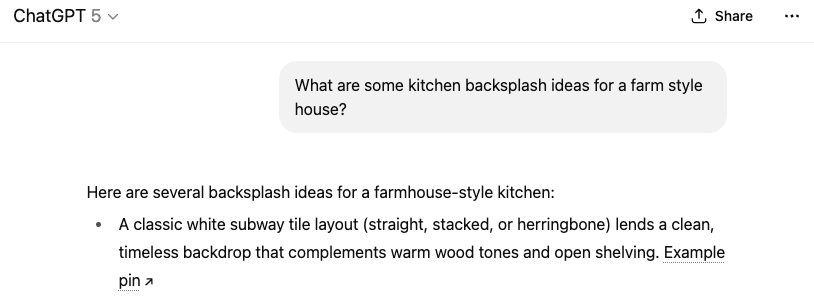
Here’s an example showing a user asking for kitchen backsplash ideas, and the AI returning a Pin as a source. That visibility could benefit a brand selling backsplashes or a local installation company looking to drive leads.
The most important Pinterest SEO ranking factors
Several factors influence how your Pinterest content ranks. Here are a few Pinterest SEO tips to help strengthen your strategy:
Engagement signals that boost authority
The more that users engage with your posts, the more you’ll support E-E-A-T and build authority. Nat Miletic, founder of Clio Websites, a Calgary web design and SEO agency, explains the connection. “Publishing meaningful content […] on Pinterest strengthens expertise by demonstrating knowledge, supports authoritativeness by growing a visible following and builds trustworthiness. […] Platforms like Pinterest, LLMs and search engines can more easily connect the dots about your brand, which supports stronger rankings and visibility.”
Analyzing the “dots” that Miletic references starts with tracking engagement signals like saves (formerly Repins), clicks and comments. These indicators tell crawlers your content meets search intent.
Here’s a Video Pin from SDCTS, an apparel brand, featuring high-waist pants. It’s a good example of how to gauge engagement, boost authority and refine your digital marketing strategy for Pinterest SEO. It received 25 crawlable comments about the product, and users saving it signals value and increases reach.

Source: Pinterest
Profile and board optimization
When building your profile, be sure to include relevant keywords that can appear in Pinterest search results and across other search engines.
Another way to optimize your profile is by creating boards. Pinterest boards are curated pages where you can collect and organize Pins. Think of them like library stacks with different areas devoted to a certain focus or genre. For example, a pet food brand might have boards like “Organic dog foods” and “Top dog treats.” If a board gets too large, you can create sections for micro-categories such as “dog treats for sensitive stomachs” and “dog treats for large dogs.”
Each board is an indexable page that provides opportunities to add keyword-rich titles and descriptions that improve search performance. Creating highly targeted boards increases your chances of showing up in results for specific needs.
Before you begin restructuring your boards for search, performing a Pinterest audit will help you identify which existing boards are already ranking for your target terms and which ones need a keyword refresh to better align with your SEO goals.
Keyword strategy for Pins and descriptions
The right keywords aren’t just effective for boards. They also help keep your Pins discoverable long after publishing. Since Pinterest content is evergreen, Pins continue to surface in search as users engage with and collect them over time. To increase your visibility and long-term reach, remember to use keywords in your titles, descriptions and alt text.
8 best practices to improve your SEO on Pinterest
To grow your impact through Pinterest, include these key Pinterest SEO best practices in your marketing strategy:
1. Optimize your Pinterest profile and board descriptions
Your Pinterest profile should clearly communicate who you are, what you offer and whom you serve. For example, a bio description for a casual apparel brand might read:
“Comfortable apparel for active men who love nature. Get breathable shirts and flexible shorts for jogging, hiking and everyday outdoor activities.”
This brief description incorporates SEO keywords and signals while addressing these interests and needs:
- Active men’s lifestyles
- Nature
- Comfortable clothing
- Jogging and hiking
Your bio is just one opportunity to enrich your SEO. You can also optimize board titles and descriptions by focusing on the subcategory you want to feature and weaving in keywords that reinforce your brand positioning and topic authority.
If you’re just getting started with the platform, our guide on how to use Pinterest covers the basics of profile setup.
2. Create visually compelling Pins that drive engagement
Since Pinterest is a visual search engine with a creative user base, you’ll want to publish appealing and engaging Pin designs. Pinterest offers a variety of formats for creating interactive, design-forward content, such as:
- Image Pins: A single featured image; the classic Pin that hosts a visual appealing image to share on your feed. With a business account and being in the ad market, you can also do a carousel of images or videos.
- Video Pins: A single video that plays automatically or multiple videos and images in one Pin. You can make them interactive by adding effects like text overlay, stickers and more.
- Rich Pins: A Pin type available through a business account that lets you sync website information to content like recipes, articles or products.
- Product Pins: A Pin type that shows products that are available to buy. When the user clicks, or taps a product Pin, they are directed to your product web page.
Each Pin should have fresh, modern visuals. If you use text, make sure the Pin title is clear, concise and doesn’t overwhelm the graphic. Prioritize value and give users a reason to engage.
Most importantly, make your Pins relevant to your audience. According to Sprout’s 2025 Content Benchmark Report, consumers prefer relatable, authentic and entertaining content, underscoring that quality matters more than volume.
3. Use Sprout’s tagging workflows to measure performance
Each Pin you publish should inform your SEO strategy. But tracking your progress, comparing it across organic and paid efforts and reporting business outcomes to stakeholders can be a challenge.
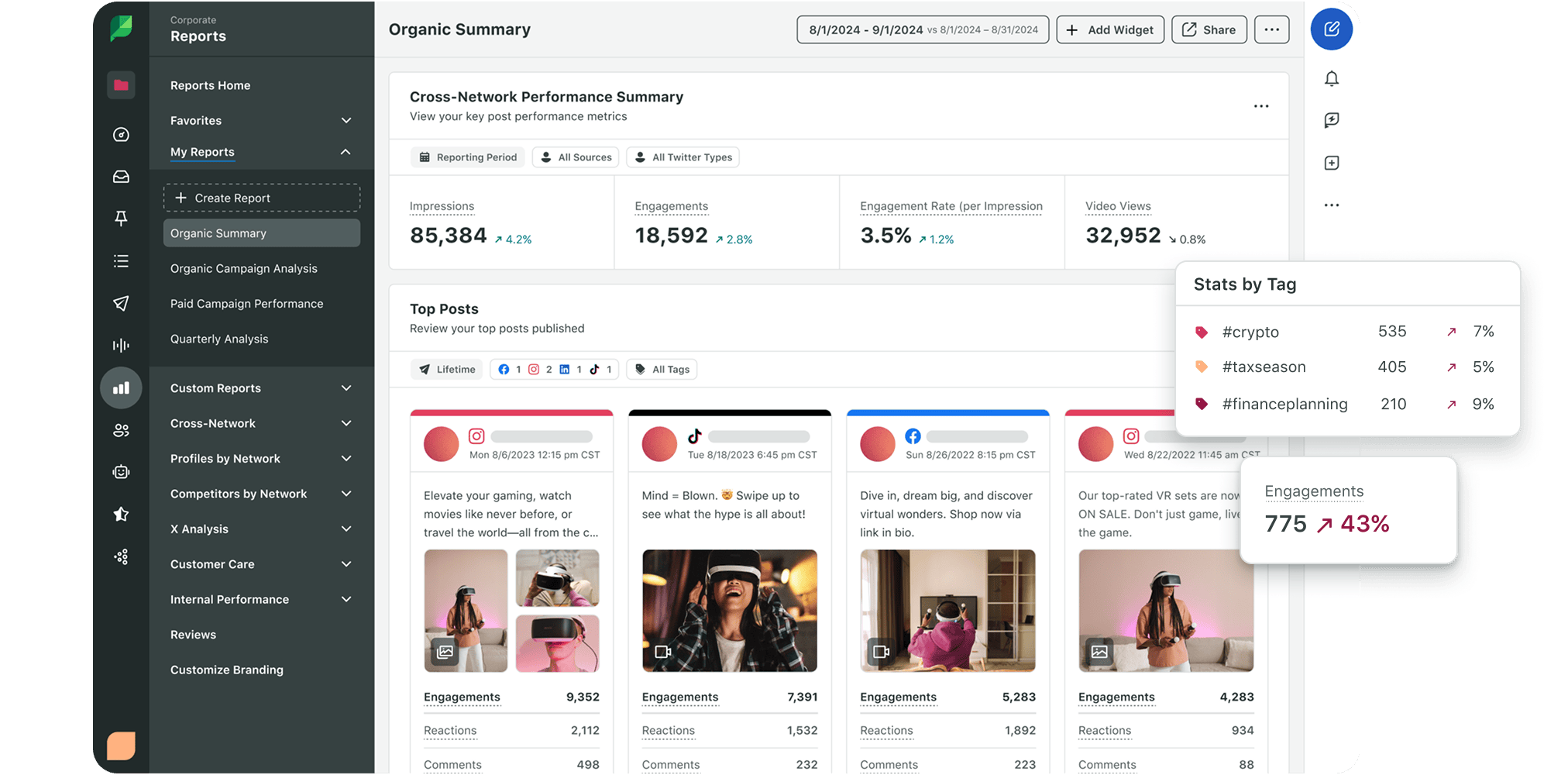
With Sprout’s Pinterest integration, you can tag posts to measure and report on your performance. For example, with the Post Performance Report and dashboard, you can track all your multi-channel social posts in one place and create comparison reports to communicate their results. Here’s an example of an outbound report:
4. Balance organic and paid strategies
Ads may not directly affect social media SEO, but paid and organic strategies work together to drive engagement and Pinterest saves. For example, Pinterest ads can help boost brand reach and awareness, indirectly supporting discoverability. Insights from both approaches also reveal emerging trends and consumer intent, helping inform your SEO strategy.
To avoid having your paid and organic strategies feel siloed, it’s helpful to develop unified reports that connect them. Sprout, for instance, lets you build reports for your organic Pinterest metrics and compare them to your other social media channels. Then, you can use Pinterest Analytics to look at your organic and paid strategies side by side.
5. Publish high-quality, original content consistently
According to the Index, originality leads to better results than simply posting for volume. Users crave authenticity and meaningful connections, and those experiences outperform fleeting trends. Since Pinterest supports longer-lasting content, the more relevant and intentional your Pins are, the more sustained engagement you’ll see.
6. Leverage Pinterest boards for keyword-rich engagement
Make keyword-rich, buyer-intent descriptions a priority in your Pinterest strategy. Boards and Pins have the potential to appear in both Pinterest and external search engine results.
By creating well-optimized boards with relevant Pins, you build indexable content that strengthens your authority and relevance in your target topic areas.
7. Optimize post timing with AI-driven insights
The first few minutes after publishing are often the most important, as strong early engagement signals value to Pinterest, increasing your reach and supporting your SEO.
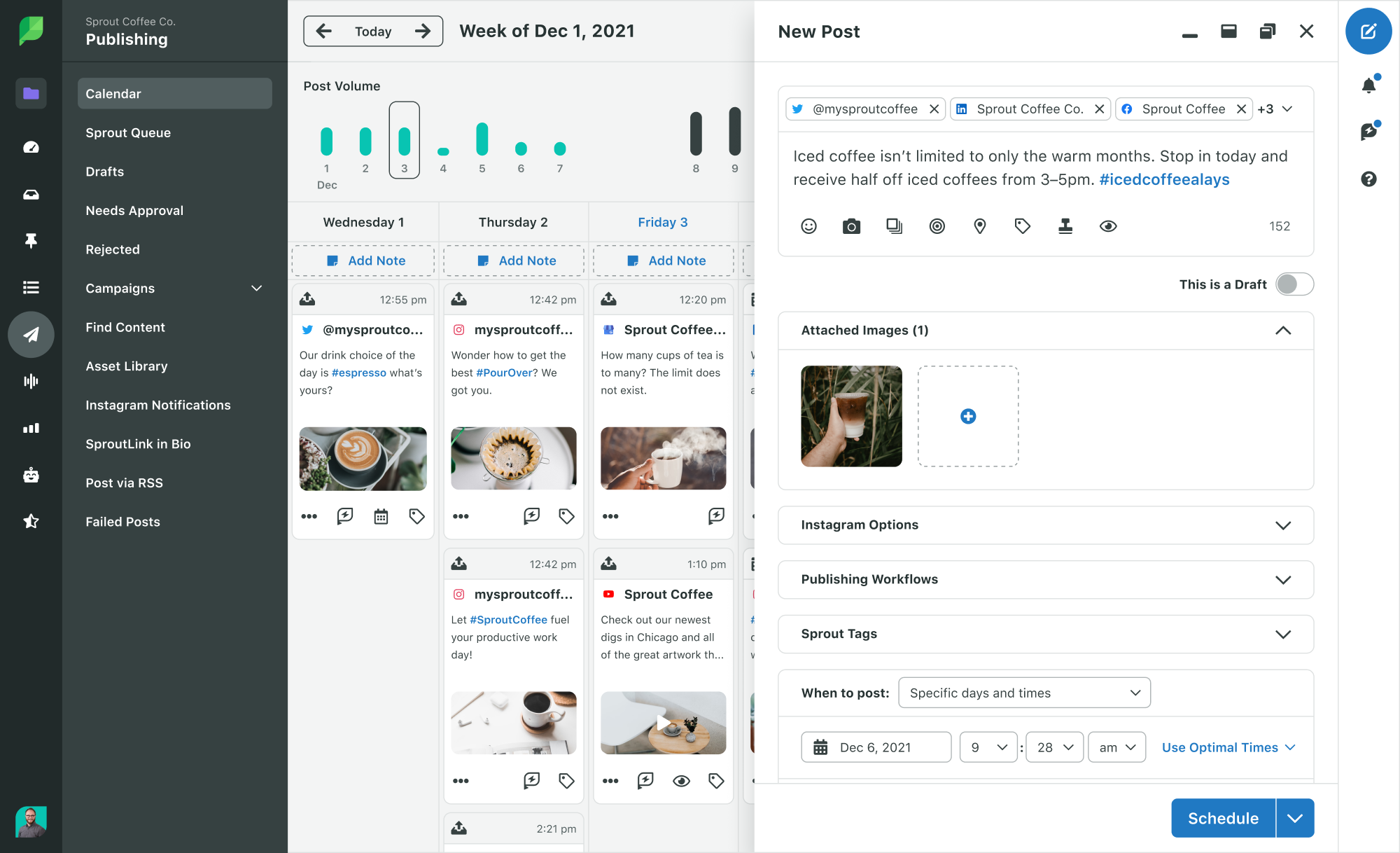
Using Sprout’s ViralPost®, you can maximize engagement by posting when your audience is most active. Its AI insights provide optimal send times based on activity, allowing you to schedule your Pins for the best ROI. Here’s how easy it is to schedule posts:

8. Build social signals with cross-channel amplification
Adding Pins in your blogs, newsletters and other online assets helps circulate your website content, encouraging organic sharing and impacting overall visibility. This can increase brand awareness, drive direct engagement and even lead to backlinks.
Some SEOs argue (and case studies support) that increased time on a page can positively influence how well your content ranks on Google. Amplifying your content on Pinterest can drive traffic from qualified users, increasing both engagement and rankings.
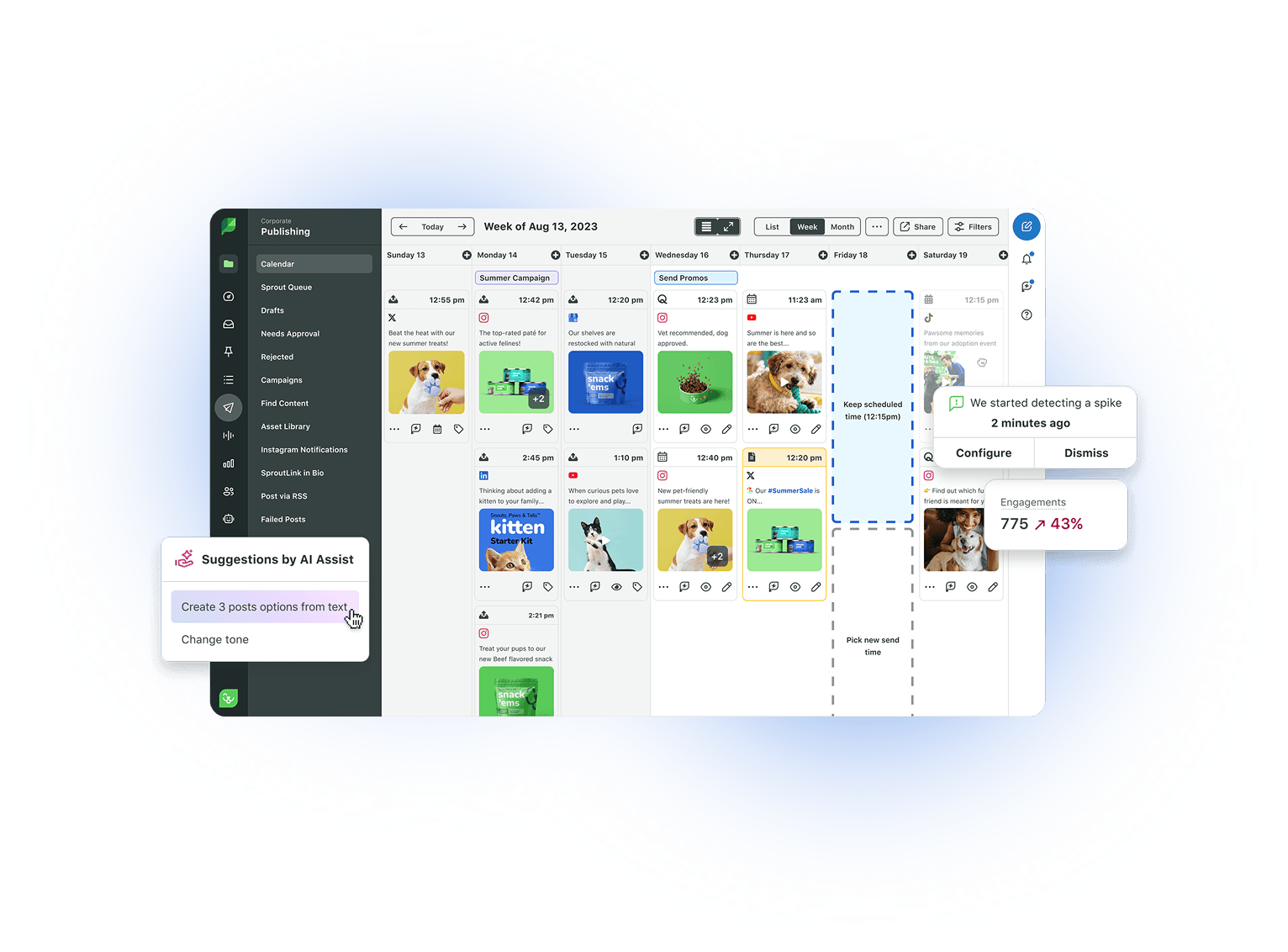
Sprout’s Publishing Calendar makes it easy to coordinate the cross-channel effort to share web pages from Pinterest and cross-post to other networks, like this:
How to measure Pinterest SEO success
Each Pinterest SEO initiative should support credibility to strengthen E-E-A-T signals to Google and improve business outcomes. Use these two KPI categories to measure results and SEO success:
Pinterest search results:
- Saves signal that your content is resonating with audiences and is discoverable.
- Click-through rate shows if your descriptions, visuals and Pins effectively motivate searchers to take action.
- Keyword reach indicates whether your SEO strategy is targeting the right terms.
- Impressions reveal how often your content appears on Pinterest users’ screens, which also informs discoverability.
Overall SEO KPIs:
- Pinterest referral traffic indicates whether your audience is discovering your website through Pinterest searches.
- Pinterest page rankings for Google keywords indicates how popular your Pins are and the extent of visibility your Pins may be getting in Google search results.
- Domain authority (a Moz metric) can be used to estimate how strong your website’s authority is in the eyes of Google, with a higher score making it easier to rank on SERPs and within AI-generated results.
- Visibility in LLM and AI search results highlights how Pinterest SEO contributes to your discoverability across AI-powered tools.
Sprout’s Premium Analytics, an add-on capability to the Reporting suite, provides unified dashboards and advanced reporting capabilities that let you filter data and focus on the metrics that matter most. These insights make it easier to align your SEO strategy with measurable business goals.
Transform Pinterest SEO into measurable business impact
Search is no longer limited to a single platform. With discovery happening across channels, SEO has expanded and become harder to track. By simplifying workflows and connecting engagement to real outcomes, you can turn Pinterest into a meaningful driver of visibility and results.
Sprout Social helps you manage all your social media networks, including Pinterest, so you can meet your audience where they like to search.
Try Sprout’s 30-day free trial to learn how you can build a Pinterest SEO strategy that helps get your content discovered.
FAQs about Pinterest SEO
Can you really do SEO on Pinterest in 2026?
Yes. Since search continues to diversify to social media platforms like Pinterest, TikTok and Instagram, now is the perfect time to build a discoverable presence for your brand. If you’re wondering how to improve SEO on Pinterest, it starts with optimizing your profile, boards and Pins to increase engagement and search visibility.
Do Pinterest Pins show up in Google search results?
Yes. Pins, boards and your profile page can show up on Google and other search engines.
Is Pinterest SEO worth the effort compared to other networks?
Yes. Pinterest is one of the largest social networks, and its community is highly buyer-intent. That makes it a valuable channel for increasing discoverability and reaching customers where they already like to shop.
39 free social media strategy templates that will elevate your workflows
Published on August 20, 2026 Reading time 15 minutes









Share