Facebook SEO: How social search shapes your visibility

Written by Emily Jenkins
Published on December 4, 2025
Reading time 11 minutes

Table of Contents
Your Facebook marketing strategy isn’t just about engaging posts anymore. It’s also about organic search visibility.
With billions of daily searches happening inside Facebook, users now treat the platform like a discovery engine for brands, products and conversations. If you don’t optimize your content, you risk being invisible when people are actively looking for you.
That’s where Facebook search engine optimization (SEO) comes in. It helps your brand show up for the right queries and drives visibility far beyond the news feed.
Here’s how to master it.
What is Facebook SEO?
Facebook SEO is the process of optimizing your Facebook Page, profile, posts and Groups so they rank higher in Facebook search results and Google SERPs.
While the concept of discoverability on Facebook isn’t new, it’s now less reliant on hashtags than in the past. Today, being discoverable comes down to how well your profile, content and community activity align with audience search intent. To appear in relevant discussions, you need to optimize your Page details, posts and Groups.
But Facebook SEO goes beyond simply ranking within Facebook. In July 2025, Meta confirmed that public Facebook posts will now surface more often in Google results. That means your Facebook SEO efforts extend beyond the app and can put your brand in front of people searching on Google.
This makes sense when you consider Google’s ranking approach, which relies on Experience, Expertise, Authoritativeness and Trustworthiness (E-E-A-T) signals. Social presence—like follower growth, consistent engagement and relevant content—demonstrates these qualities to Google.
For example, imagine a fitness company sharing expert advice like safe summer training tips. A well-optimized Facebook post on this topic can rank in Facebook search and appear in Google SERPs for queries like “seasonal workout safety.” When your post earns strong engagement (likes, comments, shares) and uses relevant keywords, both users and search engines recognize your brand as a trusted authority.
Facebook as a social search engine
Beyond social media posts appearing in Google search results, social networks are now being considered a primary destination for search, especially for younger generations. According to the 2025 Sprout Social Index™, 90% of consumers use social to stay plugged into online culture and over half say Facebook and Instagram are their top networks for product discovery.
These numbers confirm that Facebook functions as a search engine in its own right. If you don’t optimize your social presence for search, you’ll be invisible when audiences are most open to discovery.
Why brands can’t ignore Facebook SEO
As a social media marketer, you know the struggle: limited time, endless content calendars and constant pressure to prove ROI in a landscape that changes monthly. Between algorithm updates, shifting engagement patterns and new AI search, it’s easy to feel like your impact is moving out of sight.
But here’s the essential shift: Facebook is no longer just a place to post content. It’s a search engine driven by social intent.
Audiences are actively using Facebook to look up brands, research local businesses, read reviews and find answers from real communities. Now, optimizing for Facebook’s internal search is becoming just as critical for visibility as optimizing for Google. This doesn’t mean you need to be a technical SEO expert—it means your existing social strategy now has a direct line to how audiences discover and evaluate your brand.
This shift also helps solve one of the biggest pain points for social practitioners: proving ROI. When your content is optimized to be found—inside Facebook search, on Google and through AI summaries—you extend its lifespan and create compounding value. Instead of your best post vanishing 48 hours after it goes live, it works for you long after posting. That’s the power of treating Facebook SEO as a core part of your social discovery strategy.
Here’s why you need to focus on Facebook SEO.
Audiences are searching on Facebook first
More than ever, Facebook consumers are actively turning to Facebook to find products and information. Per the Index, Facebook stands as the second most popular platform for discovering products, just one percentage point below Instagram (61% vs. 60%).
Without posts being optimized for Facebook SEO, your brand may never surface in those searches, allowing your competitors to get ahead with more visibility.
As a social practitioner, this completely reframes your Facebook strategy. Every caption, comment and Group discussion becomes discoverable through Facebook search. Every video title and Page field can help your brand show up when someone is searching for what it is that your brand offers.
SEO funnels are shifting away from Google alone
Search is expanding beyond one landscape. For years, Google dominated brand discovery, but in 2025, that funnel has widened. As social platforms and AI tools introduce new ways to explore, audiences are discovering businesses through more entry points than ever. Rather than competing with Google, social search has become an add-on layer of discovery that complements traditional SEO.
According to the 2025 Sprout Social Index, most consumers still rely on search engines, but more than half now turn to social first to learn about brands and products. This shift means your Facebook presence isn’t just for engagement—it’s a crucial part of the customer search journey.
Today’s consumer journey often starts with a Google query and moves to social, where people read reviews, watch videos and see how brands interact with their communities. At the same time, Google’s AI-driven overviews increasingly pull context from social content, reviews and multimedia.
For social media practitioners, the takeaway is clear: visibility on Facebook directly supports your brand’s overall discoverability. Optimizing your content for search within Facebook strengthens your brand’s presence everywhere else, which is why social search has become a defining Facebook marketing trend.
Facebook SEO ranking factors
Facebook’s algorithm relies on thousands of signals to determine which content surfaces in Feed and search. While there are so many that it can feel overwhelming, the good news is that you don’t need to master them all. Some signals aren’t directly in your control.
To get ahead, focus on the signals you can influence. These levers will deliver the biggest impact on Facebook SEO:
Recency: Fresh posts are foundational for visibility
Meta confirms that recency is a core signal, meaning newer posts tend to rank higher in both Feed and search results. If your Page isn’t posting regularly, you’ll quickly slide out of being discoverable.
This doesn’t mean spamming your followers. Instead, you need to focus on keeping up a steady cadence of timely, relevant content so you’re part of ongoing conversations.
As Sprout’s Content Benchmarks Report shows, brands post an average of 9.5 times per day across social. When you consider the platform breakdown (85% on Facebook, 79% on Instagram, 70% on X and 32% on TikTok), that averages out to just over two posts per platform if you’re active on all four.
But maintaining a steady posting cadence is one of the hardest parts of Facebook marketing. Between brainstorming fresh ideas, creating content and tracking results, it’s easy to lose consistency. And when that happens, engagement drops.
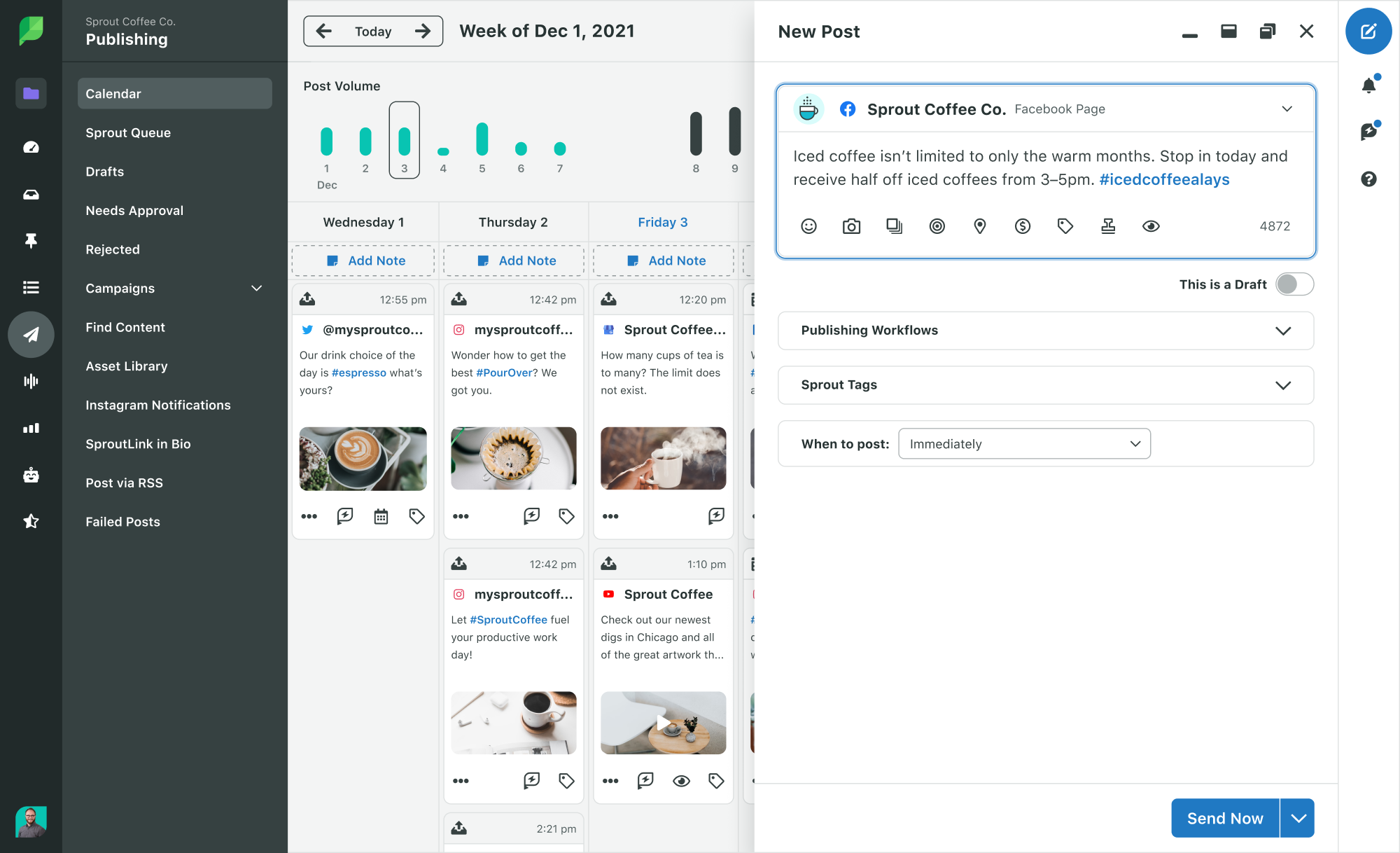
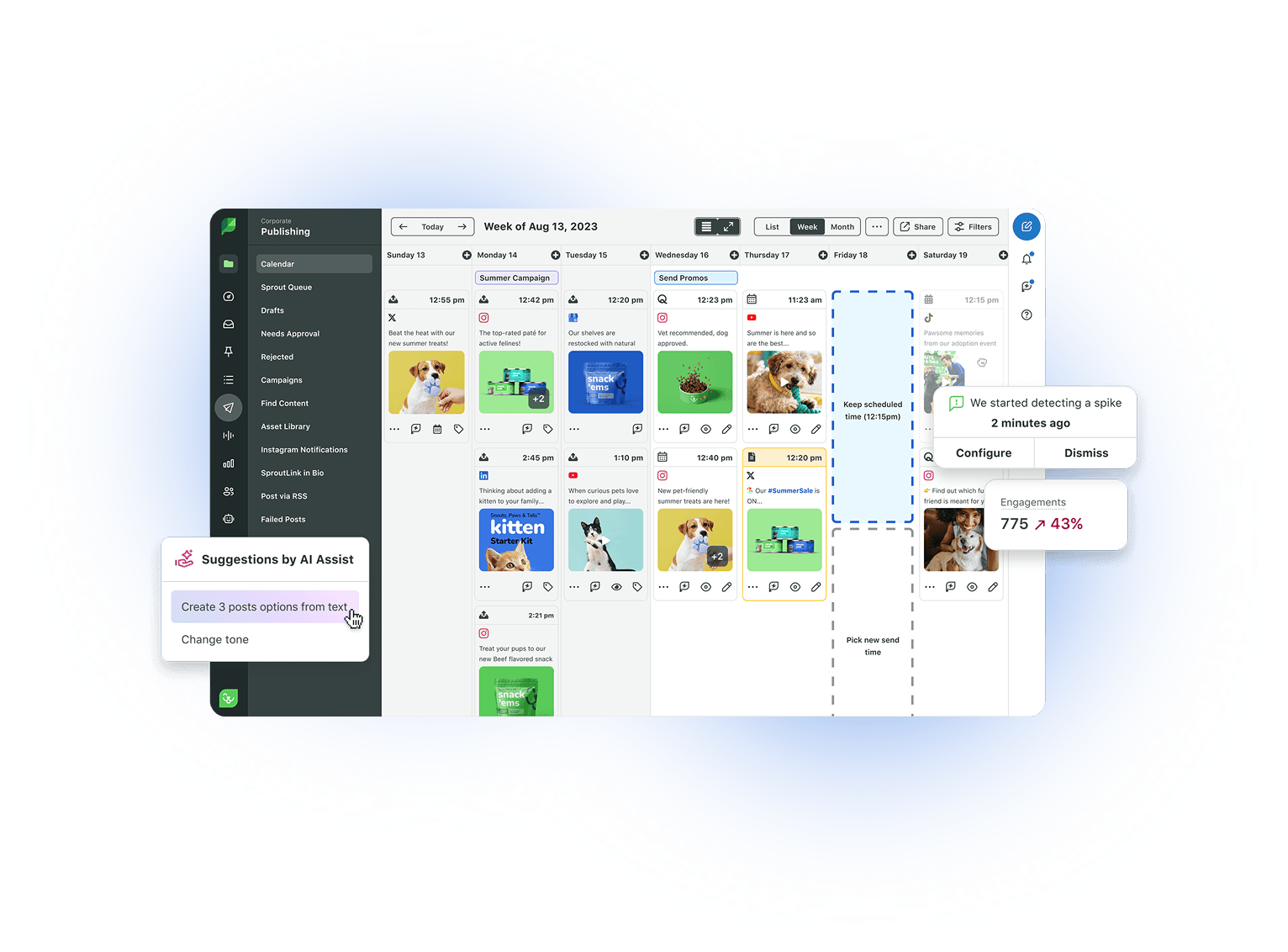
Sprout’s scheduling and ViralPost® technology solve this. Scheduling lets you plan and queue posts in advance, while ViralPost® uses AI to automatically publish at the precise times your audience is most likely to engage. Stay consistent without burning out your team
Engagement: Interactions fuel further visibility
Facebook rewards posts that spark interaction because likes, comments and shares indicate valuable content. The more authentic conversation a post generates, the more likely it is to surface in search and recommendation slots.
Virality on social posts is also debated to increase visibility in Google search results. More engagement on Facebook posts equals more visibility. Shares snowball, exponentially increasing views.
Facebook’s AI ranking systems learn from user engagement patterns—such as clicks, likes, comments and shares—to predict what content people are most likely to find valuable. Over time, consistently engaging content can help Facebook’s systems identify and elevate similar posts in Feed or Search.
While you can’t control who comments or shares, you can encourage engagement. To do so, ask open-ended questions, create content audiences want to discuss and respond quickly to keep conversations alive.
Language and keywords: Alignment improves discoverability
Meta prioritizes posts that are directly relevant to the language of the searcher’s query. For brands with global audiences, multilingual content is essential. A Page that only posts in English, for example, may miss discovery opportunities with audiences searching in Spanish, French or other languages.
Language also applies to the specific terminology your audience uses. Effective Facebook SEO means using the terms your potential customers search for in your Page name, About section and posts.
Social listening tools can help you identify the words and phrases your audience uses most when talking about your brand, industry or competitors.
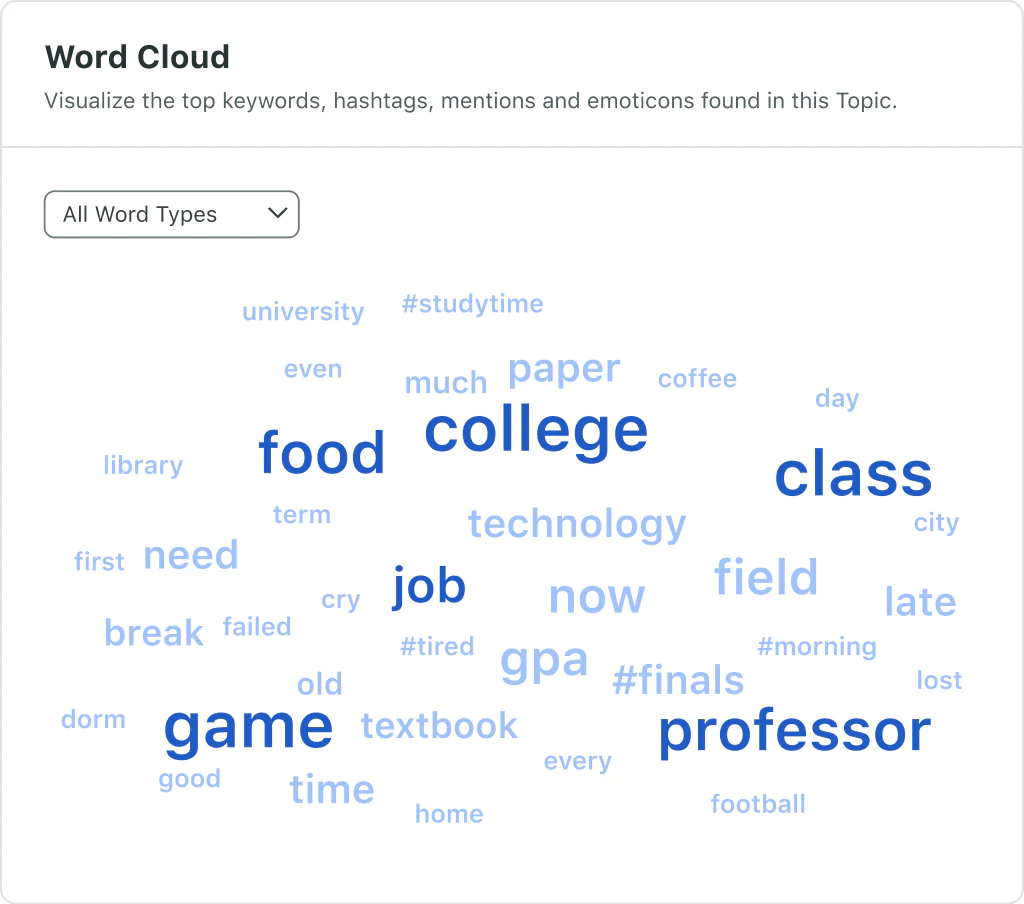
By tracking these conversations and analyzing patterns—like which hashtags are spiking or which product terms are gaining traction—you can optimize your content in real time.
8 Facebook SEO strategies
Facebook SEO isn’t about chasing quick hacks. Instead, build a presence that the network’s algorithm recognizes as valuable and that audiences want to engage with.
Here are eight strategies to help you master it:
1. Optimize your Facebook Page profile and About section
A complete and keyword-rich Facebook Page profile helps both Facebook’s internal search algorithm and external search engines understand what your page is about.
The key is incorporating your target keywords naturally into your Page name, the short bio and the more extensive About section. Following Meta’s own best practices, fully populating every available field—contact details, website links, service descriptions—builds trust and dramatically increases your chances of appearing in relevant searches.
It’s critical that the language and keywords you use on Facebook are consistent with your wider SEO strategy to reinforce your topical authority everywhere. Collaborate with your SEO team to ensure you’re targeting keywords central to your product or service offerings.
2. Create high-engagement content that drives social signals
Engagement is one of Facebook’s strongest ranking signals.
Facebook’s algorithm loves content that keeps people interacting. That’s why formats like video and community-driven posts consistently perform best. While Facebook Stories and Reels often perform well, Sprout Social’s Content Strategy Report shows that users are most likely to interact with text posts—even more than short-form video. For busy teams, this underscores that sparking conversation often matters more than polished production.
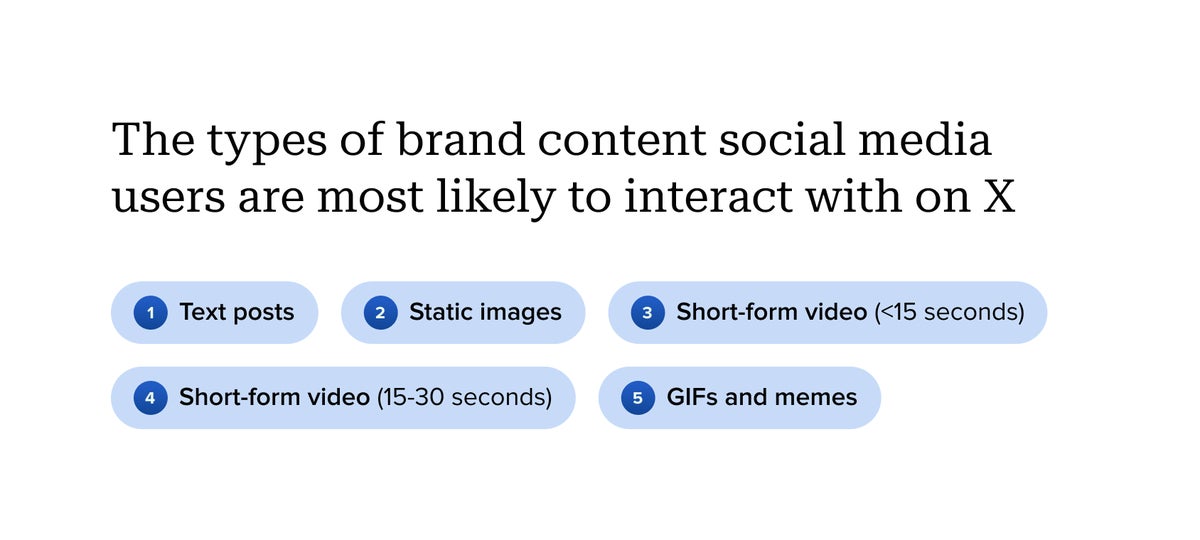
Try out these different types of posts that are optimal for a Facebook content strategy. Use your performance data to benchmark and double down on the formats that get the most consistent interactions.
3. Use Sprout’s tagging workflows to track content performance
Measurement is the foundation of any successful content or SEO strategy and Facebook is no different. Sprout Social’s tagging workflows let you categorize your posts by campaign, content theme or format.
When you apply custom tags consistently, you can use the Sprout Tag Performance Report to analyze engagement metrics across various categories. Pair this with the granular data from the Post Performance Report—metrics like impressions, reach, clicks and engagement rate—and you can connect high-level campaign insights to the performance of individual posts.
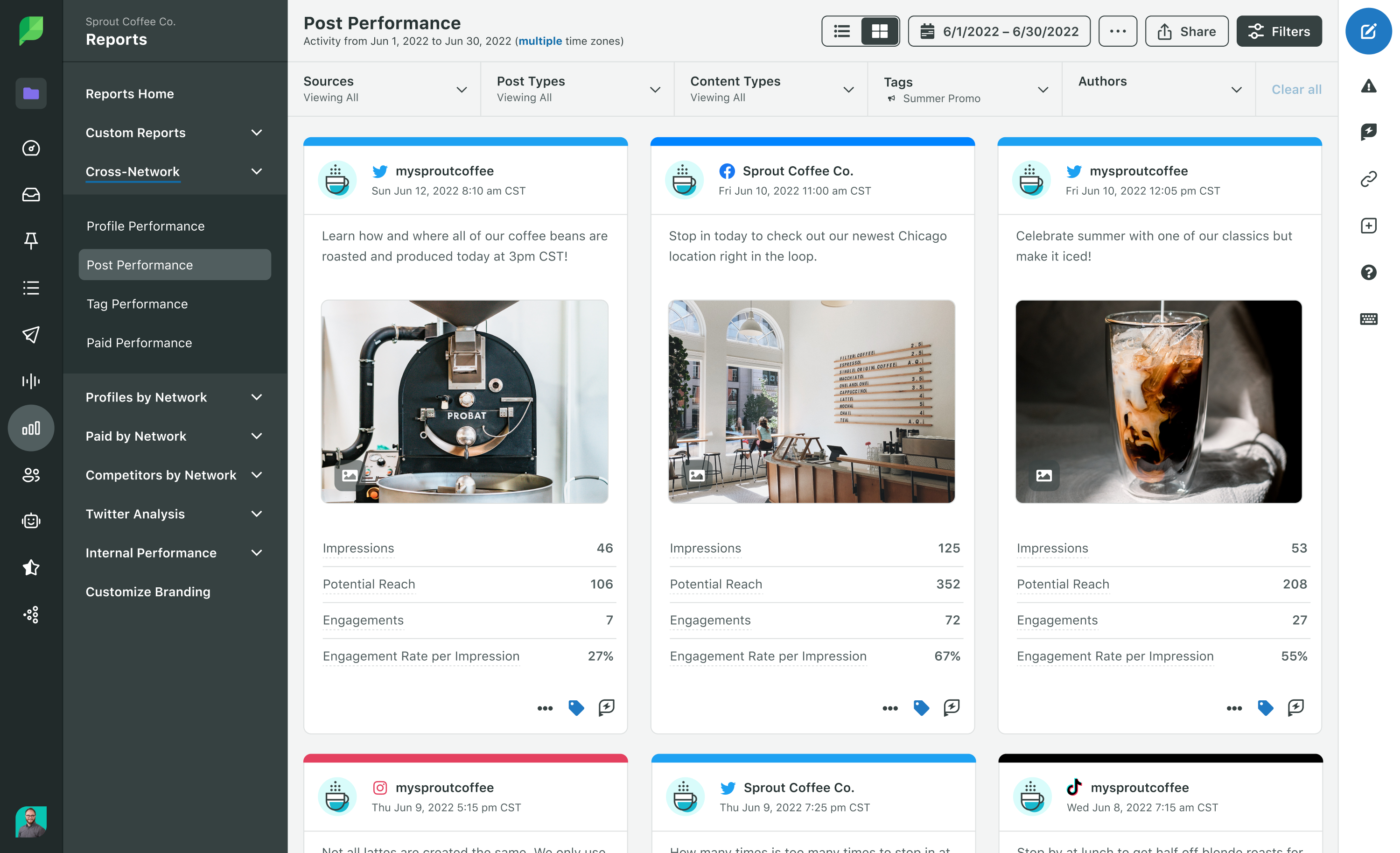
This data-driven workflow ensures every piece of content you publish actively contributes to your brand’s objectives.
4. Balance organic and paid strategies
While paid Facebook ads don’t directly boost your SEO rankings, they are a powerful tool for amplifying the engagement signals that do. Paid distribution helps excellent organic posts gain crucial initial momentum, leading to increased organic reach, more shares and greater visibility both within Facebook and beyond. More content circulation means more opportunities to earn engagement and even valuable external backlinks.
Analyzing the performance of both organic and paid content also helps marketers understand the synergy between amplification and engagement. Simply put: ads don’t directly improve ranking, but they create the engagement velocity that feeds into Facebook’s visibility systems and helps your content win organically.
5. Post high-quality, original content
On Facebook, quality always beats quantity. If you want your content to truly stand out and perform, it must be authentic and original. Focusing on unique, creative material—rather than simply recycling or posting generic updates—is essential for capturing user attention and fostering genuine engagement.
This isn’t just theory: The 2025 Sprout Social Index shows that 46% of consumers believe their favorite brands stand out because they publish original, creative content. Plus, brands that focus on rich storytelling and originality over mere posting frequency see stronger retention and engagement, according to Sprout’s Social Content Strategy Report.
This data makes a clear case: high-quality, authentic content not only performs better on the platform but also helps your brand to stand-out in Facebook search.
6. Leverage Facebook Groups
Facebook Groups are often an overlooked, yet incredibly powerful, Facebook SEO asset. Group discussions, posts and comments frequently show up in Facebook’s internal search results and sometimes even get indexed externally.
By creating or joining Groups relevant to your niche, you can naturally initiate keyword-rich, authentic discussions that attract both community members and algorithmic attention. The focus must be on authenticity: avoid keyword stuffing and instead aim to spark genuine conversations where relevant terms appear organically.
Sprout Social Listening’s Topics can help you identify trending discussions across social media, revealing invaluable keyword opportunities and audience insights. Using social listening to engage in Groups ensures your Facebook SEO strategy evolves in real-time with your community’s current interests.
7. Optimize post timing with AI-driven insights
When you post on Facebook can be just as critical as what you post. Recency is still one of Facebook’s core ranking signals, as fresh content naturally appears more prominently in search and feeds.
Using Sprout’s ViralPost™ technology, you can automatically schedule posts for the precise times your audience is most likely to engage. Aligning your publishing schedule with these peak-engagement windows significantly increases the probability of your content receiving a rapid burst of interaction—an early boost that greatly expands its organic reach.
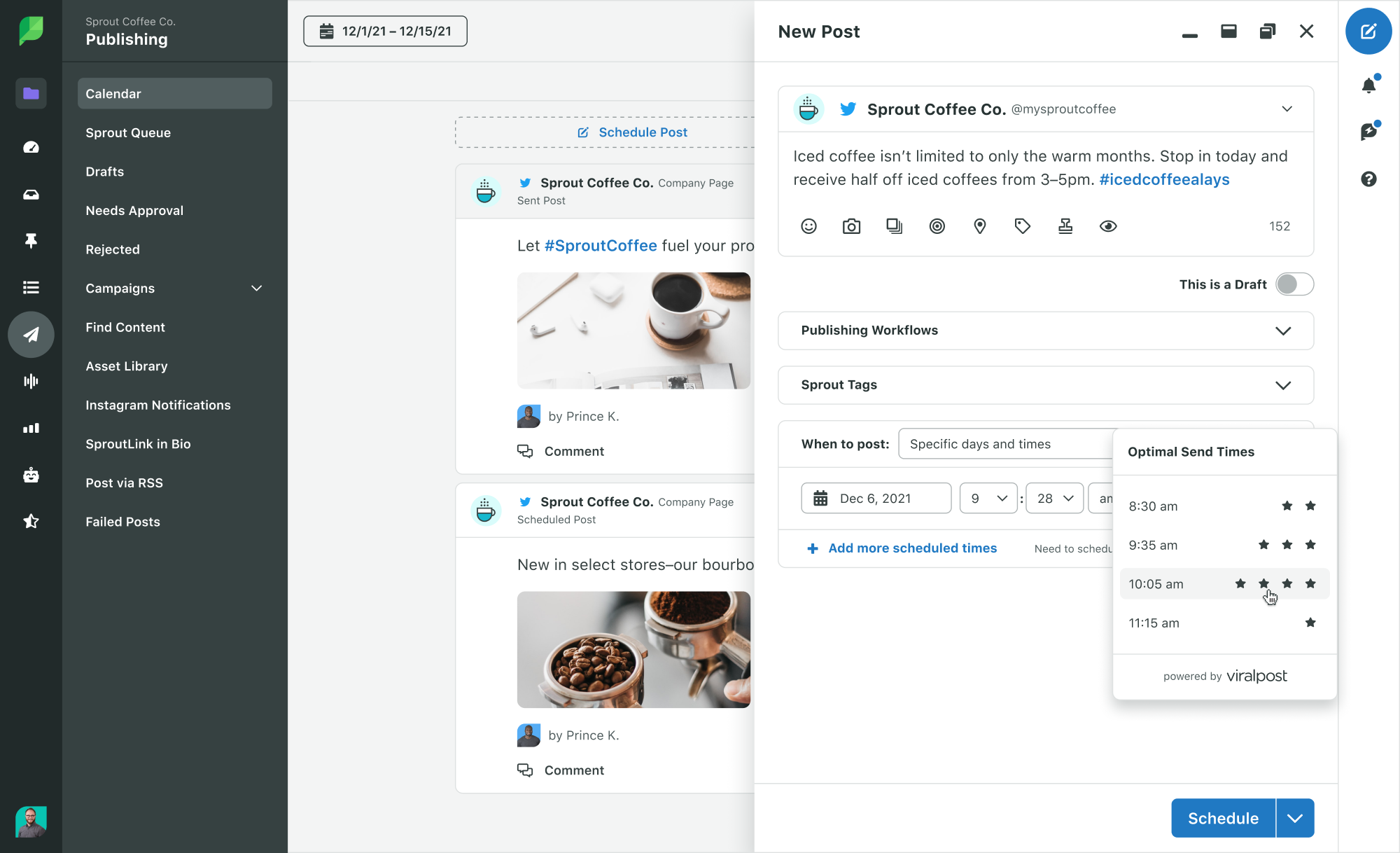
These AI-driven insights don’t just improve simple engagement; they enhance overall visibility by helping your posts earn the social signals that indirectly contribute to traditional SEO performance.
8. Build backlinks by amplifying Facebook content
Your top-performing Facebook content is an excellent foundation for building backlinks and driving valuable referral traffic. When your videos or posts are embedded in blogs or cited by media outlets, they create high-value external links pointing back to your brand.
To make this happen, embed your best-performing Facebook posts directly on your website, encourage your partners and affiliates to share them and promote them through email newsletters or other social channels.
Sprout’s Publishing Calendar helps coordinate this kind of multichannel amplification, ensuring consistent timing and branding across all platforms. By using Facebook as a catalyst for highly shareable, link-worthy content, you can boost both your social and search authority simultaneously.
How to measure Facebook SEO success
Too often, brands measure Facebook SEO using vanity metrics alone (like follower count or page views). But the real story comes from tracking the signals that both Facebook’s AI and Google reward.
Here are the key metrics to track your Facebook SEO success:
- CTR: Indicates how relevant your posts are to searchers
- Shares: Reflects how widely your content spreads and builds authority
- Keyword reach: Demonstrates whether you’re surfacing in discovery results
- Backlink volume and growth: Tracks the number of external sites linking to your Facebook content and how that number grows
- Engagement rate: Measures how valuable your content is to audiences
- Follower growth: Tracks how visibility translates into audience building
- Conversions: Shows whether discoverability turns into business impact
To visualize these metrics, use Post Performance Reports in Sprout’s Premium Analytics (an add-on feature) to track clicks, engagement and shares at the post level. Pair this with Profile Overview to reveal keyword reach and audience growth. Together, these tools show you how visible your content is, how it’s building credibility and where it’s driving measurable ROI.
Make Facebook SEO your growth engine in 2026
Facebook SEO is now a critical part of any social media strategy. It helps your brand surface in cultural conversations, product searches and even Google results. As search behavior expands across social networks and other online hubs, optimizing your content to increase visibility across new search platforms is vital.
Sprout helps by revealing the insights and keywords your audience cares about, enabling you to publish consistently across networks and measuring performance so you can keep improving.
Ready to drive growth with smarter Facebook search visibility? Start your free 30-day trial today.
FAQs about Facebook SEO
Can you do SEO on Facebook in 2026?
Yes. Facebook SEO means optimizing your Page, About section, posts and Groups so they appear higher in both Facebook and Google results.
Do Facebook ads impact SEO rankings?
Ads don’t directly influence ranking signals, but they do boost reach and engagement, which feed into Facebook’s AI ranking. This improves visibility in search.
How do social signals from Facebook affect Google rankings?
Social signals—like engagement, backlinks and community activity—prove experience, authority and trust. Google uses these cues as part of its E-E-A-T framework, meaning active, relevant Facebook content strengthens your SEO credibility.
Is Facebook SEO still worth it compared to Google SEO?
Since nearly two-thirds of Google searches are now zero-click, relying on Google alone is risky. Facebook acts as its own search engine, which gives your brand a second funnel for discovery and visibility.
39 free social media strategy templates that will elevate your workflows
Published on August 20, 2026 Reading time 15 minutes








Share