39 free social media strategy templates that will elevate your workflows
Published on August 20, 2026
Reading time 15 minutes
Alt text (alternative text) is a short written description of an image. Screen readers announce it aloud and search engines read it to understand what an image shows. It also appears in place of an image when the image fails to load. Treat alt text as a non-negotiable part of your social media accessibility strategy—not an afterthought.
Alternative text does two big jobs: accessibility first, SEO second.
The gap is real. WebAIM’s annual analysis found that missing alternative text was the second most common accessibility failure as of February 2026. It appeared on 53.1% of the top 1,000,000 home pages.
Good alt text is short, specific and useful. Follow these best practices:
Most major platforms let you add alternative text to images, but the steps and limits differ. A common rule of thumb is about 125 characters, though X (formerly Twitter) allows up to 1,000 characters. Instagram, Facebook and LinkedIn each have their own fields for it.
Instagram limits alternative text through its API, so adding the image description in the caption is a common alternative. Sizing your visuals to fit each platform also helps, so check the recommended social media image sizes before you post.
Alt text and captions aren’t the same thing. The description is hidden in the image code and read only by screen readers and search engines. A caption is visible text shown near the image for everyone to see.
You often need both because they serve different readers.
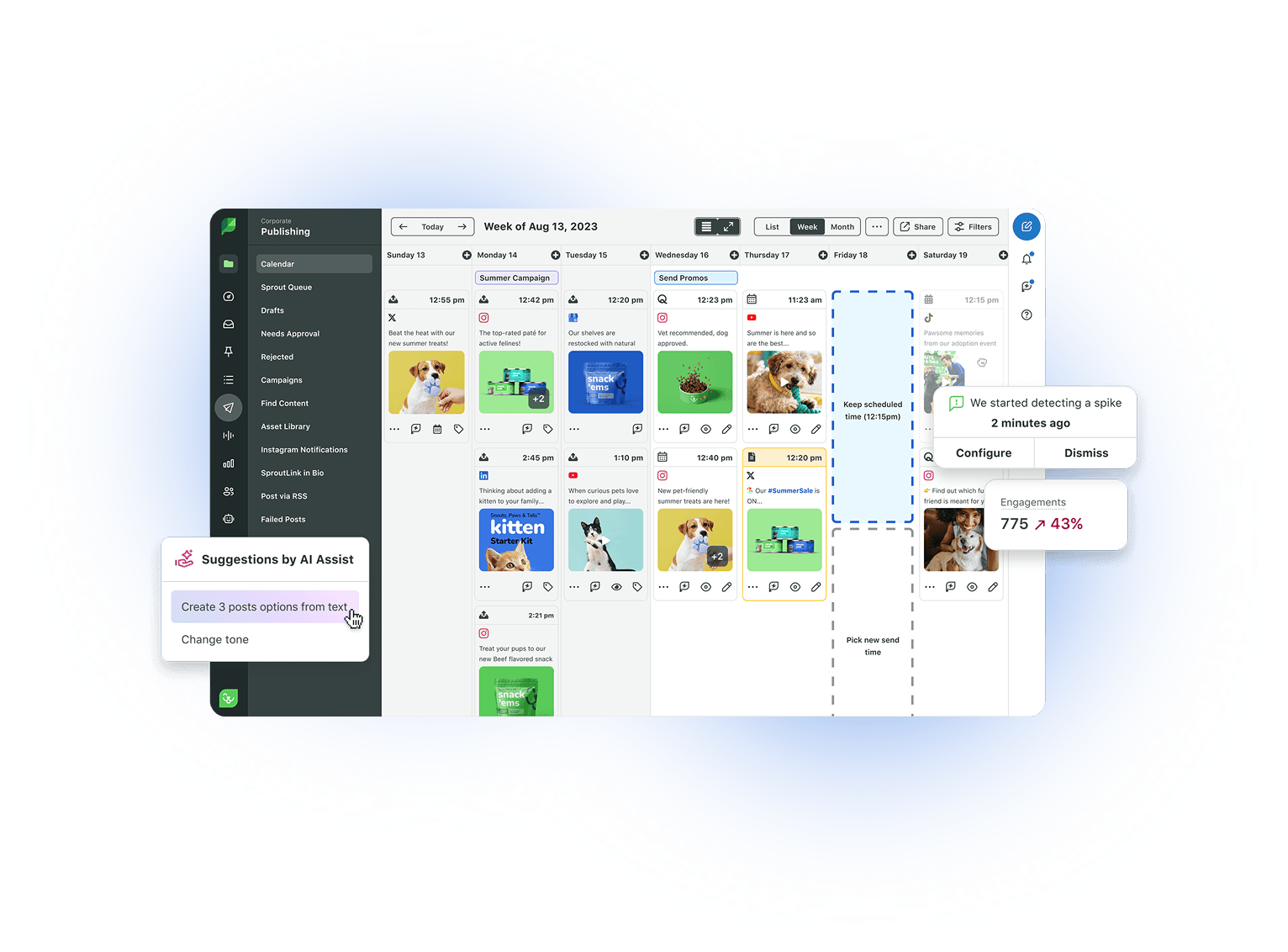
Writing alternative text for every image is easier when it’s built right into your workflow. Sprout Social’s Generate by AI Assist suggests alt text as you publish. Start a free trial to put it to work.
39 free social media strategy templates that will elevate your workflows

Build and grow stronger relationships on social