Social media trends in the UK (2026): A strategic guide for marketers

Written by Sinéad McNamee
Published on March 10, 2026
Reading time 10 minutes

Table of Contents
It is safe to say, social media is no longer just a digital hangout, it’s the UK’s primary answer engine. It is the place your audience goes to diagnose a problem, validate a purchasing decision and hold businesses accountable.
As UK social marketers, we thrive on the fast-paced nature of our industry. But let’s be brutally honest: staying ahead isn’t getting any easier. Between pinpointing exactly where your target audience is actually spending their time and finding your footing in the “human-AI editor” era, the pressure is palpable.
To drive meaningful growth this year, your social media strategy must graduate from the experimental phase of AI and short-form video. The new mandate is built on helpful advice from experts, niche community building and transparency.
“Brand-consumer communication these days is more instant, transparent and community-driven than ever before. It’s really important for brands to adapt to these changes. Otherwise, they run the risk of losing trust from their audience,” says Kikora Mason, Vice President, Social Media + Community Management at Chase, in a recent Sprout Social exploration of digital culture.
Thankfully, the exhausting scramble for a fleeting viral moment is officially over. Today’s market leaders are trading one off posts for long-term loyalty, focusing on episodic storytelling and optimising for social search.
Worried about pouring your budget and bandwidth into the wrong channels? You are not alone. But without a robust data foundation, your strategy is effectively running blind, leaving the door wide open for agile competitors to swoop in and capture your audience’s attention.
Let’s cut through the noise. Discover exactly what you need to prioritise this year with insights drawn from Sprout Social’s Social Media Content Strategy Report.
What are the current social media trends in the UK?
Before we dive in at the deep end, let’s look at the bigger picture. Here is a quick breakdown of the legacy tactics UK marketers need to leave behind, and the social media strategies driving growth this year.
| Outdated Strategy | The 2026 UK trend | Why? |
|---|---|---|
| Viral-chasing | Episodic series | Algorithms reward viewer retention. |
| AI-only copy | AI for data analysis | Generic robot copy degrades trust. |
| Public support feeds | Dark Social (WhatsApp) | Users crave private, 1:1 support. |
| Reactive activism | Values-driven activism | Buyers demand real-world action. |
| Broadcast feeds | Optimising for Social Search | Buyers want visual peer proof. |
Now that you have the summary, lets jump into the detail:
1. Using AI in social media marketing (without losing the human touch)
While the global conversation remains fixated on AI’s ability to generate content, UK marketers are facing a critical disconnect. Our research shows that while 69% of UK marketers consider their strategy effective , consumers are clear: they want human-generated content as their top priority. Meanwhile, UK marketers are making AI-generated content their #1 priority for 2026.
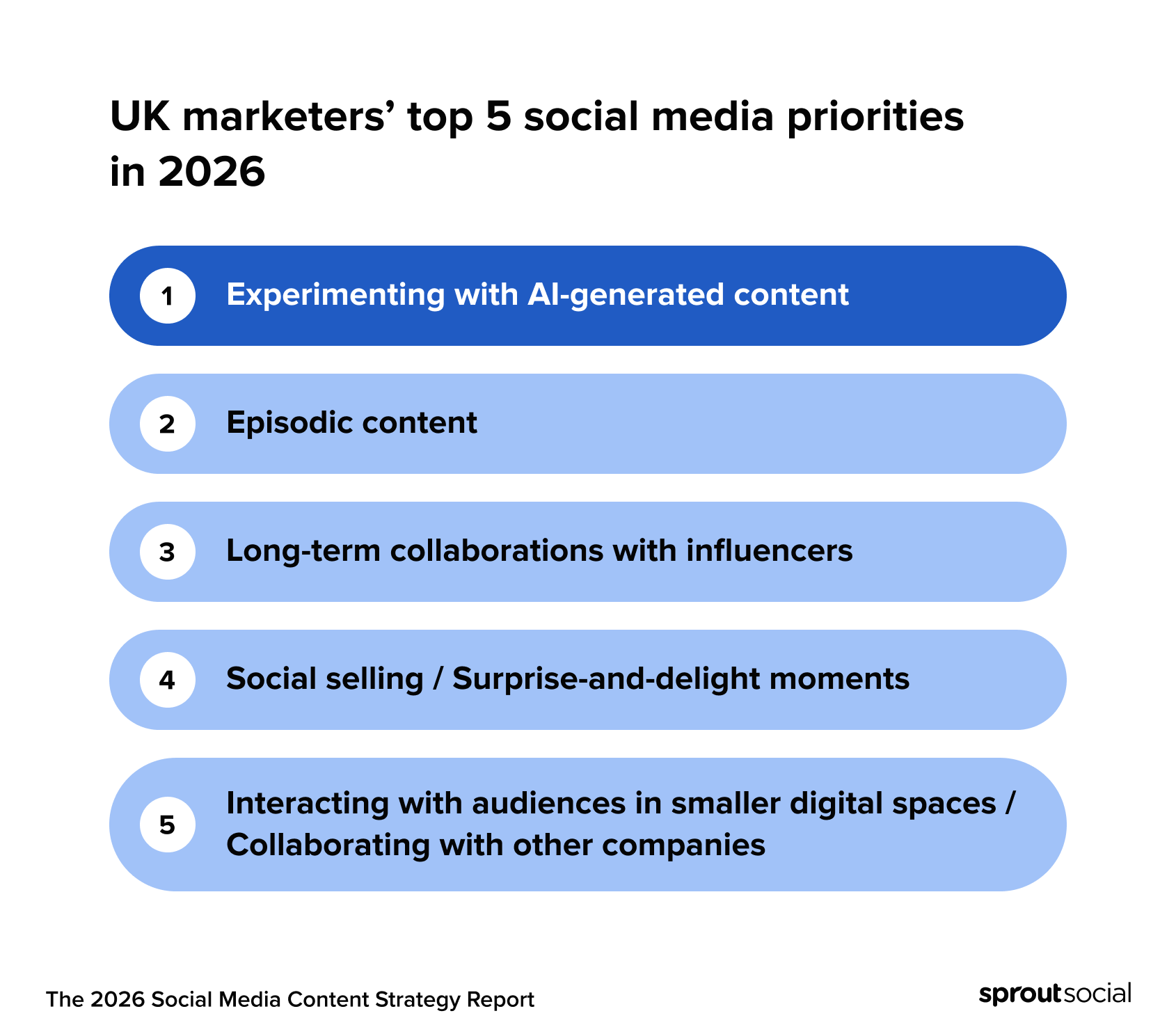
Why the disconnect? Marketers are often under-resourced and seeking scale to combat bandwidth constraints. However, pushing out generic, AI-authored content degrades trust. The solution isn’t to abandon AI, but to shift its use case. Currently, only 40% of marketers use AI tools for performance reporting and analysis. The real potential of AI for marketers isn’t content creation, but content analysis to garner timely audience insights.
UK AI in social media spotlight: Octopus Energy
Octopus Energy uses AI to process complex energy data, but they maintain a distinctly “un-corporate” British voice through human-led refinement.
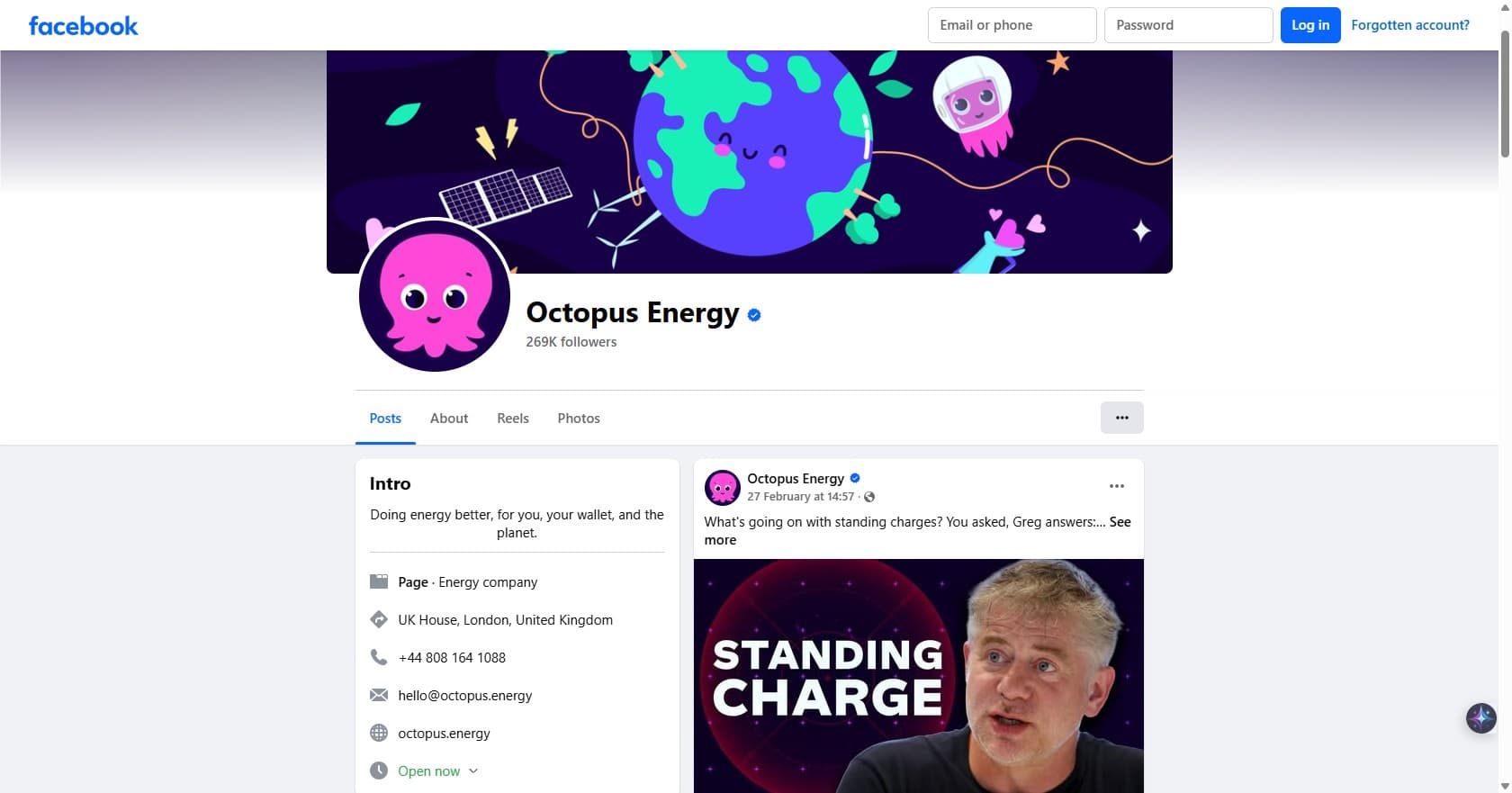
By ensuring technology supports rather than replaces the human connection, they build authentic trust.
Actionable takeaways:
- Prioritise the “human overlay”: Use AI to analyse data or build script outlines, but ensure a local UK editor refines the final copy to maintain British idioms and tone.
- Adopt transparency: 43% of consumers rate brands as only “fair or poor” at publishing truly original content. Maintain trust by clearly labelling AI-enhanced media.
- Refine your workflows: Plug AI into manual workflows like data analysis to give your team time back to craft stronger human-generated content.
2. Binge-worthy retention: The rise of the social media series
Let’s be honest: although viral marketing still exists, for most brands it has been replaced by more reliable episodic storytelling. Ranked as the second-highest priority for UK marketers in 2026, creating episodic social media series allows brands to build proper, “binge-worthy” retention engines.
But why the shift? If we look at the root cause, constantly trying to reinvent the wheel for every post leads to creative burnout and a disjointed audience experience. Instead, short-form video (under 60 seconds), the undisputed king of formats across Facebook, Instagram, TikTok and X, is perfectly suited to bite-sized, recurring concepts. Think of it like your favourite TV show; an episodic structure gives your audience a compelling reason to stick around for the next instalment.
It effectively turns passive, idle scrollers into a loyal, invested community. Crucially, social media algorithms lap this up. Because social networks are desperate to keep users on their apps for as long as possible, their algorithms inherently reward retention. By consistently bringing returning audiences back to your profile, you signal high value to the platform, earning you better organic reach across the board.
UK social media series spotlight: M&S Food
M&S Food’s Insider Programme turn their employees into brand influencers by creating episodic TikTok series like “What’s New in the Foodhall.”
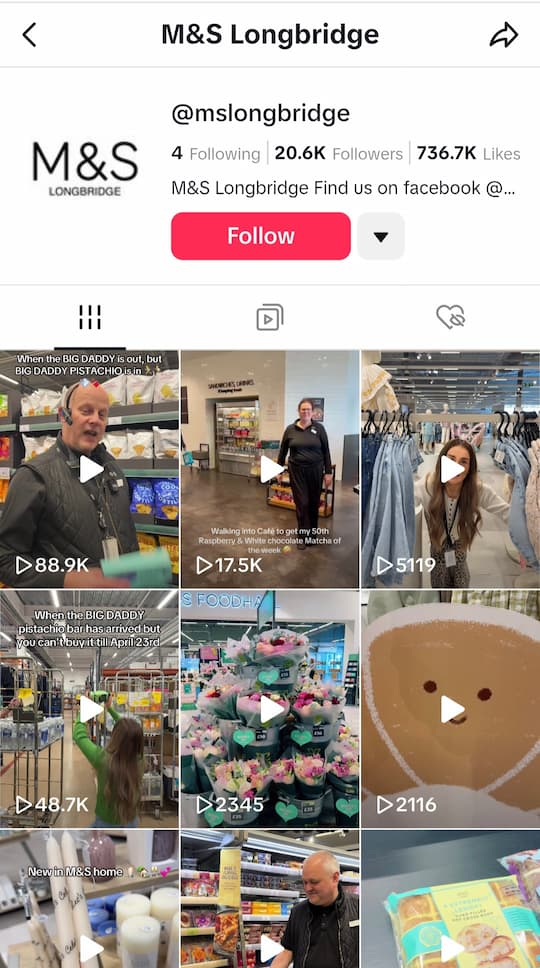
By creating a recurring format that followers look forward to, they’ve built a community that returns for the characters as much as the products.
Actionable takeaways:
- Cast your in-house talent: It’s time to ditch the corporate broadcasts. Why? Because people connect with people, not logos. By consistently featuring familiar faces from your own team, you build genuine connection with your viewers. When your audience recognises a face, they pause their scrolling, effectively turning cold prospects into a warm, invested community that wants to hear what you have to say.
- Leverage creator equity: Don’t just pay an influencer for a one-off shoutout. UK audiences are savvy; they can spot a transactional cash-grab a mile off, and it does nothing for your long-term retention. Instead, invite relevant creators to feature as recurring guests in your series. This transitions the dynamic from a standard sponsored ad to a genuine partnership, allowing you to seamlessly borrow their hard-earned community trust. If you’re keen to scale these partnerships properly, dive into our comprehensive guide on crafting an impactful influencer marketing strategy.
3. The shift from social feeds to social search
When was the last time you Googled a product recommendation and actually trusted the first page of results? UK consumers are increasingly moving from traditional search engines in favour of social networks to find authentic, human-verified answers. Social media isn’t just a place to endlessly scroll anymore; it has officially evolved into the modern “Answer Engine.”
Modern consumers are highly skeptical of overly polished, faceless affiliate articles. They crave visual proof and peer validation. They want to see a product in action, used by a real person, to get the unfiltered truth before parting with their hard-earned cash.
If you think this is just a fleeting Gen Z fad, the data tells a different story. While it’s true that for Gen Z, TikTok is a search engine and the top channel for product discovery (with 49% of Gen Z consumers turning to the platform), older demographics are actively searching elsewhere. Facebook is actually the #1 network for product discovery, with nearly 40% of social users using it to find new products. Meanwhile, YouTube has solidified itself as a budding destination for product education, where 24% of users find new products.
UK social search spotlight: Gymshark
Gymshark know their audience uses social media as an Answer Engine. Instead of just posting highly polished adverts, they actively optimise their content and creator partnerships for search.
When you search for them on TikTok, the results are flooded with highly specific, keyword-rich videos like “Gymshark Everyday Hold review,” “What to buy from the Gymshark sale,” and “Gymshark beginner workout.” They ensure their captions, on-screen text, and hashtags are packed with the exact terms their community is searching for.
Actionable takeaways:
- Optimise for Search and GEO (Generative Engine Optimisation): Treat your social posts like you would a high-value landing page. Ensure your captions, on-screen text, and video transcripts are packed with natural, conversational keywords. Social algorithms and AI chatbots scrape this exact text to serve up answers to user queries.
- Pivot to utility-first content: Stop broadcasting a list of your product features. Instead, use social listening tools to uncover the exact, highly specific questions your UK audience is asking, and create content that acts as the definitive, helpful answer.
4. The rise of Dark Social: Building communities on WhatsApp and DMs
The days of relying solely on public feeds for community building are fading. With organic reach proving increasingly difficult to secure, savvy UK marketers are officially shifting their focus to smaller, private digital spaces, often referred to as Dark Social.
The data speaks for itself. In the UK, a staggering 85% of users interact with brands on WhatsApp at least once per week—the highest engagement rate across all surveyed regions. Furthermore, 31% of UK consumers are so invested that they contact brands multiple times per day on the network.
Why the retreat to private messaging apps? As public feeds become heavily saturated with algorithmic recommendations and sponsored ads, users are experiencing severe content fatigue.
British audiences are naturally gravitating towards spaces that feel curated, intimate and entirely free from the noise. Private channels offer a high-trust, low-friction environment. When a customer has a query about a delivery or wants a personalised product recommendation, they want a direct, one-to-one conversation rather than leaving a public comment and hoping for the best.
UK dark social spotlight: ASOS
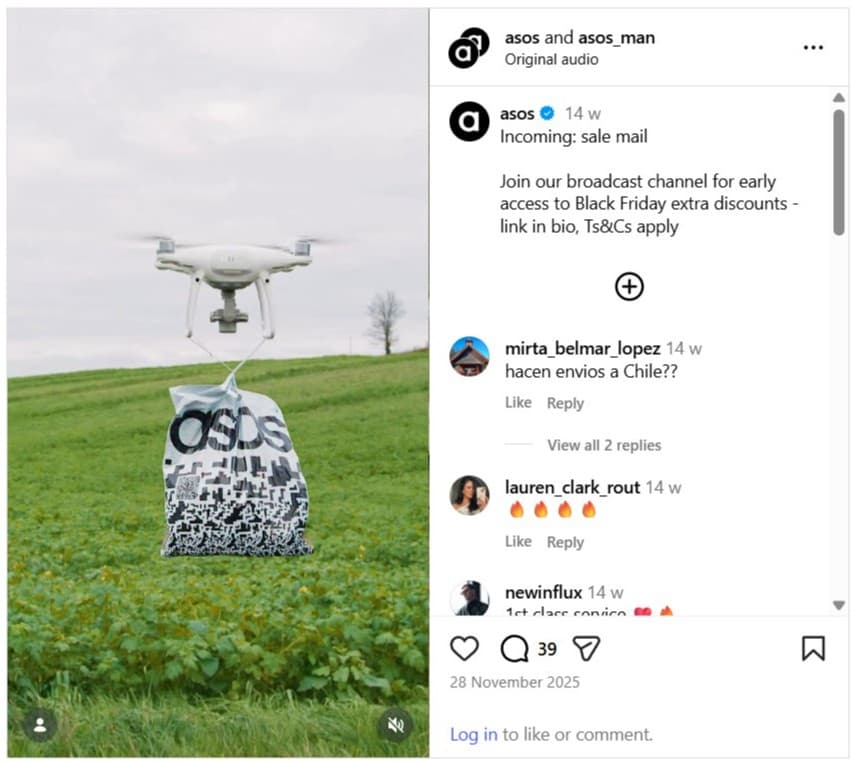
ASOS cultivates niche resonance by using private digital spaces like Instagram Broadcast Channels to deliver exclusive early-access codes and “lo-fi” updates, fostering loyalty away from the noise of the public feed.
Actionable takeaways:
- Launch a WhatsApp Channel for Care: 40% of users say they want companies to show up on WhatsApp specifically to provide customer service and support. Treat this as a direct extension of your customer care team rather than just another broadcast channel.
- Embrace “lo-fi” community building: Shift your support to DMs and private groups. Users want raw, conversational updates and direct dialogue in these spaces, which builds far more trust than highly polished, corporate advertisements.
5. Purpose-driven social media: navigating brand activism in the UK
The days of brands sitting comfortably on the fence are well and truly over. UK consumers are holding businesses to account, ushering in what we can only describe as a proper brand activism renaissance.
The data paints a stark picture: 63% of Gen Z and 57% of Millennials now state they are actively more likely to buy from companies that speak out on specific causes or current affairs that align with their own morals.
Modern buyers don’t just want a utility product; they want their purchases to reflect their personal values. However, when marketers reactively jump on a trending hashtag without a history of caring about the issue, UK audiences instantly clock it as performative. The resulting backlash is often worse than saying nothing at all. True resonance only happens when a brand’s stance is deeply anchored in its existing core values and backed by long-term, tangible action.
UK purpose driven social media spotlight: RSPB The Royal Society for the Protection of Birds (RSPB)
The RSPB perfectly balances purpose with personality. They use Bluesky to inform their 60,000 followers about vital bird conservation efforts, but they cleverly weave in relatable, properly funny bird-inspired memes to drum up engagement.
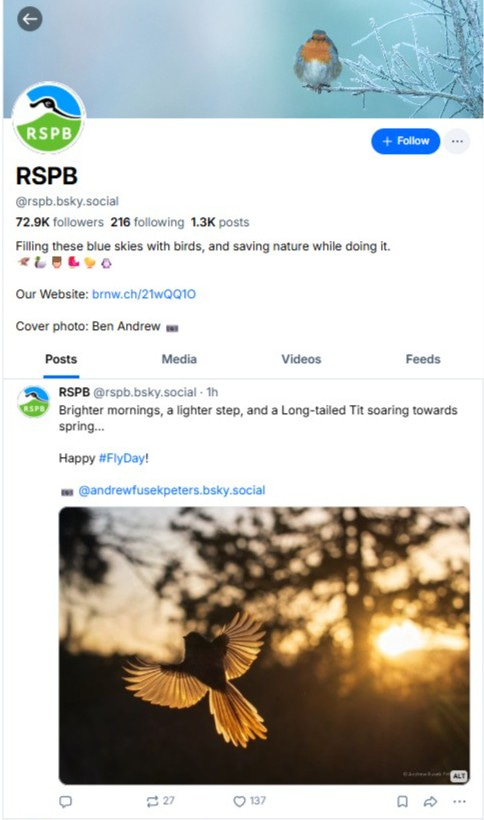
They prove that purpose-driven, activist content doesn’t have to be entirely doom and gloom, it can still be highly entertaining and inherently shareable.
Actionable takeaways:
- Listen before you speak: The most successful brands use social intelligence to understand what your specific audience genuinely cares about first. If you’re eager to dig deeper into this, discover how to capture and analyse true audience sentiment with our comprehensive guide to social listening.
- Stick to your brand’s remit: Only speak on issues that organically align with your brand’s heritage or operational footprint. If you can’t back up a supportive social media post with real-world company action or policy, it is always better to hold back and focus on your core offering.
6. Best social media networks for UK businesses in 2026 (Where to invest your budget)
There is a glaring disconnect between where UK brands are spending their social media budgets and where their audience is actually hanging out. Right now, UK marketers are putting all their eggs in the trend baskets, planning to heavily invest their resources into TikTok (73%), Instagram (69%) and Facebook (64%) in 2026.
However, UK consumers are telling a very different story. When asked where they actually plan to spend more of their time, 34% pointed to Facebook, 29% to TikTok and WhatsApp, and a solid 25% to YouTube. Marketers may find themselves shouting into a void on networks their audiences are merely passing through.
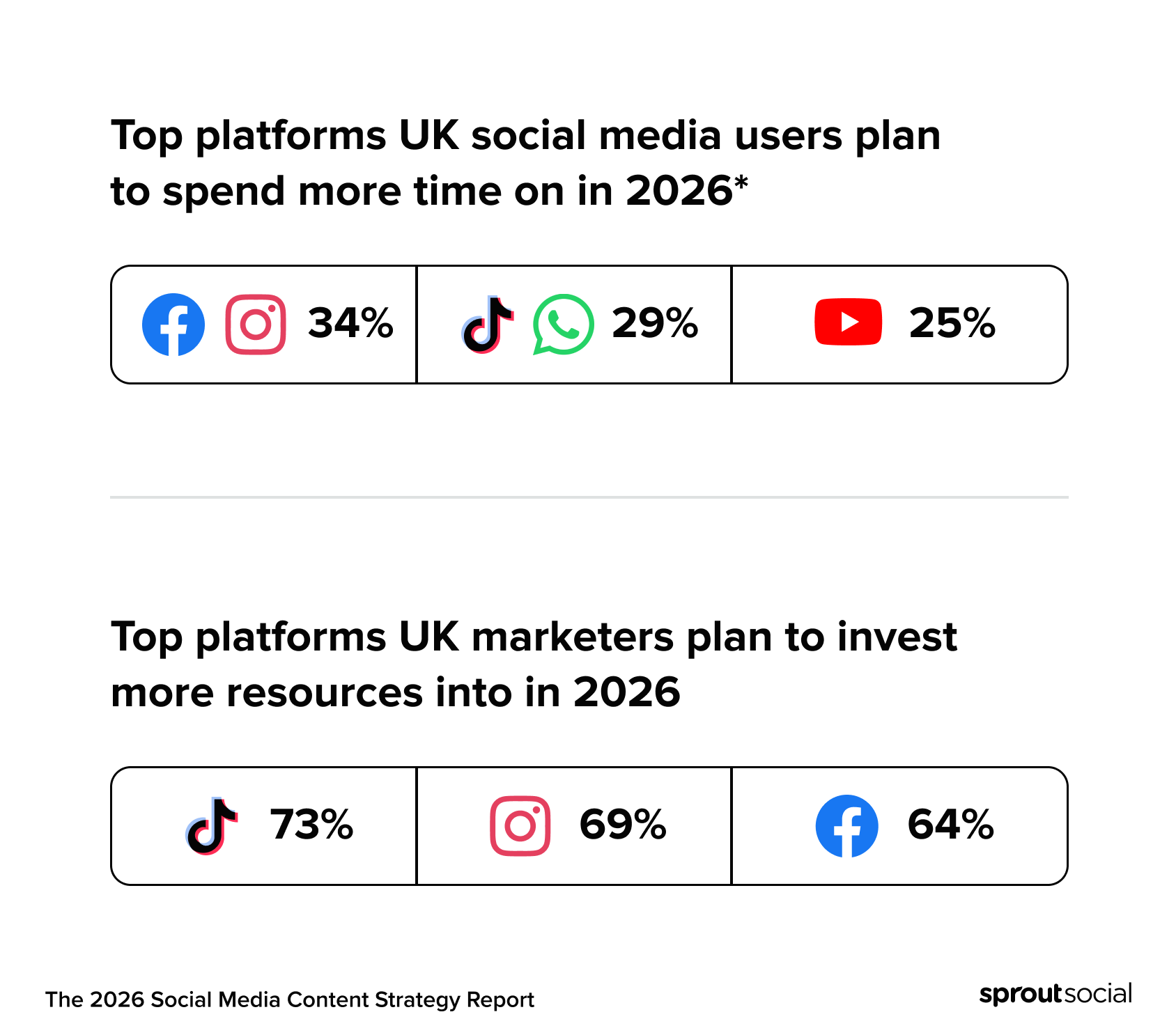
Why are we getting it so wrong? It ultimately boils down to the marketer’s echo chamber. We spend our days reading industry think-pieces about the explosive growth of TikTok, so we assume we absolutely must be there. We constantly chase the shiny new toy and falsely assume legacy platforms are dead or uncool. But the data doesn’t care about what’s cool; it cares about where the attention actually is. By letting our own biases and industry FOMO dictate our channel strategy, we leave a massive, profitable gap for competitors to swoop in and capture our actual buyers.
Actionable takeaways:
- Don’t sleep on Facebook and YouTube: It might not feel like the sexiest choice, but Facebook marketing remains an absolute powerhouse. It is currently the #1 network for product discovery, with nearly 40% of social users actively using it to find new products. Similarly, YouTube marketing is quietly dominating as a destination for long-form product education, with 24% of users using it to validate their purchases.
- Audit your channel strategy: Stop relying on gut feeling or copying what the wider industry is doing. You need to strictly cross-reference your channel investments with hard, audience-specific consumption data. If you are pouring hours of resource into Instagram Reels but your core buyers are actually searching for tutorials on YouTube, it’s time to ruthlessly reallocate that budget.
Mastering the new mandate
Success this year requires a shift in mindset. It’s no longer about how many people saw your post, but how many people valued it. By embracing AI as an analysis time saver, investing in episodic storytelling and nurturing private communities, your brand won’t just keep up, it will lead.
Ready to learn more? Download the full 2026 UK Social Media Content Strategy Report for more in-depth data and strategic frameworks.
37 free social media strategy templates that will elevate your workflows
Published on December 5, 2025 Reading time 15 minutes







Share