How to use social media market research to turn social data into strategic intelligence

Written by Sam Kendall
Published on January 28, 2026
Reading time 11 minutes

Table of Contents
Market research helps us better understand our customers and uncover new business opportunities. But traditional market research is no longer enough, now that consumer preferences and market dynamics change overnight. Social media is the new hub for discovery that bridges this gap.
Sprout’s Q2 2025 Pulse Survey found 37% of users prefer to search on socials for product reviews and recommendations. Social impacts almost every corner of content creation, from online marketing to the production of television shows. More people are using social media as a research tool, meaning its strength as a source of company-wide market research continues to grow.
But the dynamic and rich data source offered by socials isn’t always fully harnessed. You need to use social media market research to uncover critical customer, competitor and industry insights to maintain an accurate pulse on your market while keeping costs low.
We’ll outline what sets social media market research apart from alternative methods and list some of its key benefits. You’ll also see some of the main ways to leverage your social media market research strategy for the benefit of your entire brand.
What is social media market research?
Social media market research is the practice of gathering historical and real-time data from social media channels to improve your business. But it’s more than just monitoring and listening to your social channels; it’s about harnessing the data you’ve collected, and refining the methods you’re using, to create actionable social media intelligence.
Social media market research is a specialized application of open-source intelligence (OSINT), focused on harvesting and analyzing public data to improve business outcomes.
While more traditional forms of customer market research are still useful, like focus groups and surveys, social media market research gives you an unfiltered look into audience behavior. It allows you to collect different data points that can be grouped into both qualitative and quantitative categories.
Quantitative data refers to any data you can directly measure. Through social media market research, you can collect metrics like shares, comments and likes on your content and your competitor’s content.
In contrast, qualitative data can’t be directly measured, and includes data like the behaviors and opinions surrounding your brand on socials.
By combining these insights across social networks like Instagram, TikTok, X, Reddit, Facebook and others, you can accurately research how your brand is being perceived online.
The benefits of using social media market research
According to The 2025 Impact of Social Media Marketing report, 80% of marketing leaders are already planning to reallocate funds away from other, more traditional channels towards socials. Market research is no different, and this is because when it comes to customer centricity, content strategy and more, social media offers several benefits over traditional methods.
Becoming more customer-centric
Sprout’s Q4 Pulse Survey found that 55% of all users say most companies do a good job of listening to what audiences say on social media, but they don’t always act on those conversations.
Investing in social media market research clues you in on these audience conversations. It also gives you detailed insight that you can use to adapt to the desires of your audience. This allows you to become more customer-centric over time, and keeps you in tune with what your audience expects from your brand.
Improve audience segmentation
Conducting market research on social media helps you identify different segments of your audience. You can filter audience groups based on demographic and psychographic data like age, gender, location, engagement level, interests and other factors. You can then create a set of target personas based on this data.
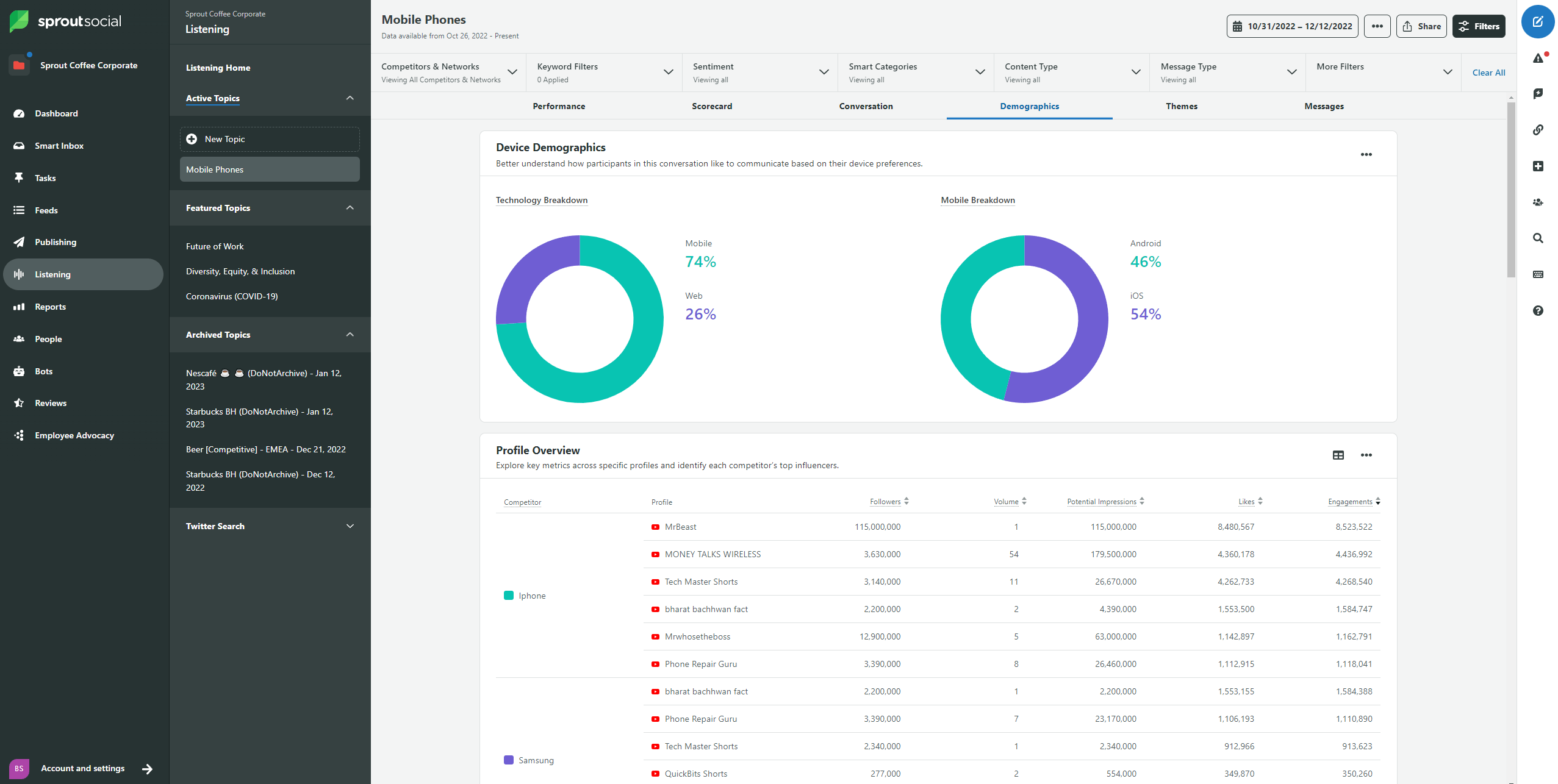
Once you’ve segmented your target audience, leveraging audience intelligence makes it easier to create personalized campaigns that cater specifically to certain demographics and measure performance.
Manage brand reputation
Users are turning to socials for reliable information. According to The State of Social Media 2025, 36% of consumers are more likely to trust information about a brand found on social compared to information found through other forms of search, like Google or AI chatbots. This increased trust in social media means it’s a vital channel for reputation management.
Use social media market research to conduct sentiment monitoring at scale. These insights reveal wider perceptions of your brand, competitors and industry, so you can get ahead of potential crisis points before they happen.
Optimize your content strategy
An effective content strategy is only as reliable as the data behind it. Use the data you’ve gained from your social media market research to conceptualize, guide and measure the performance of your entire online content strategy.
For example, your social research might uncover a new way customers are using your or your competitor’s products. You can harness this insight to design a content campaign around this new value proposition, which affords you a campaign that’s tailored to the demands of your followers.
Effective optimization means continuing to research and improve your strategy. By conducting social media market research frequently, you can continue to reveal new ways to adapt your approach.
Keeping ahead of competitors
Socials are small ecosystems, where you can learn about your brand and analyze your competition.
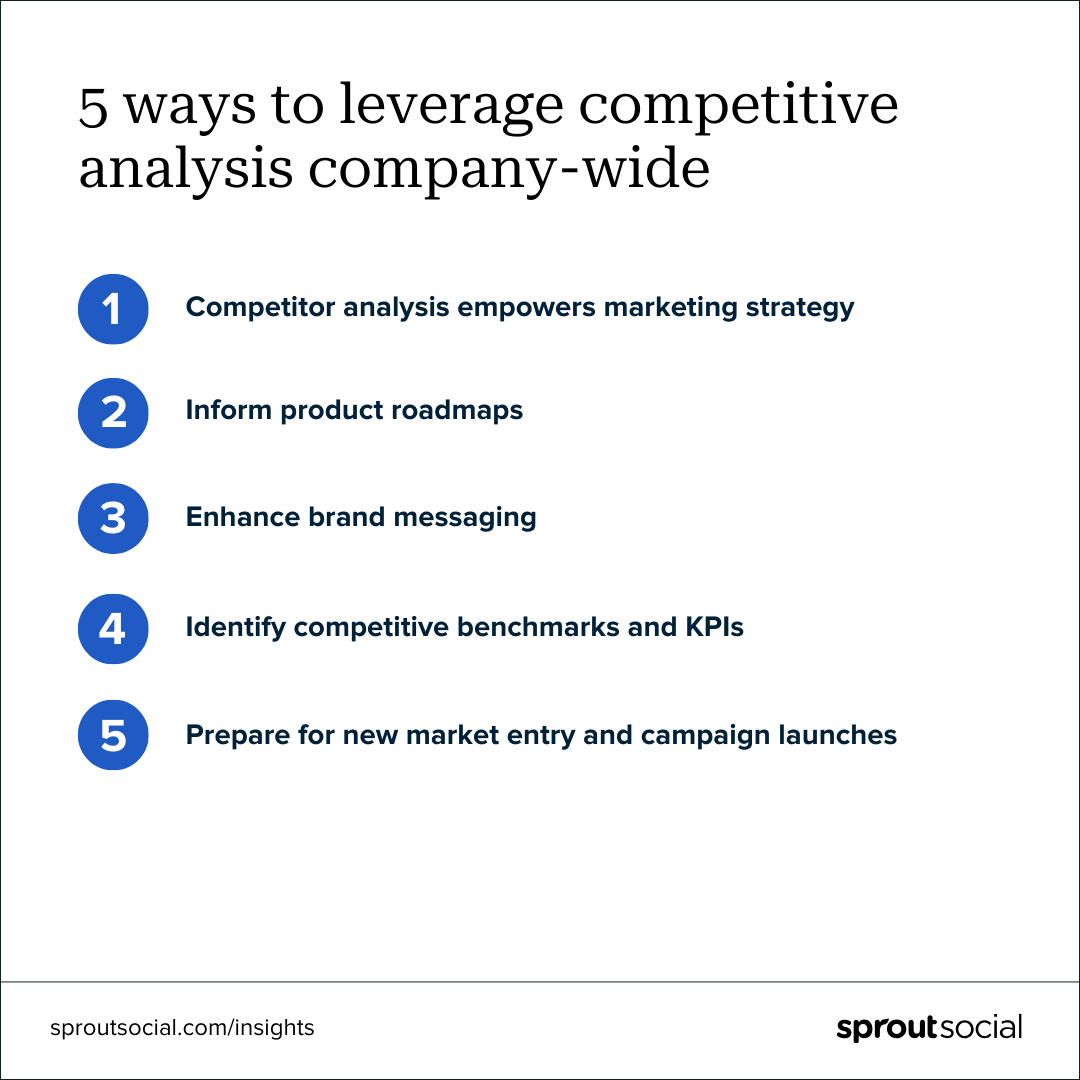
Social data taps into deep competitor insights, such as what people like about competing brands and how customers respond to them. All of which guide how you can differentiate yourself from the pack if you adapt your insights to impact the wider company. Beyond using competitive intelligence to empower your marketing strategy, these insights can inform your product roadmaps, identify benchmarks, provide insight into new markets and more.
Tap into online culture and predict future trends
There’s nowhere more appropriate for tracking online culture than socials, and it’s an area where most agree brands should be doing more. Data from The 2025 Sprout Social IndexTM found that 93% of consumers agree it’s important for today’s brands to keep up with online culture.
As well as meeting this expectation, social media market research allows you to get ahead of the game and predict future trends. Use social listening and other strategies to predict how customers will adapt to products and brands in the future, and start pivoting towards these movements.
A recurring social market research strategy means you stay ahead of the curve and can prepare your brand for tomorrow’s major cultural shifts. For example, 2025’s summer of celebrity showdowns between jean labels, showing how keeping (or not keeping) a pulse on culture impacts the resonance of campaigns.
How to use social media for market research
It’s one thing to conduct market research, but you also need to learn how to turn your insights into actionable social intelligence (SOCMINT). By turning your social media market research into intelligence, you can improve your discoverability, refine campaigns and center your brand around trends and customer voices.
These eight strategies explain how you can use market research and tools to extract social intelligence for your brand.
Identify audience segments
To properly identify your audiences, it’s worth first building out your community management strategy using social networks. Leverage platforms like Reddit to know what your audience is talking about and respond to threads directly.
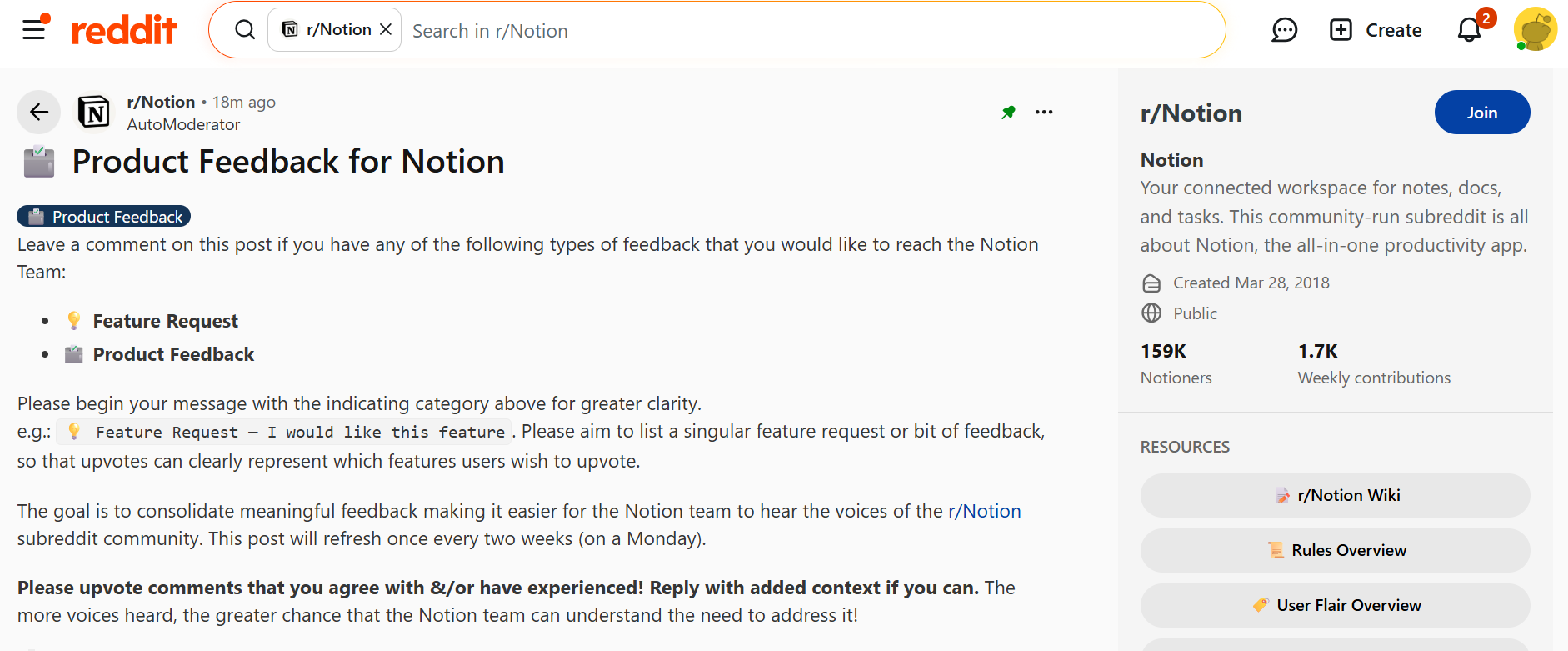
One example of brands making use of Reddit is Notion. They manage the r/Notion subreddit, and include an easy way for users to communicate feature requests or product feedback through a pinned conversation.
Tools like Sprout Social Analytics determine how users are engaging with your content, and who they are. Combine this with social listening to reveal even more data about their behaviors, and use all this data to identify key audience segments among your followers.
Then, create a target persona for each of these segments, and use this persona to create personalized content strategies tailored to their needs.
Social listening and monitoring
Social listening is its own irreplaceable technique when conducting social media marketing research. Use social listening to find out what your audience really thinks about your brand and content.
Customer comments are often not as simple as “I like [brand]” or “I don’t like [brand]”. Some are indirect, don’t tag your handle or misspell your brand name. A dedicated social listening tool navigates these issues to give you a clearer idea of what customers expect from you and distinct insights on how to address them.
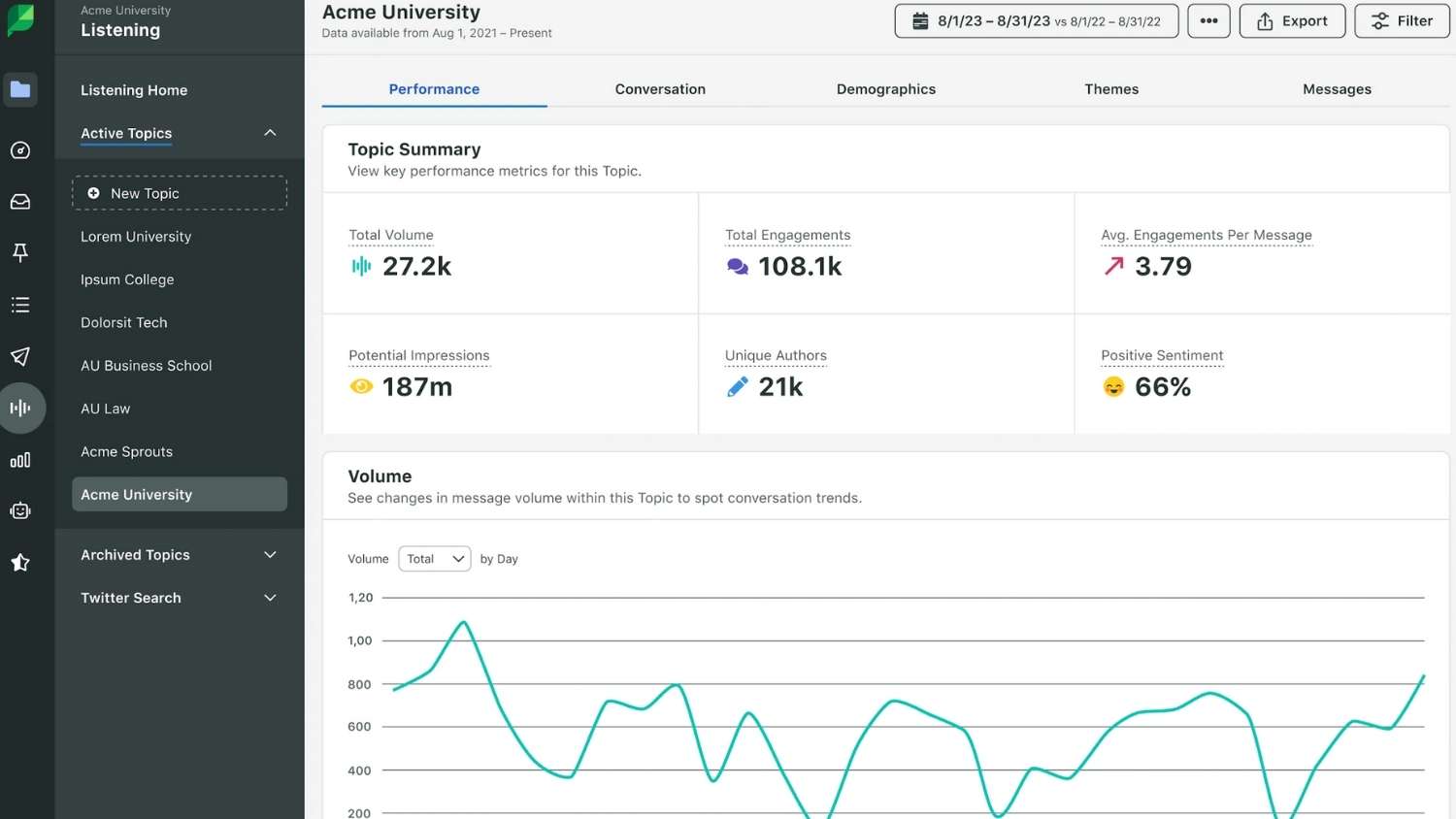
With social listening, you can focus on being active and proactive. Active social listening means adapting based on the data you’ve collected, and using it to inform changes in how you operate. Proactivity then means using social listening to get one step ahead of your audience. Create a proactive strategy for social listening that allows you to get ahead of conversations.
Listening tools can be combined with media monitoring tools, like NewsWhip by Sprout Social, to stay on top of conversations. Once you’ve collected this data, use Sprout listening to look at the long-term impacts of conversations surrounding your brand. You’ll better understand audience sentiments and learn to recognize cultural shifts, which you can adapt to in order to effectively optimize in the future.
Content analysis
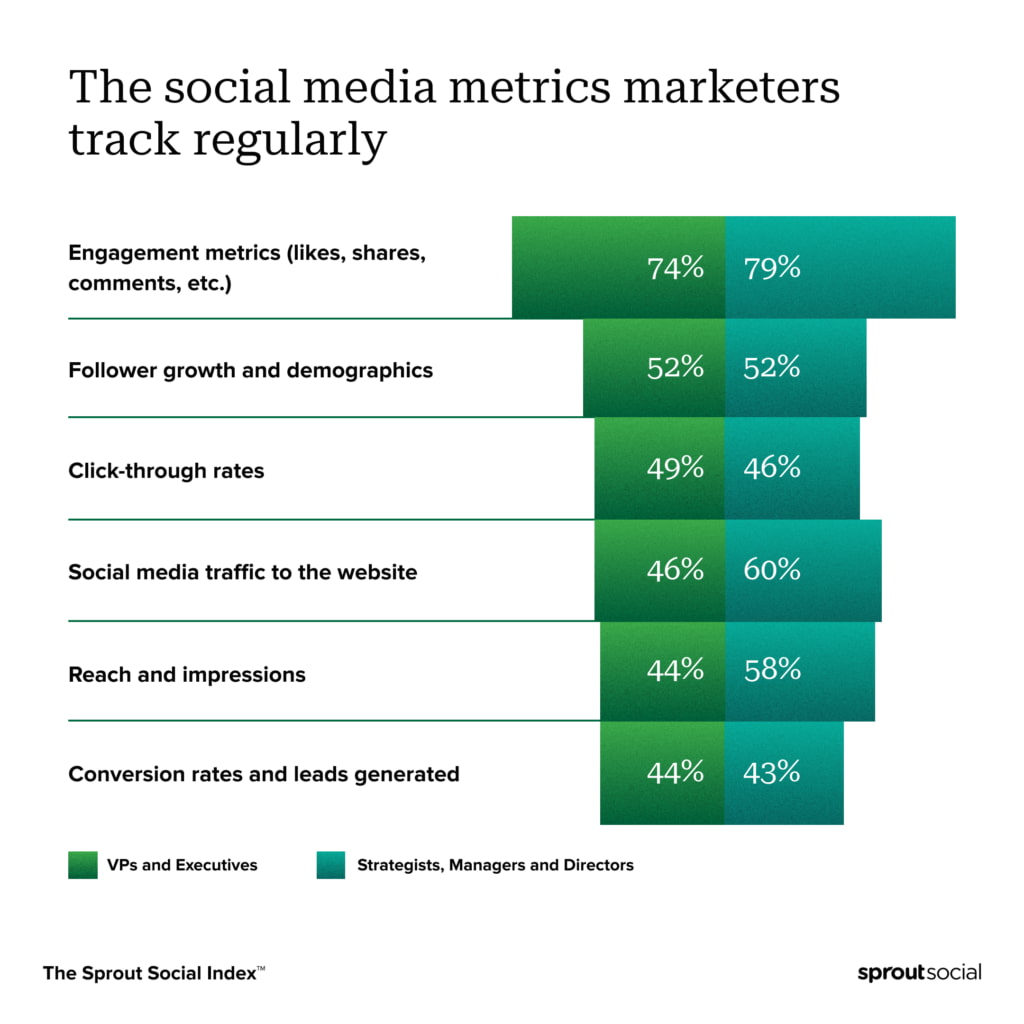
You can also use social media analytics to determine which of your content is performing well, and where there’s room for improvement. A social media management tool like Sprout provides granular insights into your content performance, down to the performance of individual posts.
Track this performance across different networks, post types and campaigns to reveal what’s really working for your brand. Then, alter your strategy so you’re creating more of this content, while modifying content types that could do with a refresh.
Trend analysis
Social listening can be used to discover popular trends within your industry and related to your brand. Don’t just focus on short-term changes; look at long-term trends that have evolved over time, and use this data to predict how your audience’s expectations might change moving forward.
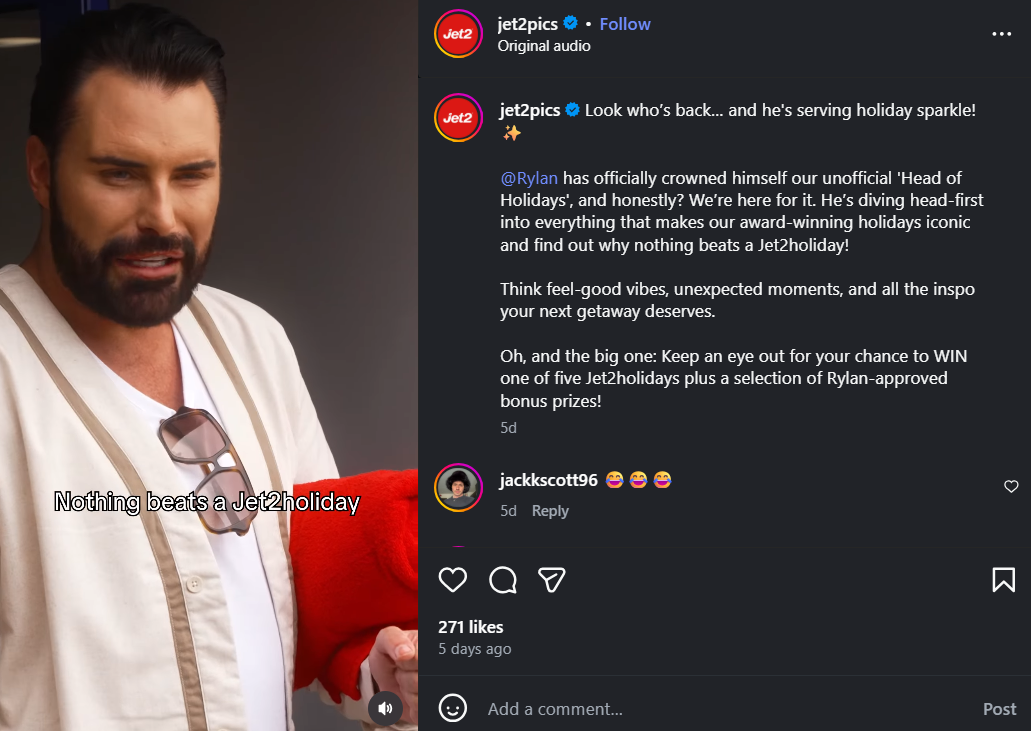
Throughout 2025, the UK airline Jet2 found itself at the center of an online culture trend around its slogan. The brand has continued to capitalize on this naturally occurring meme with a series of supportive content campaigns, most recently featuring UK celebrity Rylan. They’ve proven that the best way to keep a trend going is to support its growth with your own content, without going overboard.
Influencer mapping
Influencers continue to play a significant role in social media strategy. As their audiences grow, it’s essential that your social media marketing strategy also involves tracking and reacting to key influencer voices in your market.
With influencer mapping, you can track the most important influencers and voices within your industry, or in communities that matter to your brand. Tools like Sprout Social Influencer Marketing provide more detailed data on these influencers; who they are, what they post about, how they’re performing and the metrics that matter across their accounts.
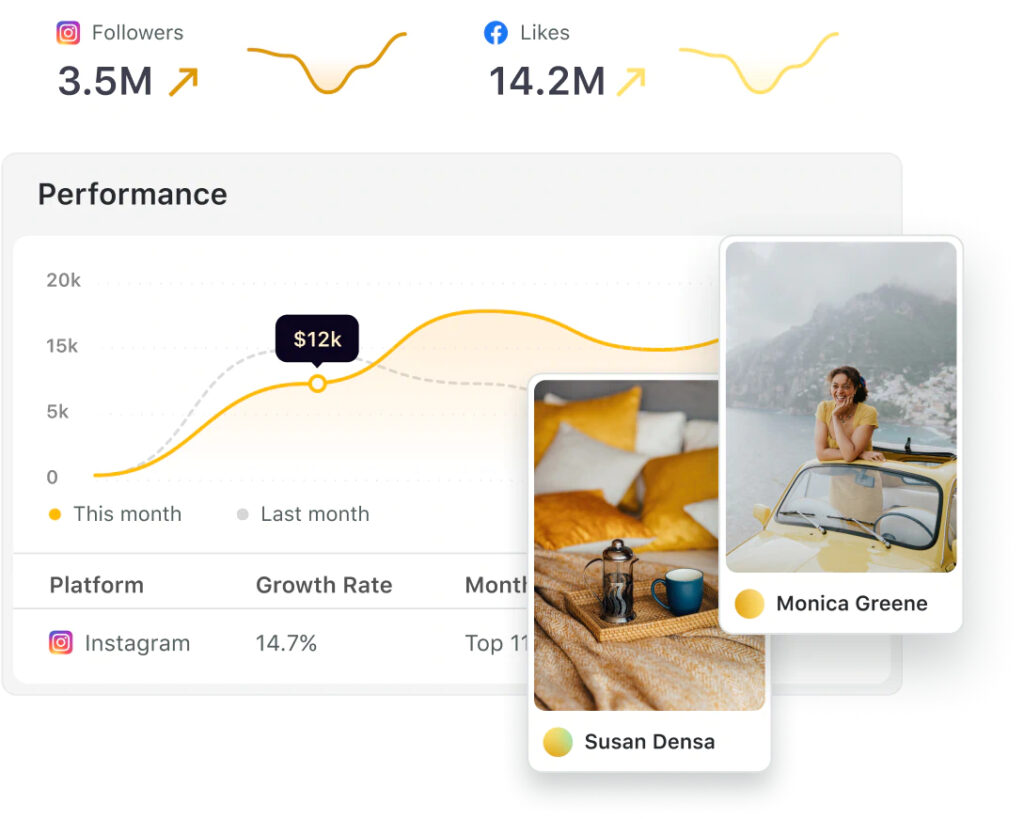
Mapping these individuals gives you a list of influencer marketing campaign partners who are the best fit for your brand. It also helps you discover and tap into niche communities where these influencers are active, and find ways of joining the conversation with your own content.
Competitor intelligence to know where you stand
Insights from social media market research guide your competitor strategy for short-term and long-term campaigns. The ability for social research to uncover competitor intelligence is one of the key reasons why, according to Sprout’s Q1 2025 Pulse Survey, one of the top specialized roles marketers would like to add to their teams is a social media intelligence lead.
One example of this is Turo, which is competing with traditional car rental companies. They regularly use their social content to compare their service to renting vehicles to explain why they are a better alternative.

Use social media research to understand your competitors’ content and ad strategy, track how the market responds to them and know where you are in terms of audience segmentation. With Sprout Social, you can set up a competitive analysis report across various social networks including review websites, like Google My Business, to track competitor benchmarks and understand your customers’ attitudes toward the competition.
Turn social data into actionable insights
Bring all the data, insights and recommendations from the strategies above together to create actionable social intelligence. This will connect your research to specific business goals, across your marketing department and the wider business.
As a first step, map your data to the key metrics that represent your customers, from how they engage and feel to what makes them convert, which every department cares about.
If you’re struggling with what to focus on, AI capabilities like those found in Sprout can help you transform millions of data points into insights that tell the story of how your brand, industry and audience are converging. Sprout also enables you to create custom reports, which can be downloaded via PDF or shared directly with others.
Build an integrated tech stack
Your social data shouldn’t live in a silo; it should flow through all of your platforms for a holistic view. Use tools that can integrate your social and customer data, so you can get a full view of customer behavior and connect your social media research to business impact.
Sprout integrates with several other leading providers, including Salesforce and Tableau, so you can unify your data and understand each step of the customer journey.
The challenges of social media as market research
Social media definitely isn’t perfect, so neither is the market research that comes from it. Keep these limitations in mind as you’re collecting and analyzing social media data:
- Representation bias. You may have some preconceived notions or assumptions when collecting data. Make sure you’re aware of these, as they could skew your findings if left unchecked. This is particularly important if you’re trying to predict future trends or changes through your research.
- Bots and bad actors. Unfortunately, social media remains vulnerable to bots designed to manipulate conversations and influence public opinion. Try to identify commenters as bots before you place too much value on their sentiments. But don’t dismiss bots entirely; look at the conversations they’re trying to start, and think about how those attempts might impact your brand in the future.
- Cultural nuances. When collecting qualitative data, think about the cultural nuances that might be present from certain commenters. Sarcasm, irony, pop culture references, memes, slang and other behaviors can distort sentiment analysis attempts if you don’t have the right context.
- Data privacy. Consider data privacy measures and laws when collecting any data across platforms. Similarly, make sure you keep your findings and social data protected.
- Fragmented data. Since social platforms are owned by different companies, each network has its own algorithm, and they don’t always share metrics. They also have different policies on provided analytics, which can lead to fragmented data across your accounts.
- Algorithmic opacity. There’s often some level of mystery around how different algorithms work, and each prioritizes different aspects depending on audience preferences and the network’s business goals. Bear this in mind when tracking organic trends across socials.
A social media management tool can help you navigate these challenges. Use a unifying social media marketing tool to bring all of your profiles under one roof, so you can more directly compare the similarities and catch the differences across networks. Advanced analytics tools can also help with mitigating bot data and irrelevant content by filtering the noise from your social engagement.
Lead the era of intelligence
Social media intelligence is no longer the future of effective research—it’s happening now. Brands that have already started to embed social insights into their market research and business strategy can continue to reap the rewards of rich social data, and are better positioned to define the next era of business.
See how you can start making use of the social intelligence at your fingertips by scheduling a Sprout demo today.





Share