How to pay influencers: Complete guide for 2026

Written by Jacqueline Zote
Published on June 15, 2026
Reading time 9 minutes

Table of Contents
From influencer discovery to campaign ideation, influencer marketing teams are already fluent in planning and executing campaigns. What they sometimes struggle with is the grueling admin work of managing influencer payments.
Between tracking down payment details and getting approvals for invoices, the process is tedious and prone to delays.
And after all the administrative back-and-forth, you end up with late payments and frustrated influencers. This quickly gets more complicated as you scale your creator program, meaning more tax documents to collect and more invoices to track.
But influencer payments don’t have to be a fragmented and headache-inducing manual workflow. This guide looks at how to pay influencers more effortlessly with automated tools and streamlined processes.
Let’s get started.
What are influencer payments?
Influencer payments are the compensation given to social media creators in exchange for promoting a brand and/or its products. Depending on the agreement, the payment may be monetary or in-kind, compensating influencers for their reach, time and content creation skills.
Traditionally, influencer payments were straightforward, often involving products, services or experiences as gifts in lieu of money. With the industry’s boom, compensation has now evolved into a critical business operations workflow that requires social media managers to work in tandem with finance teams.
How do brands pay influencers? 4 common compensation models
Brands choose payment models that work for them based on budget, goals and influencer marketing needs. This is a key consideration as you plan your campaign because it will influence a creator’s decision to work with you. According to The State of Influencer Marketing Report, 59% of influencers consider budget and payment structure to be the most important criteria when choosing a brand partner.
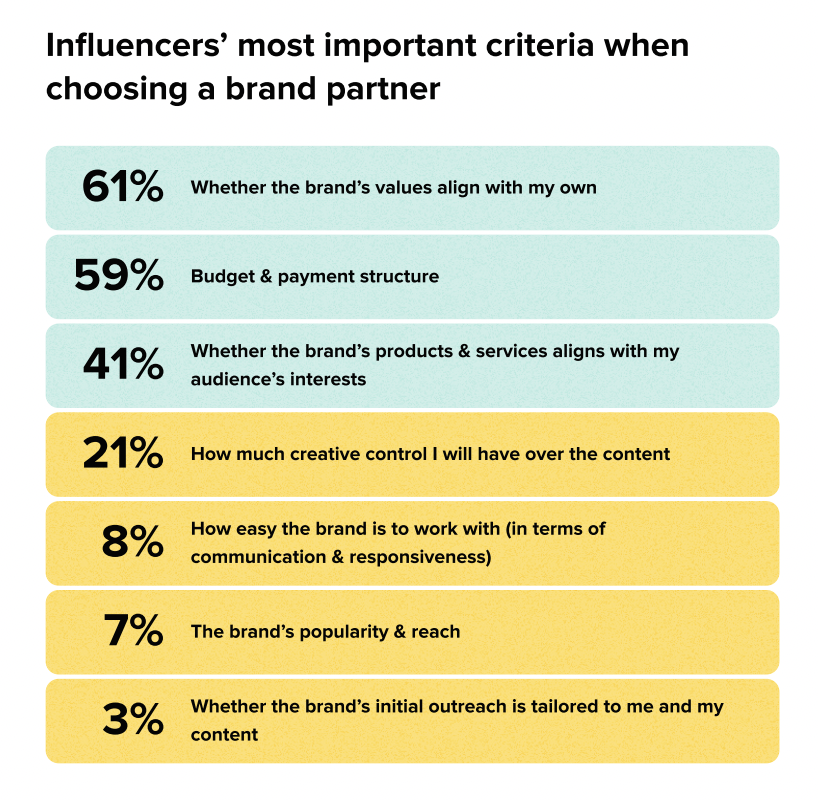
Here are the most common compensation models to consider.
Flat fee per post (fixed rate)
This is the most common model where brands pay a set price for a specific deliverable. For example, $100 for one Instagram Reel. Since the rates are fixed, it’s the most straightforward payment approach. It allows you to anticipate campaign expenses more accurately based on negotiated influencer pricing.
Sprout Social’s Influencer Marketing platform lets you create payment drafts within your campaign and log your fixed expenses cleanly before launch.
Performance and affiliate commissions
With performance-based models, brands pay creators a percentage of the sales they generate through unique tracking links or promo codes.
This is a profitable option as it allows brands to directly tie influencer fees to business outcomes. However, the onus is on influencer marketing teams to closely track affiliate terms, like commission percentages and conversion data, for accurate payments.
Sprout’s TUNE integration makes it easy to centralize influencer performance data. This lets you calculate exactly how much you owe and create precise payment drafts based on actual conversions.
| Compensation model | Best for | Budget predictability | ROI tracking | Sprout Social support |
|---|---|---|---|---|
| Flat fee per post | One-off campaigns, brand awareness | High | Moderate | Payment drafts within campaign workflow |
| Performance/affiliate commissions | Direct response, e-commerce | Low (variable) | High | TUNE integration for conversion tracking |
| Product gifting / in-kind | Nano-influencers, seeding campaigns | High | Low | Expense logging for in-kind value tracking |
| Long-term retainer | Ongoing brand ambassadors | High | Moderate | Centralized payment history by creator |
| Hybrid model | Performance-driven long-term partnerships | Moderate | High | TUNE + payment drafts combined |
Product gifting and in-kind exchanges
Often used for nano-influencers or influencer seeding campaigns, this model involves sending free merchandise or providing complimentary services in exchange for content.
While this type of in-kind payment is more cost-effective for brands, ROI tracking becomes tricky since no cash changes hands. Teams need to record the value of these gifts or “in-kind” exchanges to accurately measure influencer marketing ROI.
Long-term retainers and hybrid models
Some brands choose to retain top-performing creators on an ongoing monthly basis. While this type of long-term influencer partnership seems costly, the latest influencer marketing statistics show that it actually saves you money. In fact, 71% of influencers offer discounts when brands hire them to create multiple posts.
Other brands even combine baseline flat fees with performance-based bonuses to create a hybrid model that balances predictability with scalable outcomes.
Manage every influencer payment in one place
Sprout Social’s Influencer Marketing platform connects payments directly to your campaign workflow—no spreadsheets, no platform-switching.
Popular payment methods and tools for creator payouts
From direct wire transfers to peer-to-peer payment platforms, brands have several options to send influencer payments.
Direct peer-to-peer platforms
Digital platforms like PayPal let you send payments directly to a creator’s associated email address. This is one of the most seamless options as you don’t need to exchange (or keep track of) sensitive banking information. It also supports global payments with automatic currency conversions.
Many influencer marketing tools integrate with these platforms to centralize payments.
Sprout Influencer Marketing’s PayPal integration lets you pay creators in 10 different currencies and maintain a centralized record of influencer payments. The built-in fee estimator makes it easy to accurately calculate payouts while accounting for transaction fees.
Best for: Quick, one-off global creator payments
| Payment method | Examples | Features | Pros | Cons |
|---|---|---|---|---|
| Peer-to-peer platforms | PayPal | Send payments directly to creator’s email address; automatic currency conversions | Quick and effortless; easy global payments | Not suitable for large-scale payouts; only provides US-based tax compliance |
| Invoice-based compliance networks | Lumanu | Invoice-based funding model; master vendor | Reduced admin work; global payments at scale | — |
| Off-platform | Physical checks, ACH, wire transfers | Direct payments outside of dedicated platforms | Flexibility for varying payment preferences | Manual and prone to errors; tracking difficulties |
Invoice-based compliance networks
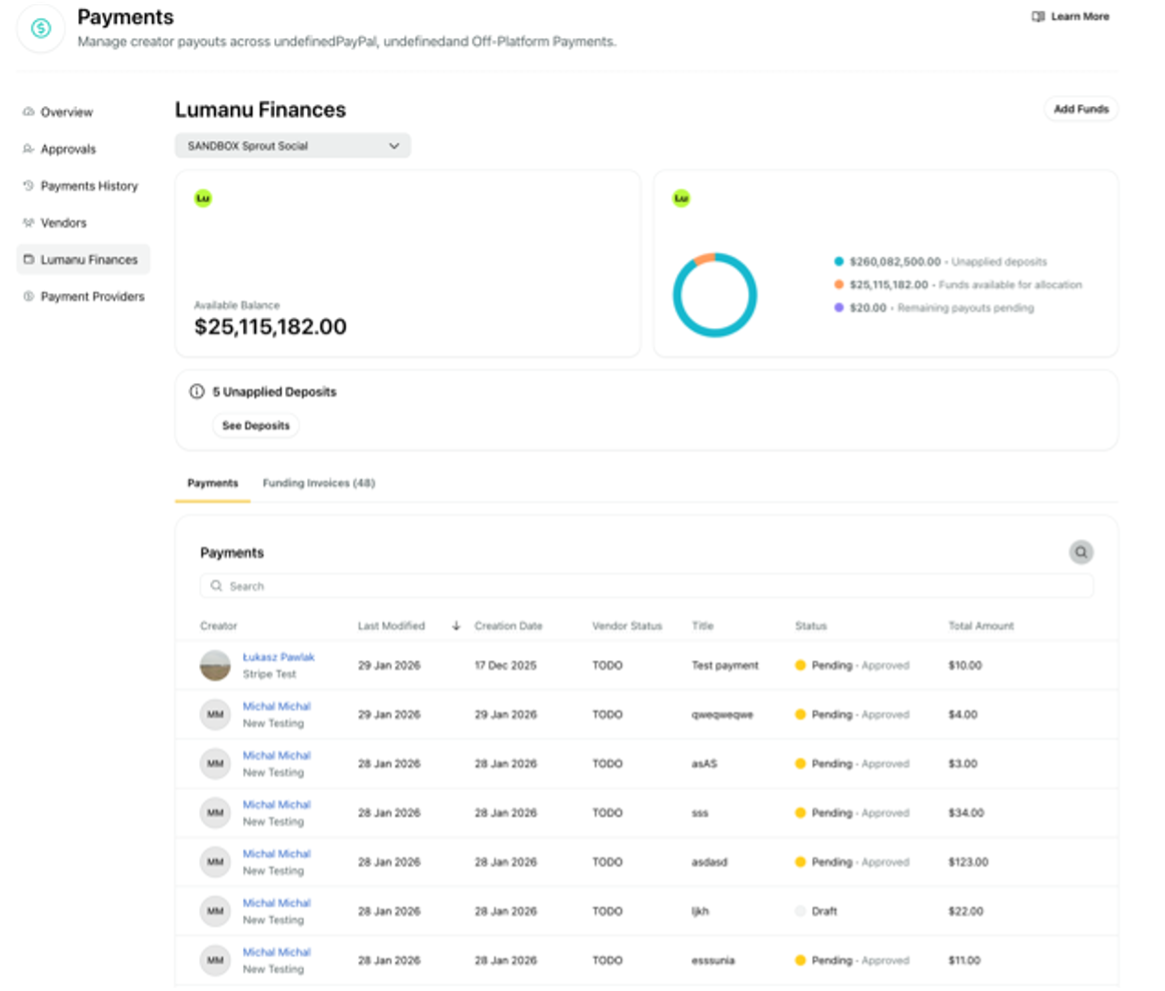
Payment platforms like Lumanu centralize compliance and invoicing for large-scale influencer payouts. It uses an invoice-based funding model that lets corporate finance departments fund a secure balance and seamlessly disburse multi-currency payouts. The platform serves as a master vendor, streamlining admin work related to onboarding, tax and compliance.
With Sprout Influencer Marketing’s Lumanu integration, you can easily send and approve payments within the Sprout campaign workflow. You get real-time visibility into payment statuses and full ledger balances, so you know exactly where funds stand.
Best for: Enterprise accounts scaling global payouts
Wire transfers, checks and manual tracking
Another option is to pay influencers directly through physical checks, wire transfers or automated clearing house (ACH). It’s harder to keep track of these transactions since they’re highly manual and take place outside a dedicated platform. But you still need to document them for a clean internal audit trail.
Sprout’s Influencer Marketing payment solution lets you maintain a centralized record of all your payments—including off-platform transactions. (Note: No funds move through the platform; this is a tracking record only.)
Best for: Individual one-off payments
Best practices for managing influencer payments
Companies still fall behind on payouts even with the right influencer payment tools. And they don’t automatically become better at recording expenses. Let’s look at some of the best practices to improve how you pay influencers and how Sprout’s influencer payment solution can help.
Establish contracts and due dates
Start with a clear understanding of when payments are due and how influencers want to receive payments. For example, you could establish that influencer payouts are made in bulk on the 5th of every month instead of individually paying each influencer after they submit content.
Set expectations with influencers early on in the negotiation process to avoid delays and miscommunications. This ensures timely payouts and helps finance teams anticipate cash flow needs based on upcoming project pipelines.
| Best practice | Why it matters | How Sprout Social helps |
|---|---|---|
| Establish contracts and due dates | Prevents delays, sets clear expectations with creators and finance | Bulk payment scheduling within campaign workflow |
| Simplify tax compliance | Reduces risk of errors across domestic and international creators | Lumanu integration automates W-9/W-8 collection and 1099 filing |
| Maintain an audit trail | Ensures clean financial records and seamless corporate reconciliation | Filterable payment history with exportable audit-ready CSV files |
| Use an all-in-one platform | Eliminates platform-switching and disconnected workflows | Payments integrated directly into campaign management |
| Centralize payouts in a dashboard | Gives marketing and finance shared visibility into budget and payment status | Native Payments Dashboard with real-time status tracking |
| Empower creators with self-service | Reduces back-and-forth and protects sensitive brand financial data | Creator Hub for secure payment detail management and payout tracking |
Simplify tax compliance and reporting
Tax documentation is one of the biggest friction points when it comes to influencer partnerships. It’s easy to keep track of W-9s from a handful of local influencers. But between varying state regulations and international tax laws, compliance gets even trickier as you scale your creator program.
Simplify this aspect of your influencer payments using dedicated tools.
For example, third-party settlement networks like Lumanu automate compliance by managing W-9/W-8 collection and issuing 1099s/1042-S forms on the brand’s behalf. Meanwhile, peer-to-peer processors like PayPal report via 1099-K thresholds.
Sprout’s Lumanu integration automates domestic and international compliance, eliminating the manual chore of collecting tax forms or distributing 1099s. Moreover, finance teams get to control exactly when funds are released through dedicated approval gates, ensuring a secure payout process.
And when the end-of-year reporting season comes around, Lumanu handles your IRS-1099 reports for you, ensuring timely and accurate electronic filing.
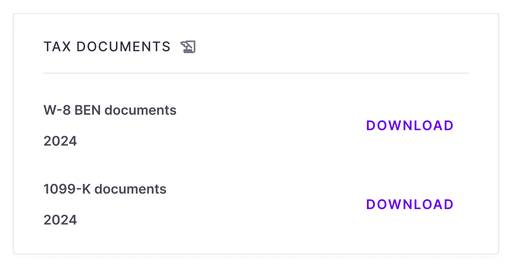
Source: Lumanu
Maintain an audit trail for clear financial records
Every campaign expense—from creator payments to platform fees—must be a part of your financial records to ensure seamless audits.
But relying on spreadsheets means having to manually check whether you’ve paid an influencer or which currency to use. It’s time-consuming and prone to errors, especially if there’s a disconnect between finance and marketing teams. Switch to dynamic reporting tools that let you organize your influencer payment records in one place.
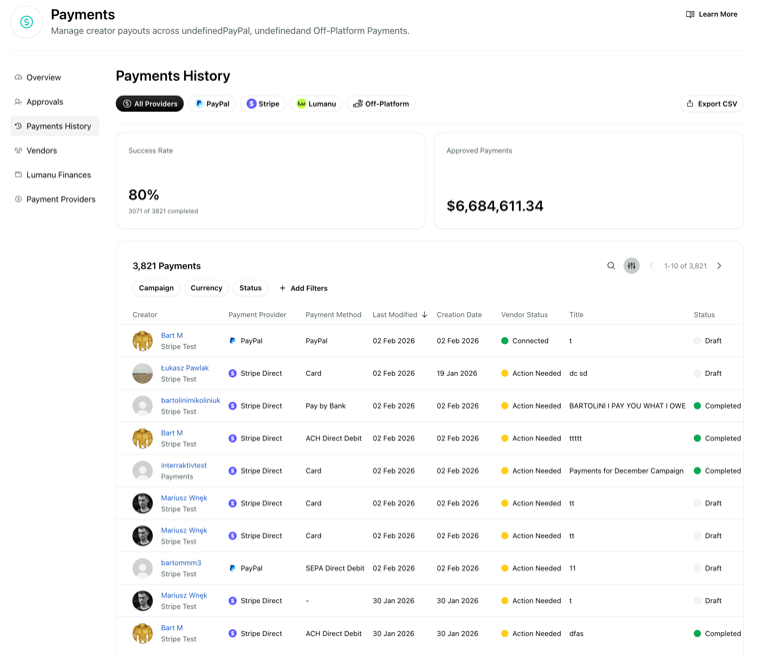
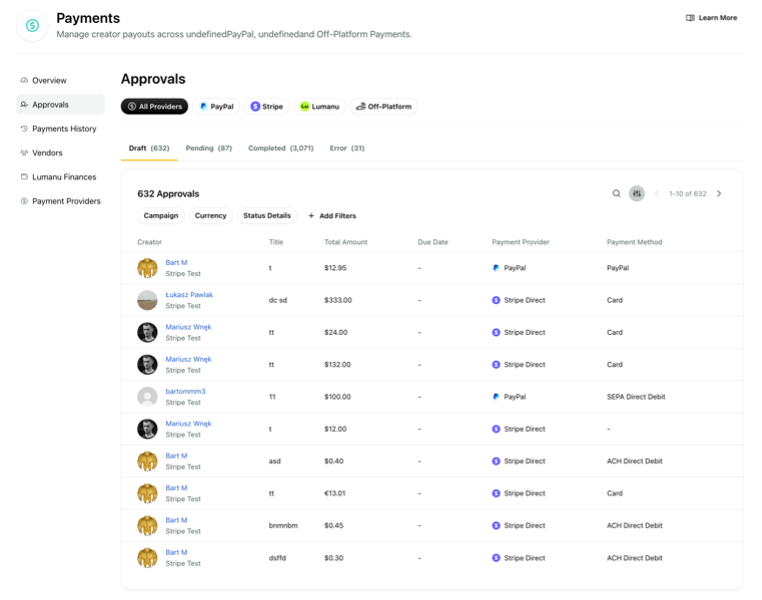
Sprout’s Influencer Marketing payment solution maintains a clear audit trail of your payouts, complete with relevant info on payment providers, payment methods, invoices and taxes. It lets you filter payment histories by campaign, currency or creator status, so you can quickly find what you need without digging through messy spreadsheets. You can even export structured audit-ready CSV files for painless corporate reconciliation.
Streamline your workflow with an all-in-one influencer payment tool
Third-party payment tools come with robust features to manage payouts and tax compliance. But they also require switching between multiple platforms as you manage the admin work alongside your campaigns.
An all-in-one platform helps you further streamline the process by letting you manage payments with other aspects of your campaign. Sprout Social Influencer Marketing’s Payment solution integrates payments directly into your campaign workflow.
You can find and recruit influencers, collect payment details, review and approve their content, track performance and send payouts—all within the same platform. It even lets you manage user rights, giving you control over who gets to approve payouts.
Centralize your payouts with the Sprout payments dashboard
Imagine having to request funds from finance to pay your influencers, only to find out that you’ve already used up your budget for the entire month. That’s what happens when campaign execution is separate from financial operations, often with finance teams holding all the cards.
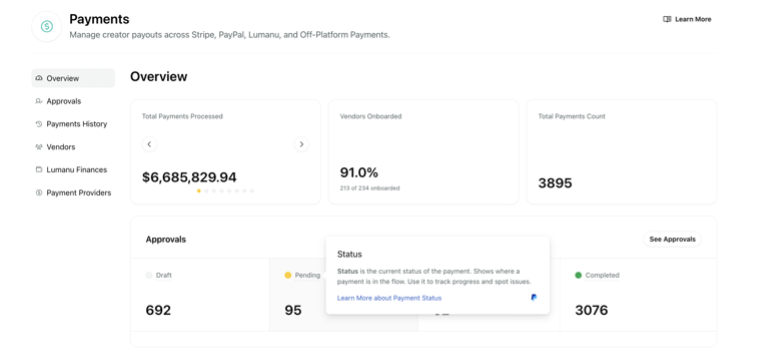
Sprout Influencer Marketing breaks down this silo, letting you connect influencer metrics directly into your budgets and deliverables. The native Payments Dashboard gives teams instant, high-level visibility into your campaign financials. You can keep track of total payments processed, payment statuses (Draft, Pending, Completed, Error) and general payout health for effortless management.
So it’s easy to catch payment errors or onboarding issues and fix them before they disrupt your payment workflow.
Empower creators with proactive tracking in Creator Hub
Whether it’s chasing invoices or hunting down missing payment information, neither influencers nor marketing teams like having to constantly go back and forth.
Sprout’s dedicated Creator Hub reduces this administrative headache with a streamlined onboarding flow. Creators can securely manage their payment details and proactively track incoming payout statuses on their own. They won’t have to send sensitive account information via email or constantly ask after a late payment. And they won’t ever have access to internal brand budgets or campaign metrics.
Stop chasing tax forms at year-end
Sprout Social’s Lumanu integration automates W-9/W-8 collection, 1099 distribution and IRS filing—so your team focuses on campaigns, not compliance.
Influencer payments made easy with Sprout Social
Paying influencers sounds simple enough. But with hundreds of tax documents to collect and dozens of currencies to keep track of, things can quickly get out of hand. Add lengthy invoice approvals to the mix, and you have a system that’s vulnerable to mistakes and delays.
Sprout Influencer Marketing’s payments solution lets you build payments directly into your influencer marketing workflow. This way, you can centralize all your documents and payment tasks without switching platforms or going back and forth with finance.
Scale your influencer program without the payment headaches
From recruitment to payout, Sprout Social Influencer Marketing handles the entire workflow in one platform.
It integrates with leading payment providers like PayPal and Lumanu to scale global payments effortlessly. You can even automate compliance, reducing the admin work of collecting tax documents and reporting.
Ready to see how payments work on Sprout Influencer Marketing? Schedule a demo today.
How to pay influencers FAQs
What's the difference between paying influencers via PayPal vs. Lumanu?
PayPal works well for quick, one-off payments to individual creators—especially for smaller programs. Lumanu is built for scale: it handles multi-currency payouts, acts as a master vendor for your finance team and automates tax compliance across domestic and international creators. For enterprise programs managing dozens or hundreds of creators, Lumanu removes the compliance burden that PayPal can’t address.
How much should you pay an influencer?
Influencer rates vary widely based on follower count, engagement rate, platform and content format. As a general benchmark: nano-influencers (1K–10K followers) typically charge $10–$100 per post, micro-influencers (10K–100K) charge $100–$500, macro-influencers (100K–1M) charge $500–$10,000 and mega-influencers charge $10,000+. But follower count alone doesn’t determine value—engagement rate and audience quality matter more. Use influencer pricing data and your campaign goals to negotiate rates that reflect actual business impact.
39 free social media strategy templates that will elevate your workflows
Published on August 20, 2026 Reading time 15 minutes










Share