How to build a brand newsroom

Written by Aubree Schaefer
Published on July 28, 2026
Reading time 7 minutes

Table of Contents
Key Learnings
- Driven by a shift where audiences favor social feeds and zero-click search over traditional media, modern brands are increasingly building internal newsrooms to directly engage their communities.
- A brand newsroom acts as an agile, cross-collaborative hub that unites marketing teams to scale timely insights, deepen audience understanding and proactively manage brand crises.
- By establishing structured team rituals and leveraging real-time listening tools, marketers can move past the slow approval chains of traditional PR to fully own their industry narrative.
Most people get their news on social media, according to the Q1 2026 Sprout Pulse Survey. They’re more likely to turn to social for news than TV, news apps or podcasts.
As their destination for news changes, so too do their sources. Sharing timely information has become widely democratized, and most people are likely to encounter reporting from media outlets, creators and influencers, and even brands when scrolling.
Changes to how people consume content—including turning to social and zero-click search—have left brands thinking beyond traditional channels and media outlets. To get in front of their audience, brands have started building newsrooms, even going as far as to hire journalists, as reported by Forbes.
At Sprout Social, our newsroom uses real-time data to make sense of the latest industry discourse and events. We analyze the data and distill it, unpacking what marketers should take away.

In this article, we’re sharing our experience building a brand newsroom, including what we’ve learned and how other marketers can implement their own.
Empower your team to spot timely trends, activate niche communities and act on moments that matter with our social media newsroom guide.
What is a brand newsroom?
A brand newsroom is a central workspace where collaborators across social, content, PR, communications and other marketing teams craft timely narratives and report on the latest news relevant to their audience.
Rather than only relying on traditional media, marketers use this hub to create newsworthy posts, articles and other brand content. This content includes thought leadership, original data and cultural commentary that shapes how the public views your brand.
For example, IKEA’s Responsive Project Team was formed to create content in response to “news, trends, pop culture moments and key calendar dates.” The team has published social posts inspired by popular TV shows, viral social media moments and trending cores.

The benefits of creating a brand newsroom
Brand newsrooms are about more than strictly trendjacking, though there can be crossover. They give marketers more control over their brand trajectory and help them adapt in a changing content ecosystem.
- Filling a gap left by traditional media. Traditional media companies have been losing resources and have been slower to adapt their content to social. Within your niche industry or the specific subcultures you serve, there may not be any reporting available where audiences are looking. A brand newsroom allows your company to step into the role of providing the social-first, culturally relevant content your audience is searching for.
- Granting marketers more control over their brand story. When brands rely on earned media and paid ads, their messages lose impact. By operating a brand newsroom, you control the narrative from ideation to distribution.
- Building the infrastructure to get ahead of a crisis. A crisis can balloon from a single comment to a viral trend in a matter of hours. Traditional approval chains are too slow to keep up with the speed of social. A brand newsroom is an operational blueprint that establishes pre-approved frameworks and a rapid-response team that is already used to working together on a daily or weekly basis. When a crisis hits, this infrastructure allows you to listen to sentiment in real-time and act quickly.
- Understanding your audience more deeply. Because you’re publishing at a journalistic frequency, you get a daily pulse check on what resonates. Traditional marketing often relies on lagging data, like monthly reports, focus groups or high-level demographic surveys. But by looking at real-time indicators like comments, shares and social conversations, you get a front-row seat to your audience’s needs.
Steps for building a brand newsroom (including what we’ve learned at Sprout)
Since we first formed our brand newsroom at the beginning of 2026, we’ve effectively grown our Substack, Social Futures, to over 1,800 followers and driven nearly 8,000 engagements across social networks.
Here are the steps we took to mobilize our brand newsroom, lessons we’ve learned along the way and what we still hope to figure out as we continue experimenting.
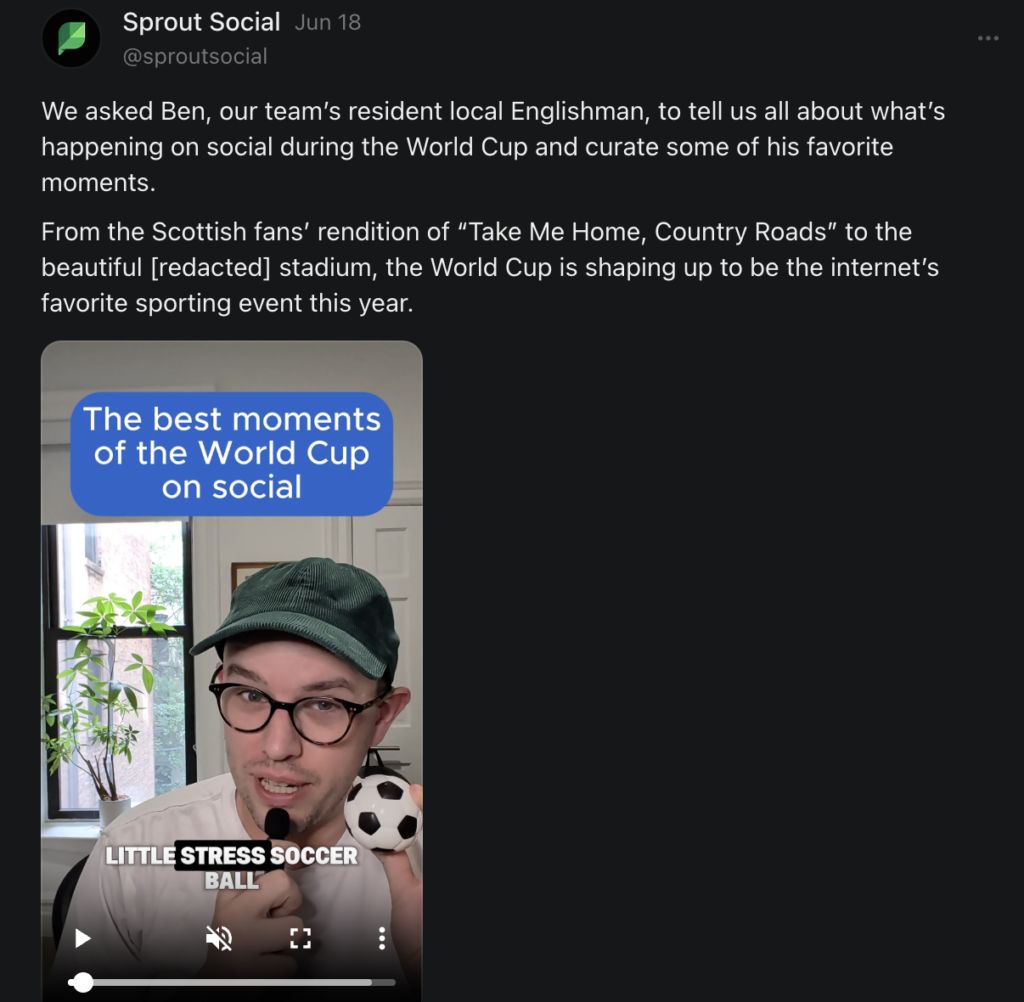
Assemble the cross-collaborative dream team
The first step in building our brand newsroom was bringing together collaborators across content, PR, social, communications, internal comms, campaigns and influencer marketing.
We knew it would benefit each group to be part of the newsroom. For social and content, it would increase reach and engagement. For PR, it would further amplify existing media coverage and repackage our data narratives. For internal comms, it would enable stronger industry knowledge across the company.
For all of us, this newsroom meant increasing our share of voice and resonance, while crafting Sprout’s distinct POVs together. As they say, “A rising tide lifts all ships.” When gathering the A-team, emphasize how the work you will do in the newsroom benefits everyone.
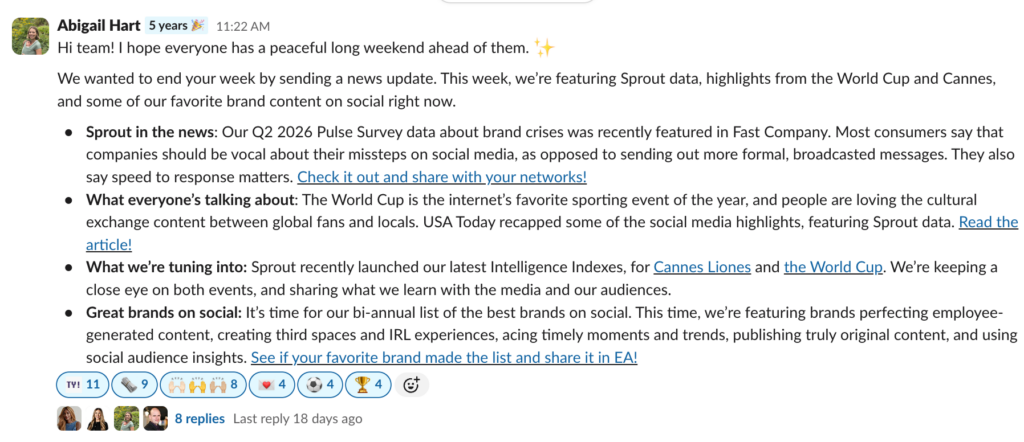
Having a solid cross-collaborative group guarantees that each team is working in tandem while still achieving their individual goals. As an example, this is a recurring internal post from PR and content that amplifies our work while keeping the entire organization in the loop on industry news.
Get access to the right tools
You need data to conduct research. Candidly, being part of Team Sprout gave us an advantage in the tools department. But we still had to make sure our team was up-and-running with our product, and understood how we would use different tools for different functions.
- Listening: Access a high-level overview of social conversation volume and sentiment, like we use in our Intelligence Index landing pages.
- NewsWhip by Sprout Social: Tap into predictive intelligence to understand how a story is evolving in the media and on social, like when we watched the Knicks’ NBA Championship hype build over time.
- Sprout Social Infuencer Marketing: Report on the success of specific brand campaigns and social posts, like we did for the Toy Story 5 campaigns.
These platforms made it possible to scale data collection and understand a timely topic from every angle. We were able to gather stronger insights—whether we needed to zoom out, zoom in or watch something unfold over time.
Establish newsroom rituals
As a remote team, it can be easy to work heads-down, churning out work without connecting what you’re doing to other teams. It was important to establish newsroom rituals so we could break down silos and commit to collaboration.
We meet to share a shortlist of the trends we’re seeing—both in feeds and in dashboards. We pitch ideas for content based on those trending and timely moments, and agree on a plan for bringing them to life. We stay in touch throughout the week asynchronously in our trending content newsroom Slack channel, where we facilitate approvals and resharing across channels.
By formalizing your meeting rituals and editorial planning—whether through daily or weekly standups—you create a predictable rhythm that allows your team to move fast without sacrificing quality.
Set goals and define your audience
Before setting new goals, it’s helpful to benchmark your current share of voice to measure how much of the industry conversation your brand is currently capturing and observe how it changes once you implement the newsroom. While we won’t show you our exact dashboards (we have to keep some things under wraps!), we built them using Sprout Listening in a very similar analysis as demonstrated in this social intelligence template.
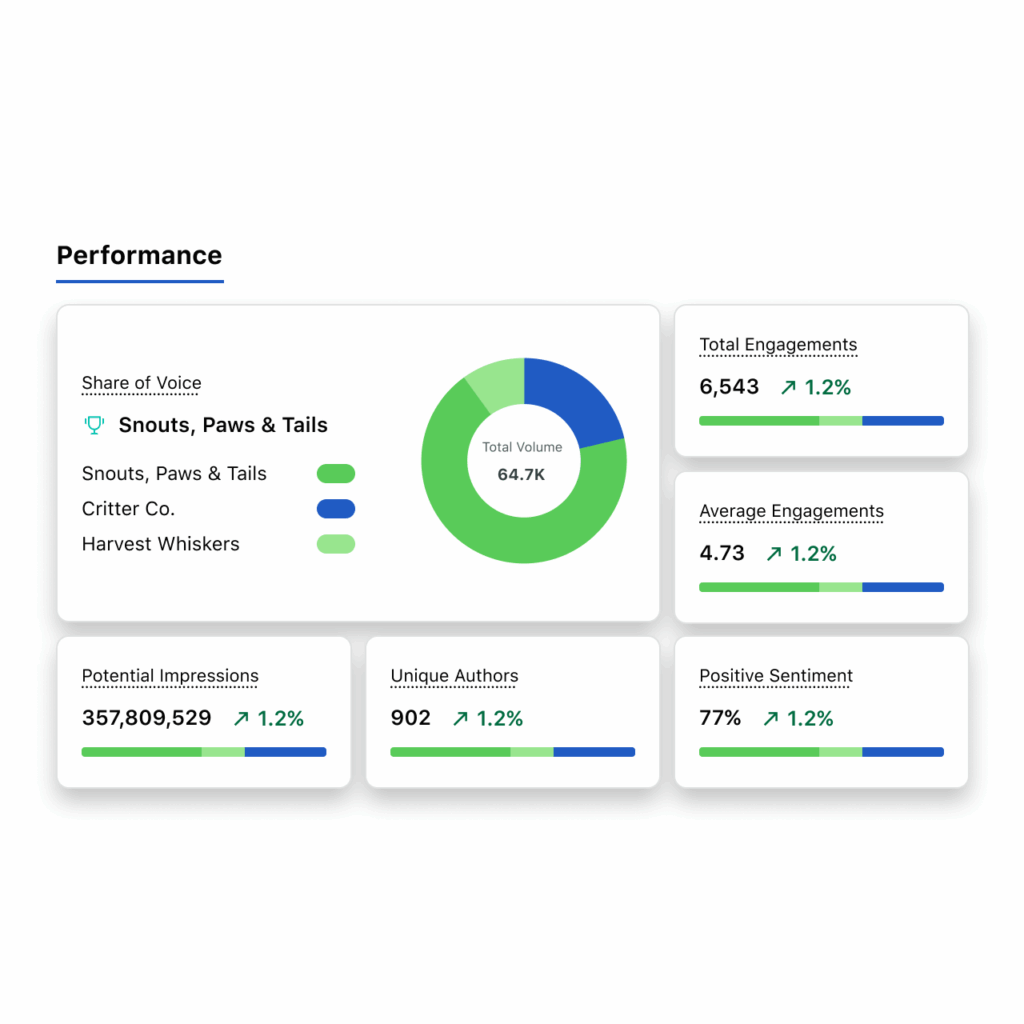
Next, determine exactly which audience segment you are most likely to reach with your newsroom approach, tailoring your editorial voice and topics to their specific needs. In our case, we realized social practitioners and managers were most likely to interact, so we stuck with the topics most important to them.
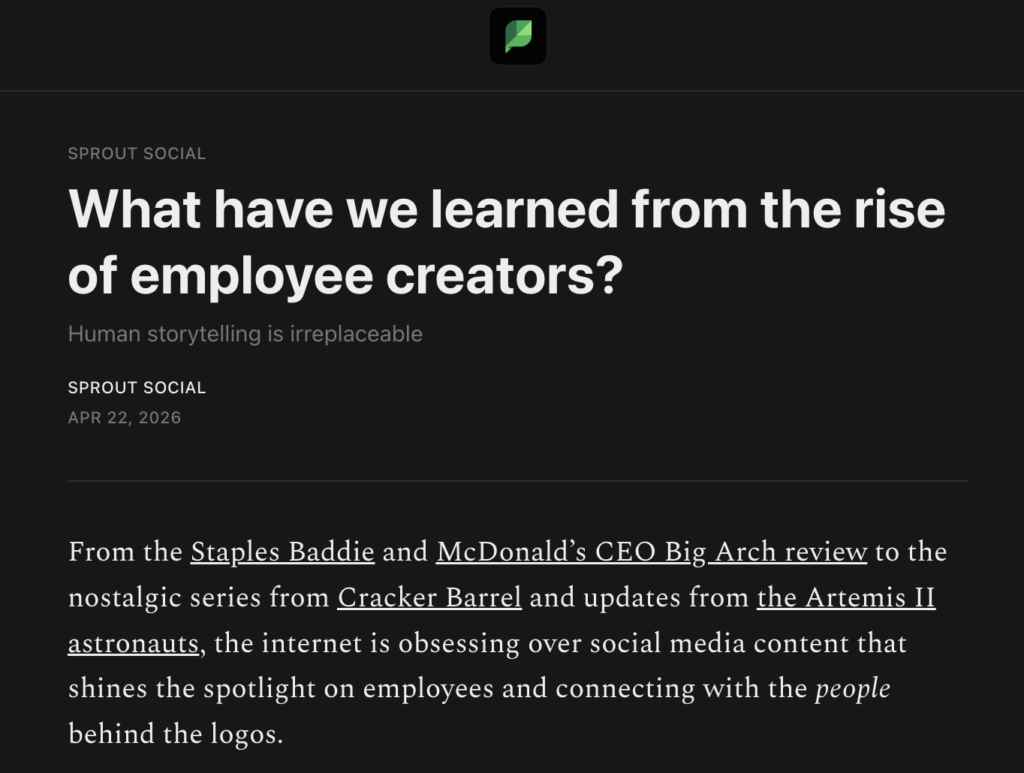
Note: It also makes sense to track how Answer Engine Optimization (AEO) influences your performance as much as you can. As AI-driven search engines work to answer user queries directly, demonstrating your visibility in AI search with this content will showcase how valuable a newsroom is to content discoverability.
Operationalize content development for each channel
Finally, make a plan to create content across channels. This step will likely stay ongoing as you figure out how to use different channels to achieve different goals. For example, we found that Substack is a prime channel for long-form essays that deconstruct macrotrends, while social is the best for reporting on breaking news, timely moments and proactive trendspotting.
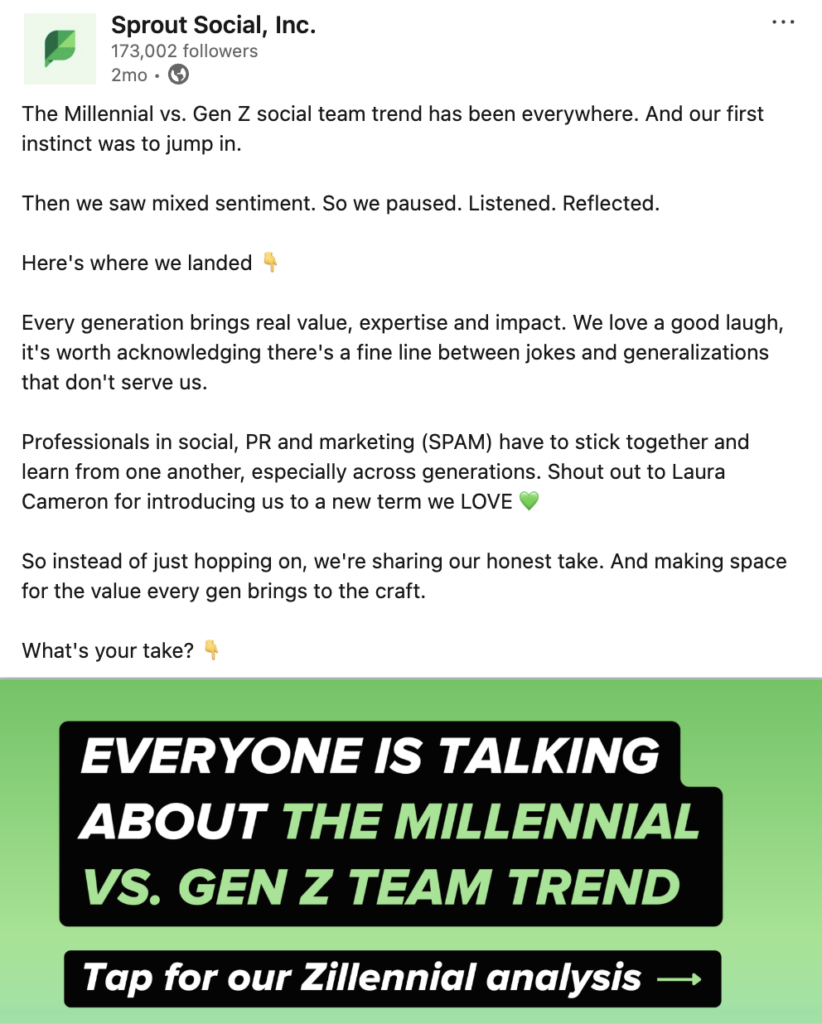
While it can be hard to figure out how much you should publish and what content works best, it’s more important to get your hands dirty and experiment rather than have all of the answers at the outset. Make sure to track your experiments across channels in a shared space, so all the teams involved can understand what’s working and what’s not. This might look like a shared spreadsheet with tabs for each experiment at the start, later evolving into a tagging system across content that helps you drill down into the details of each experiment. Once you see what’s getting traction, repeat successful content formats and series to hook and retain your audience.
Own your narrative with a brand newsroom
The way audiences consume information has fundamentally changed. The brands that lead their industry will be the ones that stop waiting for coverage and start creating it. Building a brand newsroom is a cultural shift toward agility, breaking down long-standing internal silos, equipping your team with real-time data tools and committing to regular collaborative rituals.
As you start pulling together your cross-functional team and experimenting with different content formats, remember that perfection shouldn’t be the goal. The internet moves too fast for perfect. Instead, focus on building the operational muscle to stay relevant, protect your brand and connect with your audience on a deeply human level.
Don’t just watch the conversation happen in your industry. Build the infrastructure to lead it with our social media newsroom template.
Frequently Asked Questions
What is the main purpose of a brand newsroom?
A brand newsroom serves as a central workspace where teams can craft timely narratives and report on the latest news relevant to their audience. Instead of relying solely on traditional media, it allows a brand to create newsworthy content—like thought leadership, original data and cultural commentary—that shapes public perception, adapts to a changing content ecosystem and lets the company directly own its story.
Who should be included in a brand newsroom team?
A successful brand newsroom requires a cross-collaborative “dream team” that includes contributors from across social, content, PR, communications, internal comms, campaigns and influencer marketing.
What tools are needed to run a brand newsroom?
To scale data collection and understand timely topics from every angle, a brand newsroom needs three core types of tools:
- Social Listening: For a high-level overview of conversation volume and sentiment.
- Predictive intelligence (like NewsWhip by Sprout Social): To see how a trend or story is evolving over time in the media and on social.
- Influencer marketing software (like Sprout Social Influencer Marketing): To zoom in on specific campaigns, creators and content performance.
How does a brand newsroom differ from traditional PR?
Traditional PR relies on earned media, meaning marketers have to pitch outside journalists and hope for coverage, which ultimately filters the brand’s message. A brand newsroom bypasses this middleman, allowing marketers to control the narrative entirely from ideation to distribution. Additionally, traditional PR approval chains are often too slow to handle modern internet crises, whereas a brand newsroom creates an agile operational blueprint and rapid-response infrastructure to listen and act in real time.
39 free social media strategy templates that will elevate your workflows
Published on August 20, 2026 Reading time 15 minutes









Share