Enterprise social media: The tools your organization needs to excel on social

Written by Ronnie Gomez
Published on March 13, 2026
Reading time 14 minutes

Table of Contents
If your marketing tech stack is a puzzle, then picture your enterprise social media management tool as the final piece that pulls it all together.
Traditional systems like CRM and BI track the structured records of your internal history—what has already happened inside your business. Social media management adds social intelligence to complete this ecosystem by capturing the real-time, unstructured context of the market—what is happening right now.
Once it locks into place, you eliminate the critical gap between internal data and external truth, gaining the reasoning and “why” behind every consumer data point.
When searching for your company’s missing piece, an informed decision is the best decision. Kicking off your selection process with a research phase focused on how to move from reactive reporting to predictive advantage will pave the way for superior performance outcomes.
Keep reading to find out what you need to know when choosing an enterprise social media management software that transforms social from a siloed channel into a source of verified business impact.
What is enterprise social media?
Enterprise social media is the strategic use of social networks and social media management tools by large organizations to manage complex brand ecosystems, facilitate global communication and drive measurable business outcomes.
While a small business typically focuses on localized brand awareness and direct sales through a handful of accounts, an enterprise company often manages a multi-regional presence that requires stricter governance.
In an enterprise environment, social media also serves more than marketing; it’s a cross-functional utility integrated with CRMs and business intelligence tools to handle everything from global crisis management and employer branding to high-volume customer support. This often requires multi-stage approval workflows and sophisticated tech stacks that ensure brand consistency across several local and corporate profiles to unify messaging and maintain security.
Why is social media for enterprise so important?
Social media has fundamentally altered the brand-consumer relationship. Industry trailblazers—who have championed a new era of brand relevance—have made consumers more receptive than ever to seeing businesses in their feed.
Audiences aren’t just passively consuming branded content, they’re looking for it.

According to The Sprout Social Index™, 68% of consumers follow brands on social media to stay informed about new products or services. Nearly half (48%) follow for access to exclusive deals or promotions.
Social has taken the mall experience online, where brands of all sizes compete for market share through strategic content and engagement.
The brands that maximize their use of social data to engage audiences are positioned to foster life-long fans—and generate meaningful revenue.
In a way, this gives smaller businesses a slight advantage, as smaller teams often have more streamlined approval workflows and less internal bureaucracy. If enterprise brands want to capitalize on the full impact of social media, they need to strive for maximum operational efficiency.
Succeeding in the most dynamic channel in marketing calls for more than just creative thinking and a strategic mindset. You need a tech stack designed to dramatically reduce time-to-insights, so you can focus on interpreting trends, developing predictions and making more informed, data-driven decisions.
Core components of effective enterprise social media management
A robust social media management strategy is built on several key pillars that work together to create social intelligence that drives results. The five core components that turn your social presence into a well-oiled machine are:
- Publishing and content strategy
- Engagement and community management
- Analytics and reporting
- Social listening and predictive intelligence
- Governance and collaboration
Let’s dive deeper into each component to understand how each contributes to your greater strategy.
Publishing and content strategy
This is your plan of attack. It’s how you create and schedule compelling content that resonates with your audience and consistently reflects your brand voice across all platforms.
Key elements include:
- Content calendar planning: Strategic scheduling across multiple platforms
- Brand voice consistency: Maintaining unified messaging across channels
- Visual asset management: Organizing and optimizing creative content
Engagement and community management
This is where you build lasting relationships. It’s the process of responding to comments, messages, and mentions to foster a loyal and active community around your brand.
Key elements include:
- Real-time response: Meeting the 73% of social media users who expect brands to respond within 24 hours
- Sentiment tracking: Understanding how your audience feels about your brand
- Community building: Creating authentic connections that drive loyalty
Analytics and reporting
This is how you prove your impact. It involves tracking key metrics to understand what’s working, what isn’t and demonstrating the tangible ROI of your social media efforts to stakeholders.
Key elements include:
- Performance metrics: Tracking engagement, reach and conversion rates, and creating custom formulas to track business-level KPIs
- ROI measurement: Connecting social efforts to business outcomes
- Presentation-ready reports: Making data accessible to all stakeholders
Social listening and predictive intelligence
This is your ear to the ground. Social listening and media monitoring enable your organization to move from reactive reporting to predictive intelligence, providing both the immediate pulse of the market and the long-term context needed for strategic growth.
Key elements include:
- Brand monitoring: Tracking fast-breaking stories, mentions and sentiment in real-time
- Competitive intelligence: Understanding your market position
- Trend identification: Spotting opportunities before your competitors
Governance and collaboration
This is your framework for security and scale. It establishes the workflows and permissions that allow your team to collaborate seamlessly while protecting your brand from risk.
Key elements include:
- Approval workflows: Ensuring content meets brand standards
- Access controls: Managing permissions across teams
- Compliance features: Meeting industry regulations, data privacy and security requirements
How to choose the right enterprise social media management software
Enterprise software purchases are a team sport. Throughout the buying process, you’ll likely have to work with several stakeholders across your business, from IT to legal and beyond.
Address all stakeholder concerns during vendor selection with focused prep work. Here’s what you need to know to set your company up for social success:
1. Know your goals
Why does your business need a new enterprise social media management software?
Asking this question is a major step toward ensuring everyone is on the same page. For example, your social team may have different marketing priorities than those operating on the customer service side.
Defining your goals creates clarity, which leads to more informed decisions.
Schedule a kickoff meeting with all your stakeholders to decide on top priorities. Remember to keep longevity in mind so you won’t have to repeat this process at the end of your contract terms.
2. Know your governance and compliance policies
Enterprise social media security tools are incredibly important when it comes to reducing risk.
Work with your IT team to outline the social media governance concerns and requirements you’ll need to discuss with potential vendors. Preparing and sharing a compliance-focused scoresheet before signing up for demos can save both parties time and effort.
Pro tip: Outlining these concerns in a social media RFP helps vendors remove themselves from your process if they can’t meet your security needs.
3. Know your priority integrations
Social data can transform how your business seeks and acts on consumer insights. But if it lives on software that’s isolated from your tech stack, you won’t be getting the full picture.
Identify which social media management integrations matter most when creating wow-worthy customer experiences online. Rank them by importance and mark which are non-negotiable.
As you move through vendor evaluations, this will help you identify which software will be most able to meet your needs.
The enterprise social media management tools your business needs
It’s important to select a tool that complements both your existing processes and tech stack. Creating a vendor shortlist like below can help.
| Integration Category | Platform | Primary Function | Key Benefit with Sprout Social |
|---|---|---|---|
| Enterprise social management | Sprout Social | Comprehensive social media platform | Unified publishing, analytics, and engagement |
| Team communication | Slack | Internal collaboration | Real-time approval workflows and notifications |
| Influencer marketing | Sprout Influencer Marketing | Creator relationship management | Integrated campaign tracking and ROI measurement |
| Employee advocacy | Employee Advocacy by Sprout Social | Advocacy platform | Empower employees as brand advocates while staying compliant |
| Customer service | Salesforce Service Cloud | Support case management | 360-degree customer view across channels |
| Lead management | Adobe Marketo Engage | Marketing automation | Social lead capture and nurturing |
| CRM | Salesforce, Microsoft Dynamics 365 | Customer relationship management | Social context for sales and support teams |
| Predictive media intelligence | NewsWhip by Sprout Social | Media monitoring | Surface news and social insights early to forecast what’s next |
| Business intelligence | Tableau | Data visualization | Omnichannel marketing insights |
| Asset management | Dropbox, Canva, Feedly | Content creation and storage | Streamlined creative workflows |
| Reputation management | Glassdoor, Yelp, Google My Business | Review monitoring | Centralized feedback management |
| Social commerce | Shopify, WooCommerce | E-commerce integration | Social selling and product promotion |
Enterprise social media management: Sprout Social
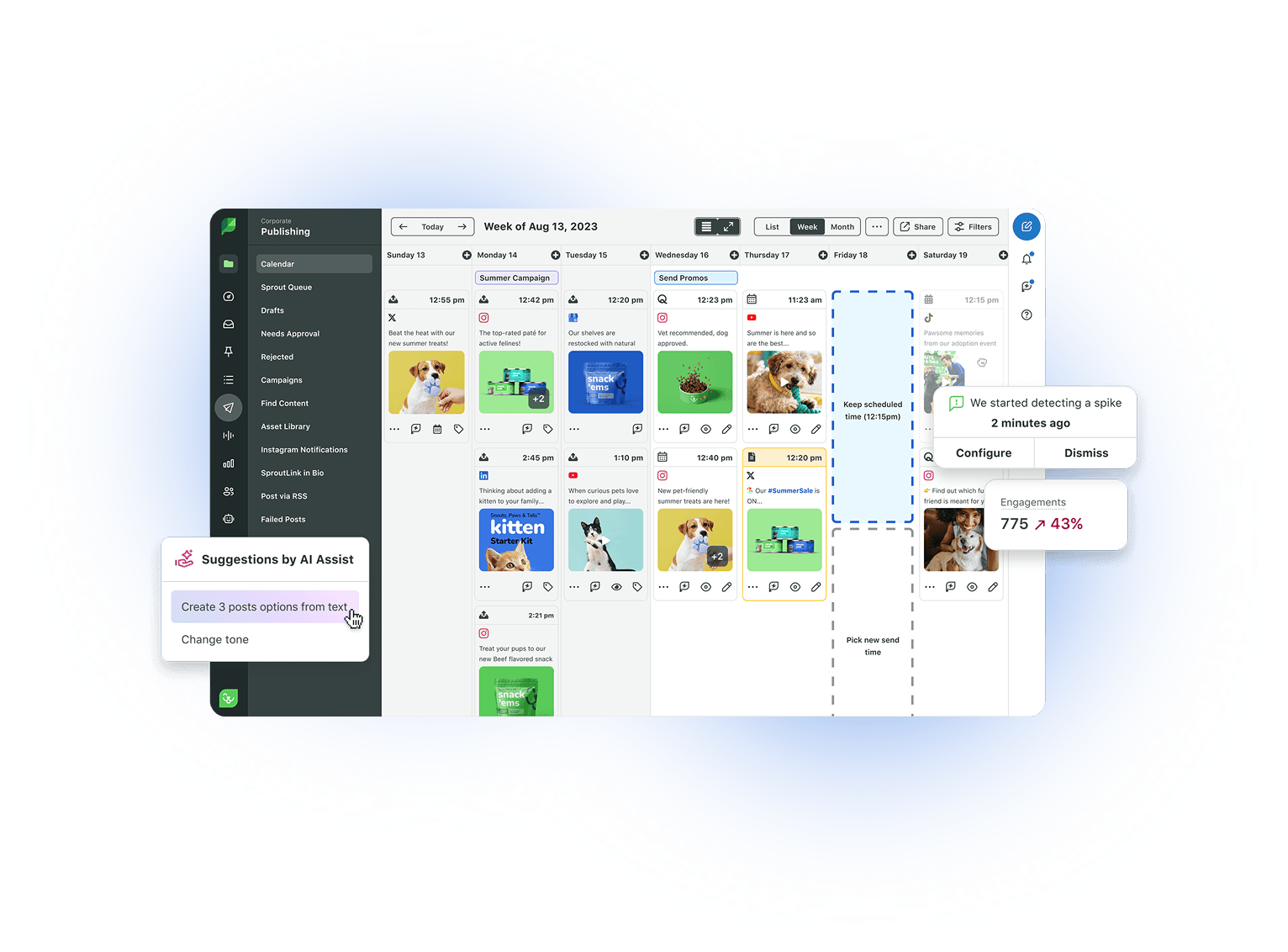
Sprout Social offers a full suite of AI-powered enterprise tools designed to transform social into a company-wide social intelligence engine for immediate action. By unifying the capability to find signals, interpret meaning and act quickly, Sprout closes the critical information gap between market shifts and business reactions.
Our platform doesn’t just measure the results of past decisions; it helps breakthrough brands move from reactive reporting to predictive advantage.
We work with a roster of partners to ensure your social media processes are integrated into everything from internal communications to customer retention and enterprise reporting.
With Sprout, you can mitigate risk, capitalize on opportunities and amplify your brand in a fan-favorite platform.
Our G2 rankings speak for themselves. In 2026, Sprout was named a top company in six key categories, including Best Software Products and Highest Satisfaction Products by G2’s Best Software Awards—a recognition informed by authentic reviews by real users.
On top of that, Sprout has maintained its status as a G2 Enterprise leader every quarter since 2018.
We could provide you with a whole laundry list of reasons to consider Sprout when selecting a new enterprise social media management tool. But here are three reasons why enterprises choose Sprout for organizational alignment:
- We leverage AI for predictive strategy: Powered by Trellis, our agentic AI, Sprout automates the manual data processing, enhancing our customers’ ability to drive deeper insights from social media and expand their brand presence. This enables teams to move beyond flagging trends to actively forecasting sentiment and cultural shifts before they peak. Our AI Assist features are also designed through proprietary machine learning and deep automation capabilities with OpenAI’s GPT model, empowering teams to work smarter and achieve greater impact.
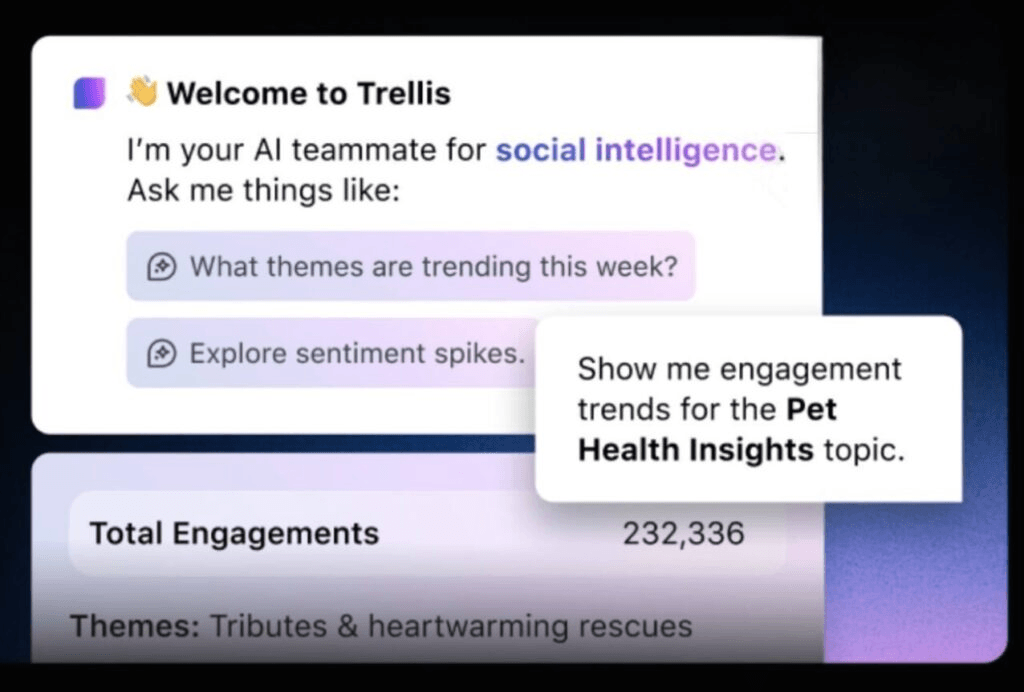
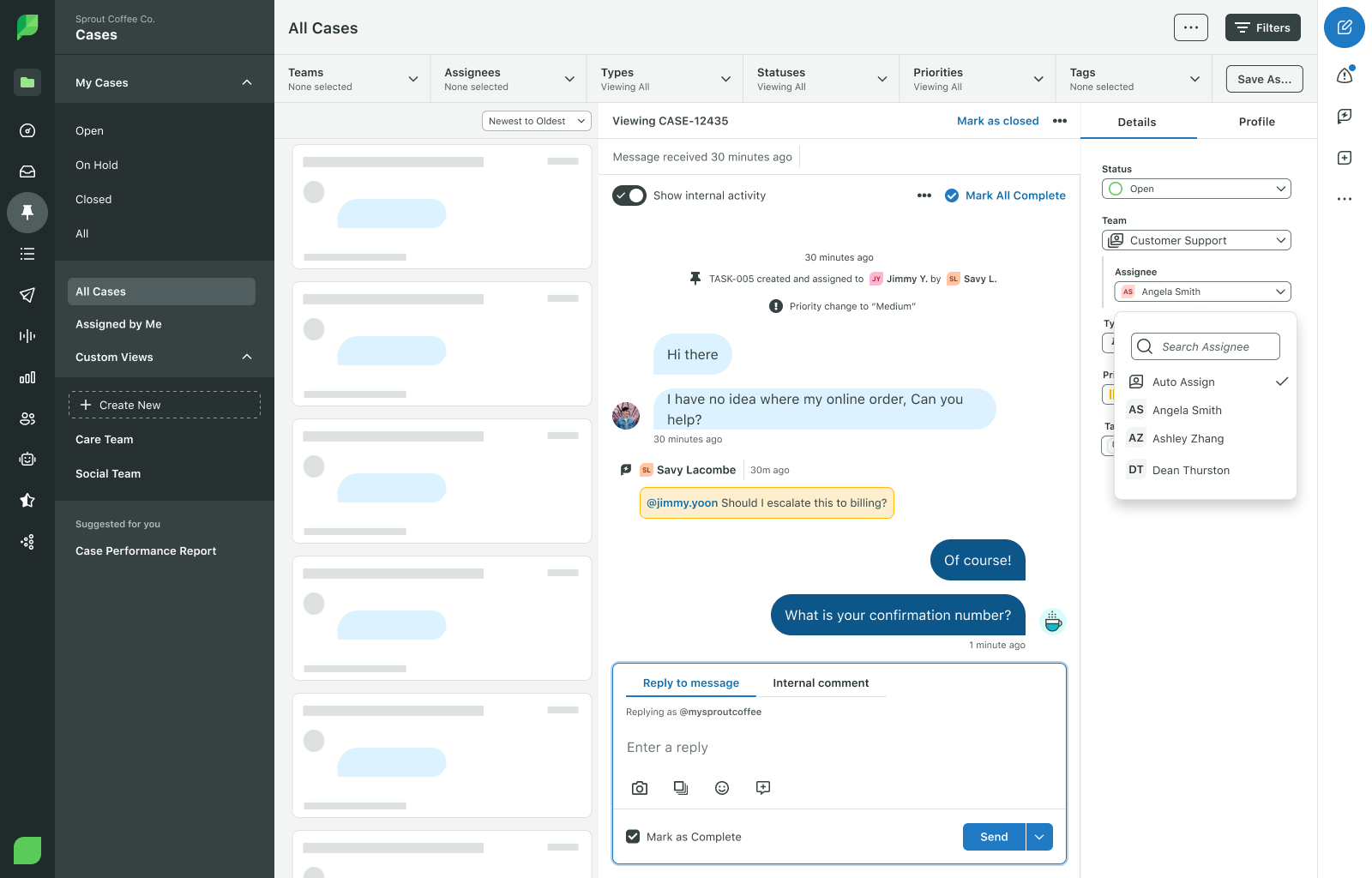
- We bring alignment to teams through unified intelligence: Sprout integrates seamlessly with your existing CRM and BI tools, completing your tech stack by adding real-time human context (sentiment and intent). This creates a connected enterprise where social insights fuel every department, from product to finance. Additionally, Social Customer Care by Sprout Social and Sprout’s partnership with Salesforce Service Cloud set teams up to provide faster, more efficient support. We streamline the handling of incoming messages across networks, integrations, geographies and languages so your service agents can provide better support in less time.
- We speed up time-to-insights: While traditional business intelligence looks backward, Sprout looks forward. Sprout’s analytics tools provide users with an extensive analysis of their brand’s social media presence with easy-to-build and understand reports. While our publishing tools empower frontline teams to take immediate action directly within the platform, ensuring your strategy is always synchronized with the real-time world.
See for yourself how social intelligence can close the information gap for your business by scheduling a demo with Team Sprout. We’ll give you a live product tour to show how you can turn social insights into the ultimate competitive advantage.
Enterprise social network: Slack

What is it? Slack is a team collaboration tool that is basically the professional equivalent of AOL Instant Messenger. Companies use this enterprise social network to promote internal communication through direct messaging and group channels.
How does it work with Sprout Social? Sprout’s pre-built integration with Slack helps social teams keep up with approval processes and task flows in real time.
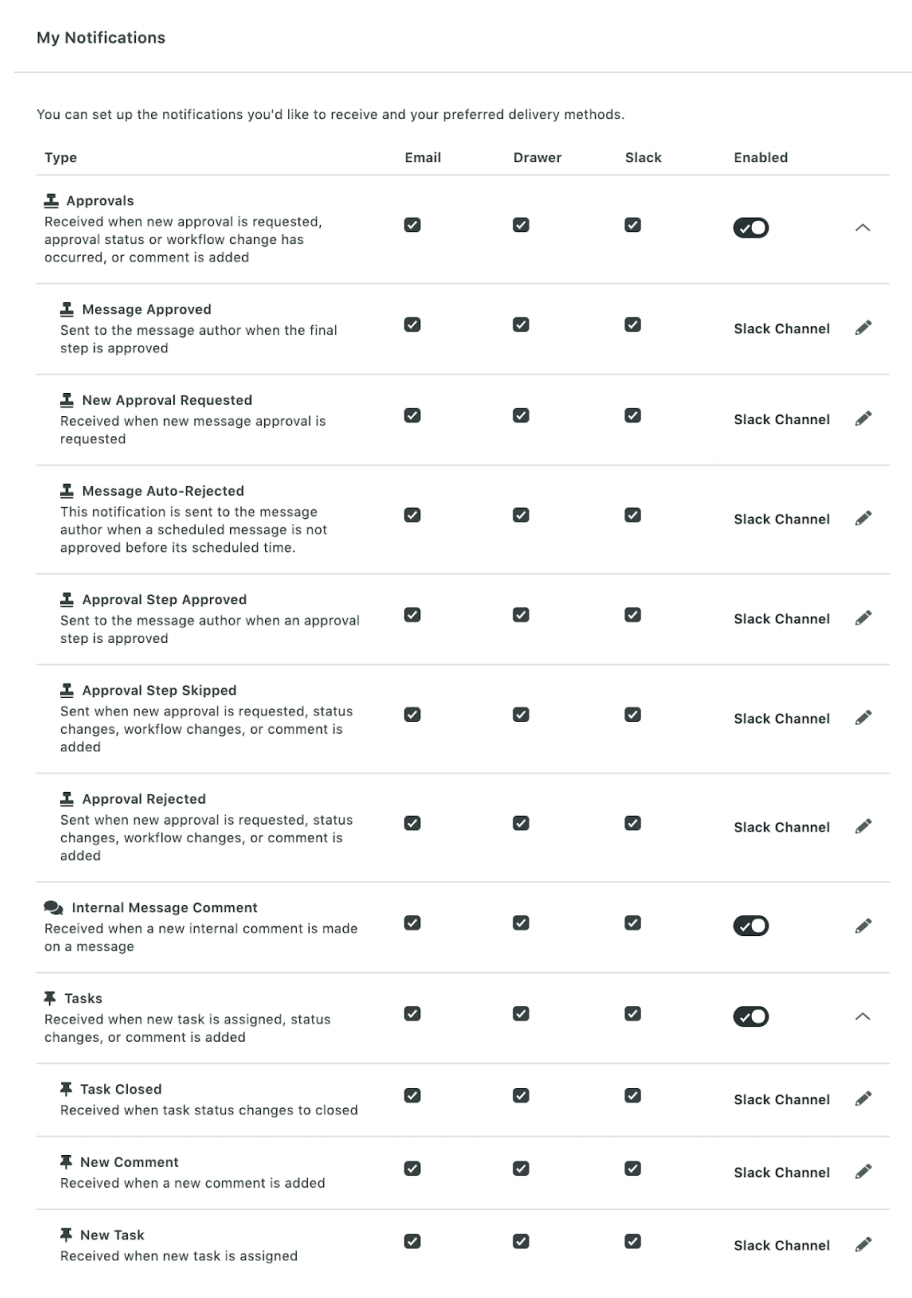
Once a Slack Workspace is connected to a Sprout instance, users can choose which Sprout notifications they’d like to receive via Slack. This is a game changer for time-sensitive engagement opportunities and lengthy approval workflows.
Influencer marketing: Sprout Social Influencer Marketing
What is it? Sprout Social Influencer Marketing (formerly Tagger) is the leading AI-powered influencer marketing and social intelligence platform, revolutionizing how brands and agencies harness data and analytics to drive influencer marketing strategies.

How does it work with Sprout Social? Successful influencer marketing strategies can’t exist while siloed off from a greater social media marketing strategy. Sprout Social and Sprout Influencer Marketing connect the dots between your influencer and brand social strategies, maximizing workflow efficiency from onboarding to project assignment to execution.
Employee advocacy: Employee Advocacy by Sprout Social
What is it? Employee Advocacy by Sprout Social helps you tap into your workforce by making it easy for teams to share curated, on-brand content that amplifies your message across social. With intuitive sharing tools, customizable newsletters and built-in compliance features, your brand stays aligned, visible and ready to scale.
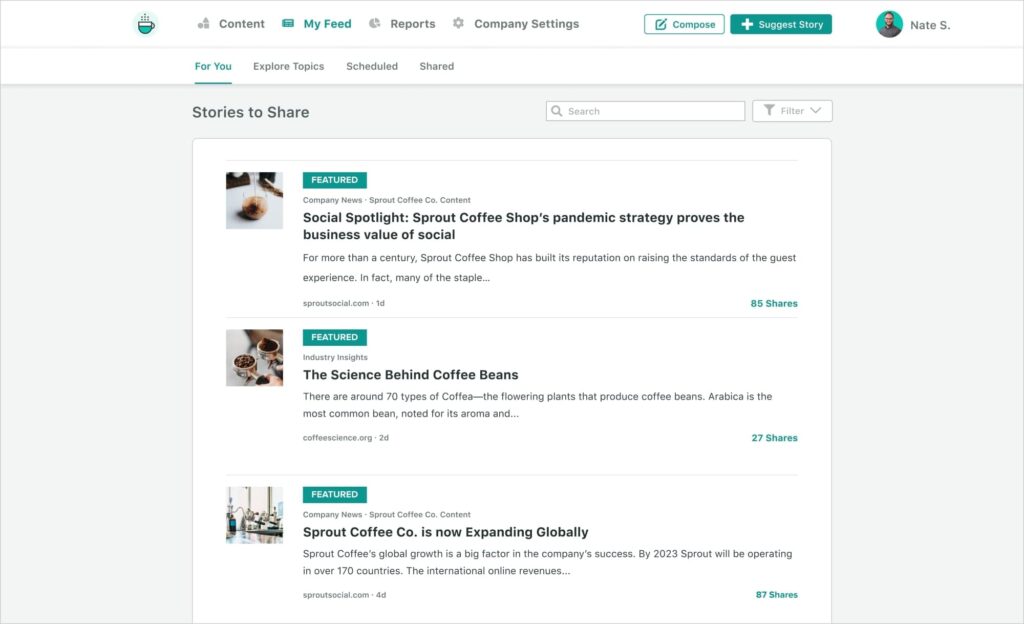
How does it work with Sprout Social? Sprout’s Employee Advocacy platform empowers you to leverage your most trusted channel—your employees—to extend your social strategy. By connecting advocacy analytics to your broader social data, Sprout helps you transform employees into powerful brand ambassadors. This enables you to amplify your message, build your brand and drive measurable ROI by turning employee pride into tangible influence.
Customer experience: Salesforce Service Cloud
What is Salesforce Service Cloud? Service Cloud is built on the world’s #1 CRM (Salesforce) and highly rated customer service software solution.
How does Salesforce Service Cloud work with Sprout Social? Sprout’s preferred partnership with Salesforce drives a true 360-degree understanding of your customers. The integration pulls together conversations across Sprout and Salesforce Service Cloud so agents have complete context to effectively add the right level of personalization to customer inquiries.
According to The Index™, 76% of consumers notice and appreciate when companies prioritize customer support. Connecting Sprout and Salesforce Service Cloud allows teams to respond to customers faster, with better solutions that meet their unique needs—a recipe for long-term loyalty and retention.
Lead generation: Adobe Marketo Engage
What is it? Adobe Marketo Engage is a lead management platform that helps marketers nurture prospects and target qualified lead-to-revenue opportunities.
How does it work with Sprout Social? Sprout’s integration with Marketo Engage helps social teams send warm leads over to sales quickly and with all the necessary context needed to get the conversation started on the right foot.
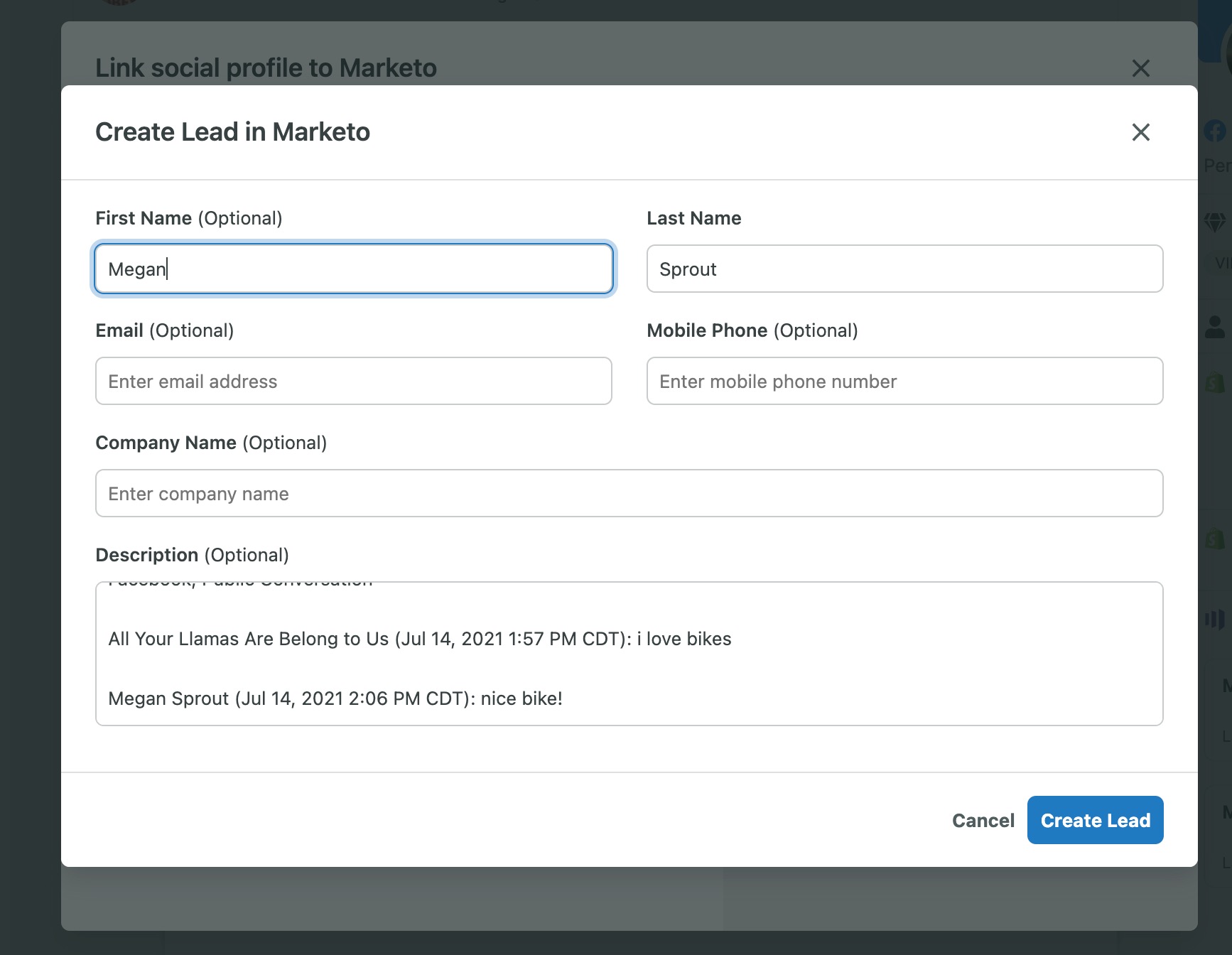
Users can create and edit leads within the Sprout platform, creating a richer lead profile that accounts for a prospect’s full experience with your brand.
CRM: Salesforce and Microsoft Dynamics 365
What is it? Customer relationship management (CRM) tools are like digital rolodexes that house all of a business’ prospect, lead and customer data.
Sprout integrates with two enterprise CRM tools: Salesforce and Microsoft Dynamics 365.
How does Salesforce work with Sprout Social? Sprout’s integration with Salesforce allows users to edit leads, cases and contacts through the Sprout platform. This easy-to-use, pre-built integration supports alignment between marketing, sales and support teams so everyone can take advantage of critical social insights.

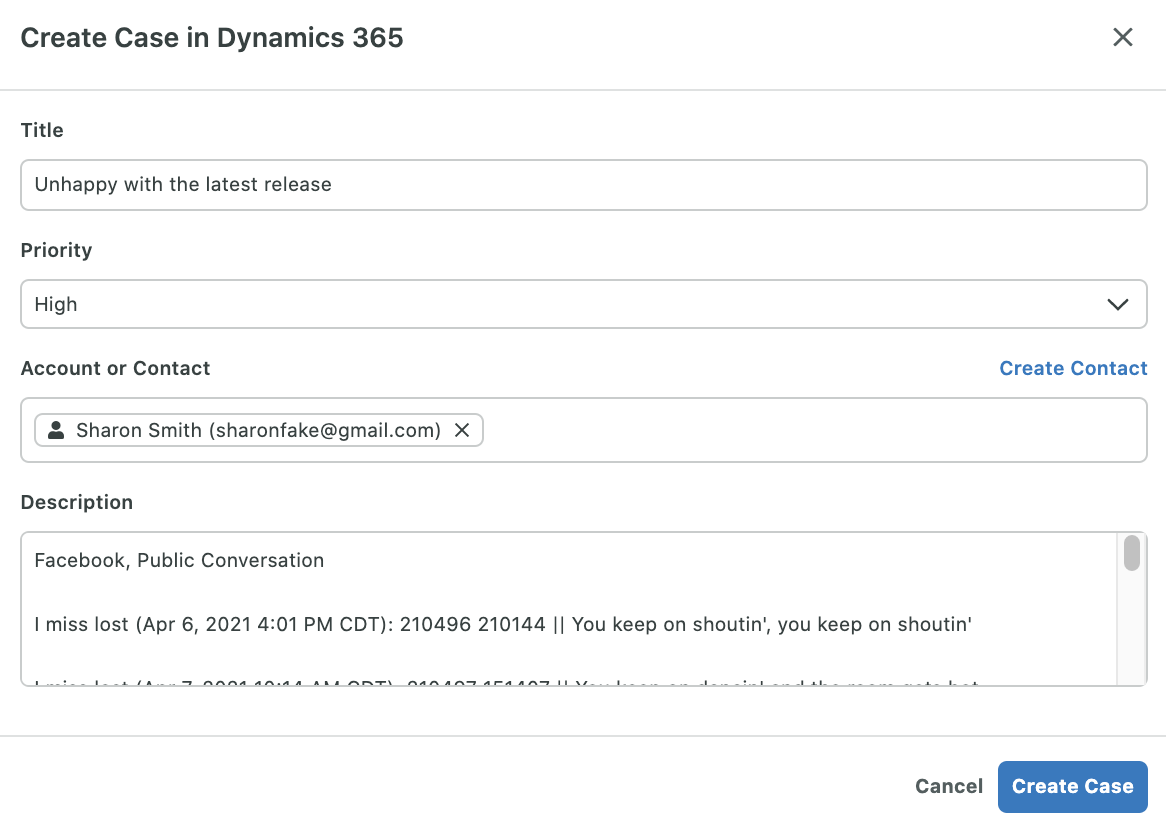
How does Microsoft Dynamics 365 work with Sprout Social? Our enterprise social media management solution integrates with Dynamics 365 to assist with lead generation and support case management.
Predictive media intelligence: NewsWhip by Sprout Social
What is it? NewsWhip by Sprout Social is a real-time, predictive media intelligence platform that identifies fast-breaking stories and forecasts their narrative trajectory before they peak. Powered by AI agents, NewsWhip automates the monitoring of millions of stories to separate meaningful signals from noise, helping organizations stay resilient and responsive when reputation is on the line.
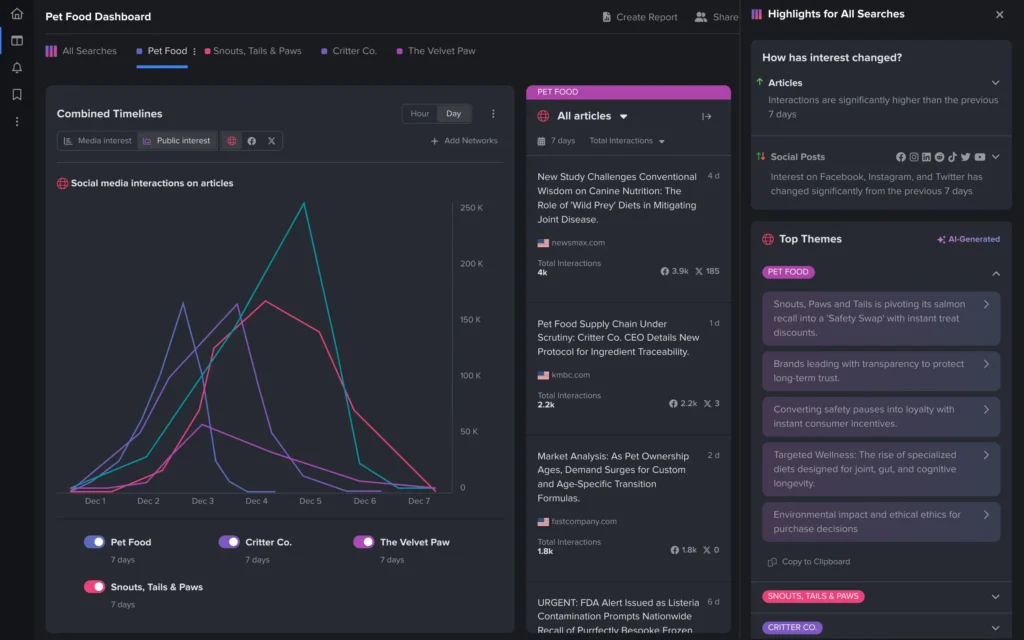
How does NewsWhip work with Sprout Social? NewsWhip completes the Sprout Social ecosystem by capturing the “why” behind market trends. While Sprout helps you manage the brand’s owned social presence, NewsWhip acts as an early-warning system that feeds predictive insights into the broader organization, ensuring internal strategies are always synchronized with the real world.
Business Intelligence: Tableau
What is it? Tableau is a visual analytics platform for creating actionable and easy-to-understand data visualizations. The platform processes data from integrated sources, delivering predictions and recommendations using Einstein AI.
How does Tableau work with Sprout Social? Sprout Social’s Tableau Business Intelligence (BI) Connector layers rich social data on insights across marketing channels, creating a truly omnichannel view of the customer experience.

This centralized source of audience insights empowers enterprise brands with the resources necessary to identify opportunities to meaningfully influence the customer journey.
Workflow and digital asset management: Dropbox, Feedly and Canva
What is it? Creating a single piece of content can require several video clips, graphics and reference materials. Workflow and digital asset management tools centralize these files in a single location for easy storage and sharing.
Sprout Social integrates with three workflow and digital asset management tools:
- Dropbox: a cloud-based file hosting service that helps teams share files and folders easily.
- Feedly: a news aggregator that allows users to organize and research stories by topic.
- Canva: an online graphic design tool that can be used to create social media graphics, videos and presentation decks.
How does Dropbox work with Sprout Social? Sprout’s integration with Dropbox streamlines content creation by allowing users to access Dropbox files from directly within the Compose tool.
How does Feedly work with Sprout Social? News aggregators can level up enterprise social media management by creating a direct stream of content inspiration in a centralized location.

Users who connect their Feedly account to Sprout Social can access their personal RSS feeds from the Feeds tab. This content can be used as third-party social shares or for extra doses of inspiration.
How does Canva work with Sprout Social? If your team relies on Canva to punch up your visuals, Sprout’s Canva integration lets you import design files from your Canva folders for beautiful, on-brand social creative, every time.
Reputation management: Glassdoor, Tripadvisor, Yelp and Google My Business
What is it? Social proof is a psychological phenomenon in digital marketing that has both risks and rewards. While seeking feedback can open your company up to critique, positive feedback is too powerful to miss out on.
Enterprise businesses face a unique challenge when it comes to reputation management. The larger your company, the more customer touch points.
More customer touch points leave more opportunities for feedback.
Using social media reputation management tools like Glassdoor, Tripadvisor, Yelp and Google My Business can help enterprise businesses be proactive with reviews, even at high volumes.
How does Sprout work with Glassdoor, Tripadvisor, Yelp and Google My Business? The Reviews tab in Sprout Social centralizes feedback from all four sites.

Enterprise businesses can create multiple filtered views to triage and respond to reviews across channels. You can also report on reviews by volume and star rating from the Reports tab.
Social commerce: Shopify and WooCommerce
What is it? Social commerce—the buying and selling of goods and services within a social media platform—is creating brand new revenue opportunities for enterprise organizations.
To sell directly on social media, marketers typically must link their ecommerce platform to their enterprise social media management tool. Sprout integrates with two ecommerce platforms: Shopify and WooCommerce.
How does Sprout work with Shopify and WooCommerce? Marketers can set up their social commerce shops by integrating their preferred ecommerce platform with Sprout.
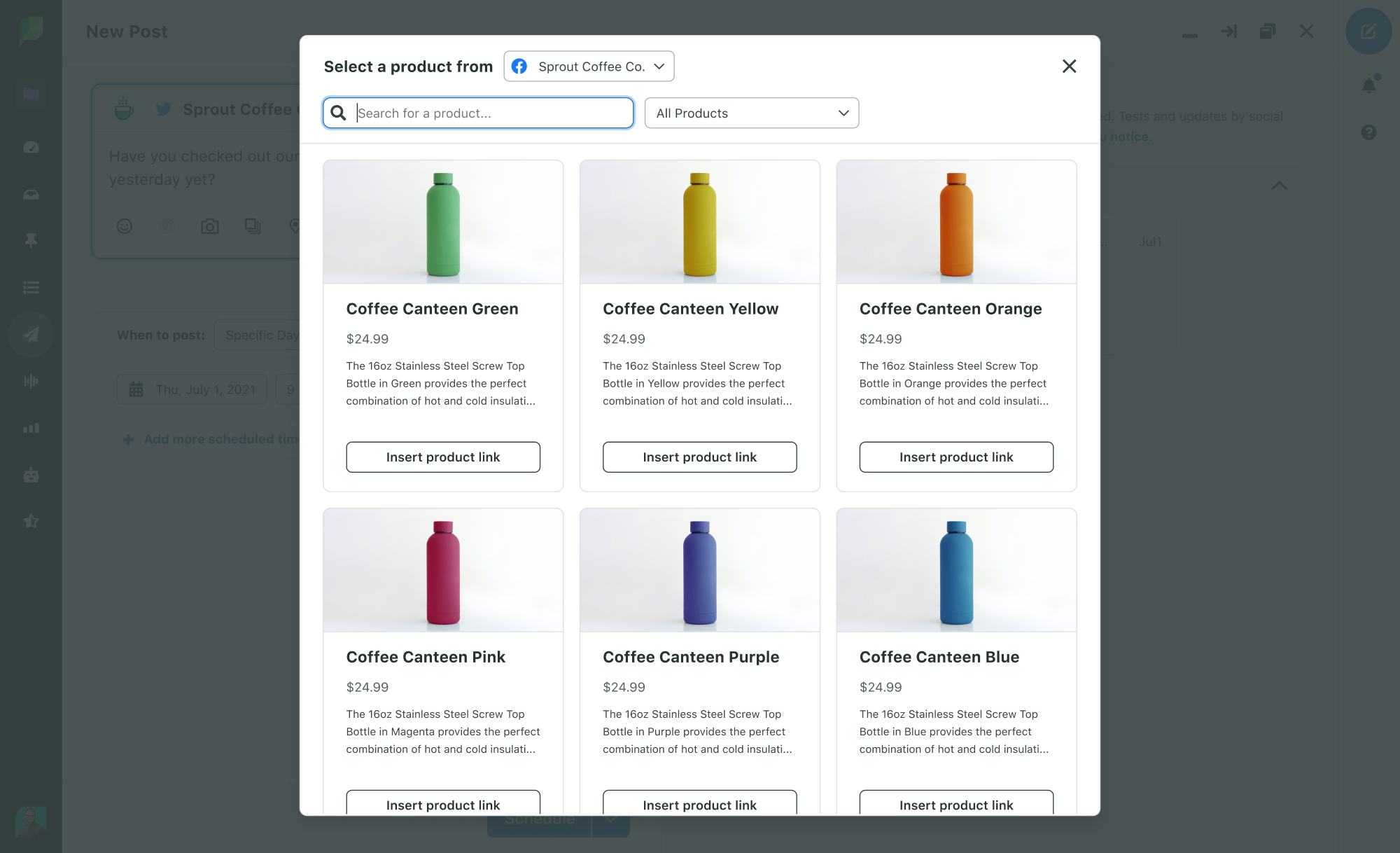
Once the platforms are connected, you can curate your shop by selecting which listings you’d like to promote on social. Listings can also be promoted in scheduled content using custom product links, turning social into your new storefront.
Transform your business with strategic social media management
Social media management is the engine that turns your social presence into a competitive advantage. It connects you directly to your customers and provides the insights you need to future-proof your business.
When you invest in a strategic approach, along with the right tools to support it, you empower your team to move from managing tasks to driving real, measurable business impact.
Ready to see how a comprehensive platform transforms your strategy? Start a free trial to experience Sprout Social’s Smart Inbox, advanced analytics and seamless integrations or request a demo to see how our platform unifies your entire social media management workflow.
Frequently asked questions about enterprise social media management
Is it worth paying for social media management software?
Yes, dedicated social media management software delivers significant ROI through time savings, risk reduction and advanced analytics that free tools can’t match.
What is the 5-5-5 rule for social media?
The 5-5-5 rule is a content curation guideline. For every 15 posts, five should be your own original content, five should be curated content from other relevant sources and five should be posts that build your brand culture and community.
What is the 5-3-2 rule for social media?
The 5-3-2 rule is another popular content strategy ratio. For every 10 posts, five should be curated content from others, three should be your own original, non-promotional content and two should be fun, personal posts that humanize your brand.
How do you measure social media management success?
Success is measured by tracking metrics tied directly to your business objectives. This includes engagement rates and audience growth, but more importantly, it extends to business-level KPIs like website traffic, lead generation, conversion rates and customer satisfaction scores (CSAT) from social care.
What is corporate social media?
Corporate social media is the strategic use of social platforms by larger organizations to achieve cross-departmental business goals. Unlike small business social, it uses formal governance, integrated technology and social intelligence to unify global communication, mitigate risk and convert social data into company-wide action.




Share