YouTube social listening: How to find actionable insights in a video-first world

Written by Emily Jenkins
Published on March 17, 2026
Reading time 9 minutes
Table of Contents
YouTube’s countless creators, constant uploads, fierce competition and shifting trends make it easy to get lost in the noise. But if you listen closely, the chaos fades—and what emerges is detailed, meaningful feedback from your community. That’s where the power of social media listening on YouTube begins.
But YouTube social listening works a little differently. Instead of chasing brand mentions, you’re diving deep into the questions, reactions and pain points sitting right in your comments.
Here’s how to use these qualitative insights to ignite action and understand what your audience cares about and what they want next.
What is YouTube social listening and why is it different?
YouTube social listening is the practice of analyzing your competitors, the creators in your space and the conversations, reactions and patterns happening around your videos. But unlike traditional social listening on text-based social networks, YouTube plays by different rules. These limitations impact the way you gather insights.
First, YouTube is a video-first ecosystem. Most meaningful conversations happen in comments, replies, captions and creator-to-creator exchanges.
Then, there are technical limits. Due to API restrictions and quota rules, no social listening tool can pull comment data, sentiment or mentions from the 1.7 billion users at scale the same way you might on text-heavy social networks.
But this limitation is also a strategic advantage. It forces marketers to stop chasing volume and vanity metrics, and instead focus on what’s truly actionable: direct community feedback, comment sentiment, recurring questions and creator-driven trends. By learning how to use social listening tools specifically for video, you can focus on direct community feedback and creator-driven trends.
Why you need a YouTube listening strategy
A focused YouTube listening strategy fuels growth by providing direct, actionable insight from real viewers. This approach enables you to move beyond basic metrics to find the “why” behind the data.
Analyzing your own comments shows you what your audience cares about right now. Looking at competitor and creator content reveals broader patterns and expectations in your niche. Put together, these signals shape smarter campaigns and more effective video content.
Below are three core business benefits of putting a YouTube listening strategy into action. And if you are looking for a framework to get started, our social listening guide provides a structured way to organize these efforts.
Uncover voice of customer data
Your comments section is one of the richest sources of voice of customer insight anywhere online. Unlike short replies on text-based social networks, YouTube comments often include detailed opinions, thoughtful questions and honest feedback about your product or service.
A strong YouTube listening strategy helps you spot the following community insights:
- Product and content praise: Signals of what’s resonating with your target audience
- Customer service issues: Indicators of emerging problems to escalate
- Recurring questions: Patterns that reveal gaps in onboarding, support or messaging
- Capability requests: Insights that guide product updates and content planning
When you read comments through a listening lens, you’re gathering evidence to shape everything from product updates to social media marketing workflows.
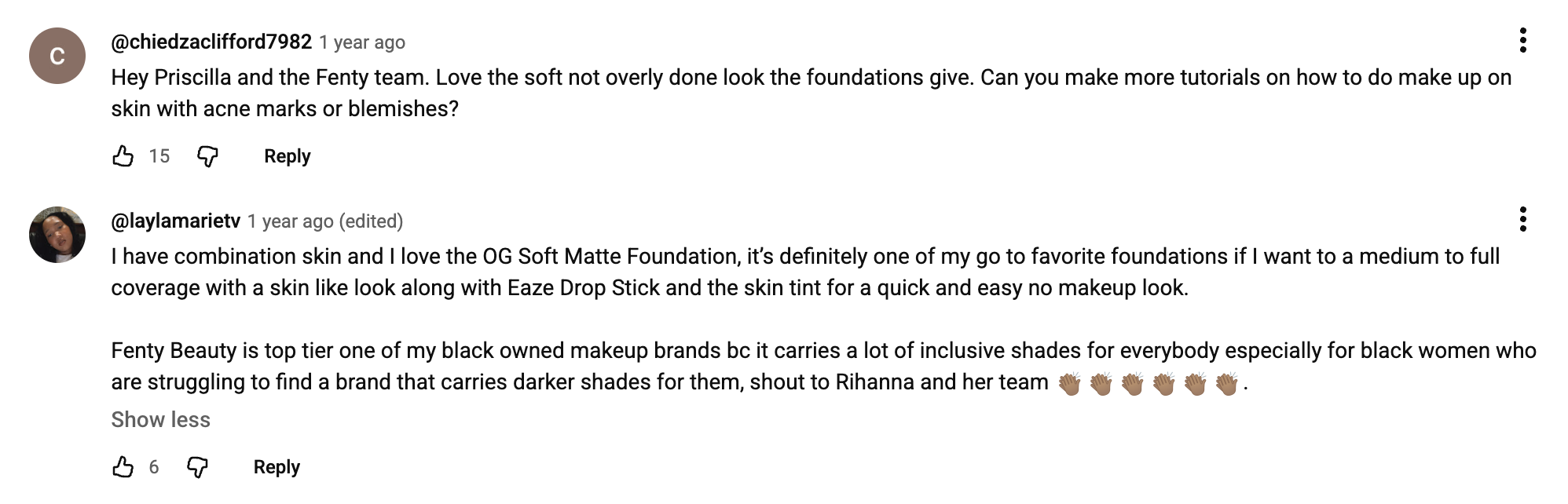
For example, look at how Fenty Beauty’s audience responded to this “How to Choose the Right Foundation For You” video. They commented specifically about skin concerns, inclusive shades and natural makeup looks, directly stating this is what Fenty’s audience cares about and what they’d like to see more of.
Find new video content ideas
If you’re ever unsure what to create next, your audience will tell you. Requests like “Can you make a video about X?” or “I’d love a tutorial on Y” are high-intent prompts that can enable you to fill your content calendar with content you know will perform.
Here’s what you get when you listen to these asks:
- A steady stream of validated video themes
- Clarity on which formats (Shorts, long-form, tutorials, explainers) viewers prefer
- Insight into emerging trends within your niche
Instead of guessing what might perform, you’re building content based on demand.
Monitor brand health and community sentiment
Even without full YouTube listening capabilities, you can monitor brand health on your own videos. Tracking how viewers respond—positively, negatively or emotionally—helps you stay ahead of reputation risks and identify sentiment shifts early.
Understanding the emotional tone behind your community interactions enables you to identify sentiment shifts early, serving as a pulse check on how your audience receives your brand.
Benchmark your video performance
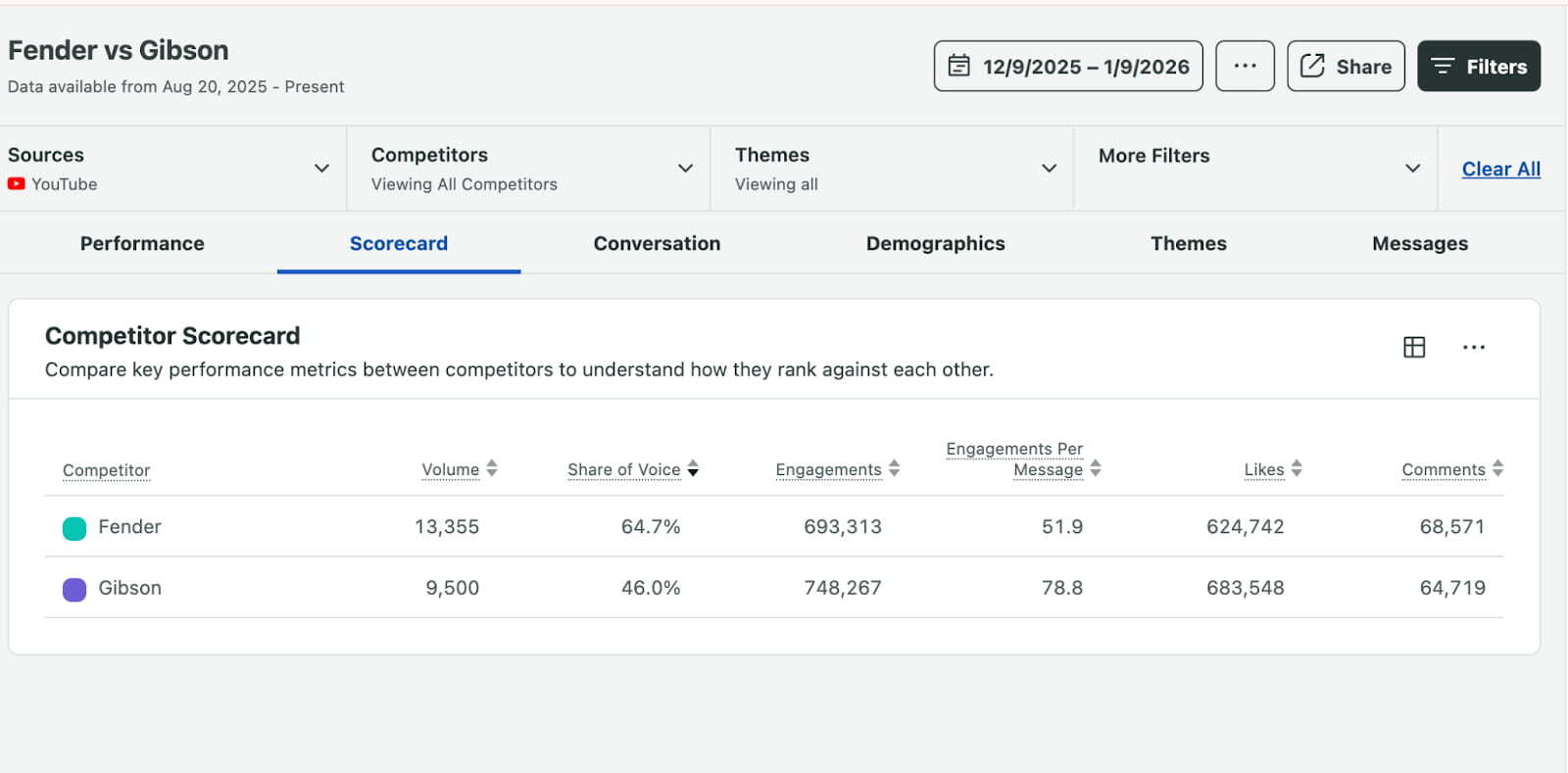
Competitor analysis is a powerful form of YouTube listening. By monitoring your competitors’ titles, formats, engagement metrics and upload cadence, you see which topics gain traction in your industry and which fall flat.
Here’s how benchmarking can help you understand your position in the market and where you can improve:
- Spot content patterns in your industry
- Understand where you’re outperforming (or underperforming)
- Identify whitespace opportunities competitors aren’t addressing
- Optimize your YouTube marketing strategy with real-world data
- Compare your share of voice against direct competitors
How to build an actionable YouTube analysis strategy
A strong YouTube listening strategy doesn’t require full platform-wide data. It requires clarity, structure and a realistic process. Because you can’t track everything on YouTube due to API limits, you need to focus on the signals you can collect and turn them into actionable insights.
Here’s how to build a strategy to analyze YouTube to spot areas for strategic improvement:
Step 1: Define and prioritize your goals
YouTube is too noisy to track without intention. The first step is to choose your priority, whether it’s content performance or brand health.
By setting specific goals, it’s easier to understand the metrics you need to track to analyze your performance. And exploring unique ways to use social listening can help you uncover goals that align with your specific business needs.
Here are a few examples of goals that line up with relevant YouTube metrics:
- Understand your audience more deeply: Track recurring questions, emotional tone in comments, audience demographics and common pain points
- Improve your content performance: Monitor engagement rates, watch time, audience retention and comments about clarity or value
- Benchmark against competitors: Measure competitor engagement patterns, titles, formats, upload cadence and video themes
- Identify gaps in your content strategy: Track unanswered questions, repeated content requests, trending topics in your niche and creator formats you’re not currently using
When you start small and set intentional goals, your analysis is clearer and more repeatable.
Step 2: Identify what to track (and where to look)
A great YouTube social listening strategy blends data from multiple sources. But it’s easy for the enormity of the network to overwhelm you if you don’t have structure. A focused list keeps your review consistent and helps you spot meaningful patterns.
Here are a few of the most important YouTube touchpoints to focus on:
- Comments on your own videos
- Comments on competitor videos in your niche
- Comments on relevant YouTube creators’ content (influencers, educators, reviewers)
- YouTube Search and Autocomplete trends
- Trending video formats (Shorts, long-form, live sessions)
- Titles, thumbnails and keyword patterns across top-performing videos
Step 3: Extract and categorize your comment data
Once you know where to look, the next challenge is making sense of it all.
Comments often arrive in high volume with mixed emotions. To find the insights within these interactions, you need to manually export comment data from the YouTube Data API or a third-party exporter tool.
Next, categorize the comments into themes to reveal patterns and audience interest. High-level, AI-powered tools can enable keyword extraction. This reveals patterns you wouldn’t spot by scanning comments individually.
Here are several categories to use to organize your comments:
- Product feedback (positive and negative)
- Content requests and new video ideas
- Frequently asked questions (FAQs)
- Criticisms or customer pain points
- Competitor comparisons
Step 4: Take action on your insights
Categorization is only valuable if it leads to decisions. This means turning categorized insights into tactical changes.
- Address pain points: If viewers repeat the same questions or frustrations, update your help resources or create new video tutorials.
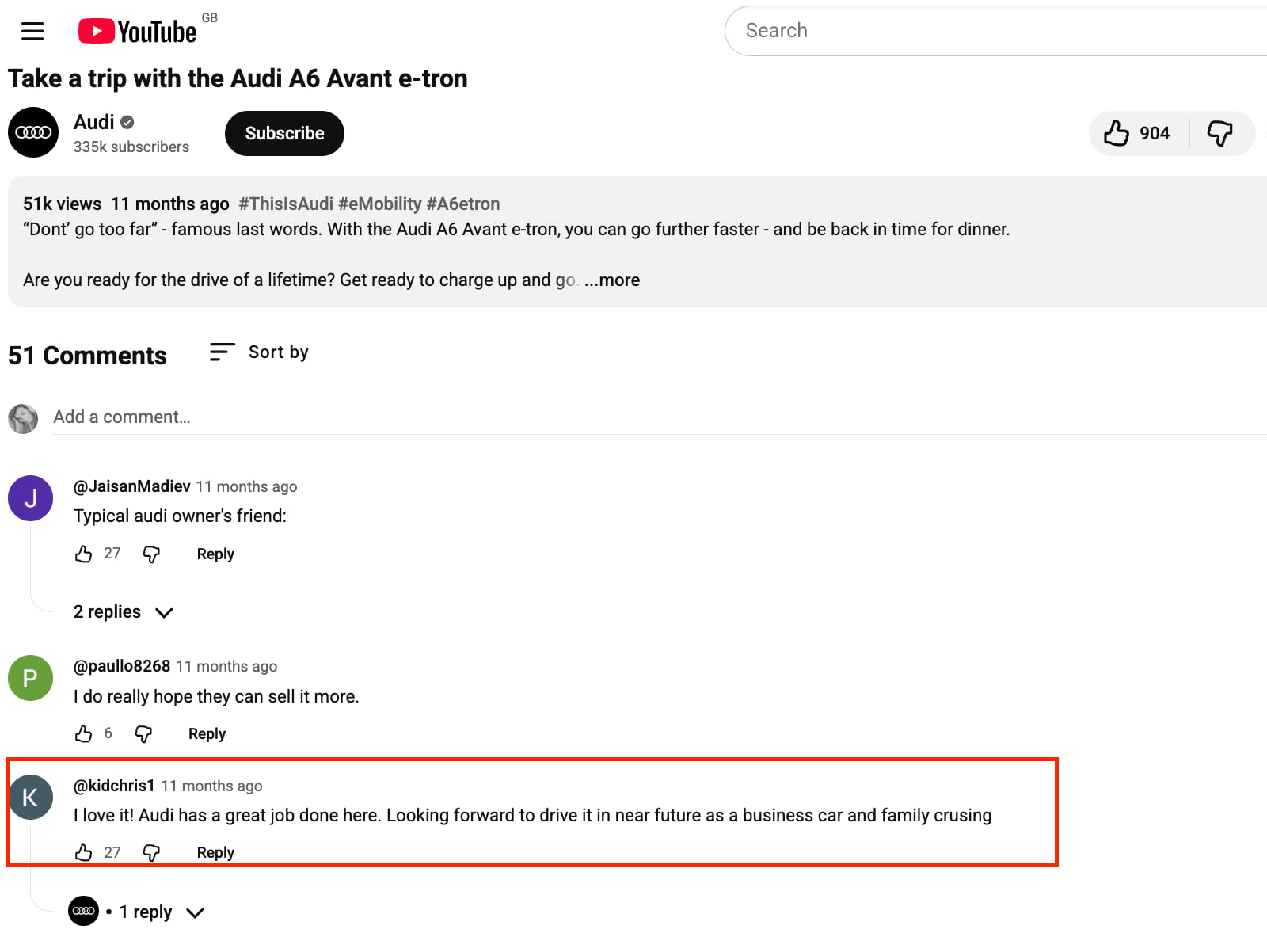
- Capitalize on intent comments: Identify purchase-intent comments like “I’m buying this now” to use in future campaigns and refine your conversion signals.
- Differentiate your brand: If competitor comparisons appear, adjust positioning or produce content that highlights your unique value.
For example, the comment below on Audi’s YouTube channel indicates that someone intends to buy, or at least experience, the car featured in the video.
Step 5: Report on insights that matter and translate them into strategy
When sharing findings with leadership, focus on both qualitative and quantitative insight:
- Comment volume and engagement patterns
- Direct viewer quotes supporting major themes
- Examples of sentiment or emotional cues
- Strategic recommendations tied to business goals
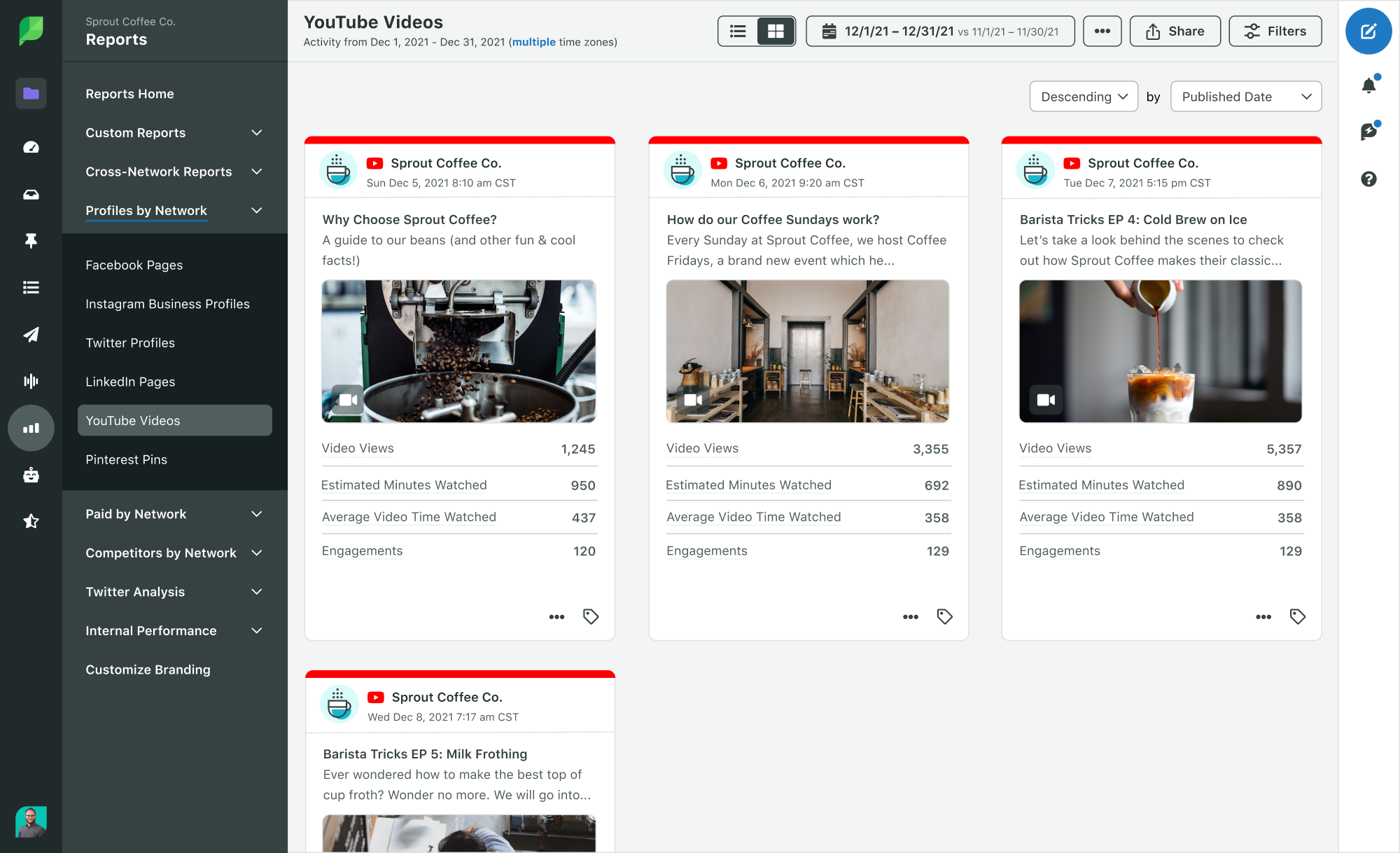
Reports like Sprout Social’s YouTube Videos Report enables you to quantify data such as engagement, audience growth and post-level trends to tell a compelling story of social impact that resonates.
How to leverage creators for proactive YouTube listening
There’s a lot to learn from your YouTube comments. But there’s significant value in understanding what happens before a single viewer leaves a comment. The videos by influencers, niche experts and fast-growing YouTubers in your industry show you the trends, formats and cultural shifts in your niche.
This is proactive listening. By watching what YouTube influencers and creators publish, you can see what audiences care about, which YouTube channels are gaining traction, which hashtags are emerging and which ideas are shaping marketing campaigns.
Identify popular topics and industry trends
To “listen” proactively, look at what top creators in your niche are doing week after week. Creators often adopt emerging trends long before brands do. By monitoring these influential accounts, you’ll start to see patterns such as:
- New audience interests you can incorporate into your content strategy
- Keywords and hashtags bubbling up within your category
- Formats, like Shorts, gaining algorithmic traction
- Topics your competitors may not be covering yet
This is one of the simplest, most powerful forms of YouTube listening, because it gives you a read on the cultural direction of your category.
Recognize and vet relevant influencers
A proactive listening strategy relies on understanding the people of influence in your niche. The creators you track should be trusted voices with engaged, aligned audiences. Look for the voices shaping conversation in your niche.
Understanding YouTube influencer marketing allows you to move beyond simple mentions to find creators with engaged audiences that align with your business goals.
When evaluating creators, ask yourself questions about their content style and following:
- Audience alignment: Do the influencers and creators talk about topics that are of interest to your target audience?
- Engagement quality: Are comments thoughtful and authentic, or are they bot-like and impersonal?
- Content consistency: How regularly do they create content within your industry?
- Creative style: Is their format compatible with how your brand communicates?
To help with the vetting process, Sprout Social Influencer Marketing provides AI-powered capabilities such as Brand Fit Score and Brand Safety reports. These tools enable you to conduct effective influencer outreach by filtering out risky creators and focusing on those who truly match your brand values and who naturally influence the conversations your customers are part of.

Understand your audience and their preferences
Top creators often function like focus groups at scale. Their comments, engagement patterns and content choices can reveal what audiences love, dislike or expect from brands.
Studying creator content helps you understand all different aspects of your audiences’ preferences:
- The tone, pacing and depth audiences prefer
- Which pain points, myths or misunderstandings still need clarification
- What emotional triggers drive engagement
- What formats spark conversation vs. passive views
Using capabilities like Smart Categories within Sprout’s Social Listening tool can further identify the top people, places and things discussed within these conversations to help you lead confidently. These insights help you create more audience-aligned content and inform your broader social media management strategy.
Uncover competitor strategies and market gaps
Creators also reveal what your competitors’ priorities are. By monitoring creator videos, you can see whether your competitors sponsor specific YouTubers or experiment with new storytelling styles in their creator partnerships.
This proactive layer of listening helps you understand market and industry trends, so your brand stays in the conversation and can set the pace for competition. You can even leverage Trellis, Sprout’s conversational AI Agent, to get a quick snapshot of competitor moves and identify white-space opportunities.
Turn your YouTube insights into action
A smart YouTube strategy isn’t about tracking every mention—it’s about engaging your community and creating better content. By listening to how your audience behaves around your content and studying your competitors and industry-related creators, you can find tangible ways to improve your content, products and marketing strategy.
If you’re ready to manage your YouTube channel more efficiently and learn from the wealth of insights available on YouTube, explore how Sprout Social can support your workflow. Book a demo now.
37 free social media strategy templates that will elevate your workflows
Published on December 5, 2025 Reading time 15 minutes







Share