The rise of episodic content: Should your brand launch a social media content series?

Written by Aubree Schaefer
Published on January 6, 2026
Reading time 8 minutes

When you scroll your feed on major social media networks, it looks nothing like it did a few years ago. Gone are photo dumps from your friends and family. Instead, you’ll see video after video starring people you don’t know. Some of these videos are from influencers and creators, while others are from brands.
Social has become the new destination for video streaming, an inevitable milestone after years of video dominance. We swipe through videos like we’re changing the TV channel (Instagram even recently launched Instagram for TV). Top brands are responding by building their own social media content series.
Read on to learn more about the consumer preferences that led to the explosion of social media content series. Plus, examples of real brands producing their own episodic content, and actionable advice for teams that want to follow suit.
Defining episodic social media content
First, what is episodic social media content? Episodic content is a series of interconnected social video posts that weave together a larger story or theme. Similar to a TV series, episodic content crafts a brand universe with a cohesive narrative and familiar faces.
Human-centric storytelling and relatability are hallmarks of episodic social content, as many series center around real and fictional people.
“A lot of brands are creating series that mirror TV shows, like Office-style workplace content. The common thread is serialization; people want to follow along and come back for the next episode,” described Angelo Castillo, the creator behind ProfitPlug, when asked about current social media trends.
As Castillo pointed out, content series are a strategic response to saturated feeds, where posting for volume alone is unlikely to grab attention as audiences tune out noise. It’s a way to create something specific to your brand that can’t be replicated by a competitor. It hooks consumers and reels them in for the long haul.
The audience mandate: Why audiences prefer episodic content
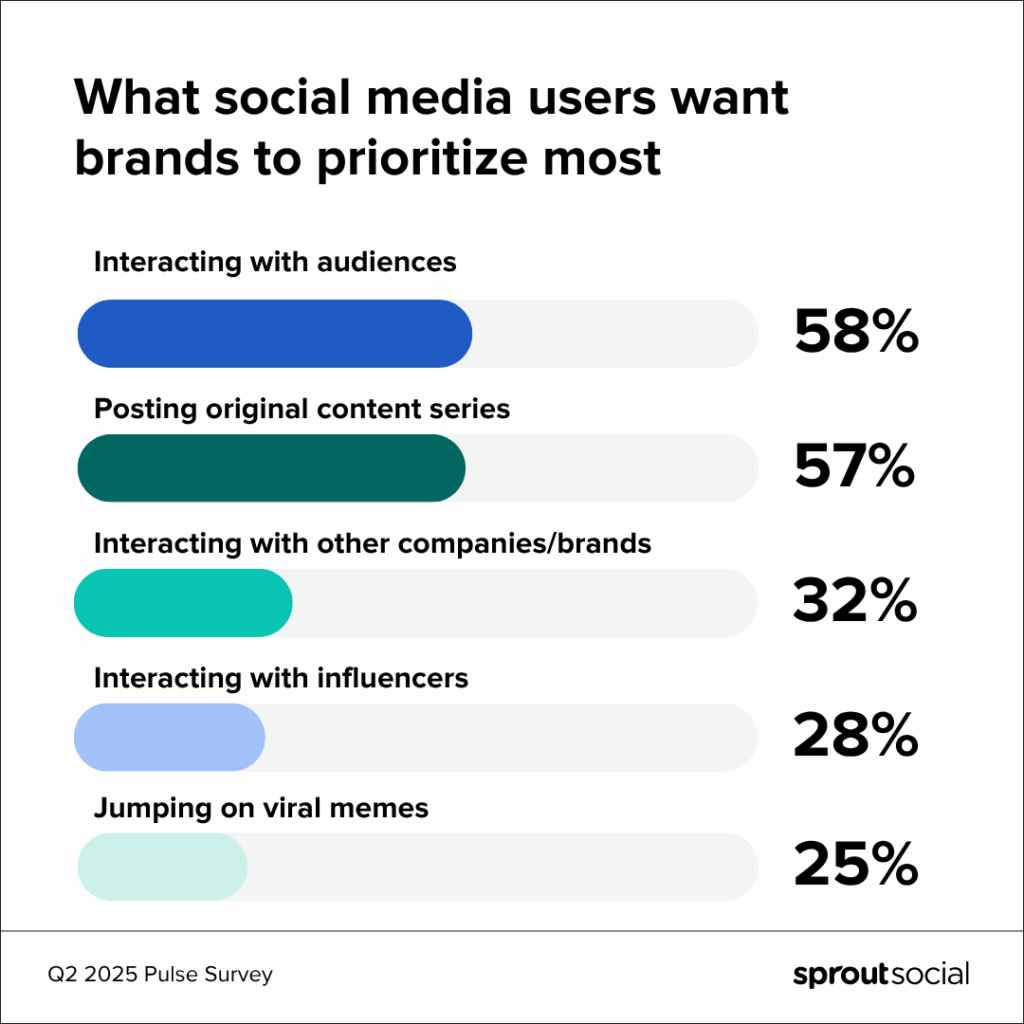
When we asked over 2,000 global social media users what they wanted brands to prioritize in 2026, 57% said posting original content series, per the Sprout Q2 2025 Pulse Survey. That answer was nearly tied with interacting with audiences, the top response.
Let’s dive deeper into where audience appetite for serialized storytelling is coming from.
A sense of routine and predictability
A predictable posting cadence creates a fear of missing out among your audience, especially when you’re publishing serialized content. When a new episode drops every week, consuming your content becomes a weekly ritual for your community. They seek out the latest video instead of waiting for it to pop up in their feed.
As creator Coco Mocoe wrote for Sprout’s Substack, Social Futures, “The routine that long-form creators give their audience through weekly podcast or YouTube uploads is something that even the most viral TikTokers and short-form creators fail to replicate due to the nature of the unpredictable algorithms. To transcend algorithms, you have to give your audience routine.”
It creates connection and fosters brand loyalty
Just like characters in our favorite books and TV shows, the continuous narrative arcs in a social series foster emotional investment and connection. We need to know what happens next, how the story ends.
These emotional ties extend beyond the stars of the series, with bonds forming between fellow fans, too. By posting and interacting in the comments sections, we become a part of something. Like when Brita dropped their viral song “At least I’m hydrated” on Spotify, and nearly 105,000 people streamed it and thousands shared their love for the single on TikTok.

Not only does episodic content answer the consumer mandate for original, human-generated content, it also answers consumers’ call for community. For brands, this translates to audiences becoming loyal viewers, and often brand advocates with a higher customer lifetime value. Content series aren’t just about entertainment—they’re a full-funnel effort.
Relatable stories and characters stave off social media fatigue
We are living in an era of constant content consumption and AI slop. People are overloaded with stimuli. Merriam-Webster even named “slop” the 2025 word of the year.
The content that stops their scroll is relatable, entertaining, educational, niche or human-centered. Everything else is passed over. This shift is why brands are moving away from stock imagery and generic trends in favor of original content that provides real substance and a unique perspective. Content series allow brands to embody all of those traits, while building out lore and depth in their narratives.
The shift toward serialized storytelling isn’t just a trending format. It’s the beginning of what Rachel Karten, author of Link in Bio, calls “post-social media” or “New Social.” Karten explains how in this new landscape, recommendation-based algorithms reward episodic content because it retains viewership. Among a deluge of content, viewers will continue tuning in.
Examples of winning content series from brands (B2B and B2C)
Now the fun part: seeing episodic content in action. These are a few of Team Sprout’s favorite brand content series, with the best characters, storylines and fanbases.
Alexis Bittar: It’s Margeaux Goldrich’s world, and we’re just living in it
Jewelry and lifestyle brand Alexis Bittar’s character Margeaux Goldrich has become a pop culture phenomenon all her own. The brand first introduced Goldrich, played by Patricia Black, and her sidekick Jules/Hazel, played by Julie J., in 2024. The two are a part of the larger Bittarverse, a brand universe created to showcase the brand’s jewelry and handbags in a disruptive, social-first way, while paying homage to the many personalities of New York City.
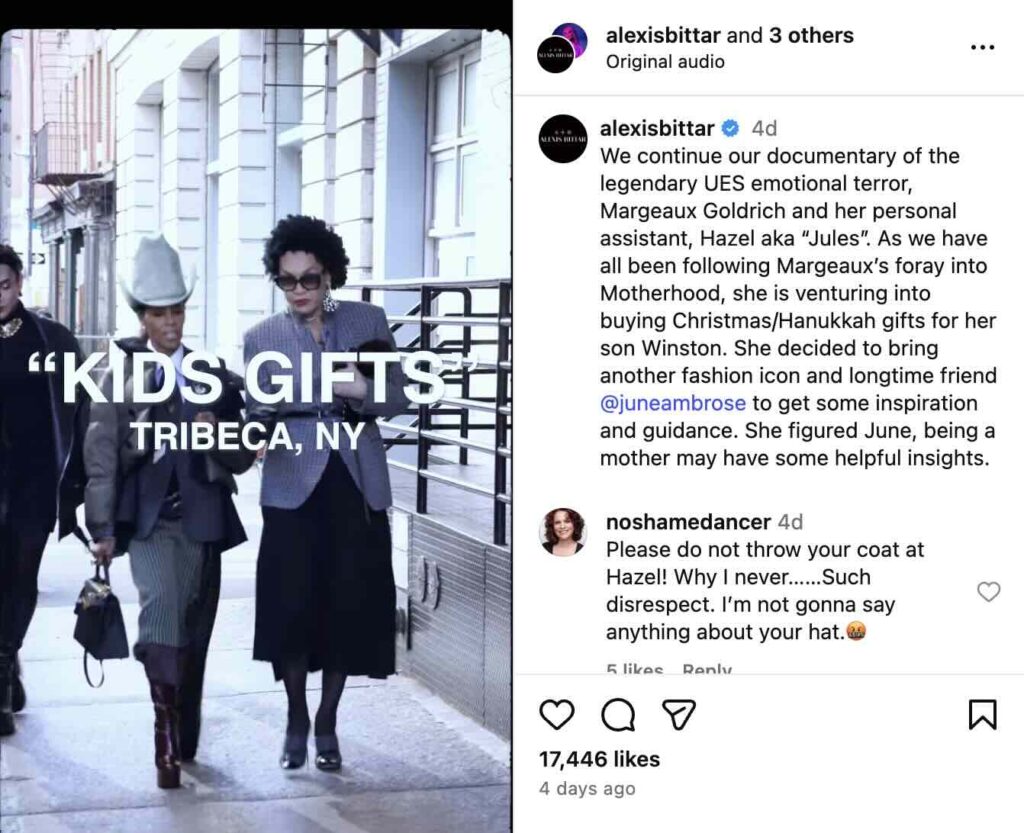
In the brand’s mockumentary-style videos, Margeaux collides with famous celebrities and stylists from the real world—all while forcing Jules/Hazel to jump through increasingly egregious hoops. It’s “The Real Housewives of New York” repackaged for social.
Under Armour: Lab96 Studios ushers in a new era of athlete storytelling
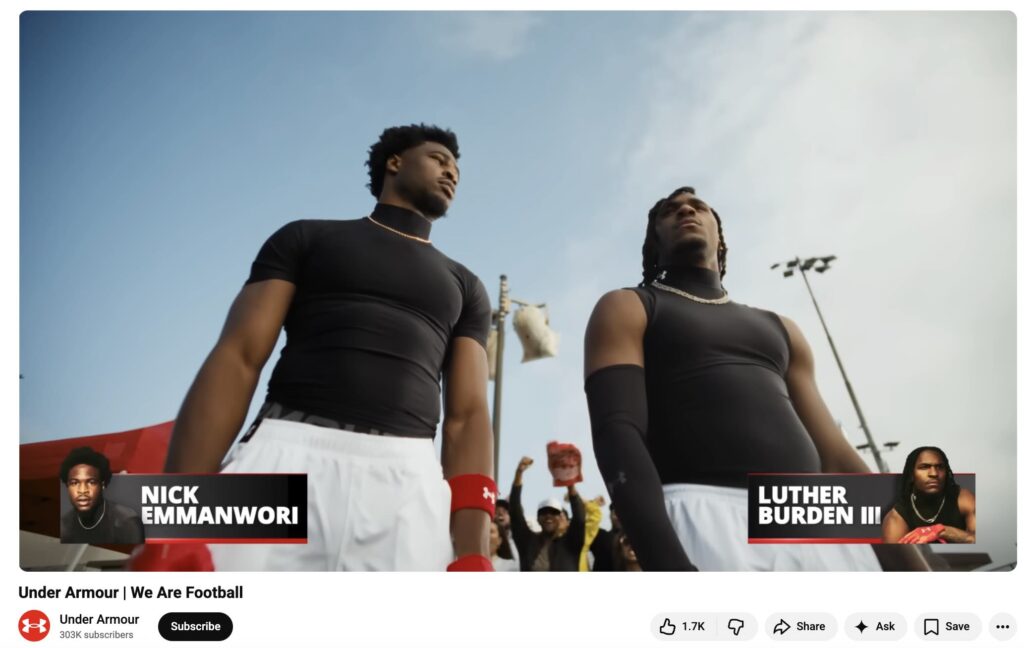
Sports retailer Under Armour announced the launch of Lab96 Studios, its new in-house content studio designed to deliver athlete stories in episodic and cinematic ways. Lab96 Studios is the beginning of a new kind of marketing for the company—a shift away from traditional ads toward entertainment-driven content.
The studio’s debut short film, We Are Football, features Under Armour brand ambassadors—from NFL athletes to emerging stars in women’s flag football. In just three minutes, the brand weaves together a world where their ambassadors have superhuman abilities.
Ramp: A software that leads to happily ever after
The finance automation platform, Ramp, makes corporate spending clear and easy. Like other B2B companies, product benefits are at the forefront of their marketing. Unlike other B2B companies, Ramp uses episodic content as the vehicle for their brand storytelling.
Whether it’s making the office Grinch’s holiday season “chill” or calling on a former contractor for “one last job” (à la the artistic stylings of filmmakers Christopher Nolan and Martin Scorsese), they drop us into a scene that’s relatable and deeply entertaining—yet still product-centric.

What makes episodic content stand out (and tips for your strategy)
When planning your social media series, it’s important to consider how your content will stand out from your competitors and other creators. Here are tips for crafting episodic content that is truly unique and tailored to your target audience.
Embrace video
Video is the bedrock of episodic content. Some brands create short-form, lo-fi videos for multi-part series, while other brands take a highly-produced, cinematic approach. The type of video content you create will depend on your internal capabilities and the subject matter of your series.
Take Immi Eats’ “Ramen on the Street” series. The videos are casual and appear to be taken with a smartphone, a typical style for man-on-the-street interviews. Whereas Nike produces Oscar-worthy athlete profiles, similar to professional documentaries.
No matter where you fall stylistically, many brands will need to invest in video production beyond their existing bandwidth to pull off episodic content. As Castillo predicts, “Content creators will become the next coveted [corporate] roles. Strategists, scriptwriters and producers will be highly sought after. Creative strategists who can blend data with storytelling will be especially competed for. The traditional social media manager role will split, with some focusing on community and analytics, others on content production.”
Apply it: Start by dreaming up the focal point of your series and the story arc. What type of video is needed to tell the story correctly? What resources will you need to get there? Where do you have skill gaps on your team? It’s better to take stock in the beginning so you can secure the resources you need and maintain a consistent look and feel throughout the series.
Prioritize human connection
So, you have an imaginative concept for your series. Check. You know it will be highly engaging and perform well. Check, check. The only problem is your narrative has nothing to do with the messaging framework your product marketing team handed down. What should you do?
Move forward with your idea anyway. Prioritize human-led storytelling over corporate messaging. When it comes to episodic content, focusing too much on product can detract, especially if it’s not a natural fit.
Look at Bilt’s series, Roomies. The theme of the show—the convergence of roommates in New York City—is adjacent to Bilt’s platform, where users can earn points for on-time rent payments. But Bilt’s platform hardly shows up in the series at all. The purpose of Roomies is to build brand goodwill, not promote a specific offering, according to Bilt’s senior director of content.
Apply it: When outlining your series, don’t push a hard sell. Episodic content complements other efforts in your brand ecosystem—like paid and influencer marketing—but should feel like organic, social-first content. Keep human connection at the heart.
Use recurring characters
Familiar faces make for compelling (and heart-warming) characters in a series. For some brands, that might mean “casting” full-time members of your social and content teams. For others, it could mean hiring professional actors.
You could also consider spotlighting your influencer partners and brand fans in the series. Pretzelized even hired stand-up comedians for their series, “Pretzel or Pita Chip?” The brand went on to work with the comedians as brand ambassadors.
Apply it: Every series needs a cast. When finding stars for episodic content, consider how series regulars will interact in your content ecosystem and as part of your brand universe.
Make audience feedback a priority
Because of social, every brand is co-created by its audience—whether they want to be or not. It’s best to get ahead of public sentiment and align with audience feedback early on. Content series are no exception. Fans want to influence how storylines pan out and which characters are brought back. It’s important to listen to audience reactions and comments in real-time to inform your storylines, turning social insights into creative feedback.
Through the comments section especially, you’ll know if you’re making your audience feel seen. Like in Tower28’s series The Blush Lives of Sensitive Girls. A character was accused of looking like a “ghost” without Tower28 blush, to which one user replied, “We all know that feeling.”
Apply it: It’s important to ritualize gathering, analyzing and sharing audience feedback. Have a plan in place to surface both quantitative and qualitative data. It can help guide your content, secure more resources and plan your series’ next season.
Lead with storytelling to stand out on social in 2026
By giving audiences familiar characters, predictable cadences and human-centered narratives worth following, brands move from being passively consumed to actively sought out. The mandate is to think like an entertainment brand. That means allocating resources to storytelling and video, and building feedback loops that let audience insights shape what comes next. Episodic content isn’t a passing fad, it’s a long-term engine for building community, brand affinity and full-funnel impact.
For another example of episodic content in action, check out Sprout Social’s My Social Media Diet Substack series where social marketers sound off on their predictions for the future of social.
37 free social media strategy templates that will elevate your workflows
Published on December 5, 2025 Reading time 15 minutes








Share