20 Instagram trends defining success in 2026

Written by Mahnoor Sheikh
Published on April 8, 2026
Reading time 18 minutes

Table of Contents
Instagram is still one of the most important social networks for marketers.
But the platform doesn’t reward the same things it did a year ago. Likes have lost their weight and the algorithm now favors content people like to share or save.
Meanwhile, users are pickier about what they engage with and AI-generated content is making them even more skeptical of anything that doesn’t feel distinctly human.
Showing up consistently is no longer enough for your Instagram marketing strategy.
You need to show up with the right content, in the right format, with a voice that’s authentically yours. Here are 20 popular Instagram trends that are shaping what “right” looks like in 2026.
1. Using AI for social content creation
AI is becoming a more visible part of the Instagram content workflow, and not just through third-party tools.
Instagram (and Meta) now offer their own AI social media tools, including:
- Write with Meta AI
- AI-generated stickers
- Restyle tools
- Edits app
Most brands are already using AI on Instagram to draft captions, repurpose content, brainstorm hooks and even generate visual concepts.
What’s new is that audiences can now tell. Sprout Social’s Q1 2026 Pulse Survey found that 56% of consumers encounter AI slop on social media often or very often. And the number one thing they want brands to stop doing is posting AI-generated content without labeling it.
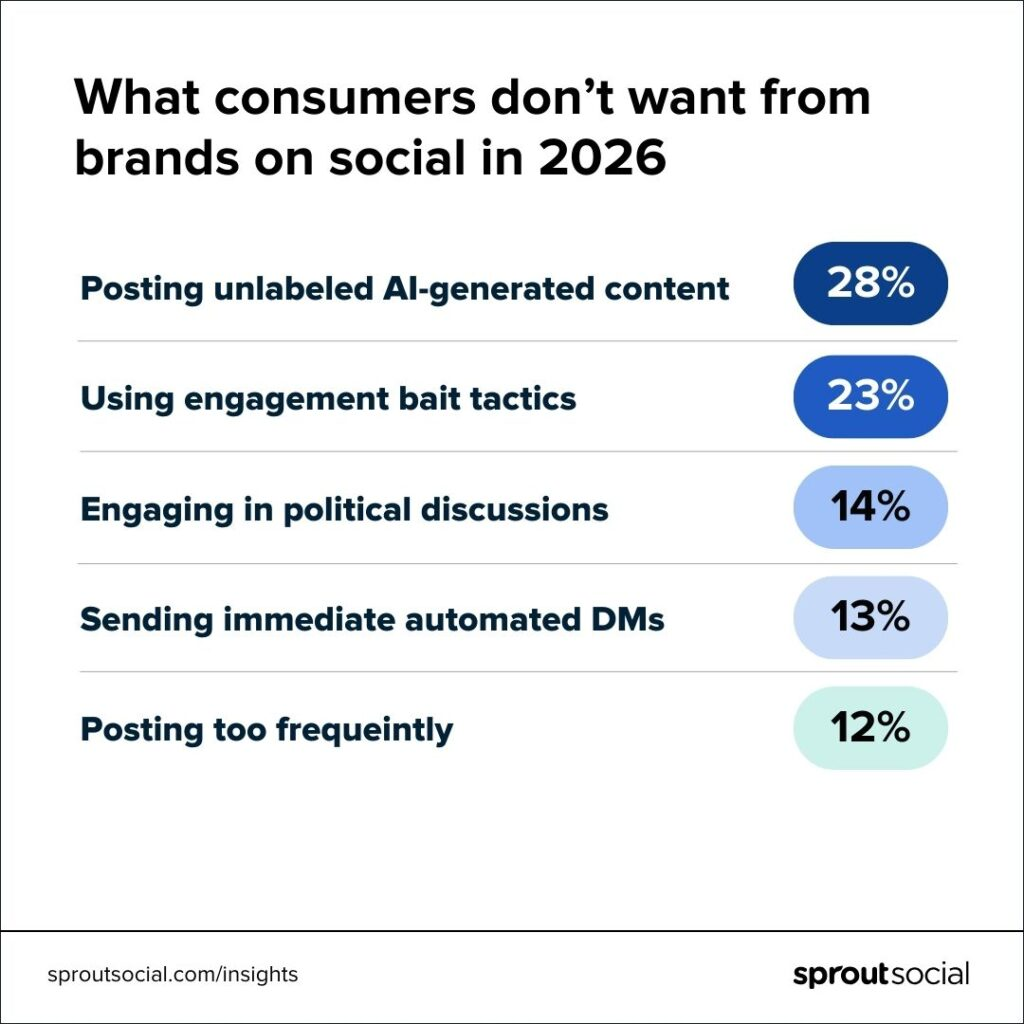
So no, brands don’t need to abandon AI. But they do need to use it more carefully.
Let the machines handle the routine work (e.g., drafting, variations, reformatting) so your team can spend more time on the parts that need a human brain: voice and creativity.
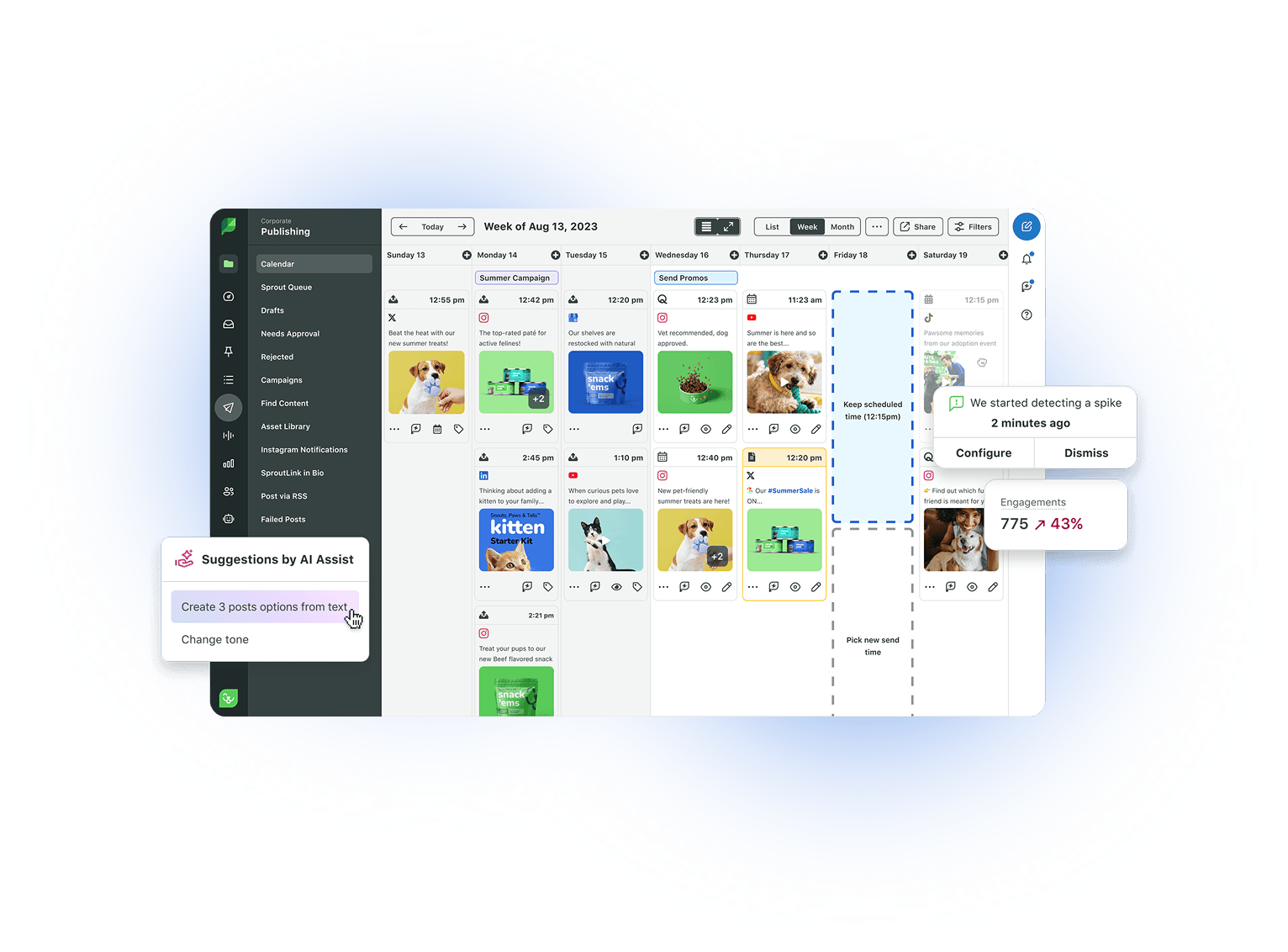
For example, Sprout Social’s AI capabilities help you speed up and optimize your content creation process. Tap into features like:
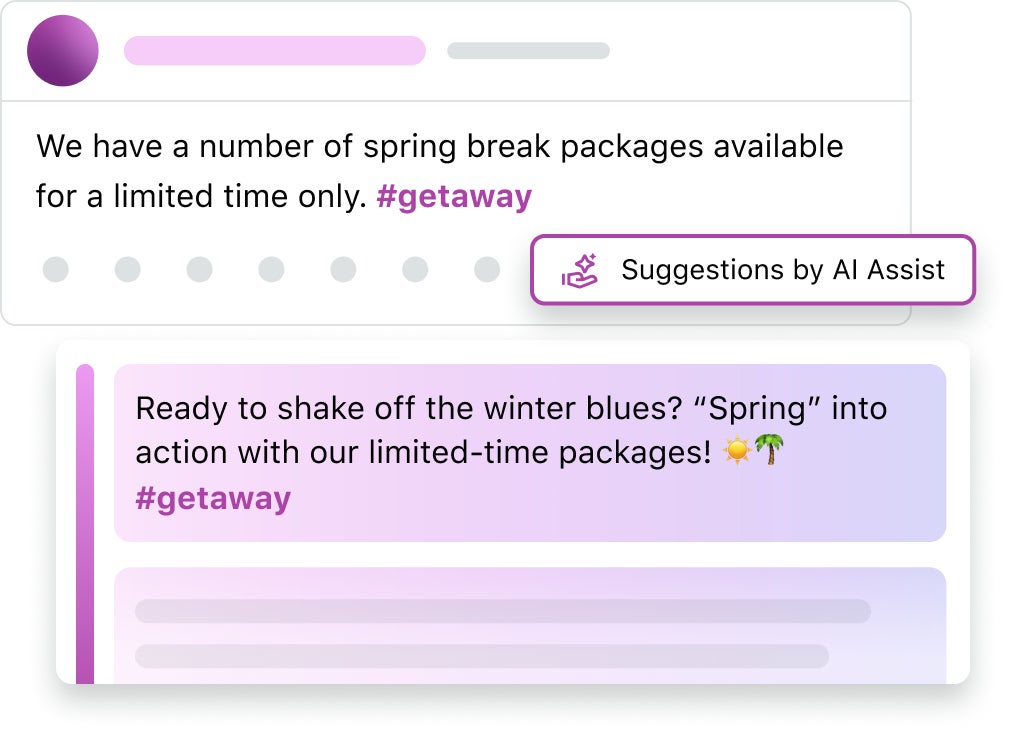
- AI Assist: This feature uses AI to suggest content ideas, generate alt text and improve your captions. It automatically creates engaging captions based on your top-performing posts. You can also generate new ideas based on top-performing posts or custom topics.
- AI Assist for Listening: Use these features to catch key topics quickly. Analyze surfaces the top conversation themes in a Listening Topic, Summarize gives you quick takeaways from longer messages and Listening Spike Alerts notify you when conversation volume suddenly jumps so you can spot trends and react faster.
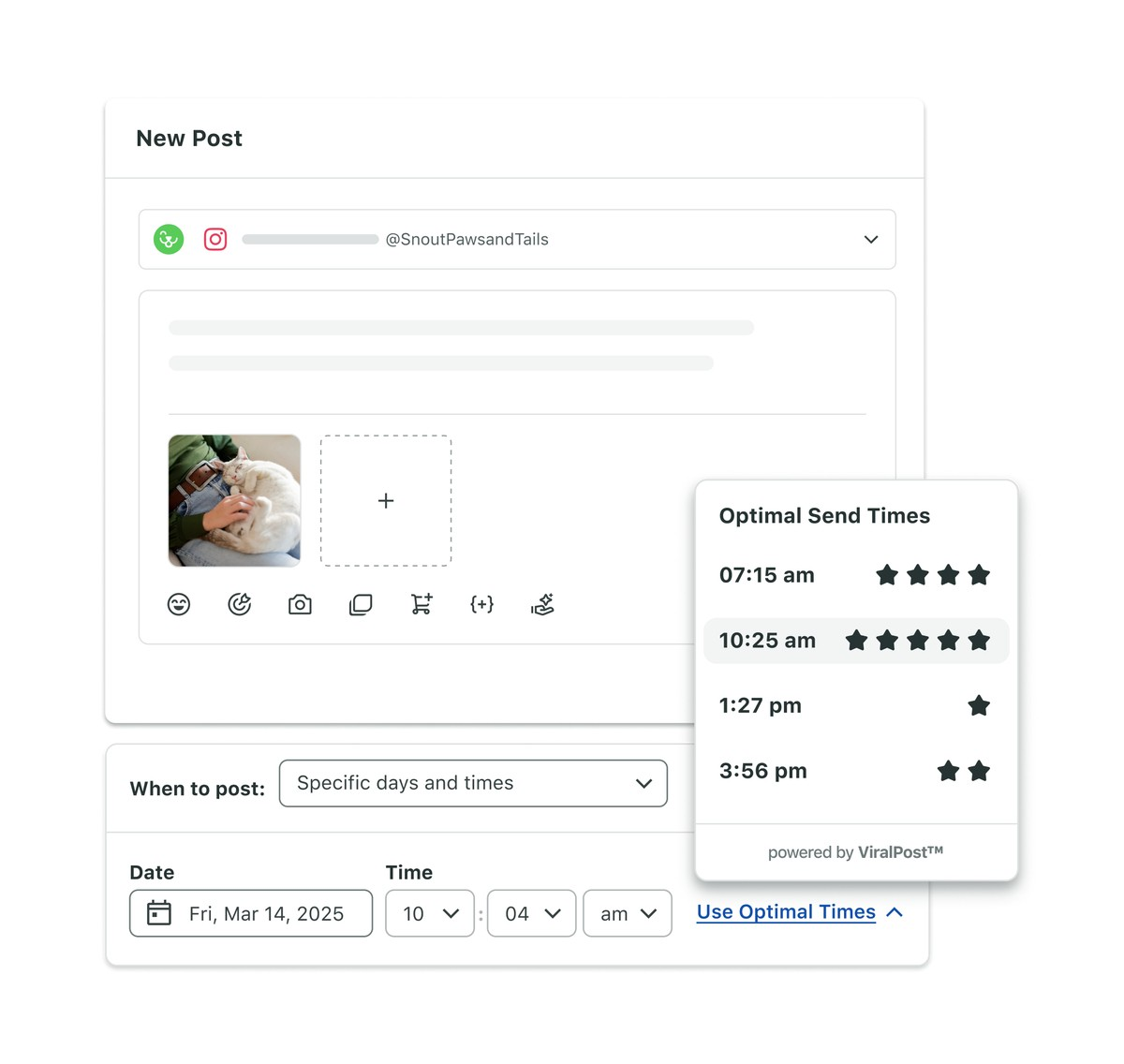
- Optimal Send Times and ViralPost: These features use AI to analyze your audience behavior and recommend the best time to post. Use these suggestions to optimize your posting schedule and drive more engagement on Instagram.
Sign up for a demo to see what you can do with Sprout’s AI tools.
What marketers can do
- Use AI for repetitive tasks. Use it to experiment with drafts, variations and timing, but keep the overall creative direction human.
- Label AI-generated visuals or copy. Your audience is smarter than you think, so make sure you’re transparent about your usage.
- Use AI for customer support. Sprout’s data shows about 25% of consumers turn to Instagram for customer care over any other channel. Let AI help with FAQs and basic product assistance, but keep humans involved for more sensitive or complex cases.
2. Instagram as a search engine
According to Sprout’s Q2 2025 Pulse Survey, nearly one in three consumers now rely on social media for search instead of traditional search engines. And Instagram is one of the top destinations for those searches.
Younger users in particular are skipping Google entirely and going straight to Instagram to look up brands, products, restaurants, travel spots and more.
For example, here’s what an Instagram search pulled up for “Malaysia hotels”:
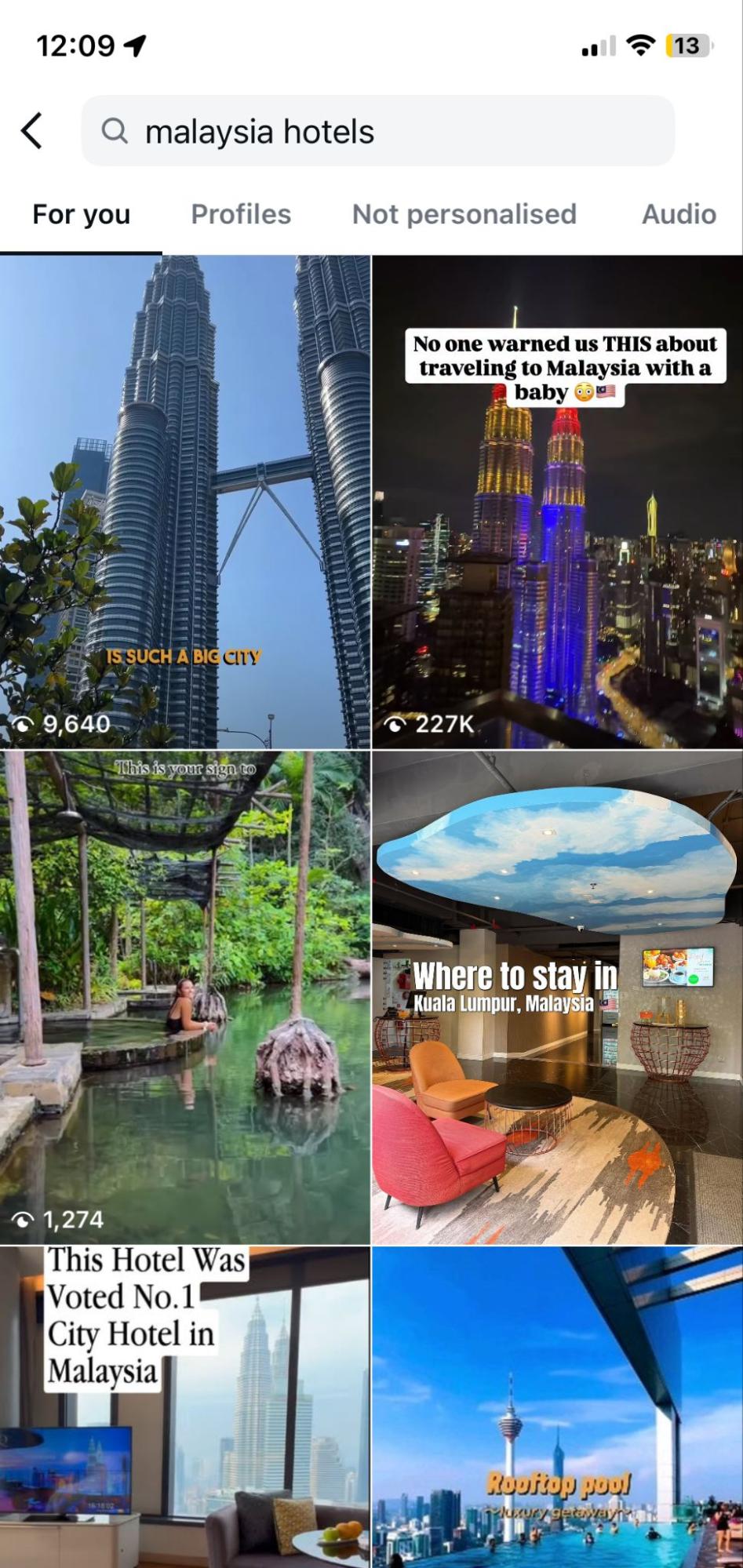
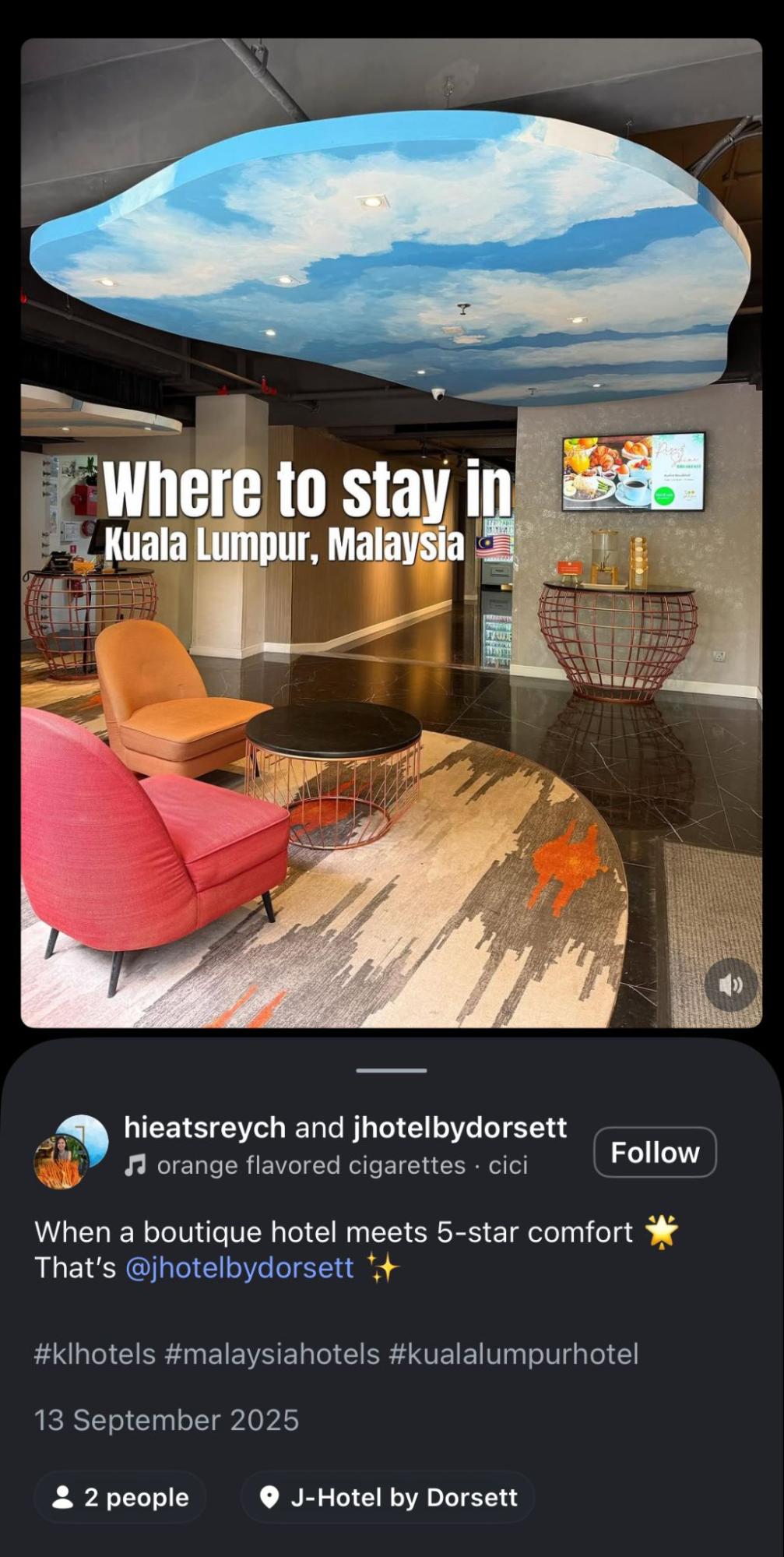
Most of these Reels use matching keywords in their on-screen text, captions and hashtags, like the one from J Hotel Dorsett below:
Being “findable” when someone types a query into Instagram’s search bar is non-negotiable in 2026. Sprout’s research also shows that 26% of social users turn to Instagram specifically for product discovery, which makes showing up even more important for brands.
What marketers can do
- Optimize everything. Use relevant keywords in your account name, bio, captions, on-screen text and hashtags to boost Instagram SEO and show up for the right searches.
- Create content around search intent. Forget what you want to post and focus on what your audience is trying to find, whether that’s product tips, comparisons or local recs.
- Use location tags to improve local visibility. If your business has a physical location, tag the city, neighborhood or venue so you pop up when people search for places nearby.
3. Storytelling to build brand connection
Most brand content on Instagram is forgettable. Storytelling is a tried-and-true technique for standing out, and it’s especially relevant now with so much generic noise on the platform.
We’re not talking about “storytelling” in the vague marketing sense, but actual narratives:
- How did your product come to exist?
- How did it change the life of a customer?
- Was there a failure your team learned from?
- Does your company name have an interesting origin story?
We love this heart-warming origin story example from Just Date:
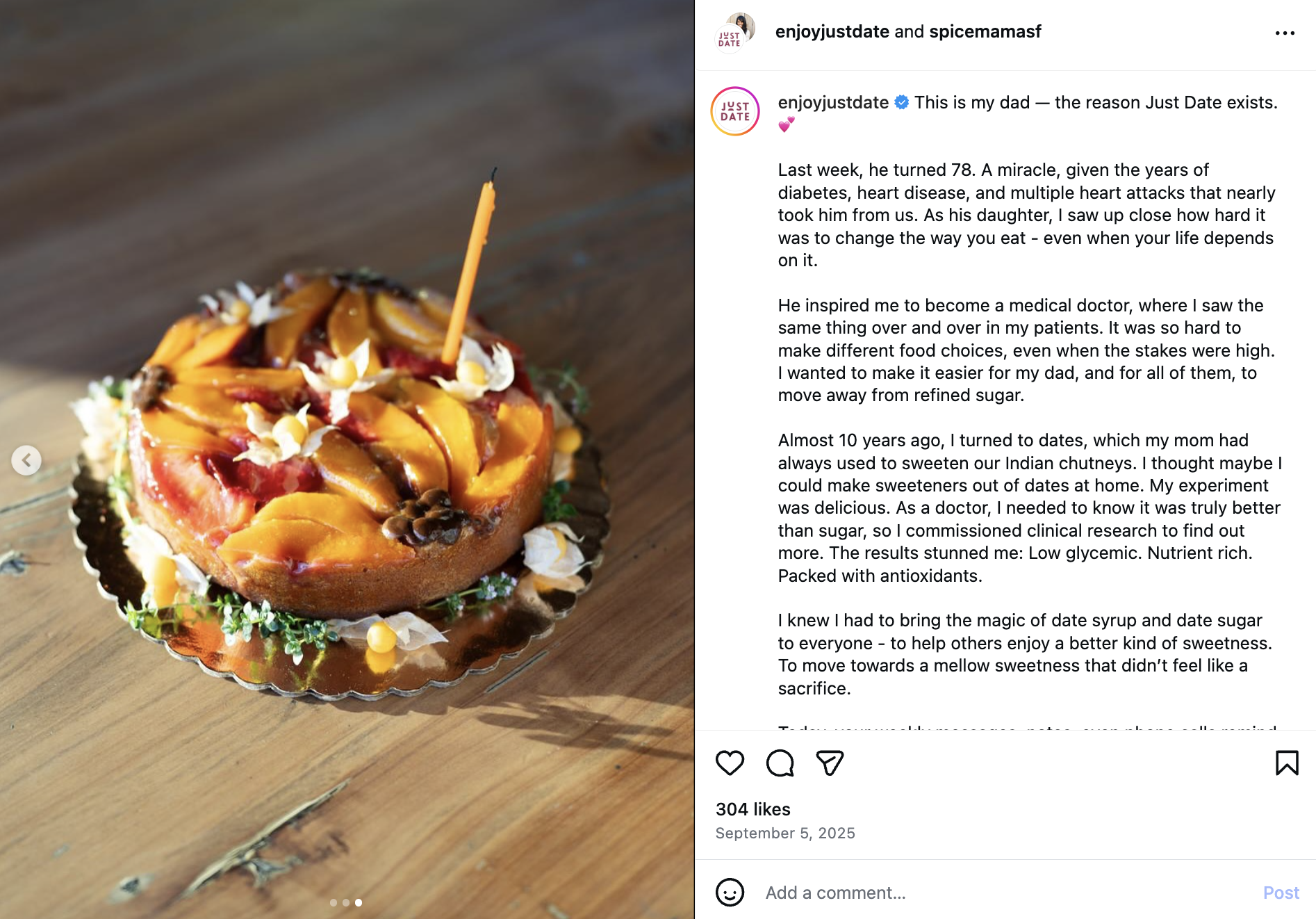
Stories give people something to feel and remember. A feature tells your audience what a product does, but a story gives them a reason to care, which builds connection.
Sprout’s data shows when consumers feel connected to a brand, 76% would buy from that brand over a competitor and 57% would spend more with them.
What marketers can do
- Pick the right format for your story. Use Reels when voice and emotion are central to the narrative, and carousels when the story needs more detail or context.
- Feature real people in your stories. Bring in the founder, employee or customer who lived the moment. Don’t fill your post with stock photos or generic quotes.
- Create a series instead of standalone posts. Episodic content is trending right now, so capitalize on that with a “how we built this” or “Customer story of the week” type of series that keeps people coming back.
4. Longer carousels to boost engagement
Videos might outperform static images, but Socialinsider’s data shows carousels consistently get higher engagement than Reels on Instagram.
When users swipe through a post, they’re not just spending more time on it but also actively interacting with every slide. Instagram’s algorithm counts this as true engagement.
Instagram allows up to 20 photos or videos in a single carousel, which gives brands more room to build a narrative or teach something useful. For example, you can use carousels for event recaps, product shots, step-by-step tutorials or data stories.
Here’s Adidas sharing highlights from a recent launch:
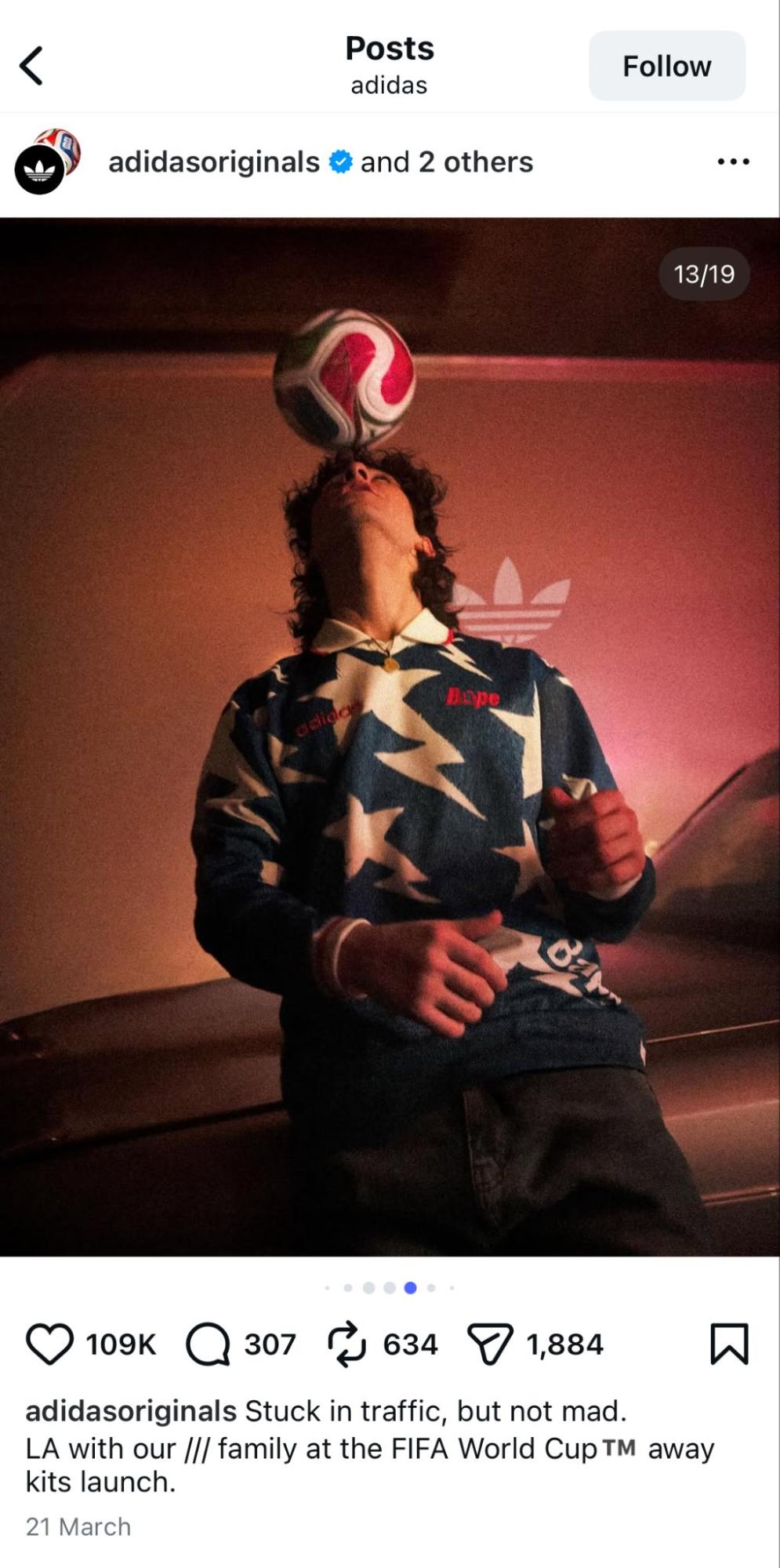
It also makes it easy for brands to jump on the “photo dump” trend. Mix in polished images with candid team photos, behind-the-scenes videos or user-generated shots so your content feels more layered and human, which is what audiences prefer in 2026.
What marketers can do
- Lead with a strong first slide. Slide one is the hook. IG users won’t give you a second chance, so make your post worth stopping for (and swiping).
- Make the carousel genuinely useful. How-tos, frameworks, tips and step-by-steps give people a reason to save and share, both strong engagement signals.
- Create a reason to keep swiping. Use a sequence or open loop so people want to see what comes next.
5. Quality of posts over quantity
For years, the standard social media advice was to post frequently to stay visible, sometimes multiple times a day. In 2026, that Instagram marketing trend is outdated.
Instagram’s algorithm now rewards resonance over volume. Sprout’s recent survey also found that 66% of users are more selective about what they engage with compared to last year.
Filler content isn’t just a waste of your time; it actively pushes people to disengage. When asked about the one thing people wish brands would stop doing on social media this year, about 12% said “posting too frequently.”
Instead, focus on posting more strategic content aligned with your audience’s interests. Invest in stronger visuals, more engaging topics and better use of data over a full content calendar.
What marketers can do
- Analyze your Instagram content. Use Sprout Social to identify high-performing content by saves and shares (not just likes). Posts people bookmark or DM to friends are what you need to look at. Build your calendar around similar content.
- Find the right posting rhythm. Whether that’s three times a week or daily, what works for you depends on your audience. Combine your analytics data with our guide to the best times to post on Instagram.
- Redirect your hours. Instead of spending time creating filler posts, use social listening tools to research what your audience is searching for, talking about and engaging with from other accounts.
Pro tip: If you’d rather focus on making fewer, better posts, Sprout’s ViralPost® and Optimal Send Times can suggest when your audience is most likely to engage based on your own data.
6. Expert-led educational content
Sprout’s Q1 2026 Pulse Survey found the top personal goal for social media users this year is consuming content for self-improvement, learning or skill building.
That mindset directly shapes what they want from brands too: educational content was the number one content type audiences want to see from brands, at 40% across generations.
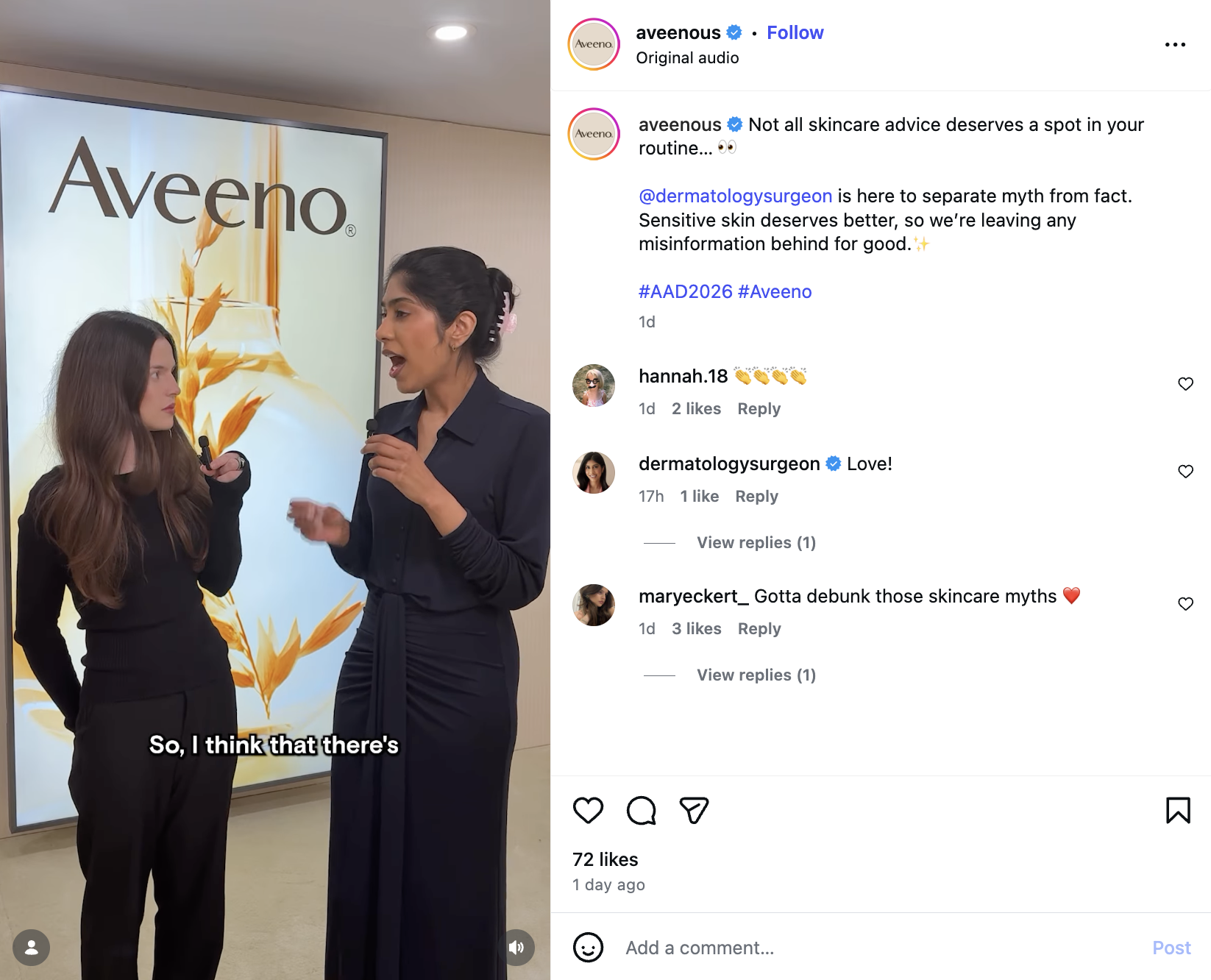
But we’re not talking about surface-level advice; your audience wants depth and credibility. They can tell the difference between someone who knows the subject and someone who Googled it. That’s why more brands are using experts in their content over generalist influencers.
For example, Aveeno shared a Reel featuring a dermatologist busting skincare myths:
What marketers can do
- Find experts in your own company. Bring in internal subject matter experts where you can to maximize resources, and tap into outside voices where it adds credibility or reach.
- Research audience questions. Look at what customers keep asking, struggling with or getting wrong, then address those concerns honestly and practically to build trust.
- Repurpose your content. You can turn one expert interview into multiple Reels, carousels and Stories. Also, cross-post on LinkedIn and YouTube (depending on your business) to reach more people.
7. Leadership becoming the face of the brand
This year, more companies are putting their executives on camera. Why? It’s one of the best ways to humanize your brand and build trust at scale.
People are wired to pay attention to other people over corporations, especially senior leaders. So when a founder records a quick Reel about why a product is worth trying or a CEO shows up on Stories to demo a new feature, it carries more weight than a faceless ad.
The barrier for most brands is often comfort instead of willingness. Leaders worry about being polished enough. But on Instagram, a slightly awkward, off-the-cuff video from a real human almost always outperforms a scripted one.
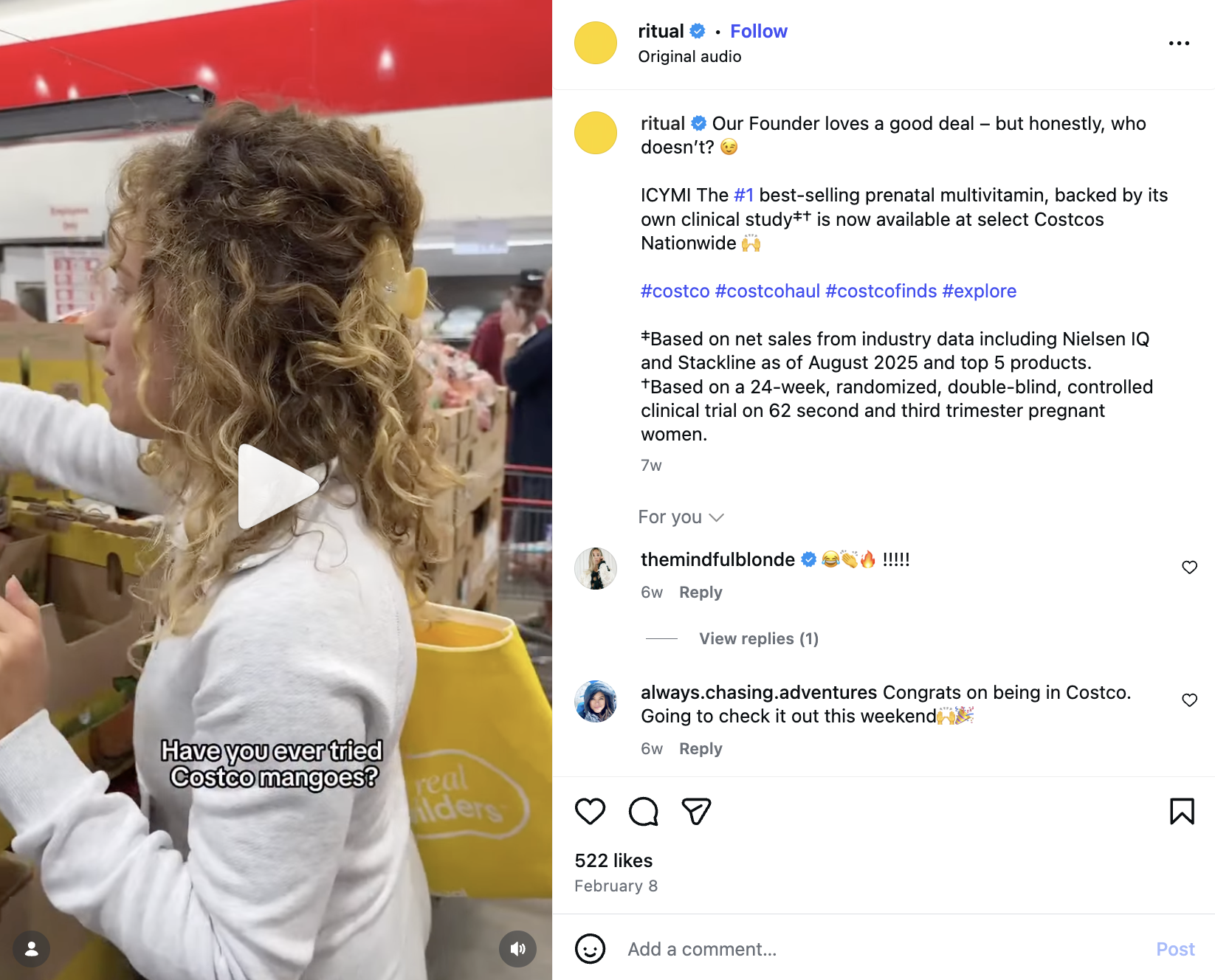
Here’s supplements brand Ritual sharing a candid video of its founder bargain-shopping in Costco:
What marketers can do
- Don’t turn executives into creators overnight. Start with low-pressure formats they can handle easily, like selfie videos you can turn into Instagram Reels or Stories.
- Resist the urge to over-produce. Give leadership a few talking points (and a hook) instead of a stiff paragraph to memorize. The whole appeal is that it feels like talking to a person, not watching a commercial.
- Cross-post to LinkedIn and YouTube. It’s where leadership content also thrives, which helps double the results from the same recording.
8. Episodic content series
In 2026, more brands are creating episodic content on Instagram: recurring formats with consistent characters, themes or storylines.
Sprout’s Q1 2026 Pulse Survey asked consumers what they want to see more of from brands, and 20% said high-production episodic content series. That number jumps to 27% for Gen Z, the top content priority for that generation.
A good series creates anticipation, which drives repeat engagement. It also builds familiarity with your brand over time as viewers get more invested.
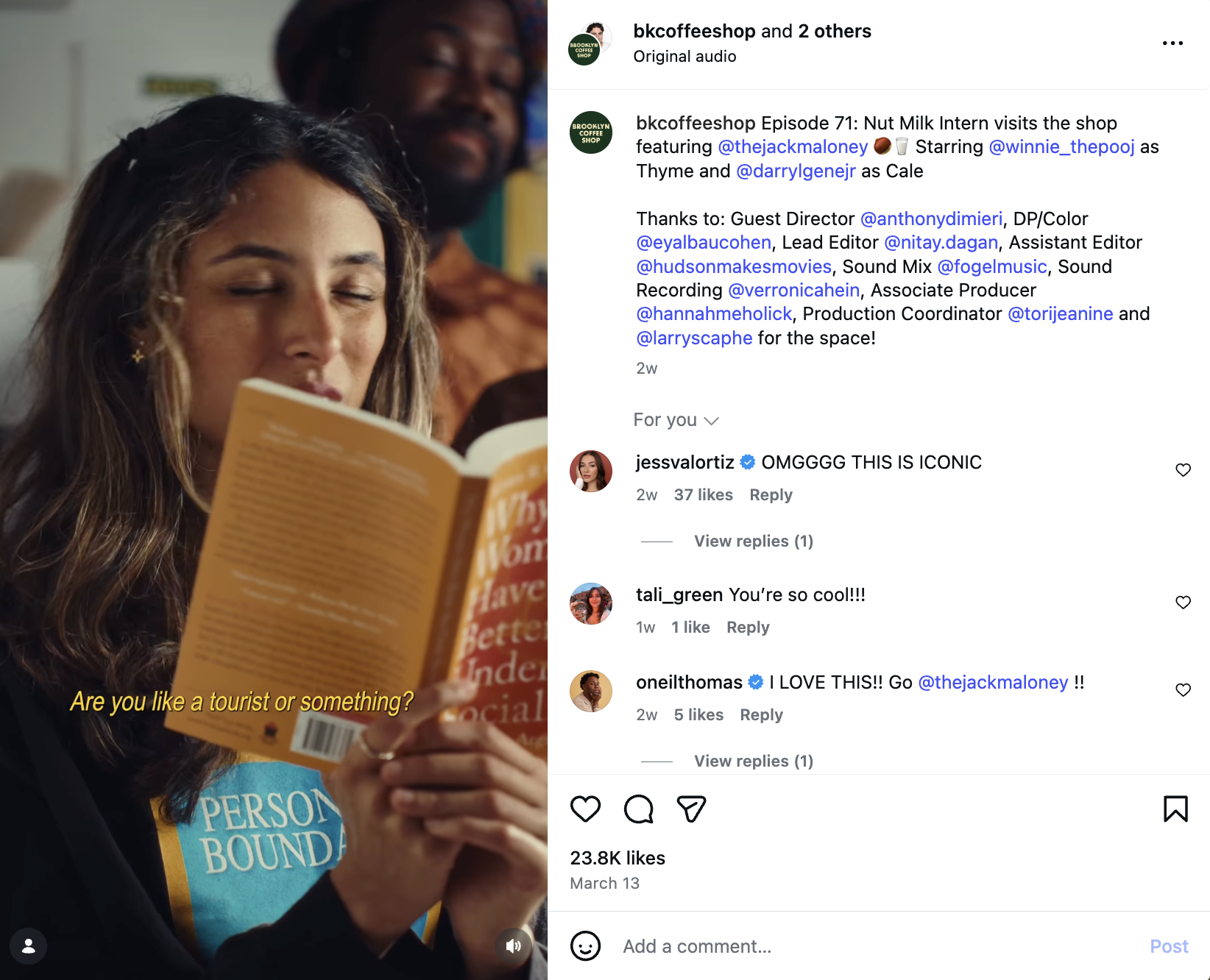
Brooklyn Coffee Shop offers a great example of what a high-quality episodic series on Instagram looks like in practice:
What marketers can do
- Invest in higher production quality for series content. This is where Gen Z in particular is saying they want brands to step up. Not every Reel needs to be “lo-fi”.
- Use recurring faces. Your series shouldn’t have a new cast every time. Like a TV show, it works better when viewers recognize and feel connected to the people in it.
- Gather performance data. Track views, watch time, shares, saves, completion rate and retention across episodes. Also look at qualitative data like comments, DMs and questions to adjust your strategy for upcoming episodes.
9. User-generated content
User-generated content (UGC) isn’t a new concept, but it’s more important than ever on Instagram. Sprout’s 2026 Content Strategy Report shows UGC is the second-most preferred brand content type on the platform (25%), right behind short-form video.
The reason is trust. People scroll past branded content with their defenses up. But a customer posting an unboxing video or a candid review is stronger social proof, sometimes even more than a paid influencer.
The operational benefit is great too. UGC essentially gives you a scalable (and free) content source that works on autopilot. You just need to find and leverage it properly.
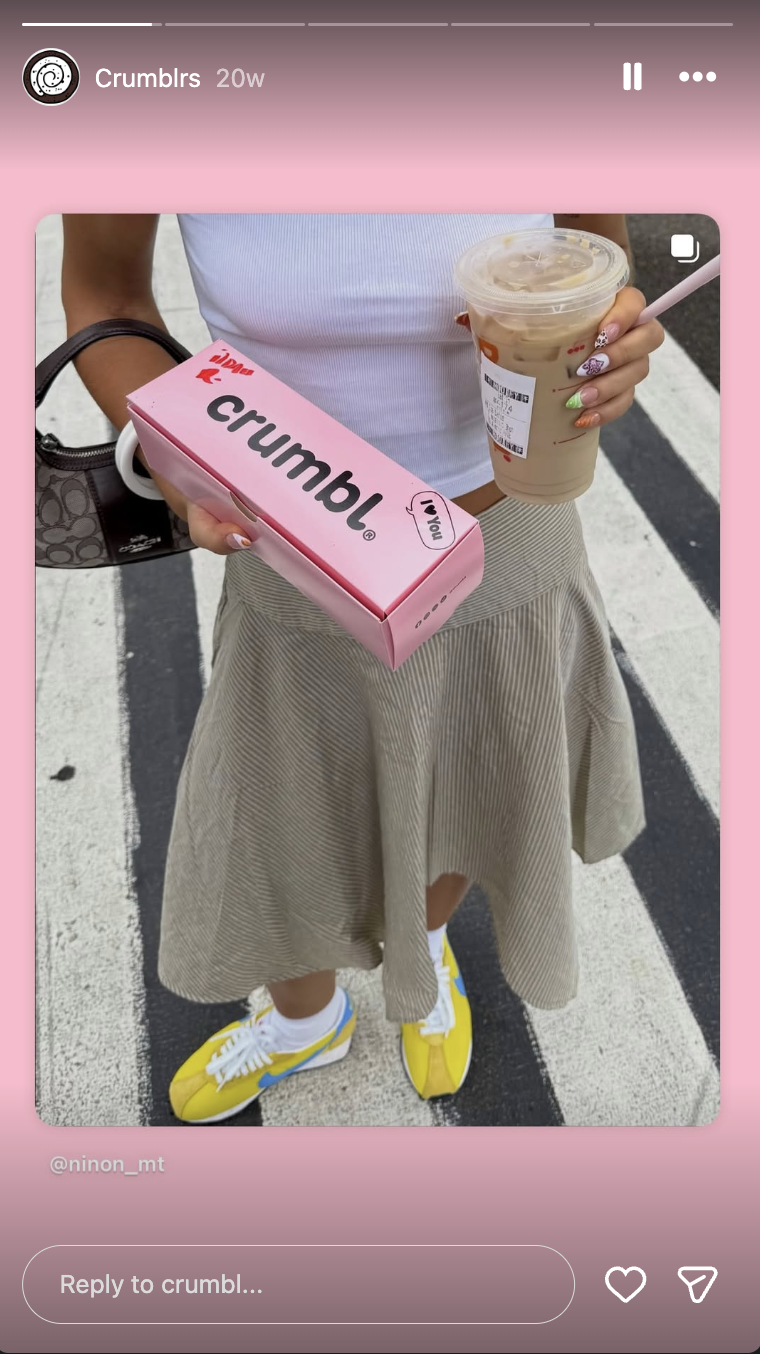
Crumbl has a dedicated Story highlight on its profile for UGC.
What marketers can do
- Set up a system for finding UGC. Monitor your brand mentions, hashtags and tags daily. Most brands have more UGC than they’re capturing.
- Ask permission before reposting. Customers often want to be featured, so it’s a win-win that costs nothing. Just make sure you ask and give credit.
- Encourage more UGC. Start a branded hashtag, challenge or giveaway, or add a “show us how you use it” CTA in your captions and emails.
10. Broadcast channels as brand communities
Broadcast channels on Instagram are one-way group chats where you can send direct messages (e.g., text, photos, voice notes, polls) to your subscribers.
Instead of pleasing the algorithm or competing for feed space, you’re engaging directly with people who want to hear from you, very much like a community.
Sprout’s data shows community is a big priority for consumers in 2026, with 27% saying they want content from brands focused on that. Broadcast channels offer you the perfect opportunity to deliver community-led experiences.
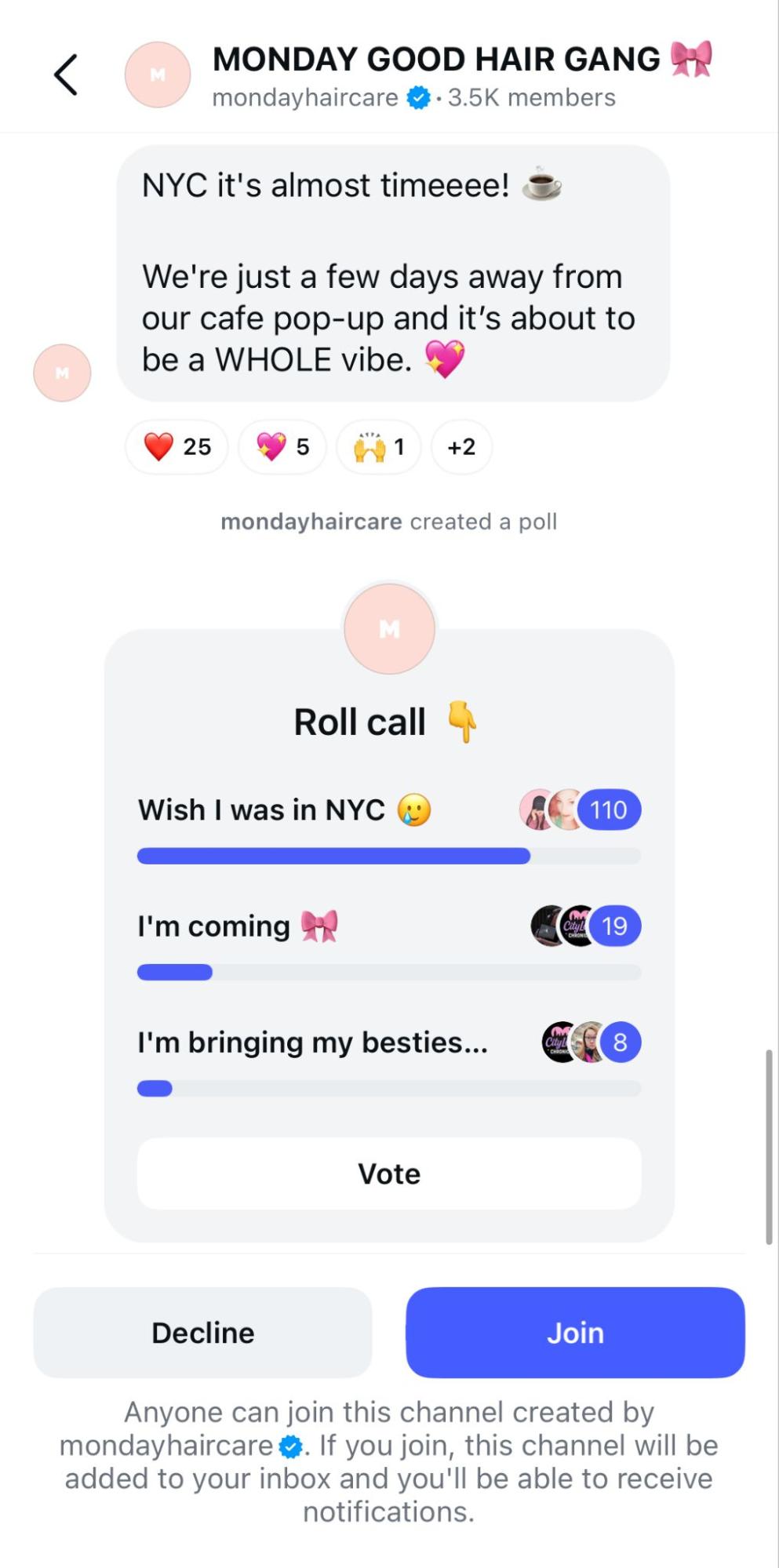
Here’s an example of MONDAY Haircare’s broadcast channel and how they keep things interactive in there:
What marketers can do
- Position your channel as an insider space. Offer perks like early access, exclusive content and first looks to give people a reason to subscribe (and stay engaged).
- Use polls and voice notes to keep it interactive. One-way broadcast is fine, but audiences engage more when it feels conversational.
- Promote the channel in your bio, Stories and Reels. It won’t grow on its own. You need to drive people there intentionally.
11. Reels are becoming more shoppable
In March 2026, Instagram expanded shoppable Reels with a new “Add product” experience, which lets creators tag up to 30 products in a single Reel using product URLs (e.g., affiliate links) or items from Meta’s commerce catalog.
For example, a creator can film a “get ready with me” Reel, tag every product they used and earn affiliate commissions when viewers tap through and buy.
Brands have also been able to tag their own products in Reels for a while, and the case for doing it is only getting stronger. Viewers can tap to see product details and pricing in a video, and go straight to your website to buy.
What marketers can do
- Tag products in your own Reels. Not just when you’re running a launch campaign. Tutorials, styling videos, product comparisons, “how we use it” content; make it shoppable.
- Update your Meta product catalog. Both your team and your influencer partners can tag products that exist in the catalog with correct pricing and availability.
- Track which products get the most conversions. Then use that data to inform what you feature in future Reels and which products you prioritize in creator briefs.
12. Partnering with more influencers at a time
Instagram is one of the most popular influencer marketing platforms. But single celebrity endorsements are fading. Sprout’s data showed 59% of marketers planned to partner with more influencers in 2025 than the previous year: a trend that continues into 2026.
The smart approach is building a roster of influencers across tiers and activating several of them simultaneously. It spreads your risk, diversifies your creative output and puts your brand in front of multiple niche audiences at the same time.
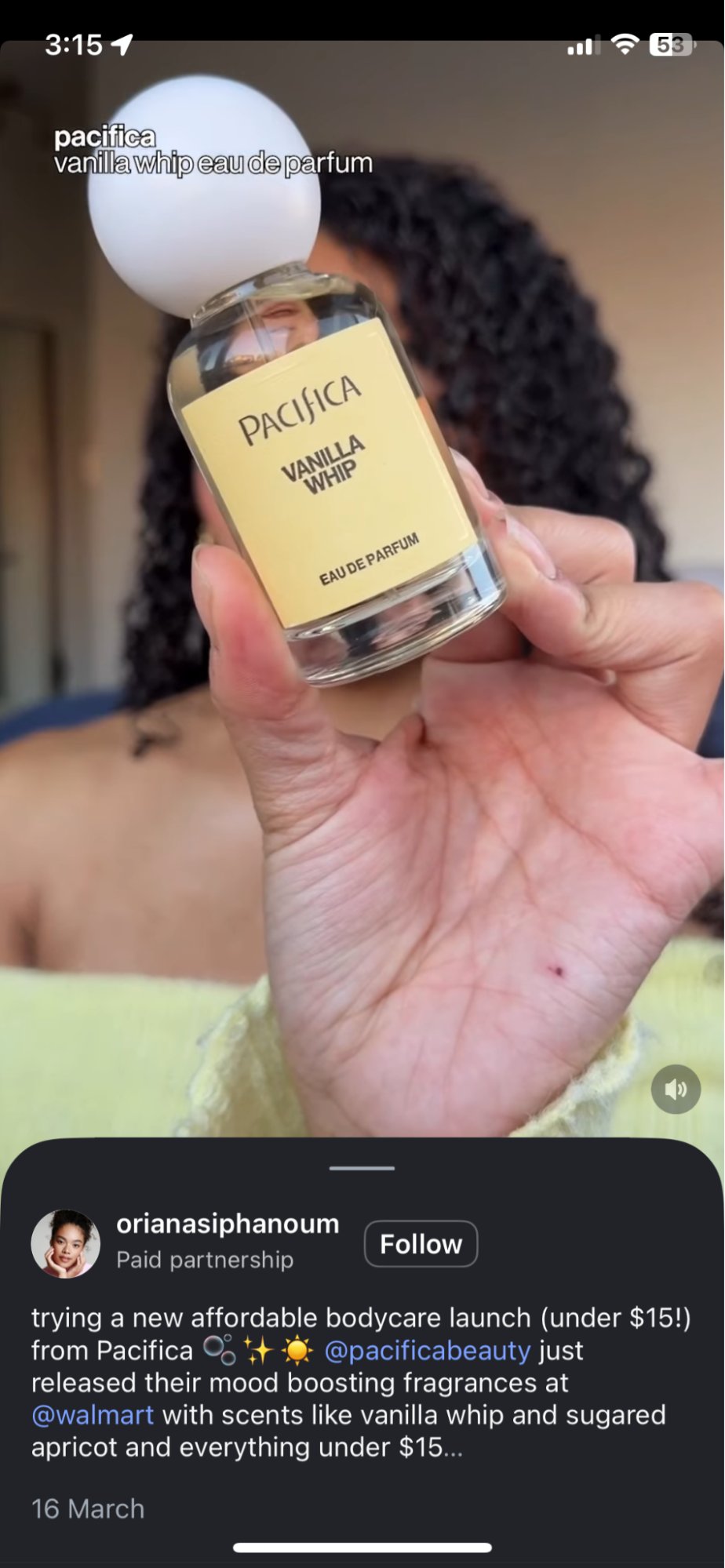
Fortunately, this Instagram influencer trend isn’t expensive. Smaller influencers (nano and micro) are cheaper and offer much higher engagement than mega-influencers. In fact, for the cost of one big-name celebrity post, you could run a coordinated campaign with 10+ micro-influencers, with even better results.
Beauty brand Pacifica regularly partners with nano- and micro-influencers.
What marketers can do
- Plan your investment. Allocate at least a portion of your influencer budget to nano- and micro-influencers, even if you also work with larger names. The engagement-to-cost ratio is dramatically better.
- Use Instagram’s collaboration features. Use paid partnership labels and Collabs so creator posts also show up on your brand’s profile (which doubles visibility).
- Evaluate influencers the right way. Look at engagement rate and audience alignment instead of follower count. A smaller creator in your niche is often worth more than a popular generalist.
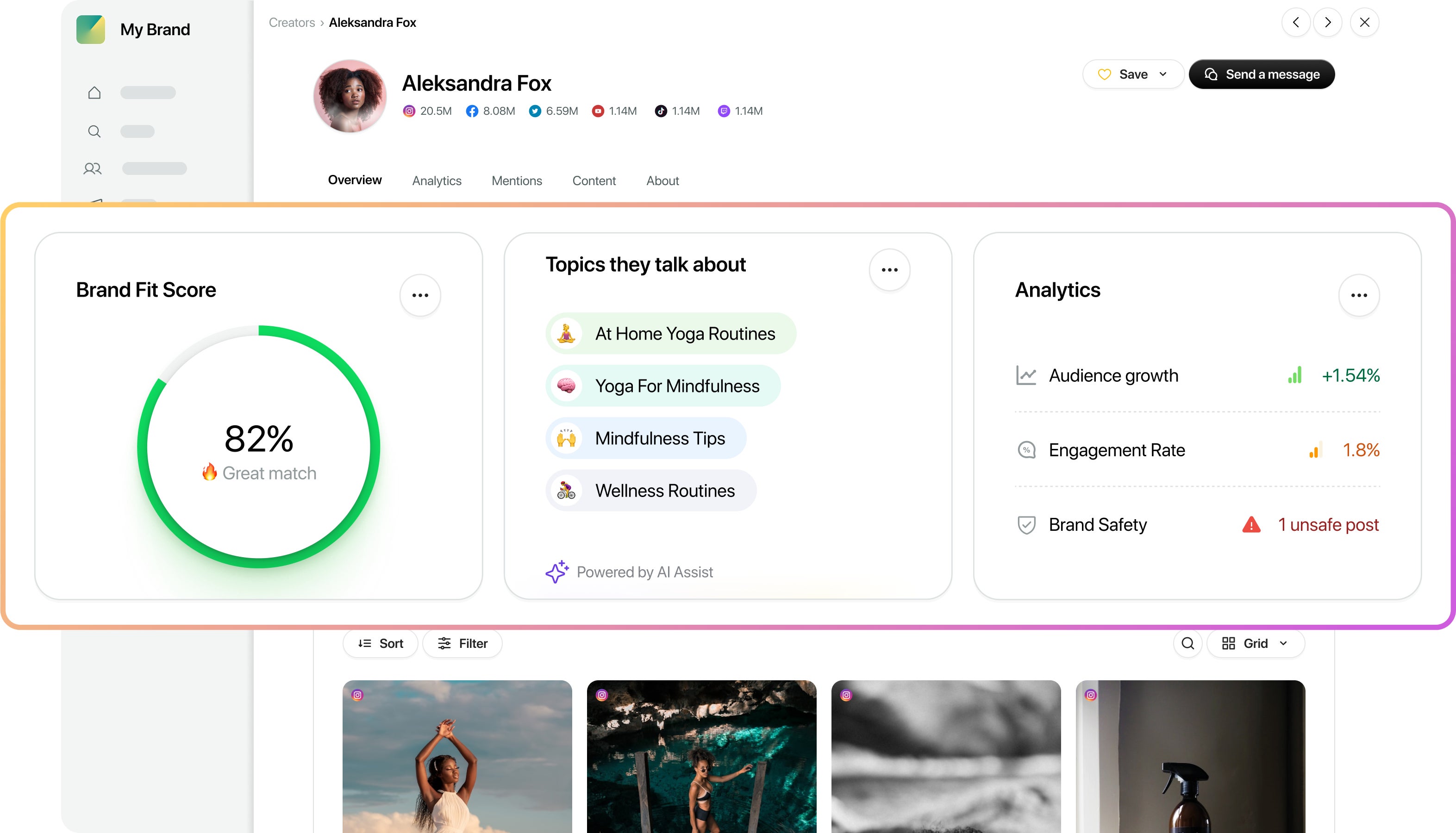
Pro tip: Sprout Social Influencer Marketing helps you find brand-fit creators, vet them faster, manage campaigns in one place and measure results more accurately, which is especially helpful when you’re working with multiple influencers at once.
13. Content tied to cultural or current events
Evergreen content has its place, but it doesn’t generate the kind of reach that timely content does. The 2025 Sprout Social Index™ shows as many as 90% of consumers rely on social media to stay on top of cultural moments.
Cultural moments could be major events happening around the world, viral memes, internet drama and even sports highlights. Brands that move fast can join the conversation and build visibility and relevance on Instagram.
But there’s a catch. Since you’re not the only one creating content on a trending topic, you need to add value in some way, such as with a unique perspective or a clever creative spin.
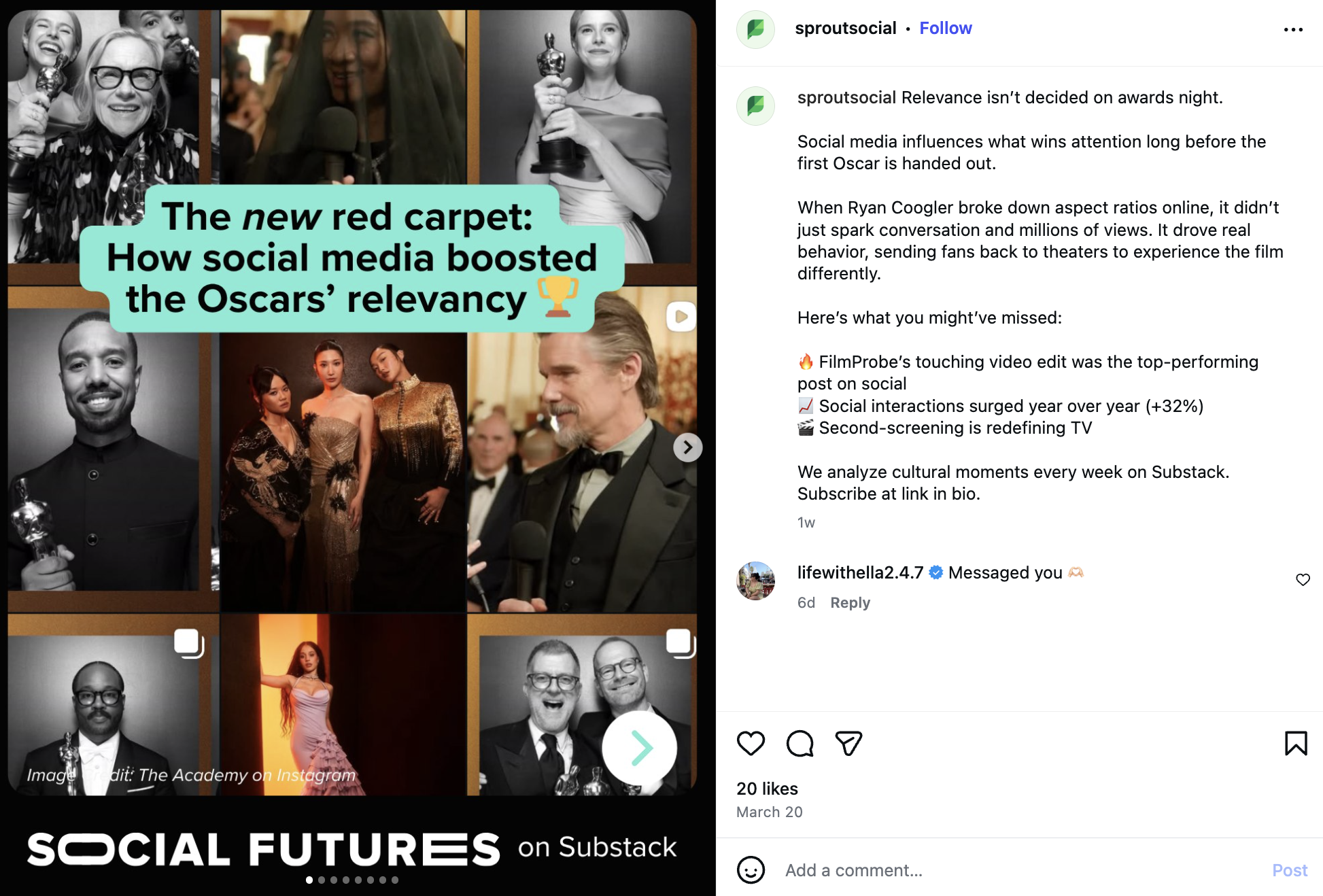
At Sprout, we do this strategically by relating cultural moments to the topic we know best: social media. Here’s an example from our Instagram.
Pro tip: Not every trend is right for your brand. Forcing yourself somewhere you don’t belong can often backfire. Prioritize topics based on what your audience cares about and your ability to add an interesting take.
What marketers can do
- Keep a calendar of predictable events. Think awards shows, sporting events or industry conferences. Have loose creative concepts ready in advance.
- Use Stories for rapid-response content. They’re ephemeral by design and perfect for timely commentary.
- Prepare for reactive content. Pre-approve things like acceptable tone, off-limits topics and who can greenlight so your social team can move quickly.
14. Posting behind-the-scenes content
According to Sprout’s Q1 2026 Pulse Survey, 19% of consumers want to see more behind-the-scenes (BTS) content from brands in 2026, rising to 26% among Gen Z.
BTS content isn’t a new Instagram trend by any means, but it works on the platform for one reason: When you show the messy, in-progress version of how things get made, people trust you more.
It also has a mechanical advantage. BTS shots are inherently easier to produce, like a phone clip from a campaign shoot or a quick time-lapse of packaging orders. You’re turning your everyday operations into content without much work.
Instagram Stories remain the natural home for this format. But we’re seeing lots of behind-the-scenes Reels and carousels too.
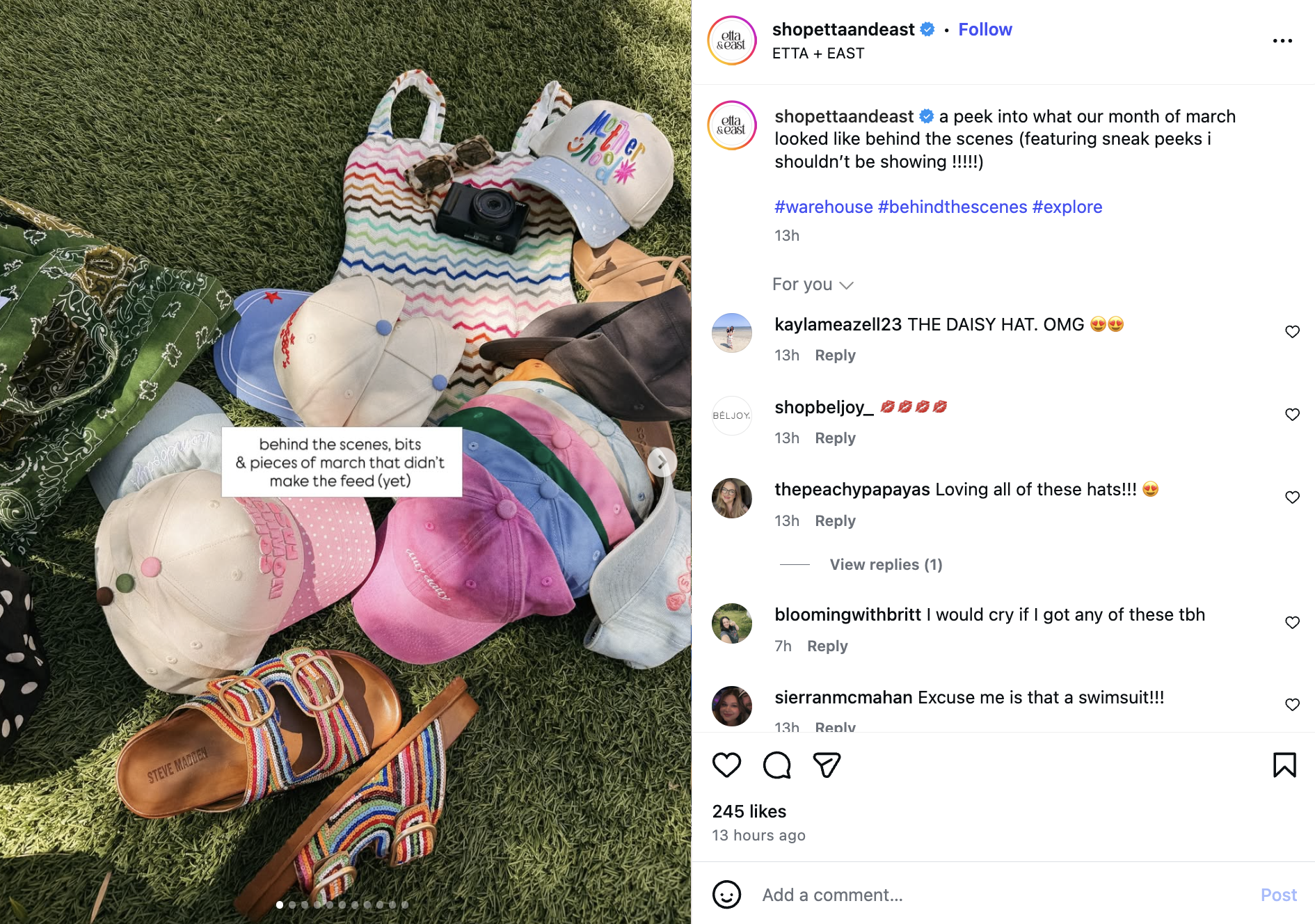
Here’s a BTS compilation from Etta & East:
What marketers can do
- Designate one person on your team to capture BTS content as it happens. Waiting to produce it after the event defeats the purpose.
- Lean into the imperfection. Shaky footage, natural audio and unscripted moments make your BTS footage look more authentic.
- Use BTS content to build anticipation. Show the “here’s what went into making this” alongside your product launches.
15. Ongoing alignment with a social cause
The brands that post a charity logo during a holiday and then go quiet for months aren’t fooling anyone anymore. In 2026, brand activism only works if it’s consistent, because consumers are paying attention.
Sprout’s research found 63% of Gen Z consumers are more likely to buy from brands that speak out about specific causes or topics in the news.
The brands getting this right are choosing causes that align with their identity and expertise, not whatever’s trending. They’re also showing up for that cause regularly and publicly.
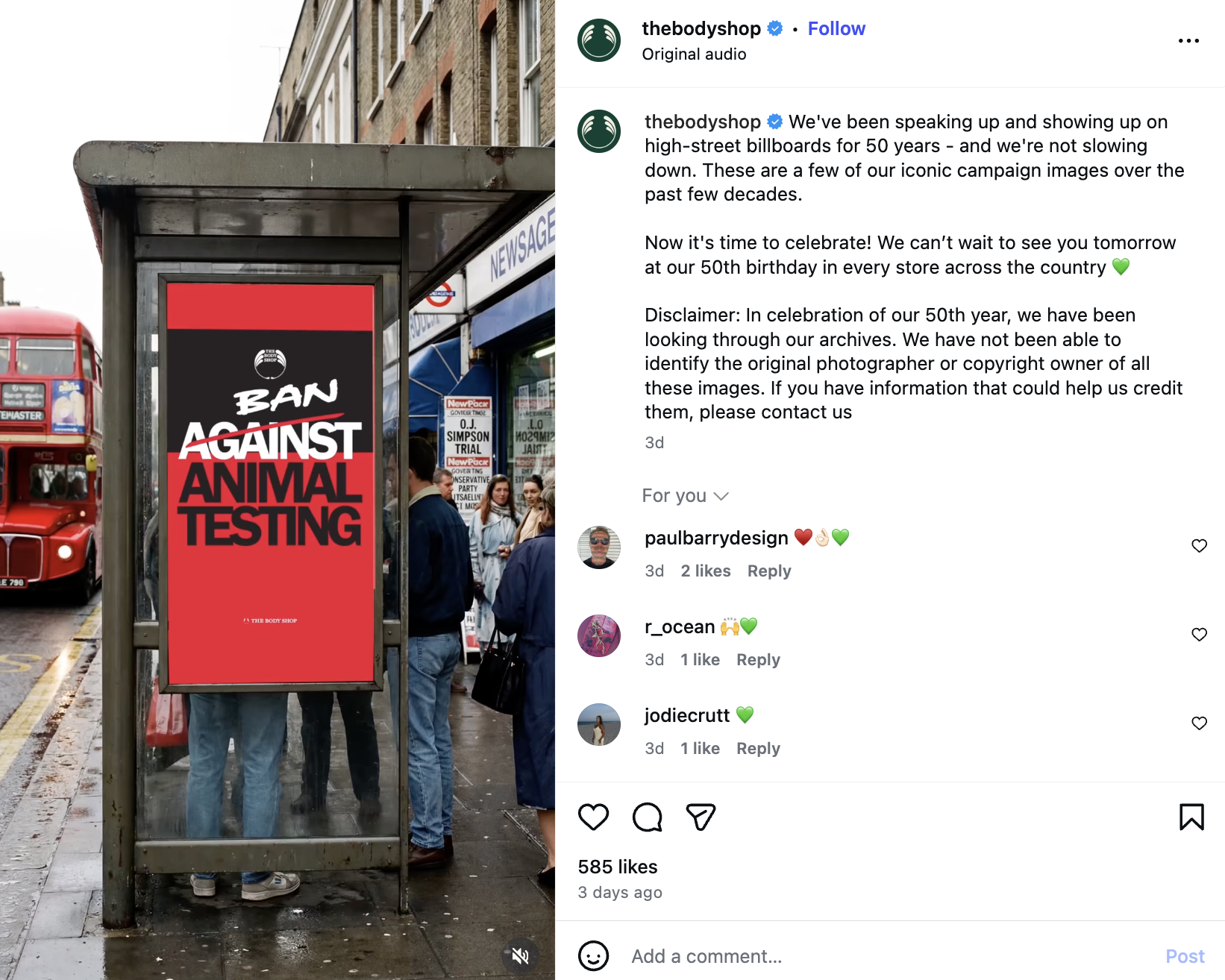
Here’s how The Body Shop shows its stance on animal testing publicly:
What marketers can do
- Pick a cause you can stand behind. Choose something that genuinely aligns with your brand values so you can stay consistent and your support doesn’t feel performative.
- Build the cause into your content calendar. It should be a recurring theme instead of a one-off campaign. Think monthly updates, employee spotlights or impact reporting.
- Be transparent. Show the specifics of your contributions, such as dollar amounts, hours volunteered and products donated. Vague “we care” posts aren’t enough anymore.
- Invite your community to participate. Encourage UGC tied to the cause, partner with nonprofits for co-branded content and create opportunities for shared action.
16. Responding to comments in Reels
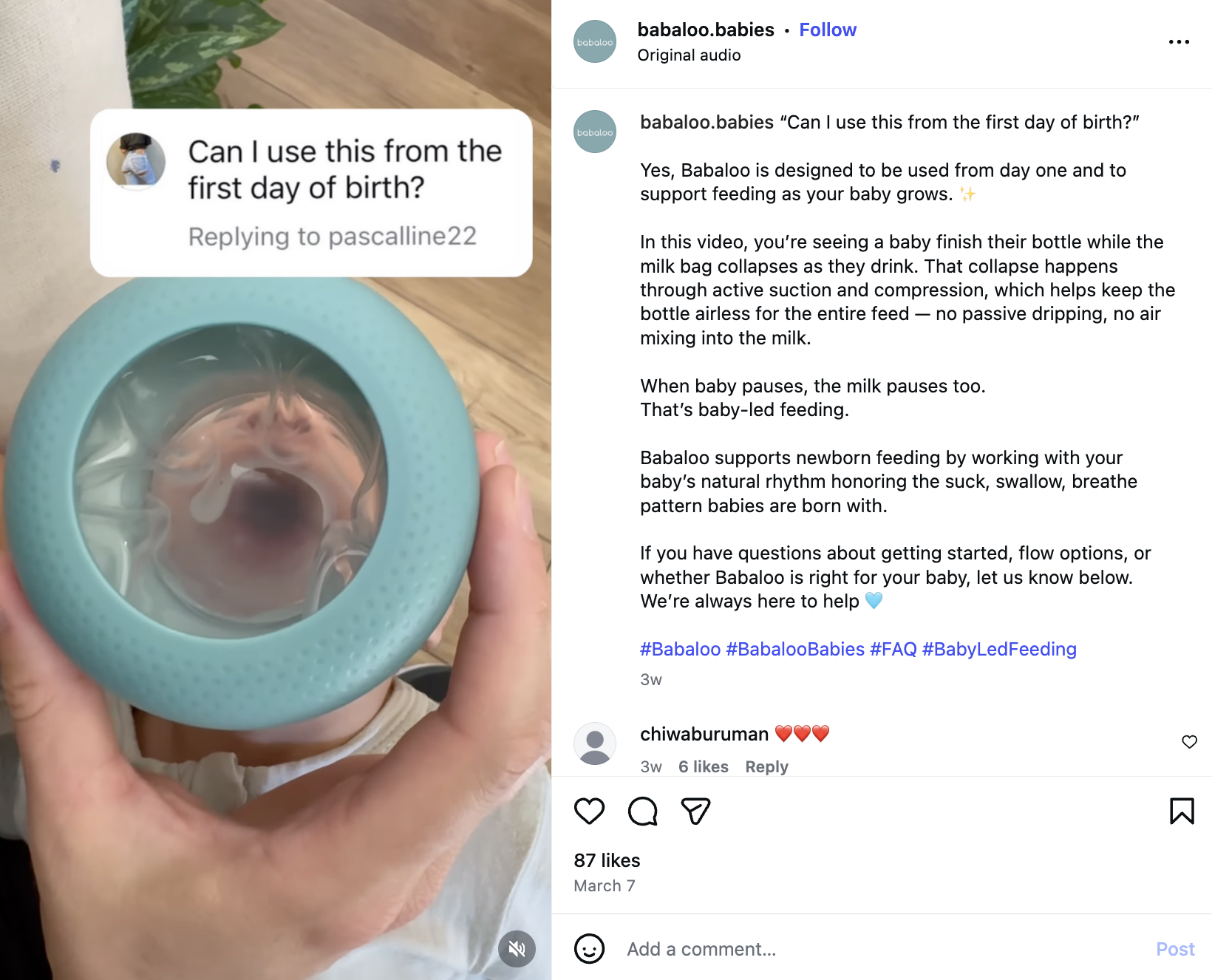
Video replies to comments have been around for a while, but brands are quickly realizing it’s an easy way to turn your audience into a content engine. Every comment becomes a prompt and every response becomes a new piece of content.
Reels also generate nearly twice as many comments as static images, so this exercise creates an interesting feedback loop. Other followers see that their comments might get featured, which encourages more participation.
The whole process tells the algorithm your account drives conversations, which ultimately boosts your visibility. Plus, it’s a great way to put social media listening to practice by addressing common questions or misconceptions in your Reels.
Here’s an example from Babaloo Babies:
What marketers can do
- Treat your comment section as a focus group. Flag questions, objections and hot takes that would make compelling standalone Reels.
- Keep responses short, direct and empathetic. Around 15-30 seconds with one person on camera (and no script) is the sweet spot.
- Batch-record a few comment-response Reels. Do this in one sitting so you have a backlog ready to post throughout the week or month.
17. Automation in Instagram ads
Instagram advertising is now less about manual campaign building and more about feeding Meta’s AI the right inputs and letting it optimize.
Advantage+ campaigns, automated placements and dynamic creative tools now handle “management” tasks like segmentation, bid adjustment and creative rotation.
Your job? Giving the machines better ingredients to work with. The old playbook of tiny tweaks and admin work is becoming irrelevant. In 2026, your results depend more on the quality of your inputs: your creative, messaging, landing page, product feed and first-party data.
What marketers can do
- Give Meta stronger first-party data. Connect high-quality conversion data, like CRM and Conversions API signals so the system has better inputs to optimize against.
- Keep humans in charge of strategy. Automation can optimize delivery, but it still needs you to set the right goal, offer and brand direction.
- Automate with boundaries. Remember to set guardrails over the non-negotiables like budget, audience exclusions and brand safety settings.
18. Talking-head reaction videos
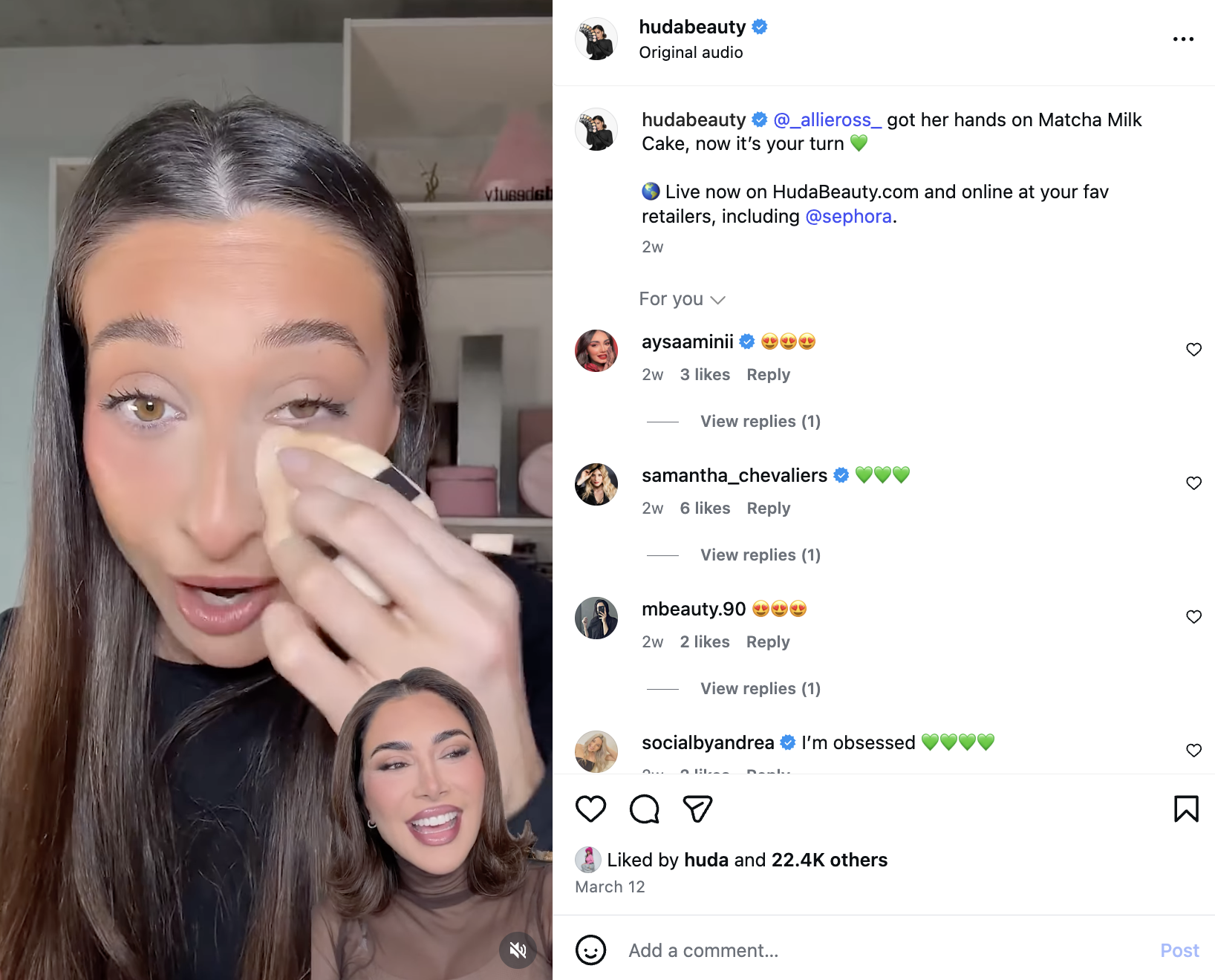
Picture-in-picture reaction videos are popping off on Instagram this year. More brands are using this format to add commentary, context and personality to their content.
The reason is partly algorithmic: reaction videos tend to generate longer watch times because viewers want to hear the full take. It’s also partly psychological: in a feed full of AI-generated visuals and polished content, an unscripted human face holds attention.
Huda Beauty’s founder often makes talking-head reaction videos like the one below in response to creators using her products.
What marketers can do
- Find the right person on your team. Someone who naturally enjoys being on camera and has opinions worth hearing is a good candidate for this job.
- Nail the first two seconds. Kick in early with your strong reaction or hot take instead of building up to it or showing up halfway through.
- Add a text overlay for sound-off viewers. Instagram says that watch time (not just plays) drives the algorithmic distribution of your content across feeds.
19. Nostalgia as a creative hook
Nostalgia marketing triggers an emotional response before the viewer even processes the content: a 90s color palette, a Y2K font or an early-internet reference.
And there’s a reason it works so reliably on Instagram. The platform’s largest demographic is the 25-34 age group. These millennials and older Gen Z often have vivid, affectionate memories of specific cultural eras that brands can tap into.
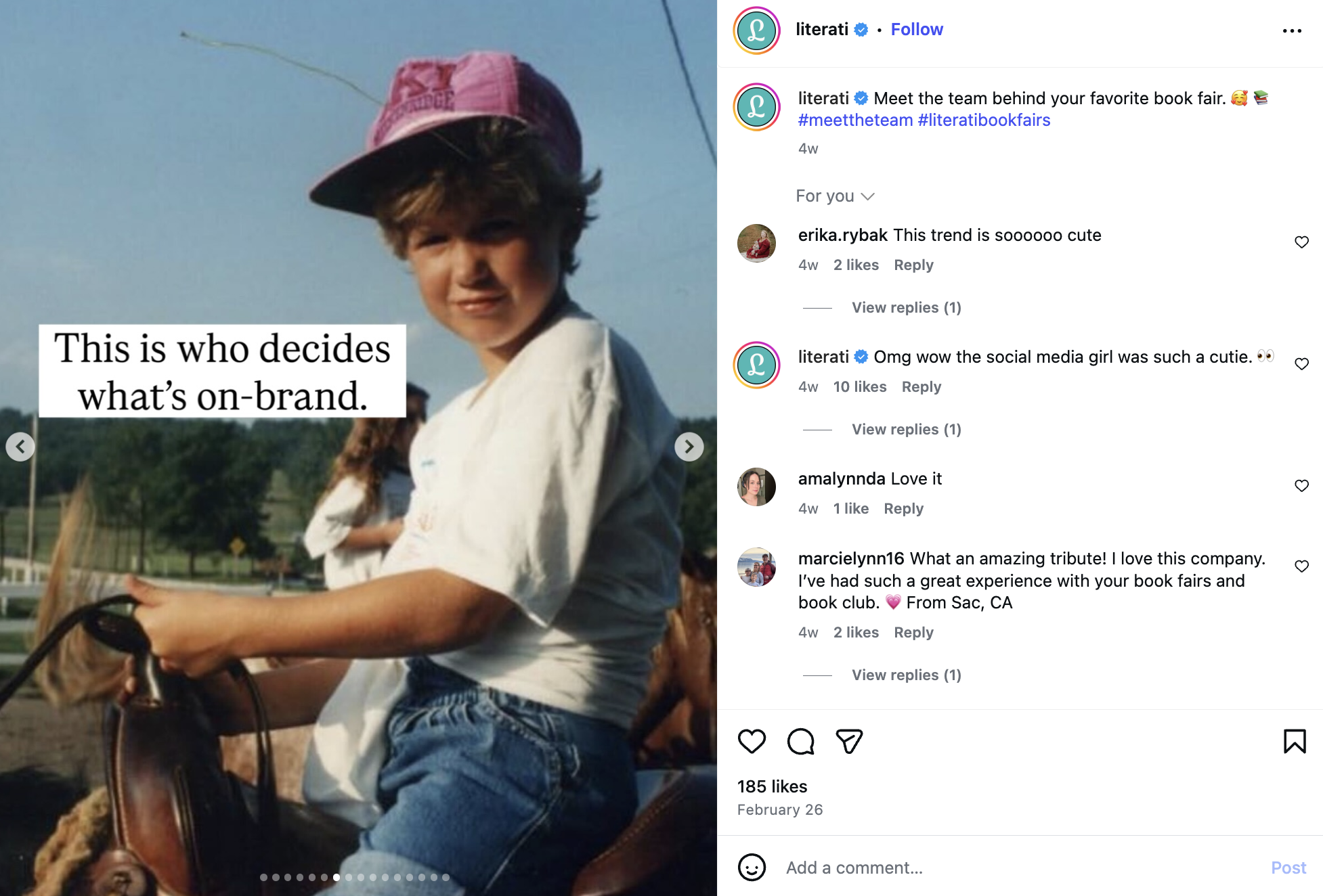
It also explains why so many brands are posting childhood photos of team members right now. The format hits the nostalgia button and helps people connect with the people behind your business at the same time.
Here’s an example from Literati:
What marketers can do
- Figure out what resonates with your specific audience. Early 2000s and 90s nostalgia hit differently depending on whether your core demo is 22 or 32.
- Use nostalgic audio on Reels. A recognizable old-school track or sound effect can carry a post by itself.
- Pair nostalgia with something forward-looking. The contrast between “remember this?” and “what we’re doing now” makes both halves more interesting.
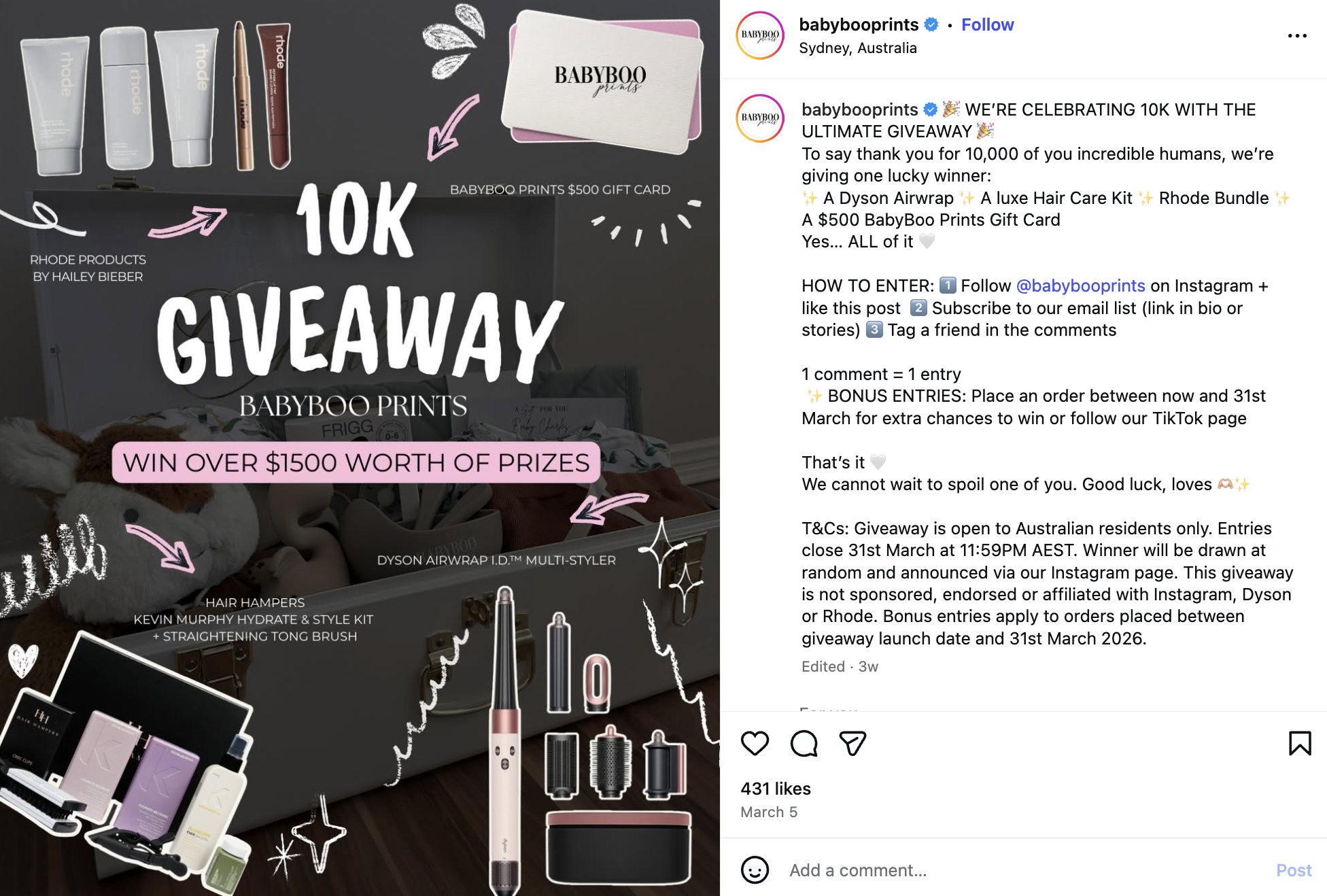
20. Giveaways and contests still work
Giveaways on Instagram are the oldest trick in the book and they still work, just differently. Audiences see right through the “like, follow, tag three friends” tactic. They engage out of obligation and unfollow once the contest ends.
The contests that drive value in 2026 ask for something more meaningful: a UGC submission, a newsletter subscription, a Story share or a comment with an actual answer.
This kind of response generates true engagement, reusable content and a participant pool that’s more likely to stick around afterward. Here’s an example from BabyBoo Prints:
What marketers can do
- Tie your giveaway to engagement goals. Want more shares? Ask people to share the post on their Stories. Want comments? Make the entry a reply, tag or keyword comment.
- Partner with a complementary brand to co-host. It doubles the reach, splits the cost and introduces you to an audience that’s already aligned with your category.
- Announce and promote via Reels. This gets you dramatically more reach and shares than a static giveaway post.
Looking ahead: How to act on these 2026 Instagram trends
Instagram is getting more sophisticated, but audiences are getting less tolerant of lazy content.
AI can speed things up, automation can improve ads and new shopping features can shorten the path to purchase. But none of that changes what people actually respond to. They still want content that feels useful, specific, timely and human.
Ready to put these Instagram current trends into practice? Try Sprout Social for free and see how listening, analytics and AI tools can help you plan impactful content.





Share