Employee-generated content is the next big thing for brands

Written by Aubree Schaefer
Published on February 11, 2026
Reading time 9 minutes
Table of Contents
Brands are getting more comfortable with employees playing public-facing roles. As far back as 2023, social media users were keen to see more frontline employees in brand account. Almost half said the people they most wanted to see most in front of the camera were the people behind the business, per the Q4 2023 Sprout Pulse Survey.
Despite consumer enthusiasm, employees were moving faster than brands were willing to—publishing content before guidelines were in place. This made brands understandably wary, with many reprimanding or, in extreme cases, even firing employees.
But the pendulum is swinging the other way, with notable brands now creating and scaling formal employee influencer programs. The flip comes as the consumer call for human-driven content grows louder. According to The 2026 Content Strategy Report, the #1 thing consumers want brands to prioritize in 2026 is human-generated content.
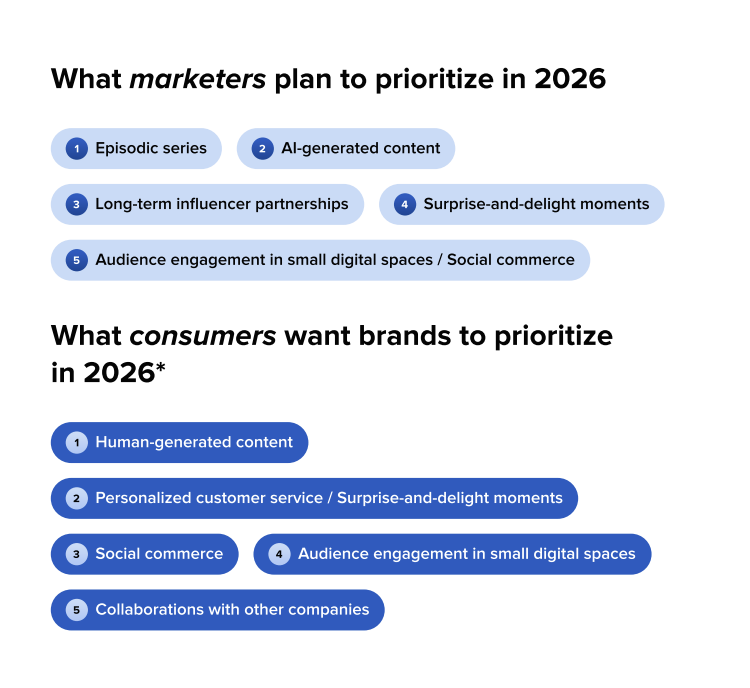
But before you put employees front and center, you need guardrails in place to protect them, your team’s bandwidth and your brand. We’re delving into the rise of brand-backed employee influencers and highlighting real examples of brands leaning into employee-generated content. Keep reading for some examples from brands that are leading in this space, as well as an actionable guide to create your brand’s employee influencer program, with learnings from Sprout’s social team.
What are employee influencers?
Employee influencers are team members who promote a brand’s culture and products by leveraging their personal social media following or appearing in the brand’s social content. By sharing stories from an employee perspective, they foster trust and human interest, while driving engagement.
Today, employee influencers typically exist within brand-sponsored programs or comply with mandated guidelines, unlike past employee influencers who often operated without brand oversight. Once seen as a potential brand risk, employee influencers now play a legitimate role in reaching audiences on social.
Employee influencers are valuable to brands across sectors, with retail, travel and B2B companies all investing in employee-generated content. Common post formats include “day in the life,” tiny mic moments, event coverage and employee POVs of a major launch or brand milestone. We’ve also seen brands launch their own workplace series and ask employees topical online culture questions. There are limitless new and different ways for brands to engage with audiences by tapping into employee creators.
The benefits of using employee influencers
By weaving employee creators into your content strategy, you can increase your credibility and awareness, while increasing your production output and humanizing your brand. People trust people, and rely on peer-to-peer recommendations for everything from shopping for products (looking at you, “Staples Baddie”) to looking for a new job.
According to our recent Pulse Surveys, consumers say the “boldest” brands are actually honest, authentic and inspirational. Likewise The 2025 Sprout Social Index™ found the companies that stand out on social are those that are upfront about their products, services and what they stand for.
When you put your brand in the hands of those who know it best, it’s easy to be authentic and transparent. Employee influencers share their genuine experiences in creative, honest ways viewers can relate to. In doing so, they bolster your brand’s recruitment efforts, increase your reach and grow positive sentiment.
Ryan Y. Kellett, a media consultant who has worked at organizations like the Washington Post and Axios, recently taught a course at Harvard University called “Content Creator Journalism.” Kellett explained how intentional employee creator programs create value for audiences: “Audience trust is built through clarity of purpose, service and consistency, not scale or virality. Journalists—and employee creators in any industry—are most effective when they understand who they’re serving, why they’re doing the work and what value they uniquely bring.”
Examples of brands using employee influencers
To help you visualize what effective employee influencer programs look like in practice, we rounded up a few brand examples from across sectors.
The Wall Street Journal
Media companies were among the first to recognize the new ways information was disseminated and take a creator-inspired approach to social media.
As Kellett recalled, “Even as far back as 2012, I was training journalists to use Instagram for the first time, as part of covering that national election cycle…Ultimately, it made politics much more accessible. We were learning that headlines, formats and timing had to reflect how people actually encountered news, namely in their social feeds. That shift pushed newsrooms to think less about ‘publishing’ and more about participation, distribution and relevance.”
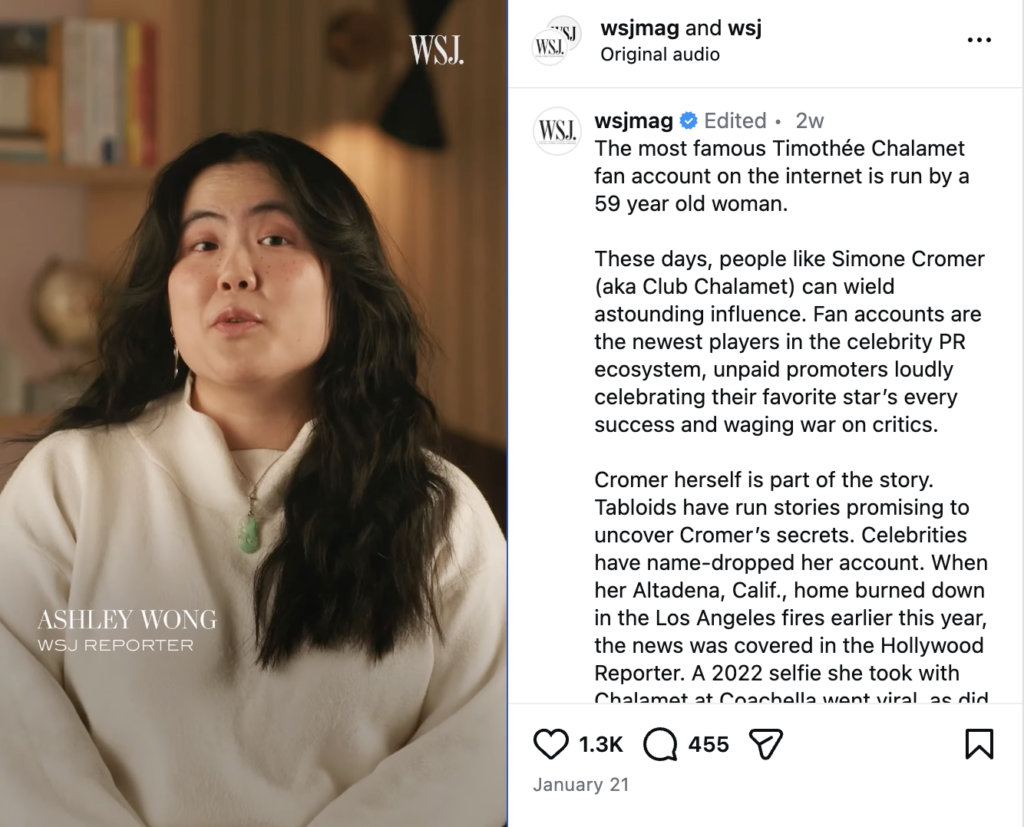
The past decade of social media reporting has laid a foundation for journalist creators, with publications like the Wall Street Journal—which recently reached 1 million TikTok followers—employing journalists who have a background in content creation (or training them to develop those skills). The company’s bench of social-first journalists frequently appear in social videos, providing nuance that carousels and standalone headlines lack. Keeping people front-and-center in their social content helps build enduring trust with your audience—something that’s critically important for the news sector, but that every industry can learn from.

Notion
Notion unifies the work happening across companies into one space, making it possible to capture knowledge, find answers and automate projects. In social content, the brand highlights how the product works, and how creators and teams use Notion to accomplish big goals.
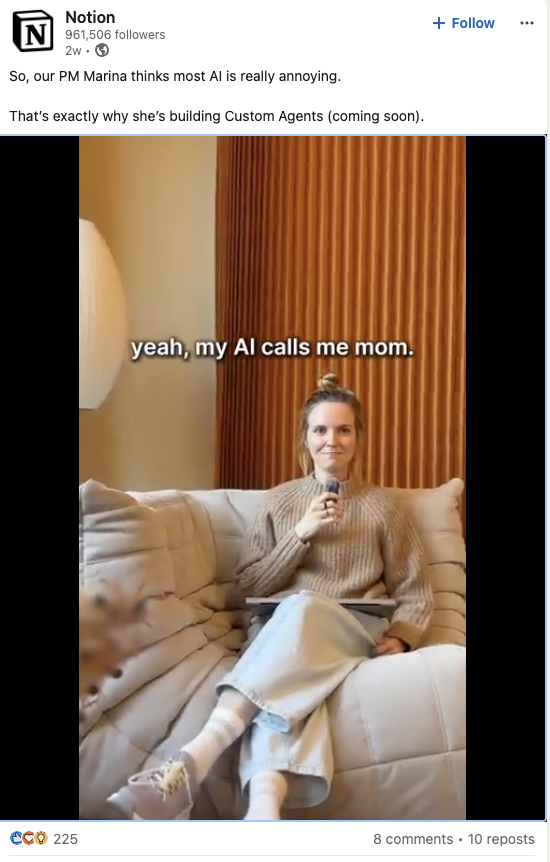
In many cases, their employees recount how and why a product feature was created, like in this video where Product Manager Marina describes why she’s building Custom AI Agents.
Notion also features employees in less buttoned-up scenarios, like this “overheard at the office” POV.
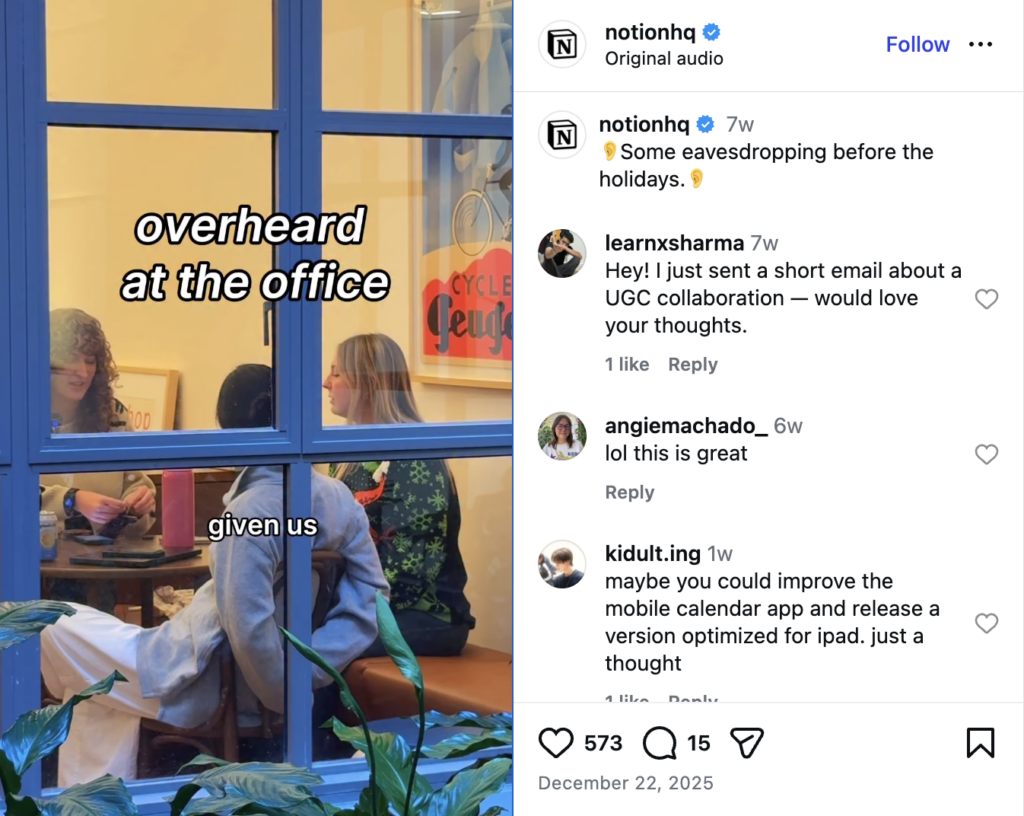
When designing your employee influencer content strategy, consider how you can tailor your content to different audiences. While your LinkedIn followers might want to learn about the nitty gritty of your product, the Instagram crowd will want to be entertained.
The Milwaukee Public Library
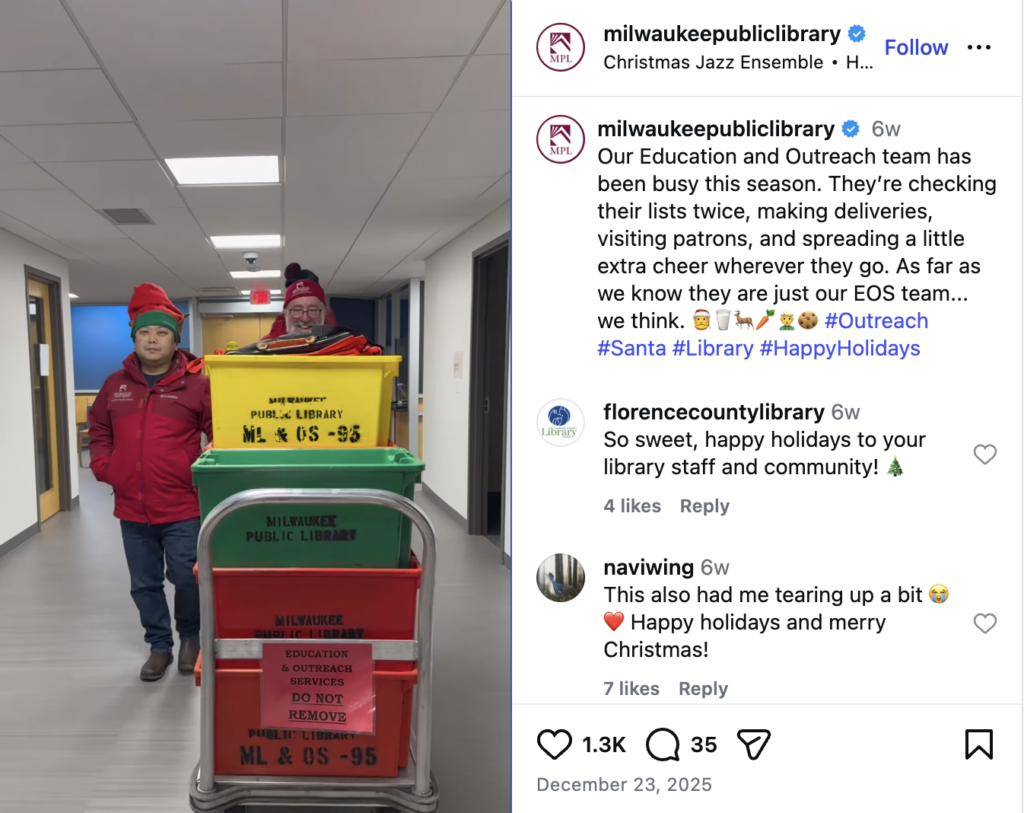
The Milwaukee Public Library relies on its staff to star in social content, and educate their followers and fans about the library’s mission and services. In this video, their EOS (Education and Outreach team) spreads holiday cheer á la the North Pole.
Or, in this video, they spotlight employees who serve critical roles that typically receive less attention: their custodial workers.
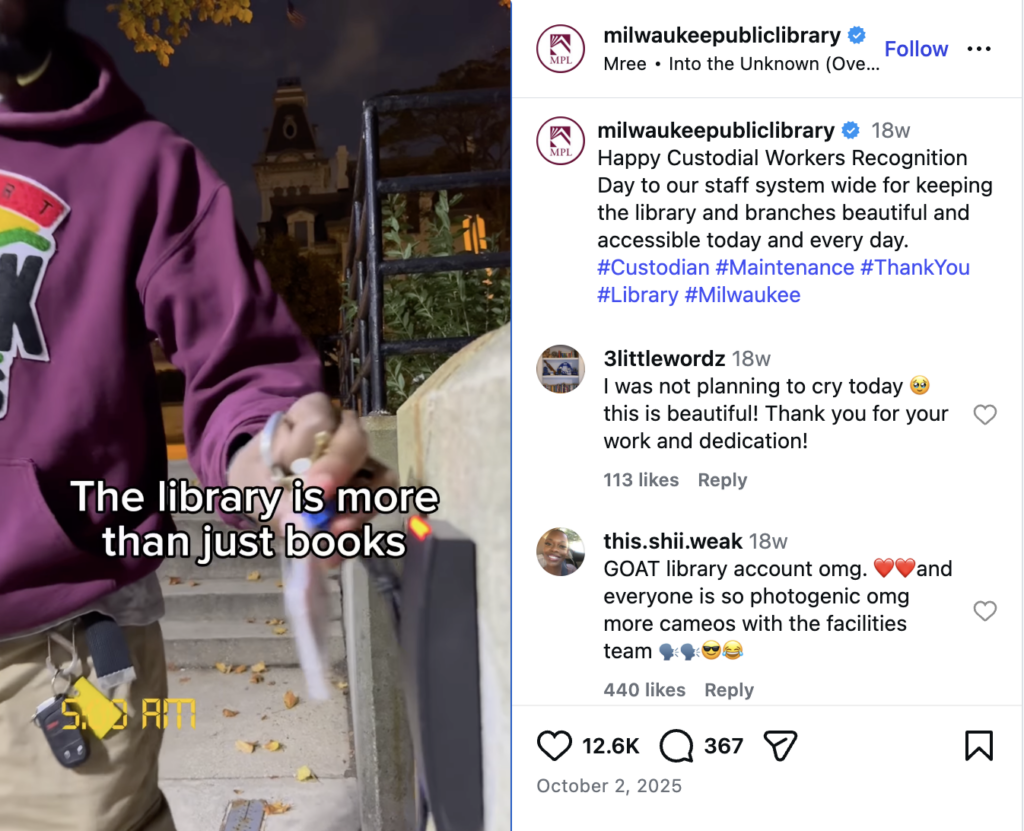
The library’s human-centered content spreads joy and tugs at the heartstrings. As one user commented, “Your social media continues to be heartfelt and brilliant. Yes, it takes a village to keep our libraries inviting and welcoming.”
5 steps to launch an employee influencer program (with tips from Sprout’s experience)
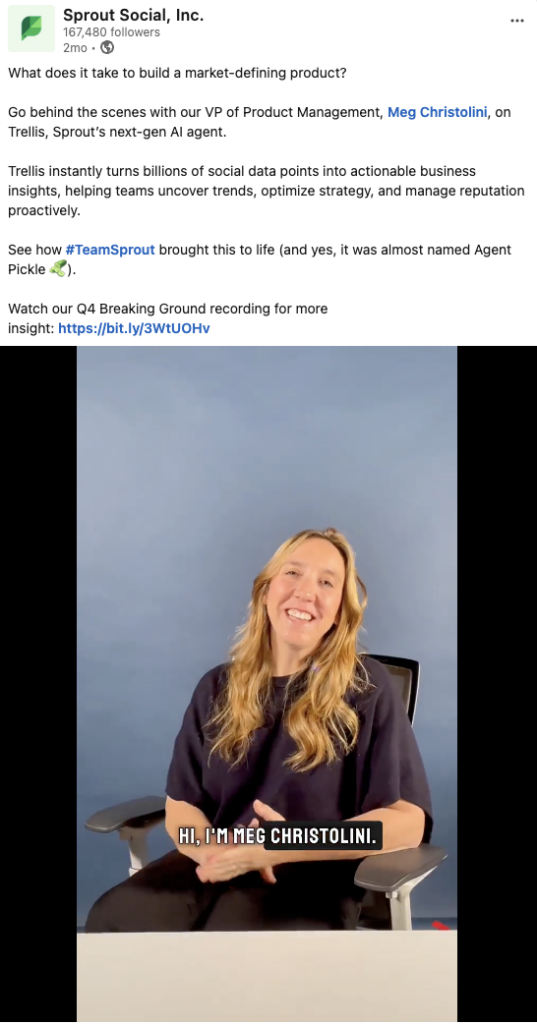
At Sprout, our Employee Creative Network (ECN) has been instrumental in executing our social content strategy. To better understand the process of launching and scaling the network, we spoke to Jamia Kenan—Sprout’s Social Media Strategist, video production expert and leader of our employee influencer program. Kenan is also a former journalist with experience producing event coverage and social media content for production studios.
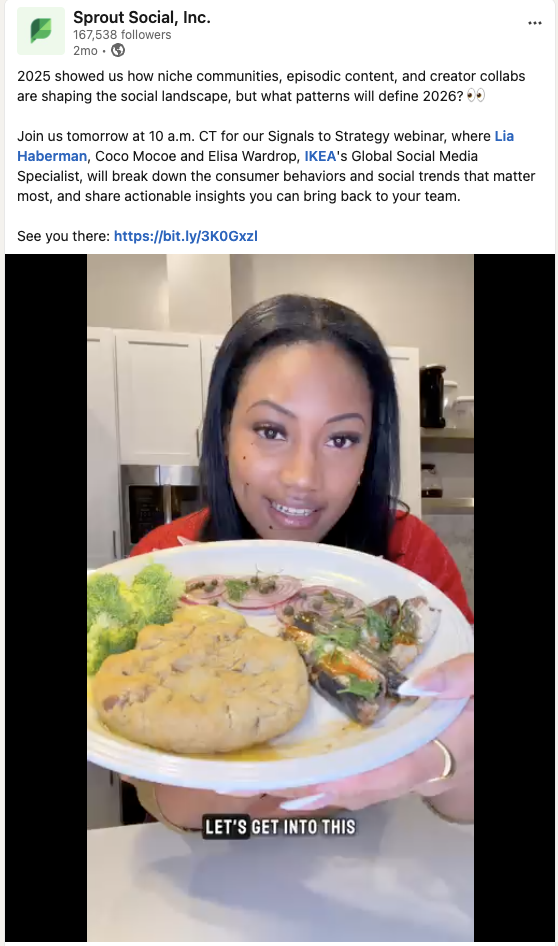
As Kenan explained, we’ve seen rapid growth since the program began. “We increased our talent list from a cohort of six to a pool of about 100 employees from across the world, including everyone from individual contributors to our C-suite executives. We scaled our video production 47% year over year in 2025—a 74% increase compared to 2023. This helped us support our social engagement goals while contributing to leads, downloads and sign-ups for our campaigns.”
Since launch, the ECN program’s share of video impressions grew 680% YoY. In 2024, ECN accounted for 3.8% of all video impressions. By 2025, it accounted for 29.5% of all video impressions. Despite being less than 8% of our total content mix in 2025, our network drove nearly 8% of total impressions across channels. ECN is now responsible for one in 12 total impressions across Sprout.
Here are more actionable learnings from Sprout’s experience:
1. Start a pilot group
Like many brands facing greater algorithmic demand for video, Sprout answered the call by doubling down
Like many brands facing greater algorithmic demand for video, Sprout answered the call by doubling down on video production. But without increased headcount, we needed to find ways to increase our video output and diversify our talent pool while remaining a scrappy team. To do this, we launched our ECN pilot program.
“We needed to produce more videos and reach more personas. I envisioned creating a pool of internal creators who could be self-sufficient (i.e., take a script, adapt it to their voice, film and deliver the final video on their own). To do so, we activated talent based on their own unique skills and expertise to maintain authenticity. The six individuals in our pilot cohort all had backgrounds in acting, theater or social video production, so training was a breeze. But it was still critical to educate them on our internal workflows and best practices for capturing content,” recalled Kenan.
When developing your program, start small and select team members who are already comfortable being on-camera. Doing so will make it easier to get off the ground and prove your case to leadership faster.
2. Create training resources
As you begin to scale your program, take stock of the resources you have and adapt them to meet the diverse levels of social production expertise on your team. Arming your employee influencers with the right resources prevents the need to do time-consuming edits and reshoots later.
Kenan described how she evolved social production guidelines to accommodate those less familiar with taking a starring role in social content. “I updated our social production guidelines as our bench of internal creators grew. For example, we brought on team members who had experience with public speaking, but not being on camera. Though public speaking skills help, they don’t always directly translate to social production. The evolved guidelines included in-depth step-by-step instruction, and helped us adapt to working with people with a variety of comfort levels on-camera and with content production. It also helped us expand to working with new teams and senior leaders.”
Kenan would often provide live notes when working with senior leaders and vice presidents new to the program, offering real-time feedback on pacing and lighting.
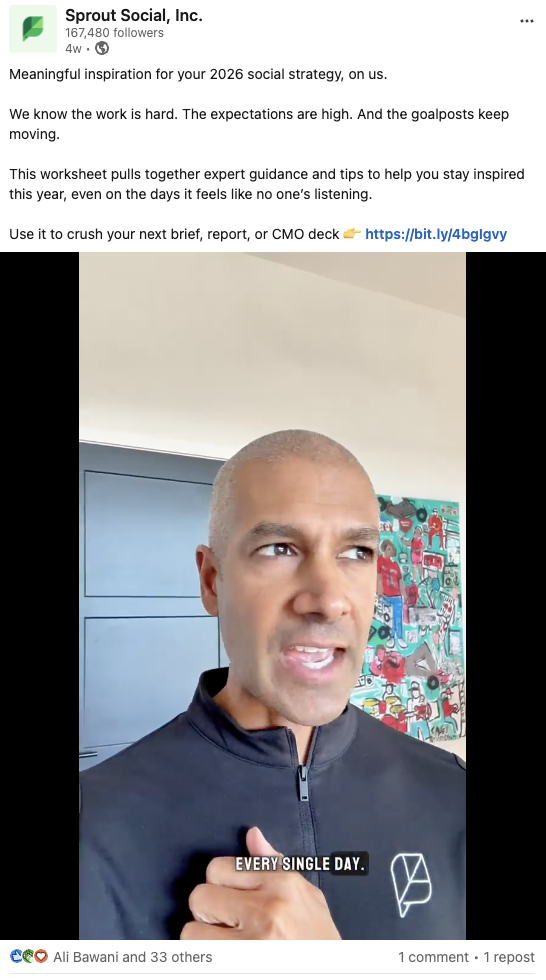
Expanding the program also highlighted knowledge gaps, and Kenan is now working on a new edition of the guidelines that provides more detailed how-tos for everything from camera angles to using green screens.
3. Scale your pool of employee influencers
Once you have a core group of employee influencers and know what works, begin making plans to expand. Think beyond marketing and communications, looking for points of view that are underrepresented in public-facing communications, such as product experts, executive leadership or the people team.
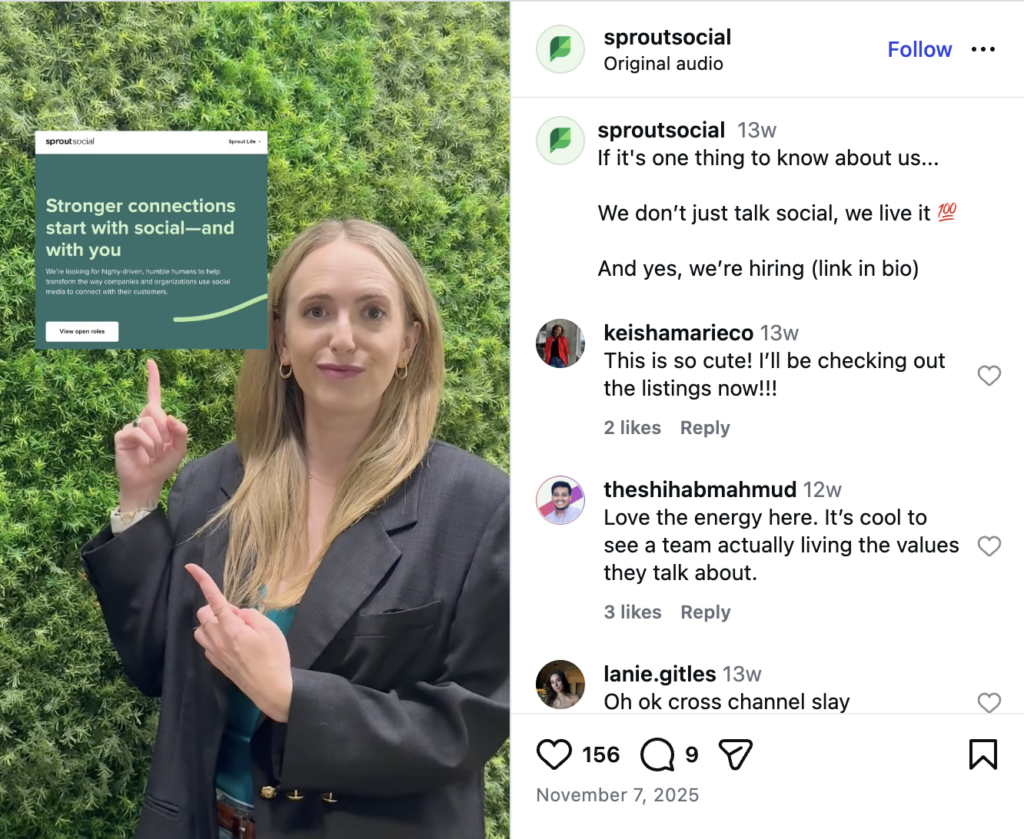
You might encounter friction or fear when approaching teams that aren’t used to appearing on video. It’s important to reiterate the value the content will bring to your company. Forcing people to step in front of the camera isn’t going to create the authenticity that’s required to pull off a video. Audiences can tell when someone doesn’t want to participate.
As Kenan explained, “People might ask, ‘What’s in it for me?’ or ‘How does this add value to my work as an employee?’ It’s important to emphasize that employees who serve in a major campaign video are part of the success of that brand milestone. We also incentivize joining the program by emphasizing how it can help employees build their personal brand, and create future opportunities for speaking events and in-person event coverage.”
4. Support your internal creators
It’s critical to provide all employees creators with ample support. Kenan advised, “Think like a director-producer, not just a marketer. The people that are part of your program aren’t just people who work for your organization—they are talent, creators, influencers. Consider how to best support them so they show up as their best selves on-screen. Make capturing content something they look forward to instead of something they have to check off on their to-do list.”
In addition to instructional resources, make sure they have everything they need to actually capture content. Kenan added, “Employee creators are essentially doing another job—serving as a content creator and influencer on top of their other internal role. You need to anticipate their needs and make it simple for them. They will need a mic and a tripod, at the very least. If filming in-person with your creative team, have water and blotting paper on standby. Help people fix their hair or adjust their wardrobe. Let them refilm if they want to rephrase something.”
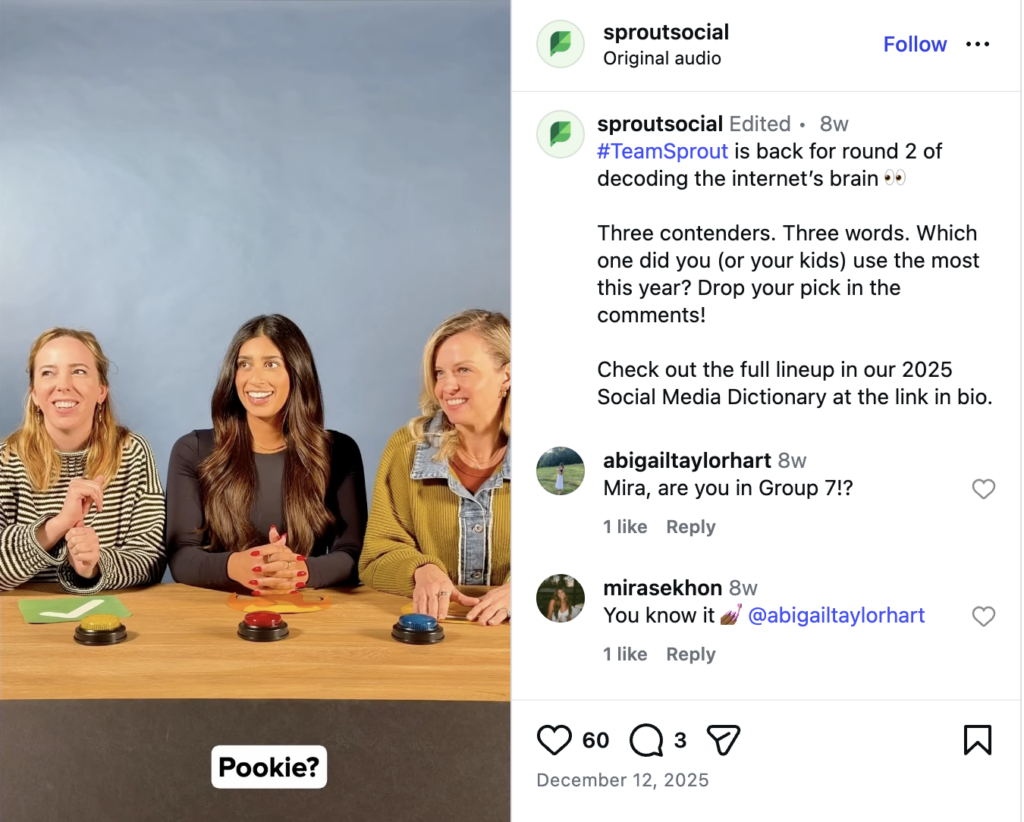
Kenan gave a recent example while filming Sprout’s internet slang gameshow in support of the 2025 Social Media Dictionary. “I worked vigorously with the video team to make sure we had the appropriate equipment and set-up. The team members who volunteered to film (during their lunch hours) didn’t have to worry about anything except showing up and being themselves.”
5. Think beyond social content
The potential for an employee influencer program doesn’t stop at social content, and should permeate other marketing arms like in-person events and internal communications.
“Our employee influencers serve our social video production needs, internal comms functions and have in-person speaking engagements for our events team. The internal creator program impacts how Sprout is perceived across channels, internally and externally.”
Employee influencers should be enabled, not feared
Employee-generated content is key to building a sustainable, human-first content engine rooted in authenticity, community and real lived experience. As audiences increasingly prioritize honesty over polish, brands that empower employees (with the right guardrails, training and support) will stand out in crowded feeds.
The most successful programs treat employees as collaborators, not content props, and invest in their growth as storytellers. When done well, employee-generated content deepens credibility, strengthens culture and creates lasting value across marketing, recruiting and beyond.
Next up: Watch our on-demand session that delves into why employee influencers are a secret weapon for B2B companies.
37 free social media strategy templates that will elevate your workflows
Published on December 5, 2025 Reading time 15 minutes




Share