How to build a cross-network brand monitoring strategy on social

Written by Benedict Nicholson
Published on July 9, 2026
Reading time 7 minutes

Table of Contents
The traditional news cycle has been effectively replaced by real-time updates breaking on social. According to our Q1 2026 Pulse Survey, social is now the primary place people turn to for news. Headlines can surface anywhere from viral videos on TikTok to breaking news on X to professional commentary on LinkedIn to community discussions on Reddit.
Whether you’re tracking them or not, conversations about your brand are happening across platforms simultaneously, often feeding into each other and bouncing around the internet from one network to another. Brands are mentioned in more places and at a faster volume than ever before.
When public perception can change in minutes, checking your direct mentions or monitoring only traditional press coverage doesn’t cut it. It’s crucial to have a comprehensive, proactive monitoring and listening strategy to understand what is being said about you, where it’s being said and if action needs to be taken as a result. Without a unified approach, you risk missing valuable customer feedback or being surprised by a budding public relations crisis that is already snowballing by the time you catch it.
What is cross-network brand monitoring?
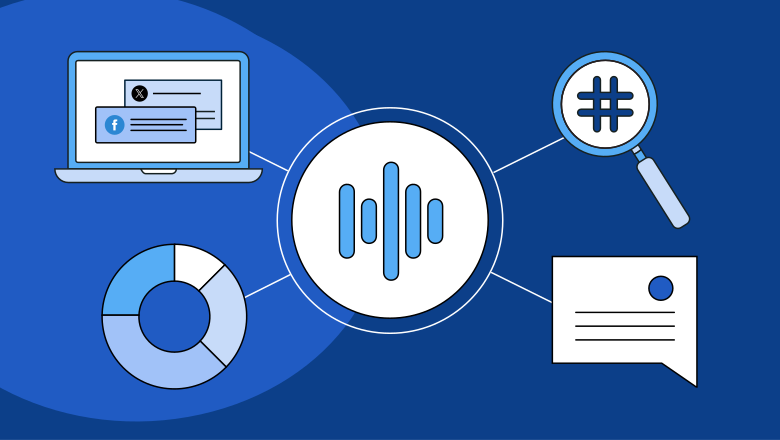
Cross-network brand monitoring is the practice of tracking, aggregating and analyzing mentions of your brand, products, services and executives across multiple digital platforms simultaneously. It synthesizes data from across the web, including social networks, discussion forums, review sites, blogs and digital news into a single view.
Cross-network monitoring usually involves a mix of social listening and media monitoring software that scans the internet for targeted keywords, mentions, phrases and hashtags. Unifying this data turns fragmented online chatter into data points your organization can act on, whether for customer care, product enhancements or responding to a potential crisis.
Why a cross-network monitoring strategy matters
Implementing a unified cross-network monitoring strategy is important for a number of critical reasons, including:
- Comprehensive brand tracking: Every social network attracts a unique audience and type of conversation. Positive milestones are more common on LinkedIn, while Reddit is where people feel they can be more honest about a frustration. A cross-network strategy ensures you capture the full spectrum of feedback.
- Crisis detection: If you’re only watching one network, you might miss a crisis unfolding on another. Conversations often start out isolated to a single network until they reach a critical mass of engagement and attention, and begin to spread. A cross-network strategy helps you spot issues early. By setting real-time alerts for every network, you can react early and address the root cause before a narrative becomes mainstream.
- Competitive intelligence: Successful brand monitoring looks beyond the brand towards the broader market. A cross-network strategy also tracks competitor mentions, product launches, customer conversations and marketing campaigns across your industry, giving you valuable insight into what competitors are doing right and where there are gaps for your brand to fill.
- Customer care: Customers don’t always tag brands directly when they need help, so if you’re only looking at your notifications, you might be missing some important conversations. Tracking untagged mentions allows your customer support teams to proactively resolve issues, thank brand advocates and turn casual mentions into loyal customers.
- Product feedback: When launching a new product, cross-network monitoring delivers honest, organic feedback from multiple demographics and regions. You can use this data to see how audiences are responding and where messaging or product improvements need to be made.
“Today, narratives— both opportunities and threats—can kick off anywhere. From a news story, a discussion on reddit, a TikTok, a Substack post. Brands risk exposure and missed opportunities if their listening focuses too heavily on just a couple of sources. They need nothing less than the full media landscape at their fingertips,” said Paul Quigley, the GM of Listening at Sprout Social.
Establishing a unified foundation for cross-network monitoring
Building a cross-network brand monitoring program requires a unified data foundation. Trying to monitor the whole internet without a strategy and goals inevitably leads to missed information and disjointed insights that can’t be acted upon. Successful monitoring requires two phases: mapping channels and categorizing objectives.
Centralizing network monitoring
The first step is to comprehensively understand every digital network relevant to your brand. The exact pillars will depend on your audience and what you want to track, but could include a combination of the following:
- Social networks to monitor official brand campaigns but also untagged mentions, product names and variations, as well as competitor insights and executive profiles.
- Forums and community hubs for unfiltered discussions and raw, honest feedback.
- Review sites to provide direct insight into product satisfaction.
- Digital news outlets to understand mainstream narratives and media pick-up.
Once you know where to look, aggregate these data streams into a single dashboard to eliminate organizational silos and ensure your entire company is operating from the same source of truth. This in turn helps build a unified strategy across social, customer care and PR. This kind of social intelligence can even make it all the way to product development and the c-suite, affecting business-wide decisions beyond the marketing org.
Set strategic tracking objectives
Data is only as useful as the goals it serves, so once you’ve built your monitoring foundation, it’s time to set those targets. And to do that, you need to track specific measures that you can benchmark against.
Your specific brand needs will vary, but some examples include:
- Brand health, which could include share of voice, sentiment and more.
- Competitor benchmarking (e.g. engagement, followers, etc.) compared against your brand’s performance.
- Campaign performance to measure the success of activations and strategic initiatives.
- Trend identification to spot emerging opportunities.
Once you’ve mapped what you’re tracking and set strategic goals, your challenge becomes processing a potentially massive influx of data without losing the ability to quickly act on the insights it contains.
Shift from reactive dashboards to proactive agentic monitoring
Traditional monitoring has relied on marketing and PR teams manually checking dashboards, logging into various platforms and looking at retrospective graphs to analyze what’s already happened, often weeks or months after a significant shift took place. But that doesn’t cut it for modern monitoring. To safeguard and elevate your brand in today’s information ecosystem, you need another layer of autonomous monitoring— and that’s where agentic monitoring comes in.
Passive dashboards need a human to log in, interpret a chart, then decide if a data point is worth taking action on. And that only happens when they have time to log in and complete that process. That introduces a delay and leaves room for human error. Agentic monitoring eliminates this risk by continually scanning the identified networks in real time.
On this point, Quigley noted that “the era of logging into dashboards to check things is over. Now 94% of NewsWhip data is consumed off platform – pushed to teams by monitoring agents, predictive alerts and other formats, and landing into the right inboxes, Teams channels and Slack groups.”
AI agents should be deeply integrated with your strategic goals and objectives so they understand the context to interpret shifts in the data. Once you define your objectives, these agents operate around the clock, pulling in every data point that corresponds to your monitoring goals. Custom alert thresholds deliver instant email or chat notifications when meaningful changes occur, freeing you from dashboard triage so you can focus entirely on taking action.
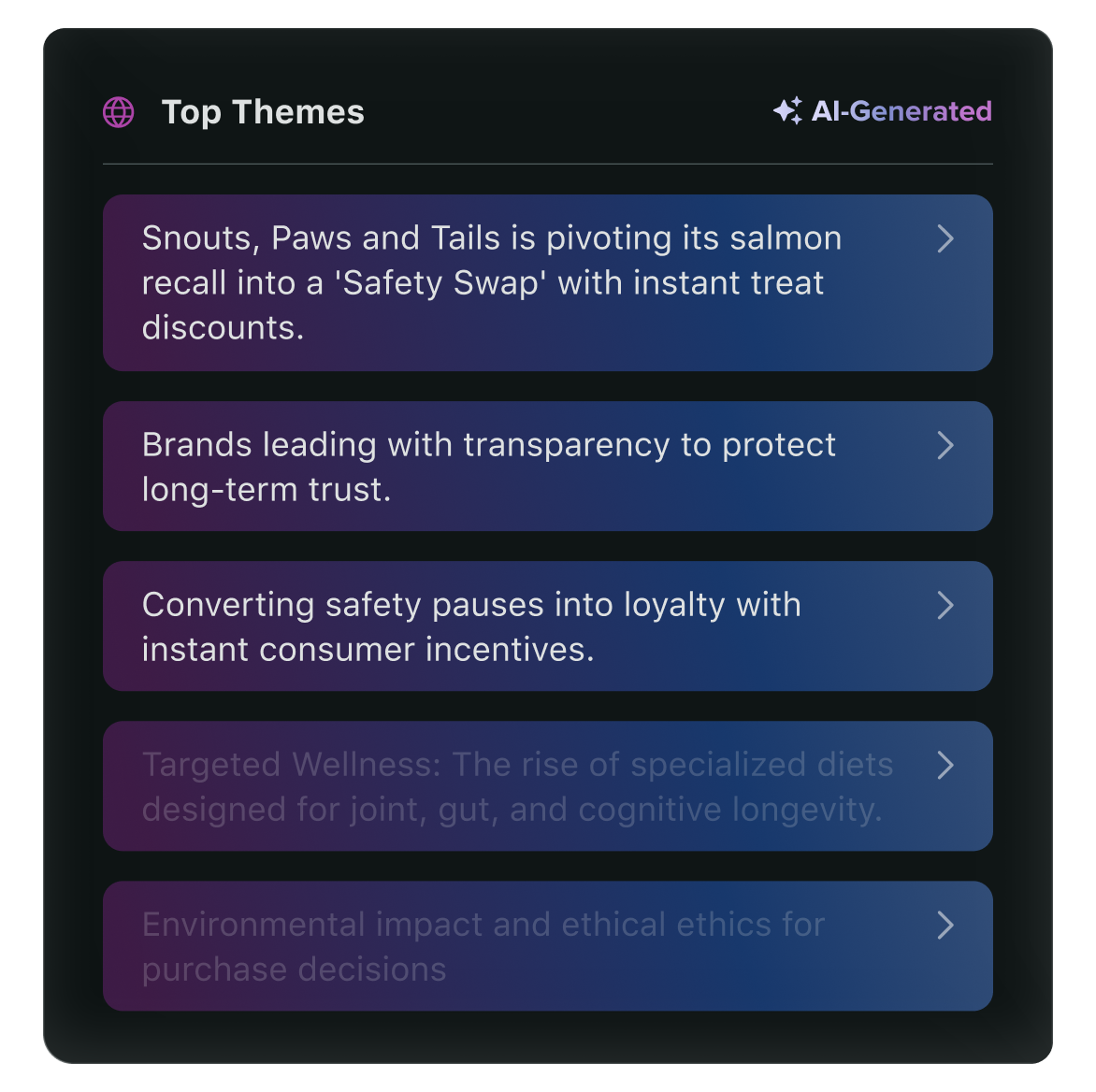
By using specialized autonomous agents such as Sprout’s AI agent, Trellis, organizations can catch critical shifts as soon as they occur. Rather than simply looking at keyword volume, these agents analyze engagement, revealing what’s actually resonating with your audience. Agents enable you to detect early narrative shifts, sudden volume spikes and sentiment drops. When specific thresholds are met, they’ll alert you automatically—just as an always-on analyst would—digging into what’s happening, where it originated, how fast it is spreading and why it matters.
By allowing autonomous agents to handle the heavy lift of data collection and synthesis, you free up your team’s bandwidth to focus on judgment-dependent tasks, such as crafting nuanced crisis communication plans or refining brand messaging.
Use Trellis to extract business answers from the data
A brief delivered to your inbox is one thing, but in an ideal world, analysts and social media managers should be able to interrogate the data in real time. Sprout’s agent, Trellis, serves as a conversational layer that connects data across Publishing, Listening, Reporting and the Smart Inbox for Sprout users, eliminating the need to piece together insights from across different corners of the ecosystem.
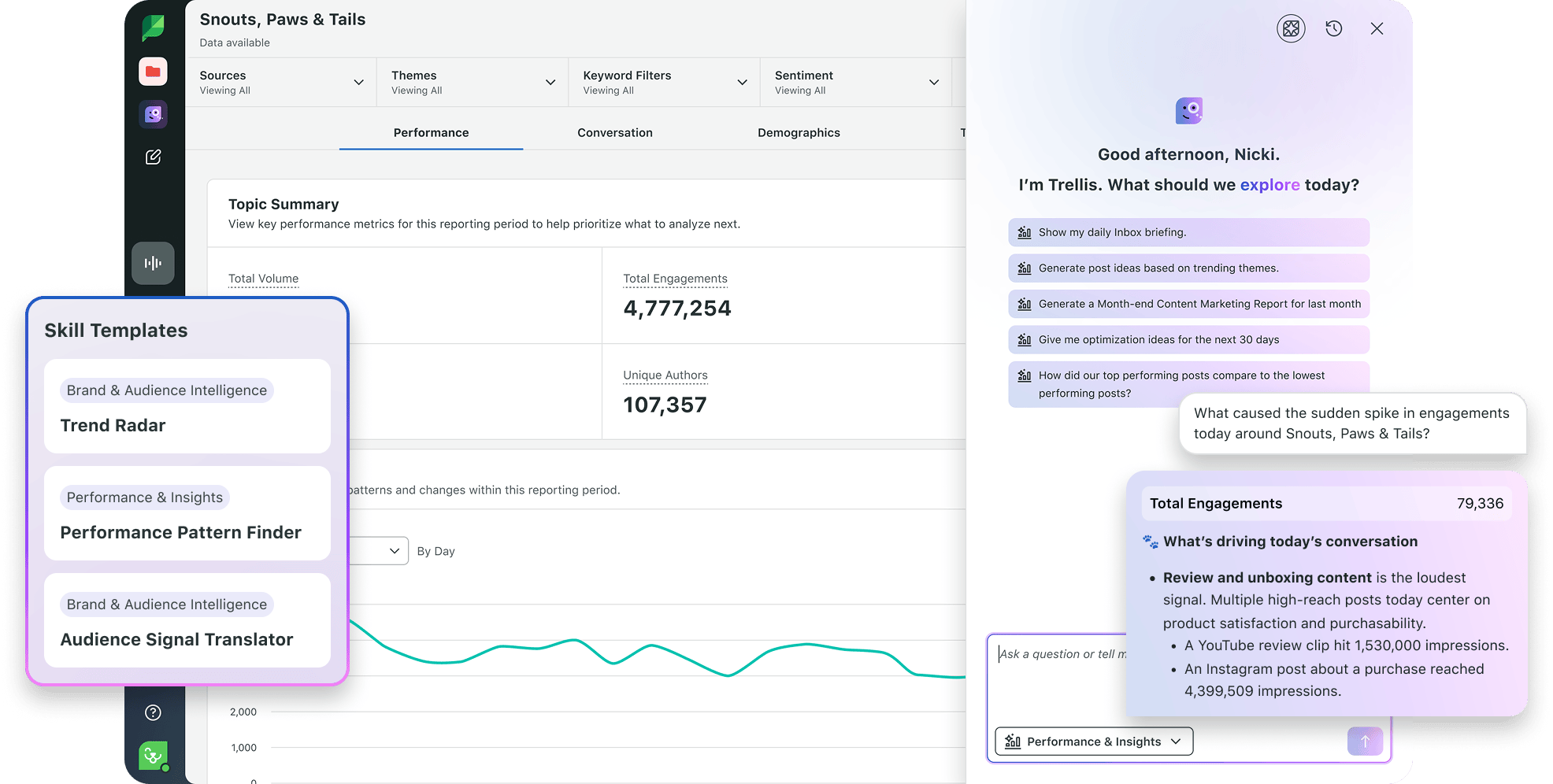
Teams can frame prompts using natural language to query billions of social data points. Ask questions like “What are the primary drivers behind yesterday’s sentiment drop on Reddit?” or “Summarize our competitors’ product flaws based on this week’s reviews,” and receive immediate, contextual answers.
Trellis converts fragmented digital signals into executive-ready recommendations and strategies, enabling you to close the gap between raw social data and action. “Action” is the operative word in this framework, moving beyond insight for the sake of insight. To take action effectively, you also need to build the right internal pathways.
Build pathways for data escalation
Brand monitoring data suffers when it’s trapped in marketing or PR departments. Building customized intelligence pathways breaks down siloes, with specific insights tailored to teams based on what you’re monitoring. This could include automatically funneling feature requests or recurring software bugs to the product and engineering teams, escalating high-priority complaints to the customer care team or flagging sentiment drops instantly with the communications team.
Automated workflows can streamline data escalation, but do require guardrails to ensure compliance. By setting strict parameters around what constitutes an escalation, you can scale your proactive monitoring without risking brand misalignment or unnecessary concerns.
Turning digital noise into a strategic advantage
Successfully scaling and growing your brand requires a cross-network monitoring strategy with a unified foundation, but can be enhanced even further by proactive, AI-driven insights and clear escalation pathways. The transition from dashboard-centric monitoring to always-on, agentic systems unlocks the immediate business intelligence needed to drive the organization forward.
Ready to transform your organization’s cross-network monitoring strategy? Discover how Sprout Social and our proprietary AI agent, Trellis, can unify your data ecosystem, automate your workflows and deliver executive-ready insights in real time.
FAQs
What are the best tools for cross-network brand monitoring?
The best tools for cross-network brand monitoring unify web, forum, review and social data into a single dashboard with a built-in agentic monitoring strategy. That includes tools such as Sprout Social Listening and NewsWhip by Sprout Social.
How does brand monitoring differ from social listening?
While often used interchangeably, brand monitoring and social listening focus on different analytical scales. Brand monitoring focuses on direct tracking: it gathers brand mentions, reviews and comments about your specific brand to handle customer care and manage PR crises. Social listening takes a macro approach focused on broad analysis: it aggregates cross-network conversations around entire industries, competitor trends and cultural shifts to guide long-term corporate strategy.
What keywords should I track for my brand?
To capture a complete view of your online footprint, group your tracking keywords into categories such as your core brand, products and features, key executives, competitors and industry topics of interest.
39 free social media strategy templates that will elevate your workflows
Published on August 20, 2026 Reading time 15 minutes






Share