Automotive social media marketing: How brands like Honda drive success

Written by Sam Kendall
Published on January 8, 2026
Reading time 11 minutes
Table of Contents
The automotive industry has always been highly competitive; a new car is a significant investment for individuals and businesses, and there’s often a lengthy consideration stage before a purchase is made. It’s also a crowded market, with multiple global brands competing for attention through distinct offerings and brand appeal.
Marketing and sales for vehicles and parts used to be handled almost entirely offline, but times have changed. As buyers continue to turn to online channels when considering their options, a strong social media presence is more important than ever. By aligning social goals with companywide brand and sales targets, automotive companies can set themselves apart and build a more significant presence in the wider market.
In this article, we’ll explain which strategies automotive companies should be investing in, based on active trends. We’ll also share real-world examples of successful social media marketing for automotive, including from one of the world’s biggest automotive brands, Honda.
What is automotive social media marketing?
Automotive social media marketing is any tactics and strategies used by car or vehicle parts brands on social networks.
This might include the types of content automotive companies are creating, the channels they prioritize and the processes they follow to increase their reach. Typically, this form of marketing is used to drive sales, further a brand’s identity and build loyalty.
The importance of social media in automotive marketing
Gone are the days when people would simply walk into a dealership and buy based on sight and sales pitches. The rise of online shopping has completely changed the way people research and buy cars, and the parts they need for them.
Social media is at the forefront of that change. In the US, 44% of people believe that social media is the most influential form of media when it comes to marketing new vehicles. Similarly in the UK, 40% of people say that social media adverts would influence their decision of whether or not to buy a new car. Meanwhile, 46% of Chinese buyers rely on a car’s social media reviews before they make a purchase.
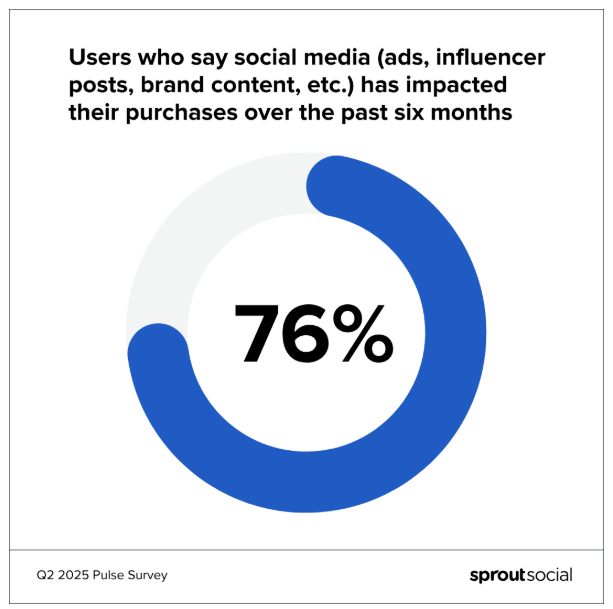
This is consistent with larger trends in social media. According to The State of Social Media in 2025, 41% of Gen Z turn to social media first when searching for new information, and 76% of people overall said they’ve been influenced by social media when purchasing in the last six months.
Social has a vital role to play in wider automotive marketing strategies. Used effectively, social campaigns can help reduce overall marketing costs and increase a brand’s reach. It’s also an essential channel for direct communication with customers, particularly during a crisis.
By using advanced tools like Sprout Social Listening, an automotive social account can also be used to better understand customers’ feelings and intentions, which can then help with refining marketing approaches over time.
All of these factors point to social being the central point for consumers to discover and love brands, which is why automotive brands should be investing in their social media presence.
Social media trends for automotive
We’ve identified several current trends that automotive brands are using to set themselves apart on social media. While not all of them are unique to the industry, the way you approach these trends can help set you up for success when plotting your automotive social media marketing strategy.
Direct engagement
The power of social media isn’t just because of the reach it can offer; it also offers brands opportunities to directly engage with their audience. Through replying to comments, managing DMs and social inboxes and leveraging user-generated content (UGC), social media allows automotive companies to communicate with and encourage interactions from their fans.
Honda is one such global automotive brand that’s benefiting from direct follower engagement. One of the company’s social media marketing goals is to use social as the primary engine for a two-way dialog between the brand and its customers. To achieve this, they’ve been using Sprout Social’s social media management tools.
Since shifting to Sprout, in their first year, Honda achieved a 251% increase in community engagement. In year two, they focused on refining the quality of these conversations through automation and a smart use of filtering tools.
This focus on high-quality engagements meant Honda could reduce queue times by 40%, freeing up approximately 40 hours a month. Giving them more time to refine their content strategies and conduct proactive data analysis. It also enabled them to achieve a 91% high-quality engagement rate as a brand, far higher than the automotive industry standard of 75%.
Learn more from Honda’s social team about the success and value they found with direct social media engagement while using Sprout.
Strategic influencer and creator partnerships
The Q2 2025 Sprout Social Pulse Survey found that 64% of all social users say when a brand partners with an influencer they like, they’re willing to buy more from that brand. Purchases can be significantly impacted by strategic influencer and creator collaborations, but success is dependent on careful research and audience alignment.
It’s important that you spend time finding the right influencer or collaborator for your particular brand. This same rule applies if you’re hoping to create collaborative content with traditional celebrities, like actors or athletes. The more an influencer’s content and audience aligns with your automotive brand, the more likely the content you create together will resonate.
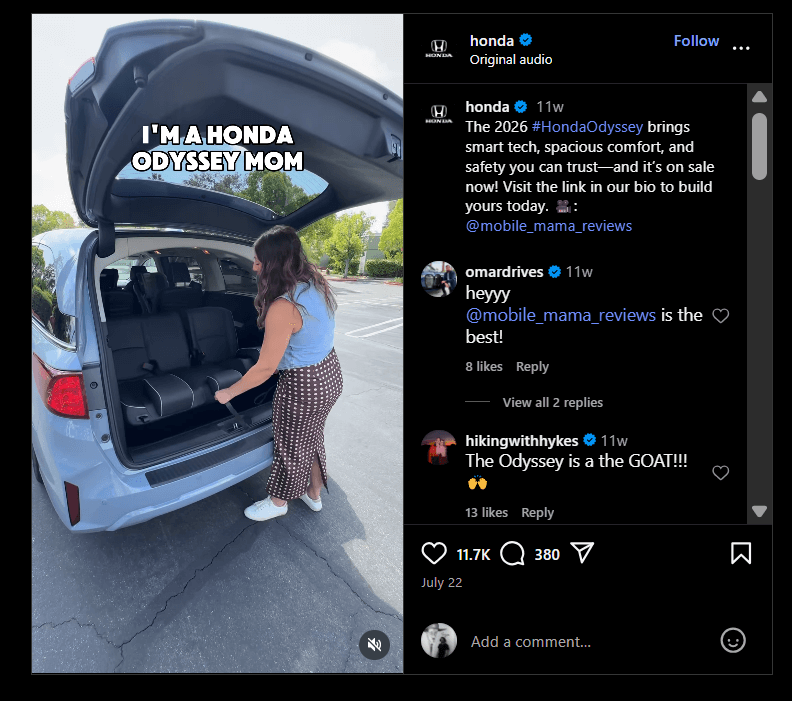
For Honda, that meant partnering with content creators like @mobile_mama_reviews. Her understanding of the industry, and partner-focused content, align well with a specific market Honda is targeting: drivers wanting family-friendly cars.
Capture niche interests
A proven way to stand out in the market is to lean into your niche audience, appealing to specific segments of the market that your brand can uniquely support.
For example, some brands focus primarily on segments within the luxury market, like premium sports vehicles or accoutrements, while others market themselves as affordable family cars. But in vehicle marketing, it’s possible to drill down into those segments even further to achieve a stronger connection with consumers.
One example of niche interest targeting in social automotive marketing is Subaru. A Japanese company that used to be associated with sports and motorbikes, Subaru uses its online and social strategies to market its vehicles to dog owners. They launched the BBC Countryfile Dog of the Year competition in 2025, and recently posted this social campaign in partnership with the ASPCA.
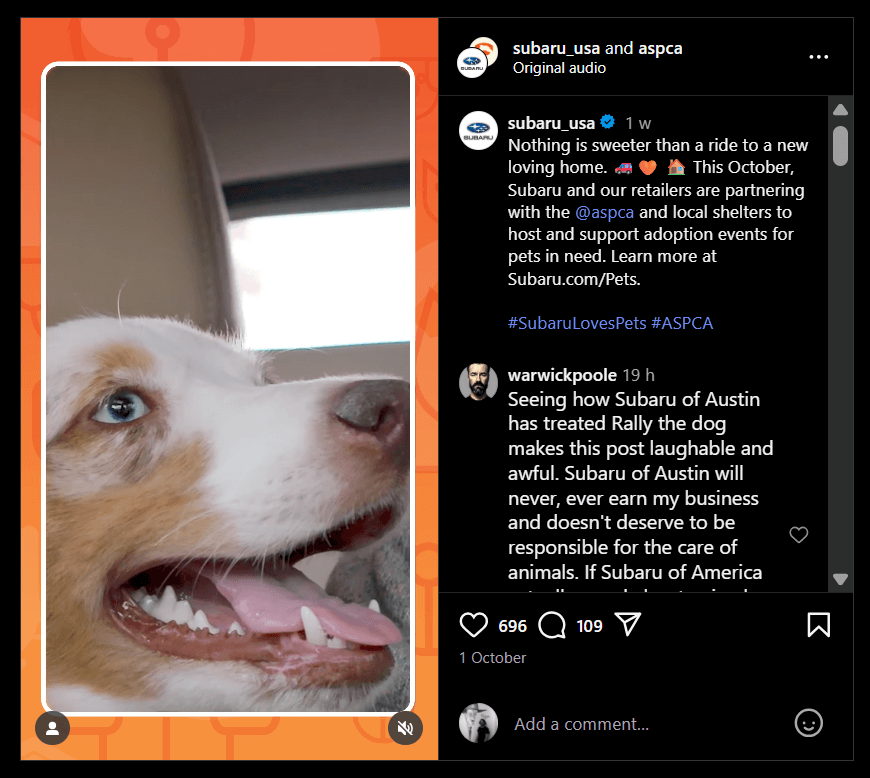
These campaigns put Subaru front-of-mind for people who value durable, adventure vehicles, but who also use them to transport their dogs. By targeting this niche, they’ve been able to speak directly to what a segment of their audience is passionate about. This helps their brand resonate more strongly with those within this niche of pet lovers.
Virtual experiences through AR/VR
Since buying a car is such a personal experience (and investment), many buyers want to see a car in person and drive it themselves before they commit. Car dealerships still serve this important function, but new technologies can support virtual experiences that lead buyers to the dealership. Crucially, they’re also a great way to stand out from your competition, enticing new and loyal fans to test drive the latest model.
AR/VR experiences can showcase new vehicle models, offering users an opportunity to inspect a car from several angles. You can also create short-form videos for feature showcases or long-form activations that link up with campaigns. By getting creative with these immersive experiences, you can offer customers a more unique buying journey. This can also help your brand feel more innovative and tech-focused, which can be an important affiliation to have in today’s market.
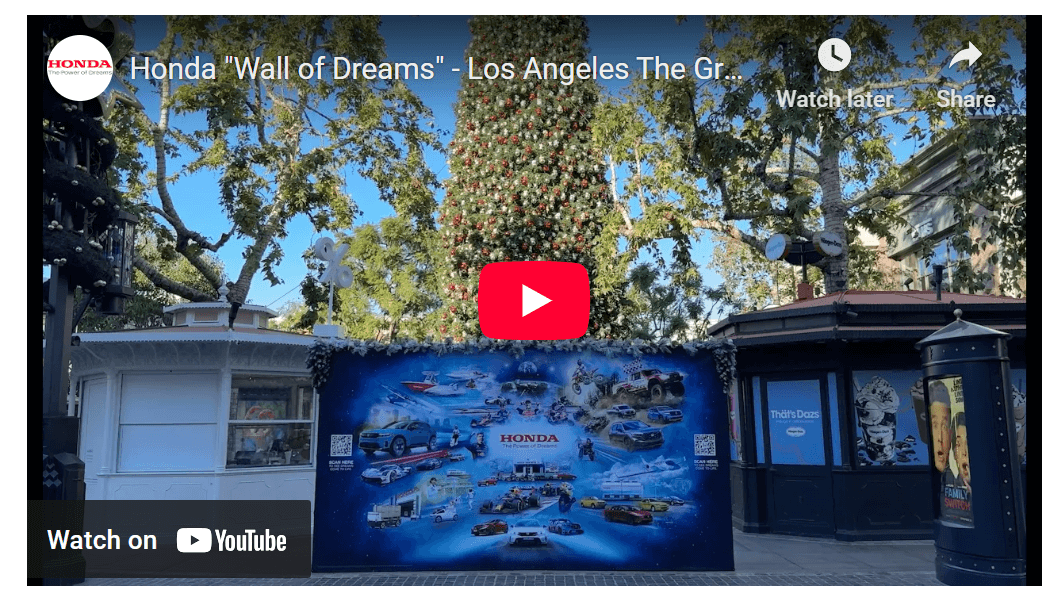
In Honda’s “Wall of Dreams” AR/VR campaign, they set up AR murals in LA, supported by sky segmentation technology, meaning their art could merge with the sky. They used this interactive experience to promote Honda’s mission for carbon neutrality with their suite of EV vehicles.
7 social media marketing strategies for the automotive industry
Now that you’re aware of some of the leading trends in automotive social media marketing today, let’s dive into proven strategies you can use to boost performance. We’ll also share insights from Honda’s social media team on how some of these strategies guide their approach.
1. Align social content with the customer journey
Every piece of content you post across social should fit somewhere along your customer journey. Content like a brand showcase Reel can build awareness, while a new model reveal could capture viewers at the consideration or decision stages.
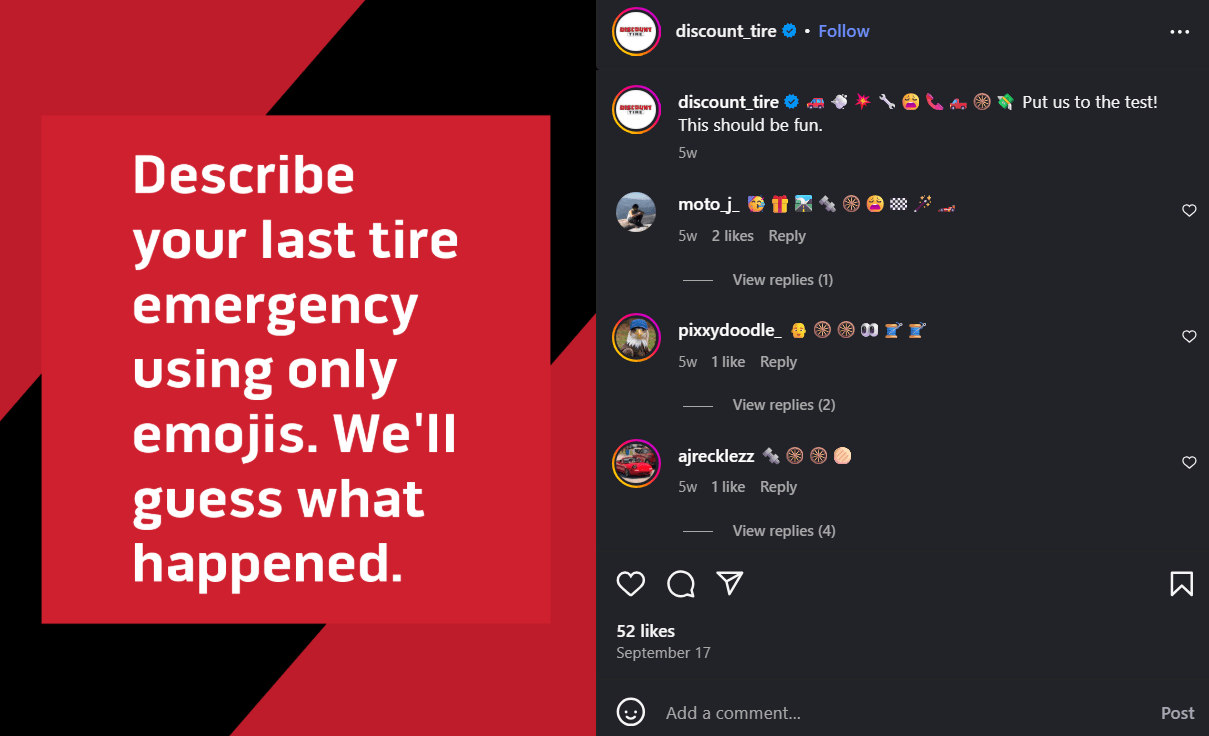
Regardless of stage, aim to embed a story within your content. Look at how you can build a narrative around your brand and its products, and weave this into everything you create. Here’s a recent example from Discount Tire’s Instagram, where they’ve combined storytelling with interaction, encouraging their followers to engage through emoji comments around a common problem their brand can solve.
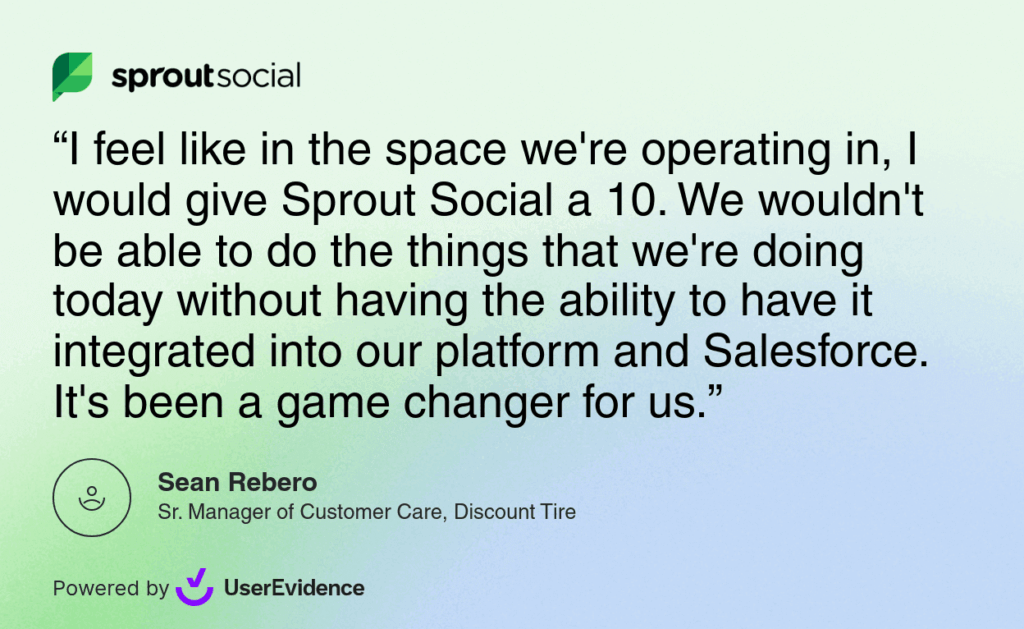
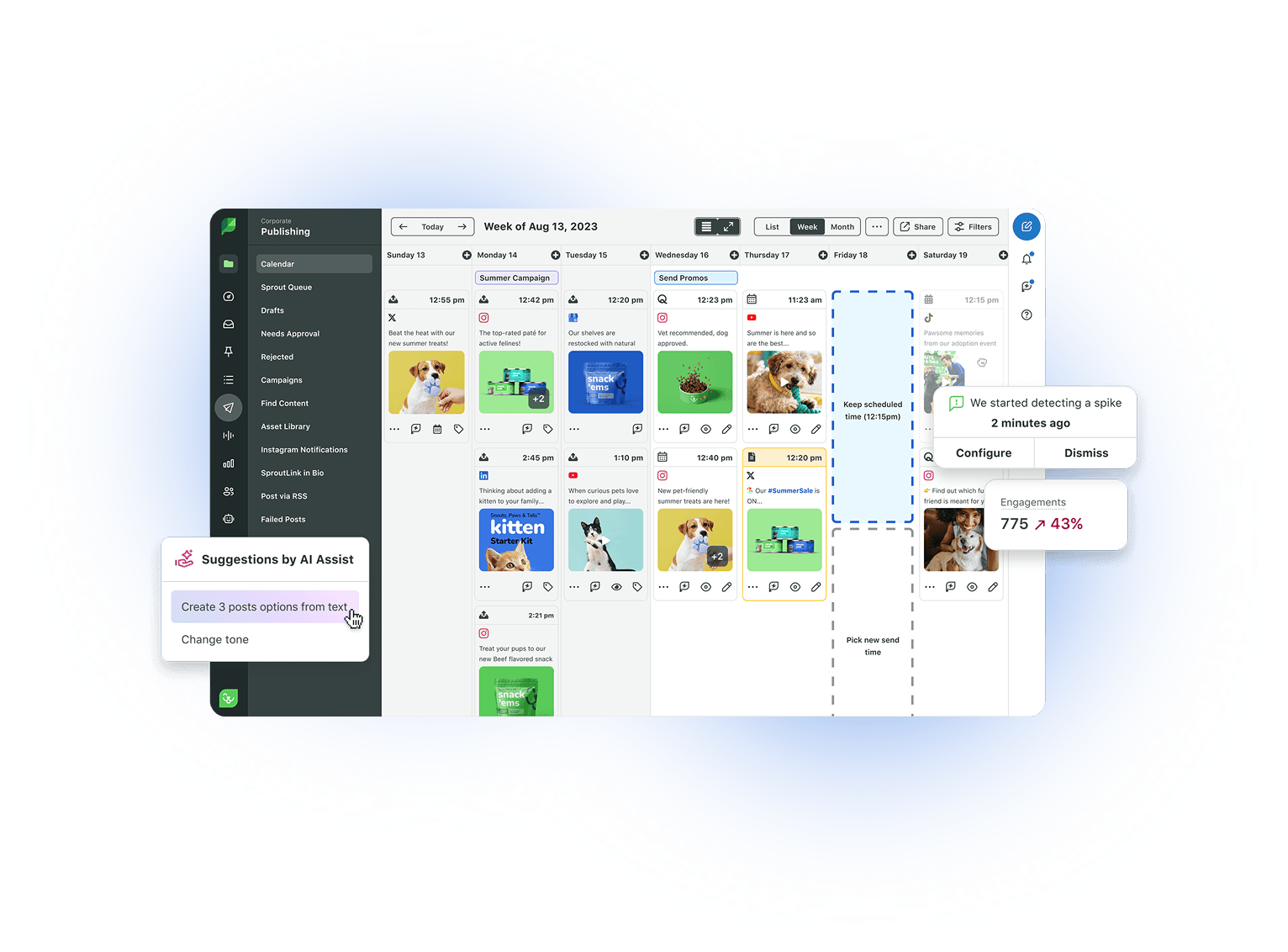
Social media marketing tools can also help you connect social posts with your buyer’s journey through CRM integrations, like Sprout’s Salesforce integration. Integrations like this connect your content with data collected from your sales team so you have a more holistic view of your sales and marketing efforts.
2. Identify key social channels and adapt your content accordingly
An effective social strategy means putting your content in front of the right people, and choosing your channels is the first (and arguably most important) step. In the automotive industry, networks like Facebook, Instagram and YouTube are all vital for growing your brand’s reach.
Other networks like TikTok and LinkedIn might also be useful for your brand, depending on the age of your target audience and if you’re trying to attract B2B customers. Once you select the right social channels for your brand, make sure you dedicate enough time to creating content for each account.
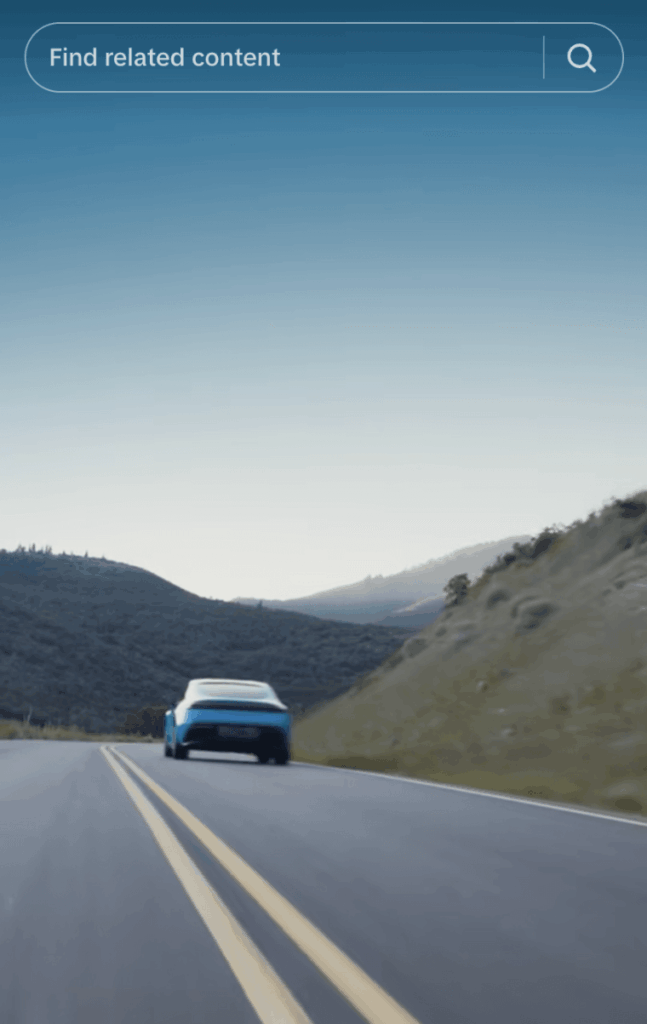
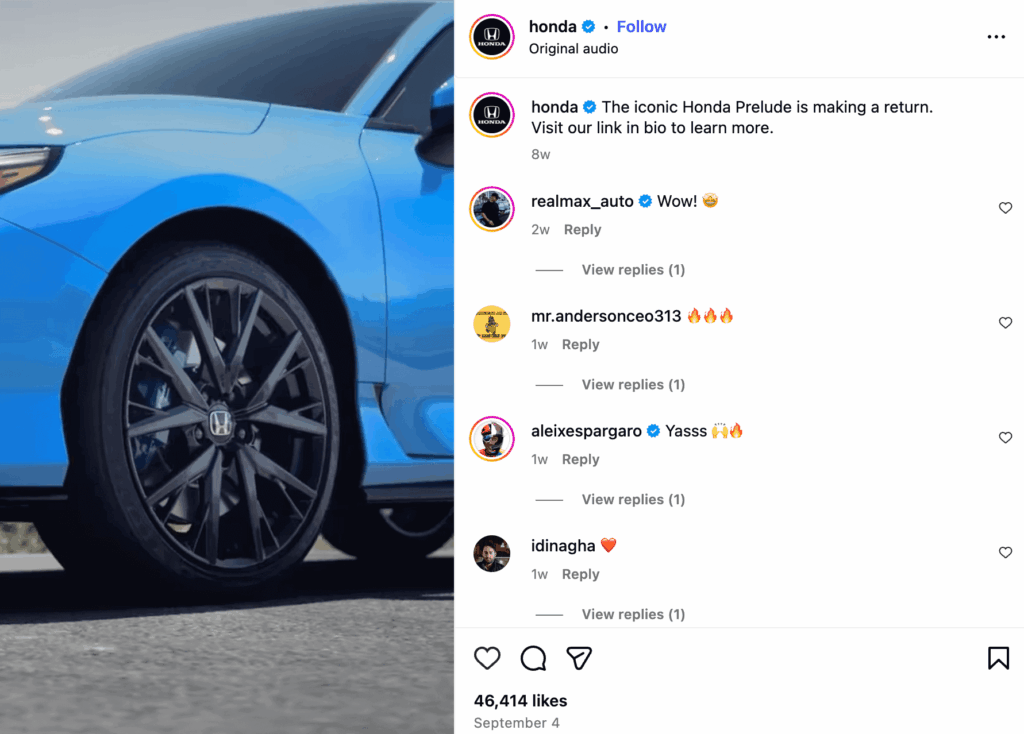
As an example, Honda has built a significant following of 5.6 million people on Facebook, and has started expanding onto TikTok, where they’ve achieved almost 500,000 followers. As you grow your following across networks, think about what content you can repost or repurpose, like using Instagram content for TikTok (shown below), or Facebook posts across LinkedIn. Honda often repurposes its Instagram Reels content for TikTok, so it can build a presence on both networks efficiently.
3. Build trust with community management and social customer care
According to Allie Coulter, Honda’s Social Media Director, “Social is so much beyond content…This isn’t just videos and photos anymore. It’s the community management piece that’s truly the dialog.”
Your community is just as vital as the content you’re publishing. Alongside content, you need to manage the social inboxes of your accounts regularly so that you’re providing the right level of customer care. As Honda’s Senior Social Media Strategist, Heather Epstein, shares, it’s about “Working with our customers 1-to-1, making sure that we’re answering all of our customer’s’ questions, and also making sure that our customers know about everything that we’re doing.”
If your social or care teams are spread too thin, consider implementing a chatbot that can filter conversations before you get to them. Tools like Sprout offer a Bot Builder that enables you to easily build and automate unique chatbots for Instagram, WhatsApp, Facebook and X (formerly Twitter). By setting auto-responses, you can react quickly to common questions or issues, and save your team’s time for addressing complex customer requests.
As well as fielding messages, think about how you can build an active community through your social content. Create interactive posts like polls, contests or UGC campaigns that encourage followers to engage directly. Alongside boosting engagement, this type of content also gives you insight into customer opinions and behaviors, which can be used to refine your sales approach. Replying to comments can also surprise and delight your customers and show you’re listening to them.
4. Invest in paid social advertising
Paid social campaigns offer greater reach and can boost the successful content you’ve already created. They can be particularly beneficial when paired with an influencer, creator or celebrity campaign, as you’ll multiply the benefits of your campaign by getting it in front of more people.
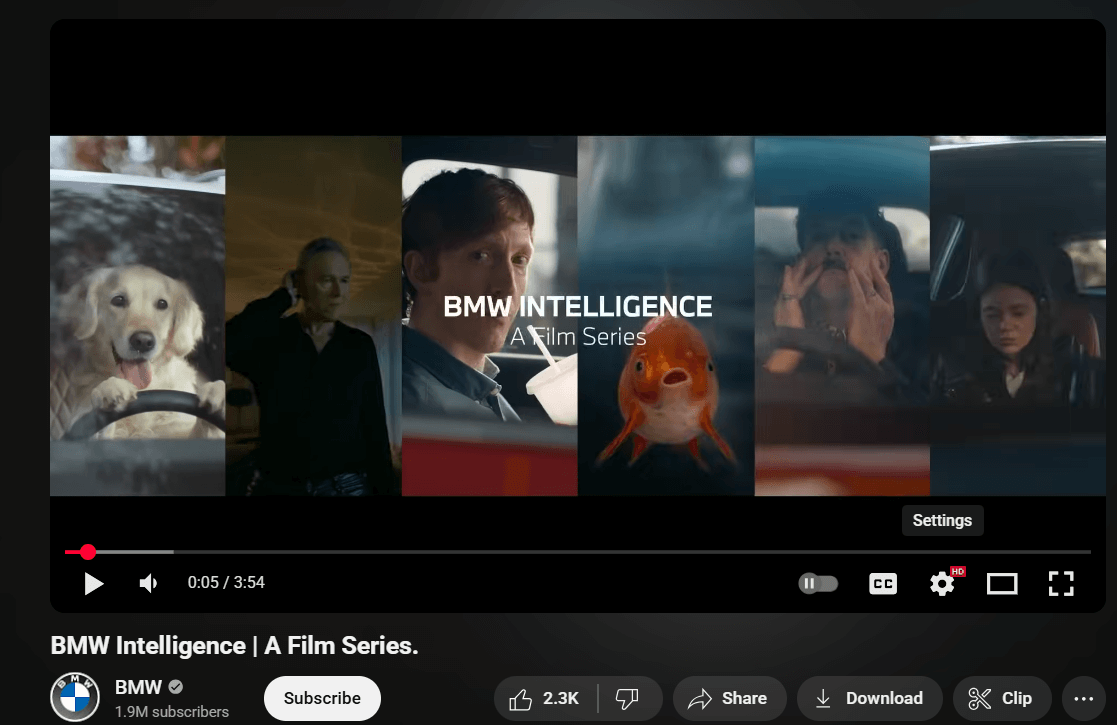
Paid social strategies can also be used to support omnichannel activations. As one example, BMW promoted its BMW Intelligence film series across YouTube and other video-based social networks, with each video linked to a feature of its cars.
5. Unlock customer insights with social listening and media monitoring
Listening to customers is another core part of Honda’s social media success. As Coulter says, it “…goes back to that two way dialog that we really wanted to create, to make sure that we are the company that listens and that we are incorporating what our customers wants and needs are into our content.”
Epstein says social listening is a particularly useful technique for content planning and understanding Honda’s audience: “When it comes to producing a lot of our content, we look to social listening to see what types of features people are talking about, like what features really make the difference between buying or not buying a certain vehicle. And we make sure to emphasize those features when it comes to producing that content.”
Advanced social listening and media monitoring tools offer you more detailed insights into current trends, audience behaviors and automotive news. By leveraging these tools, you can gain more value from your social networks by turning them into actionable data generators as well as reach growers.
NewsWhip by Sprout Social enables automotive companies to access predictive media intelligence so you can react to trends before they hit the mainstream. By coupling this monitoring with Social Listening, you can gain full visibility into what your customers are saying right now and what they expect from you and your competition over the longer term.
6. Enable your partners with social media campaigns
Vehicle brands don’t perform in a vacuum; their success is dependent on a web of dealerships, franchises, suppliers and other partnerships. By enabling your partners on social, you’ll have the dual benefit of strengthening your connection with them while also creating engaging content.
Coulter refers to this approach as a way of building a center of excellence: “There’s so many factions of our business. Which we know makes it complicated but awesome. And that’s where we know that…those brands need their own ability to communicate what they need. But the brand also needs that consistency as well. So that’s why we’re building that center of excellence.”
Honda understands that each section of their brand and business needs its own communication method, but that they all need to be aligned to a core identity. A recent example of this is Honda’s collaboration post about their F1 vehicle, the Williams FW11. Honda collaborated on this post with five different Instagram accounts, including their main brand, their sub-brands like Honda Racing and the personal account of their racecar driver, Takuma Sato.
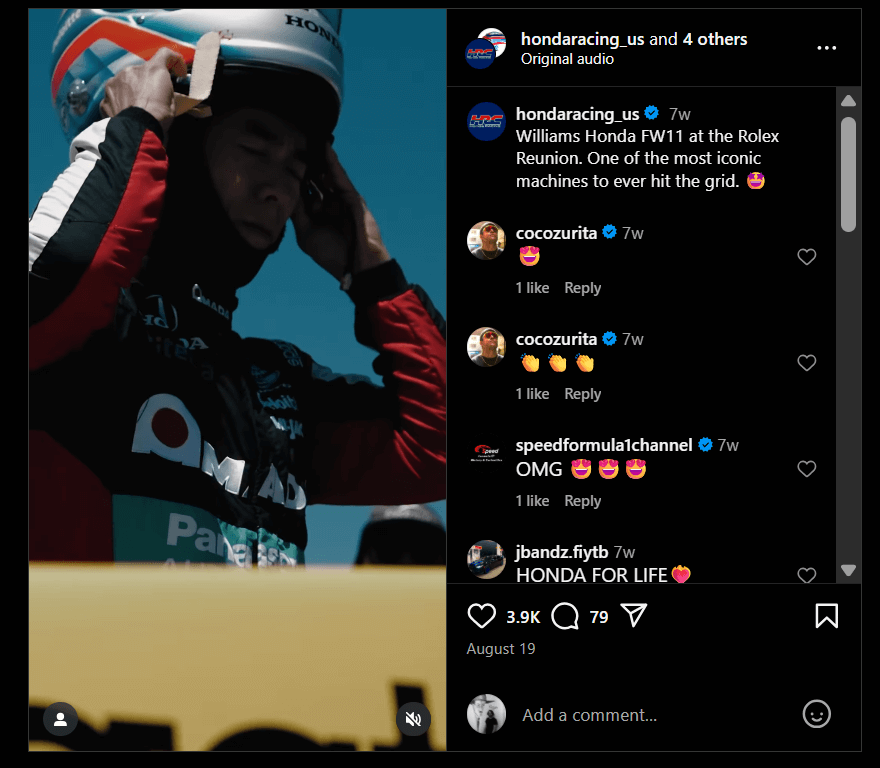
Campaigns like this one further the reach of you and your partners, and show your customers how diverse your brand is.
7. Measure, optimize, repeat
The only way to effectively improve your social efforts is by gathering data, analyzing it and using it to refine future strategies.
Invest in analytics tools that can offer greater visibility into your social strategy performance. Use this data to identify which campaigns are resonating the most with your audience, and where further refinement is needed. Then, use these insights to guide your upcoming content campaigns.
By tracking campaign performance, social data can also help you improve other areas of your organization. Embed the insights you’ve gained from these strategies into your quarterly reviews, and combine the data to uncover market changes and demands, and the actions your brand should be taking next.
Fuel your automotive social media marketing with social data
Social media is already a key channel for consumers to discover brands, so it’ll continue to be an important and growing channel for automotive brands. By using these social strategies and injecting social data into your broader strategies, you’ll refine your approach to automotive social media marketing while staying deeply connected to your audience across touchpoints.
Learn how you can position your social media strategy to impact the bottom line of your automotive business with The 2025 Impact of Social Media Marketing report.
37 free social media strategy templates that will elevate your workflows
Published on December 5, 2025 Reading time 15 minutes




Share