How to master social media for UK healthcare recruitment

Written by Emily Jenkins
Published on December 2, 2025
Reading time 10 minutes

Table of Contents
Social media for healthcare recruitment might not sound like the obvious way to hire. But it’s quickly becoming one of the best.
This is because, while the NHS workforce keeps growing, staffing gaps persist. The Long-Term Workforce Plan aims to expand medical school places to 10,000 by 2028/29, but this effort won’t solve the current shortages. And traditional recruitment methods clearly aren’t filling these roles.
That’s where social media comes in, offering a faster, more direct route to candidates. Here’s how you can put it to work.
Why should you use social media for healthcare recruitment in the UK?
Nearly one in three NHS staff say they feel burnt out because of their work. What’s more, from 2023 to 2024, 10.1% of hospital and community healthcare workers left the NHS. While this is one of the lowest rates in a decade, it’s still a sign of persistent churn.

The result is a workforce that’s slowly increasing, yet continues to face critical gaps and rising pressure on recruitment teams.
Several challenges around healthcare recruitment in 2025 make it hard to net and retain talent:
- A limited pool of qualified candidates and high turnover: With one in ten workers leaving the NHS, this creates a gap without specialist candidates to fill it.
- Strict compliance and regulations: Every recruitment campaign must meet GDPR and NHS governance rules. This can make recruitment slow and cumbersome.
- Rising recruitment costs: NHS operating expenditure rose by £8.4 billion between 2022/23 and 2023/24, with employee costs accounting for £5 billion of that increase.
- Candidate experience expectations: Job seekers want faster replies, transparent communication and insight into workplace culture.
Traditional recruitment methods often fall short in the face of these demands. They don’t make it easy for candidates to connect quickly or get a full picture of an organisation. They’re also expensive to use.
Here’s how social media recruitment changes the equation by helping healthcare providers overcome these challenges:
- Reach potential candidates where they already spend time online.
- Share authentic staff stories that build trust and highlight organisational values.
- Streamline communication and measure results through tools like Sprout Social, which centralise outreach, improve compliance workflows and give you a clear view of ROI.
Where are people looking for jobs?
Increasingly, the answer is social media.
In the UK, 79% of job seekers used social platforms in the past year to support their search, while 91% of employers now include social media in their hiring processes. In fact, the same report also shows that the average company now spends a quarter of its recruitment budget on social.
And this trend is important in the healthcare industry as 67% of job seekers look for health and wellness roles via social platforms, the survey states. In this respect, the message is clear: If you’re hiring for healthcare, you need to be on social.
How do GDPR and NHS guidelines affect your posts?
Recruitment content must balance authenticity with strict compliance, or you face fines and legal backlash.
Imagine that you’re sharing a nurse’s story for a recruiting drive. Here’s how to strip out the public health information and share that story safely:
| Do | Don’t |
| Gain written staff consent before sharing stories | Share patient names, images or clinical records |
| Anonymise details and use broad role descriptions | Include exact shift times, ward names or identifiers |
| Cite official NHS or gov.uk sources when posting about policy, training opportunities or compliance updates | Use logos or data without approval |
If you’re unsure about compliance, check out gov.uk data protection guidance and Sprout’s governance guide for best practices.
What recruitment metrics should you track?
Measuring recruitment activity helps prove value and refine social media campaigns. To track recruitment properly, focus on these three main metrics:
- Cost-per-applicant: how much you spend per application, from ads to time invested
- Time-to-hire: days between posting a role and getting an accepted offer
- Engagement rate: interactions with your recruitment posts, showing candidate interest
See this in Sprout’s Premium Analytics dashboard for a real-time view of performance. And always remember to add UTM tags to links so you can attribute results to specific posts or campaigns.
How to use each social platform for healthcare hiring?
A multi-platform approach reaches both established clinicians and early-career applicants.
Here’s how to focus your recruitment strategy.
Using LinkedIn and Sprout to fill clinical and executive roles
LinkedIn stands out as the strongest platform for healthcare recruitment because it focuses on career development and professional growth. Candidates expect to see job postings, career stories and leadership content.
These LinkedIn best practices will enable you to target healthcare professionals you’re hoping to recruit:
- Post jobs directly on LinkedIn and share them to your organisation’s page for visibility.
- Create reusable post templates, such as role announcements, campaign graphics or short text posts that keep content consistent and quick to produce.
- Highlight staff stories that showcase career progression, workplace culture and day-to-day life.
- Share leadership insights from executives or senior clinicians to build credibility and vision.
- Build a clear InMail cadence that includes initial outreach, follow-up and a final nudge and then use this to contact candidates directly.
- Use advanced search filters (such as specialty, geography or experience level) to refine candidate lists and target the right professionals.
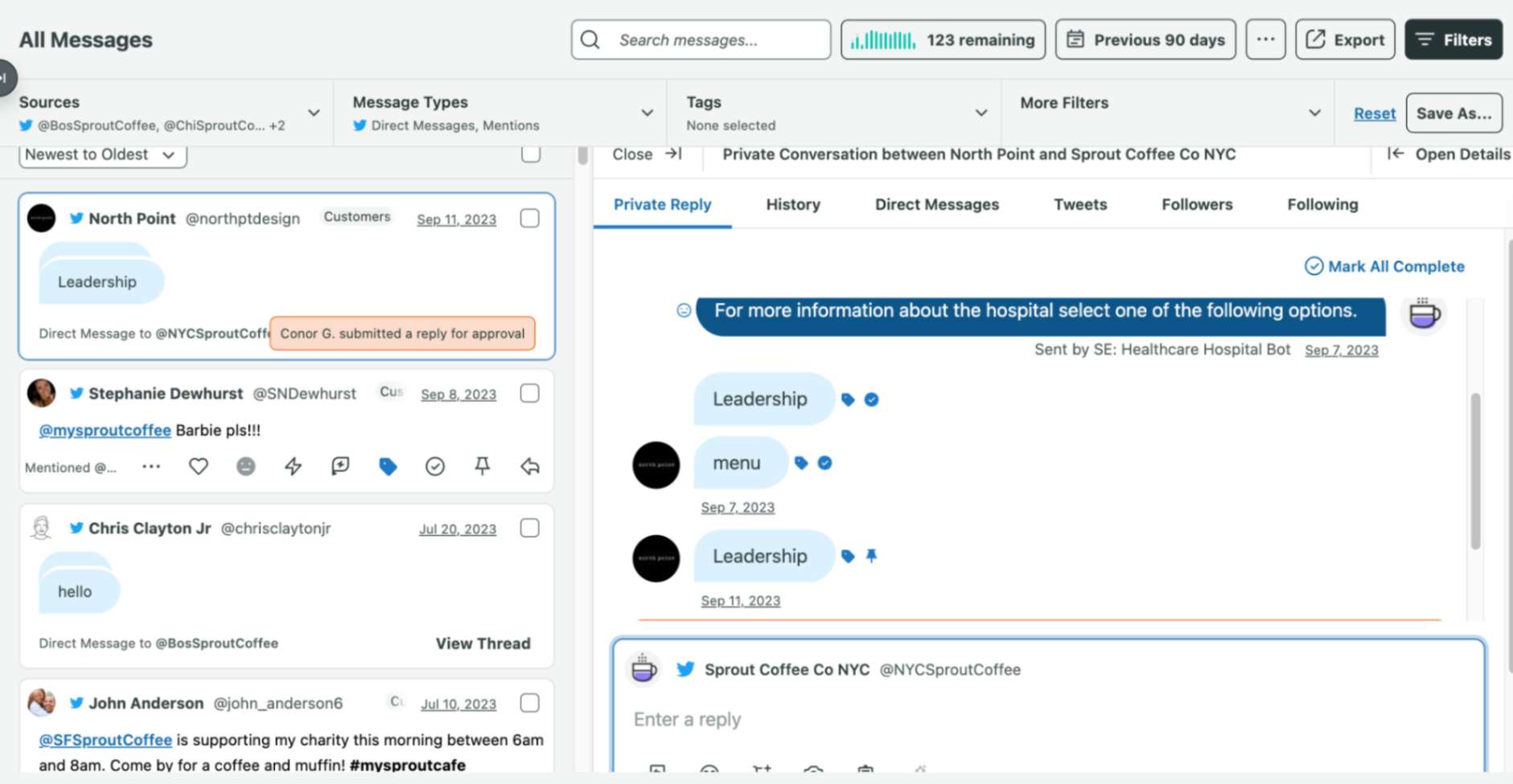
To manage everything in one place, route all candidate replies into Sprout’s Smart Inbox, where you can tag, assign and track conversations. This step prevents job enquiries from slipping through the cracks.
Engaging Facebook groups and audiences with Listening Topics
Facebook groups act as hubs where professionals share experiences, swap advice and look for new opportunities. Building a presence here enables you to connect directly with candidates who may not be active on LinkedIn.
Here’s how you can improve your healthcare marketing in Facebook groups or on your Facebook page:
- Be transparent: Make it clear you’re a recruiter, introduce yourself and share resources such as interview tips or training links alongside vacancies.
- Moderate fairly: Step in to keep discussions respectful, fact-check health information when needed and maintain a professional tone. This approach earns long-term credibility.
- Offer value: Share wellbeing resources, continuing professional development (CPD) content and career advice. Showing care for staff wellbeing strengthens your employer brand.
You can also run lookalike ad campaigns for vacancies on Facebook. To do this, look for patterns in the engagement demographics and run ads that target similar demographics and backgrounds.
And always remember to check how users feel about your posts to make sure you’re representing yourself in the right light. You can use Sprout Listening to analyse group sentiment to understand whether your contributions resonate with the right candidates.
Building your employer brand on Instagram and TikTok
Instagram and TikTok are where younger recruits and students spend their time. That makes these social networks essential for building awareness among the next generation of healthcare professionals.
Short-form, authentic video content is the best way to cut through. Here are some of the key formats to try:
- Day-in-the-life series: Encourage staff to film short clips in their own voice, showing what it’s really like to work in your organisation. This helps candidates picture themselves in the role.
- UGC challenges: Invite teams to create short videos about why they love working in the NHS or social care. Turning it into a fun challenge boosts reach and authenticity.
- Q&A Reels: Film quick-fire answers from staff to common applicant questions, like “What’s the best part of your shift?” or “How do you balance work and study?” This breaks down barriers and gives candidates a real sense of your culture.
Remember to keep it real as these platforms thrive on authenticity. To encourage candidates to engage better, you need to make them feel your content reflects genuine experiences.
Once you’ve created those day-in-the-life clips or Q&A reels, store and tag them in Sprout’s Asset Library. That way, you protect brand consistency and make it easy to repurpose the most engaging content across future campaigns.
How to find healthcare candidate pain points for social content that resonates
You can’t create content that speaks to healthcare workers unless you understand what they struggle with.
This is where social listening tools give you an advantage. Use social listening to track conversations about burnout, training, pay and work-life balance. These tools help you surface candidate pain points, preferences and online behaviours in real time.

With these insights, you can turn raw data into actionable strategies that improve how you attract and engage healthcare candidates:
- Spot recurring themes like staffing shortages, burnout or career progression worries, then build content that speaks directly to them.
- Show solutions in action by highlighting how your organisation addresses these challenges through support programmes, training or flexible roles.
- Refine your targeting by directing adverts and campaigns toward candidates already voicing these concerns, increasing relevance and response rates.
When candidates see you engaging with their reality, they’re more likely to trust your employer brand.
How do you create compliant, compelling healthcare recruitment content?
Recruitment content in healthcare has to walk a fine line. It needs to be engaging enough to attract candidates but also compliant with NHS, GDPR and accessibility rules.
Try creating a checklist to help you stay consistent while giving candidates a transparent, trustworthy experience:
- Tone and language: Does the post use plain English, avoid jargon and sound welcoming to healthcare professionals?
- Social media compliance checks: Have you reviewed the content against NHS Digital, GMC and GDPR guidance to remove any risks associated with protected health information (PHI) or sensitive data?
- Candidate focus: Does the content highlight career growth, well-being or staff support rather than just listing job requirements?
- Visual accessibility: Do images meet UK accessibility standards (alt text, contrast ratios) and align with your brand identity?
- Tracking and analytics: Are UTM tags applied so you can measure cost-per-applicant, engagement and conversions inside your social media analytics dashboard?
When you follow a repeatable checklist like this, every post reinforces your employer brand, protects compliance and enhances the candidate experience.
How to tell staff stories without risking PHI
Staff stories are among the most powerful recruitment tools because they show real people in real roles. But to stay compliant, you must protect patient privacy and follow GDPR.
Here’s a quick look at what to include and what to omit, so your staff stories stay compelling without exposing protected health information:
| What to include | What to omit |
| First name, role, years of service | Patient names or identifiers |
| Career journey and training path | Specific case details or diagnoses |
| Why they value their team and workplace | Photos where patients are visible |
By anonymising sensitive details while still drawing on real experiences, you keep your content human and authentic but avoid compliance issues.
What visual guidelines ensure accessibility and brand consistency
Under The Equality Act, accessible recruitment content is a legal requirement. On top of this, gov.uk accessibility standards set out the practical steps for accessibility (like alt text, captions and colour contrast) that are mandatory for the public sector.
But this isn’t just about staying out of legal trouble. Accessible, inclusive design attracts a wider, more diverse pool of candidates, which directly strengthens your workforce.
And with a strong balance of compliance, accessibility and authenticity, candidates will see your health services organisation as both trustworthy and inclusive.
How to build your UK healthcare recruitment toolkit
Healthcare hiring never slows down.
Building a toolkit keeps you organised and ensures your posts land when candidates are actually listening.
Build a 3-month rolling plan that blends clinical calendars with recruitment campaigns:
- 3-month content calendar: Map posts to the rhythms of the NHS. For example, plan graduate nurse and junior doctor campaigns around August intakes, push locum shifts during winter pressures and tie employer brand stories to NHS awareness weeks (like Mental Health Awareness). That way, your content feels relevant and timely, not random.
- UTM-tagged job post checklist: Add UTM tags to every vacancy link so you can trace which role, platform and creative actually leads to an application. Later, you can use your analytics dashboards to see what worked and where to stop wasting ad spend.
- Sprout Tag Report setup: Tag posts by role type, such as nursing, allied health, GP and admin executive. Then compare performance. Over time, you’ll see patterns, like “ICU nurse posts do better on Facebook groups, while exec roles travel further on LinkedIn.”
- Asset taxonomy: Keep a tidy Asset Library. Store videos, staff stories and job graphics with tags like “Paediatrics — 2025.” When NHS “winter pressures” hit and you need content fast, you’ll thank yourself.
Workflow automation
Candidates expect quick, clear replies. And in a sector where trust matters, leaving messages unread can cost you applicants.

Here’s how automation smooths the edges:
- Unified social inbox: Pull LinkedIn, Facebook and Instagram messages into one Smart Inbox so recruiters don’t have to juggle tabs.
- Saved replies: Draft-friendly, pre-approved answers to FAQs like “What’s the shift pattern?” or “Do you sponsor visas?” Quick responses show professionalism without burning recruiter hours.
- Set up a lightweight chatbot for out-of-hours questions. It can share live vacancies, explain DBS requirements and reassure candidates that a recruiter will be in touch. It’s not replacing the human touch—it’s just keeping the line warm.
How can you measure and iterate with Sprout Social?
To keep filling roles in a competitive market, you need to measure what works, refine your tactics and repeat.
Start by building a custom recruitment dashboard in Sprout where you bring together hire, application and engagement metrics for a single live view of performance. Pinpoint what works and duplicate this.
Next, use A/B testing to sharpen creative and targeting. Test headlines against images, long vs. short videos or different CTA phrasing. These small tweaks can reveal what truly motivates candidates to click, apply or share.
To get into a rhythm of testing, set monthly experiments in Sprout’s Experiments tool. That way, you’re constantly learning and adapting your content strategy rather than relying on hunches.
Winning healthcare hires with social
Hiring in healthcare is tough, but the right social strategy makes your organisation feel human and trustworthy.
With Sprout Social, you can listen, connect and measure what works, so that every campaign feels real to candidates and delivers results for your teams. Start your 30-day free trial with Sprout today.
39 free social media strategy templates that will elevate your workflows
Published on August 20, 2026 Reading time 15 minutes









Share