Influencer marketing in Australia: statistics and trends for 2026

Written by Jane Fazackarley
Published on August 31, 2026
Reading time 8 minutes
Table of Contents
Influencer marketing has moved from a nice-to-have to a core channel for Australian brands. Creators now shape what people watch, trust and buy, and the brands that partner with the right ones are pulling ahead.
If you market to Australians, you’re already competing for attention with creators your audience follows every day. The smart move isn’t to fight that shift. It’s to understand it, then build it into your strategy with clear goals and the right partners.
Numbers make that easier. Solid benchmarks show you what good looks like, where budgets are heading and which platforms earn their keep.
This guide brings together the latest influencer marketing Australia data so you can size up the market and shape your next campaign with confidence.
What is influencer marketing in Australia?
Influencer marketing partners your brand with trusted creators to reach and persuade audiences natively on social. In Australia it’s a core channel, not an experiment.
The appeal is simple. Creators bring built-in reach and credibility that traditional ads struggle to match. Australians act on recommendations from people they follow, so a well-matched creator turns attention into sales.
Brands work with creators across every tier, from nano-creators with a few thousand engaged followers to celebrity talent with national reach. The right fit depends on your goals, your budget and the audience you want to move.
Statistics on the growth of influencer marketing in Australia
Influencer marketing in Australia isn’t just growing, it’s accelerating. The money following creators tells the clearest story:
- Australian brands spent A$830 million on influencer marketing in the past 12 months, up 13.5% year-on-year, and spend is projected to pass A$1 billion in 2026, according to Mumbrella’s reporting on the Meltwater and We Are Social Digital 2026 report.
- Influencer advertising now makes up around 3.8% of total digital ad spend in Australia and is the second-fastest-growing digital vertical behind online retail, per the Meltwater Digital 2026 report.
- A quarter of Australians aged between 18–44 consider themselves influencers, and 55% of adults aged between 18–60 say they’d give up their careers to become one, according to the Influencer Aspirations report.
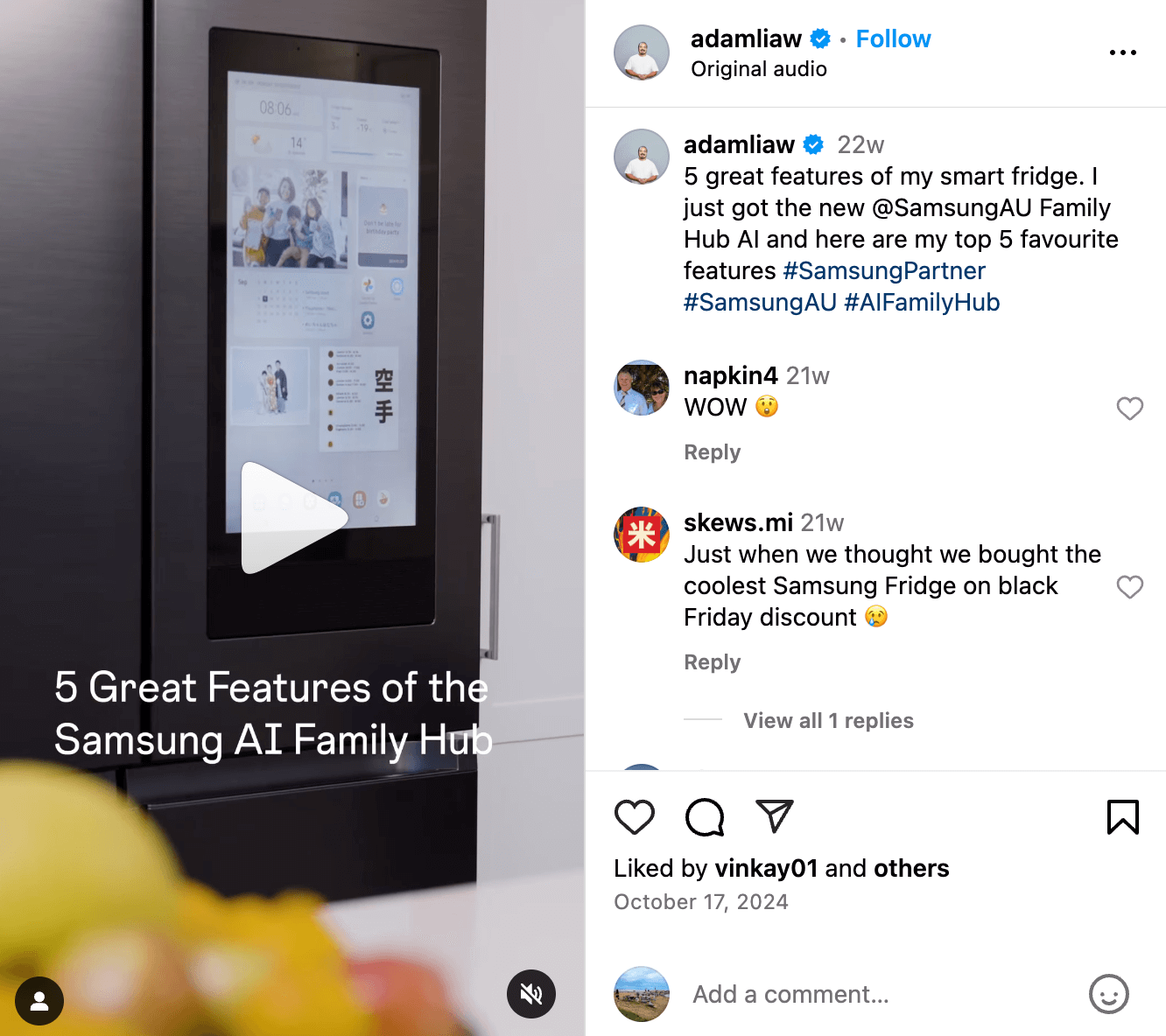
- Forty-six percent of Australians have bought an item after seeing an influencer promote it. Chef Adam Liaw, for example, regularly showcases products on his Instagram, including the Samsung Smart Fridge and Le Ceuset kitchenware.
- Fifty-two percent of Australians aged between 18 and 29 are likelier to buy a product an influencer promotes.
- Australia’s online audience gives campaigns room to scale, with more than 26 million social media users and a fresh peak of 27.48 million forecast by 2030.
Consumers back this up with their wallets. The Sprout Social Influencer Marketing Report found that 86% of consumers make a purchase inspired by an influencer at least once a year, and almost half buy that way every month.
The takeaway: Influencer marketing in Australia is scaling fast, and budgets are following the results. As spend pushes past A$1 billion, brands that treat creators as a core channel, not a side experiment, will capture the attention and trust that traditional ads keep losing.
Statistics on the platforms Australians prefer for influencer marketing
Australian creators know exactly where their audiences spend time. Here is how platform preferences and demographics stack up.
- Australian TikTok users spend the most time of any platform, averaging 1 hour and 14 minutes a day, according to the We Are Social and Meltwater Digital 2026 Australia report.
- On TikTok, nano-creators make up the bulk of the ecosystem and post the highest engagement of any tier, above 10% on average, far more than larger accounts, according to Influencer Marketing Hub.
- Instagram influencer marketing is enormous. Some 78% of Australian marketers chose Instagram posts as the most effective for influencer marketing. Instagram Stories were the runner-up, followed by YouTube videos (56%) and Instagram videos (54%).
- The 2025 Sprout Social Index™ Australia found that 24% of users intend to increase their social media use in 2025.
- Ninety-four percent of Australian social media users agree most brands’ content does a good job of keeping up with online culture. That’s according to Australians interviewed for The 2025 Sprout Social Index. Some 93% also said they feel it’s important that brands keep pace with online culture.
- Thirty percent of Instagram Australian influencers are females aged 18-24 years old. The most popular category for Australian influencers is lifestyle (16.4%).
The takeaway: Instagram and TikTok dominate influencer marketing in Australia, and marketers know it. Pick the networks where your audience already spends time, then double down there to connect directly and build brand awareness.
Statistics on consumer trust in influencers in Australia
Consumer trust isn’t freely given. Australian consumers act on creator recommendations—but only when they are rooted in authenticity.
- Authenticity in influencer marketing is the key to building trust between an audience and influencers. About 62% of consumers who regularly buy from influencers are also more likely to give the influencer product feedback.
- Forty-four percent of Australian consumers say transparency is crucial to trusting product recommendations from influencers. If an influencer works with a brand when endorsing a product, consumers expect the influencer to be clear about this.
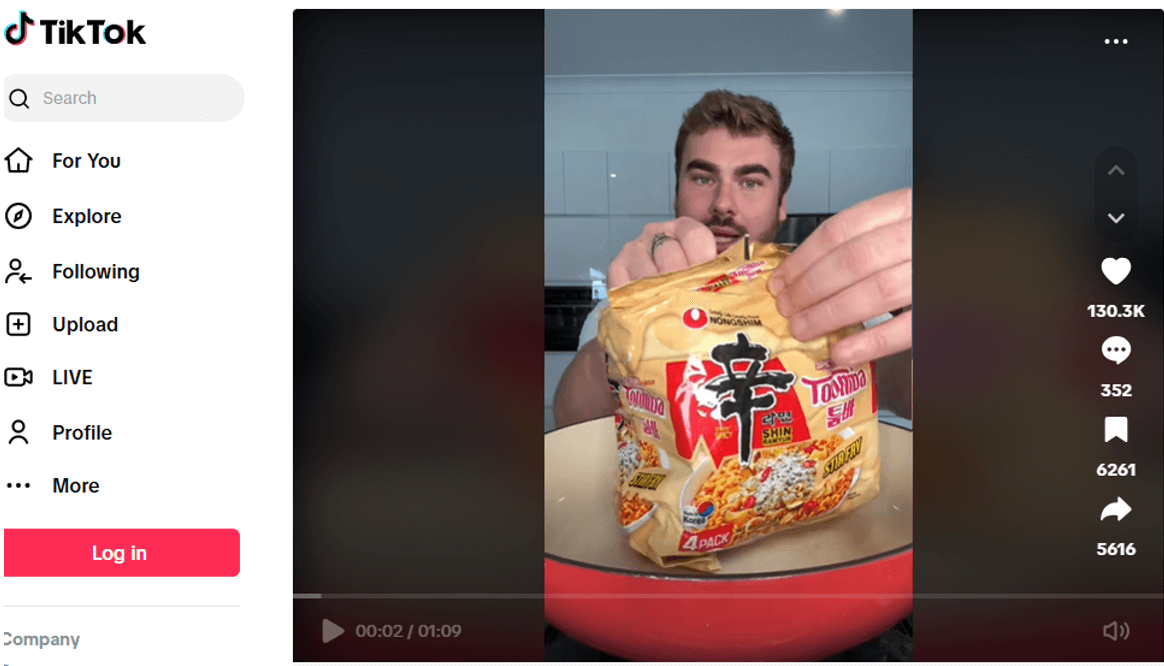
- Followers prefer influencers to show how a product works, rather than endorsing it. For example, Australian chef Michael Finch shares cooking tutorials with his followers:
- Thirty-six percent of consumers trust an influencer if they’ve provided solid recommendations in the past. Australian fashion influencer Maxine Wylde, for example has over 450,000 Instagram followers and often gives shout-outs to top brands like Dulux.
- Microinfluencers account for over 53% of brand collaborations. Although they have smaller audiences, they’re considered more authentic, and followers are more likely to trust and engage with them.
The takeaway: Consumer trust and transparency are two main pillars of influencer marketing that help foster credibility. This is especially true for nano influencers, which may explain why they top the board for brand collaborations. The stats show us that brands wanting to build and maintain loyalty and trust should prioritise nurturing authentic partnerships with nano influencers.
Statistics on influencer selection and return on influence (ROI) in Australia
Influencer marketing outpaces traditional advertising when it comes to ROI. But unlocking that value requires strategic creator selection. Here is the data.
- Fifty-one percent of 18-29-year-olds research on TikTok before buying a big purchase.
- In The State of the Influencer in 2024 report, 92% of brands surveyed said measuring influencer performance is essential for understanding ROI. The same report also found:
- One in three brands say influencers drive engagement. This is due to their ability to reach niche audiences, build credibility, create dynamic content and develop social proof.
- Seventy-eight percent of brands say the most significant benefit of working with influencers is landing key messaging.
- Twenty-seven percent of brands interviewed said influencers help most with reach.
- To succeed online, brands need to know what their audiences’ preferred networks. Research shows 88% of Australians prefer Facebook. YouTube is the second favourite, followed by Instagram and TikTok.
- The State of the Influencer in 2024 report shows 81% of brands have worked with influencers. One in five say they’ve worked on more than 20 influencer marketing campaigns. The same report found:
- Eighty-six percent of brands surveyed say video resonates better with audiences when compared to more static formats. By combining influencer marketing with more traditional types, marketers have a more complete strategy.
- Ninety percent of marketers say sponsored influencer content performs better in engagement, according to the Q1 2025 Sprout Social Pulse Survey.
- The Q1 2025 Sprout Pulse Survey also found that 83% of marketers say sponsored influencer content delivers more conversions compared to organic posts from brand accounts.
- Music and beauty are two of the most popular categories for influencers in Australia, with 8% of influencers focusing on the music niche and 5% on the beauty category.
The takeaway: Influencer marketing is a sound investment next to traditional advertising, but only if you measure it. Track engagement and click-through rates, follower growth, CPA, conversions and lead generation to prove your true influencer ROI. Sprout Social’s real-time creator and campaign analytics connect reach, engagement and conversions to revenue so you can show the business impact.
How much does influencer marketing cost in Australia?
Australian creator rates depend on audience size, content format and usage rights. Shopify’s 2026 influencer pricing data gives the clearest per-post benchmarks, and Australian quotes track these US-dollar bands closely.
| Influencer tier | Follower range | Typical rate per post (USD) |
|---|---|---|
| Nano | 1K–10K | US$25–US$150 |
| Micro | 10K–100K | US$250–US$5,000 |
| Macro | 100K–1M | US$5,000–US$25,000 |
| Celebrity | 1M+ | US$10,000–US$50,000+ |
Two factors push rates higher:
- Video deliverables: Reels and short video typically cost two to three times a static post.
- Usage rights: Whitelisting content for paid ads or locking in exclusivity adds a further premium on top of the base fee.
Smaller creators still win on efficiency. Nano and micro creators deliver the lowest cost per engagement, around US$3 versus US$5 or more for mega-creators and US$7 for mid-tier creators, according to OpenSponsorship’s 2026 benchmark data.
Statistics on influencer marketing trends in Australia
Here’s where influencer marketing in Australia is heading in 2026.
- Multi-platform is now the default. Brands increasingly run campaigns across at least two platforms at once, spreading reach and reducing dependence on any single network.
- According to Sprout’s 2026 Social Media Content Strategy Report, social selling is the #2 priority for Australian marketers, while their US and UK counterparts are heavily prioritizing long-term creator collaborations to move away from transactional, one-off posts and compound trust over time.
- Measurement is catching up to spend. Brands are investing in attribution and conversion tracking so they can tie creator activity to revenue, not just reach.
- Authenticity remains the through-line. Campaigns built with creators who genuinely share a brand’s values earn more engagement, so values alignment beats follower count.
- Micro-influencer marketing keeps rising. Creators with 10,000–100,000 followers punch above their weight because their smaller audiences engage more and trust the “real” content they share.
- Social commerce is becoming a fixed part of platforms like Instagram and TikTok, and its rapid growth is fuelling demand for creators.
- Compliance scrutiny is intensifying. Past research found issues in 81% of posts from 118 high-profile Australian influencers, and regulators are watching more closely as the sector grows.
The takeaway: Australia’s influencer marketing is maturing fast, with multi-platform campaigns, long-term creator partnerships and real measurement becoming the norm. Micro-influencers stay central, so align campaigns with creators who share your values and you’ll reach the right audience with content people actually trust.
What regulations are in place for influencer marketing in Australia?
Disclosure is the rule, and it’s enforced. Paid or gifted influencer content must be clearly labelled under the AANA Code of Ethics and the Australian Consumer Law, policed by the Australian Competition & Consumer Commission (ACCC) and the Australian Communications and Media Authority (ACMA).
Enforcement is real, not theoretical. In a 2026 action, the ACCC penalised PhotobookShop A$39,600 for undisclosed influencer reviews. Hidden disclosures buried in hashtags or long captions no longer pass.
The industry sets its own standards too. The Audited Media Association of Australia (AMAA) runs an influencer marketing council (AiMCO) that maintains a code of practice covering disclosure, influencer vetting, brand safety and contractual terms such as content and intellectual property rights. Sociallawco.com.au breaks down what this means for businesses.
The AiMCO guidance is simple. Creators need to label a post as an ad whenever they’re:
- Getting paid to promote a product, brand or service.
- Including a discount code or affiliate link that earns them a commission.
- Receiving a free holiday, product or other benefit.
Use clear labels like #Ad, #PaidPartnership or “Paid partnership with [brand]” where the audience will actually see them, not buried at the end of a caption.
Beyond disclosure, watch for other legal risks including copyright issues, misleading claims, privacy obligations and defamation.
Navigating the Australian influencer landscape in 2026
Influencer marketing in Australia is surging, and it shows no signs of slowing. Use these statistics as your benchmark for what’s working: the platforms that deliver, the budgets brands are committing and the authenticity audiences reward.
Finding creators, building relationships and proving ROI can feel overwhelming. It doesn’t have to be. Sprout Social Influencer Marketing helps you discover and vet creators, manage campaigns end to end and connect performance straight to revenue.
Discover Australian influencers for your brand
Understanding Australian influencer marketing statistics gives you a starting point. But to reach your goals, you need to connect with the right creators. To help you explore this exciting market and find the right fit for your next campaign, we’ve put together guides to Australian influencers:
- Top TikTok influencers in Australia for your brand
- Best Australian fashion influencers for your brand
- Leading Australian food influencers for your brand
- Top Family influencers in Australia to build authentic partnerships
- 20 Australian travel influencers driving tourism campaigns
- 25 powerful Australian beauty influencers for your brand
FAQs about influencer marketing in Australia
How much does influencer marketing cost in Australia?
Rates scale with follower count, content format and usage rights, from a few hundred dollars for nano-creators to five figures for celebrity talent.
Pricing varies by creator tier and deliverable type. Shopify’s 2026 influencer pricing data offers reliable per-post benchmarks in US dollars, and Australian rates typically align with these ranges when you account for currency conversion.
| Influencer tier | Follower range | Typical rate per post (USD) |
|---|---|---|
| Nano | 1K–10K | US$25–US$150 |
| Micro | 10K–100K | US$250–US$5,000 |
| Macro | 100K–1M | US$5,000–US$25,000 |
| Celebrity | 1M+ | US$10,000–US$50,000+ |
Does influencer marketing work in Australia?
Yes. Australian campaigns return several times their spend, and most consumers buy something an influencer inspired at least once a year, according to the Sprout Social Influencer Marketing Report.
Which platforms are best for influencer marketing in Australia?
Instagram and TikTok lead for Australian creators, with YouTube strong for longer video. Most 2026 campaigns run across more than one platform to widen reach.
What are the rules for influencer marketing in Australia?
Paid or gifted content must be clearly disclosed under the AANA Code of Ethics and Australian Consumer Law, enforced by the ACCC and ACMA, using clear labels like #Ad or “Paid partnership”.
How do you measure influencer marketing ROI?
Set a goal before you launch, then track engagement, conversions and revenue against it. Sprout Social’s analytics tie creator and campaign performance directly to those business outcomes.
39 free social media strategy templates that will elevate your workflows
Published on August 20, 2026 Reading time 15 minutes




Share