It’s about social media discoverability, not followers

Written by Benedict Nicholson
Published on September 17, 2026
Reading time 6 minutes

Table of Contents
For years, brands on social have chased follower count. More followers meant more reach, more reach meant more engagement, more engagement meant more sales, more sales meant more budget. Rinse and repeat. But that playbook is dated.
Today’s social networks run on algorithmic feeds, not follower counts, and a post can rack up thousands of views from non-followers, which often outnumber followers that see the post in modern feeds. Relevance is now the key, not audience size.
And the importance of discoverability even extends past the network itself, since social content is increasingly feeding into search engine results and used in AEO answers. That means the content of a post can drive awareness and traffic long after it disappears from the feed.
The takeaway for brands is the importance of content that is discoverable, not catering to just the audience you already have.
Algorithmic recommendation feeds drive non-follower reach
Reach has moved on from scaling with followers to scaling with relevance. The rise of algorithmic recommendation feeds means that on Instagram’s Reels tab or TikTok’s For You page, a majority of viewers for a given piece of content are people who don’t follow the account whose content they’re watching. Sprout’s own data shows that more than 70% of views come from non-followers 60% of the time.
And audiences have adjusted to this pattern. Only 17%* of users say they check an influencer’s follower count before deciding to follow for themselves. That means it’s less about audience size as a trust signal, and more about having the right content to engage your target audience.
For brands, that contains lessons for both content creation and the partners they work with. Follower count, especially for picking influencer partners, isn’t a reliable enough metric in 2026, when topic relevance, content quality and engagement rate are the best predictors of performance. Brands looking for new creative partners should be looking for these metrics first and foremost when assessing potential fit.
In fact, the one time you might want to look at the follower count is to make sure they don’t have too many.
Niche creators and micro-influencers can deliver superior engagement and purchase intent
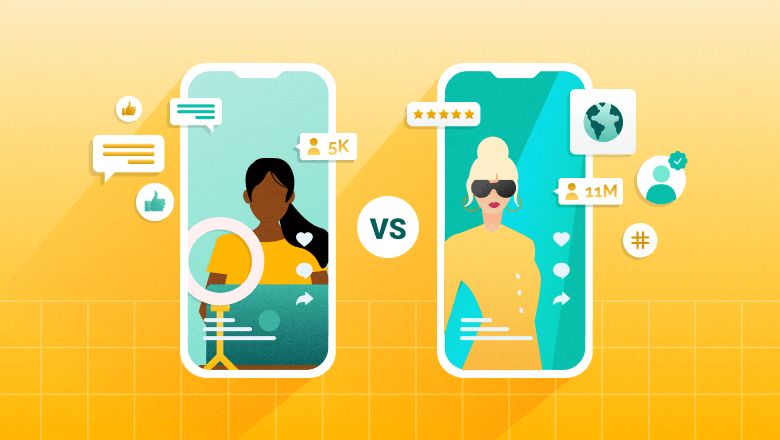
Niche creators are the clearest proof of relevance over reach, as their naturally smaller audiences can still be very highly engaged and influential. Our survey data shows that buyers are more likely to purchase based on a recommendation from a niche creator than a mega-influencer (21% vs. 15%, while about a third reported no preference.)
This says a lot about community trust, with smaller influencers often having highly engaged audiences that pay closer attention to their recommendations, and produce more genuine feeling content because of that smaller audience.
It all comes back to authenticity.
And that authenticity also matters in direct product promotion, with 80% of consumers believing influencers should actually use the product they’re promoting, and 44% wanting them to be long-term users before promoting anything. That’s much more likely to happen for smaller influencers who are promoting something that’s genuinely relevant to their audience, rather than a mega-influencer being used as a broadcast-style megaphone.
When you’re building a shortlist of partners to work with, relevance and authenticity matter more than follower totals. A creator with a highly engaged niche audience can easily outperform one with higher reach and less credibility with their own audience.
And speaking of credibility, audiences are increasingly going straight to the source to hear from the people that work at the brand itself.
Frontline employees are your brand’s newest discovery engine
Brands’ own employees are beginning to take over the algorithm. We saw this anecdotally with the attention the Staples Baddie got this year, with her content about everyday occurrences at the office supply store getting huge traction and national recognition, even laddering up to a profile in the New York Times.
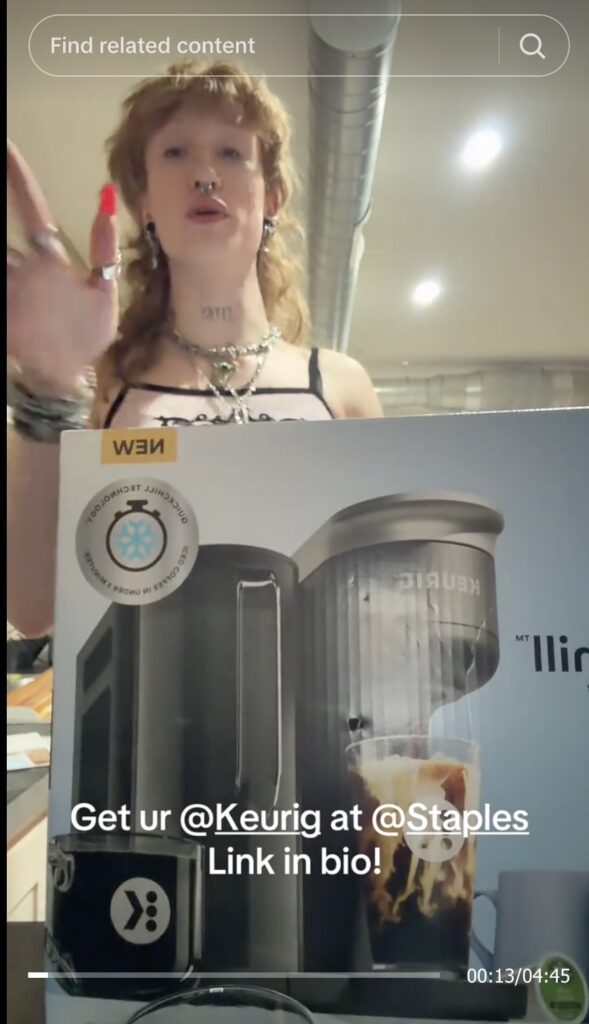
Employee-generated content now drives product discovery at least monthly for 40% of consumers according to our research (rising to 62% for Gen Z), so this has already become a major channel, and that’s before most brands have made any significant investments in it as an official program.
The quest for authenticity is reflected in who audiences want to hear from when it comes to employee advocates. For example, consumers would rather hear from frontline employees doing their actual job than the marketing team or C-suite presenting a polished vision of the brand. A stockroom employee explaining how products get ordered, or a barista showing you how a new drink gets made is much more engaging than a campaign asset delivered through a different mouthpiece, especially for B2C brands, though it does extend to B2B teams too.
But this channel needs to be treated with care, just as any partnership would be, and consumers believe that workers should be paid extra for the extra work if it extends beyond their normal job description. A clear majority (61%) believe brands should pay, and some brands such as Gap and Starbucks are already leaning into formalizing the programs to give employees clear guidelines while proposing fair pay and giving them the creative freedom to be themselves within the brand’s constraints.
Social Media SEO: The tactical side of discoverability
Beyond algorithmic discoverability, social networks now also function as search engines. According to our Q2 2026 Pulse Survey data, social media is the second most commonly used platform for search across all age groups and demographics, behind traditional search engines but ahead of chat-based AI and asking friends and family directly. Among younger users, the gap between social search and traditional search engines is narrowing significantly, with consumers routinely splitting their search habits based on their exact intent.
That means brands need to not only have an SEO strategy, but also a strategy for social search (SOSEO). That starts with understanding what your audience is searching for on social and making sure the keywords you’re using contain those same search terms, exactly as you would for a blog post or website page.
And it goes beyond just keywords used in the captions; algorithms are digesting much more than that. They also use the spoken audio, on-screen text and captions to understand the theme of the video and decide who sees it and who doesn’t, so even if they don’t search directly, the right keywords also aid discoverability. A video on the right topic but missing the right keywords for that topic will have less reach than one engineered for maximum discoverability across onscreen text, audio and captions.
These are small, consistent tweaks you can make to your content, much like experimenting with the hook to improve retention, but are crucial to making sure discoverability is maximized.
Discoverability beyond social networks through SEO & AEO
SOSEO has been a rising trend for years, but even more recently SEO and AEO through traditional search engines and AI answer engines have become more relevant to social professionals, and discoverability has extended beyond the walls of the networks themselves. For example, Google added a Short Videos tab to its search results, pulling directly from Instagram Reels, TikTok and YouTube Shorts, meaning the benefits from the SOSEO work that forward-thinking brands were doing now extend to traditional search as well.
And AI answer engines (the likes of Anthropic’s Claude, OpenAI’s ChatGPT and Google’s Gemini) are accelerating this trend. These tools pull directly from social content such as LinkedIn and Reddit when searching the web for indexed content to provide an answer.
This makes social content much more evergreen. Content used to lose relevance and disappear from the feed within 24-48 hours, but the mix of SEO, SOSEO and AEO extends that shelf life significantly, and often allows content to go viral multiple times over a longer period of time providing it remains relevant.
In practice, this is optimized the same way SOSEO is, with clear audio, good captions and keyword-aligned topics. That way, you get an algorithmic boost and potential search discovery in-platform, and then an additional discovery opportunity when that content gets indexed and resurfaced across the broader web.
How brands win in the post-follower era
All of the above points to the fact that we’ve gone well beyond the audience building that was the objective before the For You page came along. It’s an input into the broader algorithm, not the end goal itself.
The brands winning right now are building for discoverability first, across every layer of the social ecosystem. That means partnering with creators that make content that’s relevant to your brand, no matter how big they are, building out employee creator programs with frontline employees and ensuring all content is optimized with the right keywords. Done correctly, these optimizations compound, and your content becomes more discoverable across all parts of the internet.
Follower count will keep declining as a meaningful metric, and it’s not something that brands should be optimizing for in 2026. The most successful brands will be the ones that increase their discoverability through optimizations and partnerships, which they can track through increased engagement and reach on their own and partner posts, as well as AEO discovery and organic search traffic.
Want a deeper understanding of how creator partnerships are performing in this new landscape? Sprout’s 2026 Influencer Marketing Report has the full data set.
*About the data
Unless otherwise noted, all data cited in this article is from a Q3 2026 Pulse Survey of 2,286 consumers in the US, UK and Australia conducted by Panoplai on behalf of Sprout. The survey was conducted online from August 11 to August 18, 2026.
What is social media discoverability?
Social media discoverability is how likely a piece of content is to be found by people who don’t already follow the account that posted it. It’s driven primarily by algorithmic recommendation feeds like Instagram’s Reels tab or TikTok’s For You page that surface content based on relevance and engagement rather than existing follower relationships.
How does social SEO differ from traditional SEO?
Traditional SEO optimizes for search engine crawlers reading text on a webpage. Social SEO optimizes for platform algorithms parsing audio, on-screen text, closed captions and engagement signals within a video or post. The ranking factors are different, but the underlying goal of matching content to what people are actively searching for is the same.
Why are follower counts becoming less important?
Algorithmic recommendation engines distribute the majority of views on most platforms, often reaching far more non-followers than followers. As a result, relevance, content quality and engagement have become stronger predictors of reach and performance than raw audience size.
39 free social media strategy templates that will elevate your workflows
Published on August 20, 2026 Reading time 15 minutes




Share