5 ways social media impacts consumer behavior

Written by Sam Kendall
Published on January 7, 2026
Reading time 9 minutes

Table of Contents
The era of passive social media use is over. Social media is now a measurable driver of the whole customer journey for almost every demographic, and its importance demands a nuanced, strategic and evolving response from brands.
Social media’s impact on consumer behavior can’t be understated. For many, social is now the primary way consumers search for products, consider their options, evaluate brands and make purchases. It’s even completely changing the way we speak and communicate with each other.
The new Sprout Social 2025 Social Media Dictionary found that words like aura and labubu have entered the public consciousness entirely because of their frequent use on social platforms. And “67” (pronounced “six-seven”), a phrase that originated on social, was named Dictionary.com’s 2025 word of the year.
In this article, we’ll discuss the top five ways social media influences consumer behavior and what each means for your brand’s social strategy.
What is social media consumer behavior?
Social media consumer behavior refers to any way that an individual modifies how they think about or react to products based on their social media use.
Some examples of this might include:
- Using social media search functions to discover new products
- Accessing social media shopping channels to purchase from social platforms directly
- Commenting on content or messaging brands directly through social media with questions or feedback
- Reacting and sharing brand content that speaks to the user’s values
- Following influencers who have partnered with specific brands
These behaviors directly impact how people interact with brands and products on social media. And they’re increasingly normalized in today’s social media climate, where social is often the first place people go for news, opinions and connection with friends, family and brands. Today, the consumer journey is social first.
The new consumer journey is social first
2025 was the tipping point where social media’s attention economy significantly intersected with and impacted the actual economy. According to Sprout’s Q2 2025 Pulse Survey, 90% of Gen Z and 84% of Millennials say that social media has impacted their purchases in the past six months.
These shifting consumer behaviors mean attention is now every brand’s most valuable resource. Where quantity and the sheer volume of social media content created by brands used to be the most important factor, today the quality of your output is even more vital. Companies need to create content that resonates with their audience, prioritizing creativity, originality, shared values and human-centric engagement.
To better understand this shifted landscape, we’ve outlined the 5 most important ways social media continues to influence consumer behavior today.
How does social media influence consumer behavior?
Consumer behavior is a broad concept and encompasses many different behaviors. It relates to purchases, searches, opinions, engagement, trust in brands and more. Below, we’ve outlined 5 behaviors that are the most crucial for brands to understand and adapt to on social media today.
1. Social is reshaping traditional search behaviors (especially for Gen Z)
Social media has become the starting point for discovery. Whether it’s information, advice or new product recommendations, nearly a quarter of people now turn to social media for answers before anything else, and that number rises for Gen Z, according to Sprout’s Q2 2025 Pulse Survey. The survey found that almost half of Gen Z begins their brand or product searches on platforms like TikTok or Instagram, making social the leading source of information for this generation.
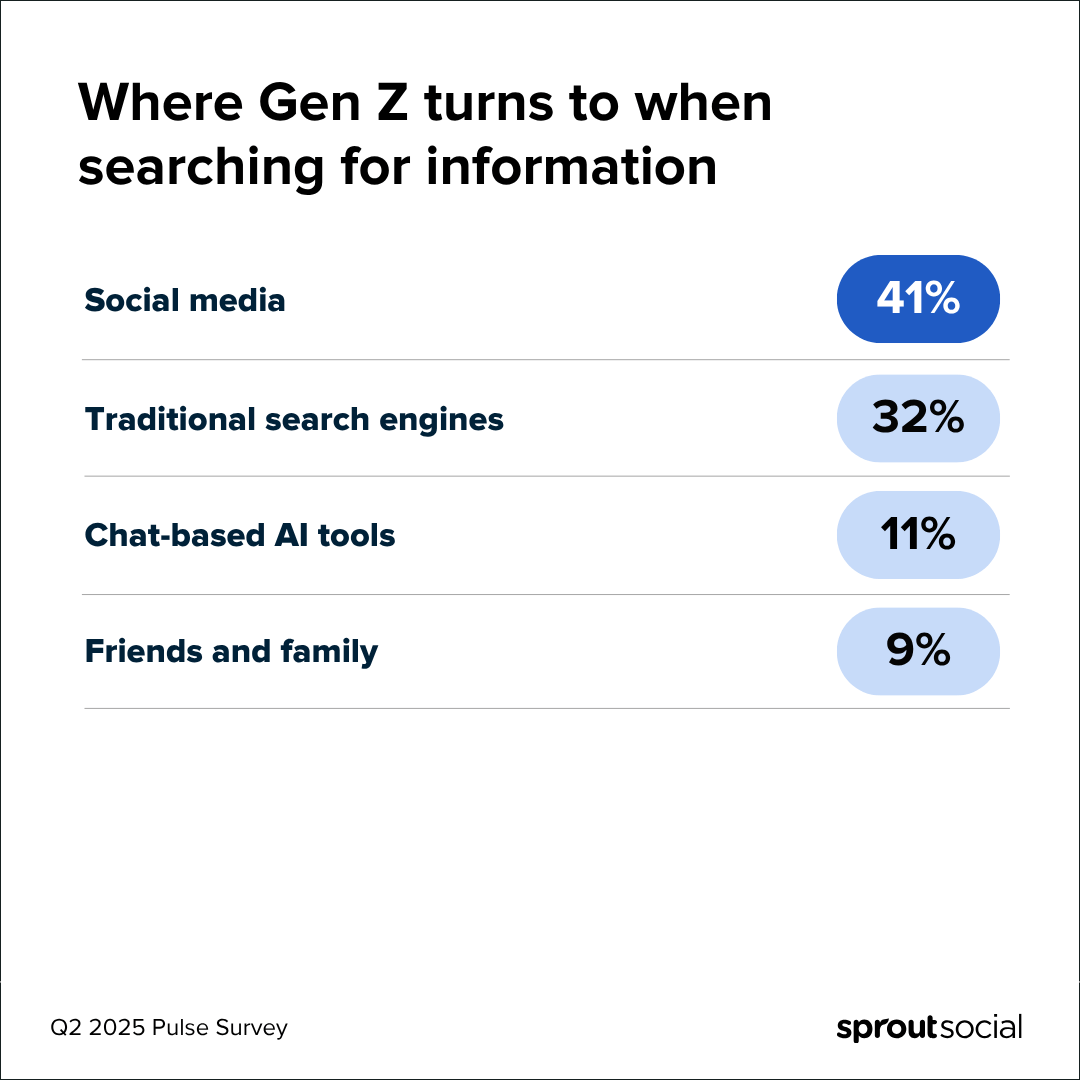
This means it’s more likely than ever that social media search will impact how potential customers find your brand. If they’ve not come across your brand before, then social search will become their first impression of who you are and what you represent. And even if they are familiar with you, they’ll still use social search to find your products and learn more about what you’re selling.
How your brand can use this insight
In the past, a strong SEO strategy would enable brands to capture searches across Google and other popular search engines. Whilst this is still important, today you also need to invest in a dedicated SOSEO (Social Search Optimization) strategy. Sprout’s Impact of Social Report found that 81% of leaders are now reallocating funds away from traditional SEO and toward organic and paid social.
Remember that each platform will have its own useful SOSEO strategies; you can’t apply a single strategy to every social network. Design unique strategies for Instagram SEO, and make sure this differs from your approach to TikTok SEO and other platforms. Prioritize the main platforms your brand is using and the preferred platforms of your target audience.
2. Customers buy directly on social
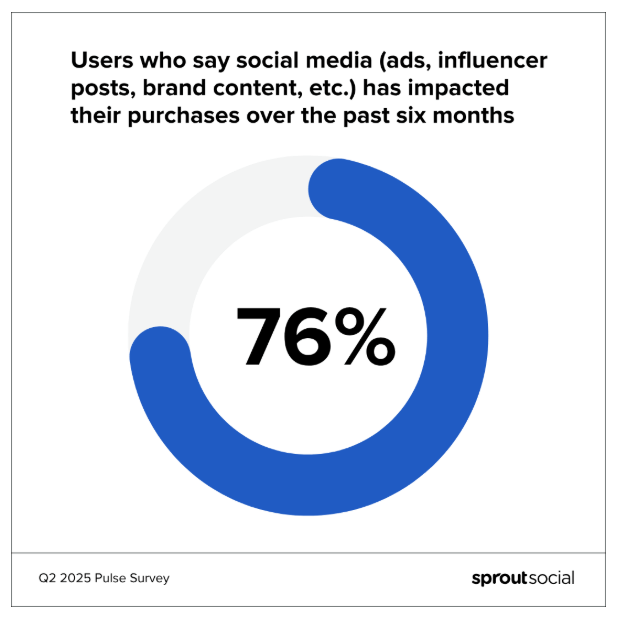
Social media now impacts purchases in a couple of key ways. Firstly, it encourages purchases; Sprout’s Q2 2025 Pulse Survey found that 76% of all social users, not only Gen Z and Millennials, say social media has influenced some percentage of their purchases in the last six months.
It’s also more common for people to buy directly on social media networks with e-commerce features. Networks continue to experiment with and formalize e-commerce capabilities to bring convenience to consumers and present brands with new revenue streams. For example, TikTok Shop enables users to find and shop for items even more easily.
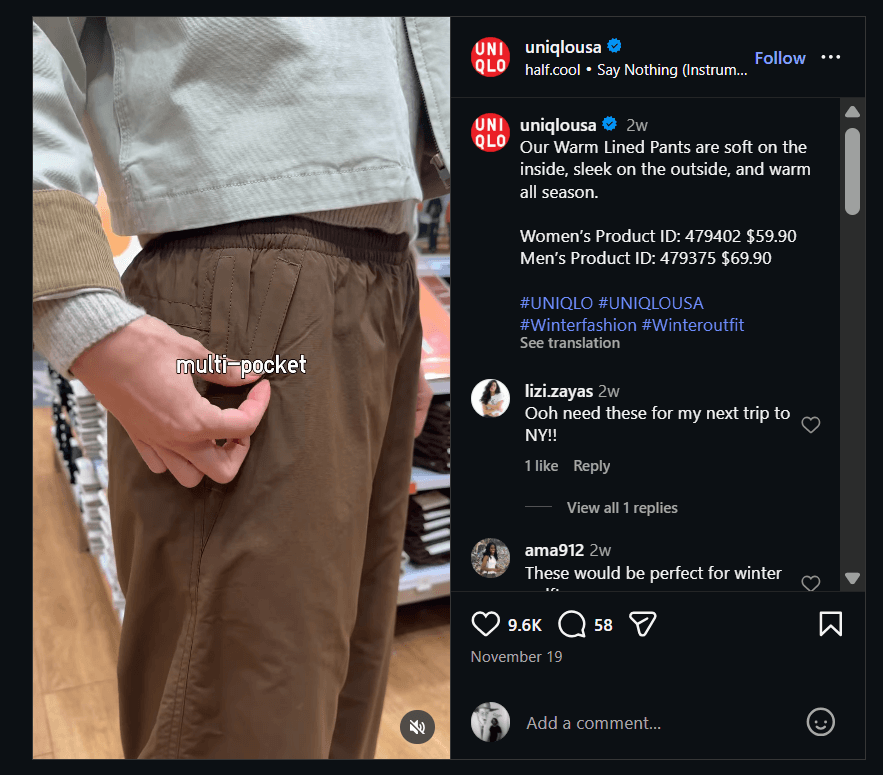
Many global brands have begun to adapt their content to meet this continuing trend. On their regional US Instagram account, Uniqlo creates Reels that showcase seasonal products and includes product IDs so users can easily find each product in their store.
How your brand can use this insight
Social commerce makes it easier for brands to deliver the seamless purchasing experience buyers want. You can turn a casual scroller into a new customer in a couple of clicks. For example, if you’re a retail business and a holiday is coming up, you can create a shopable Facebook ad or a limited-time offer using Instagram Shops for your seasonal product lines.
If you’re not already, look into what social commerce functionality is available on the channels your audience spends the most time on. From TikTok to YouTube livestream shopping, there is a growing number of ways to connect with ready-to-buy consumers.
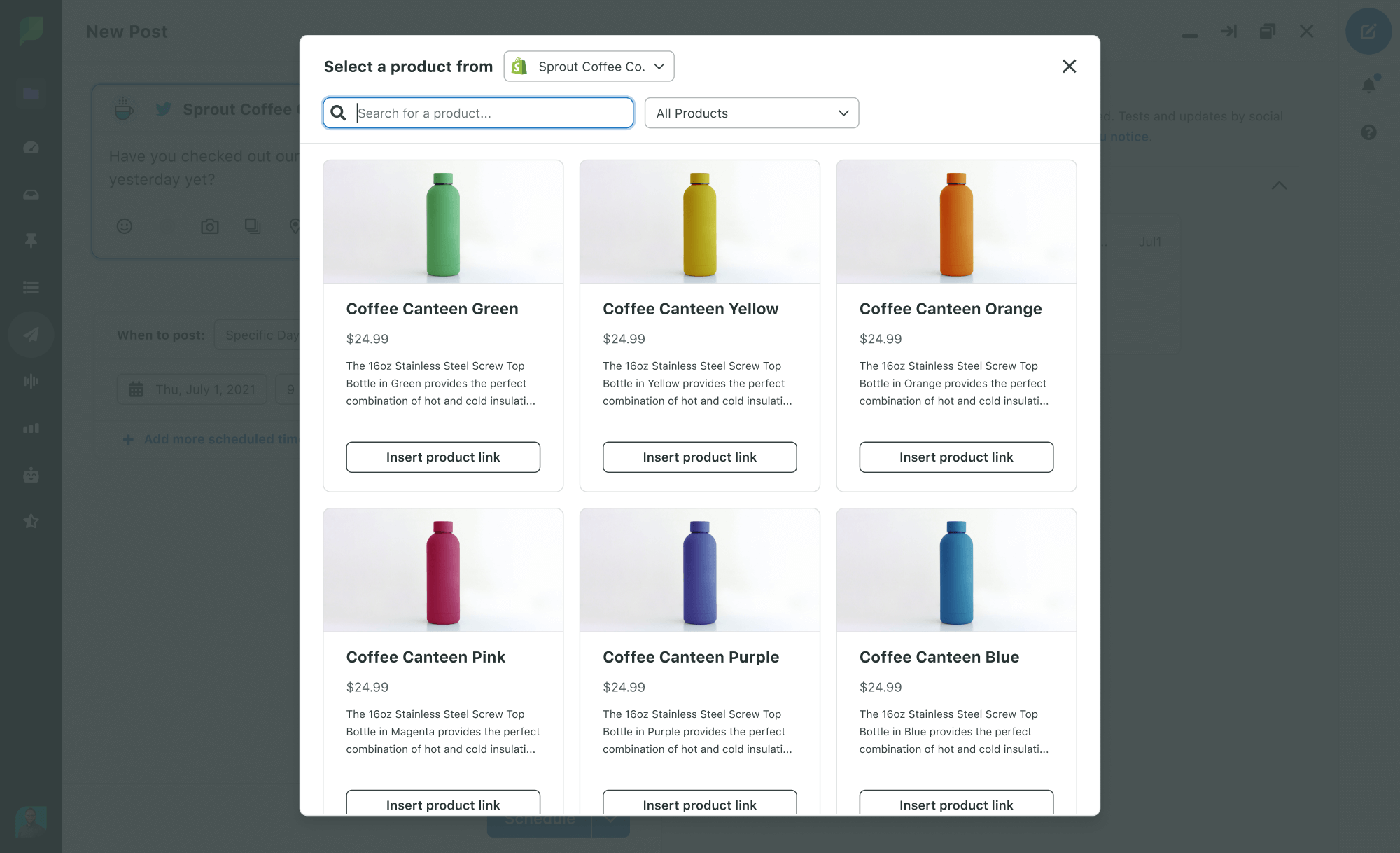
If you’re a Sprout user, take advantage of our integrations with Shopify and Facebook Shops by connecting your product catalogs with our platform—you can quickly add product links in your outbound posts and customer replies.
3. Purchase decisions hinge on customer care responsiveness
Social media adds another dimension to the brand-customer relationship. A brand is no longer a remote, faceless entity that we only learn about in publications, press releases or Google searches. Looking at a brand’s social networks helps you gauge their values, relevant news and offerings, and how they relate to their audience.
Social media users now expect to communicate with brands directly on social media, and to receive a timely response back. According to The 2025 Sprout Social Index, almost three-quarters of social users will buy from a competitor if they fail to receive a response on social media. This underscores the importance of building customer care into your social marketing strategy.
Brands are already making sure they actively respond to comments on social content. Here’s an example from UPS, where they interacted with comments from a customer to get the appropriate information to resolve the issue.

It’s worth noting that customer care can be even more impactful in certain industries. In travel and hospitality, for example, effective customer care is the second most significant factor impacting customers’ decision to book, behind positive customer feedback on review platforms, according to our Q3 2025 Pulse Survey.
How your brand can use this insight
Managing a social inbox can feel overwhelming, particularly for smaller teams, but you can make use of chatbots and other AI functionality to lessen the pressure. Sprout’s Q4 2025 Pulse Survey found that 69% of users are comfortable with brands using AI to deliver faster customer service on social media.
It’s also worth investing in a management tool like Sprout’s Smart Inbox or supporting more advanced customer service workflows with a social-first tool like Social Customer Care by Sprout Social because engagement often happens perpetually across multiple channels and formats. With a tool like Smart Inbox, you can set up rules to automatically tag and categorize inbound messages so you never miss an opportunity to engage. Pair this with Social Customer Care, and you can automatically create and assign Cases to get them to the right team member for faster resolutions.
Of course, brands should address complaints and negative inbound messages, but tools like Sprout can discover opportunities for connection, too. For example, with social listening, you can uncover opportunities to surprise and delight your customers.
Elicit and listen to feedback and share it with your organization. Channel this feedback to your colleagues across the business from sales and marketing to product and operations to deliver more tailored customer experiences in the future.
4. Authenticity and ethics outweigh price and brand stance
Social users are becoming drawn to brands that display honesty, authenticity and relatability on their social channels. For example, 55% of consumers say they’re more likely to trust brands that publish content created by humans, rather than by AI.
Meanwhile, 41% of users say they’re most likely to call out a brand for doing something unethical, ahead of other decisions like failing to respond to messages and pricing.
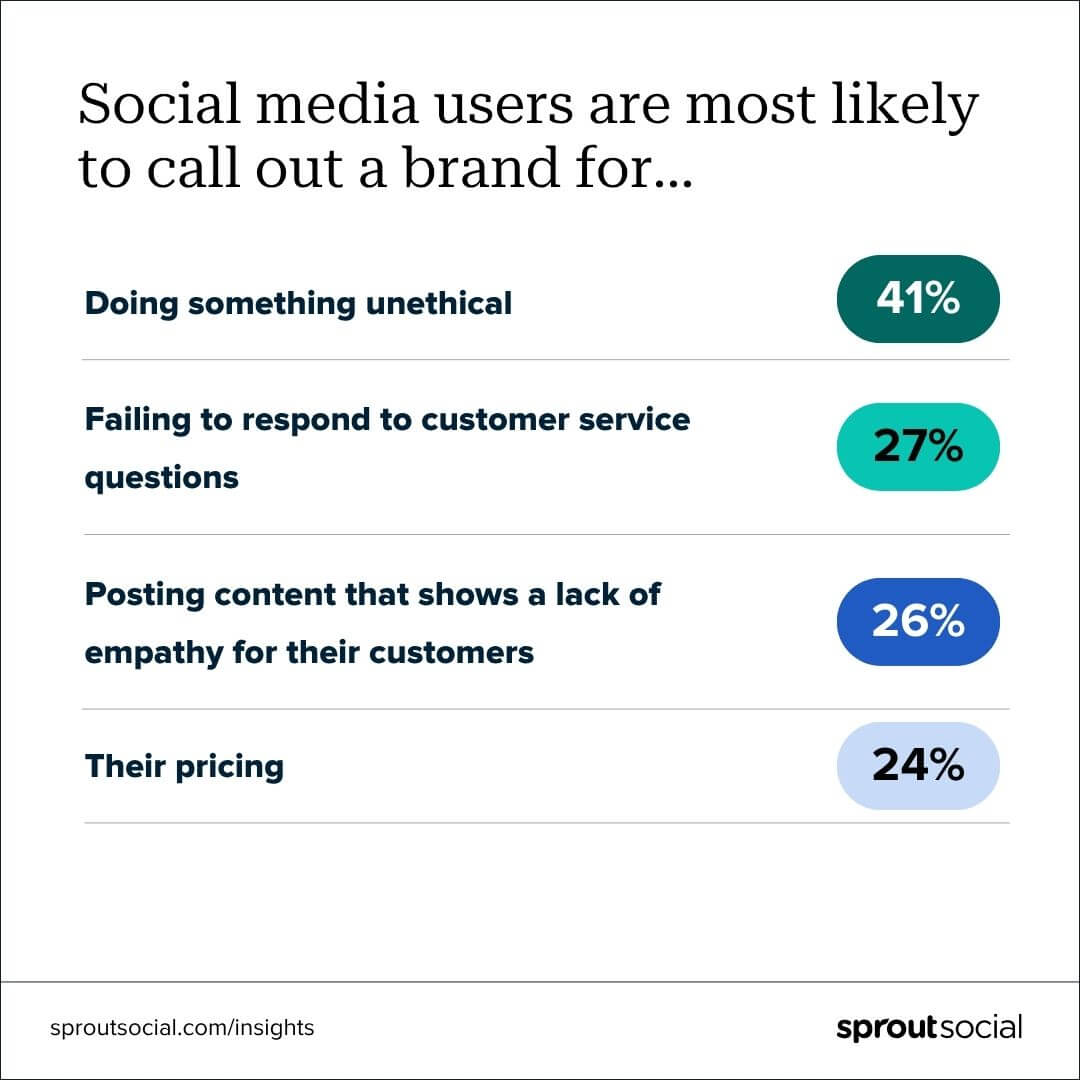
And now more than ever, social users value honest interactions. These factors should also take priority over brands jumping on trends. To become a “bold” brand on social media, brands should prioritize honesty over everything else, including trying to be trendy, funny or provocative.
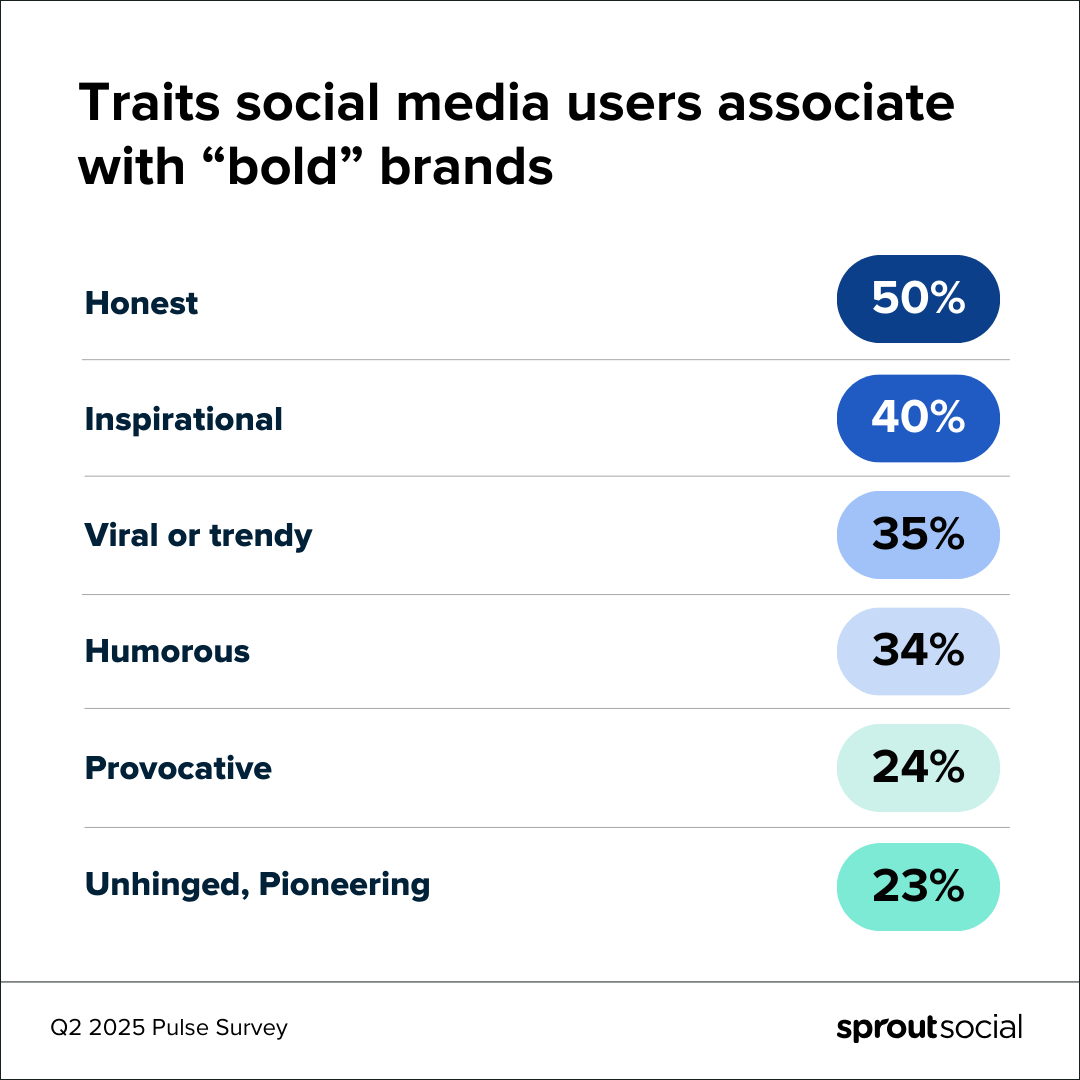
The common thread between these 3 statistics is that today’s consumers expect authenticity on socials above everything else. If brands aren’t genuine through their content and values, they’re unlikely to resonate and build trust.
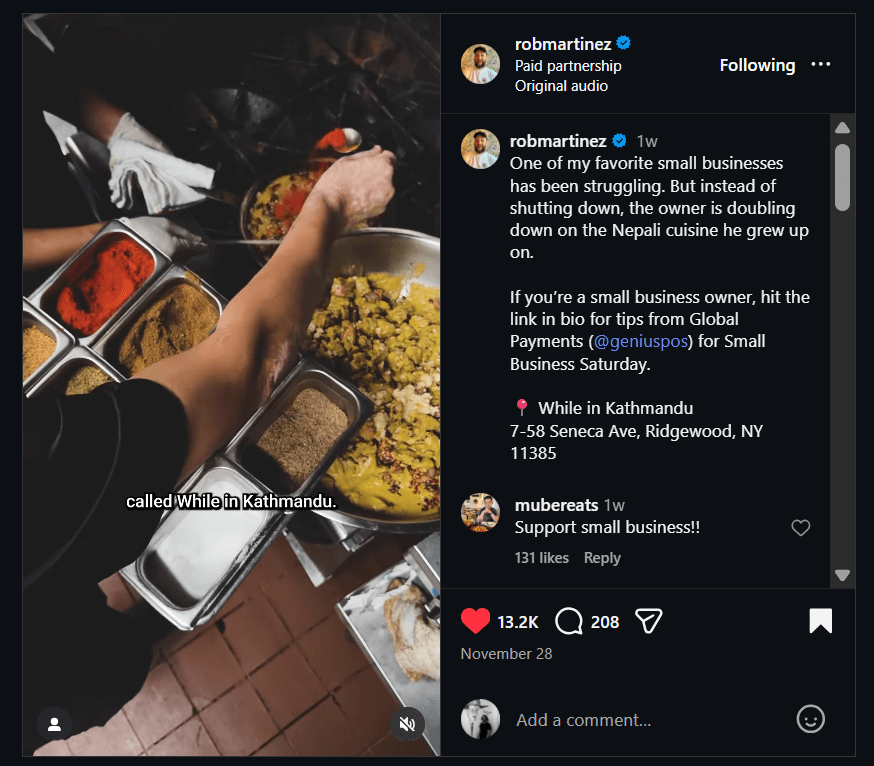
One example of this form of honest, inspiring content is Rob Martinez’s collaboration with the POS Global Payments. To promote the POS, Rob visited a local small restaurant in NYC, interviewing the chef and spotlighting how important it is to support local businesses. This is also an influencer collaboration, which we’ll explain the importance of in more detail in the next section.
How your brand can use this insight
To apply this trend to your own social accounts, think about the type of content you’re producing for your audience. Consider how you can tweak your approach to focus on more engaging, authentic content that really speaks to the people who follow you.
It’s also worth connecting with others in your local community and engaging in charitable initiatives that align to your brand values. These efforts make a positive difference to those around you and can positively impact your brand over time. The best advice is to first show up, and then keep showing up on social media.
5. Influencers and brand advocates earn consumer trust
Influencer marketing has changed the way most brands advertise on social media, and it’s also led to several notable impacts in how consumers behave across social networks. Buyers now increasingly turn to their favourite influencers for recommendations, whether in the form of new restaurants, products or experiences that they’ll enjoy.
Some 80% of marketers are planning to increase influencer spend in the near future, and that’s because of its proven success; Sprout’s The State of Influencer Marketing Report found that 83% of marketers say influencer content converts better than organic content.
One of the key benefits of working with influencers is the trust they can bring to your brand. Sprout’s Q2 2025 Pulse Survey found that some 64% of social users said they’re more willing to buy from a brand that partners with an influencer they like. This statistic highlights the importance of thoroughly researching potential influencer partners and choosing a partner who aligns well with your brand.
A recent example of a successful influencer collaboration with buyers in mind is Horlicks’ partnership with Sumayah.bakes. Sumayah created a unique baking recipe (she’s famous for appearing on the Great British Bake Off) featuring Horlicks’ product. By listing this recipe on their collab post, Horlicks has been able to market to an interested audience of bakers, and positioned their product as a necessity if users want to recreate the recipe for themselves.

How your brand can use this insight
Spend time planning your own influencer marketing campaigns. Create a list of influencers who have a similar audience, set of values and are aligned topically to what your audience cares about. Then, consider the type of content you could create alongside them to authentically speak to your followers.
Make sure to connect your brand profile to this content through collaborative posts, as this can boost your reach and means your brand is connected to an influencer’s audience directly. It’s also worth giving your influencers more creative ownership and working to build long-term relationships with them over time. A well-managed influencer relationship can turn them into ambassadors for your brand and can lead to more impactful content in the future.
Keep a pulse on social media’s impact on consumer behavior to improve your brand
Social media has leveled the playing field between buyers and brands. Social users can now find brands through social search and buy from them without ever leaving the network. Social also offers a two-way communication channel between brands and buyers, and enables brands to create authentic content and influencer campaigns that resonate with their followers.
To make the most of this brave new world of consumer-centric social media, it’s important to fully understand the scale of the impact in recent years. Learn more about social media’s business impact and how you can adapt by reading Sprout’s Impact of Social Media Report today.
39 free social media strategy templates that will elevate your workflows
Published on August 20, 2026 Reading time 15 minutes








Share