Social media slang isn’t for every brand

Written by Aubree Schaefer
Published on January 8, 2026
Reading time 7 minutes
The internet—and social media in particular—has a profound impact on our language, shaping so much of how we speak in the real world. But when it comes to brands using online slang, marketers need to tread carefully. Although an expertly-timed slang drop can boost your reach and endear you to specific communities, it’s equally likely to backfire. In plenty of cases, it’s probably best to avoid using certain terms at all.
We’re back with the latest edition of our series, @Me Next Time, where we invite Team Sprout and some of our favorite social experts to share how they really feel about the latest trends and industry discourse.
This time, we sat down with Paul Quigley—General Manager of Listening at Sprout Social and part of the team behind our 2025 Social Media Dictionary—to learn more about social’s influence on language and what that means for marketers.
“Massive movements in culture often start from niche online communities. Tracking these emerging conversations is invaluable for predicting where social is headed and how we can best engage with audiences and create relevant, meaningful content. But just because you see a spike, doesn’t mean your brand should immediately start using a slang word,” said Quigley.
Read on for more guidance about when to use (and not to use) social media slang, and examples of marketers thoughtfully embedding their brands into online culture.
Social media’s impact on internet slang
Social media speeds up the rate of language evolution, changing the meaning of words and introducing new vocabulary overnight. The top words from the past few years all have roots on social. “Rizz” was deemed the 2023 Word of the Year by Oxford. This year, Dictionary.com gave that distinction to “6-7”. It used to take decades for new words to emerge. Now, our vernacular changes as quickly as the algorithms.
“The speed of language moves faster than it ever has before. If you think about it, we still use words from the age of exploration (i.e., ‘sailing too close to the wind’). But those phrases took a long time to become commonplace. Then there are words like ‘hacking.’ Everyone talks about hacking now—biohacking, lifehacking, sleep hacking. That all started with computer hacking in the 1960s. Modern internet slang moves even faster. Aura in its current meaning was first used by sports fans and fashion enthusiasts in the early 2020s. Now it’s Sprout’s Word of the Year,” adds Quigley.
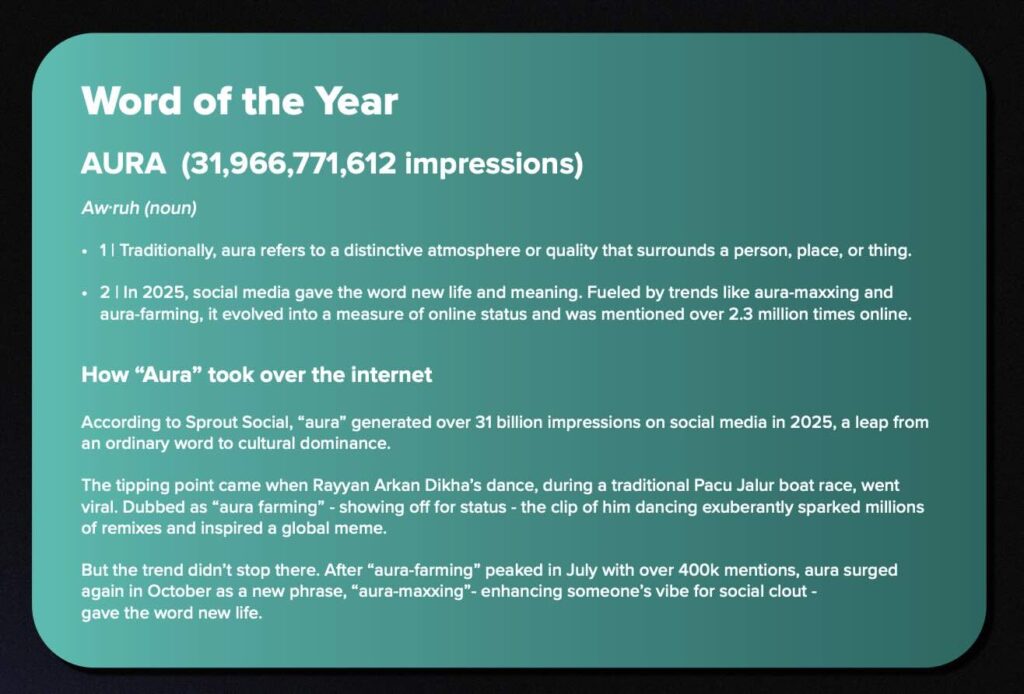
Aura generated 31.9 billion impressions across major social networks in 2025. From “aura-farming” to “aura-maxxing,” the term’s explosive rise exemplifies how viral micro-moments can rapidly transform into global cultural phenomena.
Other top words from our dictionary include pookie, skibidi, Labubu and the aforementioned 6-7, all generating billions of potential impressions.
Why internet slang can backfire for brands
With so much cultural cache, internet slang entices social marketers. Quigley explains this is only natural, and likens it to our collective fear of missing out.
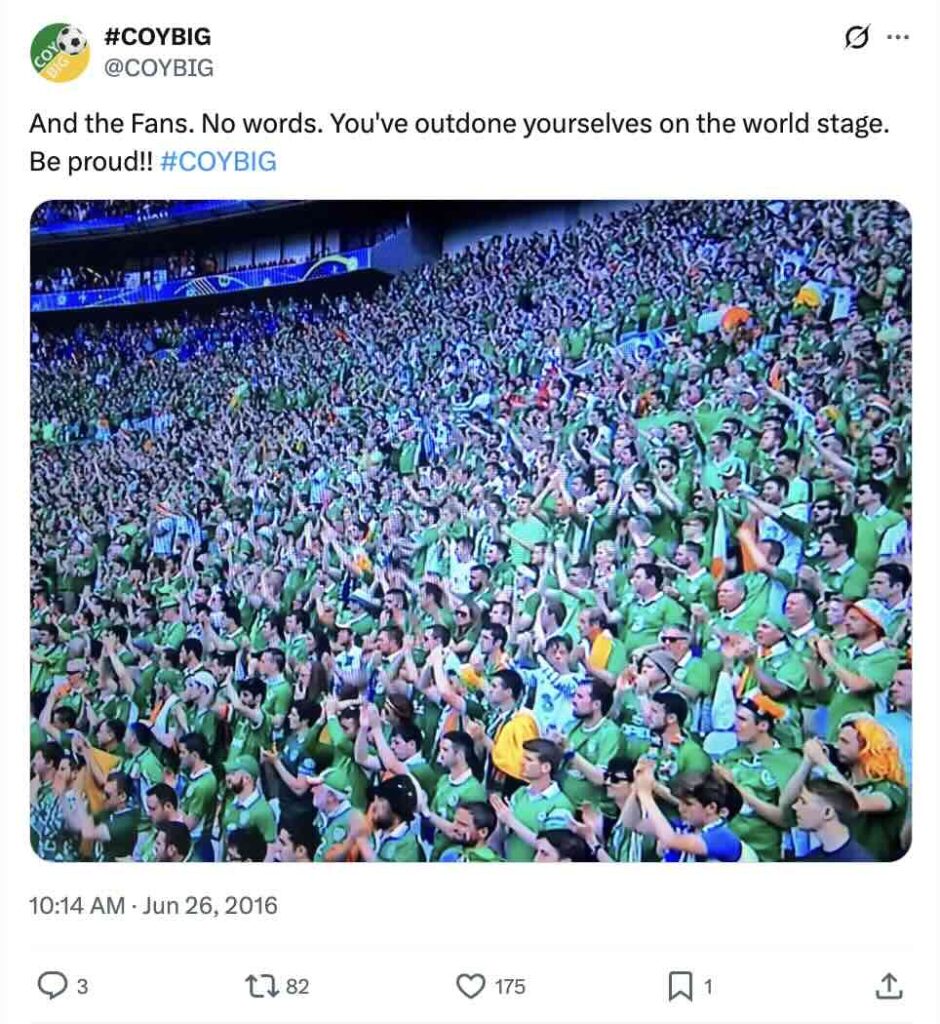
“We have all experienced that embarrassing moment when we have no idea what other people are talking about when new slang emerges. I remember when people first started saying COYBIG or COYGIG on Irish Twitter. It means ‘Come on, you boys in green’ or ‘girls in green.’ I had no idea what everyone was going on about. That sense of social panic is what so many marketers feel when they see a word like ‘aura.’ While it’s important to figure out what people are talking about (and why), it doesn’t mean your brand needs to start saying it, too. In fact, in most cases, you shouldn’t.”
Here are some of the risks involved when using online slang.
It won’t endear audiences to your brand long-term
So you see a new slang word start trending and pepper it into your next post caption. What’s the worst that could happen?
“Before deciding to use a slang word, marketers need to understand their brand and audience really well. We all know brands like Duolingo or Brita that are able to lean into chaos culture and go viral. Even some B2B brands publish irreverent memes. But if your brand doesn’t have that established identity and it doesn’t make sense for your industry, you risk alienating your audience or receiving backlash,” Quigley warned.
Even if the reception is positive on a single post, using internet slang is low on consumers’ priority list when it comes to what they actually want from brands long-term. Though 93% agree it’s important for brands to keep up with online culture, most say jumping on trends or using every word of the moment isn’t the way to stand out, per The 2025 Sprout Social Index™.
Rather than being viral or trendy, audiences say the most memorable brands are honest and inspirational, according to the Q2 2025 Sprout Pulse Survey. And their favorite brand posts are distinct. Almost 60% of consumers say they want brands to prioritize crafting original content. Which makes sense given the growing rate of social media fatigue and apathy.
Plus, many consumers consider mainstream adoption the death of a slang word’s cool factor. “Internet subgroups like having obscure language that only the in-crowd knows. Once brands start using it and it goes mainstream, it’s over,” lamented Quigley. Nothing reeks of trying too hard like posting a slang word past its expiration date.
It can be culturally appropriative
On a deeper level, brands using internet slang without discernment can be harmful to the communities who create these terms.
“Marketers need to understand how trends are culturally stapled. We, as social teams, need to recognize the nuance and know when trends aren’t right for our brand,” said Tameka Bazile, creator, Associate Director of B2B Social & Content Marketing at Business Insider, and member of our 2025 Sprout Social Index Council.
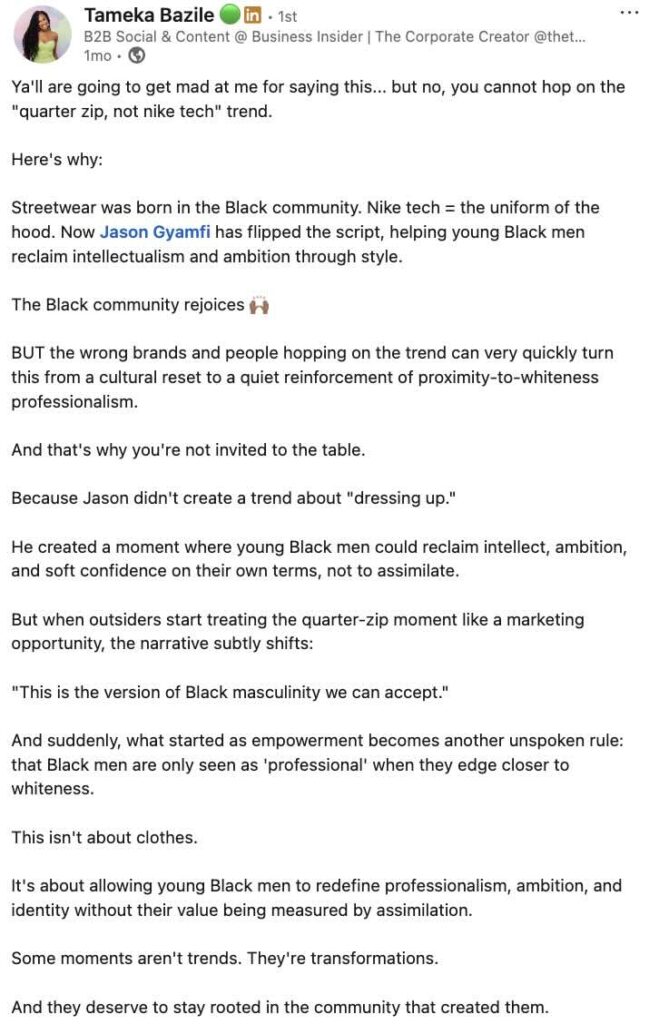
When brands don’t understand the full meaning or origins of a slang word, they can inadvertently say offensive things or play into limiting stereotypes. Even if the use of a slang term is above board, brands can still cause harm by failing to give proper credit. Consider how Jools Lebron, the creator behind the “demure” trend, nearly had her own intellectual property trademarked by someone else after it was co-opted by thousands of brands and creators.
How (and when) to reference internet slang thoughtfully
When deciding whether or not to use social media slang, marketers must conduct comprehensive research. Quigley observed how this looks today compared to a decade ago: “Marketers I talk to are becoming obsessed with tracking the acceleration of slang words. The rate we’re evolving is uncomfortable for brands. In the past, you could rely on consumer surveys and traditional audience research. Now, you need real-time data to stay relevant.”
Here are research considerations you can use to get started.
Delve into what slang your audience uses and cares about
As already mentioned, knowing your target audience is an important first step when honing your brand voice and deciding whether or not to incorporate slang. Look at how your community communicates, and what makes up their daily lexicon. This is where social intelligence comes in.
As Quigley put it, “You used to be able to tell the world what to think about you through buying ads. Now the world tells you how to think about you.”
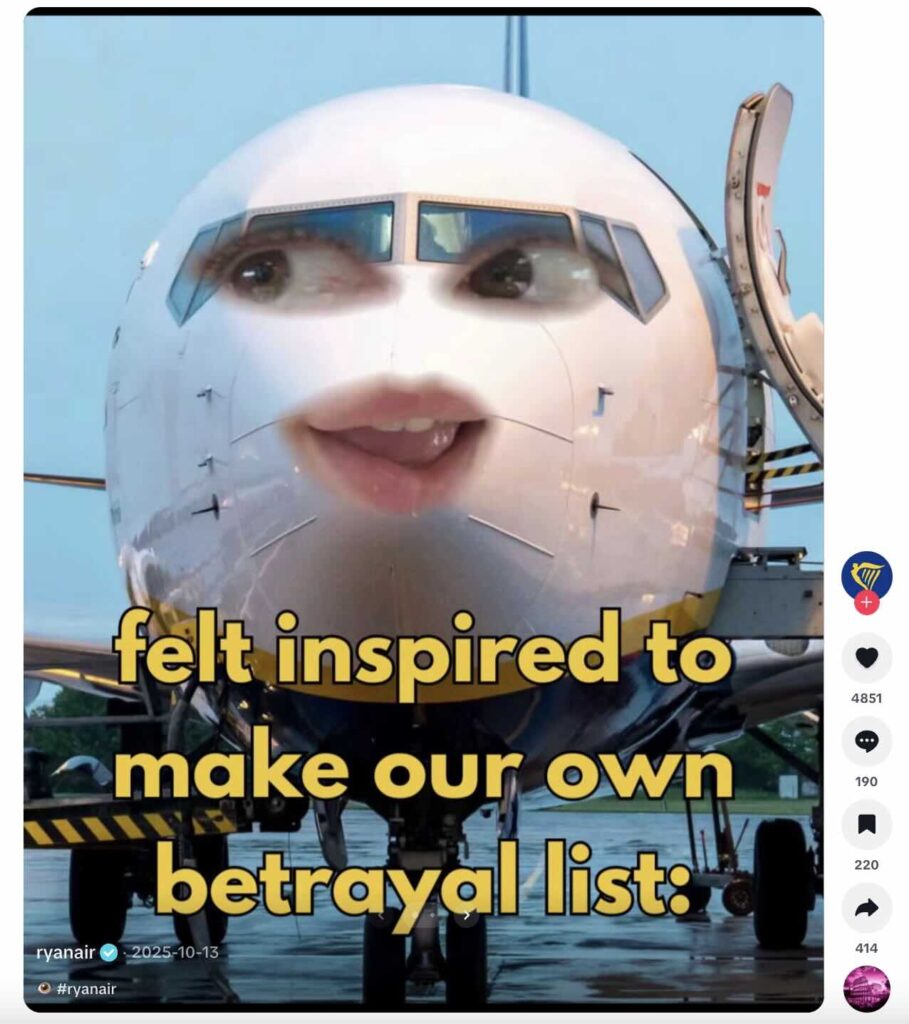
By conducting social intelligence analysis, you can learn which conversations are trending among your audience, and which specific words and phrases are emerging. From there, figure out how your brand adds something new to the conversation (if you aren’t yet part of it), and which terms allow you to create a cultural moment. Take Ryanair, for example.
“Ryanair uses internet slang to riff on their own terrible reputation. Their posts whisper, ‘What do you expect for a cheap flight?’ They don’t take themselves too seriously, which lends itself to the cynicism Gen Z in particular is known for. They know their audience and their sense of humor, and are comfortable speaking their language.”
Understand cultural context
You must do more than surface-level research to understand the origins of internet slang. That includes digging into the communities it’s attributed to and/or the creators responsible for coining it.
From there, develop your brand’s criteria for when it makes sense to use certain terms, and which formats you’ll lean into. Avoid copying content from creators and other brands one-for-one, and always give credit where it’s due. Consider how you can reference the slang, while making it your own and relevant to your audience. Ask: How can we make our followers feel seen?
Let influencers take the lead on slang
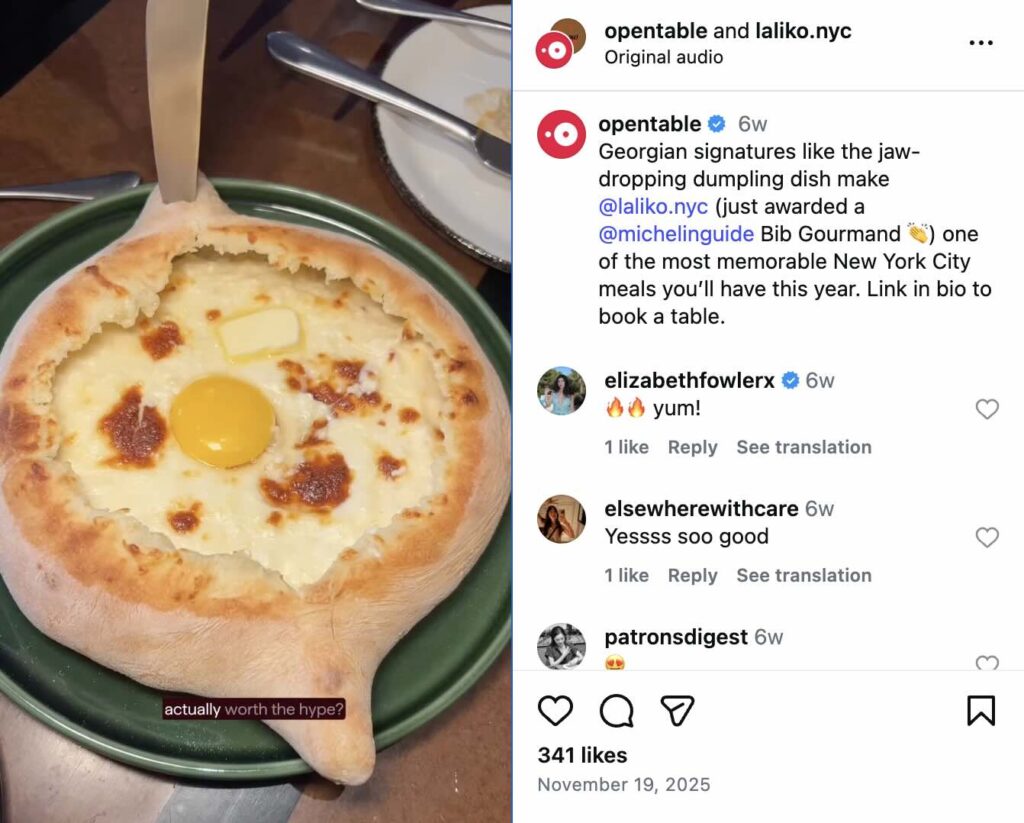
References to slang or a new trend might be best achieved via creator partnerships than on the brand account, according to Quigley. “There are ways to use internet slang in your brand’s ecosystem, without posting about it directly. Take OpenTable. They’re a large and respected brand in the food and dining sector. Even though the industry they’re part of does use slang, OpenTable ardently sticks to their brand voice. It makes sense. Their platform is for scheduling reservations, a service consumers count on to be stable and reliable, not trendy. Instead they allow the influencers and creators they partner with to use slang that feels natural to them and their audiences, which keeps the brand culturally relevant.”
Monitor for timeliness
It’s crucial to understand that some words have a short shelf-life. Research whether or not a word or phase is part of daily lexicon, or if it’s already fading into obsolescence before you use it.
Just because a word represents a moment in time doesn’t mean it’s off-limits. But it does mean you have to act fast, and find a way to tie it to your brand. For example, 69% of all social users think brands should have posted about the release of Taylor Swift’s latest album, “The Life of a Showgirl,” per the Q4 2025 Sprout Pulse Survey. But 44% think the post needed to be relevant to a company’s product or service.
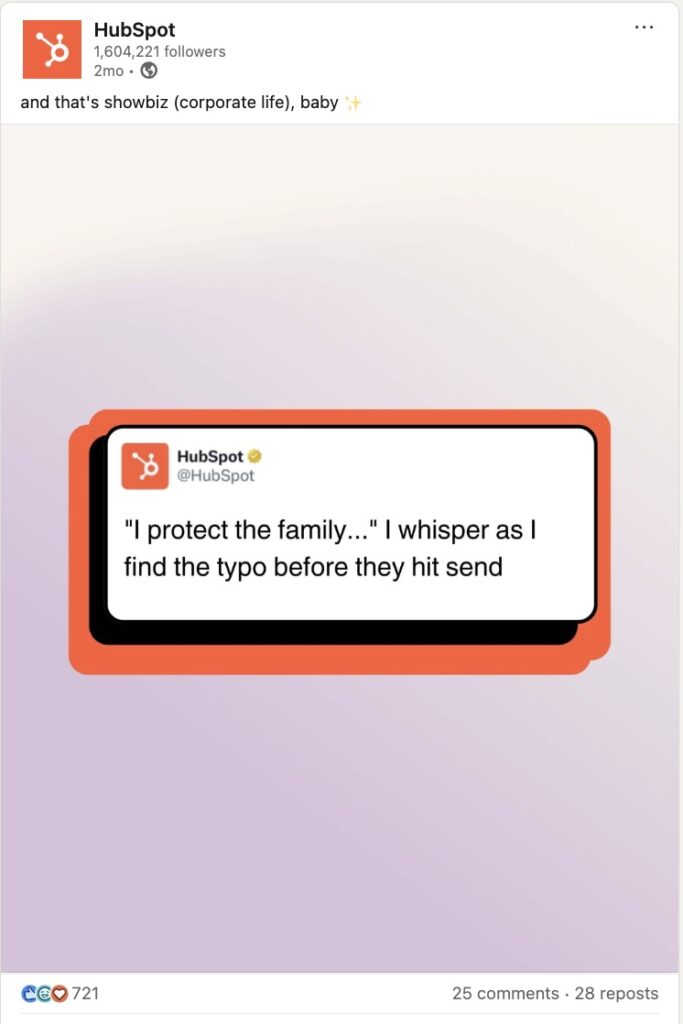
Like when HubSpot posted about the TS12 album. Quigley observed, “HubSpot can get away with posting memes and referencing slang used by the chronically online because they always stay true to their brand’s purpose and ethos.”
Social media slang should serve your strategy
Using social media slang only works when it genuinely aligns with your brand’s voice, values and community. As language evolves faster than ever, marketers need to prioritize understanding cultural context and audience expectations over chasing fleeting trends.
Thoughtful research and real-time social intelligence help ensure you’re contributing to conversations in a way that feels respectful and distinct. Ultimately, the most memorable brands aren’t the ones using every new slang term. They’re the ones communicating with clarity and purpose.
Check out Sprout Social’s entire 2025 Social Media Dictionary for a look ahead at what words will define digital conversation next year.
37 free social media strategy templates that will elevate your workflows
Published on December 5, 2025 Reading time 15 minutes







Share