The complete guide to keyword research for social media

Written by John Paul Hernandez
Published on January 28, 2026
Reading time 20 minutes

Table of Contents
Social media search is redefining how people discover brands. Because consumers are using networks like TikTok and Instagram alongside Google, visibility now depends on understanding every path to discovery. Social search is no longer just a buzzword—it’s a behavior shift.
This shift has real business impact: Sprout Social’s Q2 2025 Pulse Survey found that 76% of all consumers (84% of Millennials and 90% of Gen Z) say they’ve bought something in the last six months because of content they saw on social media.
With the right process, you can build a keyword search strategy that boosts visibility across social networks, search engines and AI search to increase your reach through measurable ROI.
What is social media keyword research, and why does it matter?
Social media keyword research identifies the words and phrases that people use to discover content, products and conversations across social networks. Unlike traditional keyword research, which focuses on ranking in search engines, social keyword research reveals how audiences search, speak and engage in real time.
For example, when someone needs help baking a cake, they may search on Instagram for “DIY cake.” That keyword phrase helps users find what they need, but it also informs you about search demand.
Keyword insights like this shape discoverability and visibility across networks. In fact, Sprout’s Q2 2025 Pulse Survey also found that 41% of Gen Z have a social-first search mindset, and 37% of consumers overall start their product research on social media. These terms influence how algorithms categorize content, surface trends that signal audience intent and uncover emerging topics that drive engagement. But beyond optimization, social search data also powers campaign planning, ad targeting and product innovation.
More than just a list of terms, though, social media keyword research is a strategic guide. By understanding the language your audience uses, you can directly inform your content strategy, ad targeting and even product development to meet your audience where they’re already looking. The terms you identify serve as a window into the conversations people are having on social, and therefore what’s trending in sentiment and online culture.
Today, keyword research isn’t optional for social media marketing—it’s a critical part of the modern customer journey.
Social keywords vs. SEO keywords: Key differences to know about
Social and traditional keyword strategies share the same goal: visibility. But the way algorithms surface content is very different.
Search engines like Google rank results based on factors like relevance, authority and backlinks. Social networks, however, prioritize what’s trending and what aligns with a user’s interests, follow history and engagement patterns. That means keyword research on social is less about ranking for exact terms and more about tracking conversations, cultural trends and audience intent. Because of this, even if your post is optimized for a specific keyword, it won’t appear in feeds unless it resonates with what users are already engaging with.
Before social search rose in popularity, customers primarily turned to Google or Bing to find information using broad phrases. But today, they’re searching everywhere—across social networks, traditional engines and AI-powered tools—and their behavior has evolved, too. This shift underscores the importance of meeting audiences where they already spend time. And according to the 2025 Sprout Social Index™, 30% of users plan to use social more in 2025, while 56% plan to maintain their current usage.
Here’s a breakdown of how social keywords differ from traditional SEO:
Social keywords
Social terms are often more conversational, casual and relevant to emerging trends. Additionally, queries on these networks often reflect real-time interests and cultural conversations rather than transactional intent. For example, a user who’s looking for sneaker art might search for “sneaker art inspo,” a top-of-funnel query for visual ideas.
Social keywords also vary across networks. X, for example, favors informal language, whereas LinkedIn terms are more professional.
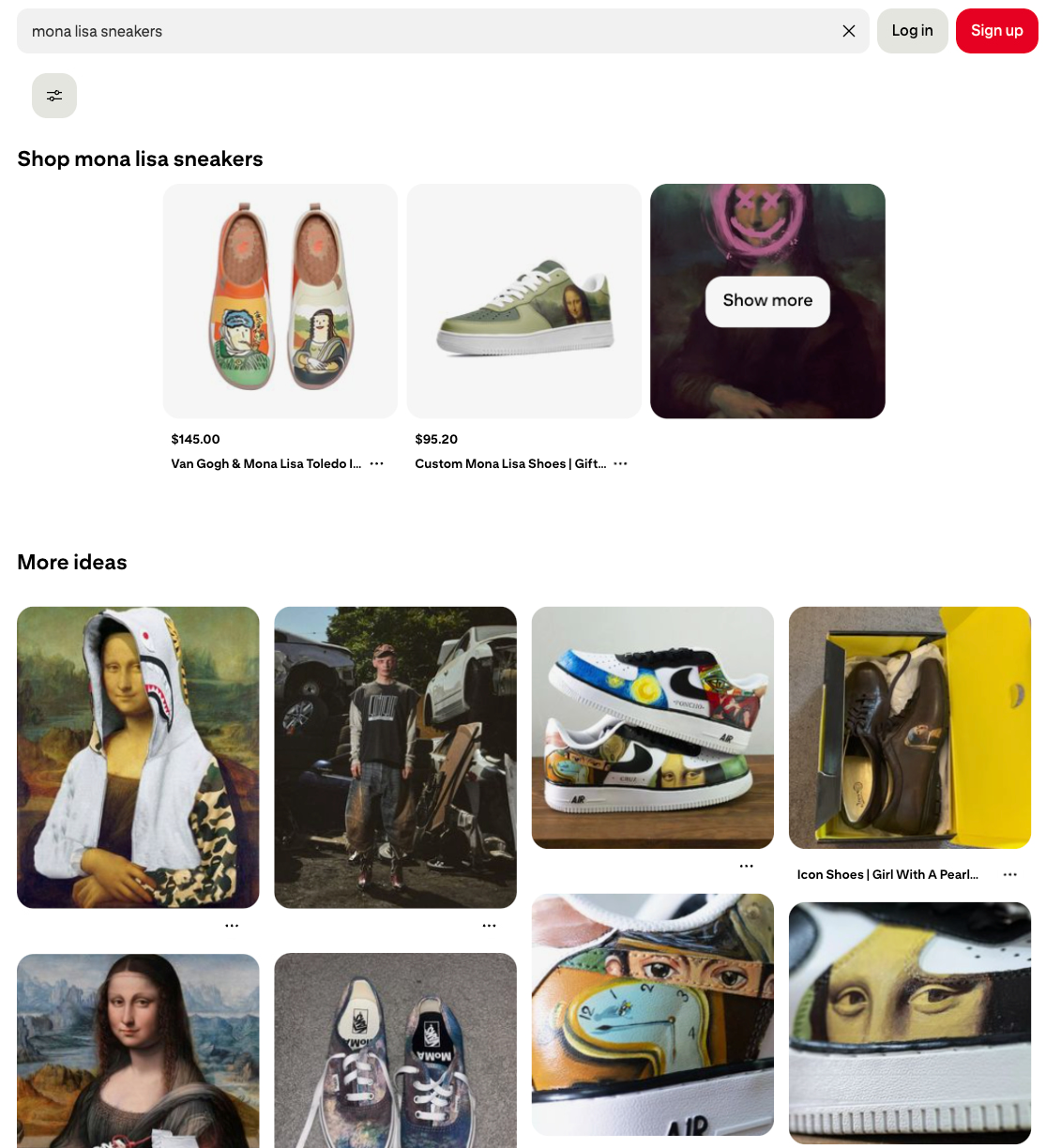
(Source: Pinterest)
Social keywords are also generally more timely since they rise and fall quickly with trends. These terms guide engagement, content planning and campaign relevance, but they complement, not replace, long-term SEO strategies.
Traditional SEO keywords
Traditional SEO keywords focus on longer-lasting search trends and transactional intent. As a result, SEO researchers rely on tools like Google Trends, Ahrefs or Semrush to identify search volume, SERP results and trending POVs from experts, which inform web articles or long-term social content.
These terms support evergreen content strategies, maintain consistent visibility and inform campaigns based on durable search demand rather than social network trends.
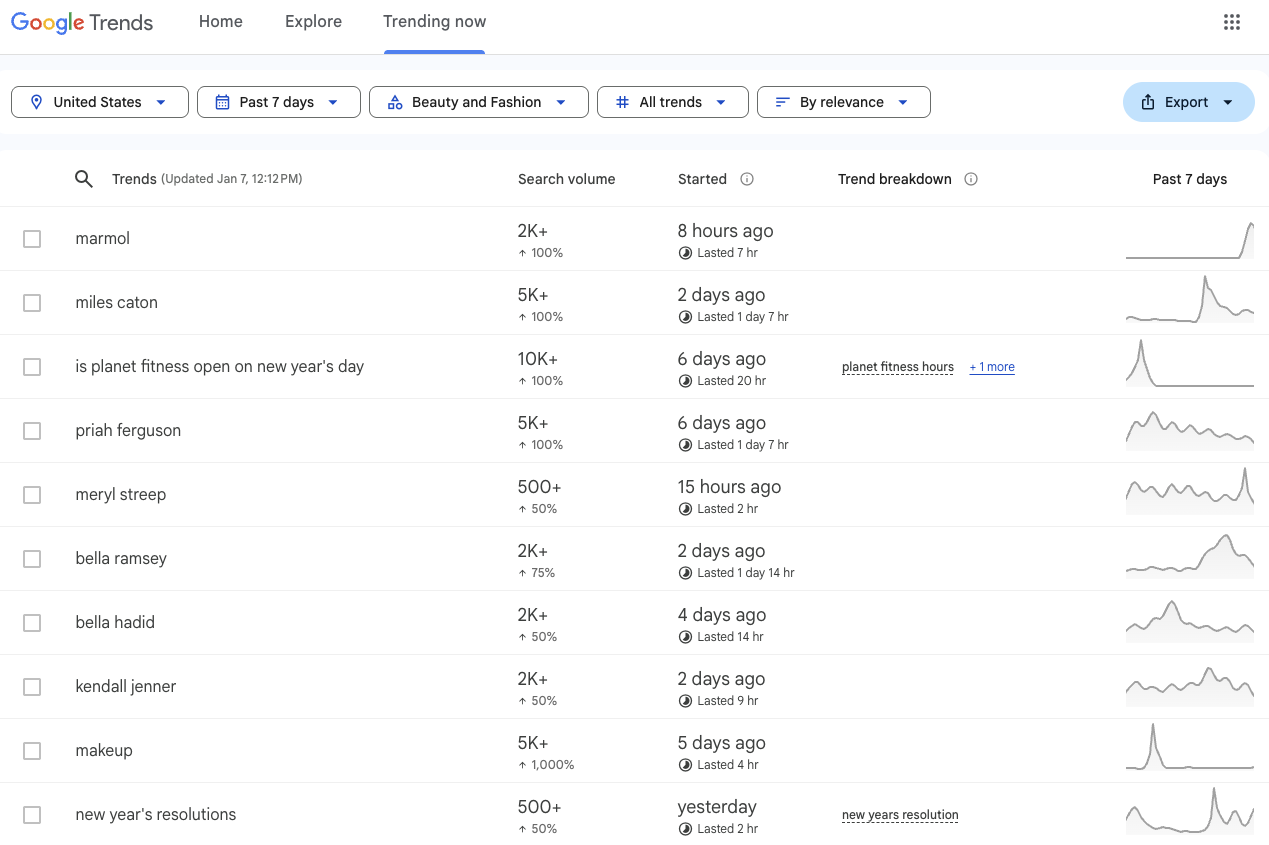
(Source: Google Trends)
A 6-step framework for social media keyword research
Keyword research follows the same fundamental processes across channels, whether for traditional SEO or social media. Though the underlying steps are similar, the examples and applications that follow focus on social media search, with guidance that you can also apply to traditional SEO:
Step 1: Start with your core brand and topic pillars
To get started, brainstorm broad topics that reflect your brand, products, audience interests and industry niche. For example, what are the first things that come to mind when you think about your business or industry? At this stage, think about the terms you use and, more importantly, the terms your audience might use.
From here, use social-first tools to expand and refine your keyword list. Sprout Social Listening, for instance, helps you uncover long-term themes and audience insights that shape your broader content strategy. By monitoring conversations around your brand, industry and competitors, you can identify emerging niches, understand community interests and spot opportunities to strengthen brand affinity over time.
In contrast, NewsWhip by Sprout Social focuses on the near-term by surfacing trending stories and topics before they go viral. Together, these tools give you a balanced view of what’s resonating now and what’s gaining lasting momentum, which grounds your keyword strategy in real social conversations.
Step 2: Use autocomplete to discover your audience’s search habits
Every social network’s search bar is a powerful research tool. After listing your keywords, type them into the search bars on TikTok, Instagram and X. The autocomplete suggestions reveal the phrases that your audience is actively searching for on that network.
For instance, here’s a social search for “cookies for” that autocompletes on Threads:
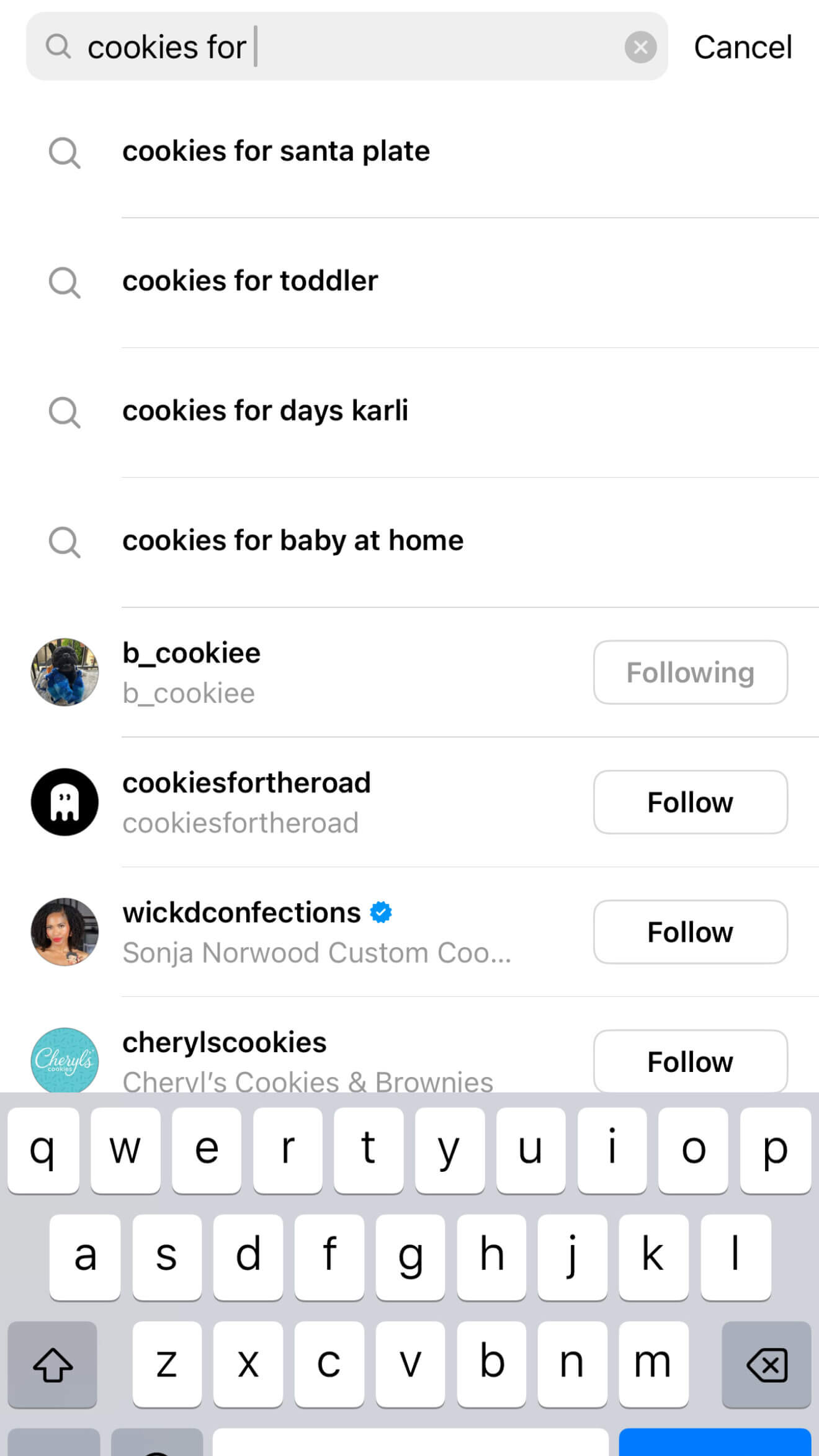
(Source: Threads)
Because these terms come from the social network’s data, they reveal real insight into what users are looking for and what the network prioritizes.
Step 3: Uncover community language with social listening
What you say and how you say it make all the difference in successfully connecting with your audience. But cultural nuances aren’t always something that you can learn in one sitting. Instead, they become clear if you pay attention to conversations and behavior over time.
This is where social listening helps you spot trends, topics, keywords and sentiments about your brand, product and industry. Sprout Social Listening in particular captures the full context of conversations and competitor mentions. You can also set up Topics for specific keywords and hashtags.
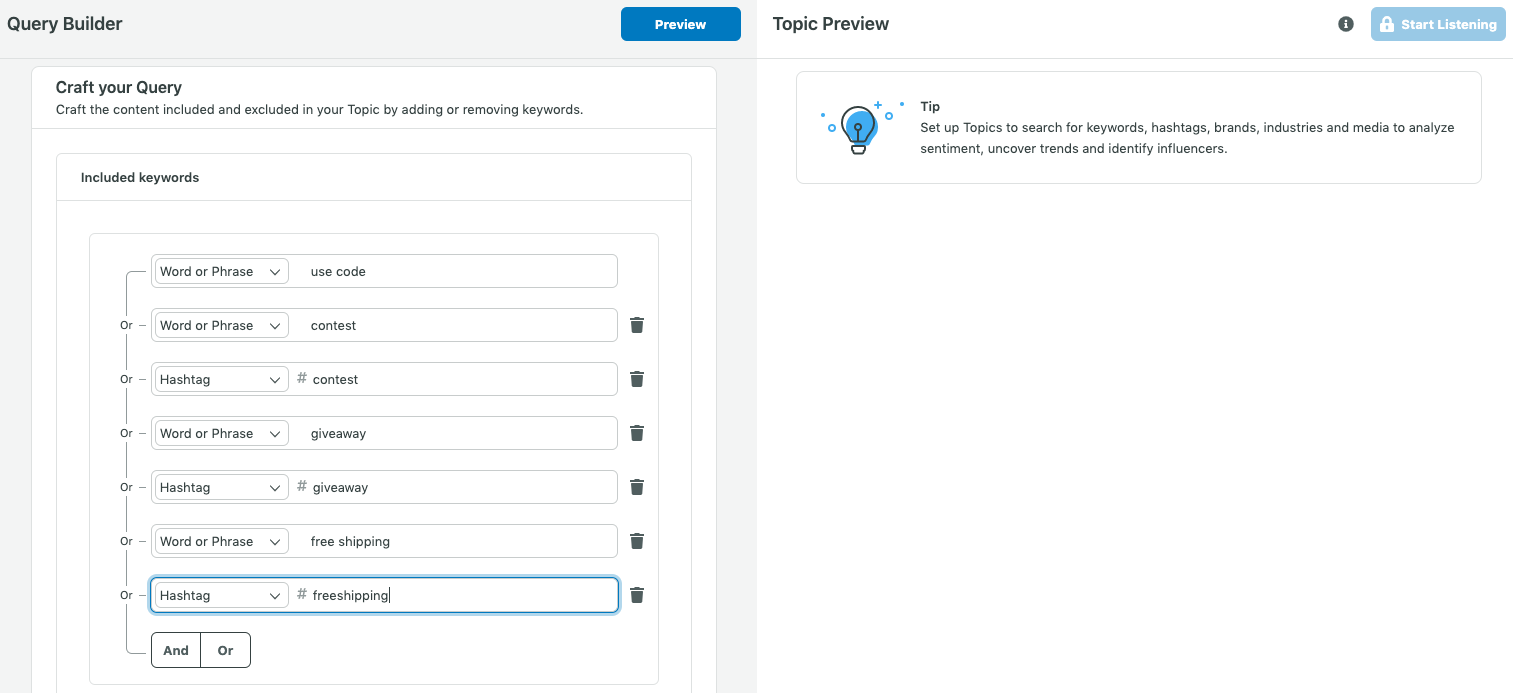
This capability captures the language that your community uses when discussing pain points and products and provides insights to inform your targeted keyword strategy.
Step 4: Analyze hashtags and co-occurrence patterns
Hashtags are a great way to identify events and common trends on social media, especially to find your target audience’s conversations. That’s because they reveal trending events, ideas and movements on social media. For example, if an artist that your audience follows is hosting a concert, there’s probably a hashtag for that tour.
Here’s an example from Crocs, which cleverly plays on Taylor Swift’s #TheLifeofaShowGirl trending hashtags for the tour, by using #TheLifeofaCrocsGirl. This post works because it taps into Taylor Swift’s existing audience with humor and creativity, and even encourages users to try the project themselves. The post generated successful engagement, including 9k likes.

(Source: Facebook)
Along with hashtags, consider co-occurrence patterns, which are hashtags that frequently appear together. For example, you’ll likely see #NewYear and #2026 in the same posts around the new year. Using related hashtags like these together increases the likelihood that users will discover your content.
Step 5: Group social keywords into strategic content pillars
Social keywords shouldn’t just sit in a long, random list. You instead need a clear strategy to use them where they’ll make the biggest impact for your business.
That’s where content pillars come in handy. They let you organize your terms into topic clusters that mirror current content pillars (like those your team uses on a blog), campaign themes and audience interests.
Organizing keyword data into topic clusters helps you post more strategically and measure performance by category. With Sprout, use Tagging to group posts under specific content pillars or keyword themes. This makes it easy to review your analytics and see which clusters drive the most engagement and identify the topics that deliver the highest value for your overall content strategy.
Here’s an example of a pressure cleaning company that’s creating pillars from a keyword list. In this case, the social media marketer divided content pillars by services: one for pressure washing, another for low-pressure (soft washing) and a third for commercial services.
| Pillars | Pressure washing | Soft washing | Commercial services |
| Keywords | Pressure cleaning for my driveway | House washing | Storefront pressure washing |
| Sidewalk pressure cleaning | Roof pressure washing | Restaurant pressure wash | |
| Pool deck pressure cleaning | Gutters washing | Commercial pressure washing | |
| Pressure wash driveway | Soffit vents washing | Parking curb pressure wash |
Step 6: Broaden your reach with semantic keywords
During your keyword research, you’ll find related terms, synonyms and modifiers. This is all thanks to natural language processing (NLP), a field of AI that gathers insights from posts, messages and similar data. These clues help you identify the language that your audience actually uses, especially when they reveal users’ most frequently used terms.
For example, “dinner party for the fall” might be a great target keyword for a catering company, but regional usage may favor the word “autumn” instead. Identifying semantic variations like this ensures that your content aligns with your audience’s language and search habits.
Network-specific keyword research strategies
Discovery looks different on every network, and as a result, success in social SEO depends on knowing what to prioritize. To improve your social search results, you should align your content with how people search and what each network’s algorithm favors.
No matter which network you’re optimizing for, though, you’ll want to start by understanding what your audience values most. When your content genuinely resonates with them, the right keywords will naturally rise to the surface. You can then use them to strengthen your content’s discoverability and ensure that it connects with people who are already searching for what you offer.
Here are a few more network-specific social search tips:
Instagram keyword research
Instagram search is visual. As a result, users expect to find images and videos that connect with their lifestyle, show how a product works and provide context.
Beyond this, Instagram uses search terms, tags, comments and hashtags for discoverability. It also provides location-based search, which is valuable for local SEO.
To get started with research on this network, take a look at your pillar topics and use the search bar to see what’s trending and what Instagram autosuggests. Then, take note of the additional terms and hashtags that the top posts use.
Here’s what Instagram search keyword suggestions look like for pasta recipes, for example:

(Source: Instagram)
For local results, search your city to see what your community is talking about. Here’s what location research looks like:

(Source: Instagram)
Sprout’s Listening tool helps you move beyond surface-level keywords to understand real conversations. To do this, create Listening Topics around your brand pillars and topic clusters to uncover what people are saying about your industry, competitors and key themes. This gives you a more complete view of what’s resonating and what’s gaining traction across social.
TikTok keyword research
TikTok shapes trends through a blend of education and entertainment. Its influence makes it a powerful space for discovery, especially when you use the same language as your audience.
As you plan your video content, optimize your captions, hooks and on-screen text around the phrases and topics that users search for most. This will make your content feel native to the platform while increasing its visibility and shareability.
This social media network provides search capabilities through its Explore tab and Shop. The Shop feature in particular is a great way to optimize your TikTok SEO with product pages when users are ready to make a purchase.

(Source: TikTok)
TikTok’s search bar is another valuable tool for researching possible keyword terms. When you type in a phrase, TikTok provides trending terms and topics that reveal what its users are interested in. If you find a relevant keyword there, you can then post about that topic for more exposure.
TikTok’s Keyword Insights solution also lets you research trending keyword terms and study data like popularity, changes in interactions and click-through rates, as it relates to ads. This, in combination with Sprout’s TikTok Listening, will provide you with real-time insights into what your target audience is talking about.
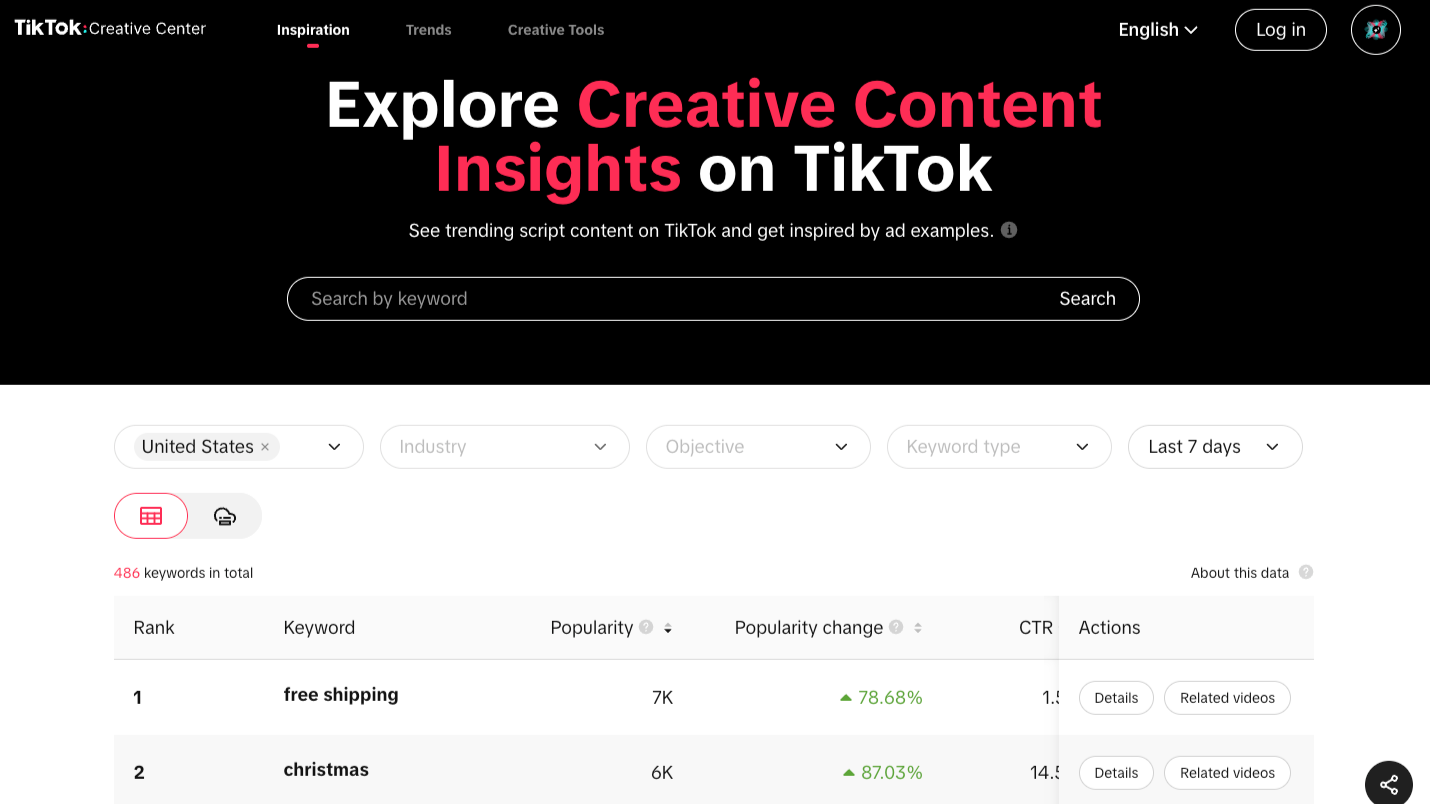
(Source: TikTok Keyword Insights)
YouTube keyword research
YouTube is the ideal place for customers who want long-form and short-form video content. As your team works on YouTube SEO, you can find keywords for both viewing experiences and repurpose them accordingly.
Here’s a closer look at these two common formats:
- Long-form videos: These longer videos often target bottom-of-the-funnel keywords to satisfy users who want in-depth content.
- YouTube Shorts: These shorter clips let you break up long-form videos into subtopics. You can then optimize each with different keywords to multiply your discoverability.
YouTube has a dozen different ways for users to search, so it’s important to research keywords across the board. Here are some of the visibility features it provides that help with research:
- Home tab: Here, YouTube suggests videos from subscriptions and user interests. You can subscribe to channels that your audience likes so your feed will show you the topics that resonate most with them.
- Shorts tab: This option presents a shuffled feed of Shorts. Your targeted algorithm can inform you about popular target keywords and topics here as well.
- Search bar: YouTube’s traditional search bar helps users find the content they’re searching for. Like on other networks, you can enter your core terms here to find similar keywords with traction.
- Category tabs: YouTube generates tags for users under the search bar. These tags not only help you target a specific keyword phrase but also reveal content in that category, which exposes more keywords that you can use.
Since YouTube and Google share data, Google Keyword Planner is a helpful tool for initial research on this network as well. Additionally, many Google results feature YouTube videos at the beginning of the SERP, like in this example:
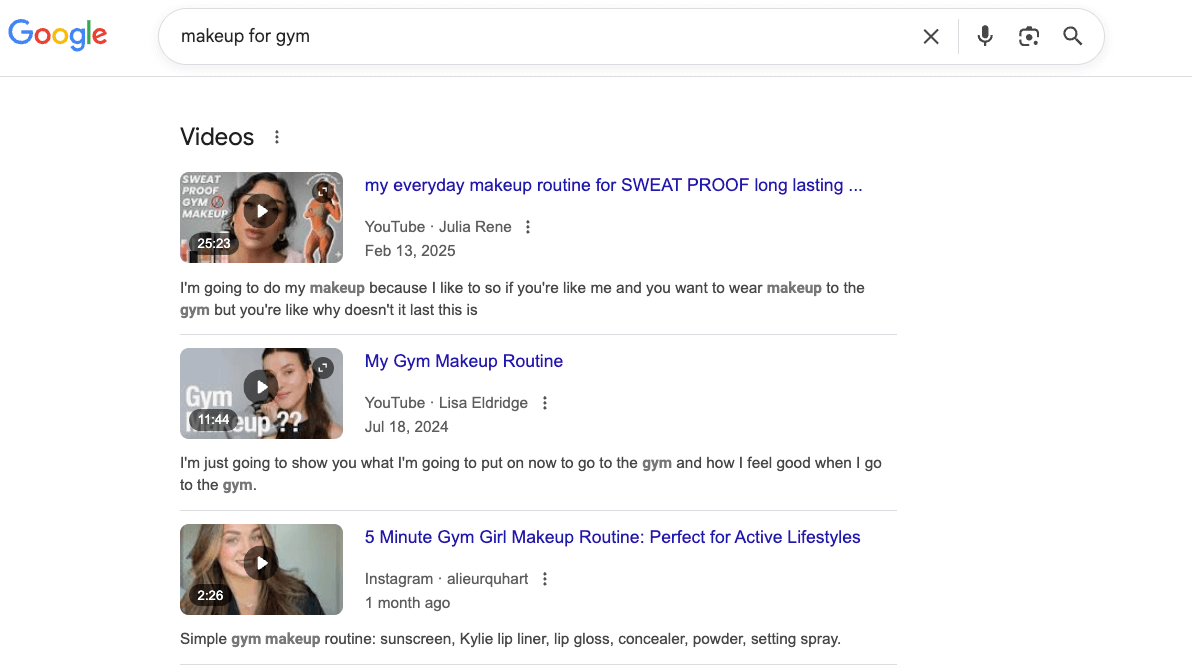
(Source: Google)
For further research, go to Google’s search bar and see what it autosuggests for different topics. Then, switch to the Video tab to see which YouTube videos are ranking and gaining engagement for each term. You can also use Sprout’s YouTube Listening to spot trends so your team can develop relevant videos that gain traction.
LinkedIn keyword research
LinkedIn offers a mix of posts, carousels, videos and articles, which makes it a unique and valuable network for many types of keyword research.
On this social network, discovery happens through the home feed, search bar, LinkedIn News, groups, articles and newsletters. Visibility here depends not only on your keywords but also on the connections you have, who you engage with and the engagement that your posts typically receive. When your brand page or professional profile focuses on building connections and follows, LinkedIn will prioritize your content based on your network proximity and interactions. Engaging with your target audience will then help you see which posts gain the most traction in your network and search.
To improve your research, use LinkedIn’s Search Suggestions. When you type your industry terms into the search bar, you’ll see related topics, hashtags and relevant phrases. Semrush offers a LinkedIn Keyword Tool that provides further insights into keyword relevance and popularity too. Your team can also use Sprout’s LinkedIn Listening to learn what your network is talking about.
Facebook keyword research
Facebook offers many opportunities to boost discoverability with your profile, posts, Stories, Groups, Marketplace and more. This network uses texts, captions, alt text, hashtags and other content features to inform and influence visibility. It also organizes search results by content type, which gives your social media team the chance to increase reach through multiple content formats and community features.
On the search page, you can type in your keywords to see what Facebook is currently promoting, which can reveal new keywords. And by reviewing comments in relevant content, you’ll find and spot new opportunities to increase your reach.
Facebook’s search bar also provides autosuggestions that reveal popular keyword searches. Meta Business Suite Insights will give you more in-depth information about these keywords and topics. But beyond this, you can also use Sprout’s Facebook Listening to give you targeted insights on terms that your audience mentions.
Pinterest keyword research
Pinterest is a visual search engine and social media network that provides many opportunities for keyword research and SEO success. It increases your content’s visibility through keyword relevance, engagement and Pin quality. Then, when a user searches in the search bar or within boards with a specific intent, such as for “home decor ideas,” they’ll get results based on the keywords within Pin titles, descriptions and image alt text.
The best tool to start your keyword research for Pinterest SEO is Pinterest Trends, which helps you identify popular and trending terms for your audience.
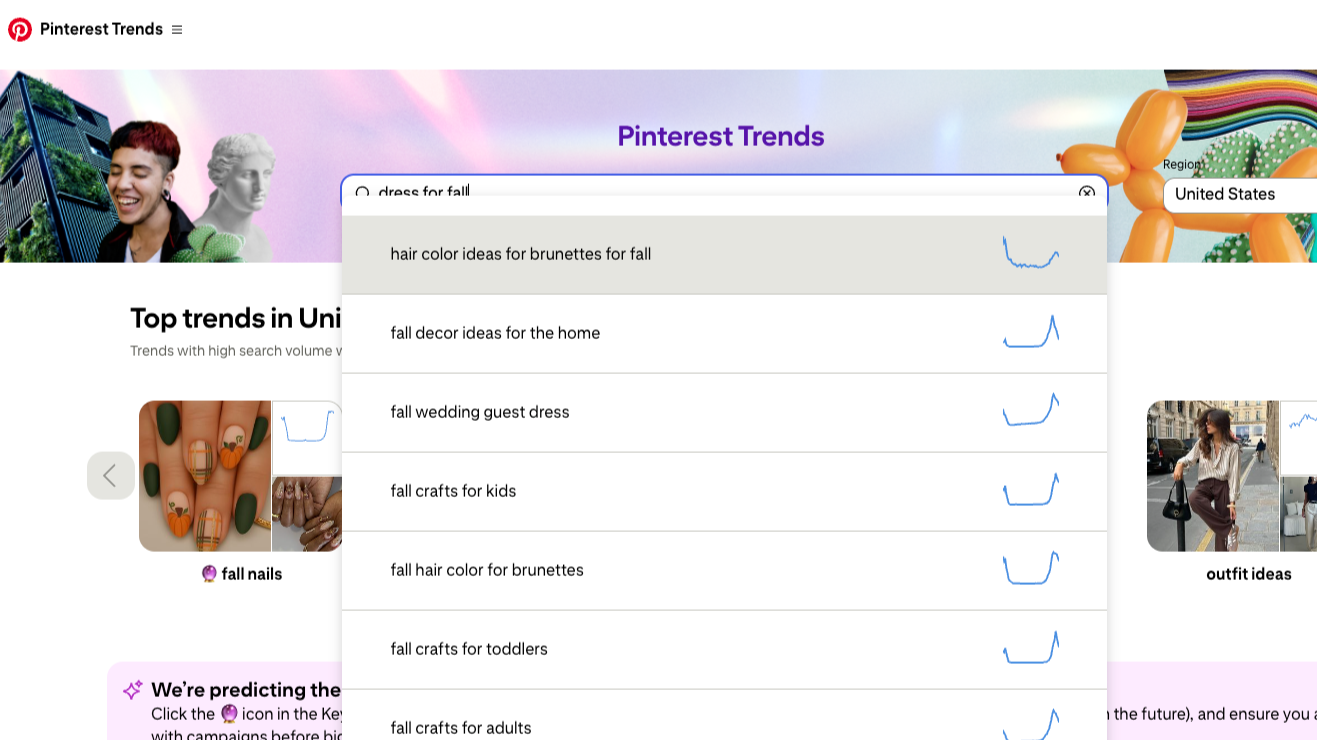
(Source: Pinterest Trends)
Additionally, the Pinterest search bar provides autosuggestions for keyword variations and related popular terms.
X (Twitter) keyword research
X continues to change rapidly, so the user experience and social search behaviors are still evolving. In the past, its search algorithm ranked posts according to relevance, engagement, recency, audience interest and your profile reputation (number of followers). But in recent days, this has changed since a version of Grok AI now influences visibility. This means that engagement and relevancy are now more important than just follower counts.
Users can search on this network using the X search bar, within Communities and on Grok. Posts and comments influence discoverability across the network, while Grok results have the potential to reference and cite your content.
The Explore and Trends tabs are also helpful X search tools that identify rising topics. Additionally, since X offers AI search with Grok, you can use it to find more relevant keywords. Queries like “What are the most popular topics around weight loss for men?” and “Show me the top posts in this category,” for example, reveal potential keywords that you can use in your strategy.
For deeper insights, try Sprout’s X Listening feature to see what your audience is saying on X.
Reddit keyword research
Reddit is a community-first platform that values user-generated content. Its passionate audience will not only help you find potential keywords for Reddit SEO but can also inform your broader social search and social marketing strategy.
But unlike most social media networks, Reddit’s focus is on topic-based communities, or subreddits. Each subreddit has an audience and culture that affects which keywords will gain traffic. Keyword relevance, therefore, comes from a subreddit focus, post titles and comments.
Tools like Subreddit Stats or Reddit Pro will help you find high-performing keywords from your communities. Along with these tools, native solutions like the Popular tab in your home menu show what’s trending. To find more trending and long-tail keywords, you can also try visiting relevant subreddits and filtering for the top posts of the day, week, month or year.
The platform also offers Reddit Answers, an LLM that sources the platform’s content. If you ask questions that are relevant to your audience and keyword list, Answers will give you user-generated responses with citations. Additionally, Sprout provides listening for Reddit so you can gather helpful insights in one place, rather than having to track down audiences across hundreds of targeted communities.
Threads keyword research
Threads, Meta’s answer to X, Bluesky and Substack Notes, is one of the most generous networks for organic reach. The network’s real-time, conversational nature makes Threads SEO especially valuable for visibility and engagement. Posts can gain traction quickly here, even without a large following, when they tap into active discussions or timely topics.
Because Threads is decentralized and users have more control over what appears in their feeds, staying connected to the community matters even more on this network. To capitalize on this, use keyword research to understand what people are talking about, which conversations are gaining momentum and how your brand can authentically join in. Insights from Instagram keyword trends can also guide you since these networks share a similar data ecosystem.
5 essential tools for social media keyword research
Aside from Google’s Keyword Planner tool, there are many other keyword research tools available in the market. Some of them are much easier to use, while others that are more difficult provide more comprehensive data.
Some of these research tools can also help you find keywords for other aspects of your marketing campaign, like social media marketing and content marketing. Here are some excellent options to check out:
1. Sprout Social: Comprehensive trend and sentiment analysis
Sprout Social Listening is an effective keyword research tool because it lets you build listening queries to easily discover relevant conversations about your brand and products. Not only does this help you in your brand listening efforts, but it also shows you trending topics that you can participate in through relevant social posts or in the comments.

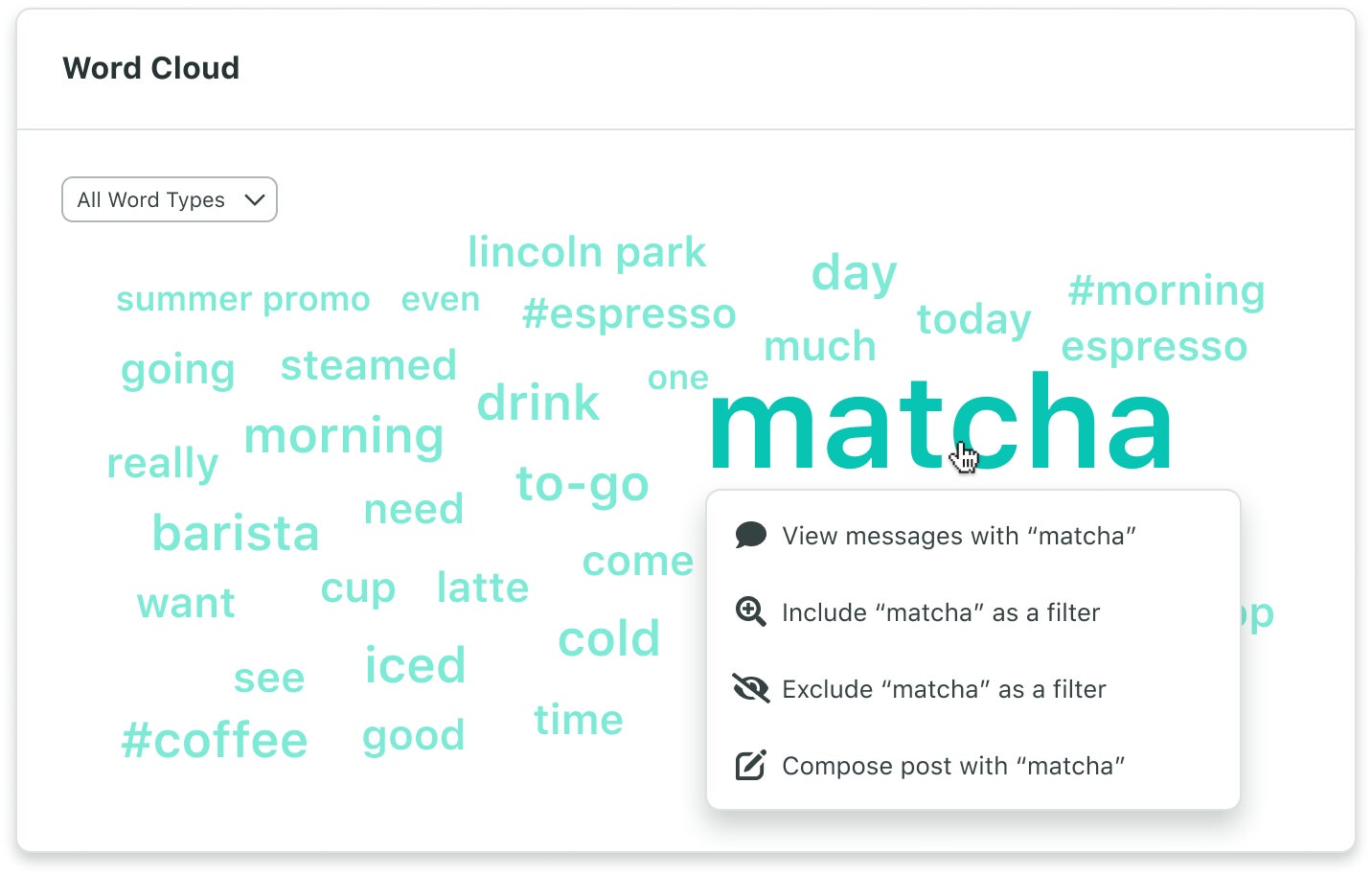
Its Trends Report highlights the topics and hashtags that are gaining traction across your industry, competitors and audience. And within Sprout Listening, the Word Cloud gives you a visual snapshot of your Topics’ most-used keywords and hashtags, which helps you see what’s resonating in real time. If you pair this with sentiment analysis, you’ll be able to understand how people feel about your brand and the broader conversations that are shaping your space.
Tracking these hashtags and keywords over time will help you refine your strategy and create content that naturally aligns with what your audience is already talking about.
2. Native social network tools: First-party insights
Most social media networks offer native analytics solutions, such as Meta Business Suite, TikTok Analytics and LinkedIn Page Analytics. These are great starting points for your social media keyword strategy because they provide first-party data.
Along with native analytic tools, you can use autocomplete and in-app trend trackers to find timely keywords with growth potential.
3. BuzzSumo: Top-performing social content
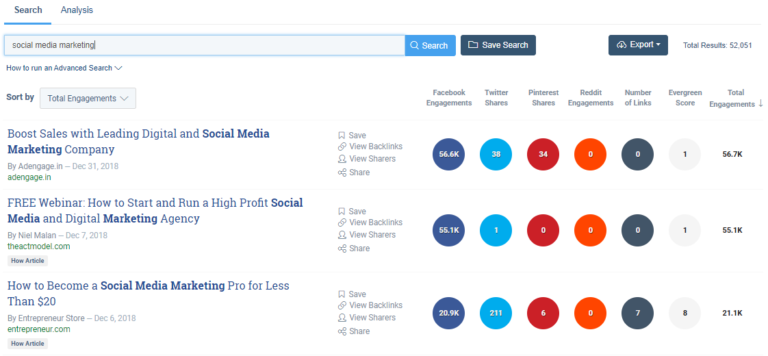
BuzzSumo is a leading content research tool that helps you analyze what content performs best on social media, but you can also use it for blog and social media keyword research. It may not necessarily provide you with keyword ideas, but it provides useful insights to fuel your content strategy.
(Source: BuzzSumo)
By entering a keyword or topic, you can discover the most-shared articles, videos and posts across social networks related to that keyword. This shows you which angles and formats are resonating right now, which will help you identify which keywords and topics to target for your social media content. You can also filter by platform, content type and date to get highly relevant insights.
BuzzSumo’s evergreen score is also useful if you’re learning how to perform keyword research for a blog. This feature helps you understand how profitable the topic will be in the long run so you’ll have a much easier time deciding whether it’s worth investing your time and effort.
4. AnswerThePublic: Natural language queries
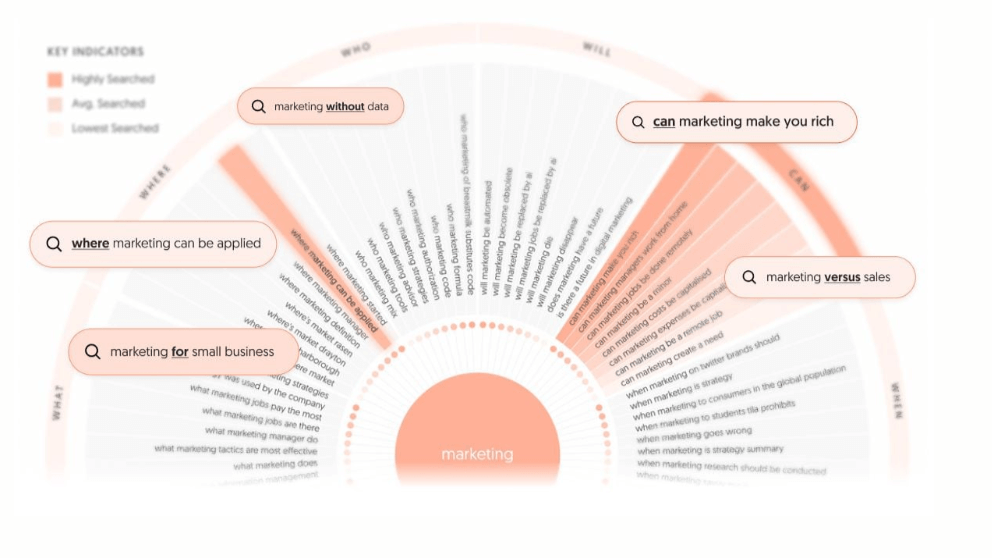
AnswerThePublic is a data-driven tool that generates ideas for customer searches. To do this, it analyzes autocomplete results across search engines and helps you generate variations and similar queries to spark new ideas.
(Source: AnswerThePublic)
Using this tool, you can find common user questions that will help you perform content ideation and address customer concerns.
5. Hashtagify: Hashtag research
Hashtagify helps you identify trending tags, analyze hashtag performance and uncover variations that expand your reach. The tool also recommends complementary hashtags to give you ideas for potential social keywords to include in captions, comments or future content planning.

(Source: Hasthtagify)
Using these insights helps you stay relevant and understand what audiences are actively engaging with in your niche.
How to turn social keywords into a content strategy
Ultimately, your keyword research should translate into themes and campaigns. Here’s how you can use your findings to put your SEO research into action:
Map keywords to your social media funnel
After you’ve identified your top keywords, you’ll need to group them into content pillars and align each category with a stage of your social media funnel.
To get started with this, map awareness-focused keywords to brand discovery posts, mid-funnel terms to engagement content, and conversion-driven keywords to calls to action or product storytelling. Then, apply a semantic strategy to map these keywords to broader goals—like brand visibility, engagement or conversion—and thread them through every format, including captions, video scripts, Stories, bios and long-form content.
This approach helps search engines and audiences understand the full context of your content, which will create a cohesive experience from discovery to purchase.
Draft social posts based on keyword groupings
Now that you’ve defined your themes, you can move from ideation to execution using a social media management solution.
If you’re using Sprout, you’ll create and organize your posts in Compose, then use Tagging to categorize them by campaign, topic or keyword group. Within the Publishing Calendar, you’ll then visualize these tagged posts to identify content gaps, ensure a healthy mix of formats and maintain a consistent publishing rhythm. This view helps your team stay proactive and aligned across every social channel.

Track content performance to create a content feedback loop
After publishing, you’ll want to track your performance to determine what’s working and what’s not.
Sprout’s Tagging and Post Performance reports help here by revealing which content resonates most so you can apply those insights to future posts. Or for deeper analysis, you can use Premium Analytics (a paid add-on) to gain custom dashboards, advanced filtering and detailed visualizations.
Using these tools, you can create a keyword-to-content loop framework with your performance analysis. Doing this surfaces new keywords (or similar keywords) that show potential based on your viability results and engagement.
To learn how you can find an influencer and manage the partnership in one place, try out a free demo of Sprout Social’s Influencer Marketing platform.
How to measure your social keyword strategy’s ROI
Knowing what to track makes the difference between vanity results and real business growth. Here are some critical key performance indicators (KPIs) to look out for that reflect visibility, engagement and growth:
- Engagement rate: This metric represents how often your audience interacts with your content via comments, likes, reposts and shares.
- Growth in search discoverability by keyword: This KPI analyzes the number of times your keyword content appears in search queries on each network.
- Impressions for keyword-optimized content: Impressions represent how much reach and visibility your content earns.
- Link clicks: The click-through rate shows how much your content resonates with audiences and how effective it is at moving them to action.
- Backlinks: The third-party websites and social posts that link back to your brand increase your authority for E-E-A-T.
- Keyword performance trend over time: This KPI measures how effective your keyword research and content strategy are.
- Audience and follower growth: Follower growth reflects awareness and content resonance, as well as your potential to increase views for future posts with a larger base.
Performing regular audits and refreshing your keyword cycles will also help you continually improve your strategy and find new insights.
How to spot keyword fatigue and emerging trends early
Social keywords often have a shorter shelf life than traditional SEO terms since they’re typically connected to trending events and interests. So if you want to catch social keywords at the perfect time and invest in them while they still resonate, listening tools are your best option.
Sprout Listening, for example, uncovers high-performing hashtags and terms. When those keywords start losing traction, you can listen again to quickly pivot your strategy before performance dips. This ensures that you’re spending your effort on the highest-ROI opportunities.
Let data drive your next great social campaign
Social keyword research gives you valuable insights into what users are searching for so you can publish content that shows up in search results. By improving your keyword research in this way, you’ll meet users where they like to search and buy.
Alongside analytics that tie performance to business outcomes, effective keyword research can increase your reach and discoverability—but it all starts with listening. Sprout Social Listening leverages AI to discover vital user, industry and pain-point insights. That way, you can meet users where they are and discover what they engage with most.
To build your plan today, download our free social search optimization workbook. Or to learn how Sprout can guide your content and community strategy for maximum engagement and impact, sign up for a free demo today.
39 free social media strategy templates that will elevate your workflows
Published on August 20, 2026 Reading time 15 minutes









Share