Implementing a Social Media Newsroom Model [Guide + Template]

Popeyes garnered 16 million views and more than 2K comments on a single post within a day.
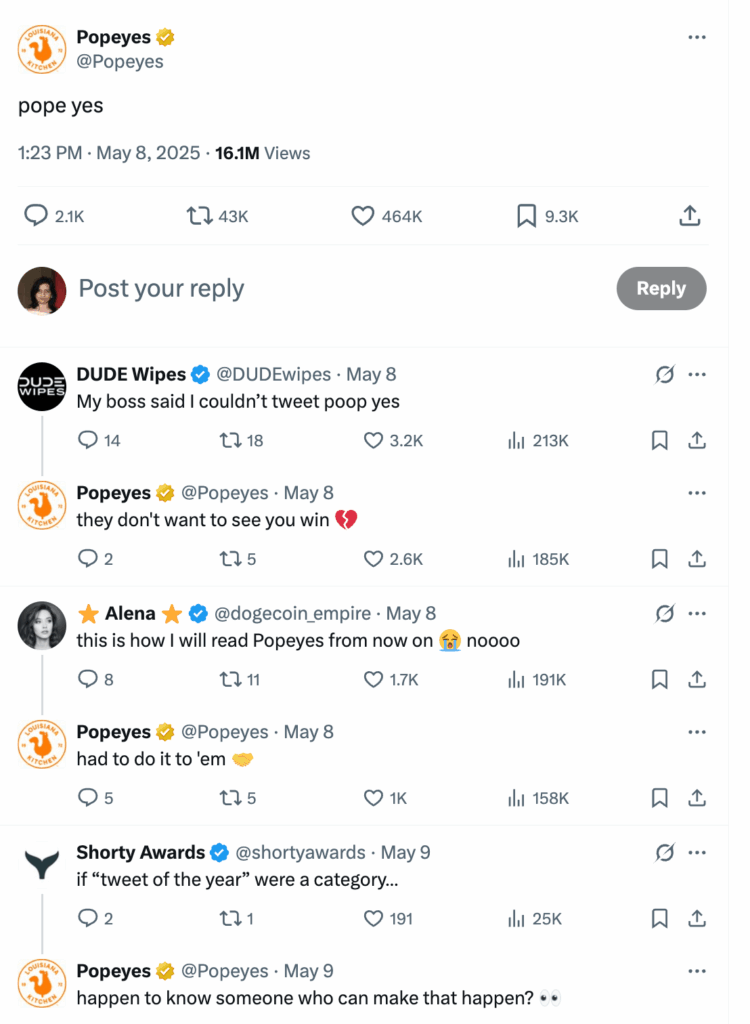
That virality stems from a brand’s ability to jump in on a cultural moment and anticipate how its audience will respond. The brand also didn’t just sit back after the post. Instead, they leaned into the moment with hilarious, ongoing banter, building a genuine audience connection. This dual strategy is a powerful way to spark brand engagement, but it requires keeping a constant pulse on social trends so you can jump on the right moment before anyone else.
In a world where news breaks on social before it reaches traditional media, brands today need a social media newsroom that transforms social from a simple publishing channel into a predictive engine for trendspotting and risk management. Adopting a social newsroom helps your team move at the speed of culture, with more agile, informed content creation.
A social media newsroom showcases your most important updates, but also fuels visibility, strengthens media relationships and positions your brand as a trusted, real-time source. Beyond this strategic edge, it also brings stakeholders together by providing teams, executives and partners with a single source of truth for timely, consistent and shareable messaging.
If you’re ready to exercise your organization’s social sophistication, it’s time to introduce a social media newsroom model. The newsroom model creates a motion that helps teams identify trends quickly, allowing for more nimble and strategic content creation.
This scalable process is designed to:
- Increase social sophistication with key stakeholders—including executive leadership
- Outline a process for activating on timely trends and events
- Build a more relevant social media brand presence that speaks to the unique needs and interests of your audience
We created this guide in partnership with social media consultant, Jazmin Griffith, who’s used this approach to keep brands like Pepsi, Delta Airlines and Johnson & Johnson moving at the speed of culture. In it, we’ll walk you through the process of setting up your social media newsroom. Plus, we’ve included presentation and email templates to accelerate the rollout.
The benefits of implementing a social media newsroom
To better understand how brands stand to benefit from a social media newsroom, we spoke to social media consultant Jazmin Griffith.
Griffith has worked as a social listening and intelligence analyst for big-name brands like Pepsi, Delta Air Lines and Microsoft. On top of that, she’s introduced and contributed to social media newsrooms in various organizations.
It increases your organization’s social sophistication
A social media newsroom does more than just identify trends. It creates and socializes criteria around what’s worth posting about. When you find something that’s worth posting about, it also makes space to act.
Both byproducts are essential when it comes to leveling up your organization’s social media maturity. Eventually, stakeholders across your organization will be equipped to use social business intelligence strategically, while increasing their flexibility toward calculated risks.

An added bonus? You’ll probably never be asked to just “throw something together” at the last minute again.
Griffith’s experience attests to that. “When we see a trend, the first instinct isn’t to immediately post our take. Our team takes a minute to huddle and discuss how the idea might come to life for [the brand]. From there, we can decide whether or not there’s brand fit.”
It creates a more culturally informed organization
Successfully capitalizing on opportunities in today’s environment requires more than just a single individual’s passive scrolling. Culture is moving faster than ever before. Trends are becoming more niche.
A social media newsroom empowers brands to understand and engage with evolving social culture and niche communities by providing real-time insights into the conversations, interests and values that matter most to these audiences. By tracking trends and sentiment within specific subcultures, teams can create highly targeted, culturally relevant content that resonates authentically, rather than relying on broad, generic messaging.
Plus, niche marketing is increasingly important today because audiences expect personalized, meaningful experiences, and brands that speak directly to smaller, passionate communities can build stronger loyalty, advocacy and long-term engagement. As these communities gain increasing influence online, social media newsrooms are essential tools for brands seeking to stay culturally informed and ahead in niche markets.
“Every community has its own crop of subcommunities,” explains Griffith. “For example, one brand I work with is tapping into the gaming community. Within that group, there are dozens of subgroups—gamers who love anime, gamers who love comics, gamers who only play one specific game. The newsroom model allows us to collectively zero in on what’s trending with hyper-niche audiences, which keeps our content culturally relevant.”
The social newsroom also equips brands with the skills and mindset needed to identify trends independently to find their niche on social media. The more eyes and ears at your disposal, the easier it is to keep up with an increasingly fractured social media environment.
It helps you manage brand reputation and proactively identify engagement opportunities
A social media newsroom enables you to manage your brand’s reputation while spotting opportunities to engage your audience in three concrete ways.
Protect your brand
- Get a heads-up for high-stakes moments to anticipate the impact of planned events, so your leadership is positioned to address questions and situations effectively.
- Proactively manage risk by catching early warnings and negative coverage, allowing you to take control of the narrative.
Building a newsroom model with real-time inputs from media monitoring sources, like NewsWhip by Sprout Social, can help your brand spot rising issues from early warning signs before they become headlines or reputation-defining moments.
Our real-time tracking and predictive intelligence reveal not only what’s being said but how quickly it’s spreading. Understand the scope of the risk so you know when to act—and when to let it pass.
Guide your brand strategy
- Inform your messaging and thought leadership by using real-time, strategic insight on current cultural and market forces.
- Use predictive intelligence to focus your efforts and resources confidently on the stories and moments that truly matter, using data that predicts trends before they take off.
Identify opportunities and drive perception
- Identify white space and use those untapped opportunities for growth. This could include unmet customer needs in the form of products and services, underserved markets or innovation in ecommerce.
- Build lasting brand favorability by spotting emerging trends, enabling you to shape the public conversation early on.
Some of our favorite social media examples come from brands in regulated industries. If you think the social media newsroom model won’t work for your brand because of your vertical or team size, we encourage you to think again.
How to implement a social media newsroom model at your organization
You’re probably already thinking about all the valuable insights a social media newsroom can help you uncover, but remember: Good things take time. A thoughtful rollout can mean the difference between cross-functional adoption and a program that falls flat.
Below, we’ve outlined the process to set up and launch a social media newsroom that works.
Step 1: Gather your cross-functional team
Your social media newsroom should involve two distinct groups of stakeholders: Those who’ll contribute and those who’ll be informed.
Contributors are individuals from your marketing and social media team who already contribute to trendspotting efforts. This could include a social customer care team leader who summarizes common themes in customer feedback, a community manager who oversees a closed group of brand advocates, or your communications and PR team.
Everyone else—directors, cross-functional collaborators, executive leadership—will fall into the informed category. These individuals will receive your insights and be called to act on them. As informed parties familiarize themselves with the art of trendspotting, they can eventually become contributors as well.
Step 2: Identify key sources and establish your tech stack
While everyone has their preferred approach to staying updated on social media, no method can cover every conversation occurring online. A diverse selection of sources can increase the relevancy and accuracy of your research, leading to stronger insights.
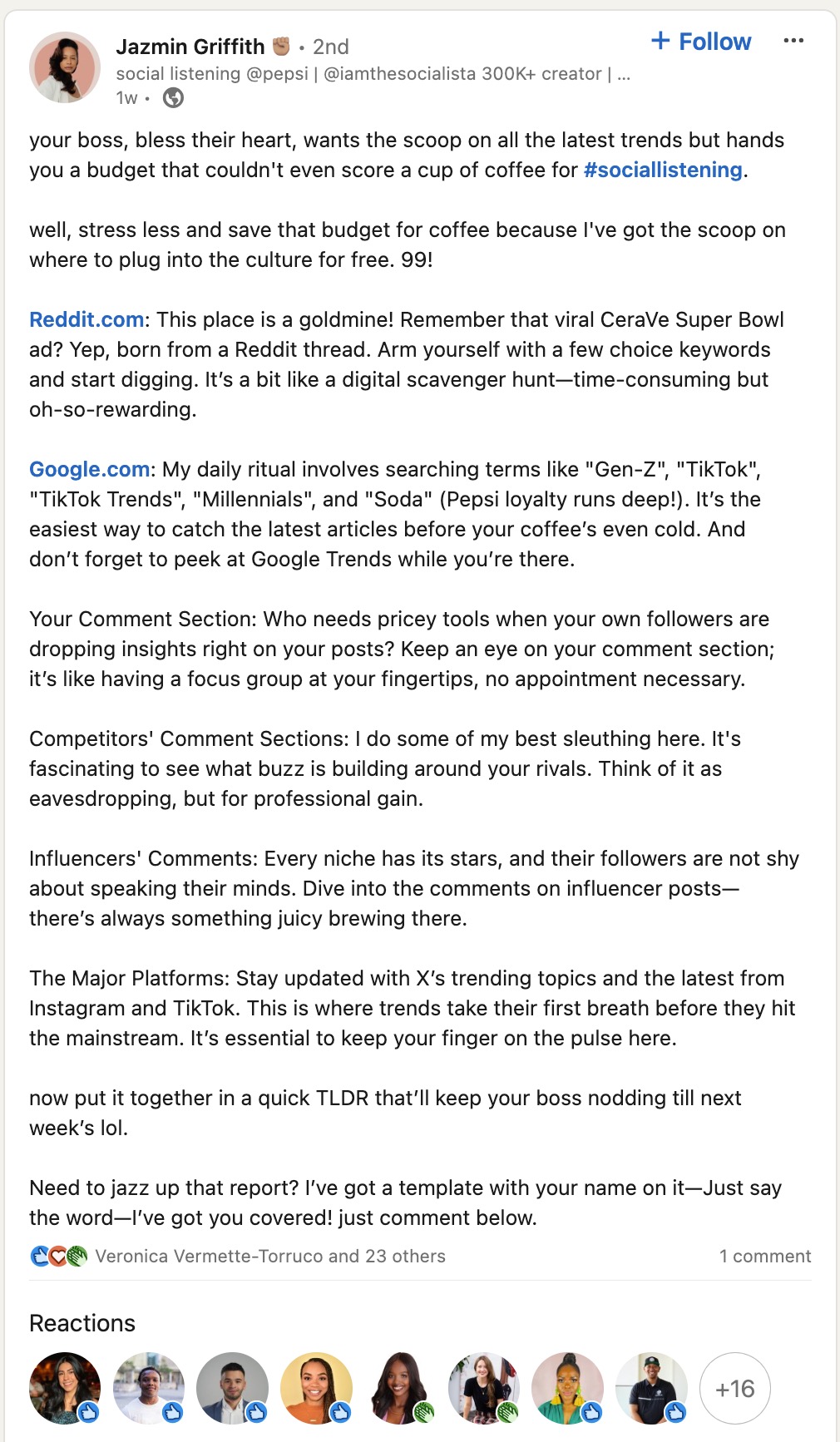
Here are a few resources that can guide your research:
Native platform research
A successful trendspotting strategy starts with scrolling.
Unless you’re looking into a specific hunch, there’s no need to start off with a hyper-structured approach. Instead, consume content with an open mind for potential brand applications. Check out comment sections, visit competitor profiles, use the “see similar accounts” feature—don’t be afraid to go down rabbit holes. This is an area where you definitely want to go wide.
Along the way, take note of popular content formats, user engagement patterns and trending slang because these are the first seeds of social insight.
Social listening tools
Native research will leave you with a lot of hunches. To confirm what’s really driving those conversations and trends, you’ll need a social listening tool.
Think of social listening as your trend translator. It summarizes all of the social conversations surrounding a topic, so you can find the insights that matter most for your strategy.
By listening to global conversations, you can fully embrace social for the powerful market research tool it is—accessing unfiltered thoughts, opinions and feedback that are essential for creating more relevant content.

Media monitoring
Media monitoring is like eavesdropping on the internet, so you catch trends before they go mainstream. Media monitoring tools, especially AI-powered ones like NewsWhip, are designed to help brands like you decide what matters and when it matters—often before competitors or media control the narrative.
NewsWhip scans data from all major social networks and news sites, detects which topics are gaining momentum and forecasts where they’re headed. This helps you confidently prioritize the stories that matter most and proactively catch early signs of negative coverage to manage the situation before it escalates. Plus, you can integrate this predictive media intelligence directly into your existing tech stack and workflows.
Newsletters
Email newsletters are back. Some publications cover every industry and audience imaginable, and offer in-depth insights into what’s trending both online and in real life.
For the best insights, subscribe to a mix of industry favorites and a few focused on social media. This way, you can stay updated on your specific audience and the never-ending flow of social platform trends and updates.
Here are a few we recommend:
- Link in Bio features expert interviews from industry-leading social media managers. The newsletter shares actionable advice and relatable experiences to inspire its community.
- Social Futures sheds light on emerging social trends, expert insights from influential voices in social, and exclusive Q&As from prominent social media professionals on what inspires them and what they believe will define the future of social for brands.
- After School covers youth consumer analysis, specifically as it relates to Gen Z. It’s a great read for businesses targeting or looking to expand into younger markets.
- SocialMedia.org is a membership organization for leaders in the social media marketing space. Their weekly newsletter, The Shortlist, highlights member stories as they share what they’re working on and what they’re keeping an eye on in the space.
Data reports
Data reports offer insights into current market trends, consumer behavior and emerging industry patterns, allowing marketers to make informed decisions.
These resources provide a quantitative way to support the qualitative trends you observe online. For instance, if your industry is seeing a sudden rise in micro-influencers, you can use data from The State of Influencer Marketing Report to justify developing relationships with them.
Step 3: Start trendspotting and finding moments that matter
This step in the process is what Griffith calls “keeping your ear to the digital streets”.
Create a contributors-only communication channel on your company’s preferred messaging app (think Slack or Microsoft Teams). This is where your team of trendspotters will share insights, thought starters and opportunities on the fly. Think of it as your organization’s distributed newsroom.
At the start of this process, your goal is to simply improve your team’s collective social media sophistication. Engaging in more conversations helps contributors better identify the insights and opportunities that matter to your business. Be sure to stress that no idea or concept is too big or too small to share. Even something as simple as a trending audio can inspire quick-turn lo-fi content creation.
Over time, this channel will become a living archive of cultural insights, industry trends, audience preferences and brand opportunities.
Step 4: Decide how you’ll distribute insights
Once newsroom insights flow and your team becomes comfortable identifying social media opportunities, it’s time to decide how to share this information with your broader organization.
“I’ve worked with brands that share insights once a month, and brands that share insights three times a week” says Griffith. “It all depends on how big you want your program to be and who’s involved.”
To decide how and when to share newsroom updates, tailor your approach to your organization’s current level of social sophistication.
For example, if your social team operates separately from the rest of your organization with minimal oversight beyond marketing, start by setting up monthly contributor meetings. These meetings can be used to identify the most important insights and opportunities surfaced in your newsroom channel over the past month.
Once you’ve agreed on the insights that matter most, summarize your findings to wider audiences using the deck and email template provided below. This is a great place to highlight any quick content creation wins that came from newsroom discussion, as well.
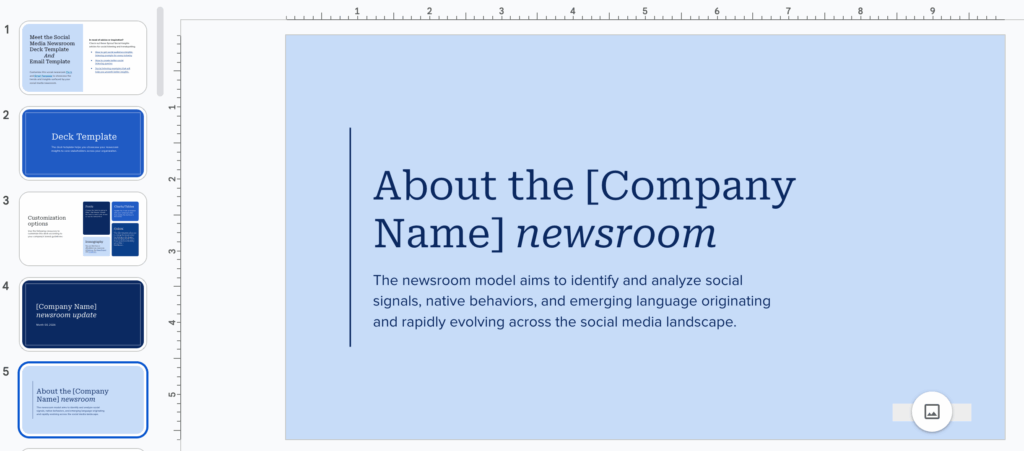
If your organization is already operating at a high social sophistication, then you may want to consider hosting a regular newsroom update meeting. Send out an open invitation, and include time for discussion so teams can think through how these insights might apply to their unique projects.




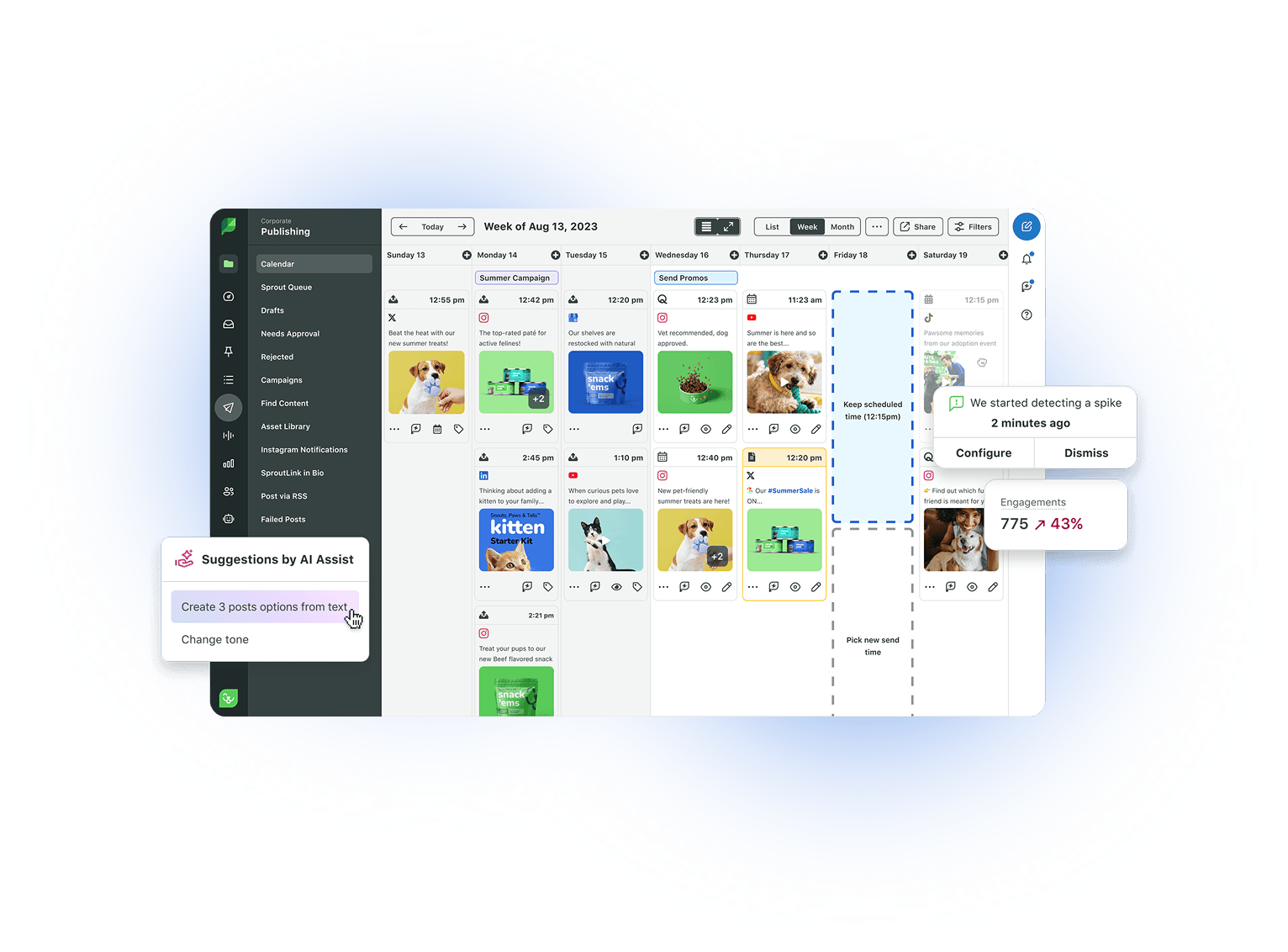
Social media newsroom vs. online press room
While both a social media newsroom and an online pressroom serve as centralized hubs for brand communications, they differ in scope and functionality.
An online pressroom is primarily focused on providing journalists with press releases, media kits and corporate information, essentially a static repository for media use. A social media newsroom, by contrast, is built for real-time engagement and broader visibility. It integrates social listening, analytics and multimedia content to help brands monitor trends, manage reputation and share stories directly with both media and social audiences.
So, while a pressroom serves the press, a social media newsroom serves the brand’s entire ecosystem, which includes a brand’s audience, journalists, stakeholders and the broader public.
Download our social media newsroom email and presentation template to start building your centralized hub for news, trends and real-time engagement.
Download the template