How to turn social listening insights into action and connect with your audience

Written by Annette Chacko
Published on January 14, 2026
Reading time 7 minutes

Table of Contents
An ideal day with social listening is one where insight leads seamlessly to action. Because collecting social data isn’t the end goal, acting on it is. The real value of social listening comes from using insights to inform decisions, guide content and strengthen how brands show up for their audience.
For example, you begin by asking a conversational AI what your audience is talking about today. It quickly surfaces a clear opportunity in the form of an emerging trend, a shared question or an unexpected moment of enthusiasm about a product feature gaining momentum.
With that insight in hand, you collaborate on content the same day, from writing a decisive brief to using tools like Canva to create social assets that reflect what your audience already cares about. You publish this content while the conversation is still relevant, engage in real time and close the loop by tracking performance tied directly back to the original insight—all within a normal day’s work.
This is what social listening should enable. A practical, connected workflow that helps social teams respond with speed and confidence instead of insights that live in reports or get revisited after the moment has passed.
This guide breaks down how to turn social listening insights into action so your team can move from understanding what’s happening to making an impact when it matters most.
Why turning listening into action on social media matters to your audience
Active social listening goes beyond tracking mentions or monitoring keywords. It’s about engaging with your audience and using what you learn to guide real decisions—what you publish, how you respond and where you show up. When you treat listening as a passive exercise, insights stall. But when you approach listening as an active practice, social becomes a two-way relationship.
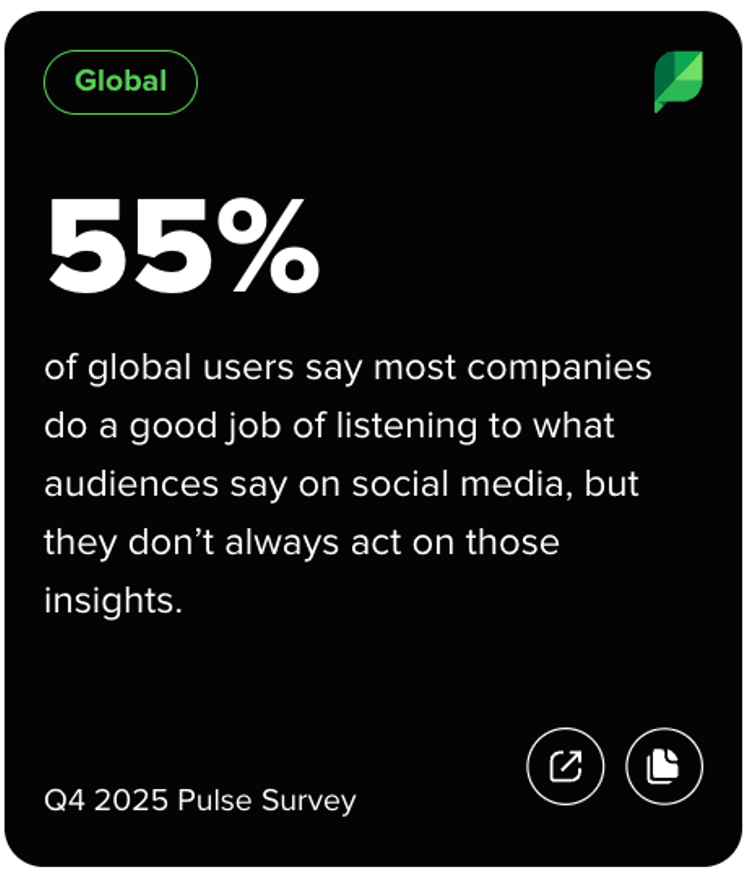
The gap between listening and action is noticeable to audiences. According to Sprout’s Q4 2025 Pulse Survey, 55% of global users say most companies do a good job listening to what audiences say on social media, but they don’t always act on those insights.
That disconnect can quietly erode trust. When people take the time to share opinions, questions or feedback, they expect to see some reflection of it in how brands communicate and evolve. Turning insights into action lets audiences know their feelings and opinions matter.
Turning listening into action informs original, audience-aligned content that feels intentional. Instead of chasing every trend, you can build content series, themes and narratives grounded in real audience interests. The result is content that’s more consistent and relevant and has a bigger likelihood of earning long-term engagement and loyalty.
The core social listening challenge: Connecting insight to action
Brands are collecting more social insights than ever, yet struggle to turn them into action—hence the reason why audiences feel like brands aren’t listening to their feedback. The challenge isn’t access to data; it’s that teams don’t know how to turn social listening insights into action. The struggle is about connecting insights to the teams and moments where engagement actually happens.
When listening lives in isolation, insights fail to influence content, conversations or decisions in real time. Closing this gap requires breaking down the barriers that prevent teams from acting on what they hear.
The silo problem
Social listening data often sits within marketing or digital teams, limiting its impact across the org. When insights aren’t shared beyond social, you risk creating deep marketing silos where R&D, sales and customer care miss valuable signals about customer needs, objections and emerging opportunities. This creates a disconnect where the brand is technically listening to audiences, but not moving in a way that informs product decisions, revenue conversations or support experiences.
When you operationalize social insights by building shared workflows and regular cross-team touchpoints, insights move easily to the teams that can act on them.
The reactive cycle
Social teams are often flooded with data spread across too many tools, making it hard to see which insights actually deserve action. Without a central place to prioritize and organize signals, insights get logged, revisited later or lost altogether. This creates a reactive cycle where teams are constantly trying to keep up, responding after the moment has passed. Or, defaulting to what’s most urgent rather than most meaningful. As a result, you’re playing catch-up rather than pursuing proactive marketing.
When insight-to-action takes too long, relevance suffers and opportunities to engage slip by. The way forward is to centralize your listening data and enable your social team to prioritize insights, take action and measure impact in real time.
How to move from passive monitoring to active intelligence with Sprout
Moving from passive monitoring to active intelligence can show you how to turn social listening insights into action. According to the 2025 Impact of Social Media Report, 60% of marketing leaders from around the globe say social media drives new customer acquisition. And 54% say social insights drive R&D and decision making.

To scale your listening efforts, agentic AI for social media acts as an intelligence engine to help you close the gap between data collection and strategic action.
In this section, we’ll explore how Sprout tools enable you to move beyond reactive workflows, turning data into social intelligence that drives meaningful audience engagement.
Act fast on trends and insights
Social listening surfaces high-stakes opportunities that demand immediate action, including:
- Proactive crisis detection: Spot emerging issues before they escalate, protecting brand reputation and maintaining audience trust.
- Discovering product pain points: Identify customer challenges or questions early so product, R&D, marketing and customer care can respond quickly.
- Spotting micro-trends for content: Capitalize on growing conversations to create timely campaigns, content series or social activations.
Turning these insights into action requires a structured approach. A social media newsroom centralizes insight collection and content coordination, enabling teams to respond to trends, allocate resources and publish content quickly. Similarly, a social media center of excellence (CoE) provides a scalable framework that breaks down silos, sets consistent standards and ensures insights flow across marketing, customer care, sales and product teams.
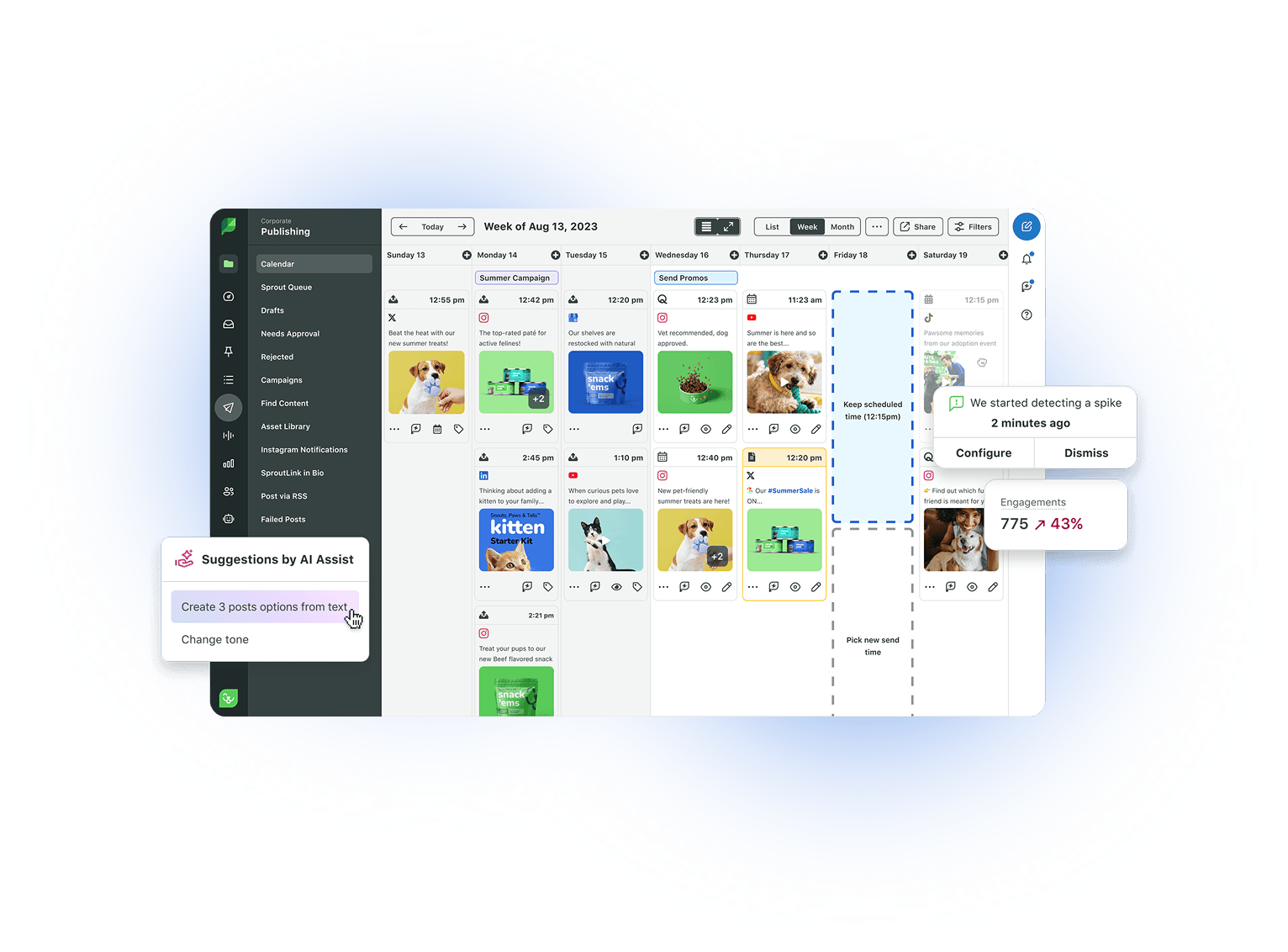
Tools like Sprout’s Agentic AI Trellis help surface insights faster by organizing social conversations and identifying emerging themes in real time. Together, these models and tools create a system where high-value insights don’t just sit in dashboards. They enable you to inform decisions, shape content and drive measurable impact across the business.
Democratize insights across departments
Democratizing social insights ensures data isn’t just collected, it’s acted on, creating alignment and a truly data-driven culture across the organization. That’s how you can turn social listening insights into action to empower the entire org.
Listening helps you build a stronger business when the data is accessible to other departments beyond the social team. It ensures decisions across the board are informed by audience intelligence and encourages action.
The good news is leaders want cross-functional departments to use social data to inform their actions, according to the 2025 Impact of Social Media Report.
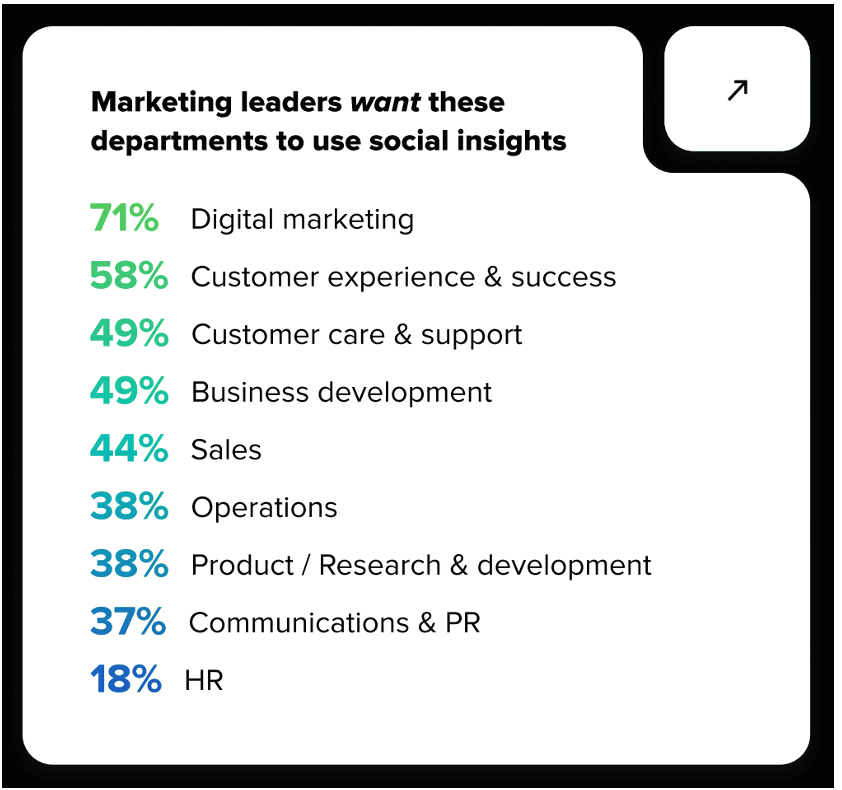
When democratized, social insights can drive impact across other departments in several ways:
- PR & communications: Access to trending topics or emerging sentiment allows teams to craft timely press statements or messaging that resonates with the public.
- R&D and product teams: Identifying recurring customer pain points or feature requests informs product development and prioritization.
- Customer care: Visibility into common customer questions or frustrations helps support teams proactively address issues and improve satisfaction.
- Marketing & campaign planning: Understanding audience preferences and micro-trends allows marketing teams to create content that aligns with what people are actually talking about.
By sharing insights in clear, digestible formats such as shareable links, dashboards or automated reports, you enable all teams outside of social to be in sync with market sentiments and act quickly and confidently.
In practice, this can look like:
- Ongoing visibility into sentiment and trends through live listening dashboards shared with PR, product and CX teams.
- Automated weekly or biweekly insight reports highlighting key shifts, risks and recommended actions.
- Recurring cross-functional reviews in the form of weekly standups or monthly insight meetings to align on patterns and next steps.
- Real-time alerts or shareable links delivered via Slack or email for fast-moving issues or opportunities.
These approaches transform social listening into shared intelligence, helping teams across the organization align, collaborate and make decisions grounded in audience needs.
Breakdown data silos with seamless integration
Robust integrations are critical to turning social listening into actionable intelligence. When social data flows directly into CRM tools, like Salesforce, Slack or Tableau, that teams already use, it becomes part of existing workflows rather than an extra step to manage. This ensures signals from social channels reach the right people at the right time and empowers teams to act upon customer feedback or emerging opportunities quickly.
Integrations also help break down traditional data silos. Social teams, marketing, sales and customer support can all see the same insights in the platforms where they work, reducing duplication and improving alignment. For example, a customer data point that surfaces in Sprout Social can automatically appear in Salesforce for the sales team, in Slack for immediate alerts or in Tableau for enterprise-level reporting.
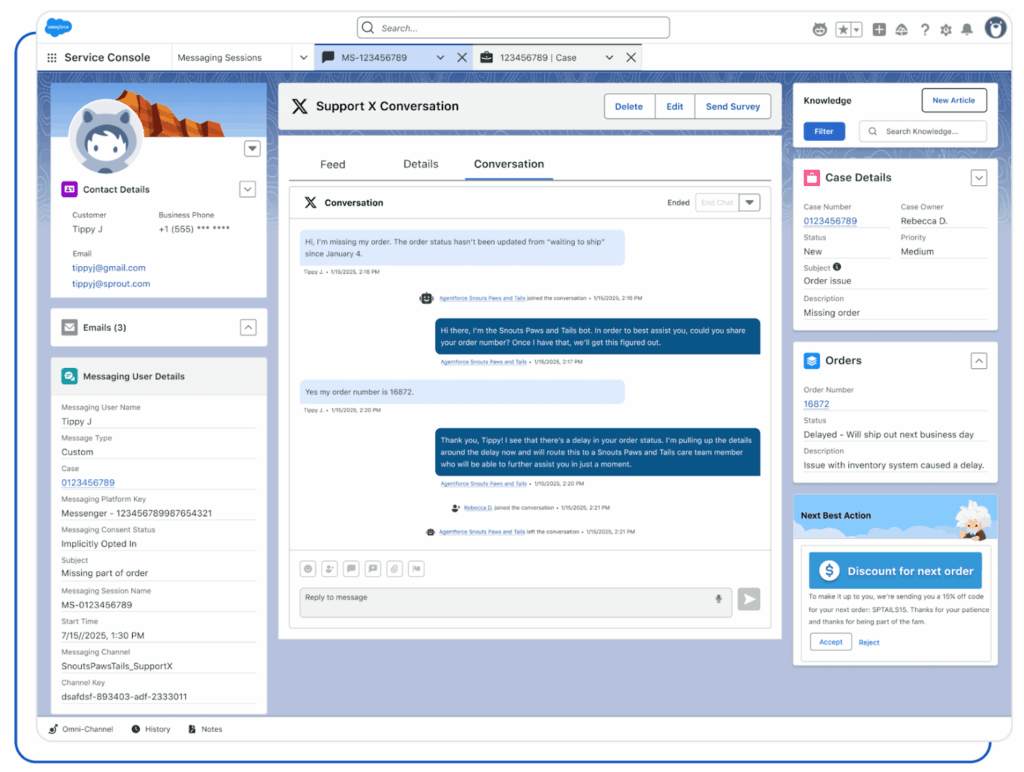
By connecting social insights with operational tools, brands can move from passive monitoring to proactive, coordinated action across the organization.
Turn social listening insights into action
Turning social listening insights into action transforms how brands engage with audiences. By acting on real-time data, breaking down silos and sharing insights across teams, you move beyond passive monitoring and inform key decisions across the organization that drive both meaningful connections and revenue. In the end, it’s not just about listening, it’s about responding, adapting and showing up in ways that truly matter to your audience.
Schedule a live Sprout Social demo and find out how to turn social listening insights into action.
39 free social media strategy templates that will elevate your workflows
Published on August 20, 2026 Reading time 15 minutes






Share