How to build a social media portfolio that proves your impact

Written by Emily Jenkins
Published on January 16, 2026
Reading time 12 minutes

Table of Contents
The social media job market in the UK is crowded, and a CV alone won’t cut it.
Hiring managers want proof that you can create real impact across every part of social media marketing. They’re looking for clear evidence that you can plan, produce and deliver results—not just talk about it.
A strong social media management portfolio does exactly that. By showing your strategy, content and outcomes in one place, you demonstrate your value and set yourself apart from other candidates.
Why a social media portfolio matters more than ever
According to the BBC, job openings fell by 5.8% between May and July this year across nearly every industry. With fewer roles available, employers are now far more selective. A portfolio is no longer a “nice extra.” It’s expected. It’s how you prove your skills.
A strong portfolio shows you understand industry standards, can deliver results and know how to present your work in a way that builds trust quickly.
Here’s what a portfolio does that a standard CV doesn’t:
Shows your expertise
A social media manager who claims to “excel at content creation” sounds like every other applicant. But showcasing your work with screenshots, results and the strategy behind them makes your expertise undeniable.
Did your copywriting help boost engagement by 20%? Did a TikTok series you produced go viral?
Portfolios cut through the noise by illustrating achievements. Evidence of your performance speaks far louder than bullet points on a CV.
Stand out in a saturated job market
Tribepad found that, in 2024, there were 48.7 applicants for every position in the UK. For employers, this often means dozens of applicants who look the same on paper, with little insight into who can actually deliver. A portfolio immediately shows you can apply your skills to real campaigns.
Imagine two candidates. One sends a generic CV, and the other shares an online portfolio with case studies and data visualisations across different networks. The second candidate proves their value and sets the standard for the rest.
Meet evolving hiring expectations
It’s no longer enough to schedule posts or write captions. Employers want social practitioners who understand authenticity and cultural relevance.
The UK Sprout Social Index™ shows consumers believe content originality and follower interaction make brands stand out. What’s more, the report reveals that marketing leaders must demonstrate that social activity ties back to business goals.
A strong portfolio bridges both sides. It highlights campaigns that combine creative execution with measurable outcomes. It helps you showcase how you increased conversions or improved cost savings compared to other channels. You can even use it to share how you generated insights that shaped a wider strategy.
Show, don’t just tell
A CV tells hiring managers what you did. A portfolio shows how you did it and the impact it had. Visual and performance-based storytelling resonates far more than listing “experienced in digital marketing.”
For example, highlighting a social media post that sparked 500 comments or a campaign that doubled conversions demonstrates business value in real terms. This shift—from listing responsibilities to presenting outcomes—makes a portfolio one of the most persuasive tools you can build.
What to include in a winning social media portfolio
A strong portfolio balances creativity with evidence, reflecting both the posts you’ve created and the strategy and results behind them.
If created correctly, it acts as a showcase and proof point of your skills.
Campaign summaries and outcomes
Structure every entry using a simple formula: goal → strategy → execution → result. This gives hiring managers a clear view of how you approach challenges and deliver outcomes.
For example, if your goal was to increase website traffic, your summary needs to show how you used targeted content and which channels you prioritised. It should also show the measurable lift in visits or conversions.
Adding metrics like engagement rate, reach, click-throughs and sentiment establishes credibility and grounds your work in business impact.
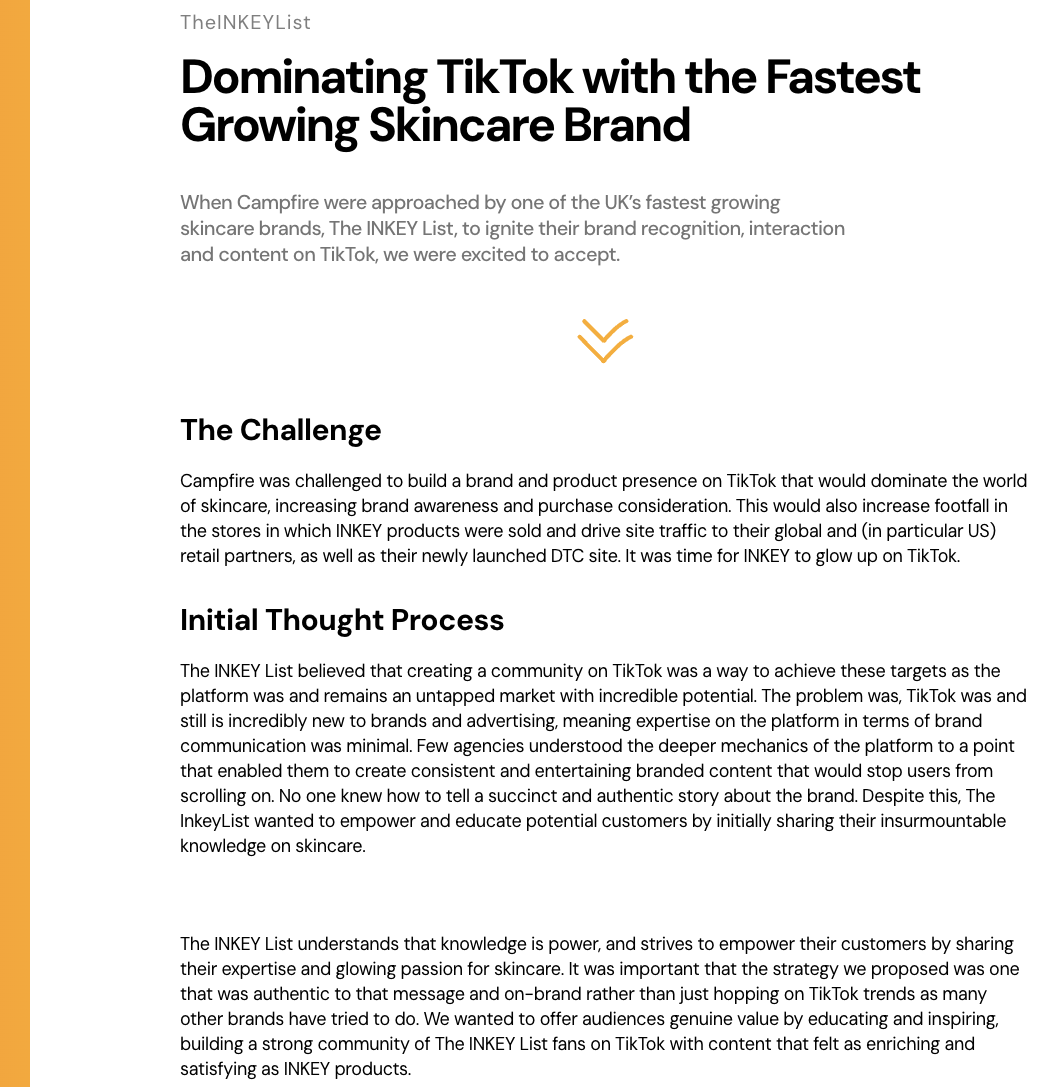
You can see how Campfire does this in its portfolio by breaking down each case study by challenge, thought process, strategy and results:
(Source: Campfire)
Platform-specific examples
Employers want to see that you can adapt your ideas across channels. A winning social media marketing portfolio includes a mix of formats, such as:
- Instagram Reels that showcase creativity
- LinkedIn posts highlighting thought leadership
- TikTok campaigns for younger audiences
- Facebook campaigns designed to spark interactions by targeting groups
Platform-specific examples prove you understand each network’s strengths. Showing how you repurposed one idea into different assets demonstrates versatility. It also proves that you have awareness of how to engage audiences across each social network.
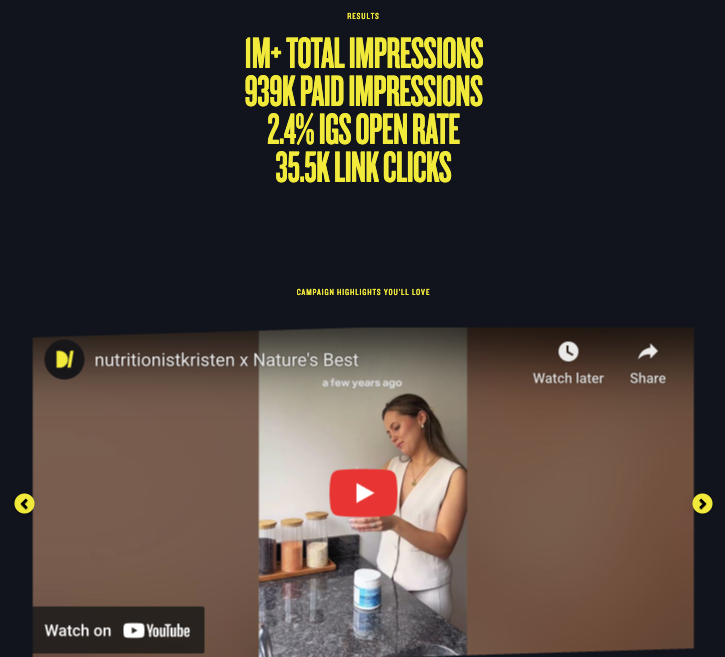
For example, Disrupt‘s portfolio highlights its strategy across networks via a slideshow of different posts:
(Source: Disrupt)
Reporting snapshots
Numbers provide hard evidence, but visuals paint a memorable picture. Instead of writing “engagement increased by 35%,” include a graph that shows the growth curve. Dashboards, charts and screenshots help prospective employers digest performance data quickly.
Sprout’s Premium Analytics reporting capabilities make this easier. This add-on includes tagging that lets you organise posts by campaign, theme or format, allowing you to quickly surface the content that’s had the biggest impact. Once you’ve identified strong examples, Sprout’s reporting dashboards convert the results into clean, visual outputs. A single chart or campaign performance snapshot can instantly communicate the business impact and ROI of your social media work.
How to format your social media portfolio
The right social media portfolio format depends on your goals.
A freelancer pitching to new clients may want something interactive and branded. But a social media manager interviewing for a full-time role will likely need a polished PDF they can email or print. Whichever format you choose, it needs to make your best work easy to access and understand.
Here are some tips to help you present your work:
Choose a format that matches your goals
There’s no single “best” format, but each has strengths. Consider how you’ll share your portfolio. Will you email it to recruiters, present it in an interview or link to it on LinkedIn?
Here’s a quick side-by-side to help you choose the right format:
| Format | Best for | Pros | Cons |
|---|---|---|---|
| Canva templates | Beginners, freelancers | Easy drag-and-drop designs and professional layouts | Less flexible for interactive use |
| PDFs | Job seekers who may need a printed copy for an interview | Simple to send and offers consistent formatting | Static and harder to update |
| Notion pages | Content creators, SMMs | Interactive, easy to edit and good for case studies | Require sharing permissions and offer less visual polish |
| Personal websites | Freelancers, advanced practitioners | SEO-friendly, helps recruiters find you and shows off your web design skills | Take longer to build and cost more to maintain |
Whichever you choose, keep a backup version as a template and tailor it for each application.
Prioritise mobile-friendly layouts
Hiring managers sometimes review portfolios on their phones. So even if you have a brilliant design on a desktop, it could backfire if it doesn’t shine on a mobile.
Use clear fonts, avoid heavy blocks of text and test your portfolio on different devices. If you’re using Canva or Notion or building a social media portfolio website, check the mobile view before sharing the link.
Keep it scannable and visual
Treat your portfolio as a landing page. Use bold headers, concise sections and plenty of white space so hiring managers can skim it quickly to grasp your strengths.
Show your achievements by adding them as scannable text with supporting visuals, such as screenshots, reporting charts or side-by-side comparisons of posts before and after optimisation. This makes it easier to see the impact of your work.
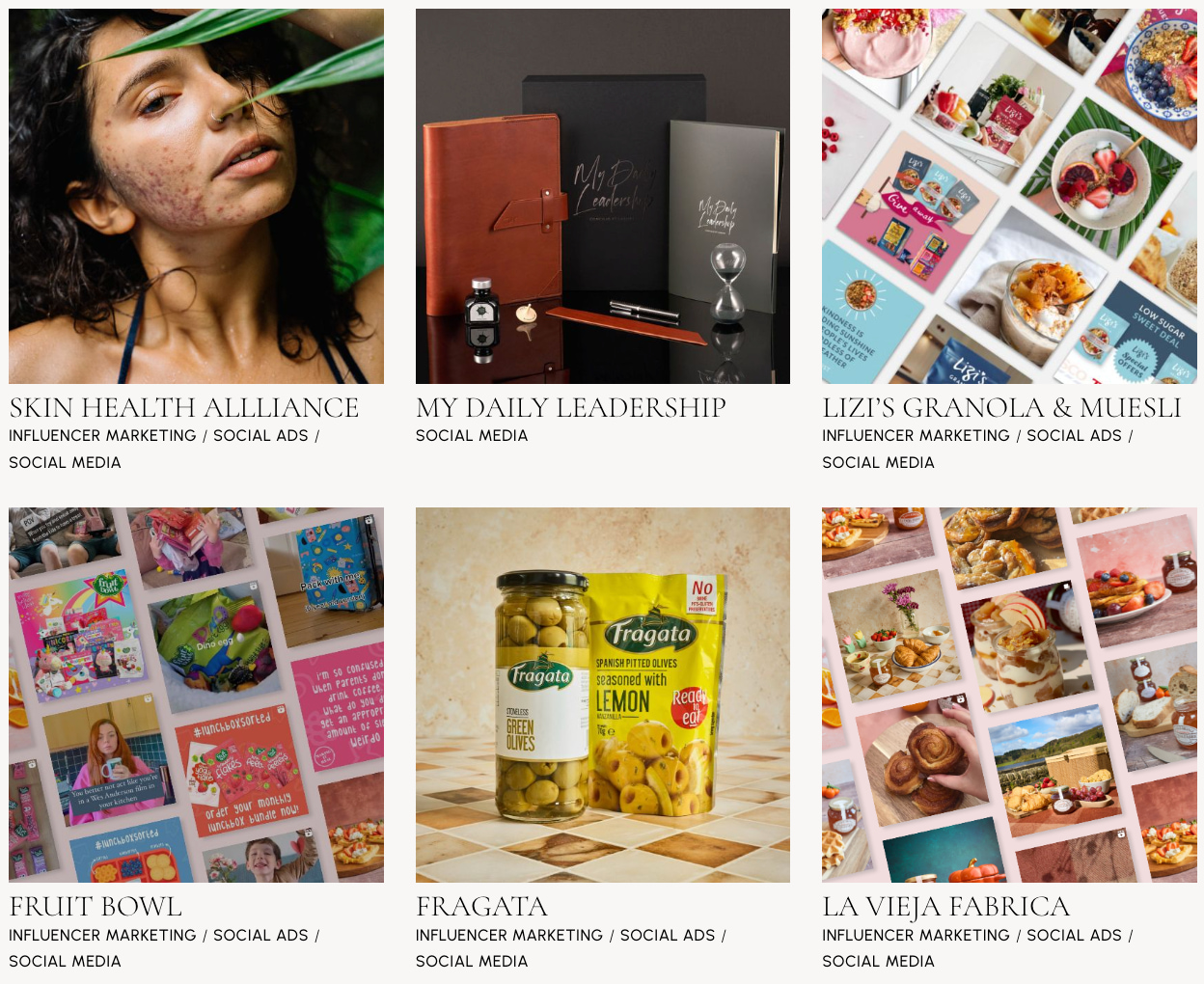
Take a look at Katie Barber Marketing. Her website offers one of the best social media portfolio examples in the UK:
(Source: Katie Barber Marketing)
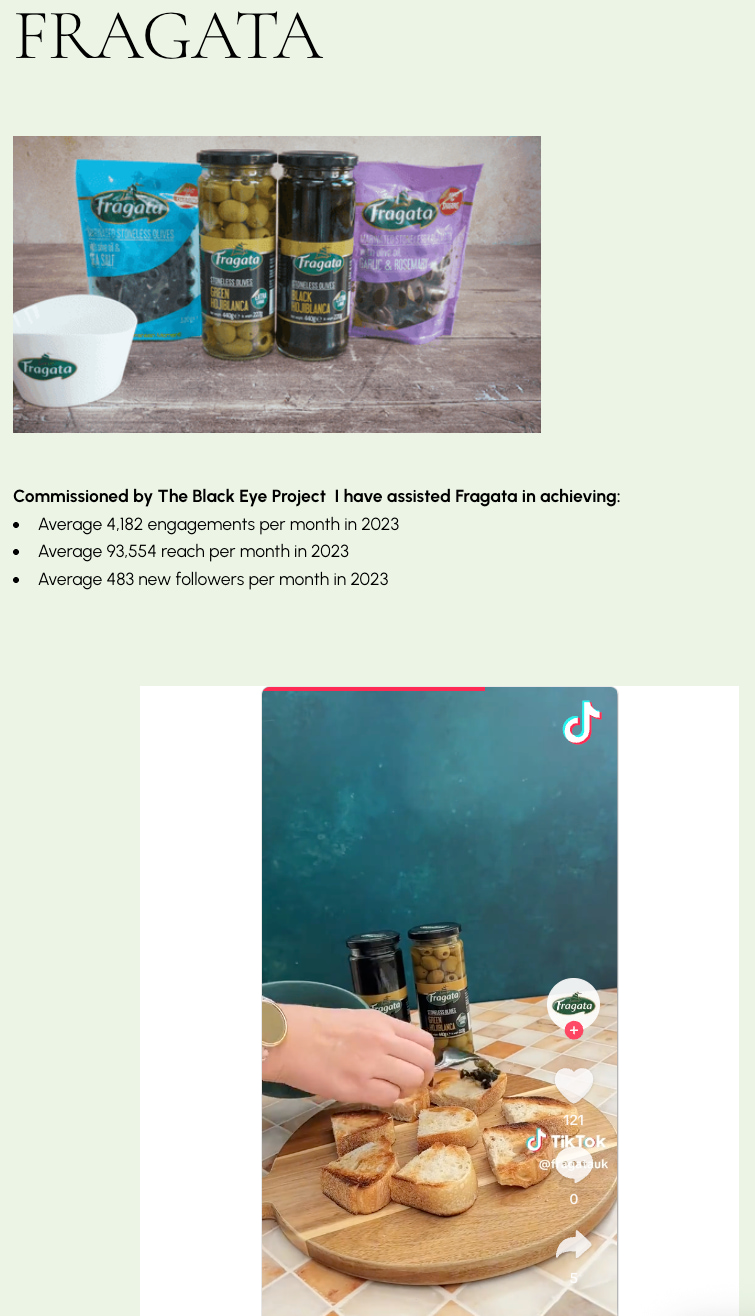
Katie’s portfolio shows her best projects, organised as thumbnails with scannable descriptions. Clicking on a client opens a page outlining her achievements, with supporting figures and examples of her work:
(Source: Katie Barber Marketing)
As you scroll through each project page, you see Katie’s monthly role, proudest achievements and the impact of her results.
How to create a portfolio that shows strategic thinking
Hiring managers want to see the thinking behind your campaigns, not just the visuals.
Here’s how to show the strategy you used for your campaigns:
Highlight your decision-making process
Each portfolio entry needs to explain the reasoning behind your choices.
Why did you run a campaign on TikTok rather than Instagram Stories? Why did you use one tone of voice over another? How did targeting a particular community or using specific hashtags fit into your overall social media strategy?
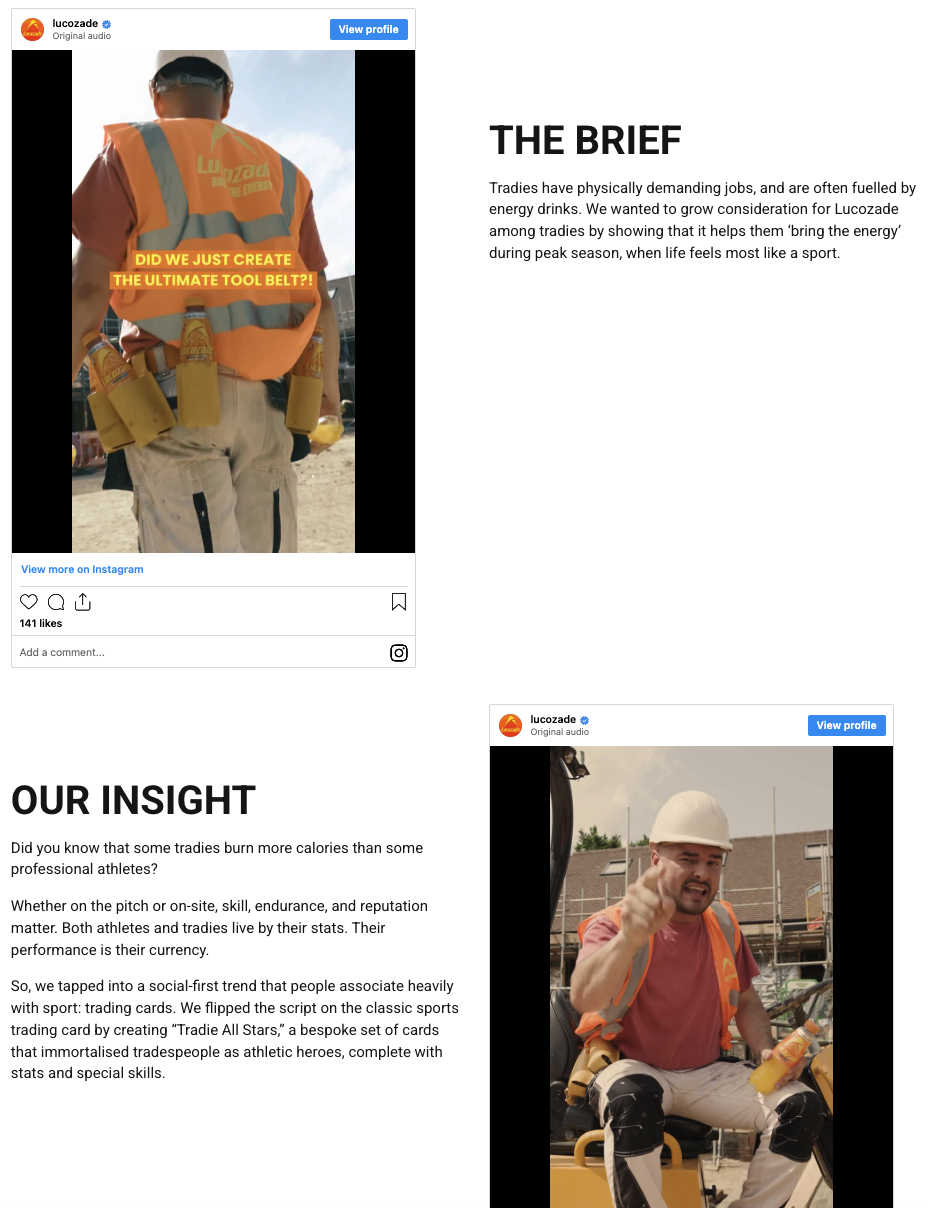
Take We Are Social, for example. The company’s portfolio doesn’t just show the final creative. It starts with the challenge: redefining Lucozade as an energy drink for tradies. And finally, it explains the bold, social-first approach the team used to shift perceptions:
(Source: We Are Social)
This makes We Are Social’s work easy for potential clients to follow and proves the strategy behind the creative.
Sprout Tip: Remember, while it’s important to show the thinking that shaped your campaigns, finding these insights shouldn’t be hard. Sprout Listening (paid add-on) makes it easy to capture and organise audience behaviours, cultural patterns or trending conversations. Including this information in your portfolio demonstrates that your creative choices are backed by data, not guesswork.
Connect content to outcomes
Employers and clients want to know how your work contributes to business goals.
Did your copywriting increase conversions? Did a social media post generate referral traffic that reduced ad spend elsewhere? Make the connection clear by tying creative choices to measurable outcomes, such as customer acquisition, cost savings or sentiment shifts.
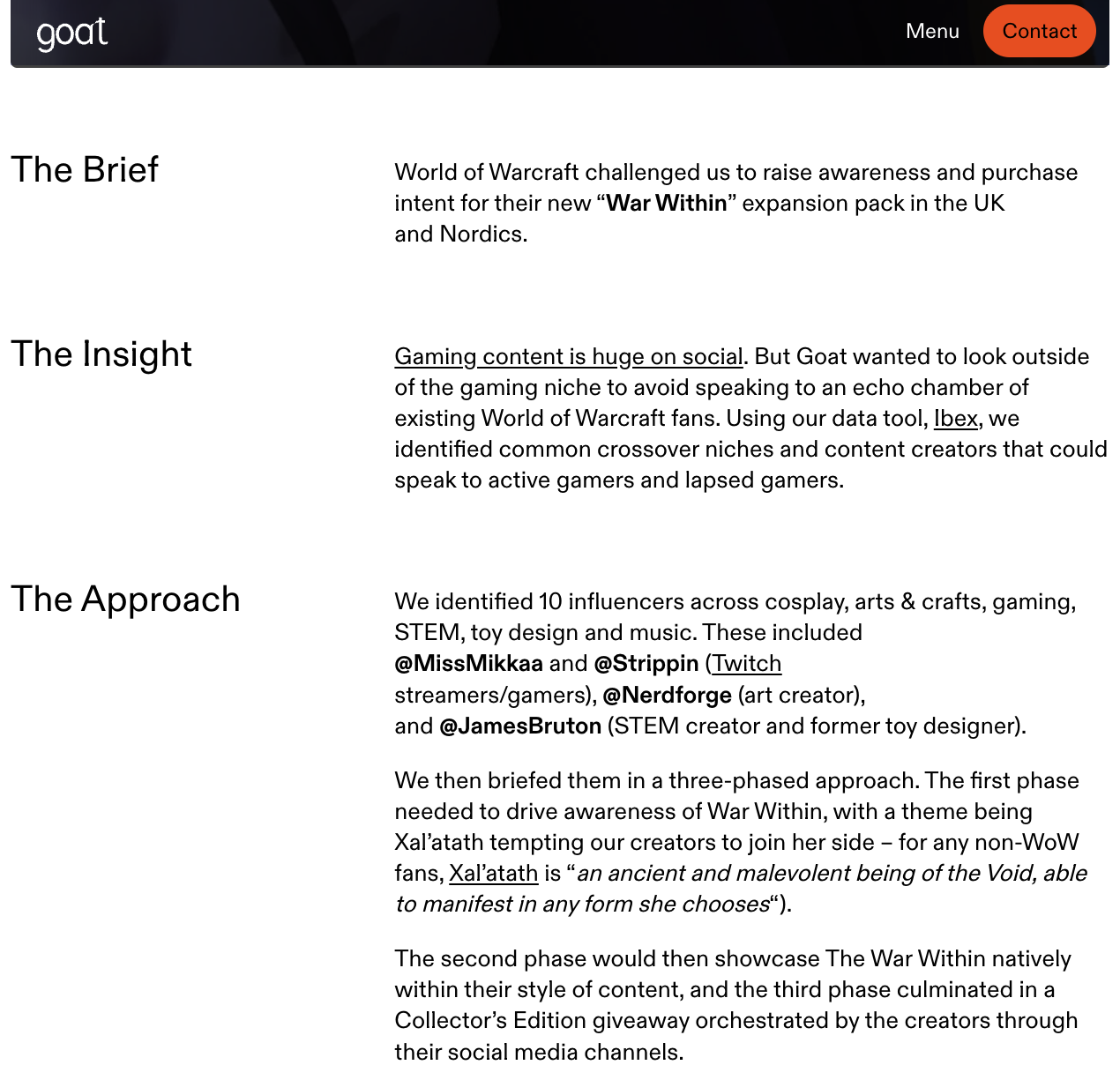
You can see this in Goat Agency’s portfolio. The company lays out the brief, its insights and its approach first. It then follows with precise results that demonstrate performance, tying its success to the challenge of raising awareness:
(Source: Goat Agency)
To show your results in an even more direct manner, use reporting snapshots to detail the before-and-after impact of campaigns. A chart that links a content refresh to higher engagement drives home the value of your efforts.
Demonstrate collaboration
Social rarely exists in isolation. Strong portfolios illustrate how your work aligns with sales, PR or even customer care. For example, maybe you collaborated with PR to amplify a product launch or created a content series answering FAQs flagged by the service team.
Documenting collaboration proves you understand how social media fits into broader business goals. This positions you not just as a content creator, but as a strategic partner.
How to build a portfolio without client work
Not every social media professional has a roster of big-name clients or brand campaigns. If you’re early in your career or moving into social from another role, you can still create a portfolio that proves your social media skills.
Here’s how to show your creativity, strategy and ability to deliver measurable outcomes:
Use mock campaigns or passion projects
Self-initiated work can be just as powerful as client projects when framed strategically.
For example, imagine creating a mock campaign for a UK coffee chain launching a new oat latte. Begin by outlining:
- Goal (generate awareness)
- Strategy (lean into TikTok trends and influencer UGC)
- Execution (short-form videos, branded hashtags)
- Expected results based on industry benchmarks
Next, add visuals, sample posts or even a content calendar to demonstrate how you think and would approach a real brief.
Contribute to community-led campaigns
Another way to build your portfolio is by volunteering your skills for nonprofits, local organisations or events. Many UK charities, grassroots festivals and sports clubs rely on volunteers to manage their social media accounts.
For example, running a campaign for a local animal shelter or helping a community arts festival with social media content creation gives you practical, provable experience as a social media executive while giving back.
Showcase your personal brand results
Your own social media profiles can also serve as proof of your ability. A growing LinkedIn audience, a TikTok with strong engagement or a side project like a podcast or blog can all demonstrate skills in content creation, optimisation and audience growth. Include metrics like follower increases, reach, link clicks or viral posts to highlight how your strategies lead to results.
Even if the “brand” is you, the results still show you can build and maintain a social media presence.
8 tips to make your portfolio stand out to UK hiring managers
Crafting a social media portfolio isn’t just about collecting your best work. To really impress, you need to tailor it for the people who will review it. These are often busy hiring managers or clients scanning on mobile, looking for impact at a glance.
These eight tips will help you shape a portfolio that feels relevant, credible and unmistakably yours:
1. Tailor for every application
A portfolio must be curated, not a master folder of everything you’ve ever created. Think of it as telling a story for each opportunity.
If you’re applying for a social media manager role at a retailer, highlight campaigns that drove conversions or sales. If you’re pitching as a freelancer to a nonprofit, showcase community-focused projects.
Swapping examples to match different social media job descriptions shows you’ve thought about the audience and care about the brand you’re applying to.
2. Highlight regionally relevant work
Cultural fit matters. In the UK, content tied to local projects and events shows you understand the moments and values that shape audience engagement. Try using regionally familiar language to demonstrate relatability and include case studies that illustrate how you localise campaigns for a UK audience.
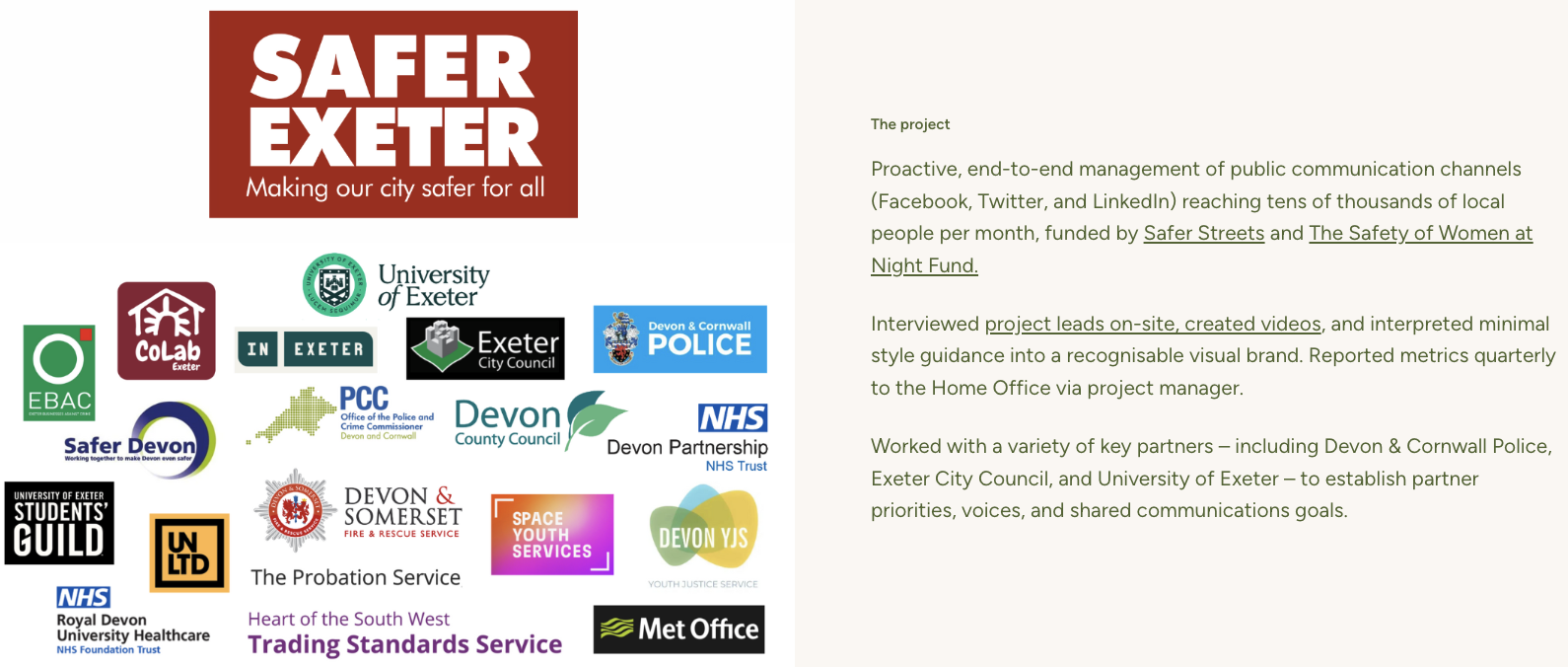
Take Rebecca Broad, for instance. She presents regionally specific campaigns and explains how she worked with local partners, tailoring her work to meet regional needs:
(Source: Rebecca Broad)
3. Keep it updated and relevant
Few things undermine credibility faster than a stale portfolio. A campaign from 2019 won’t reflect the current landscape of UK social media trends.
Set a quarterly reminder to refresh your portfolio with new work and remove outdated examples. This keeps your portfolio in line with the networks, formats and social media strategies employers care about today.
4. Tell a clear story across your examples
Instead of presenting a random gallery of posts, connect your portfolio entries like chapters in a story. Each example needs to show the challenge, the approach and the result. Together, these examples reveal who you are as a practitioner.
Think of your portfolio as a case study collection rather than a scrapbook. For instance, if you want to work with sustainable companies, show projects that reflect the community-building skills you bring to the industry. This narrative style is more engaging and easier for hiring managers to remember.
5. Use real metrics, not just vanity stats
Focus on metrics tied to business impact, like click-through rate, conversions, saves, shares, DM replies or even cost savings compared to paid channels.
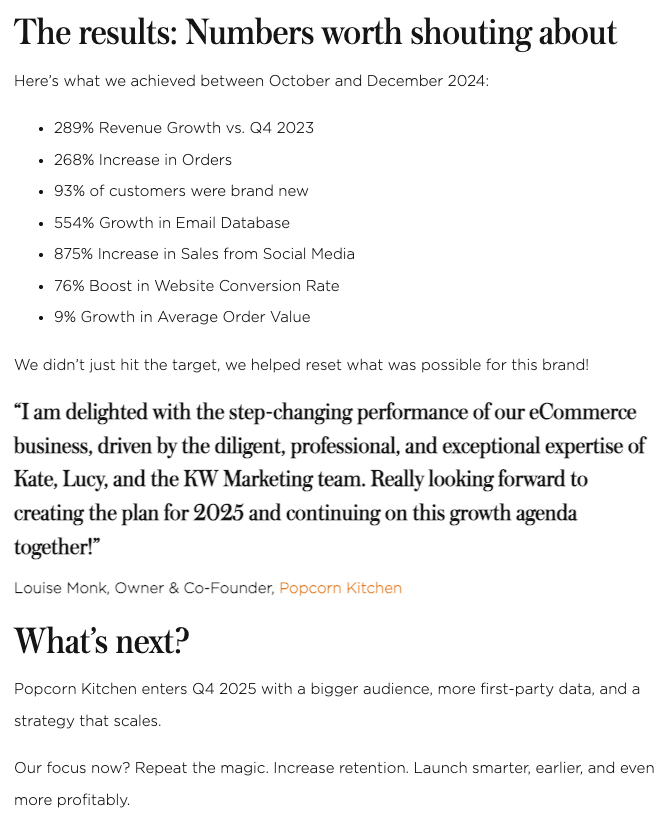
For example, showing that your campaign cut cost per click by 20% is far stronger than saying “the post got 1,000 likes.”
Take a look at how KW Marketing does this. In the company’s Popcorn Kitchen case study, it shows growth metrics rather than simple follower numbers. It also breaks this down to show impact across platforms while distinguishing new business from old:
(Source: KW Marketing)
6. Explain your role clearly (especially for team projects)
Social media campaigns often involve multiple people, including everyone from graphic designers to copywriters.
Hiring managers need to know exactly what you contributed. Did you lead the strategy, manage community engagement or produce the creative assets?
Be specific. Add a simple line under each case study, like “My role: strategy and reporting,” to prevent confusion and give credit where it’s due. You can create a click-through link to explain your role in more detail, but make your contributions clear from the outset.
Look at how Ellie May does this. Each project includes a line that summarises the activities she completed for each client:
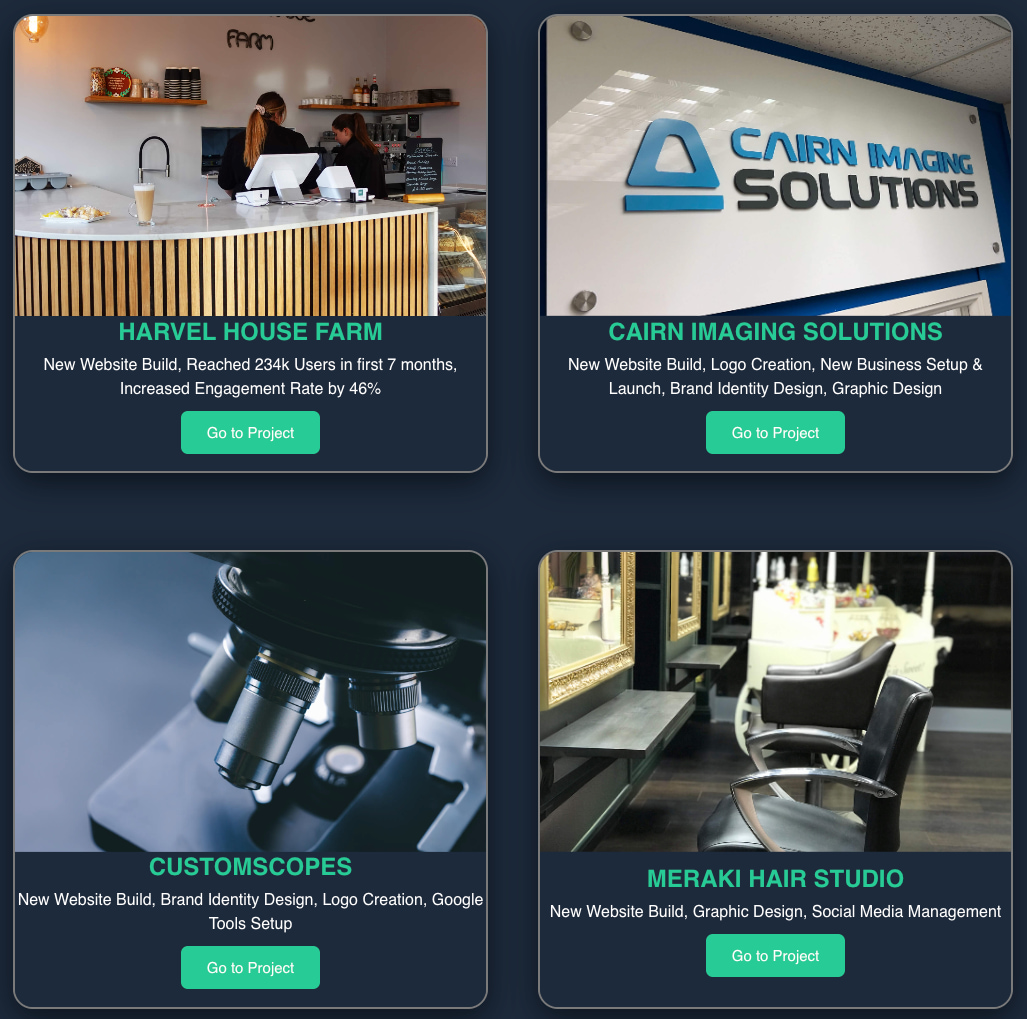
(Source: Ellie May Digital)
7. Include feedback, testimonials or social proof
Quotes from clients, managers or teammates humanise your portfolio and provide external validation of your skills.
For freelancers, this is particularly powerful as testimonials reassure potential clients that others have trusted you and were happy with your results. Internal feedback, like a manager praising your ability to handle a crisis on social, adds weight to your examples.
Victoria Marks does this well in her portfolio. She adds testimonials from a range of clients to show how her diverse client base appreciates her work:
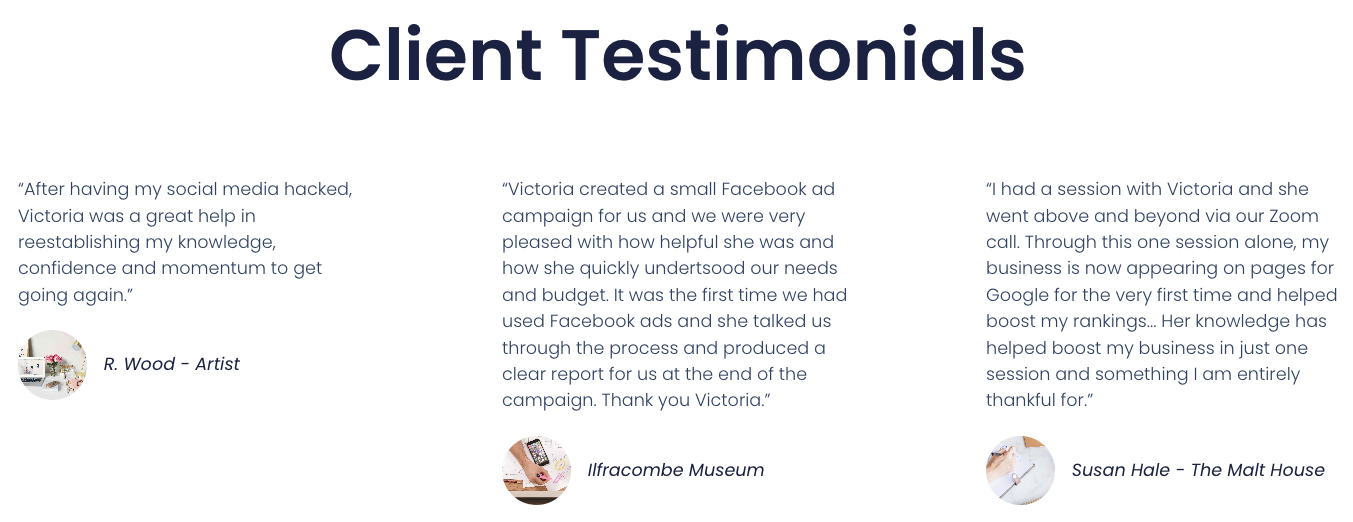
(Source: Victoria Marks)
8. Avoid over-designing
Portfolios overloaded with animations, colour gradients or unusual fonts can be difficult to navigate, especially on mobile.
Keep layouts clean, scannable and consistent. And while it’s good to use visuals to support your story, don’t let them overshadow your point. Remember, the goal is to prove your skills, not to show off your flair for design at the expense of readability.
Your portfolio is your proof
Your portfolio is more than a collection of posts. It’s your professional story. When it highlights outcomes with supporting visuals, it becomes proof of your expertise and makes your skills stand out.
The result? A portfolio that not only shows what you’ve done, but proves the impact you can deliver next. Try Sprout today to see how it can help you build a portfolio that demonstrates your impact.
39 free social media strategy templates that will elevate your workflows
Published on August 20, 2026 Reading time 15 minutes








Share