Substack SEO: A guide to grow newsletter reach and visibility

Written by John Paul Hernandez
Published on January 23, 2026
Reading time 12 minutes

Table of Contents
Substack is a powerful platform where brands and creators connect directly with passionate audiences. With its built-in SEO features, this newsletter social network helps brands expand reach, engage audiences with buying intent and improve visibility across social media search and external search engines.
But to make the most of these capabilities, you need to optimize your content for discoverability across the buyer journey. Without a clear Substack SEO strategy, your newsletters risk getting lost in the feed.
Here’s how to optimize your Substack strategy.
Why Substack SEO is critical
Over half of Gen Z and Millennials plan to spend more time on creator-driven platforms like Substack going forward, making Substack a prime place for reaching your audience where they already spend time. As readers shift their discovery habits toward searching on social, Substack search engine optimization is increasingly valuable for boosting the visibility of newsletters and blogs. Optimizing your content using SEO techniques like keyword research to write proper headlines and alt text improves both content discoverability and measurable ROI.
Here’s an example of SEO features you can control in Substack:
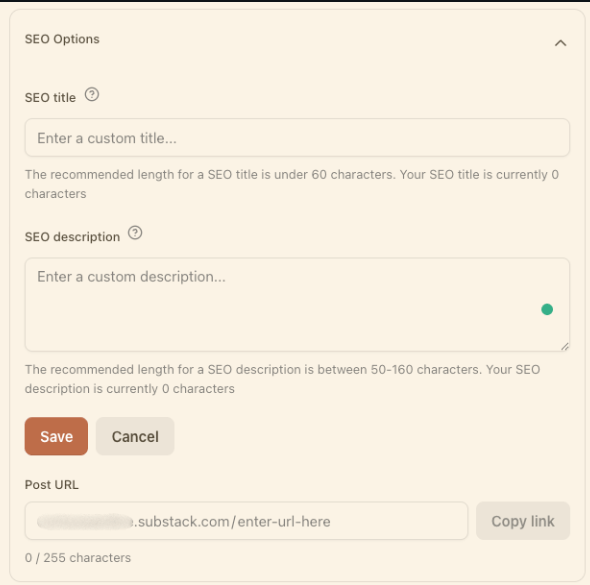
(Source: Substack)
Some bloggers refer to Substack as “rented land” because you’re publishing on its domain rather than your own. While this presents certain SEO challenges, Substack visibility helps you connect with new users and collect email addresses for long-term growth.
As Ana Calin, founder of How We Grow, a Substack newsletter with over 64k subscribers, tells Sprout, “[It’s] owned land. Treat it that way. Build equity, not just engagement.”
13 best practices to improve your SEO on Substack
Substack SEO involves optimizing for both internal discovery and external search, which includes traditional engines like Google and Bing, as well as AI search tools like ChatGPT, Claude, Perplexity and Grok.
Here are 13 Substack SEO optimization tips to help improve your performance in all areas:
1. Make every headline a search magnet
Your headline is the single most important factor in whether a reader clicks on your article. It should support E-E-A-T to signal to search engines that your content is credible and authoritative.
Aspects like clarity, specificity and even length can make a big difference in click-through rate (CTR). In fact, Backlinko reports that titles “between 40 and 60 characters have a 33.3% higher CTR” compared to those outside that range.
To maximize engagement, write headlines that are both clickable and discoverable:
- Example of a weak headline: The Best Shoes for Joggers
- Example of a strong headline: The 5 Best Running Shoes for Beginners in 2025 (Tested)
This revised title is significantly stronger because it uses the primary keyword (“running shoes”), targets a specific audience (“beginners”), implies freshness (“2025”) and signals E-E-A-T (“Tested”). The tech wellness company Loftie does this well. A post titled “A Therapist’s Guide to a Sustainable Sleep Routine” builds immediate authority (“Therapist’s Guide”) and expertise, and clickability with “guide” and practical value by providing a tangible routine.

(Source: Substack)
2. Optimize your meta details for clicks
Your meta title and meta description are your “ad copy” on the Google results page. Thankfully, Substack gives you full control over meta details to increase visibility on Google and other top search engines.
Here’s how to optimize them:
- Title: This is what appears in the Google search results. Keep it under 60 characters and include your primary keyword or other strategic adjustments that’ll motivate clicks.
- Meta description: This is the small blurb under the title. Write a compelling, 155-160 character summary that includes your keyword and a call-to-action to encourage readers to learn more.
Adding meta details to every post builds consistency and ensures each piece becomes an indexable, discoverable asset. This leads to real business value, like increased reach and authority.
Looking at the Loftie example again, we know the headline “A Therapist’s Guide to a Sustainable Sleep Routine” is strong. They can use the meta description to reinforce E-E-A-T by including additional authoritative information, like the expert’s name, along with relevant terms (like “burnout” and “healthier mind”).
3. Use headers to guide readers and rank your newsletter
Traditional search tactics involve using H2s and H3s, and SEO for Substack follows the same principles. Clear, keyword-focused headings improve both reader comprehension and how search engines understand your content.
Structured headers help readers and crawlers scan your content quickly and understand its main takeaways. To make them more effective, position your headers as concise value statements that address what readers want to learn.
For example, instead of “Wearables for nomads,” try “Wearables for nomads who like to hike.” The latter version sets clear expectations, offers specific context and naturally includes keywords like “wearables,” “nomads” and “hike.”
When organizing your headers, follow these best practices for SEO hierarchy:
- H1 (Your Post Title): Top 10 Wearables for Nomads Who Hike
- H2 (Main Section): 1. Smartwatches
- H3 (Sub-section): Key Features for Hiking
- H2 (Main Section): 2. Fitness Trackers
- H2 (Main Section): 1. Smartwatches
4. Keep slugs short and strategic
Substack offers more SEO control than most social networks, where optimization depends on including keywords in short posts. That’s because Substack also lets you edit your URL slugs to include keywords, which enhances discoverability. The key is to keep your slugs short, clear and high-impact.
To do this, focus on your primary keyword phrase and not much else. For example, if your post covers the best electronics for digital nomads, a slug like “electronics-digital-nomads” highlights relevant keywords without cluttering the URL. This makes it far more effective than a slug like /post-1234. Also, avoid anything that dates it, like the current year, to keep your post evergreen.
Calin explains her strategy for boosting discoverability for How We Grow: “Custom URLs matter more than people think. Keep them short: 3–5 keywords max. [And] put your main keyword first. Nobody’s searching for ‘the ultimate comprehensive guide to content marketing strategy 2025’—they’re searching ‘content marketing guide.’”
Keyword-focused slugs help support ranking and encourage shareability through easy-to-read Substack URLs with clear topic attribution.
5. Use Sprout Listening to surface trending topics
While Sprout Social doesn’t integrate directly with Substack, it provides valuable data that can guide what you publish and how to increase engagement. It does so by finding trending topics with strong momentum, which helps you expand reach and strengthen SEO.
For example, Sprout Listening (paid add-on) monitors your brand name, products and key terms relevant to your business and industry. Listening also surfaces trending topics that align with your audience’s interests and provides a pipeline of validated ideas to inspire future newsletter content.
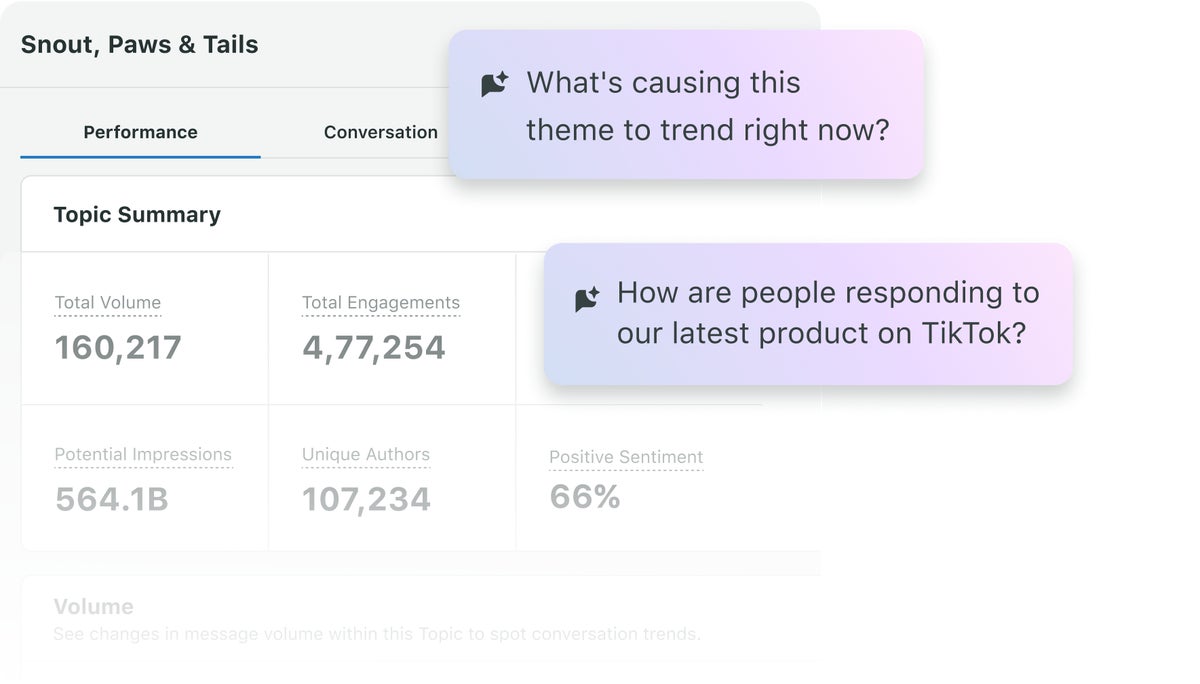
For trend prediction, NewsWhip by Sprout Social goes beyond listening and into early detection. It tracks millions of signals across news and social channels in real time, highlighting topics that are gaining momentum before they become widely covered.
Together, Sprout Listening and NewsWhip help uncover relevant topics early and spark interactions that strengthen credibility, authority and trust signals for future rankings.
6. Build a web of links
In many ways, Substack acts like a content management system for newsletters. Classic SEO tactics, like internal linking, help strengthen authority and create a connected content ecosystem.
Linking related posts and resources allows search engines to gradually recognize relationships between your Substack, website and other owned assets, which supports long-term authority. These links also improve the reader experience by encouraging deeper engagement and guiding audiences to relevant content.
Focus on two types of links for every post:
- Internal links: This is when you link to your own previous Substack posts. It’s a powerful way to build a web of content. It guides readers to your older articles, increases their lifespan and helps search engines discover and index your entire archive, reinforcing your expertise on a topic.
- External links: This is when you link out to other high-quality, credible sources, like industry reports, news articles or expert sites. This shows Google you’ve done your research and adds a layer of trust and authority (part of E-E-A-T) to your writing.
As you add links, connect them to clear, relevant anchor text that accurately describes the linked page so readers know what to expect. Well-written anchor text strengthens SEO by signaling topical relevance to search engines and guiding readers to valuable related content.
7. Add alt text that supports SEO
Every brand should use alt text for images to support accessibility. It describes images for visually impaired readers. But alt text also provides a place to naturally include relevant keywords to enhance discoverability.
For example, for a food writer on Substack using an image of a pepperoni slice, alt text like “A slice of pepperoni pizza on a paper plate next to a cola” would be appropriate for accessibility.
By making a slight adjustment to include additional keywords, the brand could optimize accessibility even more: “A slice of pepperoni pizza on a paper plate next to a cola.”
- Poor Alt Text: pizza.jpg
- Good (Accessibility): A slice of pepperoni pizza on a paper plate.
- Great (Accessibility and SEO): A slice of pepperoni pizza from a Substack newsletter about easy weeknight recipes.
When making this type of adjustment, prioritize accessibility and ensure the text doesn’t “keyword stuff,” as in this example: “Pizza office parties for convenience. Call catering today.” This fragmented, non-descriptive text fails to support accessibility and undermines trust.
8. Publish content that lasts
Substack content can remain relevant well beyond its initial publishing date. That’s why it’s important to make sure your content is as strong today as it will be a year from now. Evergreen content serves as a lasting brand asset by generating consistent search visibility and authority over time.
To maximize long-term relevance, focus on formats that provide timeless value, like how-to guides and in-depth resources. By creating content that people repeatedly find useful, you build authority, strengthen your brand’s credibility (supporting E-E-A-T) and improve your visibility in both Substack search and broader search engine results.
While evergreen content lasts longer, even top posts won’t perform forever. To improve longevity, use quarterly or yearly checks to see which of your highest-performing posts would benefit from sequels and follow-ups.
9. Invest in backlinks through community
Substack is one of the most effective ways to find backlink opportunities because it allows for direct communication with the writers and social media managers who run newsletters. Engaging with these individuals can help you build a network for sharing resources that increase brand reach, authority and search rankings.
Since search engines like Google verify that links come from reputable and relevant sources, low-quality backlinks can harm rankings. To find high-quality backlinks, participate in Substack communities on Notes and Chat to collaborate and cross-post newsletters. Also, connect with audience members and influencers on LinkedIn, Reddit and industry publications. Collaborations with media influencers or engaged audience members help boost reach while generating backlinks.
Having guests write for your newsletter also lets you tap into the audiences of influential contributors. For example, if you own an ice cream brand and partner with a local foodie influencer for a joint newsletter issue, you’ll introduce your brand to new subscribers while strategically earning backlinks from a trusted source.
10. Cross-promote with intention
Once you publish a Substack issue, don’t confine the content to the platform. Because Substack content is often in-depth, it serves as a deep well of repurposing opportunities to expand your reach and amplify your SEO efforts.
LinkedIn articles, X articles (for X Premium+ members) and Instagram carousels are all quick ways to repurpose your newsletter issues. Since these assets can show up in external search results, cross-promoting them expands SERP ranking opportunities.
Strategic repurposing involves creating new iterations of your content. For example, easily transform a newsletter into a Twitter/X thread that covers your main points. Then, once you publish the thread, post it natively on Bluesky and Threads.
Repurposing isn’t limited to text. Create short-form videos that showcase your core ideas for TikTok, YouTube Shorts, Instagram/Facebook Stories, X videos and others. Each repurposed post should feel organic, emphasize unique storytelling and avoid overt promotion. Be sure you also edit the content so it feels native wherever you post it.
In the following example, a local farm that sells produce online repurposes a newsletter titled “Why it’s better to order organic fruit online.” The farm’s repurposed posts include:
- A LinkedIn article: [Format and paste the article for publication.]
- An X thread: Did you know that ordering apples online gets you better quality fruit and more nutrients? Here are seven reasons why ordering fruit online is healthier than buying it at a big-box supermarket 👇 [Add a reply post for each point to continue the thread.]
- A YouTube Short: “Hey, I’m Ashley, and I’m ordering apples online for the first time.” Ashley proceeds to order, does an unboxing when it arrives and lists the seven benefits of ordering online.
Here’s an example from Lia Haberman, a social and influencer marketing expert, who repurposed her Substack into a LinkedIn newsletter and an Instagram Reel:

(Source: Substack, LinkedIn and Instagram)
11. Use Substack Notes and engage with newsletter comments
Substack functions more like a social media network than solely a newsletter app because it allows engagement with niche communities through features like Notes. Notes are short posts that appear in users’ Substack home feeds. When users see a Note, they can follow you to see your posts consistently—even without subscribing to your newsletter. Notes are a great way to boost content exposure and increase your visibility on the platform.
Notes also supports community management and engagement through comments. Responding to readers enhances credibility and improves E-E-A-T.
According to Ana Calin, “Notes are everything for internal discovery. The algorithm prioritizes accounts that post consistently, 5–7 Notes per day, minimum.” She adds that trending topics generate significantly more engagement than evergreen content.
Substack also offers subscriber chats, which are great for engaging with superfans, gathering feedback to improve your newsletter and encouraging shares and exposure.
For example, fashion brand Tory Burch fosters community through its “What Should I Wear?” newsletter. In it, the brand engages readers by answering common questions and featuring topics like “The suitcase diaries” with tips from Substack fashion writers:
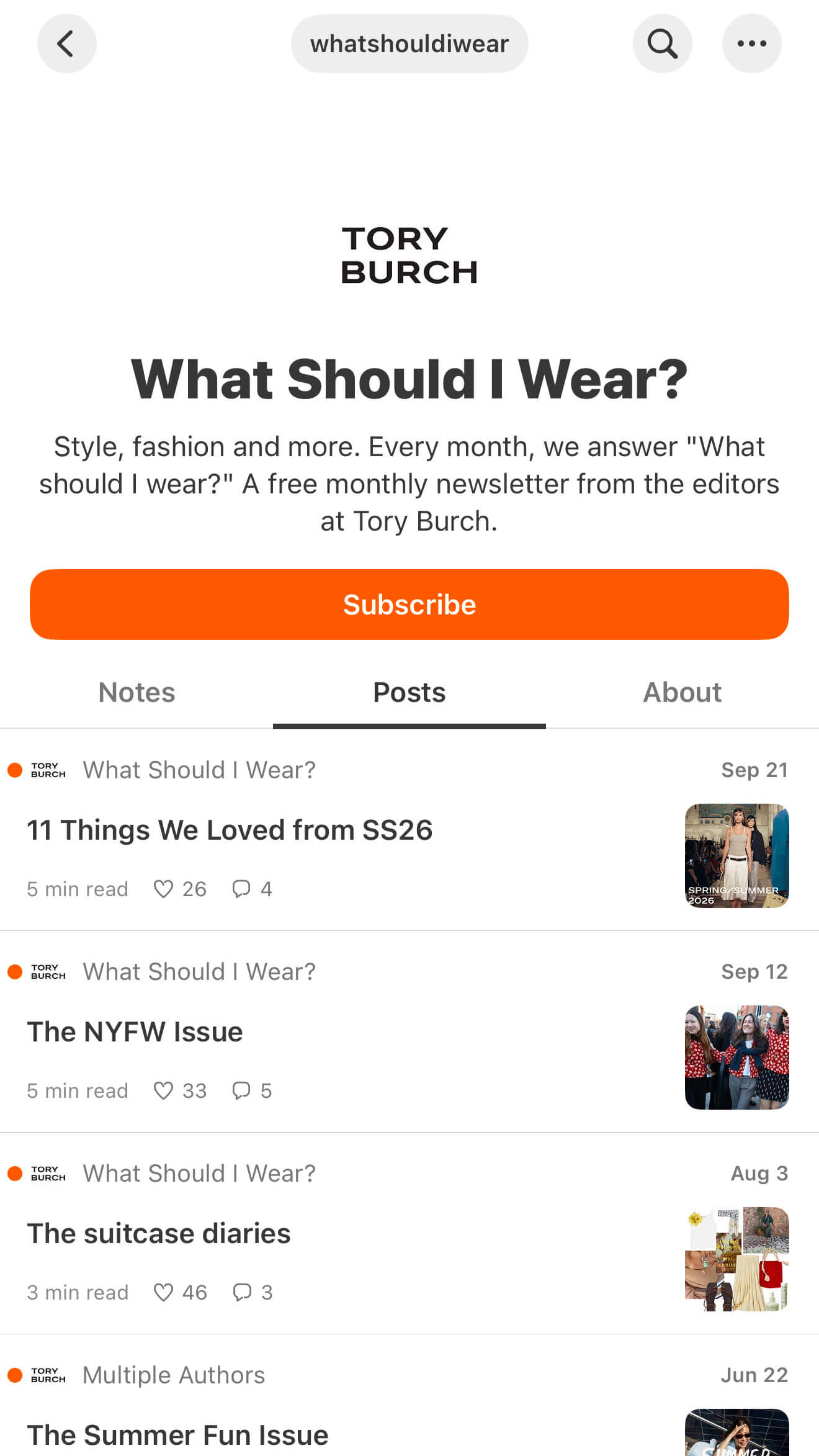
(Source: Substack)
Another engagement tactic that taps into the power of Notes is encouraging restacks, Substack’s version of reposts. “One restack reaches someone’s entire audience,” Calin says. “So create ‘restackable’ Notes—controversial takes, useful frameworks, surprising data. And ask directly: ‘Restack if you agree.’”
12. Track, learn and optimize
All your efforts on Substack should support broader SEO and marketing outcomes. To make these connections, start by tracking metrics that reflect visibility, authority and conversions. Tools like Google Search Console, for example, monitor rankings, impressions and clicks, while Substack provides analytics for impressions, content engagement and subscriber growth.
These metrics show how content performance contributes to your overarching marketing goals. High open rates and views increase brand exposure, grow your audience and drive awareness. Subscriber growth strengthens authority and expands reach, which can generate more leads and ultimately impact sales. Substack enables a continuous progress loop: publish content, measure results, optimize based on insights and grow your reach and impact.
13. Build a launch plan for SEO
The fastest way to achieve measurable SEO results is to start with a strong growth plan. Calin recommends the following approach for optimizing Substack for discoverability:
Days 1–7: Create a value-driven About Page that clearly identifies who you serve and the problems you solve. After that, Calin recommends writing “your first three posts,…stuff that solves a real problem your audience has.” Once you’ve published those posts, keep an eye on your SEO tools to see how the content resonates and ranks.
Days 8–21: Stick to a publishing cadence by releasing issues twice a week and posting Notes 5–7 times each day. Then, repurpose your content across platforms. A single newsletter can generate 3–5 LinkedIn posts, 10 Notes and future email campaigns.
After 30 days: Evaluate visibility by reviewing Substack followers, subscriptions, traffic sources and views. Use this data to see what performs best and refine your strategy.
How to measure Substack SEO success
To measure the success of Substack SEO, create two clear categories: internal SEO and external SEO.
Here are the metrics you should look at for both:
Substack-specific KPIs
- Total views per post across web, email and the app
- Open rate to find the percentage of email and app users who open your post
- New subscriptions per post to evaluate relevancy and increase future exposure
- Sharing and referral performance to track peer-to-peer visibility (shares) and find successful SEO placements (referrals)
- Likes and comments on Notes and posts to indicate engagement
SEO-aligned KPIs
- Organic search impressions and clicks through SEO tools that attribute actions to your Substack content
- Indexed pages to see how many new posts get crawled by search engines
- Keyword rankings and SERP visibility to measure the effectiveness of your SEO efforts
- Organic traffic from search engines and AI tools
- Backlinks from other websites and newsletters that build topical authority
Put Substack SEO into practice for long-term growth
Substack SEO requires both strategic planning and tactical execution. Optimizing your profile and newsletter increases discoverability across traditional and AI search, helping you grow your presence during Substack‘s early adoption.
Sprout complements Substack by helping you turn your newsletters into part of a larger growth strategy. It uncovers trending keywords with Listening Topics and expands reach through the Influencer Marketing by Sprout platform—building visibility, backlinks and search authority.
Download our free Social Search Optimization workbook to learn how to design a social search strategy that supports long-term growth.
FAQs about Substack SEO
Can Substack newsletters appear in Google search results?
Yes. Google and similar search engines crawl Substack content.
Do Substack paywalled posts get indexed by Google?
Yes and no. To allow search engines to crawl paywalled posts, enable the “Allow search engines to index paywalled content” setting. While only metadata and content previews (the portions non-subscribers see) are crawlable, optimizing those public portions is key for visibility.
How does engagement influence Substack discoverability?
High engagement on Notes and newsletters signals Substack algorithms to promote your content organically, boosting reach and reinforcing E-E-A-T.
Is Substack SEO different if I use a custom domain?
Yes. A custom domain increases authority and control and enables you to register in Google Search Console for better indexing. With a custom domain, all your backlinks and brand mentions go to your URL instead of Substack’s.
Note: If your domain is brand new, you’ll lose the domain authority you get with Substack, which will affect ranking.
What are common mistakes to avoid in Substack SEO?
The most common mistakes are using Substack primarily to boost external search (which can appear spammy instead of authoritative) and ignoring Notes, which are discoverable and extend reach to users who don’t yet follow you.
How do I measure ROI from Substack SEO?
To measure ROI, combine Substack’s native analytics (views, subscriptions and referral sources) with UTMs and conversion tracking to attribute results to SEO efforts. Layer in external tools (SERP tracking, Google Search Console and Google Analytics) to holistically monitor search visibility and performance over time.
37 free social media strategy templates that will elevate your workflows
Published on December 5, 2025 Reading time 15 minutes









Share