How to build long-term influencer partnerships that drive real business value

Written by Jasmine Williams
Published on April 29, 2026
Reading time 8 minutes

Table of Contents
You likely follow creators who consistently promote a particular product or brand. Maybe it’s a beauty YouTuber who always reaches for the same foundation, or a fitness influencer who drinks the same pre-workout shake before every gym session.
Even though you know it’s sponsored, you’re more likely to remember—and purchase—from the brand because it’s obvious they genuinely love it and incorporate it into their daily life.
This is the case for long-term influencer marketing partnerships in a nutshell. It’s also a big reason why the brands seeing the strongest returns are investing in creator relationships as much as selection.
A single sponsored post from a big influencer can drive awareness. But a creator who uses your product consistently delivers repeated, authentic exposure that compounds in trust, creative quality and business impact.
To build this kind of program, you need to be intentional at every stage. This guide covers why long-term influencer partnerships work, how to find the right partners and what it takes to build and sustain them.
Why brands need to move away from one-off influencer marketing
One-off influencer campaigns make sense for short-term goals like product launches, seasonal pushes or timely activations. But they have a ceiling as a primary strategy.
Here are two key reasons brands are rethinking the one-and-done model:
One-off influencer partnerships can feel jarring to audiences
When a creator promotes a new brand every few weeks, the recommendations start to blur together. If a parenting influencer raves about one stroller in January and another in February, neither endorsement carries much weight.
The alternative is what Deeper Sonars has built with carp fishing creator Juan Curto (@jcurtofishing). He lists Deeper in his bio, includes his audience discount code and regularly fishes with their equipment. And you won’t find him promoting any other fish finders.
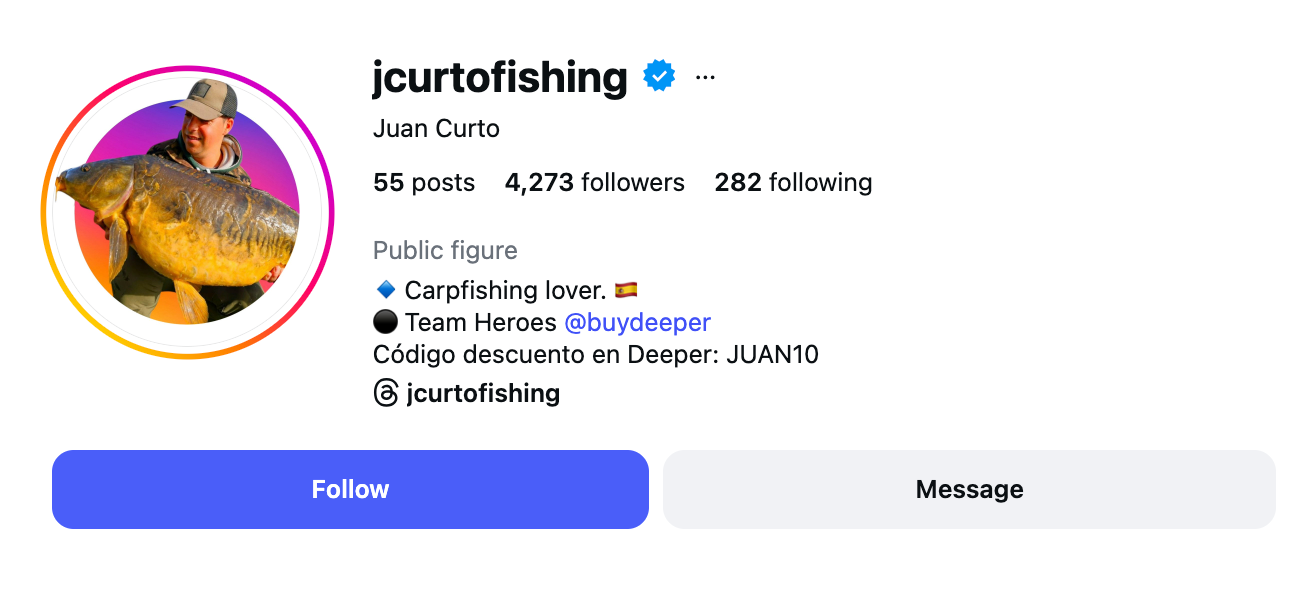

Deeper requires this kind of exclusivity for the entire duration of their influencer relationships because, as their head of partnerships put it, anglers can smell a promotion. Influencer recommendations feel more authentic when a creator builds genuine expertise with a product through consistent use.
One-off influencer partnerships come with hidden operational costs
Every new creator partnership means starting from scratch. That means:
- New contracts and legal review
- Fresh creative briefs and brand education
- Time spent onboarding someone who may only post once
Long-term partners, by contrast, develop a deeper understanding of your product and that knowledge impacts their content quality and consistency. When a creator works with your brand across multiple campaigns over months or even years, the content starts to feel less like marketing and more like a natural part of their story. They also tend to evolve from content vendors into brand ambassadors whose endorsements feel more credible.
The business value of long-term influencer partnerships
Influencer marketing already drives purchase behavior. According to the Q3 2025 Sprout Social Pulse Survey, 32% of consumers have bought a product or service through an influencer’s sponsored post in the past 12 months. That number climbs significantly among younger audiences: 53% of Gen Z and 48% of Millennials. Long-term partnerships are how brands ensure they capture as much of that intent as possible.
Here’s where the business case gets compelling:
- ROI compounds over time. Long-term partnerships allow you to see what content formats resonate, which messages drive action and how the creator’s audience responds to your product across different contexts. Each campaign informs the next, and that feedback loop can translate into improved influencer marketing ROI: better creative, stronger results and a lower cost per outcome.
- You get pricing stability and predictability. Long-term contracts give brands guaranteed placement in a creator’s content calendar and more leverage to negotiate favorable rates. For marketing teams, that means more accurate forecasting and more time to allocate to creative and campaign strategy (rather than sourcing and onboarding new influencer partners).
- Creators become a source of product intelligence. Gymshark built their entire women’s activewear line this way. When they first expanded into women’s fitness wear, they brought in Nikki Blackketter, a fitness YouTuber and one of Gymshark’s first female athletes. Founder Ben Francis has credited her input as a large reason the women’s range developed the way it did. The brand partnership eventually grew into Nikki co-creating her own Gymshark collection.
- The content gets better. There’s a natural ramp-up period early in a partnership while a creator learns your brand. As the relationship matures, that friction disappears and the content becomes more natural, specific and effective because the creator understands your brand well enough to make it their own.
How to find the right long-term influencer partners
Finding the right long-term influencer partners starts the same way any influencer search does: by identifying creators whose audiences, content styles and values align with your brand. The difference is that the stakes are higher. The longer the partnership, the more a poor fit compounds.
Sprout Social Influencer Marketing gives teams several ways to source, evaluate and vet potential long-term partners so they can find the right fit before committing.
Use AI search to find topically relevant influencers
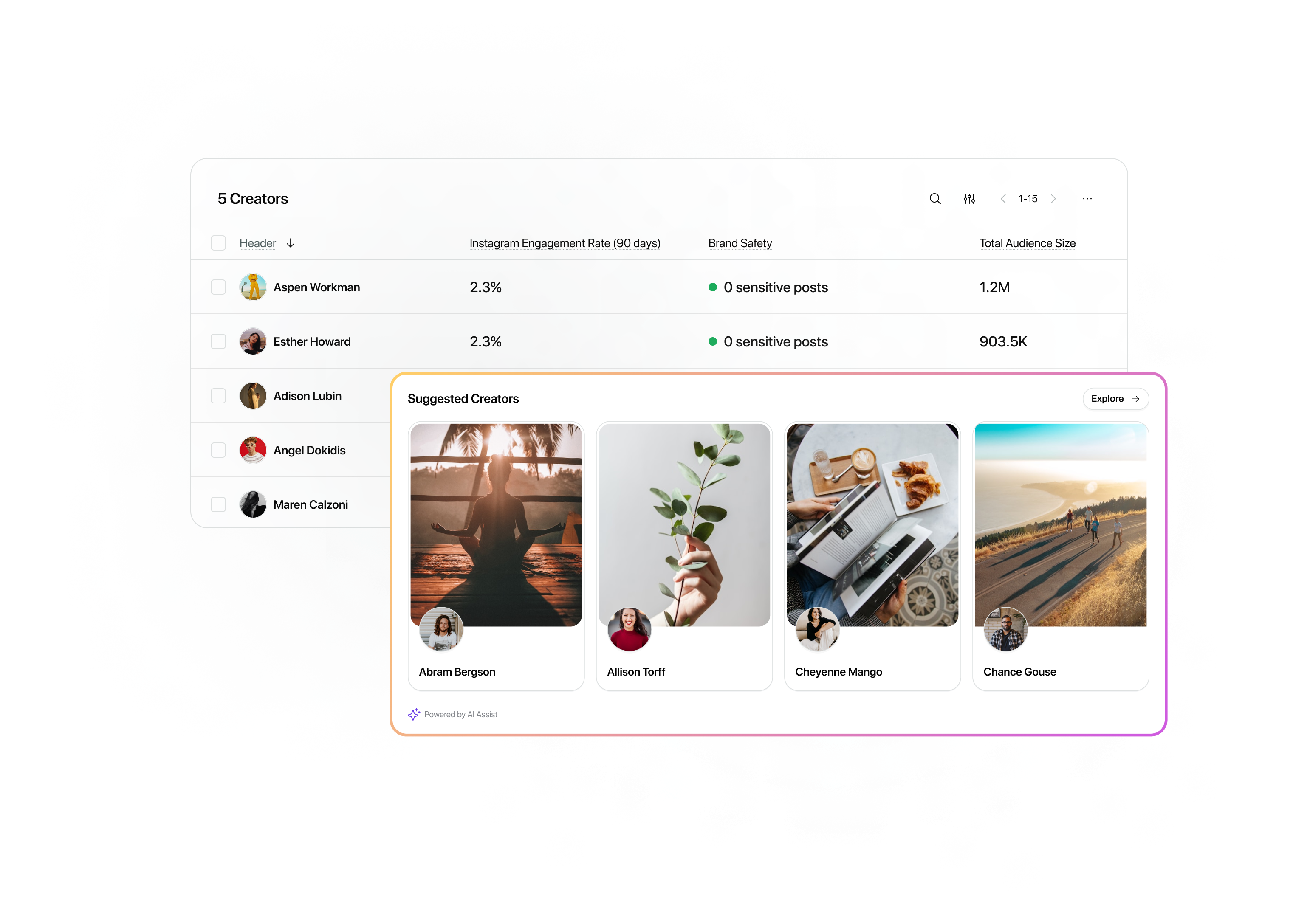
The goal is to find creators who check the obvious boxes on reach and demographics, but also talk about topics that are genuinely relevant to your brand. Sprout’s natural language AI search goes beyond filters to surface creators based on what they actually post, enabling more efficient discovery at scale.
Determine creator alignment with your brand
Finding creators is one thing. Evaluating whether they’re the right fit for your brand specifically is another. According to the Q3 2025 Sprout Social Pulse Survey, 25% of consumers cite value misalignment as a top concern in influencer partnerships, which means getting this step right matters to your audience as much as it does to your team.
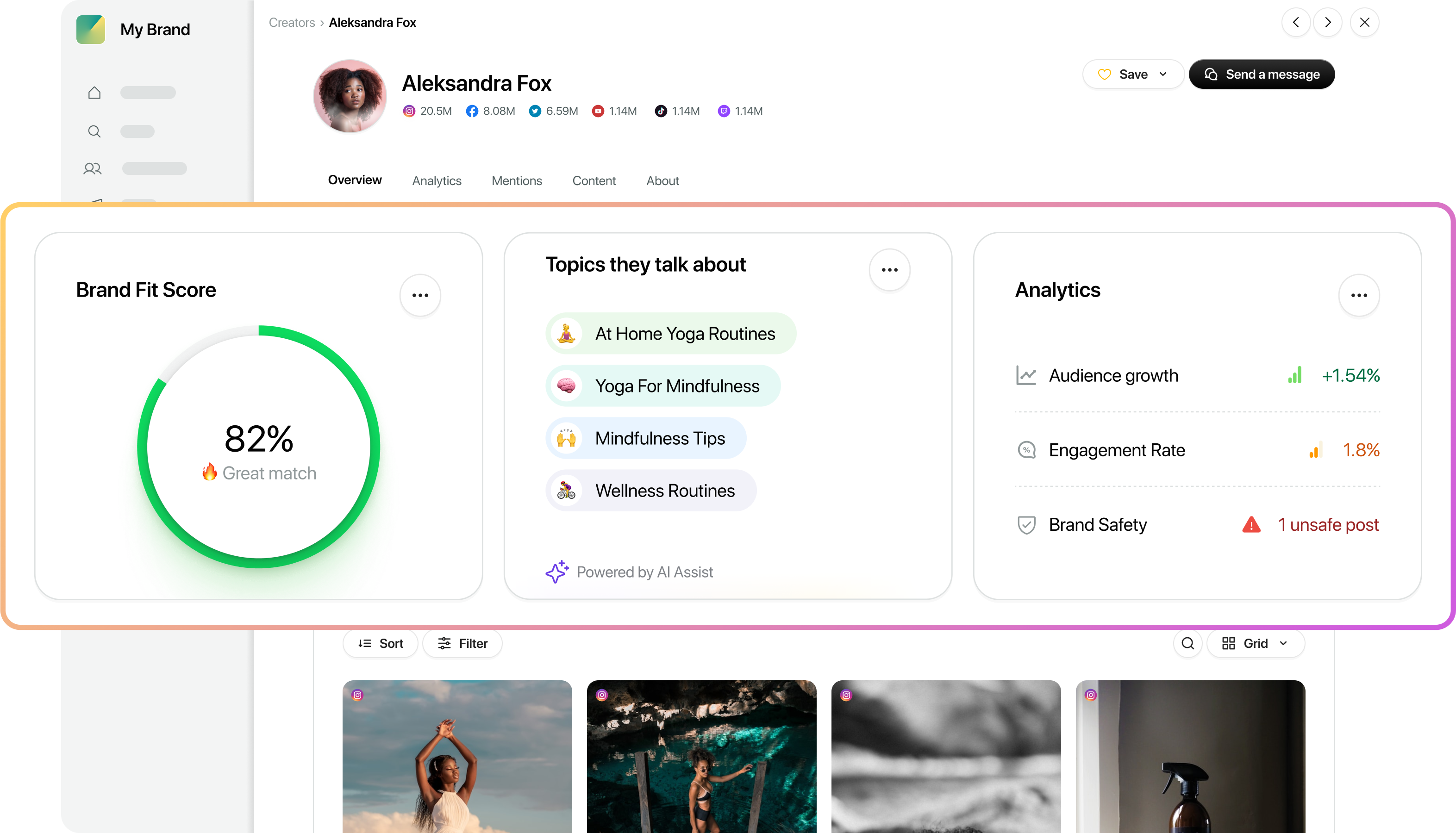
Sprout’s Brand Fit Score instantly scores a creator’s alignment to your brand across audience interests, location and topics. Users can toggle across multiple audience definitions within a single workspace to compare candidates and make a confident call before you hire an influencer.
Identify potential risks with AI-powered safety tools
Long-term partnerships mean long-term exposure. A creator who posts something controversial six months in can create real reputational risk for your brand. According to the Q1 2026 Sprout Social Pulse Survey, 22% of consumers expect influencers to take a clear public stand on major issues. For long-term partnerships, especially, a creator’s values and public positions are worth scrutinizing before you sign.
Sprout’s AI-powered Brand Safety reports help with that, scanning years of a creator’s content for risks using keyword rules, prebuilt categories and AI-powered analysis across image, video and audio.
Let influencers come to you
Building a long-term influencer roster works best as a two-way street. Give creators a way to express interest in working with you, like an application page or a recruitment campaign.
You’ll uncover creators who don’t always show up in search, especially smaller or niche accounts, or people who are already engaged with your brand. When someone reaches out first, there’s often a baseline level of alignment, which makes it easier to spot a strong long-term fit.
Sprout’s Recruit feature makes this scalable by using AI to build branded creator application pages in minutes. Those applications flow directly into your Creator Lists, where brands can vet and match with partners who have already shown interest.
From there, narrow down your pool based on the type of creator you’re looking for and plan your pricing accordingly. Whether you’re working with macro-influencers or micro-influencers, understanding who you’re committing to upfront makes budgeting for a long-term partnership more predictable.
How to nurture successful long-term influencer relationships
Finding the right partner is only half the work. Long-term influencer relationships require ongoing investment to deliver consistent results.
Set realistic goals for long-term influencer partnerships
One common mistake brands make with long-term partnerships is expecting too much too soon. Audience familiarity grows with each piece of content, and conversion behavior tends to follow awareness rather than precede it.
Before the partnership kicks off, review past campaign results from both sides and have an honest conversation about what success looks like at 30, 60 and 90 days, versus six months or a year. Setting phased benchmarks gives both parties something concrete to work toward and makes it easier to course-correct early if something isn’t landing.
Measure results consistently
A long-term partnership generates more data than a one-off campaign, and that’s one of its biggest advantages. But only if you’re tracking consistently. Establish your key metrics at the start of the partnership and measure against them regularly throughout the campaign cycle.
This is also where Sprout’s Influencer Marketing platform adds ongoing value. Instead of manually pulling data, it tracks creator content, engagement and audience sentiment in one place, giving you a real-time view of campaign performance.
Meet regularly and reset as needed
Regular check-ins separate a transactional partnership from a genuine one. Set a cadence for reviewing results together—monthly or quarterly, depending on the volume of content—and use those meetings to discuss what’s working, what could be stronger and where the creative could evolve.
Long-term influencer partnerships have the advantage of time. Unlike one-off campaigns, there’s more room to adjust messaging, try new formats or shift the content’s focus without starting from scratch.
Invest in the relationship, not just the content
The brands with the strongest long-term partnerships treat creators more like genuine collaborators than content vendors.
Sephora is a good example. Beyond the content requirements of the Squad program, ambassadors have access to founder meetups, masterclasses, professional development workshops and brand trips.
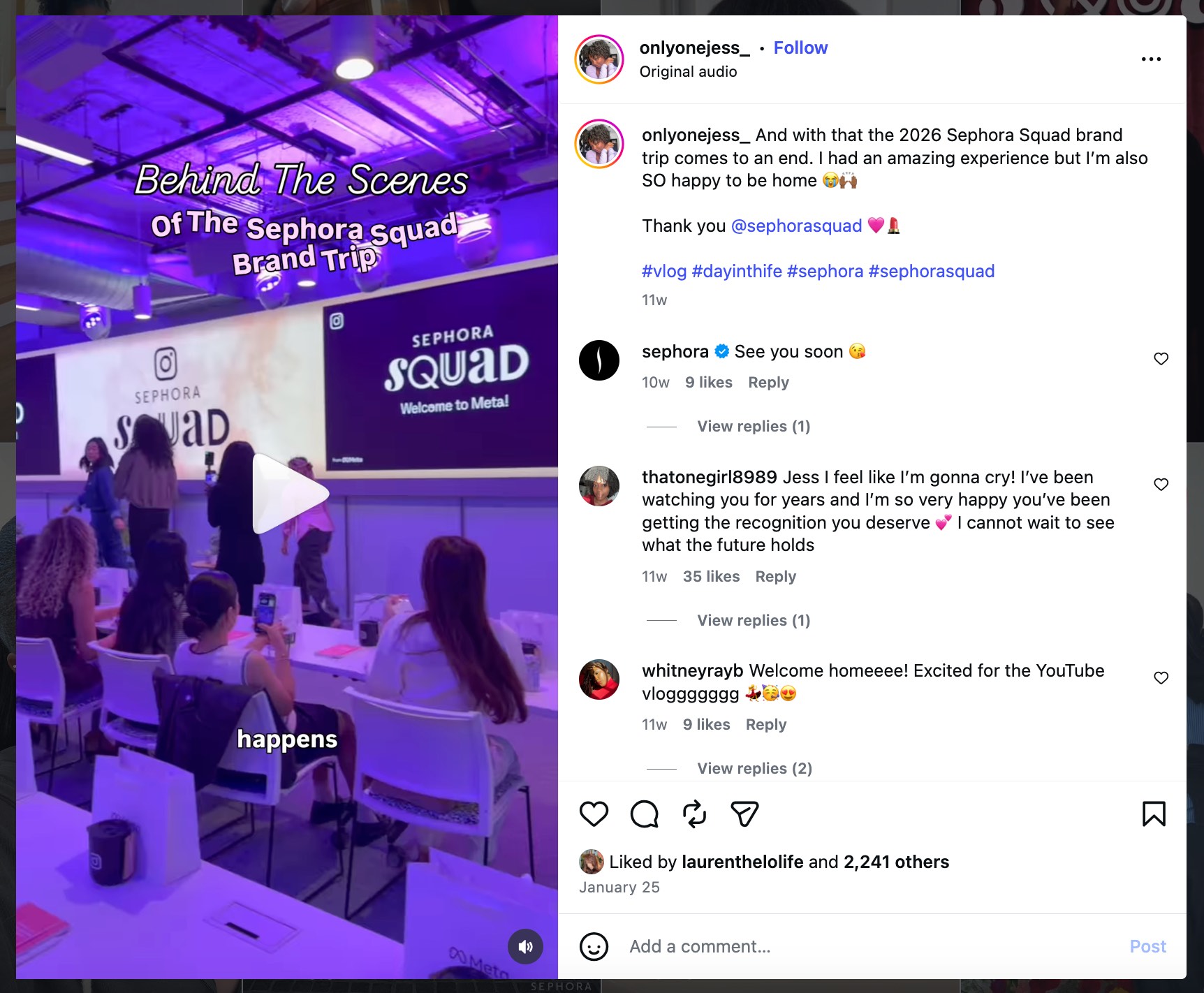
A recent trip included a visit to Meta Studios, where creators learned about key Instagram marketing features, and everyone left with Ray-Ban Meta glasses and a haul of new products. This delivers a clear message to creators that partnership goes both ways.
Investment doesn’t have to mean expensive trips. It can be early product access, invitations to brand events or simply looping creators into conversations about upcoming campaigns before they go public. It can also mean bringing them into product conversations, whether that’s feedback, testing or early-stage ideas. The more valued a creator feels, the more invested they’ll be in your brand’s success and the content they create for you.
Give your program a name
Some of the most effective long-term influencer programs have one thing in common: They give creators an identity to rally around. See: Sephora Squad, Gymshark Athletes, Lululemon Ambassadors. Each signals exclusivity, commitment and a sense of belonging that turns a business arrangement into something creators actively want to be part of and publicly identify with.
Jordan Reichert (@healthybunhead), a fitness instructor and Lululemon Store Ambassador with 24K followers in Kansas City, is a strong example. She lists “lululemon ambassador” in her Instagram bio and describes her role as a “pinch me moment.”
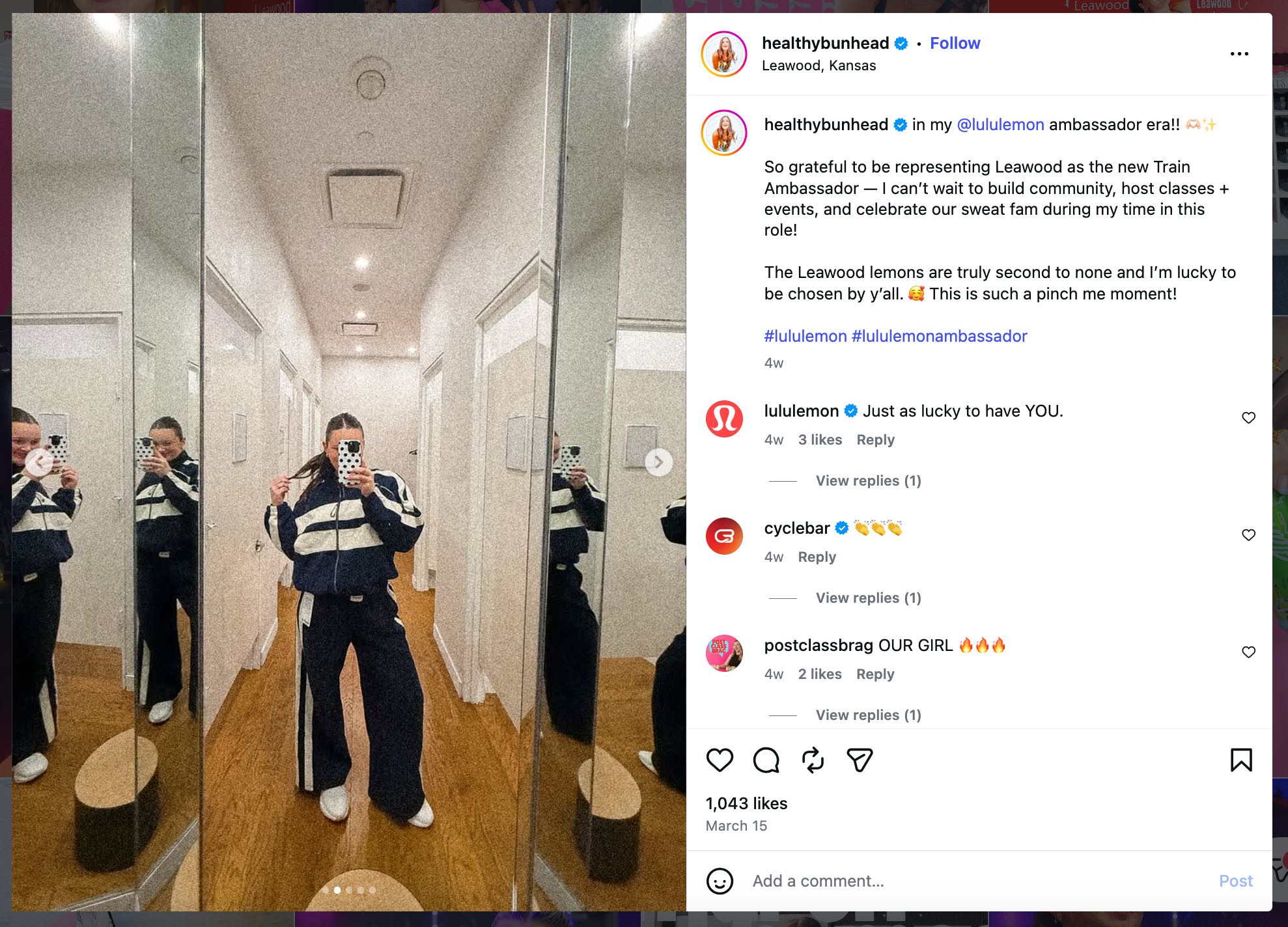

A named program also makes it easier to build community among your creators. When ambassadors know they’re part of a named cohort, they’re more likely to connect with one another, cross-promote and organically advocate for the brand beyond their contractual obligations. For the brand, that translates into wider reach, more authentic content and a higher return on every partnership investment because the program itself becomes a multiplier.
Start building influencer partnerships that last
Influencer marketing has always been about trust. But that trust takes time to build. The creators who consistently show up for a brand, genuinely know the product and whose audiences have had time to believe them are far more effective advocates than a rotating roster of one-off partners.
The fundamentals are the same regardless of your industry or budget. Find creators who are a genuine fit for your brand. Vet them carefully before you commit. Set realistic goals, measure consistently and invest in the relationship beyond the deliverables. And give creators the kind of access, recognition and true partnership that makes them want to stay.
The question isn’t whether long-term partnerships work. The data, the brand examples and the audience behavior all point in the same direction. The question is whether your current creator strategy is built for long-term ROI or short-term noise.
Ready to find the right partners? Book a demo to see how Sprout Social’s Influencer Marketing platform helps you find, vet and manage creators at scale.
39 free social media strategy templates that will elevate your workflows
Published on August 20, 2026 Reading time 15 minutes








Share