How to integrate Agentic AI for social media into your workflows

Written by Jasmine Williams
Published on February 19, 2026
Reading time 9 minutes

Table of Contents
Marketing teams are swimming in data. Media mentions, comments, DMs, trends and performance metrics pile up fast, and turning all of it into insight into your brand health, industry, competitors and audience is a full-time job on its own.
Enter agentic AI for social media and media monitoring: intelligence built to listen, analyze and act across massive volumes of online data from socials, communities and media outlets.
Social media and the news cycle moves faster than teams can manually monitor or interpret. Agentic AI is a proactive system that accelerates decision-making and automates workflows, enabling social and communication teams to focus on strategy, crisis mitigation and impact.
This article breaks down what AI agents are, how they differ from generative AI and why social and communication teams are adopting them. It also explores how Sprout’s agentic AI handles key social and media monitoring activities, and what’s next for AI in marketing and communications.
What is an AI agent vs. generative AI?
If generative AI is a helpful social media assistant at your side, an AI agent is the system quietly running in the background to keep everything moving. Both support your teams, but in different ways.
Generative AI assists with content and creative tasks. It helps draft captions, refine copy, summarize conversations or brainstorm ideas when prompted. It responds to specific requests and speeds up hands-on execution, while humans still provide context, direction and final approval.
Agentic AI for social media and media intelligence operates at a different level. Instead of waiting for a prompt, it can work toward defined goals by continuously parsing large volumes of online data, identifying patterns and initiating actions within set parameters. In practice, this might look like monitoring conversations, flagging emerging issues or triggering automations that help teams respond faster.
Agentic AI is still an evolving area within social media and crisis communication management. Today, these systems require human oversight and intervention, but over time, they will operate more independently as governance matures and confidence builds.
Why social and communications teams need AI agents: 4 benefits of AI agents
Social feeds, community forums and media outlets are a nonstop flow of conversations, feedback and industry news. As a result, social media management and media monitoring are moving from a reactive ‘post and respond’ approach to more proactive decision-making.
But there’s only so much teams can keep up with manually, which is where AI agents for social media and reputation management come in. By continuously listening, learning and coordinating actions across workflows, they reduce manual effort and enable teams to move faster with greater confidence.
That ongoing monitoring helps social, comms and PR teams stay aware of emerging issues, trends and spikes in attention, making it easier to align before situations escalate.
Below, we’ll break down the key benefits of AI agents and how they support your teams while enabling better coordination across the broader organization, from crisis response and strategy to reputation and ROI.
1. Scalability and 24/7 automation
Conversations and the news doesn’t stop when the workday ends. Customer questions come in overnight. A large account reshares a campaign post and it suddenly takes off. A brand mention starts circulating after a news story breaks. These moments don’t follow business hours or staffing plans.
That’s where AI agents make a difference. They take on repetitive, time-consuming work in the background, like ongoing monitoring, tagging or triggering alerts, without requiring constant human attention.

The result? You get always-on coverage without always-on humans. Your team can prioritize judgment-heavy work, while agentic AI monitors activity and flags what needs attention, helping teams respond faster without burning out.
2. Accelerate decisions
You get a Slack message from leadership asking why engagement jumped on one post but not the others. Or why a short-form video took off on Instagram but flopped on TikTok. You have the data, but pulling together engagement trends, network performance analytics and audience feedback takes time you don’t have.
AI agents for social media make it easier to connect those dots. Instead of manually pulling reports or piecing together context after the fact, agentic AI reveals emerging engagement or sentiment patterns in real time.
This speed matters because social increasingly shapes business decisions. According to The 2025 Impact of Social Media Marketing Report, 54% of marketing leaders say social media drives research and development and decision-making. AI agents help teams move from observation to action faster, while there’s still time to respond.
3. Better define ROI
ROI is one of the toughest questions marketing teams get. A post might have performed well from an engagement standpoint, but did people click through to the product page? Did you see a boost in sign-ups?
AI agents for social media management help teams answer those questions by connecting social interactions with broader business data. That makes it easier to see how social activity influences outcomes across the funnel, from awareness and discovery to conversion and efficiency.
This ability reflects how leaders already think about the importance of social media. In the 2025 Impact of Social Media Marketing Report, when marketing leaders were asked how their teams define social ROI, many cited increased conversions (65%), revenue (57%), efficiency (55%) and discoverability (51%) as key goals.
4. Deeper intelligence
Most social and media analytics answer what already happened. Deeper intelligence helps teams see patterns forming and anticipate what might come next. That’s especially valuable when small changes today turn into significant movements tomorrow.
By analyzing past and current data together, AI agents for social media management and media intelligence can surface longer-term trends and emerging shifts. That might look like noticing a growing trend across socials and news outlets, or catching a steady rise in questions around a feature before it turns into a broader conversation. It can also mean identifying up-and-coming creators and trending formats or topics before they peak.
Instead of looking at individual posts or specific conversations in isolation, teams can compare performance across formats, campaigns, competitors and time periods. That makes it easier to adjust creative direction, refine messaging, address crises early and plan future campaigns based on what’s emerging, not just what worked once.
How to use Sprout’s agentic AI for social media and media monitoring
Knowing what agentic AI can do is one thing. Putting it to work in social and communications workflows is where the real value shows up. This is where theory turns into practice.
We’ll walk through how Sprout’s agentic AI works during the situations social and comms teams care about most, from spotting early warning signs to shaping strategy, protecting brand reputation, tracking competitors and reporting on impact.
Each example focuses on how agentic AI fits into existing workflows, helping teams move faster, stay informed and make better decisions without adding complexity.
1. Social strategy: Investigate audience shifts with Trellis
Social listening is most useful when its insights don’t just sit in reports, but actually inform campaigns, products and positioning. Making that happen at scale is where teams tend to get stuck. In Sprout’s Q4 2025 Pulse Survey, 55% of global users said that while companies do a good job listening to social conversations, many don’t consistently act on those insights.
Trellis, Sprout’s agentic AI, enables teams to close that gap. It analyzes social listening data over months and years to reveal how audience interests, sentiment and brand perception evolve. Instead of digging through reports, teams can ask Trellis direct questions in conversational language and get clear, contextual answers rooted in real social data.
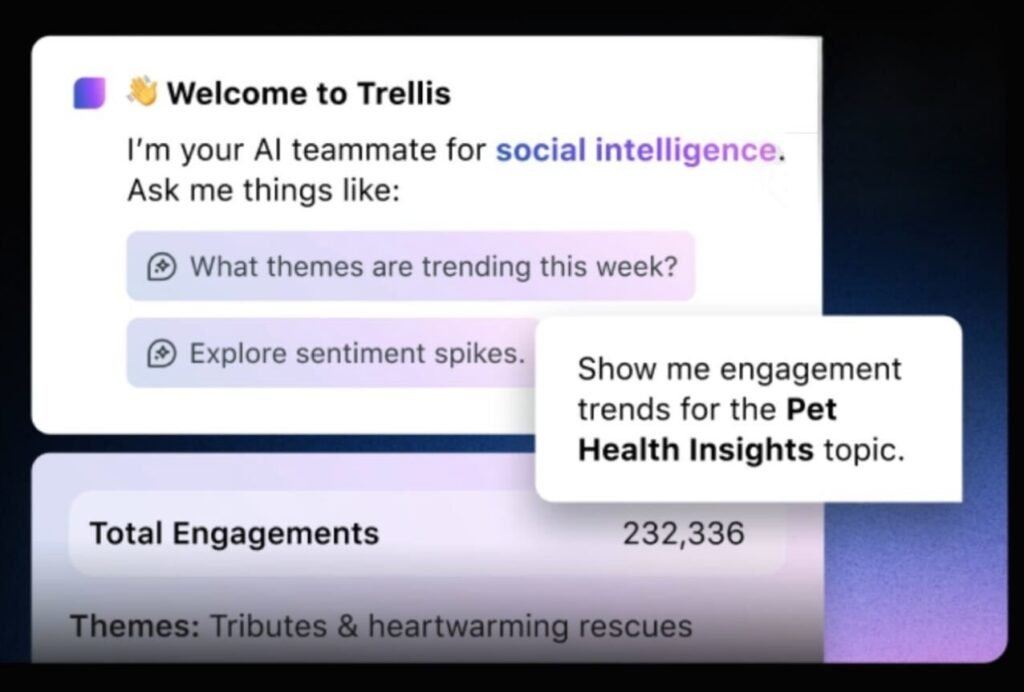
This makes social intelligence easier to use across the organization. Marketing teams can spot changes in content performance or campaign impact. Product teams can see recurring feedback or emerging needs. And leadership can track brand health with greater confidence.
Trellis helps make social listening a shared strategic resource across the organization, supporting more informed decisions at every level.
2. Crisis management: Detect early warnings with NewsWhip by Sprout Social
By the time a crisis appears in your mentions, it’s often already gaining traction elsewhere. But what if you could see what’s coming earlier and get more time to decide if, how and when to respond?
NewsWhip’s Trellis Monitoring Agent provides social, comms and PR teams with early visibility into critical moments. It continuously monitors web coverage and how those stories spread across social media, so every department has access to the same information—and you don’t have to manually track headlines and press mentions as they evolve.
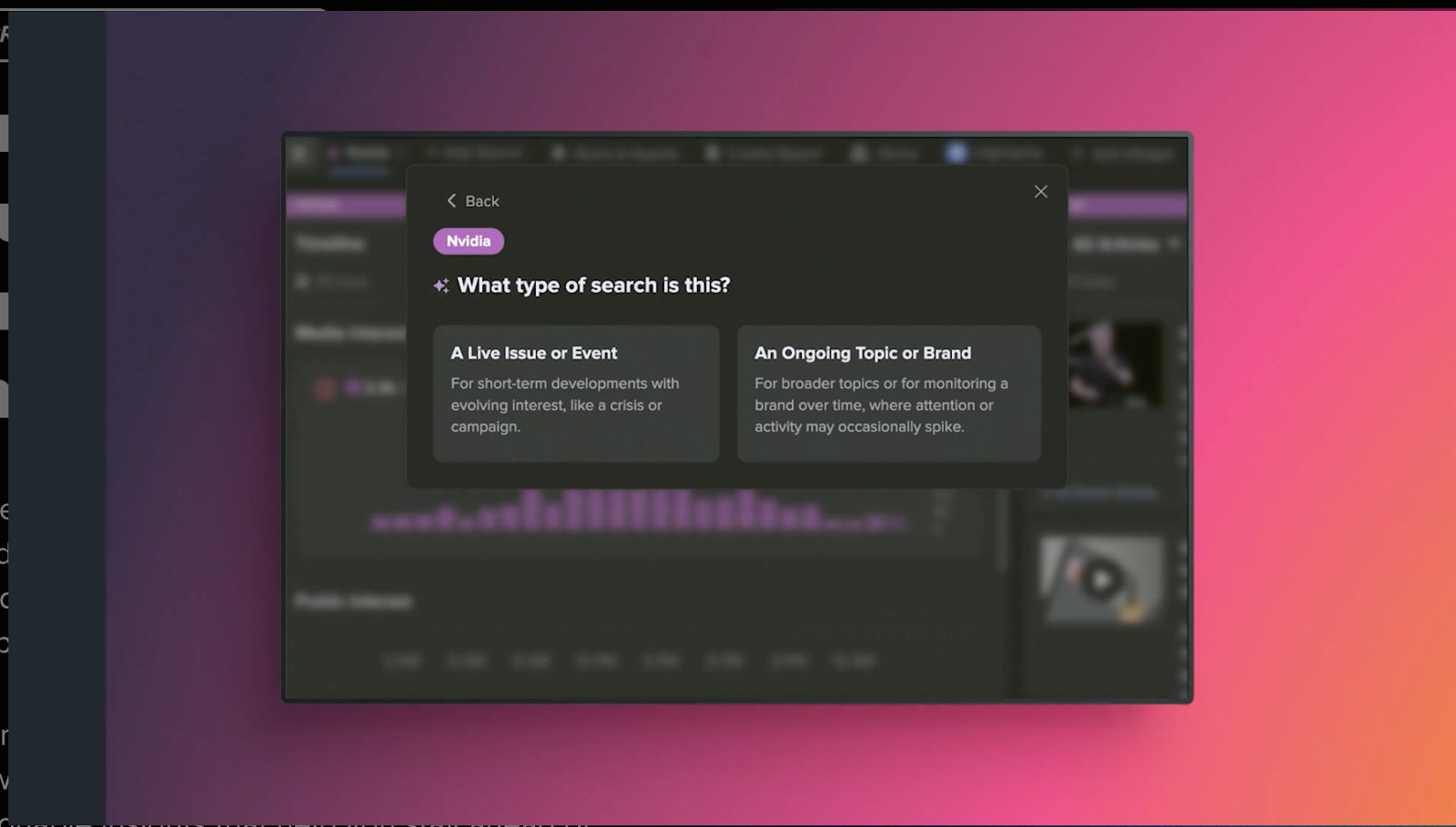
The agent’s Critical Signals capability analyzes coverage and engagement patterns, and notifies your team when meaningful changes occur, not just when a keyword appears.
The Instant Workspace feature reduces the scramble. With one click, the agent helps teams move from an alert into a pre-built dashboard that pulls together context and sources, making it easier to align on next steps.
Lastly, NewsWhip’s Active Memory remembers prior updates and only pushes notifications when something new develops.
When all three work together, you get an agent that provides earlier visibility, less manual monitoring and your team gets more time to make thoughtful decisions before a situation escalates.
3. Reputation management: Activate Sprout’s AI Agents for brand monitoring
Reputation rarely changes all at once. Maybe a pricing update receives more blowback than expected, or forums or the media pick up a negative customer experience. The challenge for communications teams is knowing what needs action now versus what’s worth watching.
Sprout’s AI agents were built for this. NewsWhip helps teams understand what’s happening in real time and what’s likely to gain momentum next. AI agents monitor sensitive topics, emerging narratives or potential backlash, then translate that activity into structured, analyst-quality updates. These insights enable comms teams to triage early signals and share aligned guidance with social, executives and other stakeholders before situations escalate.
By deploying these autonomous systems, teams can transition to an always-on AI brand monitoring model that captures insights across the entire web.
Trellis adds the longer view. Within Sprout Listening, it helps teams measure brand health over time, identify recurring customer wins and pain points, and understand how perception evolves beyond individual moments.
Together, NewsWhip and Trellis help teams protect trust in the moment while strengthening brand perception and customer care over the long term.
4. Competitive intelligence: Use Sprout for frequent pulse checks
You don’t need to track every post your competitors publish or media mention they receive. What matters is staying aware of meaningful moves, like a new product launch or a conversation that starts gaining traction. That information is rarely in one place or available on a predictable schedule, and when it does surface, social and comms teams need to act quickly.
Sprout makes it easier to run frequent pulse checks without turning competitive tracking into a separate project. NewsWhip helps communications, PR and social teams see what’s gaining attention in real time, surfacing when competitor coverage, campaigns or narratives begin to gain momentum beyond their own channels. That shared visibility makes it easier to distinguish a brief spike from something that warrants a response, and to align on next steps across teams.
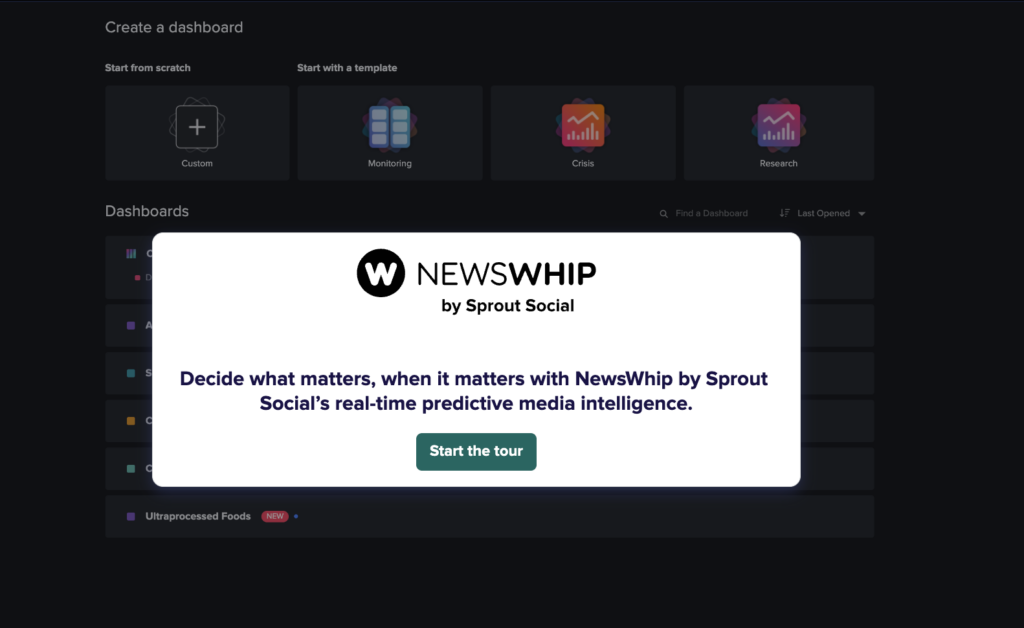
Trellis, within Sprout Listening, adds longer-term context by helping teams understand how competitors engage with customers over time. It highlights which messages resonate and what customers consistently praise, question or push back on.
Together, this approach keeps teams informed without being reactive. Competitive intelligence becomes something teams check regularly, use quickly and apply with confidence, rather than a report pulled once it’s already outdated.
5. Reporting: Enhance how you define ROI
Reporting is often where teams feel the most pressure. Leadership wants proof that social and PR are working, but the impact doesn’t always show up neatly in a single metric. A campaign sparks an industry-wide conversation, or brand sentiment improves after a product fix. All of that matters, even if it’s harder to capture in a spreadsheet.
By combining quantitative signals (e.g. engagement lift, reach and brand awareness) with qualitative insights (e.g. customer feedback themes), AI agents provide teams with a more complete picture of impact. They can also surface operational wins, such as reduced response times, fewer manual reporting steps or hours saved each week through automation.
Instead of pulling one-off reports or stitching together slides at the end of a quarter, teams can track these signals continuously. Over time, patterns such as which efforts consistently improve perception and where social reduces workload elsewhere in the business become much clearer. Your reporting shifts from defending your team’s value to explaining it, using evidence that reflects how social and media intelligence actually support the business.
What’s next for social media management and media monitoring AI agents
The next phase of agentic AI will feel seamless, built directly into how social and comms teams work day-to-day. More tasks will happen automatically in the background, from routing issues to the right teams to adjusting workflows as conditions change. AI agents will get better at predicting shifts in customer behavior, spotting patterns earlier and personalizing responses at scale, all while operating inside the tools teams already rely on.
And because of this, the human role becomes even more important.
AI can process volume, connect signals and handle the heavy lifting of analysis. What it can’t replace is judgment, context and trust. Social and communications teams bring the lived understanding of their audience and the credibility that comes from showing up thoughtfully when it matters. That’s the social proof consumers still care about, and it’s where humans remain firmly in the loop.
The future of social media and crisis management is a partnership. AI agents expand what teams can see and do. Humans decide how to act.
And it all starts with the right prompt that’s thoughtfully designed to deliver what you need most. Get started by accessing our comprehensive AI prompt library for 70+ professional-grade prompts across nine critical pillars, including strategy, thought leadership and performance optimization.
39 free social media strategy templates that will elevate your workflows
Published on August 20, 2026 Reading time 15 minutes




Share